Learning how to make vegan sausage patties at home comes down to three things: bind the mixture so it holds, season it like real breakfast sausage, and give it a hot pan with room around each patty. Get those right and you get a browned crust, a tender center and no crumbs in the skillet. The whole job takes about 30 minutes plus a short chill.
The base can be anything from textured vegetable protein to lentils, so this is not a recipe that locks you into one trip to the store. What matters is that the base is well seasoned before it hits the pan. Salt and smoke applied after cooking taste like a topping, not like sausage.
Table of Contents
- What You Need
- Base options
- Binder, seasoning and fat
- How to Make Vegan Sausage Patties at Home Step by Step
- Prepare the Mixture
- Chill for Easier Shaping
- How to Make Vegan Sausage Patties Hold Together and Keep Their Shape
- Cook Until Browned and Crispy
- Common Mistakes
- Frequently Asked Questions
- Can I make vegan sausage patties without lentils?
- What is the best binder for vegan sausage patties?
- How do I keep vegan sausage patties from falling apart?
- Can I bake vegan sausage patties instead of frying them?
- How long do vegan sausage patties last in the refrigerator or freezer?
- How can I make these patties gluten-free?
What You Need
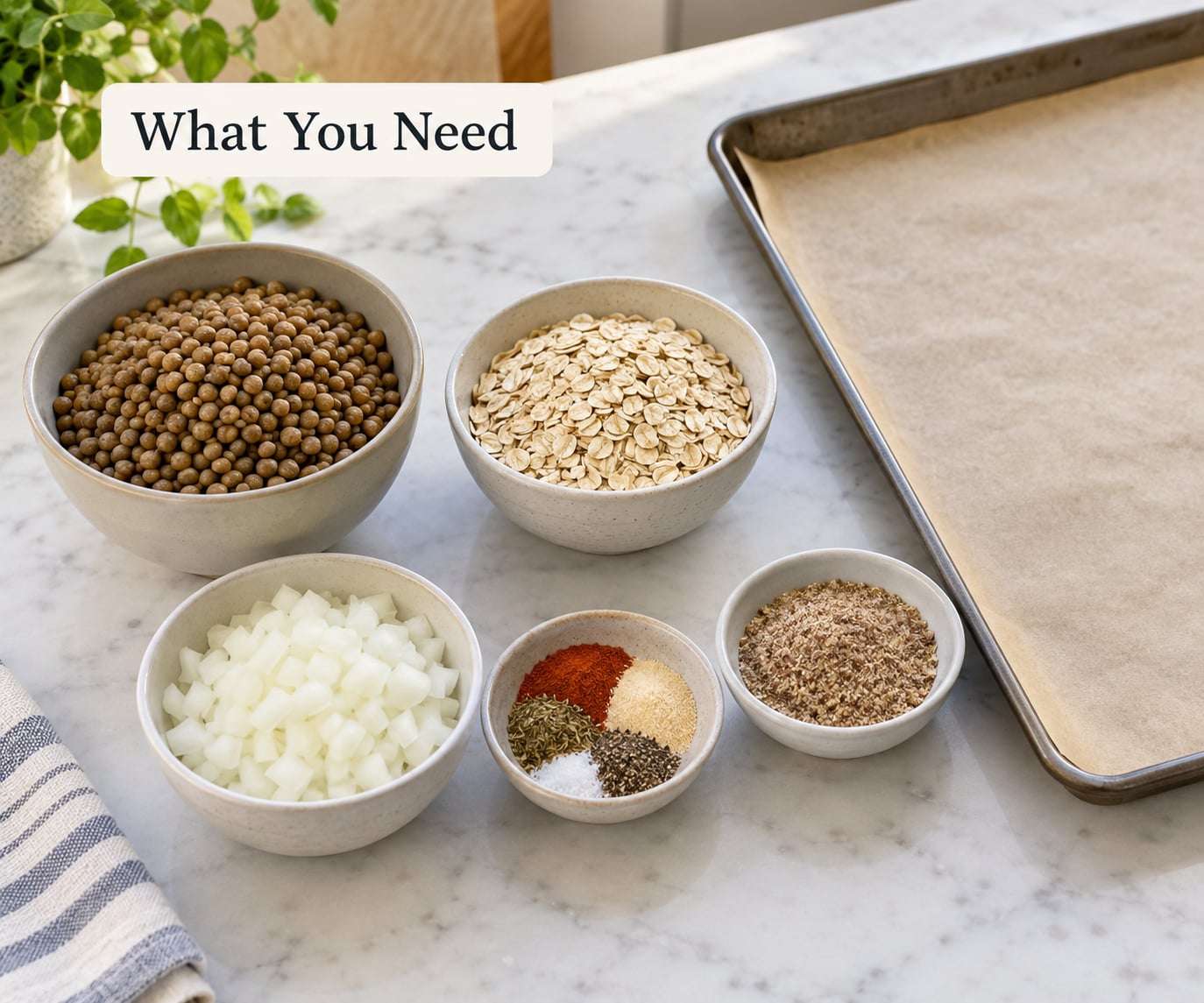
Pick one base, one binder, and one seasoning profile. Most home kitchens already have the whole list.
Base options
- Textured vegetable protein (TVP): 1 cup (about 90 g) dried TVP plus 1 cup (240 ml) hot water or broth. Rehydrates in 5 to 10 minutes. Highest protein per cup and the most sausage-like bite.
- Tofu: 14 oz (400 g) extra-firm, pressed and crumbled. No soaking needed. Softer and less savory, so bump the seasoning.
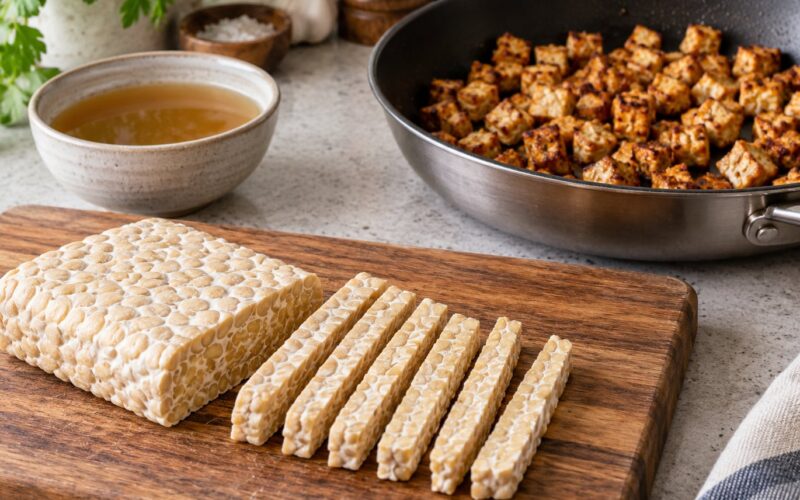
- Tempeh: 8 oz (225 g), grated. Adds a faint chew and a little bitterness that mellows with sage and maple.
- Seitan: 8 oz (225 g), blitzed or chopped. Very meaty and chewy. Needs the most binder because it is already dense.
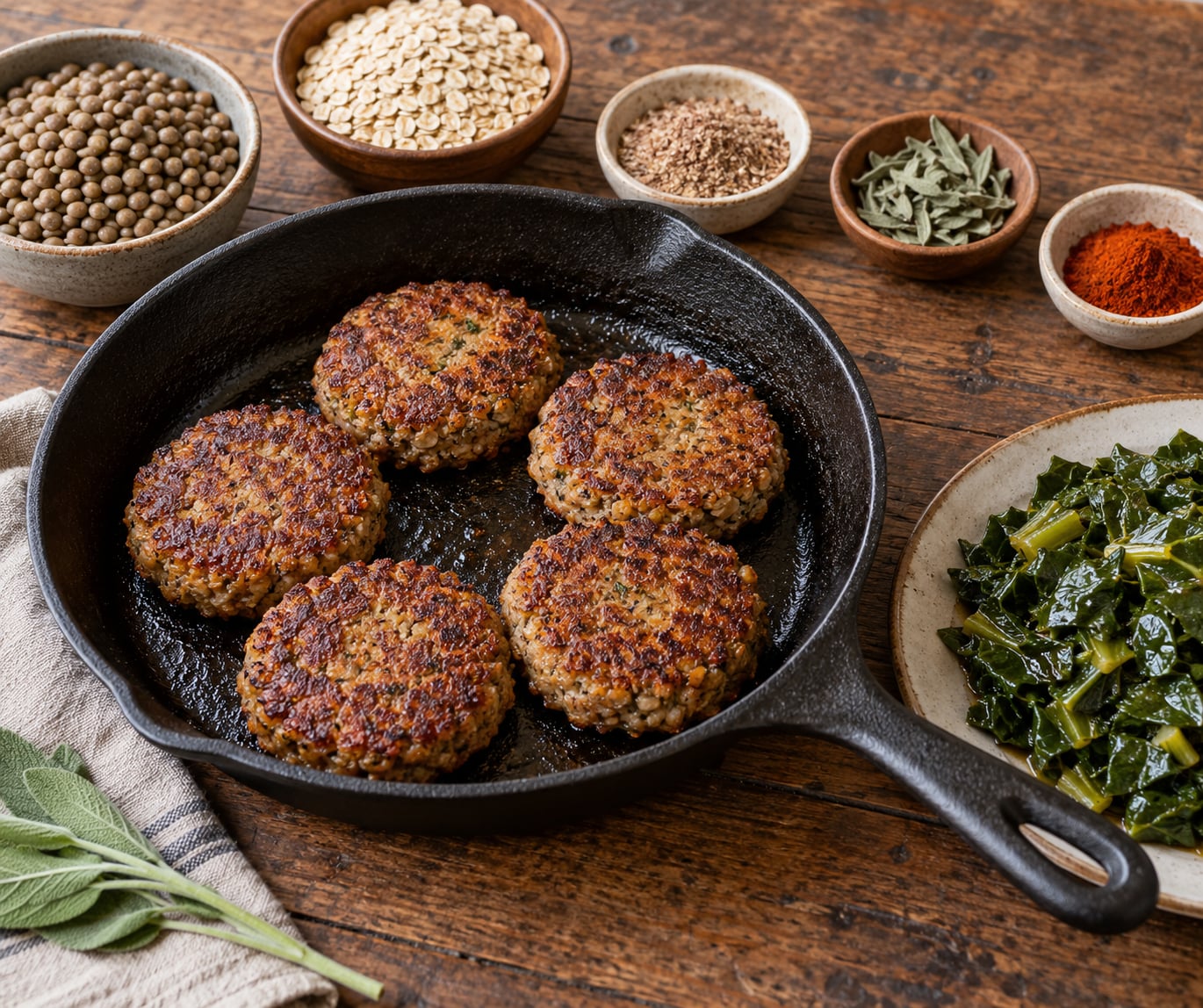
- Lentils: 1 cup (185 g) cooked red or green lentils, roughly mashed. Cheap, mild, soy-free and freezer-friendly.
- Chickpeas: 1 cup (165 g) cooked chickpeas, lightly crushed. Firm enough to hold, slightly sweet.
Binder, seasoning and fat
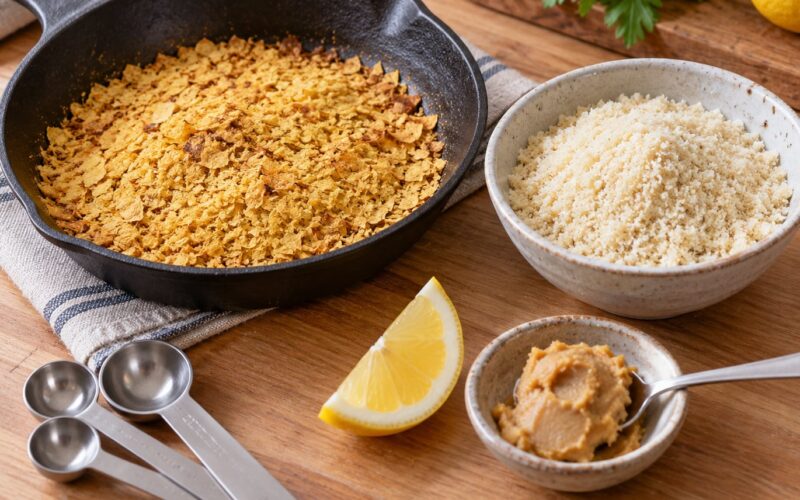
- Binder: 1/4 cup (about 30 g) ground flaxseed plus 2 tbsp water, 2 tbsp vital wheat gluten, 1/4 cup oat bran, 1/3 cup panko or breadcrumbs, or 3 tbsp aquafaba. One is enough; two is fine for seitan.
- Wet seasoning: 2 tbsp soy sauce or tamari, 1 tbsp maple syrup or blackstrap molasses, 1/2 tsp liquid smoke, 1/2 cup (120 ml) warm water for soaking TVP.
- Dry seasoning: 2 tsp dried sage, 1 tsp fennel seed, 1 tsp smoked paprika, 1 tsp garlic powder, 1 tsp onion powder, 1/4 tsp red pepper flakes, 2 tbsp nutritional yeast, 1 tsp black pepper and 1 to 1.5 tsp salt.
- Fat: 1 to 2 tbsp neutral oil for the skillet, plus a teaspoon in the mix if the base is dry.
- Tools: skillet or sheet pan, mixing bowl, a fork or potato masher, a measuring cup for portioning, and parchment paper.
One note on choosing a base: the patties should hold together without turning dense. If your mix is mostly lentils or beans, go lighter on the binder, since the starch in the legumes is already doing that job. If it is mostly seitan or TVP, add the full measure. A good test is to squeeze a spoonful and it holds its shape without dripping.
How to Make Vegan Sausage Patties at Home Step by Step
Prepare the Mixture
Pour the hot water or broth over the TVP and leave it alone for 5 to 10 minutes. The flakes should be soft and fully swollen, with no dry pockets left. Skim off any foam on top, then stir in the soaked TVP, soy sauce, maple syrup and liquid smoke.
Add the binder, nutritional yeast and every dry spice. Mix with a fork or your hands until no streaks of dry seasoning remain and the mixture feels slightly sticky. That stickiness is what binds the patty, so do not chase a dry, crumbly texture.
Rest the mix for 10 minutes so the flax or oat bran drinks up the moisture and the starches hydrate. If you are using fresh onion or bell pepper, soften it in a teaspoon of oil over medium heat for 3 to 4 minutes first. Raw onion is fine but it makes the patties wetter and looser.
Chill for Easier Shaping
Refrigerate the mixture for 20 to 30 minutes. Chilled, it is less sticky on your hands, easier to portion, and firmer in the pan, which is what keeps the patties from slumping when they hit the heat.
Many home cooks go one step further and roll the balls the night before, then refrigerate them on a tray. That is the easiest make-ahead move I use for weekday breakfasts, since morning work drops to shaping and frying.
How to Make Vegan Sausage Patties Hold Together and Keep Their Shape
Portion about 1/4 cup (60 g) of mixture per patty. That gives you eight patties from a standard batch and cooks evenly in a home skillet without crowding.
Wet or oil your palms, roll each portion into a ball, then flatten it to roughly 3 to 4 inches wide and 3/4 inch thick. Thinner than that dries out before the center sets, and much thicker means the middle is still cool when the outside is done.
Press the edges smooth with your fingertips and keep a square of parchment between patties as you stack them. Pushing too hard squeezes out the moisture the binder needs, and a rough edge is the first place a patty cracks when you flip it.
Cook Until Browned and Crispy
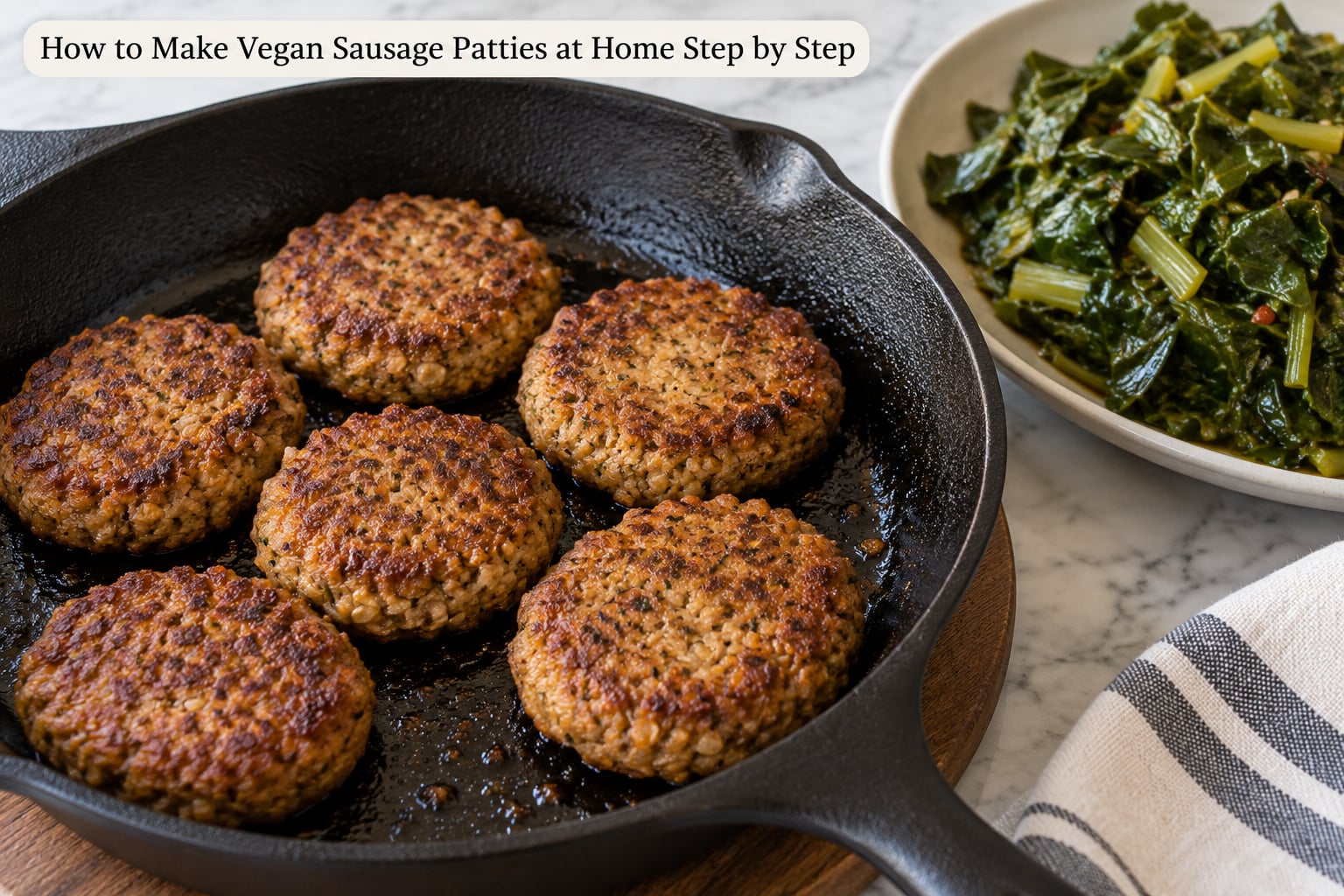
Shallow-frying: Heat 1 tbsp oil in a nonstick skillet over medium heat. Add the patties and cook 5 to 7 minutes per side until deep golden brown. Leave space between each one; six is a comfortable number for a 10-inch skillet.
Baking: Heat the oven to 400°F (205°C). Brush the tops with oil and bake 20 to 25 minutes, flipping once at the halfway mark. 375°F (190°C) works too and gives a gentler browning over 25 to 30 minutes.
Air-frying: 400°F (205°C) for 8 to 10 minutes, flipping at 5 minutes. Air fryers brown fast, so check early rather than trusting the clock.
You can tell they are done by the color and the feel: the crust should be brown all the way to the edge and the patty should feel firm when you press it. If you use a thermometer, 165°F (74°C) is a safe target for an even hot center. Crowding is the main reason patties come out pale: steam gets trapped and nothing browns.
Cooked patties keep 3 to 4 days in an airtight container in the refrigerator. For longer storage, freeze them flat on a parchment-lined tray, then transfer to a bag where they hold for 2 to 3 months. Reheat in a skillet for 3 to 4 minutes per side or in a 375°F (190°C) oven for 10 to 15 minutes. The microwave makes them crumbly, so skip it.
Common Mistakes
The patties fall apart when you flip them. Almost always too much moisture or not enough binder. Add another tablespoon of ground flaxseed or vital wheat gluten and rest the mix 10 minutes. If the mixture is loose, chill it longer before shaping.
They come out pale. Your pan was not hot enough, the patties were crowded, or you used too much oil. Give each patty space and let the oil shimmer before they go in.
The center is mushy. That is steam, not heat. Move patties that are touching, and if you are baking, finish them 5 to 8 minutes on a rack so the underside dries out.
They taste bland. Season the mixture before cooking and let it rest. Salt and smoked paprika do more in the raw mix than any sauce on the finished plate.
They shrink or turn rubbery. You cooked them too hard or too long. Pull them the moment the crust is brown, usually one minute before you think they need it.
One more failure mode worth knowing: over-processing. Running a food processor too long turns the mixture into a paste, and paste patties fall apart in the pan. Pulse only until the texture looks like coarse crumbs, never a smooth puree.
Frequently Asked Questions
Can I make vegan sausage patties without lentils?
Yes, and lentils are only one of six bases that work well. Textured vegetable protein is the classic choice: one cup of dried TVP soaked in one cup of hot water, then mixed with a binder and spices. Firm tofu, tempeh, seitan and chickpeas all work too, and each needs a slightly different amount of binder since they vary in starch. TVP and seitan need more binder, while chickpeas need less.
What is the best binder for vegan sausage patties?
Vital wheat gluten has the strongest binding power and gives the chewiest result, at about 2 tablespoons per cup of TVP. Ground flaxseed mixed with an equal amount of water is the most common everyday choice and adds fiber with no flavor. Oat bran adds bulk, panko gives the crispest crust, and aquafaba (chickpea water) is useful when you need stickiness without any grain. Use one binder, not three.
How do I keep vegan sausage patties from falling apart?
Measure the binder instead of eyeballing it, and get the mixture slightly sticky rather than dry. Chill it for 20 to 30 minutes before shaping so it firms up in the pan. Press the edges of each patty smooth, since cracks start there, and do not flip until the first side is deeply browned and releases on its own. Overcrowding also breaks patties, so cook fewer at a time.
Can I bake vegan sausage patties instead of frying them?
Baking works well and keeps the oil use down. Heat the oven to 400°F (205°C), brush the patties with a little oil, and bake 20 to 25 minutes, flipping once at the halfway mark. At 375°F (190°C) give them 25 to 30 minutes for gentler browning. Baking gives less crust than a skillet, so a short 5 to 8 minute finish on a hot sheet pan helps the bottoms crisp.
How long do vegan sausage patties last in the refrigerator or freezer?
Cooked patties keep 3 to 4 days in an airtight container in the refrigerator. In the freezer they hold 2 to 3 months, best frozen flat on a parchment-lined tray and moved to a bag once firm. You can also freeze them raw after shaping, then cook from frozen at 375°F (190°C) for 40 to 55 minutes, foil-wrapped for most of that time and unwrapped for the last 8 to 10 minutes to crisp.
How can I make these patties gluten-free?
Swap the vital wheat gluten for ground flaxseed, certified gluten-free oat flour, or chickpea flour. TVP, lentils, tofu and tempeh are naturally gluten-free, while seitan is entirely gluten, so leave it out of a gluten-free batch. Use certified gluten-free oats and panko if you include either, and check that your soy sauce is tamari, since most regular soy sauce contains wheat. The patties lose a little structure, so add a tablespoon extra binder.
Start with the part most recipes rush: let the TVP fully rehydrate, and measure the binder. Chill the mix for half an hour, then give each patty room in the pan. Those three things fix the crumbling, pale results people complain about most often, and the rest is just seasoning and a little patience.