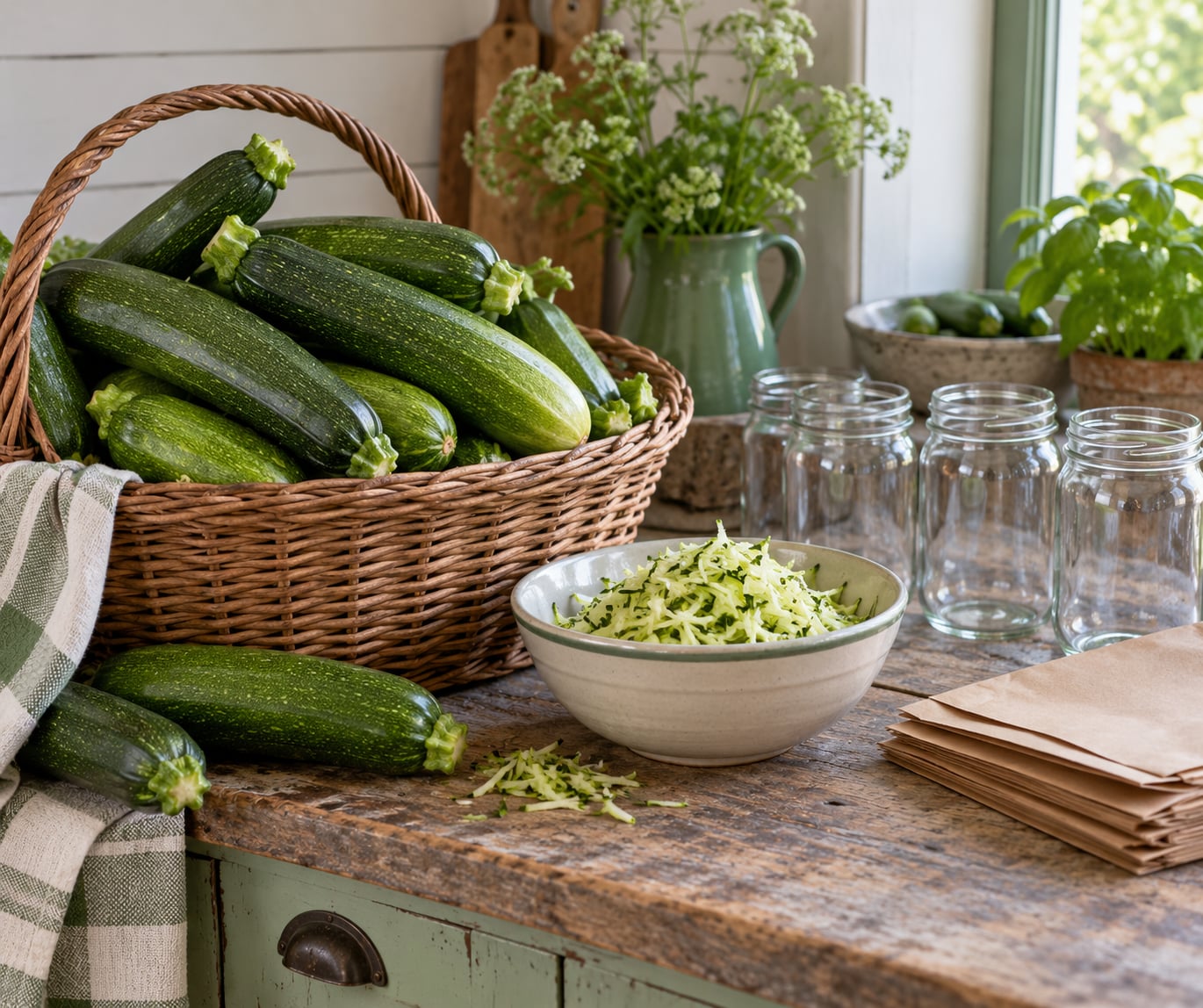
Zucchini outruns you. One healthy plant will set two or three fruit a day at the height of summer, so two plants can bury a household in a fortnight. The fix is a plan, ordered by effort: eat fresh while you can, bake the next wave into something that keeps, then freeze, pickle, dehydrate, or give away whatever is left.
This guide covers what to do with too many zucchini from the garden, starting with the ten-minute options and ending with what to do when the freezer is full and the neighbors have stopped answering the door. Small and medium fruit are for cooking, oversized fruit get hollowed or composted, and the safety rules for canning come before any recipe does.
Timing matters more than technique. Summer squash cannot be stored like a butternut or a Hubbard, and it goes soft and seedy fast, so the surplus you set aside on Monday is a poor baking ingredient by Friday.
Table of Contents
- What to Do With Too Many Zucchini from the Garden at a Glance
- 1. Make Zucchini Pancakes or Fritters
- 2. Roast Zucchini with Garlic and Herbs
- 3. Make Zucchini Soup
- 4. Bake Moist Zucchini Bread
- 5. Add Zucchini to Pasta Sauce
- 6. Stuff the Largest Zucchini
- 7. Make Zucchini Fritters with Fresh Herbs
- 8. Pickle or Refrigerate Extra Zucchini
- 9. Freeze Zucchini for Later
- When the Freezer Is Already Full
- 10. Give Extra Zucchini to Neighbors or Local Pantries
- What to Do With Zucchini Plants at the End of the Season
- Frequently Asked Questions
- How long can zucchini from the garden be stored?
- Do I need to peel zucchini before using it?
- Why is my zucchini bread watery?
- What can I do with very large zucchini?
- Can I freeze zucchini without blanching it first?
- How do I know if zucchini is still fresh?
- Conclusion
What to Do With Too Many Zucchini from the Garden at a Glance
The short version: work top to bottom and stop when you run out of week. Every method below is ranked by the time it takes, so you can find the row that fits the day you actually have.
| Method | Time and effort | How long it keeps | Best used for |
|---|---|---|---|
| Quick-pick quick list below | 10 minutes | This week | Stopping the daily harvest |
| Fritters or pancakes | 30 minutes, one bowl | Best eaten same day | 2 to 3 small zucchini |
| Roasting | 35 minutes, hands off | 3 days in the fridge | Wedges from medium fruit |
| Soup | 40 minutes | 4 days in the fridge, 3 in the freezer | 6 to 8 zucchini at once |
| Bread and muffins | 20 minutes prep, 1 hour bake | 4 days wrapped, 3 months frozen | 2 to 3 cups grated per loaf |
| Pasta sauce | 30 minutes | 4 days in the fridge | 1 to 2 zucchini per pot |
| Stuffed zucchini | 1 hour | Same day | Anything over 10 inches long |
| Refrigerator pickles | 20 minutes, no canning | 3 to 4 weeks refrigerated | Small batches only |
| Freezing | 25 minutes per bag | 8 to 12 months | Soup, sauce, bread, skillet meals |
| Dehydrating | 6 to 8 hours, unattended | 6 to 12 months sealed | Chips and dried zoodles |
| Giving away | 15 minutes a trip | Until someone else eats it | Any size, undamaged |
If you only take one thing from this list, take the first line. Most gardeners solve a zucchini surplus by stopping the harvest from running ahead of them, not by building a bigger freezer.
Here is what to do with too many zucchini from the garden, shortest job to longest:
- Pick the fruit every day so nothing hits the ground.
- Eat the small ones within the week, sautéed or grilled.
- Make fritters when the family is tired of plain squash.
- Roast a tray while the oven is hot for dinner anyway.
- Blend a pot of soup that feeds you for four days.
- Bake a loaf and a dozen muffins to eat in January.
- Fold grated zucchini into the tomato sauce.
- Hollow out the giants and bake them stuffed.
- Pickle a small batch in the fridge for the weeks ahead.
- Blanch and freeze the rest in cup-sized portions.
- Dehydrate rounds or zoodles if the freezer is already full.
- Bag up the overflow and take it to neighbors or a pantry.
1. Make Zucchini Pancakes or Fritters
Before you start cooking, know why the pile exists. A zucchini plant is the same species as pumpkins and gourds, and once it starts setting fruit it keeps going until something stops it: the first frost, a disease, or a gardener who stops picking.
Harvest daily and the plant keeps pumping out two or three fruit a day. Pick the male blossoms before they open and fruit set slows noticeably, which is why gardeners who fry the blossoms get a smaller glut later in the season. Check the bed every morning, including after a few days away, because one forgotten zucchini becomes a bowling ball in about a week.
Fritters are the fastest way through a pile of medium zucchini because they scale without a recipe rewrite. Grate three cups of raw zucchini, the coarse holes on a box grater, then salt it in a colander and wait ten minutes.
Squeeze out the water properly. This is the step that decides whether the pancake is crisp or a sad wet pancake, and most failures trace back to someone wringing it once instead of twice.
Whisk two eggs with a quarter cup of flour, a teaspoon of baking powder, and a pinch of salt, then stir in the squeezed zucchini along with a handful of chopped scallions. For a vegan version, use the flour-and-baking-soda batter instead: one tablespoon of ground flaxseed plus three tablespoons of water standing in for each egg, and the same baking powder.
Fry in a thin film of oil over medium heat, about a quarter cup per batch, until the edges brown and the centers set, roughly three minutes a side. Small zucchini is about three per person, so a bowl of batter covers four or five people at lunch.
Yogurt, chive, and a squeeze of lemon is the serving I use most, and a spoonful of salsa on top makes it feel like a different meal than the one your family is tired of.
2. Roast Zucchini with Garlic and Herbs
Roasting is the lowest-effort option that handles three pounds at once, and it works because hot dry heat browning zucchini cuts the water content that makes it soggy in a skillet.
Cut medium zucchini into half-inch wedges or half-moons and toss them with olive oil, salt, pepper, and a whole head of garlic split into cloves. Add thyme and oregano, since zucchini has almost no flavor of its own and takes on whatever you give it.
Roast at 425 F until the cut faces are brown and the flesh gives to a knife, about 25 minutes for wedges. Spread them in one layer with space between pieces, because a crowded pan steams instead of browns and you end up back where you started.
Thin half-moon slices cook in 12 to 15 minutes, so cut them separately if you are mixing sizes. A metal sheet with a rim catches the liquid that renders, and finishing with a splash of vinegar or a dusting of grated parmesan does more for a plate of roasted zucchini than the seasoning underneath.
3. Make Zucchini Soup
Soup is the best answer to a real pile, because six to eight zucchini go into one pot and the result reheats all week. Peeling is optional: leave the skin on small and medium fruit for color and body, peel the oversized ones whose skin has turned tough.
For the warm version, cut the zucchini into chunks and simmer in broth with onion, a bay leaf, and garlic for 20 minutes until a fork slides in with no resistance. Blend it smooth with an immersion blender in the pot, or cool it first and use a blender, since a blender needs venting.
Thin it with broth or cream after blending, never before, and taste for salt at the end since the vegetable contributes none. A cup of potato or a handful of beans thickens a thin soup without cream.
The chilled version is the same soup cooled fast and blended longer, so it goes silky instead of grainy. Serve it with a drizzle of olive oil and a few toasted seeds, which is a better lunch in July than a hot bowl.
4. Bake Moist Zucchini Bread
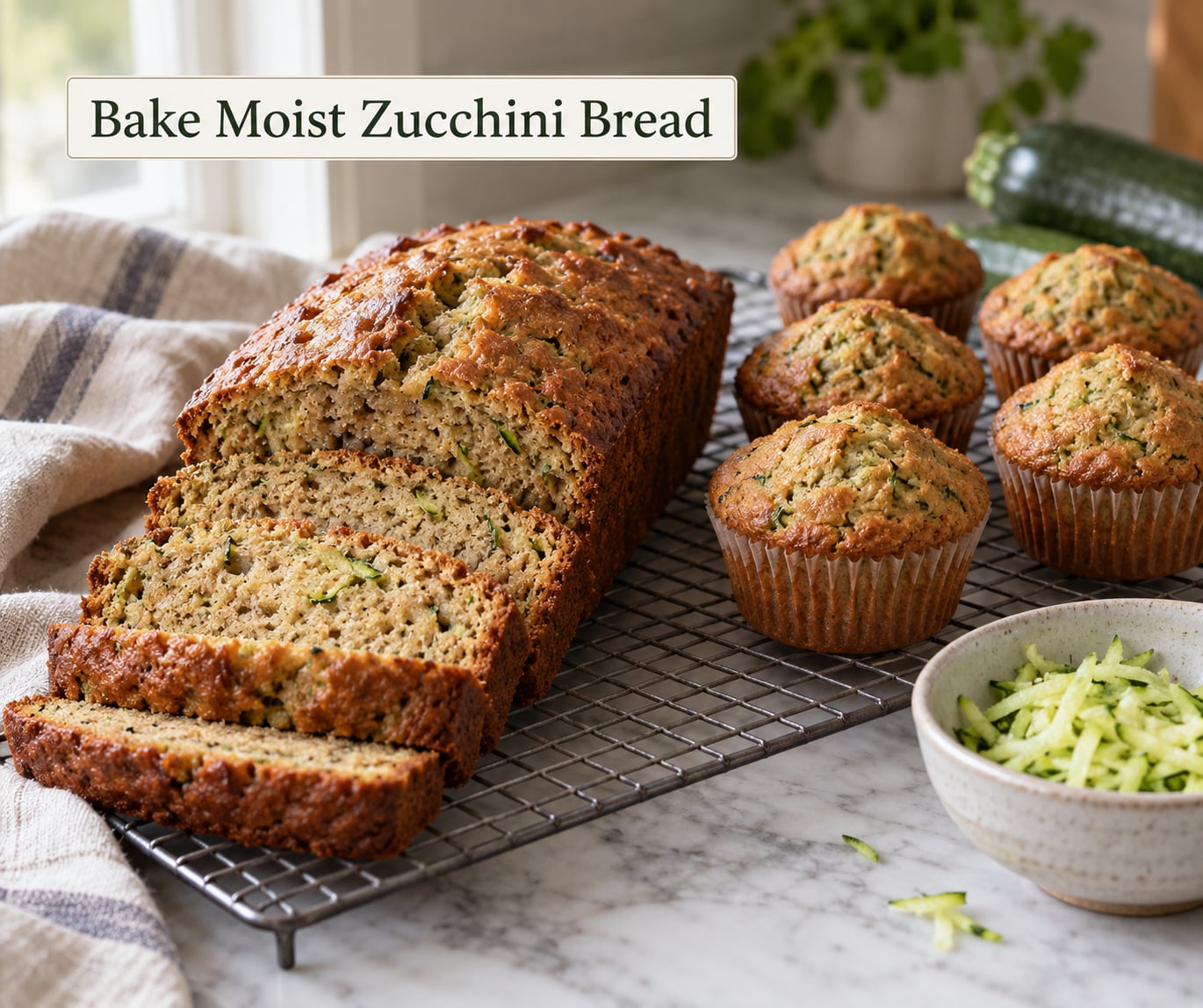
Bread, muffins, and quickbreads are where surplus zucchini goes to be useful in the dead of winter, since they freeze well and reheat without tasting like leftovers. A standard loaf takes about two to three cups of grated zucchini, which is roughly two medium fruit.
Grate, salt, wait, and squeeze, the same as for fritters. Skipping the squeeze is the number one reason a zucchini loaf turns out with a gummy bottom and a wet crumb, and a soggy center usually means the batter was underbaked rather than overdrained.
Fold the shredded zucchini in last, right before the flour goes in, and stir just until the dry ingredients disappear. Overmixing beats the batter into a tough crumb, and it makes a visible difference in a loaf with three cups of vegetable in it.
Bake at 350 F until a skewer in the center comes out clean, about 50 to 60 minutes, and cool it in the pan for ten minutes before turning out. A sealed loaf keeps about four days at room temperature and roughly three months frozen.
For a vegan loaf, use flaxseed and water in place of eggs and swap in 1 to 2 tablespoons of sugar for the white sugar so the crumb stays tender. A gluten-free version works with a 1-to-1 gluten-free flour, and the zucchini keeps it from drying out, which is usually the failure mode in that kind of bake.
5. Add Zucchini to Pasta Sauce
Grated zucchini softens into a tomato sauce and gives it body that plain sauce lacks, which matters if you want to lean on beans instead of meat. One to two zucchini per pot of sauce is the practical ceiling for flavor and texture.
Soften first: cook the grated zucchini in a hot dry pan with a tablespoon of oil for three to five minutes, letting the liquid drive off, then deglaze the browned bits with a splash of the sauce. Skipping this step adds water to the sauce, and there is no way to get it back.
Fold it into the tomato sauce for the last fifteen minutes of simmering rather than the first fifteen, so it keeps some texture. Season with garlic, oregano, and a pinch of red pepper, which are the seasonings zucchini actually carries forward.
Serve it over pasta, over a bed of white beans with a spoon of olive oil and lemon, or use it as a spread for grilled bread. In our house it does double duty as a meatless Monday sauce that nobody treats as a compromise.
6. Stuff the Largest Zucchini
Anything over ten inches long or rock hard is past the raw-eating stage, and those are the fruit most gardeners compost. Split it lengthwise, scoop out the center with a spoon, and chop the seedy interior.
Sauté the chopped core with onion and garlic, let it cool, and bind it with cooked rice, quinoa, or breadcrumbs so the filling holds together. Eggs work too, and if the filling includes ground meat it must reach 160 F in the middle.
Fill the hollowed shells, set them in a baking dish, and bake at 375 F until the shells collapse under a knife, roughly 35 minutes. A crumb-free version uses cooked rice or chopped walnuts as the binder instead of breadcrumbs.
The scooped core is not scraps you have to discard. Chopped into the filling it adds moisture and sweetness, and it is also good in a stir-fry or folded into a frittata with eggs.
7. Make Zucchini Fritters with Fresh Herbs
This is the fritter option that tastes like something other than week four of zucchini, so save it for the moment the plain pancakes stop getting eaten. Chop a half cup each of parsley or scallions and a couple of tablespoons of dill or basil into the batter, which is enough herb to change the character without making it taste soapy.
Use about a quarter cup of oil per batch. The mistake is crowding, which drops the pan temperature and the fritters soak instead of brown, so cook four or five at a time and use a second pan if you have one.
Crisp them on the first side for three or four minutes and finish on medium-low for a minute more. Serve them warm with a spoonful of yogurt and chili crisp, or as a filling in a pita with cucumber and pickled onion, which is the version our neighbors actually ask for.
8. Pickle or Refrigerate Extra Zucchini
Refrigerator pickles are the right tool for a few extra zucchini and the wrong tool for winter storage. Slice thin spears or half-moons, and pickling them in rounds keeps the shape and the texture better.
Brine them in a tested vinegar solution brought to a boil, then pour it hot over the zucchini with garlic, mustard seed, peppercorns, and dill or thyme. That must be a proper vinegar brine, never homemade, because the acidity is the entire safety mechanism here.
Keep refrigerator pickles in the fridge, in clean jars, and use them within three to four weeks. They are not shelf stable, and they do not travel in a pantry.
For anything you want to keep through winter, plain zucchini is not water-bath canned, ever. Summer squash is a low-acid vegetable, which means the risk of botulism spores surviving a boiling-water bath is real, and a water-bath recipe for plain zucchini does not exist because it is not safe to write one.
Canned zucchini exists as pickles and relish, where the vinegar and often the mustard or sugar push the acidity high enough to be sealed safely in a tested recipe, and even those use a pressure canner in some tested methods. Follow a current recipe from a source you trust, such as the National Center for Home Food Preservation or your state extension service, and use the processing time and pressure it specifies rather than a time from a forum post.
Southern and Appalachian kitchens have a long pickle habit anyway, with chow chow and pickled summer squash showing up on tables that already put up green tomatoes and cucumbers, so the jars belong in a tradition that is older than any of us.
9. Freeze Zucchini for Later
Freezing is the reliable answer for most households, and blanching is what separates good frozen zucchini from a bag of watery ice in December.
Cut zucchini into half-inch slices or grate it. For sliced, blanch in boiling water for three minutes; for grated, blanch whole for two minutes and cool it, then grate afterward, which is less work than grating raw and dealing with loose water.
Cool under cold running water and drain thoroughly. Squeeze grated zucchini hard in a clean towel, since every drop you remove now is a drop you do not find in the batter later.
Portion it into the amounts you actually cook. A cup and a half is a loaf of bread, a cup is a batch of muffins, and half a cup is about what goes into a small pot of sauce or soup. Label each bag with the contents and the date, then freeze bags flat so they stack in the freezer door and you can pull one without thawing the whole pile.
Unblanched zucchini still freezes safely, so this is a texture issue rather than a safety one. It loses structure, releases water as it thaws, and ends up better in a soup or a cooked sauce than in anything you plan to eat straight from the bag.
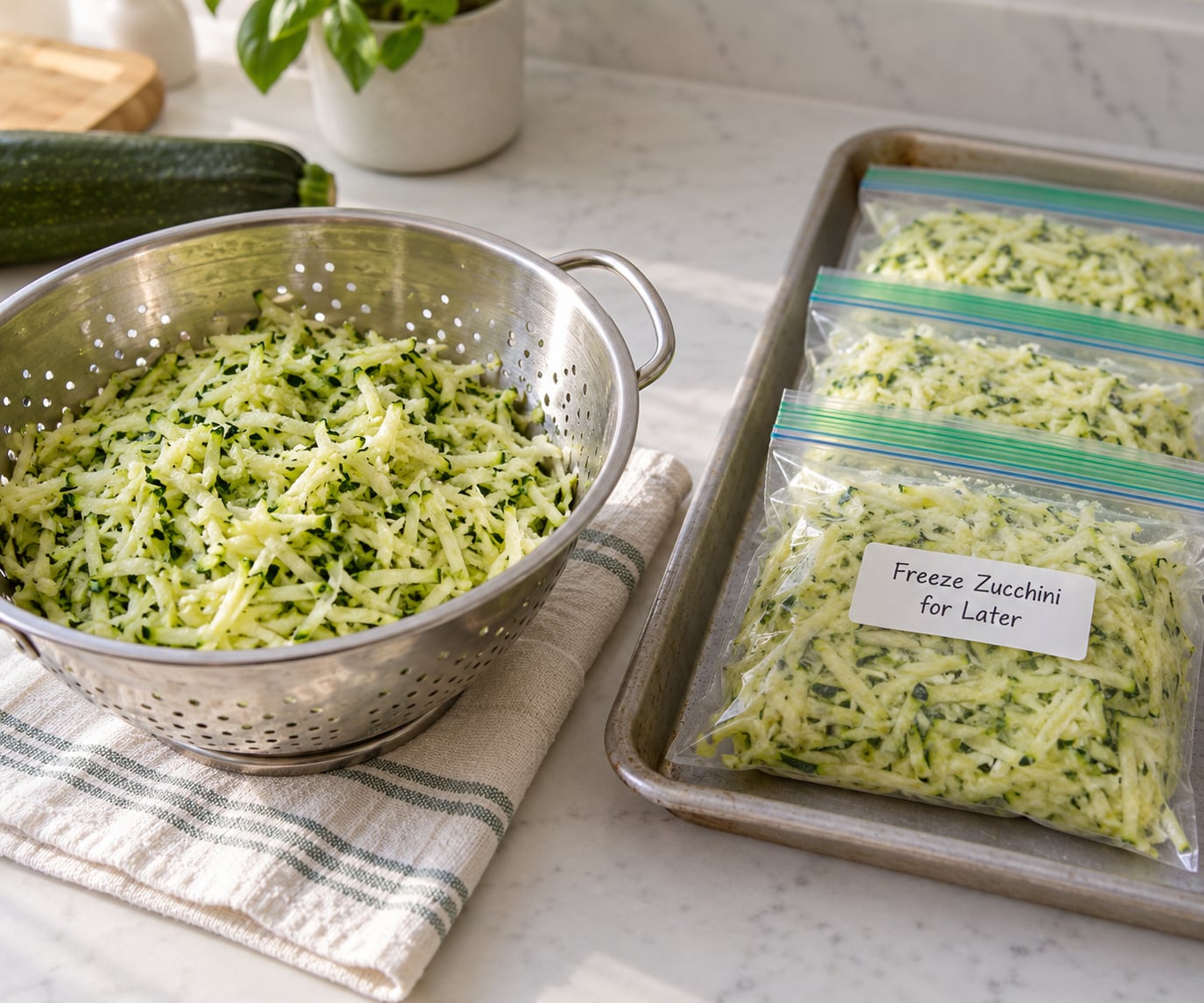
Blanched and frozen properly, zucchini keeps well for 8 to 12 months.
When the Freezer Is Already Full
Freezer space runs out before zucchini does, and that is the point where most gardeners give up. Dehydrating is the next rung: slice or spiralize thin, toss with a little oil and salt, and dry at 135 F until the pieces bend without snapping, roughly 6 to 8 hours.
Sealed airtight with a desiccant packet, dried zucchini keeps 6 to 12 months and stores on a shelf. Add seasoning after drying so the salt does not draw moisture back out in the first place.
10. Give Extra Zucchini to Neighbors or Local Pantries
Sharing solves the problem that recipes cannot, because the fruit leaves your house and lands in a kitchen where it is not the fourth zucchini meal this week. Small, undamaged fruit goes into a clean paper bag or a clean box, no plastic bags for the trip.
Local food banks and community pantries have their own rules about home-grown produce, and many only accept it during a stated harvest window or by arrangement. Call first and ask what they take, rather than arriving at the door with a crate and being turned away.
For very large or blemished fruit, your own compost pile is the right bin. Cut them open first: a zucchini that is seedy only in the center still gives up usable flesh to soup or fritters before the rest goes in the pile.
What to Do With Zucchini Plants at the End of the Season
When the vines slow down and the fruit turns rubbery, pull the plants rather than letting them go over winter, because a healthy summer squash can carry pests and diseases into the next season.
- Cut healthy vines and leaves at ground level and compost them or chop them into the fall bed as green matter.
- Bag and trash any vine that has powdery mildew, bacterial wilt, or a rotted crown instead of composting it.
- Check under the leaves for squash bug egg clusters and hand-pick or crush them before the plants come out.
- Scrub and save the largest fruits for a week or two of cooking while you still have the energy for it.
- Leave a few fruits to fully mature on the vine if you want seed for next year, and pick them when the skin turns brown and the stem dries.
Frequently Asked Questions
How long can zucchini from the garden be stored?
Whole zucchini keeps about a week in the crisper drawer, unwashed and uncut, in a breathable bag rather than sealed plastic. Washed zucchini spoils faster, so rinse only right before you cook it. Grated zucchini lasts 2 to 3 days refrigerated in an airtight container with a towel tucked under the lid, and blanched grated portions keep 8 to 12 months in the freezer.
Do I need to peel zucchini before using it?
No, and you usually should not. The skin on small and medium fruit is tender, holds moisture in baking, and adds color to soup. Peel only the oversized fruit, whose skin turns woody and fibrous, and only if the peel feels tough between your thumb and finger. Leaving it on also means you lose very little yield per fruit, which helps when you are cooking by the pound.
Why is my zucchini bread watery?
Almost always excess water from the shredded zucchini. Salt the grated fruit in a colander, let it sit about ten minutes, then squeeze it in a clean towel until it is barely damp. Second cause is underbaking, so test with a skewer in the center and add a few minutes until it comes out clean. A third cause is overmixing the batter, which is tough and gummy rather than wet.
What can I do with very large zucchini?
Split it lengthwise, scoop out the seedy core, and use the hollowed shell as a boat for a rice, vegetable, or meat filling baked until the walls give. The chopped core is still good sautéed or folded into frittatas. If the fruit is spongy all over and the skin is thick, it has run past its window, and the compost pile is the sensible place for it.
Can I freeze zucchini without blanching it first?
You can, and it is safe, but the texture suffers. Unblanched zucchini keeps thawing water inside its cells, so it goes limp and releases liquid into whatever you cook it in. Blanching in boiling water for two to three minutes stops that, and it makes the difference between frozen zucchini that goes into a loaf and frozen zucchini that goes into a soup.
How do I know if zucchini is still fresh?
Fresh garden zucchini feels heavy for its size, has skin that looks wet and glossy, and yields only slightly when you press it. Skip anything with dull, wrinkly skin, soft spots, or a smell that is not green and mild. A very large fruit can still be usable even when it feels spongy, as long as the skin is unbroken and the flesh inside is firm and pale.
Conclusion
Start by washing and trimming what you already picked, then sort it by size: small and medium fruit to the stove and the oven, oversized ones to soup or a stuffed shell, and anything past that to the compost pile. Pick the method that fits the day, not the ideal one, because the best preservation plan is the one you actually follow.
Do the small daily job first. Harvest every day, pick the blossoms if you do not want more fruit, and get the surplus into the freezer or the fridge before quality drops.