The best way to marinate tofu is to press out the water, cut the block small, and soak the cubes in a balanced sauce of salt, acid, sweetness, and aromatics for 30 minutes to 4 hours, then cook them hot enough to brown. Leave out any one of those parts and you get flat, salty, or soggy tofu, which is how most people learn to dislike it.
Here is the method I use in my own kitchen, written out so you can follow it without guessing. Most of it takes 10 minutes of active work, plus however long you marinate. If you understand why each step exists, you can swap the sauce for whatever you have in the pantry and still get a good result.
Learning how to cook tofu starts with the same two decisions: how dry you want the block, and how you plan to brown it.
Table of Contents
- What You Need
- Step-by-Step: How to Marinate Tofu So It Actually Tastes Good
- 1. Choose the Right Tofu
- 2. Cut the Tofu for Better Flavor
- 3. Build a Marinade With Balance
- 4. Marinate for Enough Time
- 5. Cook Until the Marinade Caramelizes
- Common Mistakes
- Frequently Asked Questions
- Do you need to press tofu before marinating it?
- How long is too long to marinate tofu?
- Can I reuse the leftover marinade?
- Which oils work best in a tofu marinade?
- How do I make baked tofu crisp after marinating?
- Conclusion
What You Need
The equipment list is short, and almost nothing on it is required. A plate, a kitchen towel, and a zip-top bag get you most of the way there.
- Extra-firm or super-firm tofu — one 14 to 16 ounce block feeds three or four people as a protein.
- A press, or a plate-and-weight setup — two dinner plates, a sheet of parchment, and a heavy pot or a couple of cans works.
- A zip-top bag or shallow dish with a lid — anything that seals and lets you turn the cubes over.
- Salt and umami — soy sauce, tamari, white miso, nutritional yeast, or a pinch of fine salt.
- Acid — rice vinegar, apple cider vinegar, lemon or lime juice, or ponzu.
- Fat — a teaspoon of toasted sesame oil or chili crisp, used sparingly.
- Aromatics — garlic, ginger, scallions, ramps in season, or dried garlic and onion powder.
- Optional coating — cornstarch, arrowroot powder, or potato starch for a crisp skin.
- A hot pan or sheet pan — the browning step does more for flavor than any ingredient.
Which marinade you build depends on what you are doing with it afterward. A stir-fry sauce wants salt, acid, and heat. Tofu headed into a grain bowl wants a milder, sweeter profile so it does not fight the grains. A sheet-pan bake wants less liquid in the pan, or everything steams.
Step-by-Step: How to Marinate Tofu So It Actually Tastes Good
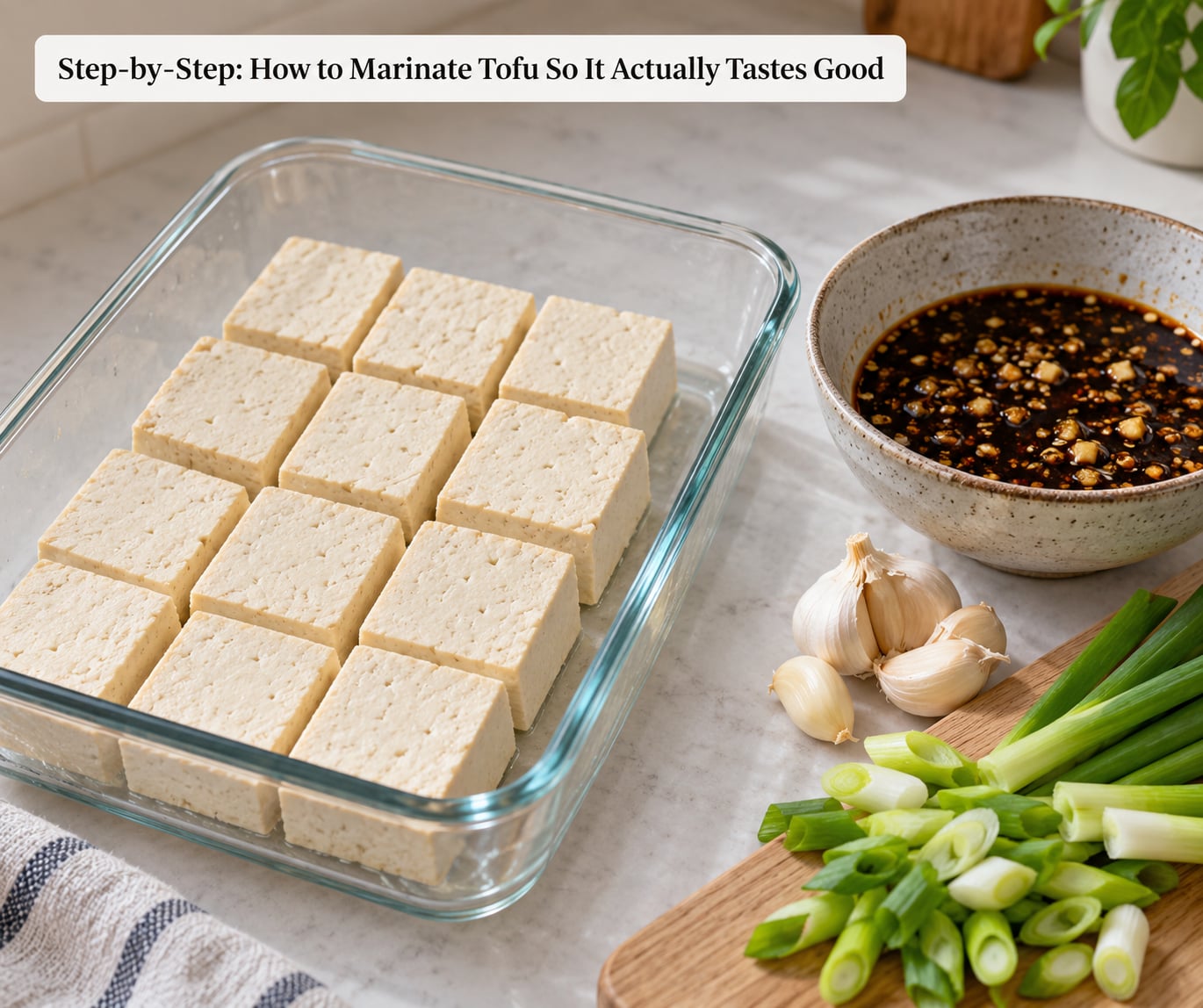
1. Choose the Right Tofu
Buy extra-firm or super-firm for marinating. Soft and medium-firm blocks hold so much water that they fall apart the moment you press or turn them, and silken tofu has no structure to squeeze at all — it is meant to blend into soups and desserts, not to hold a marinade.
Extra-firm and super-firm differ mainly in water content. Super-firm blocks have less water left in them, which makes them slightly less thirsty but also a little harder to season deeply. Extra-firm takes flavor well and is the easier place to start.
Press for 15 to 30 minutes under something heavy. You want to see a faint wet mark on the towel when you are done. If you have time, wrap the block, freeze it overnight, and thaw it in the fridge: the ice crystals leave sponge-like pores in the protein mesh, and those pores drink marinade deep into the cube. Home cooks report the texture change more than the flavor change, and it is worth the extra day.
No freezer? Simmer the pressed cubes in salted water for 4 to 6 minutes, drain, and cool. You get a firmer, chewier center that resists falling apart in a hot pan.
2. Cut the Tofu for Better Flavor
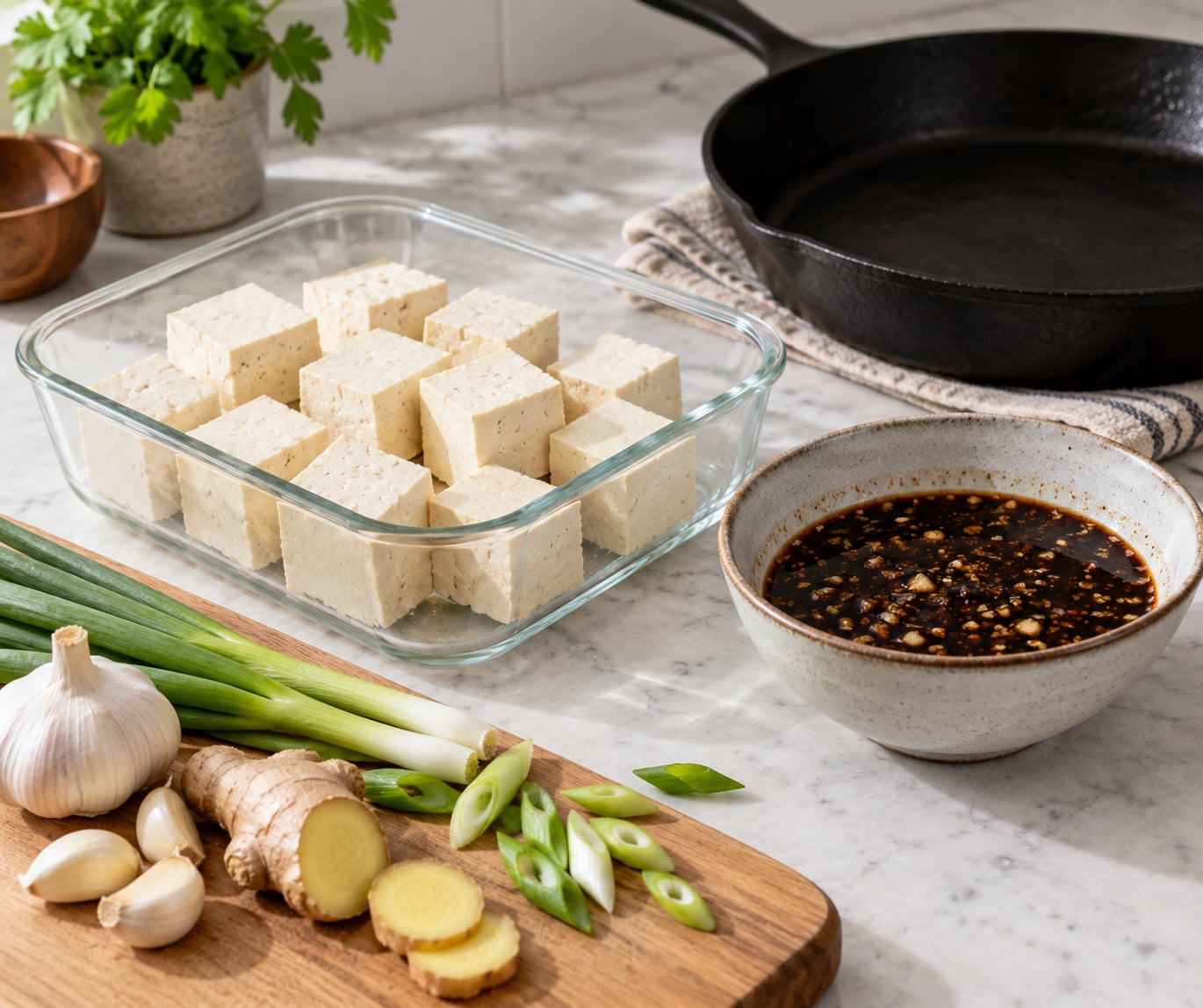
Smaller pieces soak up more sauce because they have more surface area touching the marinade. For a stir-fry or a grain bowl, cut 1 to 1.5 inch cubes; for sheet-pan baking, cut them closer to 1 inch so the middle cooks before the outside burns.
Slices about a quarter inch thick work for pan-frying and for tucking into wraps. Large slabs are the right call for grilling, where you want fewer, sturdier pieces to turn with tongs.
Pat the pieces dry with a clean towel after cutting. Surface water dilutes the sauce you just made and gives you a wet pan.
3. Build a Marinade With Balance
Start with a ratio and adjust it: two parts salty umami, one part acid, one part sweet, and a few drops of fragrant fat. That skeleton is the whole trick. Salt alone tastes flat, acid alone tastes thin, sweetness alone tastes like a dessert, and oil alone coats the tofu without getting into it.
| Flavor profile | Base | Add-ins | Best for |
|---|---|---|---|
| Savory umami | Soy sauce or tamari | Rice vinegar, garlic, ginger, white pepper, sesame oil | Stir-fries, fried rice, noodle bowls |
| Sweet and savory | Soy sauce and maple syrup | Rice vinegar, smoked paprika, black pepper | Baked tofu, sandwiches, meal prep |
| Smoky | Tamari | Smoked paprika, chipotle powder, a drop of liquid smoke | Rice and bean bowls, sheet-pan dinners |
| Spicy | Ponzu or chili crisp base | Crushed red pepper, grated fresh ginger, scallions | Lettuce cups, dipping sauce, cold noodles |
| Citrus and herb | Lemon or lime juice | Olive oil, garlic, oregano or thyme, a pinch of sugar | Salads, grilled tofu, summer plates |
For a version that suits this part of the country, swap the sugar for maple and the dried herbs for ramps in early spring, or a spoonful of hot honey and smoked paprika any time you want heat with a sweet finish.
Adjust for what you cannot eat: tamari or gluten-free soy sauce for gluten, coconut aminos plus a spoon of miso for soy-free, and arrowroot instead of cornstarch for a gluten-free coating. Keep it mild by halving the chili and letting garlic and ginger do the work.
4. Marinate for Enough Time
Put the cubes and the sauce in a zip-top bag, seal it, and massage for 20 to 30 seconds so every piece is wet. A bag coats far better than a bowl and a spoon, and you can turn the tofu without a spoon chasing it around the dish.
Thirty minutes is the floor. Four hours is the ceiling for anything more concentrated than a simple seasoned oil. Past that, salt keeps drawing water out of the tofu and pulling moisture in, so the cubes go spongy, the texture turns rubbery, and the flavor concentrates into something that reads as too salty rather than deeply seasoned.
Signs you waited too long: a puddle of cloudy liquid in the bag, cubes that squish under a finger instead of springing back, or a sauce so strong it is hard to taste the aromatics. Pull them out early and rinse if you are already there.
Cooking off some of the liquid changes things too. Once the tofu browns, spoon a little of the used marinade back over while it is still hot; heat drives flavor in that a cold soak never will.
5. Cook Until the Marinade Caramelizes
Heat the pan hot and give the tofu room. Pieces touching each other steam instead of browning, which is the single reason sheet-pan tofu comes out soft. Spread everything in one layer with space between, or cook in two batches.
- Pan-fry — medium-high heat, 3 to 4 minutes per side, until golden and firm to the touch.
- Bake — 425°F for 25 to 30 minutes, flipping at the halfway mark, until the edges are brown and the outside resists a squeeze.
- Air-fry — 400°F for 15 to 20 minutes, shaking the basket once or twice.
- Grill — medium-hot grate, 8 to 10 minutes per side, with a close eye on the sugar in the sauce so it does not scorch.
Toss the drained tofu in cornstarch, arrowroot, or potato starch just before it hits the pan for a crust that stays crisp after saucing. Cornstarch browns well but can leave a faint chalky finish; arrowroot is lighter and crisper, and potato starch sits between the two.
That browning is not decoration. It is the Maillard reaction, and it is where most of the flavor you taste actually comes from. Rest the finished tofu five minutes before serving so the crust firms up instead of going soft under the sauce.
Common Mistakes
Almost every disappointing bowl of tofu traces back to one of a handful of habits.
- Skipping the press. Pressing is not optional. Water left in the block dilutes the marinade and the pan, so the tofu steams before it browns.
- A watery sauce. If the marinade pools in the pan, drain it and use the tofu. Save the liquid for a grain bowl or reduce it on the stove until it thickens.
- Too much salt, too little balance. Soy sauce plus tamari plus a spoon of miso is three times the salt you need. Build the ratio from one salty component.
- An all-oil marinade. A heavy layer of fat coats the surface and slows absorption, so the flavor stays on the outside. Use oil as an accent, not as the base.
- An overnight soak in a strong sauce. Past about 4 hours the texture degrades. For a long soak, use a gentler marinade or a bag with the air squeezed out.
- Crowding the pan. Steam, not sear. Give the pieces space.
- Pulling it off the heat too early. Tofu that is still pale inside will taste like nothing, no matter how long it soaked.
| Problem | Why it happened | Fix |
|---|---|---|
| Soggy or watery | Unpressed tofu, or a crowded pan | Press longer, spread the pieces out, cook until the edges brown |
| Still bland | Marinade too thin, or tofu marinated only a few minutes | Double the sauce, use a bag, and give it the full 30 minutes to 4 hours |
| Too salty | Long soak in a concentrated sauce | Rinse, rinse again, and dilute with a bland oil or a little water next time |
| Rubbery or spongy | Over-marinated, or high-protein tofu soaked too long | Cap the soak at 4 hours and press extra-firm rather than super-firm |
| Falls apart | Soft tofu, or flipping before the crust sets | Use extra-firm, let it sear undisturbed, and turn with a thin spatula |
For meal prep, store the tofu and the sauce in separate containers and combine them the day you eat. Cooked tofu keeps about three days in the fridge, and the same sauce works for raw chicken, vegetables, or a second batch of tofu later in the week. Vary the finish instead of the base: same soy-marinade, then top one batch with sesame and scallions, one with chili crisp, and one with herbs and lemon.
Frequently Asked Questions
Do you need to press tofu before marinating it?
Yes, if you want the flavor to reach the middle. Tofu is mostly water, and that water dilutes whatever you soak it in and keeps the pan wet. Fifteen to 30 minutes under a weight is enough for a basic marinade. If you plan to freeze the block first, you can skip the press, since thawing does most of the same work by leaving pores in the protein.
How long is too long to marinate tofu?
About four hours for a concentrated sauce. Salt keeps pulling water in and out of the cube, so past that window the texture turns spongy and the flavor reads as salty rather than seasoned. Thirty minutes is the practical minimum for even light seasoning. If you want a deeper soak, dilute the sauce and keep it sealed, or freeze-thaw the tofu first so it can handle a longer exposure.
Can I reuse the leftover marinade?
Yes, with care. If the tofu was raw and uncooked, strain the used marinade and refrigerate it for up to a week, then bring it to a simmer before using it as a sauce, a soup base, or a marinade for a second batch. If you boiled it with the tofu, it is already cooked and you can simply reuse it straight away. Cooked or heat-treated marinades from the jar are best not reused.
Which oils work best in a tofu marinade?
Toasted sesame oil for flavor and chili crisp for heat, both used in small amounts. Neutral oils like canola, grapeseed, or avocado work for cooking the tofu but do not add much to the marinade, and a heavy pour of any oil forms a barrier that slows absorption. Olive oil is fine for the citrus and herb profile, but it solidifies in the fridge, so let the container sit on the counter before twisting the lid.
How do I make baked tofu crisp after marinating?
Drain the tofu well, toss it in cornstarch, arrowroot powder, or potato starch, then spread it on a hot sheet pan with space between the pieces and bake at 425°F for 25 to 30 minutes, flipping once. Crowding is the usual reason baked tofu goes soft: the pieces steam each other. A wire rack set over the pan keeps air moving underneath. Rest the finished tofu five minutes so the crust sets.
Conclusion
Start with the part that changes everything: press a firm block for 15 to 30 minutes, cut it small, and give it a sauce built from two parts salty umami, one part acid, one part sweet, and a little fragrant oil. Let it soak in a sealed bag for 30 minutes to 4 hours, then cook it with enough heat and enough space to brown.
That is the whole answer to how to marinate tofu so it actually tastes good, and it works with whatever is in your cupboard. A soy, miso, or citrus base is a solid first version. Once you have that down, change one thing at a time and taste as you go.