Nutritional yeast tastes nutty straight from the bag because that is what it is: a dried, deactivated yeast, not a cheese. To make it read as cheese you build the flavor around it with salt for dairy salinity, garlic and onion powder for depth, a small hit of acid for lactic tang, fat so it coats the tongue, and something fermented like white miso or mustard powder for aged funk. Toast the flakes first and you get most of the way there in about five minutes.
Here is how to make nutritional yeast taste like cheese, with the ratios, cues, and dish-by-dish method. It works on popcorn, pasta, potatoes, and tofu scrambles, and it takes less time than preheating the oven.
Table of Contents
- What You Need
- Key Flavor Enhancers
- Step-by-Step
- How to Make Nutritional Yeast Taste Like Cheese
- Toast It for a Nuttier, More Savory Flavor
- Rehydrate It for a Creamier Texture
- Balance It with Salt, Acid, Fat, and Umami
- Use the Right Technique for Your Dish
- Common Mistakes
- Frequently Asked Questions
- How much nutritional yeast should I use to get a cheese-like flavor?
- Should I toast nutritional yeast before using it in a sauce?
- Can rehydrated nutritional yeast replace melted cheese?
- Does nutritional yeast taste better toasted or un-toasted?
- How do I make nutritional yeast taste less salty?
- What is the difference between nutritional yeast and vegan Parmesan?
- Conclusion
What You Need
Nothing exotic. A dry skillet, a small bowl, a whisk, and a pinch of patience between your fingers.
- Nutritional yeast, flakes or powder, 1 to 3 tablespoons per serving depending on the dish
- A small dry skillet for toasting, plus a wooden spoon or spatula to keep it moving
- A small bowl and warm water for rehydrating
- Salt, either fine sea salt or flaky for finishing
- An acid: lemon juice, apple cider vinegar, or saurkraut brine
- A fat: olive oil, vegan butter, coconut milk, or a neutral oil
- Umami boosters: garlic powder, onion powder, white miso, mustard powder, smoked paprika, a pinch of nutritional yeast-heavy mushroom powder
- Optional texture fixers: tapioca flour or arrowroot starch for stretch, a boiled potato for gooey body, white miso for salinity
Everything else is optional. The same method works on a vegan Parmesan-style cheese topping, though those products already carry added salt and often skip the toasting step, so add boosters more gently.
Key Flavor Enhancers
- Salt is the single biggest lever, because Parmesan is genuinely salty and plain nooch is not.
- Garlic and onion powder add the savory depth that reads as cooked cheese rather than plain yeast.
- A small amount of acid — lemon juice, apple cider vinegar, or saurkraut brine — supplies the lactic tang.
- Fat such as olive oil, vegan butter, or coconut milk carries the flavor and gives it mouthfeel.
- White miso or mustard powder bring the fermented, aged note that ripened cheese has.
| Booster | Cheese quality it mimics | Amount per cup of sauce |
|---|---|---|
| Fine sea salt | Parmesan salinity | 1/2 tsp, then taste |
| Garlic powder | Cooked, savory depth | 1/2 tsp |
| Onion powder | Sweetened sharpness | 1/2 tsp |
| Lemon juice or apple cider vinegar | Lactic tang | 1 to 2 tsp |
| White miso | Aged funk and extra salt | 1 tbsp, plus less added salt |
| Mustard powder | Fermented pungency of aged cheddar | 1/2 tsp |
| Smoked paprika | Cheddar-style warmth | 1 tsp |
| Olive oil or vegan butter | Rich mouthfeel | 1 to 2 tbsp |
| Tapioca or arrowroot starch | Stretch and gloss | 1 to 2 tsp, whisked in cold |
Flakes or powder? Flakes toast beautifully, keep some texture, and work best as a dry Parmesan-style sprinkle on popcorn, roasted vegetables, and toast. Powder disperses cleanly, which matters in a smooth sauce where you do not want visible specks. As a rough conversion, one tablespoon of nooch stands in for about a quarter cup of grated Parmesan, and because Parmesan is much saltier, season to taste rather than copying a cheese recipe’s salt.
Step-by-Step
How to Make Nutritional Yeast Taste Like Cheese
The formula is short: toast, rehydrate if you need body, then season with salt, acid, fat, and a fermented note. That is the whole method, and it works whether you are making a sauce or a dry sprinkle.
The reason plain nooch reads as nutty is chemistry. It is grown on molasses and loaded with free-form glutamate, the same compound that makes aged cheese savory and meaty. Alongside that sits ribitol, a sugar alcohol that adds sweetness and part of that mushroomy-nutty note. Glutamate is your friend; ribitol is what you balance.
Try it on a baked potato. Split a potato, roll it in oil and salt, bake until the skin crackles, then scatter on toasted nooch, a spoonful of olive oil, a squeeze of lemon, and a pinch of garlic powder. Do the same over a bowl of popcorn with smoked paprika, or fold toasted nooch and miso through hot pasta with a little olive oil and lemon.
Toast It for a Nuttier, More Savory Flavor
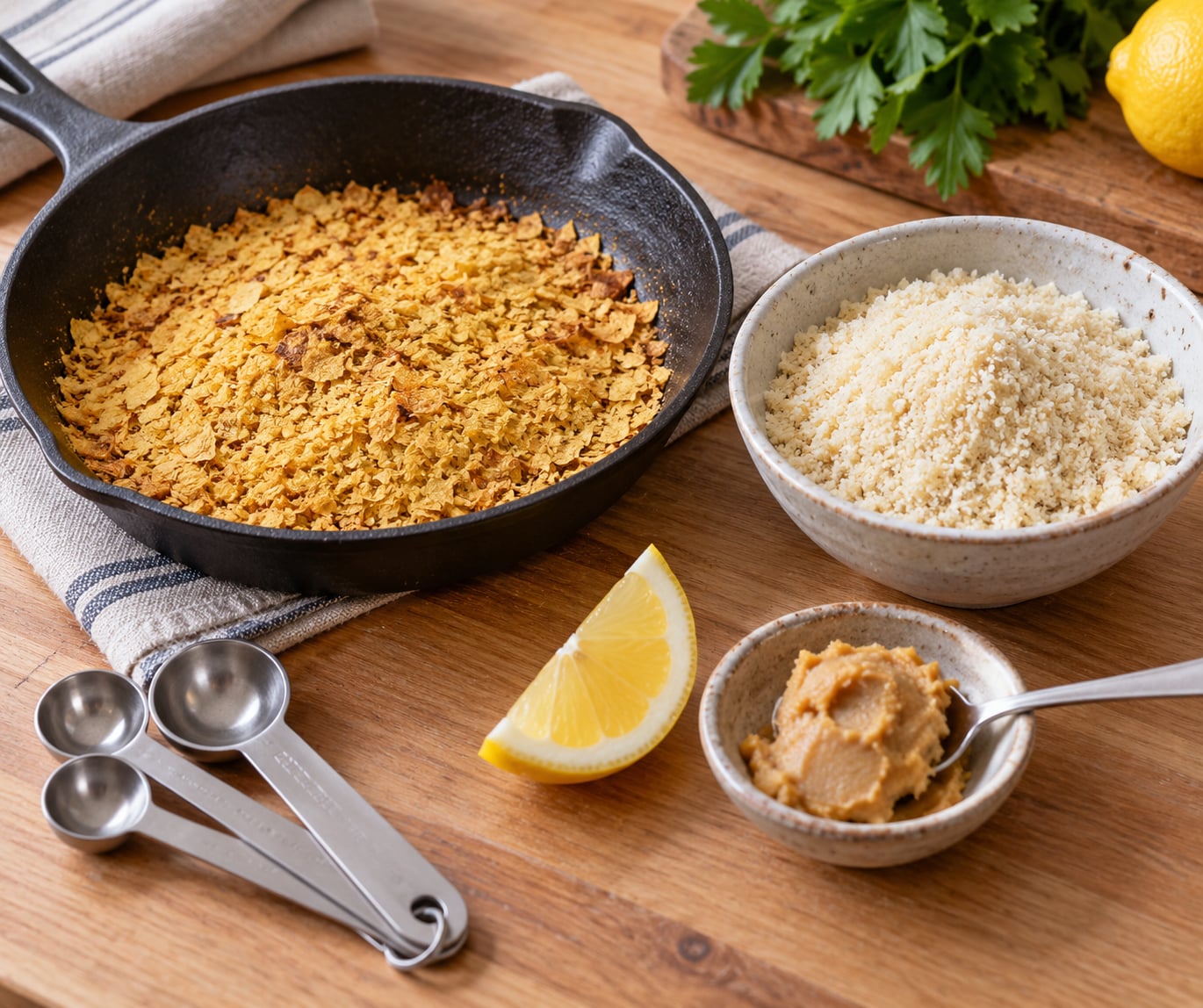
Toasting is the fastest upgrade and it costs you nothing but a couple of minutes. Put the flakes in a dry skillet over medium heat with no oil. Stir constantly for 60 to 90 seconds.
You are looking for a shift from pale yellow to a deeper golden, an aroma that moves from dusty to bread-like, and a texture that stays light and crumbly. The moment it smells like toast rather than yeast, pull it off the heat. Burnt nooch turns acrid and no later seasoning will rescue it, and the skillet stays hot after the burner is off, so err early.
Toasting works for dry toppings and for anything that gets a final sprinkle. In a wet sauce, toasting is optional because the liquid does most of that work.
Rehydrate It for a Creamier Texture
Rehydration is what separates a smooth sauce from a grainy one. Mix roughly 1 tablespoon of nutritional yeast with 2 tablespoons of warm water and let it sit 5 to 10 minutes until it swells into a loose paste. Stir that paste into your sauce base and it disperses without lumps.
Rehydration earns its keep in creamy pasta dishes, casseroles, gratins, soups, and scrambled tofu, where you want the yeast to vanish into the dish. Skip it for the shredded dry form, which is the whole point of a Parmesan substitute on top of broccoli or toast.
Balance It with Salt, Acid, Fat, and Umami
Salt first, always. Start with 1/2 teaspoon per cup of sauce, then taste. Parmesan is saltier than nooch, so this is where most people under-season and end up with something flat that reads as healthy rather than cheesy.
Acid is the second lever, and it is the one most guides leave out. Add 1 to 2 teaspoons of lemon juice or apple cider vinegar, or a tablespoon of saurkraut brine if you want a fuller fermented tang. The tang is what stops the dish tasting like a cheese-flavored oil rather than cheese.
Fat is the third. Olive oil, vegan butter, or coconut milk gives the sauce the gloss and weight that makes people think cheese. Add it after the acid, off the heat, so the flavor has something to sit in.
Umami and fermented notes come last. Garlic powder, onion powder, white miso, and mustard powder push a cheddar or parmesan character rather than a generic one. Taste after every addition. You are looking for savory depth with a slight edge, never saltiness.
Use the Right Technique for Your Dish
Dry sprinkle for popcorn, roasted vegetables, toast, and grain bowls. Toast the flakes, then season with salt, garlic powder, and paprika while they are still warm.
Rehydrated paste for creamy pasta, mac and cheese, tofu scramble, and soups. Rehydrate, season, and fold it in off the heat so nothing cooks onto the bottom of the pan.
Cooked into a wet sauce for nachos, quesadillas, gratins, and casseroles. Toast the yeast, whisk it into warm liquid, and add salt, acid, and fat before the starch thickener goes in.
Baked finish for a breaded or gratin dish. Mix the dry seasoned yeast with a little oil, scatter it on top, and let the oven do the rest. The top browns and dries into something very close to a baked cheese crust.
Common Mistakes
Most disappointing nooch comes down to one of five things, and each has a straight fix.
| Problem | Cause | Fix |
|---|---|---|
| Bitter, acrid flavor | Yeast burned in the skillet | Lower the heat, stir constantly, pull it early |
| Sauce tastes flat | Not enough salt or acid | Add salt in 1/4 tsp steps, then 1 tsp acid |
| Grainy, lumpy sauce | Yeast added to a hot pan or cold liquid poured in too fast | Rehydrate first, keep the pan low, add liquid gradually |
| Thin, watery sauce | No thickener | Whisk in 1 to 2 tsp tapioca or arrowroot starch |
| Too nutty | Ribitol left unbalanced | More salt, more acid, and a fermented booster like miso |
| Odd green-gray color | Sauce overheated or sat too long | Keep the heat low and stir often |
Beyond the pan, a few habits cost people the flavor. Adding the yeast to a screaming-hot skillet burns it in seconds, so medium-low heat is the safe zone. Stirring in a huge spoonful at once is how sauces end up grainy. And expecting it to behave like a block of cheese is the fastest way to be disappointed: it is a seasoning, so it needs fat, salt, and acid around it to read as one.
Store the jar airtight in a cool, dark cupboard and keep it dry, and it will keep a long while. If it smells strongly of alcohol, has gone clumped with moisture, or the color has faded to gray-brown, toss it. Soups thicken with a spoonful, and leftovers of a finished sauce keep about three to four days refrigerated; reheat gently with a splash of water or milk, never hard, or it will split.
Two more practical notes. Brewer’s yeast is not nutritional yeast and will taste bitter and unpleasant in the same recipe, so check the label. And expect a yellow stain: it is famously hard on teeth, tongues, and dark shirts, which is the honest drawback people rarely mention.
Frequently Asked Questions
How much nutritional yeast should I use to get a cheese-like flavor?
Start with 1 tablespoon per serving as a Parmesan substitute, and 2 to 3 tablespoons per cup of sauce. Because plain nooch is milder and less salty than grated Parmesan, treat that as a floor and season with salt after tasting. Toasting the flakes first makes each tablespoon taste noticeably stronger, so you can often use less.
Should I toast nutritional yeast before using it in a sauce?
It helps but it is not required. Toasting for 60 to 90 seconds in a dry skillet over medium heat deepens the savory flavor, which matters most in dry applications like popcorn and crusts. In a wet sauce the liquid does most of the work, so rehydrating and seasoning matter more. If you have thirty seconds, toast it anyway.
Can rehydrated nutritional yeast replace melted cheese?
Not on its own. Rehydrating 1 tablespoon of nooch with 2 tablespoons of warm water gives a smoother, creamier body, but real melted cheese also has fat and stretch that nooch lacks. For a convincing sauce, add fat such as olive oil or coconut milk and a thickener such as tapioca or arrowroot starch. A blended boiled potato is the classic old-fashioned substitute for gooey body.
Does nutritional yeast taste better toasted or un-toasted?
Toasted, for most dishes. Toasting converts the pale, dusty flavor into a deeper golden, bread-like note that sits closer to cooked cheese, and it also makes the flakes crunchier as a topping. The exception is a smooth sauce where the yeast disappears into liquid anyway, and where adding it raw costs you nothing and saves a pan to wash.
How do I make nutritional yeast taste less salty?
Use less of it rather than adding anything to dilute the dish. A tablespoon instead of two, plus a tablespoon of white miso, gives you fermented depth and umami without the salt load. Toasting does not reduce sodium, so it will not help here, and skipping the added salt while seasoning to taste is usually the whole fix.
What is the difference between nutritional yeast and vegan Parmesan?
Nutritional yeast is a single ingredient: dried, deactivated yeast. Vegan Parmesan is a product built from nooch plus added salt, garlic, and often cashews or breadcrumbs, so it is ready to sprinkle and far saltier. Nooch gives you more control once you season it yourself, and it works in hot sauces where a dry Parmesan-style topping mostly sits on top.
Conclusion
Start with the smallest possible test: a teaspoon of nooch in a dry skillet for a minute, then taste it with a pinch of salt and a drop of lemon. That single comparison tells you more than any recipe, because it isolates what toasting does and shows you exactly how much salt and acid the yeast is asking for. Once you have that, the rest is just where you put it: popcorn, pasta, potatoes, or a sauce for nachos. Adjust the acid and salt in small steps, keep the heat low, and let the fat do the rest.