Learning how to cook okra without slime comes down to three levers: dry pods, hot pan, small batches. Okra’s stickiness is mucilage, a water-soluble polysaccharide the plant makes inside the pod, and it spreads fastest when the pods are wet, the heat is low, or the pan is crowded. Twenty minutes of prep and a hot cast-iron skillet is the whole method, and it is honestly easier than most green vegetables.
The flavor of okra is mild and grassy, almost sweet once it browns. Texture is the only real barrier, which is why a dry, well-seared pod converts people who have spent years pushing it around the plate.
Table of Contents
- What You Need
- Step-by-Step: How to Cook Okra Without the Slime
- 1. Choose and trim the okra
- 2. Dry the pods thoroughly
- 3. Cut into even pieces
- 4. Use a hot pan and enough fat
- 5. How to cook okra without slime: timing, doneness, and draining
- Common Mistakes
- How to Adapt the Method for Other Cooking Methods
- What to Serve With Crispy Okra
- Frequently Asked Questions
- How do you stop okra from getting slimy before cooking?
- Can you soak okra to remove the slime?
- What is the best way to cut okra to reduce slime?
- Why does my fried okra turn soggy?
- Does air-fried okra get less slimy than pan-fried okra?
- Is simmered okra supposed to be slimy?
What You Need
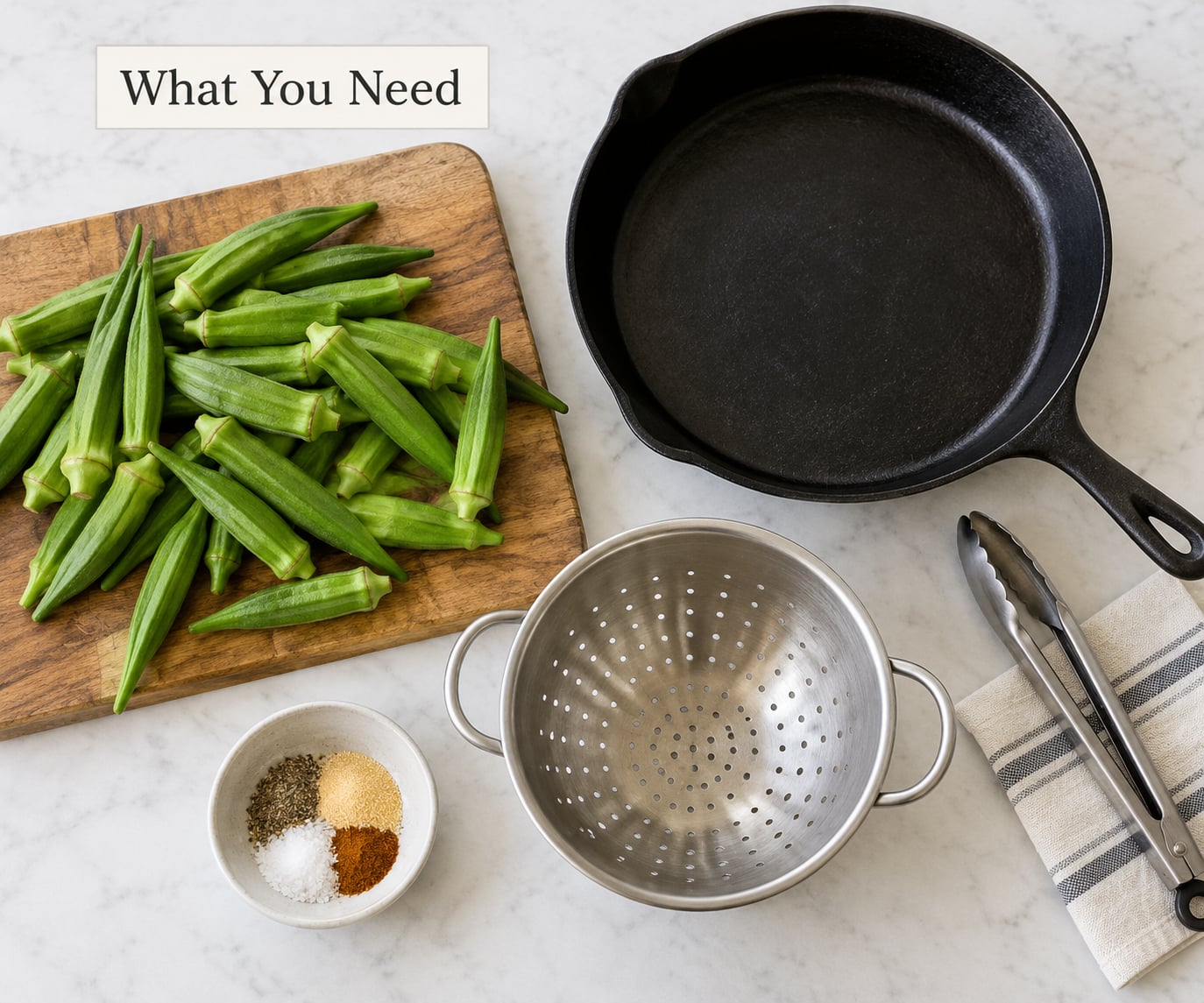
Nothing here is specialized. You need a heavy skillet that holds heat, a little cooking fat, and something to dry the pods with.
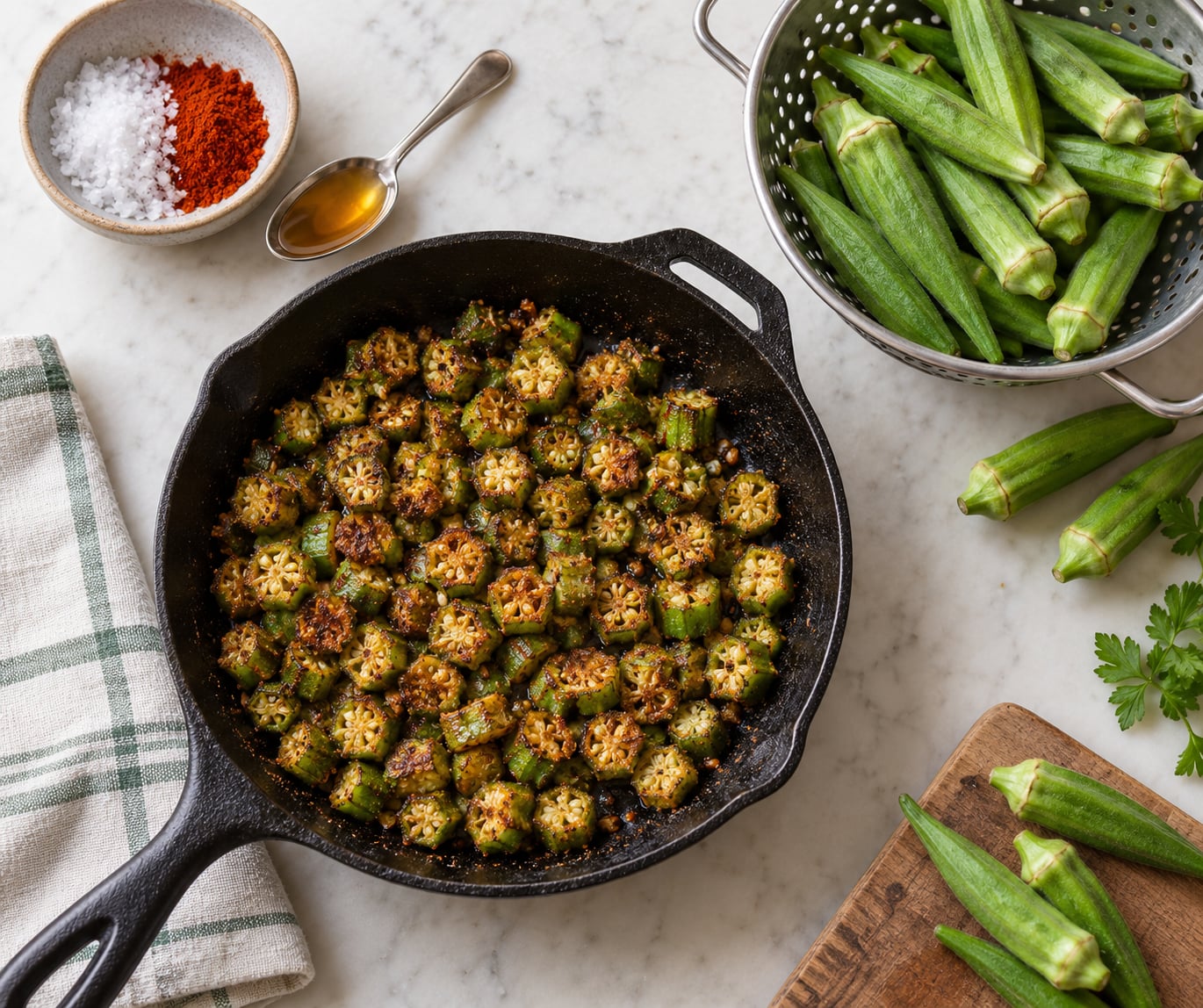
- Fresh okra. Small to medium pods, 3 to 5 inches long. Younger pods have less mucilage and more tender skin.
- A cast-iron skillet or a heavy stainless pan. Thin nonstick pans do not get hot enough for a real sear.
- Cooking fat. Bacon drippings, lard, or a neutral oil. Lard gives the best flavor for Southern-style fried okra.
- Paper towels or a clean kitchen towel. This is the tool that does the actual work.
- An acid. Apple cider vinegar, lemon juice, sherry vinegar, or a spoon of tomato.
- Seasonings. Creole seasoning, smoked paprika, garlic powder, salt, and black pepper. Cornmeal for dredging if you are going the fried route.
- Colander and tongs. Tongs keep you from touching the mucilage, which is the part that gets on your hands and then onto the cabinet pulls.
Okra also goes by bhindi, lady’s finger, and Abelmoschus esculentus. It sits in the mallow family, Malvaceae, alongside hibiscus and marshmallow, which explains a lot about its behavior in a pot.
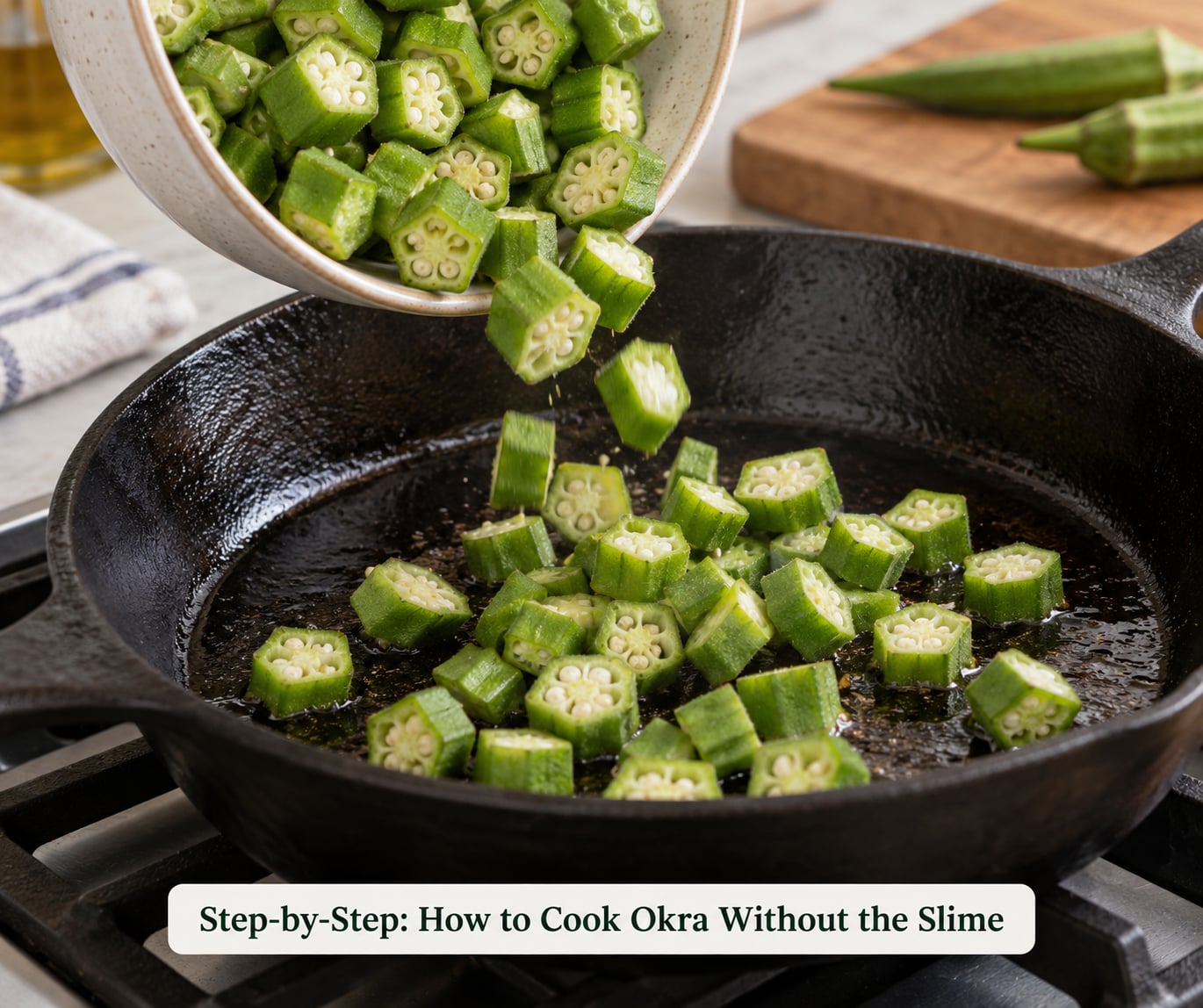
Step-by-Step: How to Cook Okra Without the Slime
1. Choose and trim the okra
Pick pods that are firm, bright green, and small enough to fit in your palm without bending. Older pods are tough and fibrous, and they carry more mucilage, so skipping them removes half the problem before you start.
Wash the pods under cool running water, then trim the stem end and the cap where the blossom was. Cut about an inch off each end and nothing more. You are removing the tough bits, not trying to make the pod small.
2. Dry the pods thoroughly
This is the step people skip, and it is the one that matters most. Water is what pulls mucilage out of a cut pod, so every drop you leave on the surface is slime you invited into the pan.
Lay the trimmed pods on a towel and blot until the skin feels dry and slightly tacky to the touch, not damp. For a big batch, spread them on a towel rack or a sheet pan in the fridge for an hour or so. If you can see a wet highlight on a pod, it is not ready.
3. Cut into even pieces
Slice the dried pods into rounds about half an inch thick, or cut them lengthwise into two or three long pieces. Even thickness is what you are after, because thin tails cook before the middle and go soft.
You will hear the old advice to leave pods whole to avoid slime. It is incomplete. The mucilage sits in cells inside the pod, not on the skin, so whole pods still get slimy the moment a fork or knife goes through them. Cutting evenly does something different and more useful: it lets the outside brown and firm before the inside releases its moisture.
Work on a glass or plastic cutting board if you have one. The slime will coat a wooden board and your knife, and that sticky film is a real chore to clean off.
4. Use a hot pan and enough fat
Put the skillet on the burner and let it get hot before the oil goes in. When a drop of fat sizzles and spreads immediately, add enough fat to lay a thin, even film across the surface of the pan.
Do not crowd it. A single layer of okra in a 12-inch skillet is about a pound; a 10-inch skillet holds noticeably less. Crowding drops the pan temperature, the okra sits in its own liquid, and you get steaming instead of searing. Cook in batches if you have more than the pan will hold in one layer.
Never add water, and never cover the pan. Both create steam, and steam is the enemy of the crust you are trying to build.
5. How to cook okra without slime: timing, doneness, and draining
Leave the okra alone for the first 2 to 3 minutes. That is the sear window, and moving it around is the most common way people sabotage themselves. You want the cut faces to sit still until they go golden brown and release from the pan on their own.
Then toss and continue cooking for another 3 to 5 minutes in total, until the pieces are browned, firm, and a little shrunken. At this point the okra is done. Push it to a warm platter or a colander set over a bowl for a minute or two to let any surface moisture drain off.
Finish with a splash of acid right at the end. A tablespoon of sherry vinegar or cider vinegar over the hot okra cuts the perceived stickiness and wakes up the green flavor. Salt, pepper, and a pinch of smoked paprika go on now.
The total cook time for skillet-fried okra is 5 to 8 minutes. Any longer and you have crossed from crisp-tender into soft, which is where the stringiness lives.
Common Mistakes
Most disappointing okra is not bad technique, it is one specific thing going wrong. Here are the ones I see again and again.
Cooking wet okra. You rinsed and then tossed straight into the pan. Pat every pod dry first, and dry your hands and tongs too. Mucilage transfers on contact.
Crowding the skillet. Too much okra drops the temperature and traps moisture. Cook in single-layer batches instead of doubling up.
Medium or low heat. A slow cook lets the mucilage swell and ooze slowly. Give it the hottest part of your range and finish fast.
Stirring too early. Constant movement stops the sear and re-wets the browning surfaces. Give each side time to set.
Adding water or a lid. Both turn frying into steaming. If the pan looks dry, add a teaspoon of fat rather than liquid.
Overcooking. Okra goes from crisp to limp in about a minute past done. Pull it while it still has some bite.
Covering it in sauce. A tomato or vinegar sauce is fine as a finishing touch, but a long braze turns crisp okra back into stringy okra.
Leaving it to sit in a pile. A heaped platter steams itself and softens the bottom layer. Spread it out on the platter instead.
One more worth naming: cutting the okra long before you cook it. Trimmed okra starts discoloring and weeping within a few hours, so trim close to cooking time and keep the cut pods dry in between.
How to Adapt the Method for Other Cooking Methods
Once you have the drying and heat discipline, every other method is a variation. Here is where each one lands on the slime scale.
| Method | Heat | Cook time | Slime level | Best for |
|---|---|---|---|---|
| Pan-fried | Very high | 5 to 8 minutes | Lowest | Okra-haters, weeknight sides |
| Deep-fried | Medium-high, 350 to 365F | 3 to 5 minutes | Very low | Cornmeal-dredged Southern fried okra |
| Roasted | High, 425F | 20 to 25 minutes | Low | Crisp edges with minimal oil |
| Air-fried | 400F | 12 to 15 minutes | Low | Crisp okra with a fraction of the oil |
| Grilled | High, direct heat | 8 to 12 minutes | Low to moderate | Smoky, charred pods |
| Simmered in tomato | Low | 25 to 40 minutes | High, intentional | Gumbo, stews, pickles |
Deep-frying. Dredge dry rounds in seasoned cornmeal or a mix of cornmeal and cornstarch. Fry at 350 to 365F for 3 to 5 minutes until golden. The hot oil and the coating seal the cut faces, and this is the least slimy method there is. Drain on a rack rather than paper towels so the underside stays crisp.
Roasting. Toss dry pods or halves with a little oil and salt and roast at 425F on a single layer until the edges brown, 20 to 25 minutes. Do not add water and do not cover the tray. If a batch comes out soft, spacing is usually the reason: crowded trays steam each other even at 425F, while a single layer keeps the moisture escaping as steam.
Air-frying. Use dry pods, a light spray of oil, 400F for 12 to 15 minutes, shaking the basket twice. Air frying is a dry method, so it stays well on the crisp side.
Grilling. Toss whole pods or lengthwise halves in oil and salt and put them over direct heat for 8 to 12 minutes, turning only a couple of times. Keep them spaced out. Whole pods on a grill roll and brown unevenly, so scoring the underside or cutting them in half solves it.
Simmering, gumbo, and pickles. Here the slime is the point. Okra is a traditional thickener in gumbo and in okra and tomatoes because mucilage gelatinizes as it cooks and gives the pot body without flour. Add okra in the last 20 to 30 minutes of a stew, add it after the broth is boiling so it does not overcook, and remember that alkaline additions such as baking soda thicken further while acid such as vinegar or tomato thins it.
Vinegar soak. One technique worth trying if you are still on the fence. Trim the pods, soak them in red or white vinegar for about 30 minutes, rinse, and pat dry. The acid is what does the work here, breaking down the mucilage before heat ever reaches the pod.
What to Serve With Crispy Okra
Crispy pan-fried okra is a good side and an easy lunch. Cornbread is the obvious partner, especially a slightly sweet skillet cornbread that soaks up the fat. White rice or brown rice gives you something to fork into between bites, and a bowl of black-eyed peas or pinto beans turns it into a full plate.
For something cooler, a tomato and onion salad with vinegar, or cucumber and dill, cuts the richness of the pan. Dips work well too: ranch, remoulade, or a quick whisk of yogurt, lemon juice, and a little garlic.
Seasoning-wise, okra takes a lot of heat without complaint. Creole seasoning, chili flakes, smoked paprika, curry powder, or a spoonful of Dijon all work. A squeeze of lemon at the very end is the move that makes the whole thing taste brighter than it has any right to.
Add okra to the plate right before you eat it. It does not hold its crust well in a covered dish, and it does not reheat into anything better than it was in the skillet.
Frequently Asked Questions
How do you stop okra from getting slimy before cooking?
Dry it. Wash the pods, trim the ends, then blot every pod until the skin feels dry rather than damp and let them sit on a towel for an hour if you have time. Water on the surface is what pulls mucilage out of the pod, and wet hands and wet tongs transfer it too. A 30-minute vinegar soak before rinsing and drying also works if you are worried.
Can you soak okra to remove the slime?
Yes. Soak trimmed okra in vinegar for about 30 minutes, then rinse and pat it completely dry before cooking. The acid breaks down mucilage, which is why this method works. Do not skip the drying step afterward, because the rinse water and the soak liquid both bring moisture back to the surface.
What is the best way to cut okra to reduce slime?
Slice dried pods into even rounds about half an inch thick, or cut them lengthwise into two or three pieces. Even thickness matters more than the shape, because it lets the outside brown before the inside releases moisture. Leaving pods whole does not prevent slime, since the mucilage sits inside the pod rather than on the skin.
Why does my fried okra turn soggy?
Four causes cover nearly every soggy batch: the pan was overcrowded, the heat was too low, you covered the pan or added water, or you left the cooked okra piled on a warm platter where it steamed itself. Fry in single-layer batches, keep the heat high, add fat rather than liquid, and spread the finished okra out on the platter.
Does air-fried okra get less slimy than pan-fried okra?
Usually about the same, and sometimes less, because air frying is a dry method with moving hot air and no pan moisture underneath. Use dry pods, a light spray of oil, 400F for 12 to 15 minutes, and shake the basket twice. The drying step still matters more than the appliance you choose.
Is simmered okra supposed to be slimy?
Yes. In gumbo, okra and tomatoes, and pickles, mucilage thickens the liquid as it cooks and that viscosity is the whole reason okra is in those dishes. Acid such as vinegar or tomato thins it, while a little baking soda makes it thicker. Simmered okra is a different goal from crisp okra, and it is worth cooking both ways.
Start with the drying and the heat. If you do nothing else, pat the pods completely dry, give the skillet enough fat and enough heat, cook one uncrowded layer for 5 to 8 minutes without touching it, then finish with a splash of vinegar.