Boil two potatoes until a fork goes through with no resistance, then blend them warm with plant milk, nutritional yeast, and salt. That is the whole trick: cooked potato starch thickens the sauce on its own, so you get a smooth, pourable vegan cheese sauce in about 25 minutes with no roux and no processed cheese.
It is a weeknight-friendly recipe, and once you know what to look for in the texture, you can pour it over pasta, roasted vegetables, or breakfast potatoes, or thin it into a dip.
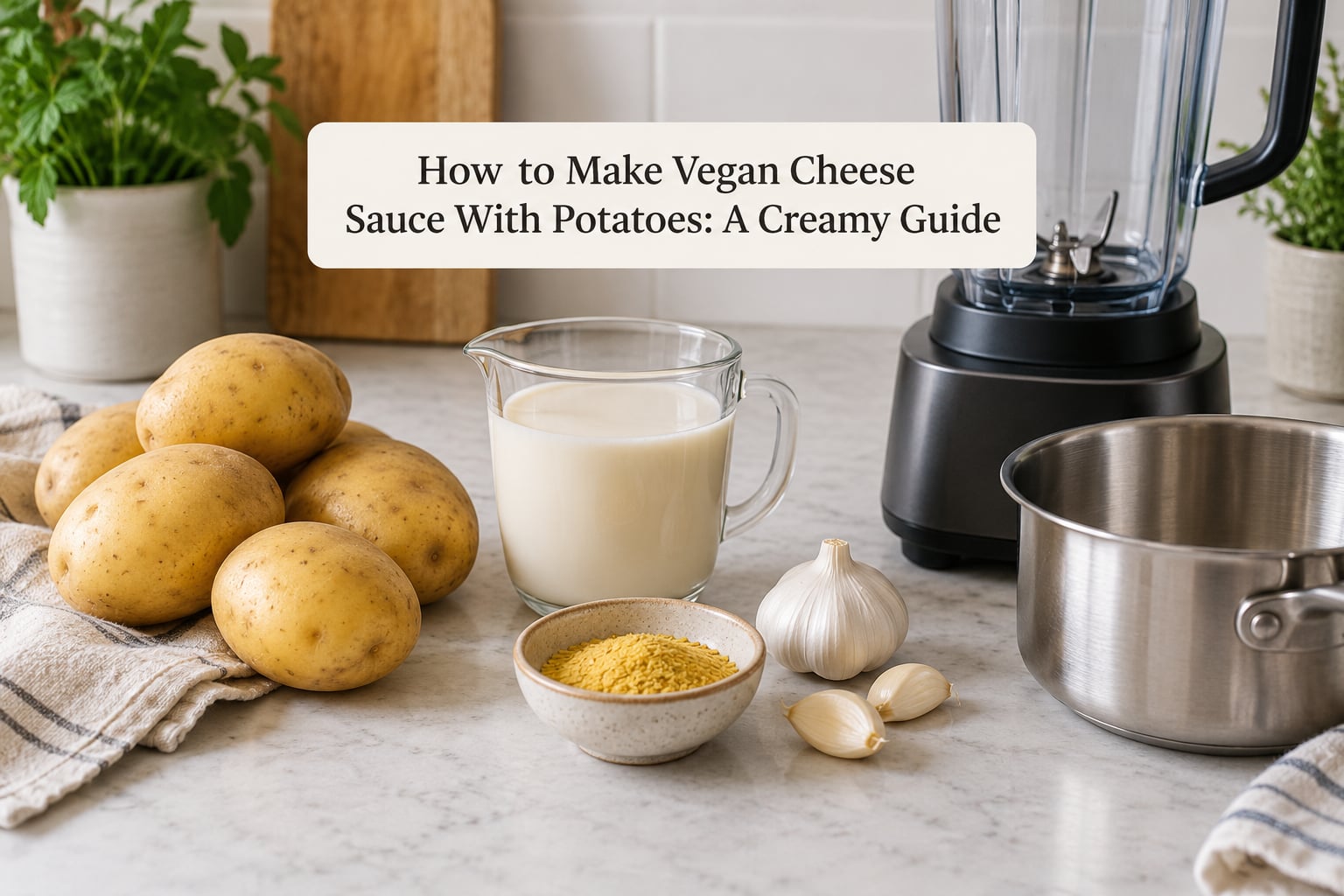
Table of Contents
- What You Need
- Step-by-Step
- Step 1: Choose and Prepare the Potatoes
- Step 2: Boil the Potatoes Until Tender
- Step 3: Blend the Potato Cheese Sauce
- How to Make Vegan Cheese Sauce With Potatoes Silky and Thick
- Step 4: Season and Serve
- Common Mistakes
- Lumpy or grainy sauce
- Watery sauce
- Sauce too thick and pasty
- Bland flavor
- Sauce separates when reheating
- Undercooked potato bits
- Frequently Asked Questions
- Can I make vegan cheese sauce with potatoes without a blender?
- What is the best potato for creamy vegan cheese sauce?
- How do I make the sauce thicker or thinner?
- Can I use dairy-free cheese instead of nutritional yeast?
- How long does potato vegan cheese sauce keep in the refrigerator?
- Conclusion
What You Need
This recipe makes roughly 3 cups of sauce. Nothing in it is hard to find, and every item has a simple swap.
- 2 medium potatoes, about 300 g total. Yukon Gold for creaminess, russet for a neutral flavor.
- 1 medium carrot, peeled and roughly chopped. Optional, but it rounds out the sweetness and takes the raw potato edge off.
- 120 ml unsweetened plant milk, plus extra for thinning. Oat and cashew milk are the creamiest; almond and coconut work fine; soy milk is the strongest cheese-flavor carrier.
- 80 g nutritional yeast, about half a cup. This is what supplies the savory, nutty cheese flavor, not the color.
- 1 tsp fine sea salt, plus more to taste.
- Seasonings: 1 tsp garlic powder, 1 tsp onion powder, 1 tsp smoked paprika, a pinch of white pepper, and a small pinch of turmeric for color.
- Acid: 1 tbsp lemon juice, 1 tsp cider vinegar, or 1/4 tsp citric acid. Skip it and the sauce tastes flat no matter how much yeast you add.
- Optional thickener: 1 tbsp tapioca starch, mixed with 2 tbsp cold water into a slurry.
- Optional richness: 1 tbsp neutral oil, which rounds the mouthfeel without making the sauce heavy.
For equipment you need a medium pot, a colander, and a blender. An immersion blender in a deep pot works too, though you need the potatoes very soft. A food processor is better than nothing, and it will leave you with a slightly grainy sauce.
Step-by-Step
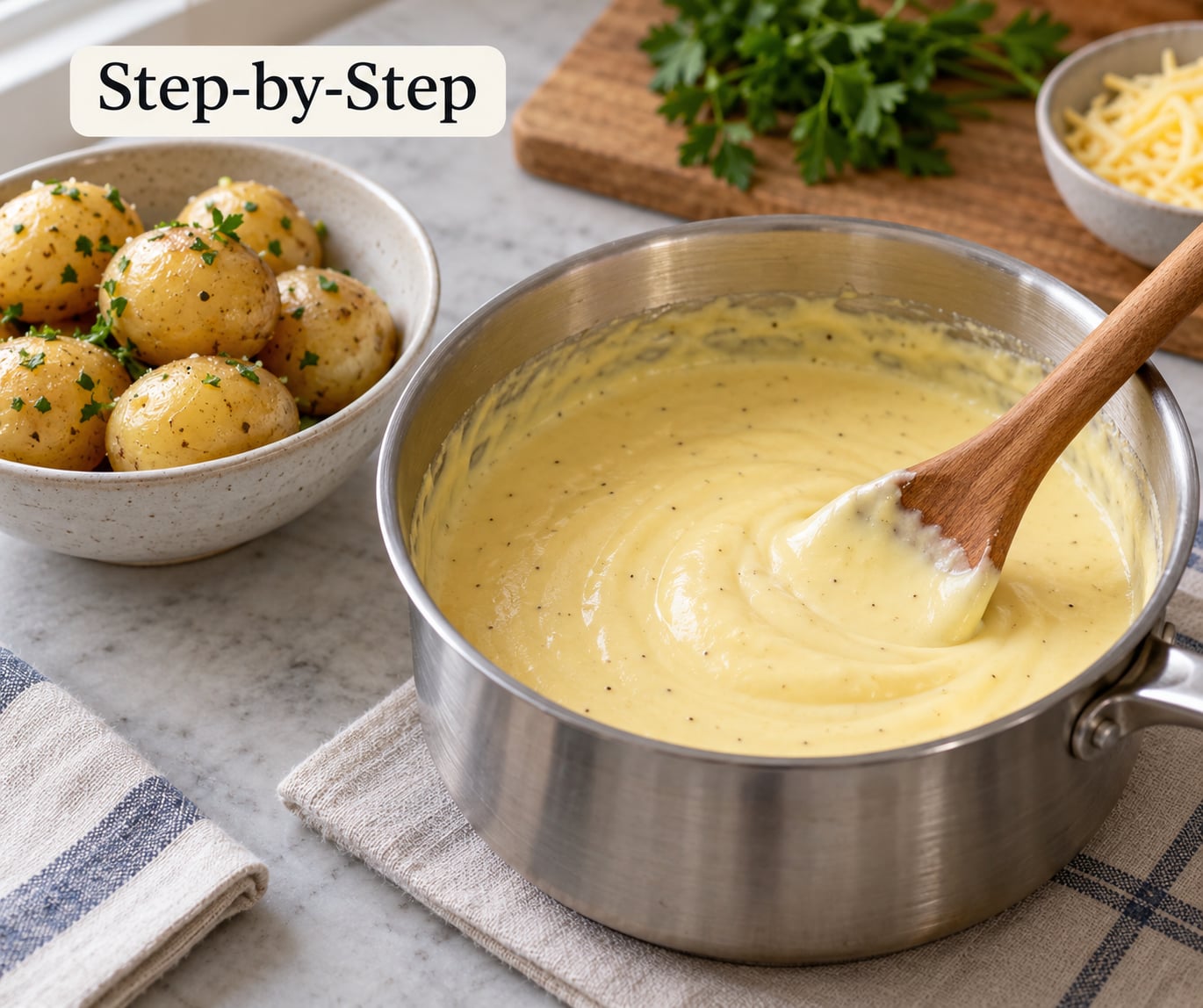
Step 1: Choose and Prepare the Potatoes
Yukon Gold gives the smoothest result because it has more moisture and less waxiness than russet. Russet works well and is easier to find; just expect a slightly floury body. Red potatoes give a faint pink tint, which you can hide with a little more turmeric.
Scrub the potatoes well and peel them if you want the smoothest possible sauce, since skins blend into visible flecks. Cut everything into 2 cm pieces so it cooks evenly, and toss the carrot in with it.
Step 2: Boil the Potatoes Until Tender
Cover the potatoes and carrot with cold water by about 2 cm, add a pinch of salt, and bring to a boil. Drop to a simmer and cook for 12 to 18 minutes, until a fork slides in with no resistance at all.
Before you drain, scoop out a cup of the cooking water. That starchy water is your main lever for thinning the sauce without dulling its flavor.
Step 3: Blend the Potato Cheese Sauce
Put the drained potatoes and carrot in the blender with 120 ml plant milk, 80 g nutritional yeast, the salt, the garlic powder, onion powder, smoked paprika, white pepper, turmeric, and 60 ml of the reserved potato water.
Start on low speed, then take it up to high and blend for 45 to 60 seconds. Blend while the potatoes are still warm; cold potatoes give you a thinner, more watery sauce that takes longer to thicken.
How to Make Vegan Cheese Sauce With Potatoes Silky and Thick
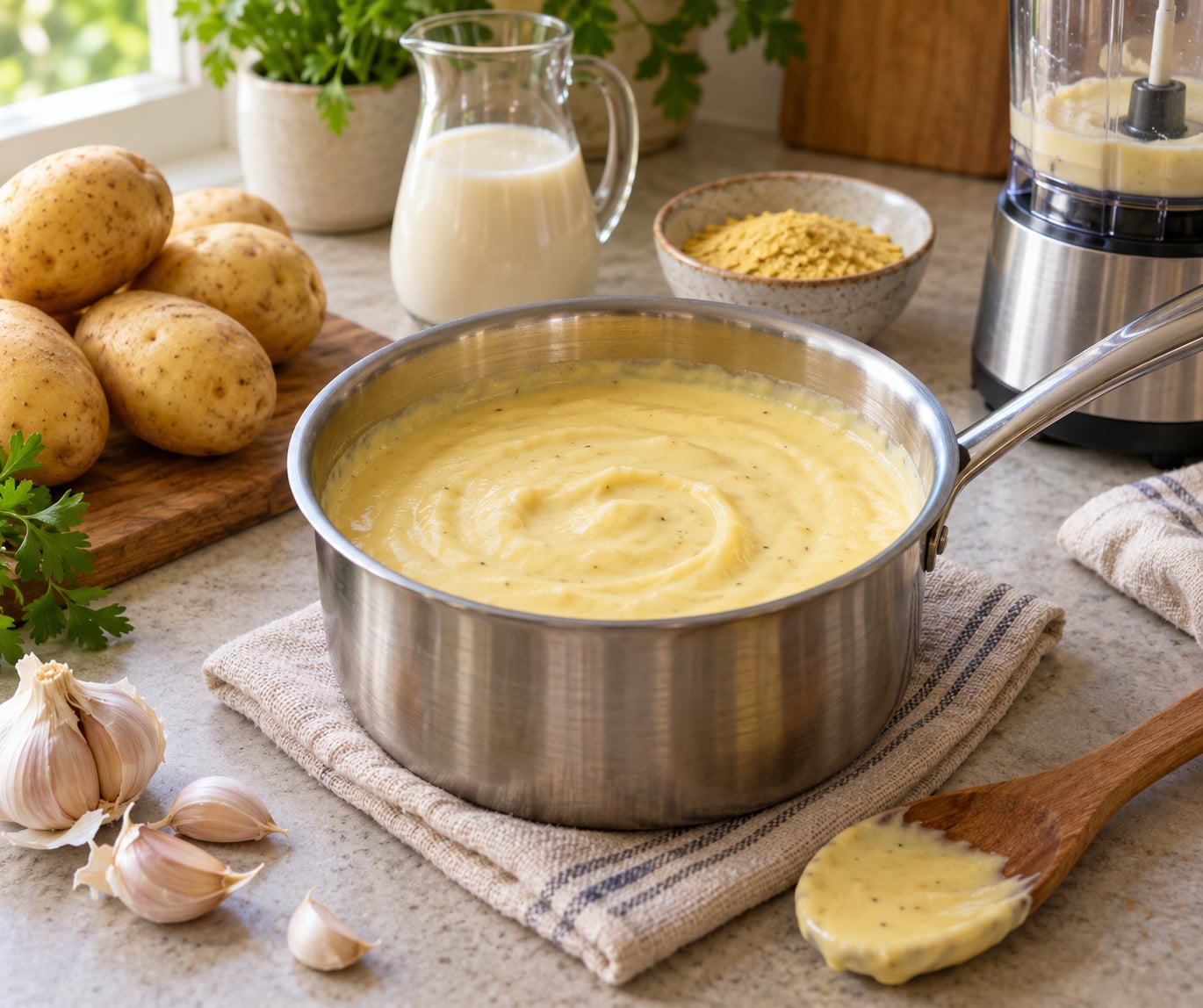
You know it is ready when there are no visible flecks, the color is an even pale yellow, and the sauce falls off a spoon in a slow, steady ribbon rather than a thin stream.
Too thin? Simmer it in a saucepan for 3 to 5 minutes and stir often, or whisk 1 tbsp tapioca starch with 2 tbsp cold water, pour it in, and simmer 2 minutes until it turns glossy. Too thick? Add plant milk a tablespoon at a time and blend again, tasting as you go.
Lumps usually mean the blender did not get long enough or the liquid went in too fast. Stop, scrape down the sides, and give it another 30 seconds with the lid on and a dish towel over the top.
Step 4: Season and Serve
Taste it before serving and fix it. More salt if it tastes flat, a squeeze of lemon if it tastes heavy, another pinch of nutritional yeast if the potato flavor is showing through too much.
Serve it warm over cooked pasta, roasted broccoli, or breakfast potatoes. To hold it for 20 minutes or so, keep it over the lowest heat and stir every few minutes, since it thickens as it sits and sticks as it cools. Cool leftovers and refrigerate them within two hours.
Common Mistakes
Lumpy or grainy sauce
Usually a blender problem, not a recipe problem. Blend longer, add a splash more warm potato water, and make sure you are not overloading the jar. Some people also swap in an extra tablespoon of nutritional yeast, which helps the blade work against a thicker mass.
Watery sauce
You either did not cook the potatoes long enough or you added too much liquid. Simmer the sauce with the lid off for 4 to 5 minutes, or add the tapioca slurry. Next time, drain the potatoes properly and start with 60 ml of plant milk rather than pouring until it looks right.
Sauce too thick and pasty
Add warm plant milk a tablespoon at a time and stir off the heat. Blending it again for 15 seconds also loosens it without cooking.
Bland flavor
Almost always missing acid. Add a squeeze of lemon, a teaspoon of vinegar, or 1/4 tsp citric acid and taste again. After that, add nutritional yeast and salt in small increments.
Sauce separates when reheating
Starch-based sauces tighten and split as they cool. Warm it gently with a splash of plant milk and whisk or re-blend until smooth. Avoid microwaving it in long bursts, which overheats the starch and makes it gluey.
Undercooked potato bits
Dice them evenly and give them the full 12 to 18 minutes. Testing one potato does not prove the whole pot is done, so check a piece from the bottom of the pot.
Frequently Asked Questions
Can I make vegan cheese sauce with potatoes without a blender?
Yes, but the texture will be a little rougher. Mash the cooked potatoes with a potato masher first, then stir in the plant milk, nutritional yeast, and seasonings in the pot until smooth. An immersion blender gives the closest result to a full blender. Many home cooks who avoid blenders add an extra tablespoon of plant milk and mash longer, which smooths out most of the lumps.
What is the best potato for creamy vegan cheese sauce?
Yukon Gold is the best all-around choice. It holds more moisture than russet, so the sauce stays smooth instead of floury, and it blends without leaving visible flecks. Russet potatoes also work and taste more neutral, which makes them easier to season. Red potatoes are fine but can tint the sauce pink.
How do I make the sauce thicker or thinner?
Thicken it by simmering for 3 to 5 minutes with the lid off, or by whisking 1 tbsp tapioca starch with 2 tbsp cold water, adding the slurry, and simmering 2 minutes. Thin it with warm plant milk a tablespoon at a time, or with reserved potato water for a milder flavor. Adjust in small steps and taste after each one.
Can I use dairy-free cheese instead of nutritional yeast?
You can. Shred about 100 g of dairy-free cheddar-style cheese and melt it into the hot potatoes with a splash of plant milk. It gives a sharper, more cheese-forward flavor, and it works well for nacho dip. Nutritional yeast is cheaper, adds more umami, and keeps the sauce nut-free and soy-free, so it stays in my base recipe.
How long does potato vegan cheese sauce keep in the refrigerator?
Refrigerated in an airtight container, it keeps for 3 to 4 days. Cool it on the counter for no more than two hours first, then cover it. Because potato starch thickens sharply as it cools, expect it to be firm when you open the container. Warm it gently with a splash of plant milk and stir until smooth.
Conclusion
Start with tender potatoes, blend them while they are still warm, and adjust the liquid in small steps. That is the whole method behind how to make vegan cheese sauce with potatoes: boil, blend, season, and taste before you serve it.