Tempeh tastes bitter because of the fermentation that turns soybeans into tempeh in the first place, and you cannot fix that with more sauce, garlic or chili powder. Learn how to cook tempeh so it is not bitter by pre-cooking the block for 10 to 20 minutes, cutting it thin, patting it dry, then browning it. Most of the whole thing takes about 30 minutes and one pan.
The mistake almost everyone makes is treating tempeh like tofu. Tofu is already soft and mild, so you go straight to the skillet. Tempeh is a dense, dried, fermented soybean cake, and it needs a short soak or steam first, the same way dried beans do.
Here in Appalachia we use tempeh the way we already use dried beans and cornmeal: crumbled into chili, simmered in bean soup, or pan-fried alongside a breakfast of eggs and hot biscuits. Same rules every time.
Table of Contents
- What You Need
- Step-by-Step: How to Cook Tempeh So It Is Not Bitter
- 1. Choose Your Tempeh and Check the Label
- 2. Peel, Dice, and Rinse Only When Needed
- 3. Start With a Gentle, Low-Heat Sauté
- 4. Steam or Simmer Until Tender
- 5. Drain, Dry, and Brown for the Best Texture
- Common Mistakes
- Frequently Asked Questions
- Why does my tempeh taste bitter?
- Do I need to soak tempeh before cooking it?
- How do I make tempeh taste better without soy sauce?
- Can I microwave tempeh to remove bitterness?
- How should I store leftover cooked tempeh?
- Conclusion
What You Need
The equipment list is short. A sharp knife and a sturdy cutting board do most of the work, because how you cut the block matters as much as how long you cook it.
For the cooking itself you want a wide skillet or a sheet pan with enough room to lay the tempeh in a single layer. A steamer basket, a pot with a lid, or a pressure cooker covers the pre-cook step. A neutral oil such as canola, avocado or grapeseed handles the browning, and it holds heat better than olive oil at searing temperatures.
On the tempeh itself, plain two-ingredient soybean tempeh gives you the most control. Pre-seasoned and pre-grilled varieties arrive carrying their own coating, and they behave differently. Tempeh bacon is a third case again. Read the label before you decide how long to cook it.
Seasoning is up to you. Tamari or soy sauce, maple syrup, smoked paprika, cumin, garlic powder and a little vinegar all work, but they go on after the bitterness is already gone.
Step-by-Step: How to Cook Tempeh So It Is Not Bitter
1. Choose Your Tempeh and Check the Label
Plain soy tempeh is usually the mildest option, and it is the easiest to correct. Seasoned tempeh has a spice or sauce layer bonded to the surface, so its flavor is partly masking the fermentation underneath, and the pre-cook you use will soften that coating too. Pre-grilled tempeh is fully cooked already, so it only needs reheating and crisping, not a long simmer.
Tempeh bacon is thin, porous and fast to cook. It goes into a dry or lightly oiled skillet for a few minutes a side, and long steaming will only make it limp. That is why I keep three packages in the pantry: plain for chili and soup, seasoned for weeknight stir-fries, bacon for the sandwich habit.
The package directions are worth reading even when you already know the method. Larger slabs take longer than a standard 8-ounce block, and a thin end can go soft before the middle softens.
2. Peel, Dice, and Rinse Only When Needed
Tempeh arrives wrapped in a thin skin of cooked beans and rye starter, and that skin carries a share of the tang. Pulling it off takes ten seconds with the edge of a knife and it takes the edge off the flavor.
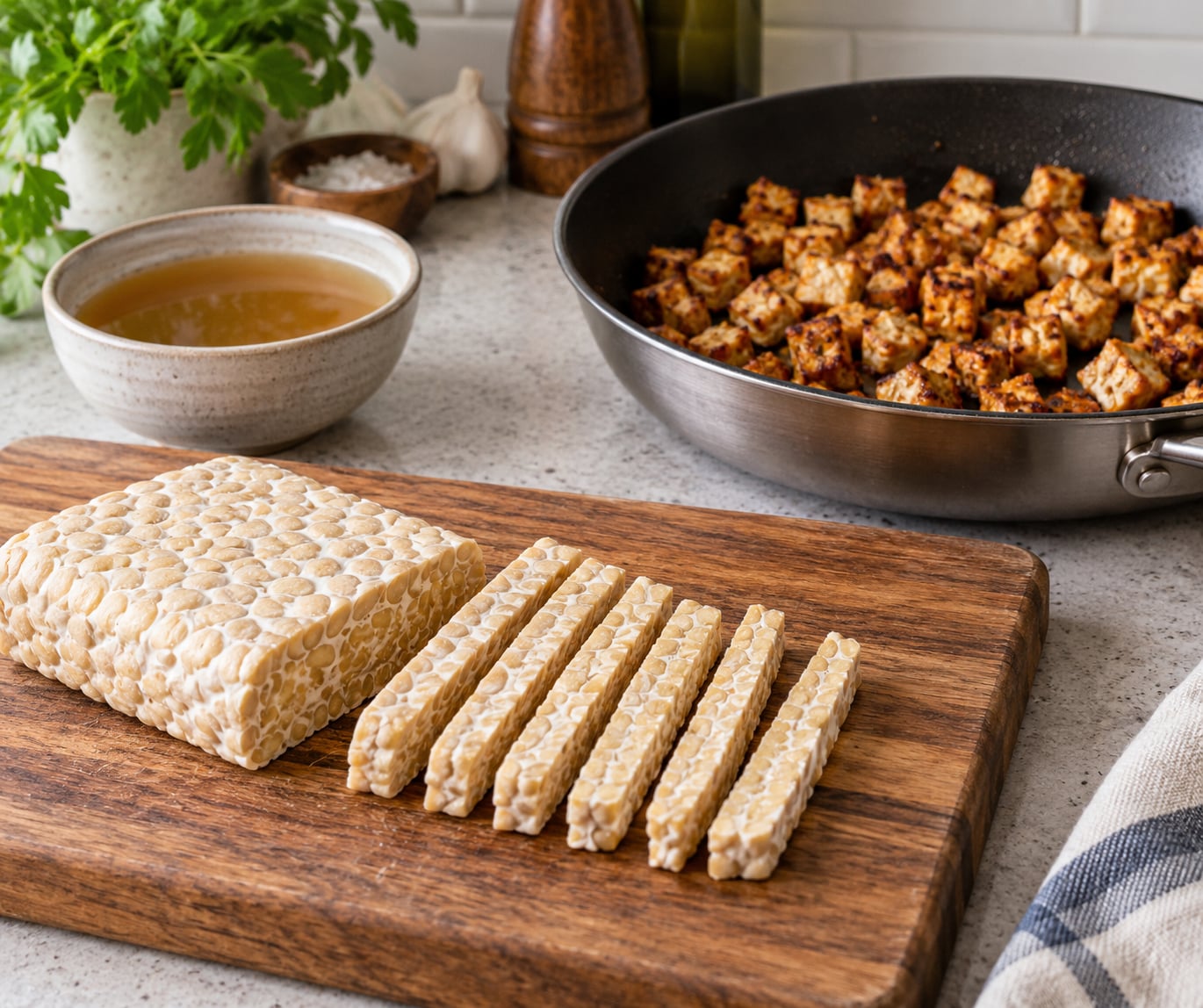
Cutting thin is the other lever. Thin slices and matchsticks cook through quickly, which shortens the pre-cook and makes later seasoning soak in. Crumbling the block into small pieces does the same thing faster, and it is the move that makes tempeh stop feeling dry and chewy. On a Facebook vegan group I read, one cook described crumbling it super finely so it would not taste dry, and that is genuinely what crumbles are for.
Rinsing is optional. A short rinse under cool water takes away surface bitterness from a particularly assertive or heavily seasoned block, and it does little for a mild one. Skip it when you would rather not dilute the flavor you are about to build.
3. Start With a Gentle, Low-Heat Sauté
Warm your diced tempeh in a little neutral oil over medium heat before any liquid goes in. Give the pieces room. Crowded food steams itself, and steamed tempeh tastes flat and turns rubbery no matter how long you sear it afterward.

Two or three minutes is enough to warm the pieces through and let the oil coat them. You are not chasing color yet. Browning happens at the end, after the beans have softened.
4. Steam or Simmer Until Tender
This is the step that removes the bitterness, and every method below does the same job with different equipment.
Steam, 10 to 15 minutes. Set the cut tempeh in a steamer basket over simmering water, keep the lid on and stay out of the way. This is the most reliable starting point and the one most home cooks settle on. Longer than 20 minutes and the outside starts to break down, so use 10 minutes for crumbles and 15 for thick slabs.
Simmer, 10 to 20 minutes. Simmering in vegetable broth does three things at once: it pulls out bitterness, softens the interior and gives the pieces something to absorb. Tamari added to the liquid helps too. On r/Cooking, cooks with vegan clients described the routine as steam and marinate first, then fry in a neutral oil, and the broth version folds the marinade into the same pot.
Boil, 10 to 15 minutes. Boiling is faster and blunter than simmering. It strips more flavor than you need on plain tempeh, so it works best when you are serving the tempeh in a heavily seasoned dish like chili.
Microwave, about 3 minutes. Place the tempeh in a bowl with a splash of water and cover it. The trapped steam does in three minutes what a steamer basket takes fifteen to do. Check at two minutes and add a minute if the middle still resists the knife. Drain afterward, because the liquid it sits in now holds the bitterness you just released.
Pressure cooker, about 8 minutes. Natural release, or five minutes with a quick release if you are in a hurry. This is the fastest route and the least precise, so taste a piece before you plan the rest of the meal around it.
Freeze first, then cook. Freezing raw tempeh for a few hours or overnight before pre-cooking reduces bitterness noticeably, because freezing opens the cell structure. It is an old tip that circulates widely and almost nobody follows through. It costs nothing but a spare pan of freezer space, and it is worth trying on the block that stayed bitter after everything else.
5. Drain, Dry, and Brown for the Best Texture
Drain the tempeh and pat it dry with a towel. Not a quick wave, a real press, because surface water is the single biggest reason pan-fried tempeh comes out soggy.
Then get the skillet properly hot. Add a fresh film of neutral oil, lay the pieces down with space between them, and leave them alone for 3 to 4 minutes before turning. Sugar and spice coatings blacken fast, so once it has color, pull it. On a cast iron skillet that is well seasoned, this is the best surface in the kitchen for the job.

Oven and air fryer work the same way. Bake at 425 degrees F on a sheet pan for 20 to 25 minutes, turning once. In an air fryer at 400 degrees F, expect 12 to 15 minutes with the basket shaken twice. Both benefit from a light spray of oil on the dry surface, and both suffer if you crowd the pan.
Sauce last, always. A glaze added in the last two minutes of pan time burns before it soaks. Shredded cabbage, mustard, barbecue sauce and a squeeze of lime all go on after the tempeh leaves the heat.
Common Mistakes
Cooking tempeh straight from the package. This is the big one, and it is why people conclude they dislike tempeh. You get the full fermented bite plus a dense chew. Pre-cook for 10 minutes first.
Expecting sauce to cover bitterness. Community consensus on this is firm, and the reasoning is sound. Once a bitter note is locked into a dense cooked bean cake, sugar and spice sit on the surface and cannot reach it. De-bitter before seasoning.
Overcooking the pre-cook. Steaming 30 minutes makes tempeh mealy and dry, and the texture drifts away from the firm bite you wanted. Ten to 15 minutes covers a standard block. If you are not sure, test a piece with a knife at the ten-minute mark.
Crowding the pan. Pieces touching each other release their own moisture and steam instead of browning, and you get pale, limp tempeh. Cook in two batches if you have to. A sheet pan gets you more surface area in one shot.
Not drying it properly. Wet tempeh steams in the skillet no matter how hot the pan is. Pat it down before the oil goes on.
Using a heavy hand with heat. High heat scorches the outside and leaves the middle tough. Medium to medium-high, with patience, browns better.
Treating every style the same. Pre-seasoned, pre-grilled and bacon-style tempeh do not want 20 minutes of simmering. They were cooked once already, and a short reheat and crisp is all they need.
Storing it wet. Let cooked tempeh cool uncovered on a rack before it goes into a container. Trapped steam makes the next batch limp, and it happens overnight.
Frequently Asked Questions
Why does my tempeh taste bitter?
Tempeh is bitter because of the mold fermentation that binds the soybeans into a cake, and the byproducts of that process carry a sharp, tangy note. It is a flavor, not a safety problem. Pre-cooking for 10 to 15 minutes by steaming or simmering drives most of it off. Blocks that stay bitter after that respond to freezing raw for several hours before you cook them.
Do I need to soak tempeh before cooking it?
A long soak like the one you give dried beans is not necessary, and it can leave the block waterlogged and bland. What matters is a short pre-cook with liquid and heat. If your tempeh is especially assertive or heavily seasoned, a few minutes of simmering in water or broth works as a quick soak. Otherwise skip it and go straight to 10 to 15 minutes of steaming.
How do I make tempeh taste better without soy sauce?
Start with the pre-cook, since no seasoning rescues bitterness, then build flavor with acid and fat. A spoon of rice vinegar, lemon or lime juice brightens the finished dish, and maple syrup or brown sugar with smoked paprika and cumin makes a glaze that caramelizes in the last two minutes. Coconut aminos, nutritional yeast, Dijon mustard and Worcestershire-free hot sauce all work in place of tamari.
Can I microwave tempeh to remove bitterness?
Yes, and it is the fastest method. Put the cut tempeh in a microwave-safe bowl with a splash of water, cover it loosely and cook for about 3 minutes. Check at two minutes and add another minute if the center is still firm. Drain the liquid well and pat the pieces dry before frying, since that moisture is what makes microwaved tempeh turn soggy in the pan.
How should I store leftover cooked tempeh?
Cool cooked tempeh uncovered on a wire rack for 20 minutes so steam escapes, then refrigerate it in an airtight container for up to 3 to 4 days. Freeze it in a single layer on a tray first, then bag it once solid, and it keeps for 2 to 3 months. Reheat in a hot dry skillet rather than a microwave so the outside firms up instead of turning soft.
One safety note worth keeping straight. Bitterness on its own is fermentation flavor and it is safe. Discard tempeh that smells like nail polish remover or rotten cheese, or that shows fuzzy green, blue or black growth, no matter how it tastes. Trust your nose over any timeline.
Conclusion
Start with the first thing to try: plain tempeh, outer skin pulled off, cut thin, pre-cooked 10 to 15 minutes, pressed dry, then browned in a hot skillet. Season it at the end. That sequence fixes bitterness and sogginess in the same pass, and it is the reason most people who write tempeh off come back to it.
Once that works, adjust to your own product. Older or denser blocks want the full 15 to 20 minutes, seasoned blocks want less, and a stubborn one can sit in the freezer for a few hours before it hits the steam basket. Once you have the timing dialed for the brand you buy, write it on the package with a pencil.