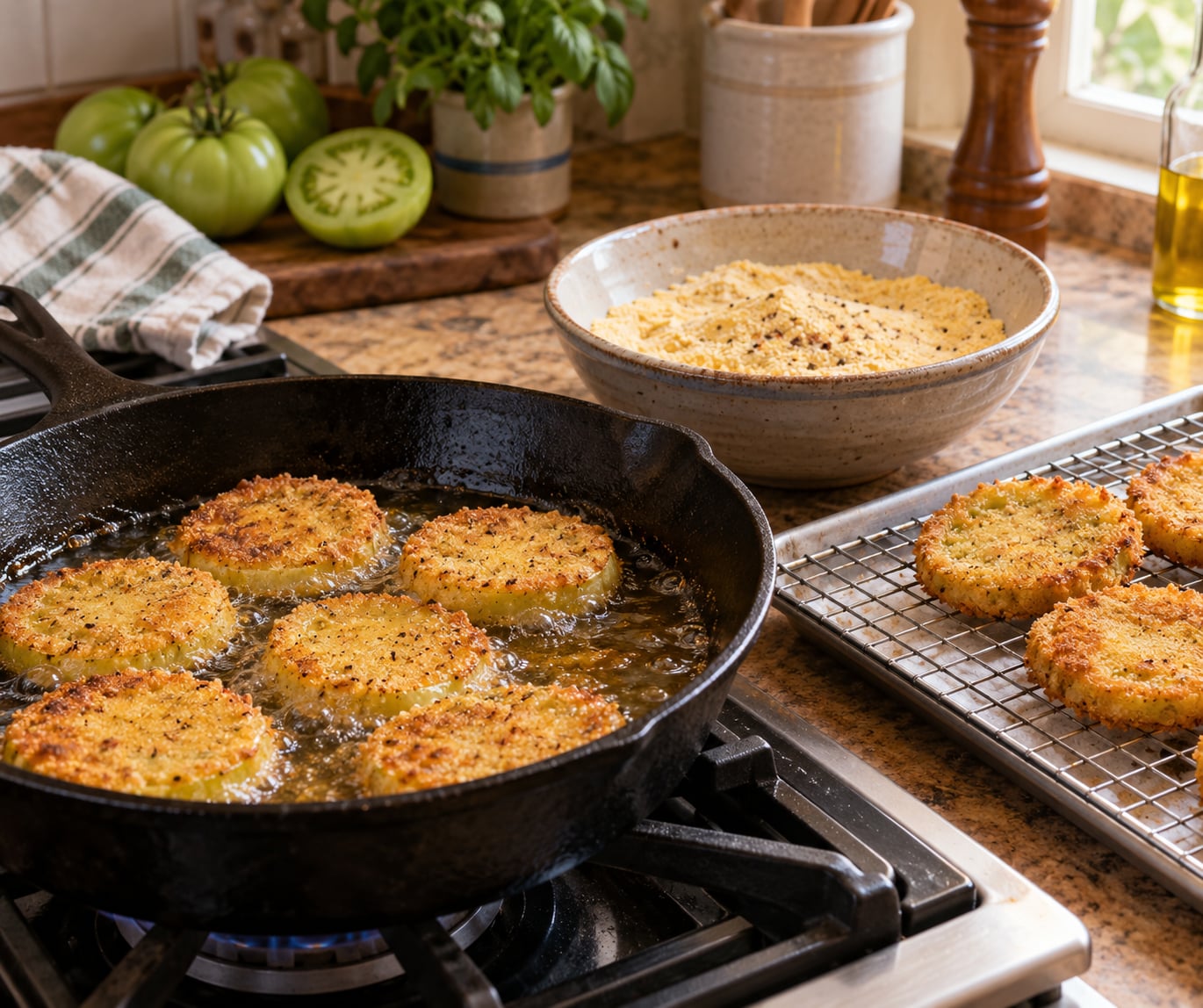
To fry green tomatoes gluten free, replace the wheat flour dredge with fine cornmeal or a certified gluten-free crumb, then fry firm quarter-inch slices in about half an inch of 350°F oil for two to three minutes per side until the crust is deeply golden. The whole method takes about 30 minutes, start to finish, and the hardest part is holding the oil steady.
A green tomato is a tomato picked before it turns red, so it is firmer, starchier, and sharper than a ripe one. That firmness is exactly what you want here: a ripe tomato would collapse into mush in the skillet, while a firm one holds its shape under a heavy crust. Around Appalachia the end-of-season glut of green tomatoes gets picked before the first frost, and this is the recipe that stops them from going to waste.
One caveat before you start. The classic version dredges slices in wheat flour and panko, so the traditional recipe is not gluten free. Every coating, binder, and sauce you use has to be checked, including the seasoning blend, since a lot of seasoned cornmeal carries wheat.
Table of Contents
- What You Need
- How to Fry Green Tomatoes Gluten Free: Step-by-Step
- Choose Firm, Ripe Green Tomatoes
- Slice the Tomatoes Uniformly
- Set Up the Gluten-Free Breading Station
- Heat the Oil Safely
- Coat and Fry Until Golden
- Drain, Season, and Serve
- Common Mistakes
- Frequently Asked Questions
- Can I fry green tomatoes without a gluten-free breading?
- What type of flour is best for gluten-free fried green tomatoes?
- Is cornmeal naturally gluten free?
- What temperature should I use to fry green tomatoes?
- How should I store leftover fried green tomatoes?
- Conclusion
What You Need
For four servings you want four firm green tomatoes, about a cup and a half of coating, and enough oil to come roughly half an inch up the side of a heavy skillet. A 10 or 12 inch cast iron skillet holds the temperature better than a thin nonstick pan, which matters more here than in most recipes.
The coating list is short:
- Fine cornmeal or a gluten-free all-purpose flour blend, about 1 cup, for the first dredge
- Seasoned gluten-free crumbs, gluten-free panko, or a second cup of cornmeal with your own seasonings, for the outer coat
- Eggs, 2 large, beaten with a splash of water, or unsweetened plant milk plus a teaspoon of cornstarch if you are avoiding eggs
- Kosher salt and black pepper, plus optional garlic powder, smoked paprika, or cayenne
- A neutral high-heat oil such as canola, peanut, sunflower, or avocado, for frying
- A wire rack over a sheet pan, set up before you fry anything
Plant-based milk works in the binder and browns the crumb nicely, since the small amount of protein and sugar is what gives egg wash its color. If you are frying for someone with celiac disease, look for products labeled certified gluten free rather than simply gluten free, and keep the bag away from your flour and breading bowls.
How to Fry Green Tomatoes Gluten Free: Step-by-Step
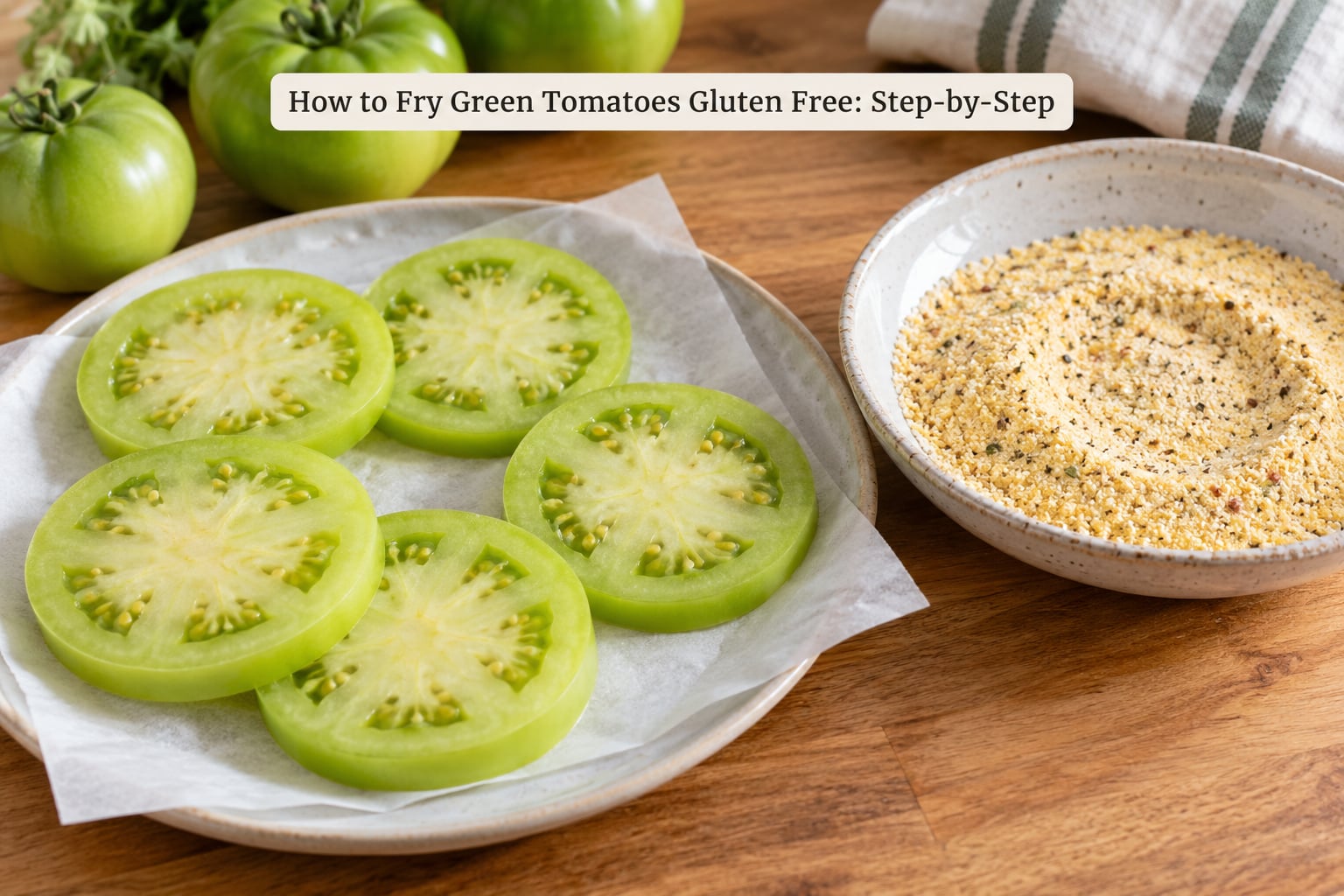
Choose Firm, Ripe Green Tomatoes
Pick tomatoes that are heavy in the hand and firm enough that a fingertip barely dents the skin. Color tells you less than texture does: a tomato can be pale green and still be perfectly fryable, while a dark green one with a give to it will turn to pudding in the pan.
Riper green tomatoes have more sugar and fry up sweeter and more tender, so they are the ones to reach for. Very hard, starchy tomatoes picked weeks before ripening usually need a ripening step first: leave them at room temperature, stem-side down, for a day or two until they soften slightly. There is no point breading a rock.
Slice the Tomatoes Uniformly
Cut straight across the equator into slices a quarter inch thick, pushing all the way to about three-eighths inch for tomatoes that are small and watery. Even thickness is the single thing that matters most, because a thin slice and a thick slice in the same pan will finish cooking at completely different times.
If your tomatoes seem especially wet, salt the slices lightly and lay them on a towel for 15 minutes to bead off surface moisture. Pat them dry before they go anywhere near the breading station. Skip the salting for firmer, fruitier tomatoes, where it can draw out more liquid than you want.
Set Up the Gluten-Free Breading Station
Line up three shallow bowls from left to right: seasoned flour or fine cornmeal, the beaten egg or plant milk, and the seasoned crumb or cornmeal. Put the wire rack with a sheet pan on the far side, before you start, so nothing has to cross over wet oil.
The crispiest version is a double dredge: flour, binder, crumb, then straight back into the crumb for a second coat before frying. Cornmeal alone, with no binder at all, also works and gives the crunchiest crust, and it is the classic Southern approach. Egg or milk in the middle adds a thin, tender layer that helps the crumb adhere, at the cost of a slightly softer shell.
Heat the Oil Safely
Pour oil into the skillet until it sits about half an inch deep, then bring it to 350°F over medium-high heat. A sturdy cast iron skillet takes this well. Without a thermometer, drop a pinch of seasoned cornmeal into the oil: if it sizzles steadily and darkens within a few seconds, you are close enough.
Never fill the pan more than halfway with food. A crowded pan drops the oil temperature fast, and the slices end up greasy instead of crisp. Frying in batches of six or so keeps everything at temperature and cuts down on splatter.
Coat and Fry Until Golden
Coat each slice in the flour, shake off the excess, dip it in the egg or milk, then press it into the crumb with your fingertips so it sticks on every side. Lay it into the oil away from you, holding the edge close to the surface so it slides in instead of splashing.
Fry for two to three minutes per side, until the crust is a deep golden brown rather than a pale tan. Gluten-free coatings brown faster than wheat breadcrumb, so start checking early and pull the first slice at two minutes to compare. The tomato itself should give a little when you press the crust with a fork but still hold together.
Drain, Season, and Serve
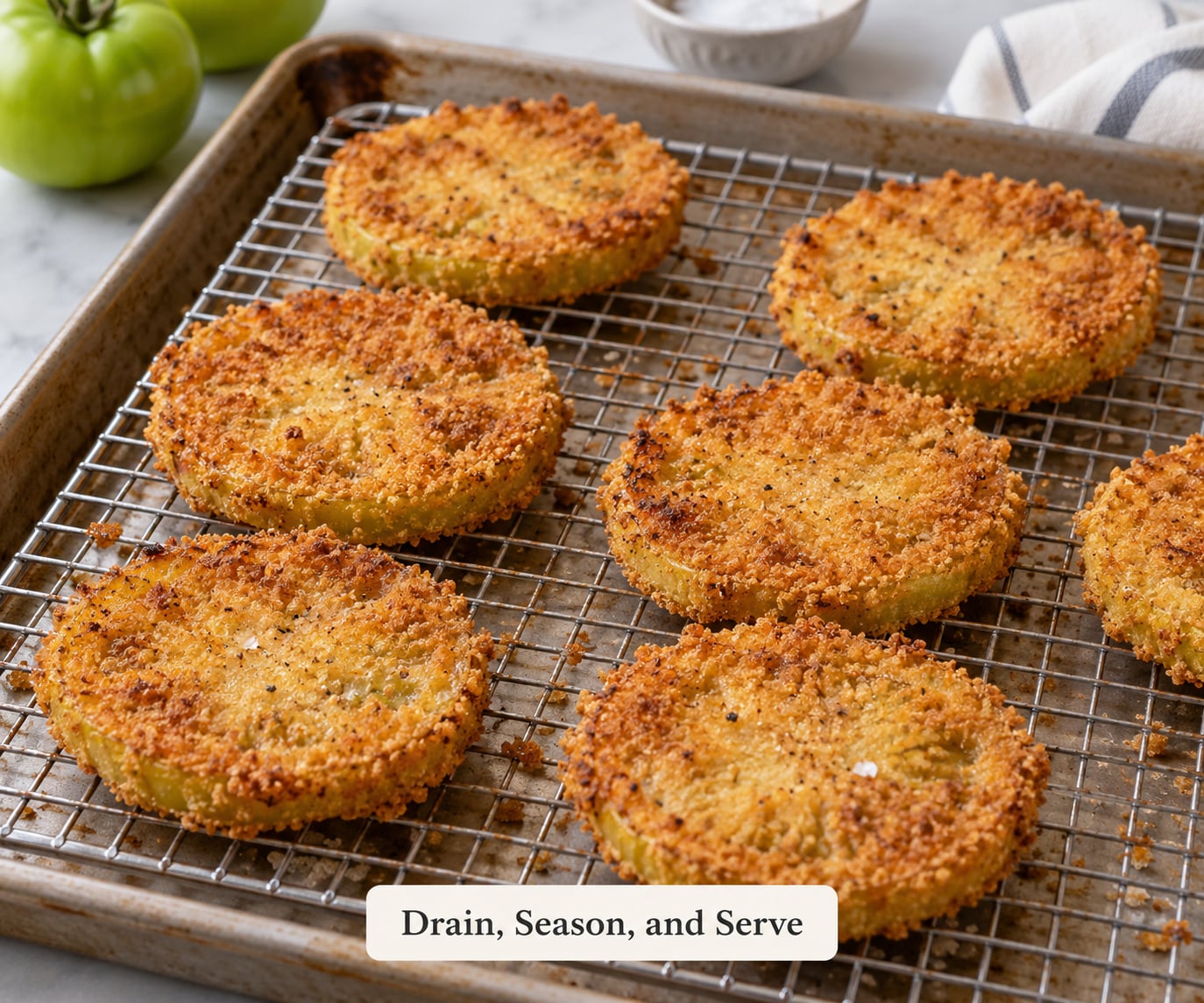
Drain each batch on the wire rack rather than a plate lined with paper towels. A rack lets steam escape from underneath, while a flat pile traps it and softens the crust within a couple of minutes. Season with a pinch of flaky salt while everything is still hot.
Serve them right away. They go best with a thick, cool dip: a horseradish cream, a remoulade, a comeback sauce with mustard and pickle, or plain mayonnaise with a splash of soy and a dash of hot sauce. They also make a good sandwich filling on gluten-free bread, where the crunch survives the trip to the table better than most fried things do.
Common Mistakes
The coating falls off in the pan. Two things cause this. The slices are too wet, so pat them dry before dredging, and the crumb is too loose, so press it on firmly and let each slice rest for a minute on the crumb before you fry it. A second pass through the crumb helps more than anything else.
The crust turns soggy before you eat it. Slice a test piece and look at the cross-section. A pale, floury core with a thin shell means the crumb did not fully hydrate, so press harder next time. A thick, raw-flour ring inside the crust means the tomato was too thick or the oil too cool, so slice thinner and check your temperature.
The crust burns before the center cooks. Gluten-free flours, almond flour especially, carry more fat and brown faster than wheat. Pull the slices a shade earlier than instinct suggests, and keep the heat a touch lower if you are working with almond flour.
Oil splatters across the stove. Wet slices are the culprit almost every time. Dry them properly, let them drip for a moment after leaving the binder, lower them slowly, and use a splatter screen if you have one. A screen also slows evaporation, so check the temperature less often rather than more.
The pan is crowded. Fewer slices means hotter oil and faster cooking. It also means crisper edges, since each slice gets its own space to brown instead of steaming its neighbors.
Someone at the table gets gluten. The risk is usually not the tomatoes, it is shared oil, shared tongs, a shared flour bin, or a spice blend with wheat starch in it. If it matters to you, use certified gluten free products throughout, and fry these before anything else in the pan.
For serving and storage: cool the cooked slices on the rack, then refrigerate them within two hours and use them within three or four days. Reheat in a 400°F oven for 8 to 10 minutes rather than in the microwave, which steams the crust and leaves you with a soft shell.
Frequently Asked Questions
Can I fry green tomatoes without a gluten-free breading?
Yes, and cornmeal-only is the easiest version. Skip the flour and the binder, season fine cornmeal generously, press each slice directly into it, and fry until golden. For an entirely unbreaded result, dust the slices in a plain gluten-free flour and salt, or skip the coating completely and just fry them in hot oil. You lose the crunch, but the tomato still cooks the same way and stays gluten free as long as the oil is fresh and the pan is clean.
What type of flour is best for gluten-free fried green tomatoes?
Fine cornmeal wins on crunch and simplicity, and it needs no binder at all. A gluten-free all-purpose flour blend works well for the first dredge because it clings and drinks up moisture without tasting beany. Almond flour gives the richest, nuttiest crust but browns faster than everything else, so it needs slightly lower heat and an early check. Whichever you pick, buy certified gluten free if a celiac guest is eating.
Is cornmeal naturally gluten free?
Plain cornmeal is naturally gluten free, since it is milled from maize and contains no wheat. The catch is what gets added after milling. Many brands mix in wheat flour, and seasoned cornmeal blends often contain wheat starch or are manufactured on shared equipment. Check the ingredient list for wheat, flour, or malt, and look for a certified gluten free label if you are cooking for someone with celiac disease. Stone-ground cornmeal tends to be coarser and crisper.
What temperature should I use to fry green tomatoes?
Aim for 350°F, which is the temperature where the coating sets and browns before the tomato releases enough water to steam it. Below 330°F the slices soak up oil and the crust turns pale and heavy. Above 370°F the crumb darkens fast, which is easy to do with almond flour or a cornmeal blend. Without a thermometer, drop a pinch of coating into the oil and watch whether it sizzles steadily and darkens within a few seconds.
How should I store leftover fried green tomatoes?
Cool the slices on a wire rack, never stacked, then refrigerate them in a single layer or loosely covered within two hours and use them within three to four days. Reheat in a 400°F oven for 8 to 10 minutes, or in an air fryer at 400°F for about 5 minutes. The microwave is the one option to avoid, since the steam it produces softens the crust within the first minute.
Conclusion
Dry firm slices, coat them in seasoned cornmeal or a gluten-free crumb, and fry six at a time in half an inch of 350°F oil until deeply golden. Start with the oil and the rack set up, and everything else falls into place in about half an hour.