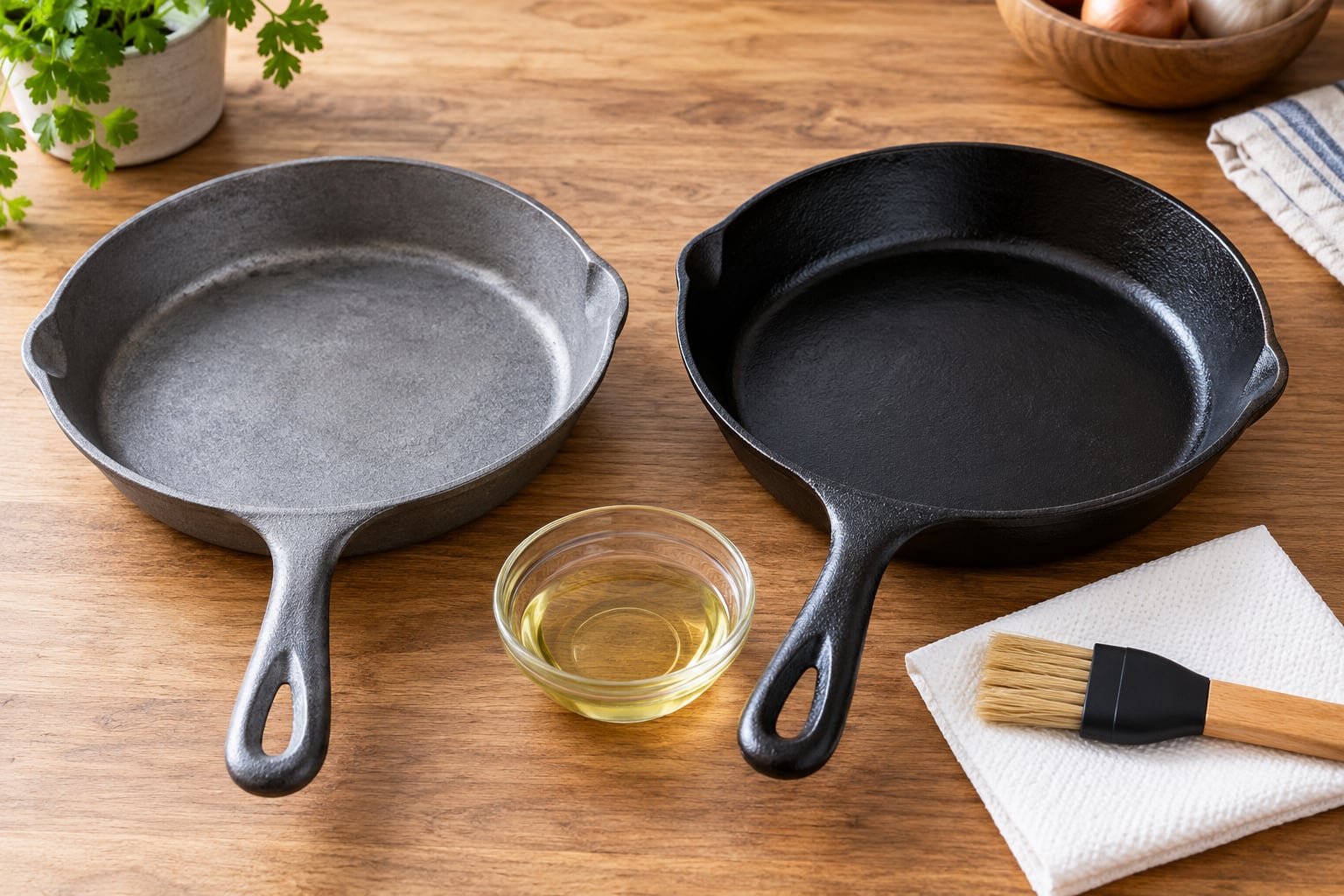
Seasoning a cast iron skillet is straightforward once you understand what is actually happening: you are baking a nearly invisible layer of oil onto bare iron so it hardens into a natural nonstick surface. Wash the pan, dry it completely, wipe on a very thin film of a high smoke point oil, and bake it at 450-500°F for about an hour with the pan upside down. Most first-timers need two or three coats, and the whole job takes roughly ten minutes of hands-on time per coat.
New to iron? You cannot ruin a cast iron skillet. At worst you end up with a pan that needs another coat, and the community consensus over at r/castiron is about as reassuring as it gets: stop analyzing it and start cooking on it.
Table of Contents
- What You Need
- Step-by-Step: How to Season a Cast Iron Skillet
- Clean the skillet and remove any rust or factory residue
- Choose the right oil and apply a very thin coat
- Heat the oil until it polymerizes into a hard film
- Repeat thin coats and inspect the seasoning
- Season on the stovetop when you do not want to use the oven
- Common Mistakes
- Frequently Asked Questions
- Do I need to season a new cast iron skillet before using it?
- What oil is best for seasoning cast iron?
- Why does my cast iron skillet smoke when I season it?
- Can I season a cast iron skillet on the stovetop?
- How can I tell if my cast iron skillet is seasoned?
- How do I fix sticky or patchy seasoning?
- Conclusion
What You Need
Gather these before you start, and the whole process moves without a trip back to the store mid-way.
- The skillet. New from the factory, rescued from a flea market, or an old pan that lost its slick finish. All three use the same method.
- A neutral, high smoke point oil. Canola, grapeseed, vegetable, and avocado are the easy defaults. Lard and bacon grease work well too.
- Paper towels or plain newspaper. For wiping the pan dry and for buffing off oil you did not mean to leave on.
- A basting brush or a folded cloth. A silicone brush spreads a thinner film than your fingers do, which is the whole point.
- Water and a little mild dish soap. Yes, soap. More on that below.
- Baking soda, optional. Useful as a gentle scrub for factory residue and stubborn spots before the first coat.
- A rimmed baking sheet or a piece of foil. A bare oven rack leaves you with a smoky kitchen and a baked-on mess to scrub off the rack later.
One clarification before the steps: a new preseasoned pan from a major manufacturer already has a thin factory coat, and most cooks cook on it right away without trouble. If you want the extra insurance, run the first two steps and one oven cycle on it anyway.
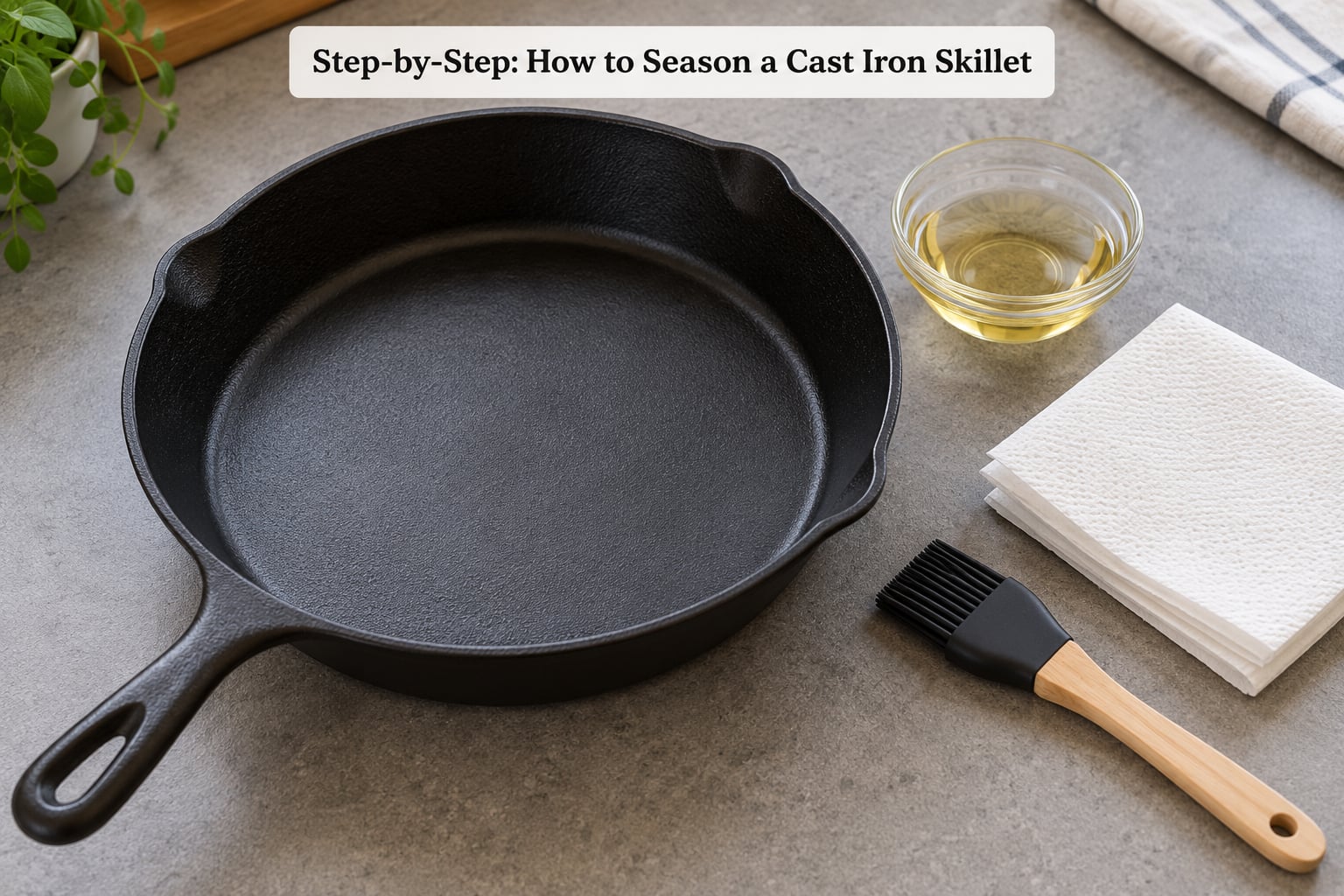
Step-by-Step: How to Season a Cast Iron Skillet
Clean the skillet and remove any rust or factory residue
Start with a clean pan, because seasoning only bonds to bare iron. Wash it with hot water, a little mild dish soap, and a scrubber, then rinse and dry it immediately.
For factory residue or light surface rust, scrub the cooking surface with coarse salt or a chainmail scrubber and a drop of oil. Skip the harsh stuff: oven cleaner, steel wool soaked in chemicals, and dishwasher cycles all do more harm than a few flecks of orange.
Now dry it properly, and this is the step people rush. Hold the pan up to a window or a lamp. If you can see a haze or feel tackiness anywhere, it is not dry enough yet. Put it on a burner over low heat for two or three minutes until it is bone dry and just beginning to look faintly warm to the touch.
Choose the right oil and apply a very thin coat
Use an oil that can take the heat without smoking badly or breaking down, and use far less of it than you think you need. About 1/8 teaspoon for the cooking surface of a 10 or 12 inch skillet is plenty.
| Oil | Smoke point | Best for | Notes |
|---|---|---|---|
| Avocado | About 480-520°F | High bake, low odor | Expensive, easy to find, hard to argue with |
| Canola | About 400-460°F | Everyday default | Cheap, neutral, in every pantry |
| Grapeseed | About 400-420°F | Neutral color and taste | A very common first-timer choice |
| Flaxseed | Low, roughly 225°F unrefined | The hardest finish | Polymerizes at low heat, so never needs to get hot. Flakes more than other oils. |
| Lard | About 400°F | Traditional Southern seasoning | Plenty of smoke point and a long history on Southern cookstoves |
| Bacon grease | About 400°F | Same as lard, plus flavor | Strain the bits out before it goes on |
| Olive, extra virgin | About 375-410°F | Fine in a pinch, not a first pick | Smells while it bakes and turns gummy over time |
| Shortening | About 410°F | Budget option | Works, but store-bought brands vary |
Put a small amount of oil on a paper towel, not in the pan. Wipe the cooking surface in tight circles until the iron looks faintly darkened and evenly coated, then flip the towel and buff the surface again. The second pass is the important one.
Your test is visual: the pan should look like a matte, dry surface, not like a wet one. If you can see a pool, a bead, or a rainbow sheen, wipe it again. Oil that pools in the base or runs down the handle will polymerize into a thick, sticky, gummy layer instead of a hard one.
Heat the oil until it polymerizes into a hard film
Put the pan upside down in the oven on a baking sheet, and bake at 450-500°F for one hour. Turning the pan over lets any stray oil run away from the cooking surface toward the handle and out of the way.
| Method | Temperature | Time | How it works |
|---|---|---|---|
| Single hot bake | 450°F | 1 hour | The most common method and the fastest route to a hard coat |
| Hotter double bake | 480°F | 2 sessions of about 1 hour | Cold oven start, then ramp to temperature. More layers per sitting. |
| Slow ladder | 200°F, then 300°F, then 400°F | Roughly 1 hour per stage | Drives off moisture slowly before the real cure, which reduces spiderweb marks |
| Low and slow | 350°F | 1 hour or more | Works, just takes patience. Expect a lighter, less even finish. |
Do not open the oven door early and do not rush the pan out. Let the skillet cool inside the turned-off oven for another hour, because lifting it out hot and setting it on a cold counter can encourage flaking.
A thin haze of smoke at the start is normal and comes from moisture and light compounds in the oil leaving the surface. Heavy, dark billowing smoke means the temperature is too high for the oil you chose, or you used too much of it. Turn the heat down and let the oven finish its work.
Repeat thin coats and inspect the seasoning
Two or three thin coats beat one thick coat every time. Let the pan cool, wipe off any residue, apply another film of oil, and bake again. Raw iron or a freshly stripped pan deserves three to four rounds.
Seasoning works by heat driving the fatty acids out of the oil and into the iron surface, where they cross-link into a hard, glassy film. Each coat interlocks with the one under it, and the stack behaves like thin coats of paint.
Test the result with a drop of water. If it beads up and sits on the surface, the pan is ready. If it soaks in or spreads into a film, the coating is porous and needs another coat. The real test is a fried egg or a piece of cornbread, which should release without a scraper.
Look for a finish that is dark, even, and matte. Glossy patches and spiderweb patterns mean oil got too thick in spots. Grey or streaky areas after the first session are common, especially with the slow ladder method, and they usually darken with the next two coats.
Season on the stovetop when you do not want to use the oven
Yes, you can season a cast iron skillet on the stovetop, and it is the method to use if you have no oven, a tiny kitchen, or a landlord who frowns on baked-on grease odors. The process is slower and easier to rush, which is also why most people prefer the oven.
- Clean and dry the pan completely, using the low-heat burner trick above.
- Set it on a burner over medium-low heat and add about 1/8 teaspoon of oil.
- Spread the oil with a folded paper towel, moving the pan off the heat as the oil starts to shimmer, then back on. Keep the oil moving for two to three minutes.
- Wipe the pan nearly dry with a fresh towel, leaving only a gold-tinted film.
- Let the pan cool on the burner for a few minutes, then repeat three or four times.
- Finish with a very thin coat and cook something fatty on the pan, such as bacon or a roux, to keep the seasoning building.
Turn on a range hood or open a window first. A skillet held over a naked burner produces more smoke than the same oil in a 450°F oven, and flaxseed oil is the exception here, since it polymerizes well below stovetop temperatures and needs almost no heat at all.
Common Mistakes
Almost every seasoning problem traces back to one of these habits, and every one of them is fixable without a stove scouring pad.
- Using too much oil. This is the number one cause of sticky, tacky pans, and the most reported complaint on r/CastIronCooking. Wipe until the pan looks dry and only slightly darker.
- Skipping the drying step. Water left on the surface turns to steam, and that steam is what leaves patchy, blotchy seasoning. Heat the empty pan dry for a few minutes before any oil goes on.
- Heating an empty skillet too hard. A screaming hot empty pan can discolor the existing coat or bake on food residue. Warm it gently.
- Soaking the iron. Standing water attacks bare metal and leaves rust overnight. Wash, rinse, dry, and oil the pan right away.
- Assuming acid soap is a crime. A little mild dish soap on a modern seasoning layer removes grease without stripping the film, and at 450°F for an hour the leftover soap residue burns off long before it can do damage.
- Relying on one thick coat. Thick oil polymerizes into a rubbery sheet that peels. Thin repeated coats interlock properly.
- Oiling after every single use. A very light wipe is useful, but daily thick oiling builds a greasy layer that turns sticky. Most cooks oil the pan before long storage and otherwise rely on cooking fatty food to maintain the finish.
- Stripping a working pan back to bare metal. You almost never need to. If you see small rust spots or a dry patch, scrub that spot, rinse, dry, and run one more light coat over the whole pan.
One more myth worth killing, since you will hear it constantly: a rough-feeling modern pan is not a failed pan. Machine-milled surfaces are rougher than vintage iron, and they season just as well. A coarse surface on day one usually turns smooth after a few months of cooking.
Storage decides how long the work lasts. Let the pan cool fully, wipe on a paper-thin coat of oil, and store it upright or with a paper towel between pans so nothing traps moisture against the surface. A pan left greasy in a closed cabinet is how fresh seasoning turns tacky overnight.
Frequently Asked Questions
Do I need to season a new cast iron skillet before using it?
Usually not. A new skillet from a major manufacturer arrives with a thin factory coat, and most cooks fry eggs on it the first morning it leaves the box. Run one thin oil layer and a 450°F bake if you want a head start or if the pan has been sitting in a damp garage. Do not skip seasoning on secondhand, rusty, or sticky pans.
What oil is best for seasoning cast iron?
Canola, grapeseed, avocado, and vegetable oil are the easiest defaults because they are neutral and cheap. Flaxseed gives the hardest, blackest finish but flakes more often. Lard and bacon grease are excellent and have a long Southern history, though cooks there often switch to a neutral oil for long storage. Olive oil smells while it bakes and tends to turn gummy.
Why does my cast iron skillet smoke when I season it?
A light haze at the start is normal, and it is mostly moisture and light compounds leaving the oil. Thick dark smoke means the oven is too hot for that oil, or too much oil was applied. Turn the heat down to 450°F, wipe the pan down again, and let the cycle finish. Use a sheet pan underneath so nothing drips onto the oven floor.
Can I season a cast iron skillet on the stovetop?
Yes, and it works well if you are patient. Warm the clean, dry pan over medium-low heat, add about 1/8 teaspoon of oil, spread it with a paper towel, then wipe the pan almost dry. Repeat that cycle three or four times and finish by cooking something fatty in the pan. Run a hood or open a window, since stovetop seasoning smokes more than the oven method.
How can I tell if my cast iron skillet is seasoned?
The surface should be dark, even, and matte rather than glossy or greasy. Drop a little water on it: beads that sit on top mean the film is sealed. A cooked egg or a slice of cornbread should release with a gentle shake. Grey streaks after one session are normal and usually darken after two or three more coats.
How do I fix sticky or patchy seasoning?
Sticky seasoning means too much oil polymerized into a thick layer. Scrub it off with coarse salt and a little oil, or 400-grit sandpaper on the cooking surface, rinse, dry the pan on a burner, then apply a paper-thin coat and bake at 450°F for an hour. For flakes, do the same. Seasoning is recoverable, and nobody has ever ruined a skillet trying.
Conclusion
Start tonight. Wash the skillet, dry it on the burner until it is truly dry, wipe on about 1/8 teaspoon of canola or lard so the surface only looks faintly darker, and bake it upside down at 450°F for an hour. Let it cool in the oven, then give it a second and third coat over the next few days. Build it a little at a time and cook fatty food in between, and within a few months the pan will be more slippery than anything you own with a synthetic coating.