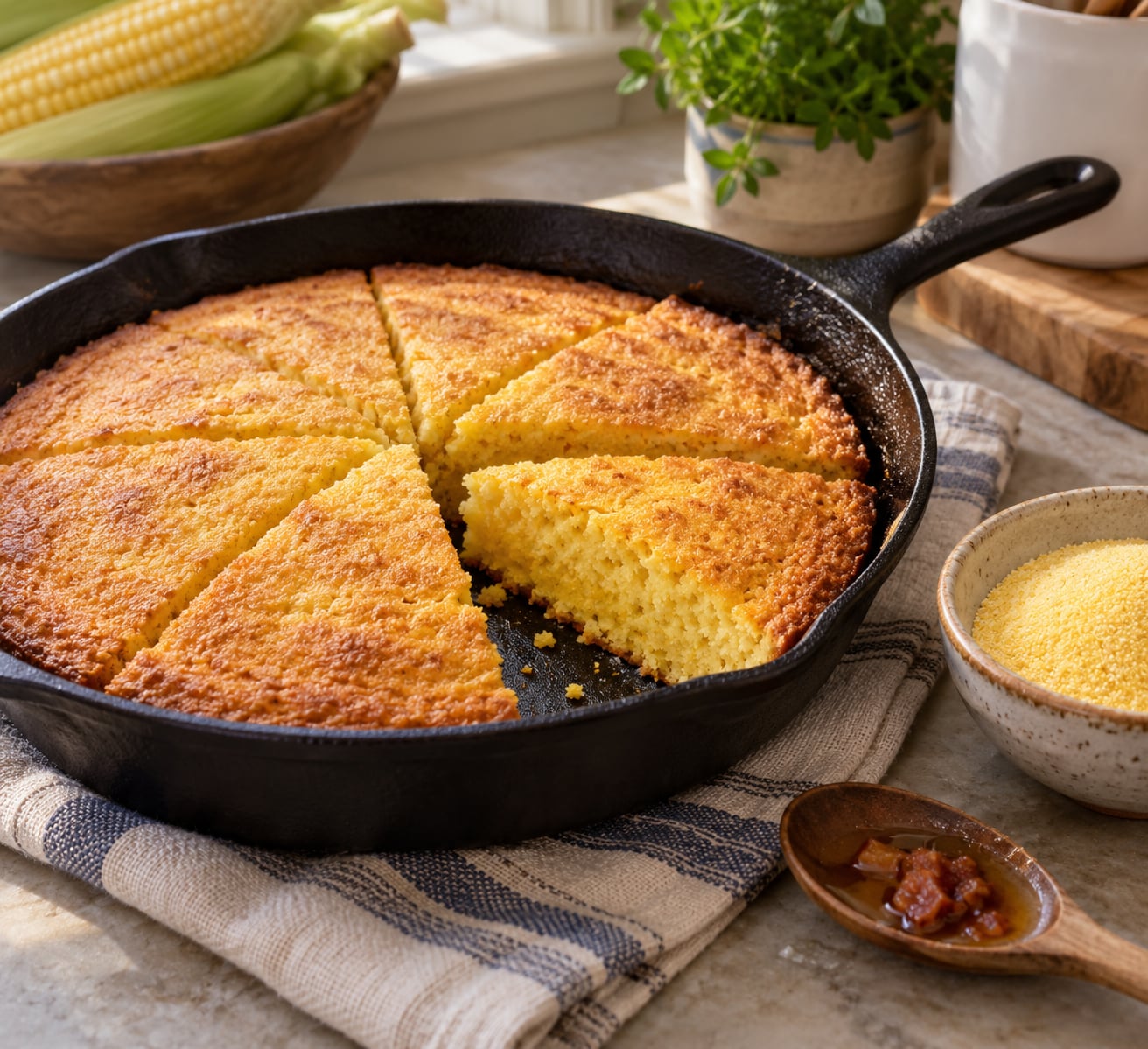
How to make skillet cornbread in cast iron is mostly about one thing: a very hot pan. Heat a 12-inch skillet at 425°F for 30 minutes, wipe it with bacon drippings or oil, pour in the batter, and bake 20 to 25 minutes until the top is golden and a toothpick comes out clean. The cast iron does the rest. It sears the batter the second it lands, so you get a crisp, deeply flavored bottom and edges with a center that stays tender instead of drying out. Total time is about 40 minutes, most of it unattended.
I bake cornbread in cast iron roughly once a month, and the reason is not nostalgia. It is the crust. A baking pan gives you a decent cornbread; a hot skillet gives you the fried-looking bottom that makes people ask what you did differently. Nothing exotic, just heat.
A few notes before we start. Cast iron does not tolerate temperature swings well, so the pan goes into the oven while it is cold and comes out with the cornbread in it. The batter is mixed separately and stays at room temperature while the pan heats. And the skillet is not washed hard or dried on the stove afterward. That part matters more than most recipes admit.
Table of Contents
- What You Need
- Equipment
- Base batter for a 12-inch skillet
- Skillet size and how much batter to use
- Vegan and gluten-free swaps
- Cornmeal grind changes the texture
- Step-by-Step
- How to Preheat Cast Iron for Cornbread
- How to Mix the Cornbread Batter
- How to Get a Crisp Cast-Iron Crust
- How to Know When Skillet Cornbread Is Done
- Common Mistakes
- Sticking on a well-seasoned pan
- Caring for the skillet after the bake
- Frequently Asked Questions
- Should I preheat my cast iron skillet for cornbread?
- How long do you bake cornbread in cast iron?
- How do I keep cornbread from sticking to a cast iron skillet?
- Why does my cornbread taste metallic?
- Can I make cast iron cornbread without buttermilk?
- How do I store and reheat skillet cornbread?
- Conclusion
What You Need
Everything here is pantry-shelf. The cast iron skillet is the only real equipment, and a 12-inch skillet is the size to buy if you are starting out, because it gives you a cornbread about 1.5 inches thick, which is the sweet spot for a crisp base and a soft middle.
Equipment
- 12-inch oven-safe cast iron skillet (a 10-inch works, a 9-inch gives a thicker bread)
- Two heavy oven mitts
- Dry towel or paper towels for gripping the hot handle
- Two mixing bowls, one for dry and one for wet
- Wooden spoon or stiff whisk
- Wire cooling rack
- Toothpick
Base batter for a 12-inch skillet
- 1 1/2 cups (180 g) yellow cornmeal, medium or fine grind
- 1 cup (120 g) all-purpose flour
- 1 tablespoon baking powder
- 1 teaspoon baking soda
- 1 teaspoon fine salt
- 1 tablespoon sugar, optional, for a slightly sweet loaf
- 1 cup (240 ml) buttermilk
- 2 large eggs
- 4 tablespoons (60 ml) melted butter or bacon drippings, plus more for the pan
For the pan itself, you need 2 to 3 tablespoons of a high-smoke-point fat. Bacon drippings are the traditional choice in Appalachian and Southern kitchens and add a salty, savory note that plays well against the corn. Lard works nearly as well. Neutral oil or avocado oil will get you the same crust with a cleaner flavor, and melted butter tastes the richest but browns fastest, so use a little less of it and watch the last few minutes.
Skillet size and how much batter to use
| Skillet | Batter scale | Bake time at 425°F | Resulting thickness |
|---|---|---|---|
| 9 inch | Two-thirds of the recipe | 18 to 22 minutes | About 2 inches, very cornmeal-forward |
| 10 inch | Three-quarters of the recipe | 20 to 23 minutes | About 1.75 inches |
| 12 inch | Full recipe | 20 to 25 minutes | About 1.5 inches |
Do not fill a skillet more than halfway with batter. If you have a small 9-inch pan and the full recipe, you are better off making cornbread muffins in a muffin tin than pouring a deep loaf that will bake raw in the middle.
Vegan and gluten-free swaps
For a vegan version, the buttermilk is the only real hurdle. Many people use a 1:1 swap of sour cream or full-fat coconut yogurt, which works because the acid is what tenderizes the cornmeal. A quick alternative is to make your own: stir 1 tablespoon of lemon juice or apple cider vinegar into 1 cup of unsweetened plant milk, let it stand 5 minutes until it thickens and looks slightly curdled, then use it in place of the buttermilk. Melted vegan butter or a neutral oil replaces the butter, and an egg replacer such as ground flaxseed mixed with water, or just 2 tablespoons of aquafaba from a can of chickpeas, stands in for the eggs.
For gluten-free, a cup-for-cup swap with a 1:1 baking blend of rice flour, tapioca starch, and xanthan gum is the most reliable option and keeps the crumb tender. A straight cup of flourless version is a different recipe rather than a substitution, and a good one: drop the all-purpose flour entirely and use 2 cups plus 2 tablespoons of cornmeal, 1 tablespoon baking powder, and 1 tablespoon baking soda, which gives you a denser, more corn-forward loaf that still browns beautifully in cast iron. I have baked both ways plenty of times, and the flourless version holds up better the day after, if that is useful to you.
Cornmeal grind changes the texture
Stone-ground cornmeal keeps some of the germ and bran, so it tastes more like corn and bakes slightly heavier and more crumbly. Medium grind is the all-purpose choice and the one most boxed yellow cornmeal falls into. Fine grind bakes the most tender crumb and takes on the color faster. All three work in a skillet, and none of them will fail you. If you want the most distinct corn flavor with a tender center, go stone-ground and add 2 tablespoons of all-purpose flour.
Step-by-Step
Six steps, and the only one that demands attention is the first.
- Heat the oven to 425°F. Put the cold cast iron skillet inside and let it preheat for 30 minutes with the fat already wiped onto the cooking surface.
- Whisk the dry ingredients: cornmeal, flour, baking powder, baking soda, salt, and sugar if using.
- Whisk the wet ingredients: buttermilk, eggs, and melted butter or oil until fully combined.
- Pour the wet into the dry and stir with a spoon until the last streaks of flour disappear, then stop. Do not beat it.
- Carefully pour the batter into the hot skillet and spread it to the edges with the back of the spoon.
- Bake on the center rack at 425°F for 20 to 25 minutes, until golden brown and firm in the center.
How to Preheat Cast Iron for Cornbread
Preheat the skillet in the oven, not on the stove, and give it a full 30 minutes. A skillet that sat in a cold oven for two minutes is not a hot skillet, and the batter will land in a lukewarm pan, spread out across the wide bottom, and cook into a thin pale layer that clings to the metal.
Why the heat matters: the fat and the iron themselves form a very hot surface. Cornmeal is mostly starch, and starch sets and browns fast on contact with metal above 300°F. That instant set is what builds the crust. The pan’s weight also matters, since cast iron holds temperature far better than a thin baking pan, so the heat coming from the oven tops out and finishes the center evenly while the outside is already set.
Do not put cold water on this pan, and do not move it from a cold counter into a hot oven with a splash of water in it. Let the skillet heat empty and dry. Wipe the fat on with a paper towel so you get a thin film rather than a pool, because a heavy layer of fat at 425°F will smoke before the batter arrives. A thin shimmer is what you want, and you can check it by holding the pan near the handle base to feel radiant heat before you pull it out.
How to Mix the Cornbread Batter
Mix dry first, in its own bowl. Cornmeal is thirsty and will clump if it hits liquid in lumps, and a whisk gets it dispersed evenly with no pockets of dry meal at the bottom. Then mix wet in a second bowl, whisked until the eggs and buttermilk are one smooth yellow liquid with no streaks of white.
Now pour wet into dry and stir with a spoon, not a mixer, and stop the moment the last dry streak disappears. Overmixing develops gluten from the flour and gives you a tight, bready crumb instead of a tender one. It is the same reason cake batter is treated gently. If you are making the vegan version, the flax and aquafaba mixes go in with the wet ingredients, and if you are going flourless, stop mixing even earlier because there is no gluten to develop and you only want the cornmeal hydrated.
Have the batter mixed before the pan comes out of the oven, and give the skillet about 10 minutes to cool to something you can handle comfortably. A 425°F skillet will scald you through a mitt, and cold batter hitting searing metal is also a small thermal shock to the seasoning. Wiping the hot pan with a cold, wet spoon is the fastest way to strip a season.
How to Get a Crisp Cast-Iron Crust
Wipe the preheated skillet with 2 to 3 tablespoons of bacon drippings, lard, or oil using a paper towel held with the towel, then immediately pour in the batter. The fat should shimmer, not smoke.
Spread the batter to the outer wall of the skillet. The edges set and crisp first, and if the batter pools in the middle while leaving a dry ring, you get a hollow sound when you tap it and a crust that is thicker than the rest. Level the top with the back of the spoon and leave it alone.
The crust cues arrive in stages. At about 12 minutes the surface will look matte and set at the perimeter while still pale in the center. By 18 to 20 minutes the sides will have pulled slightly from the wall and the top will have gone from pale to deep gold. Full caramelization on the bottom takes another 3 to 5 minutes, and it happens by contact with the pan, not from the top heat, which is why the top can look done before the crust is. If you want the full flip-out presentation, rest it 2 minutes in the pan and see if the bottom releases cleanly. If it does, place a plate over the rim, hold both together firmly with dry towels, and turn it out in one motion. Have a rack waiting underneath, and do not attempt this on the first loaf you ever bake.
How to Know When Skillet Cornbread Is Done
There are four checks, and any one of them alone will mislead you. Use two.
Color. The top should be golden brown, with a few deeper amber spots near the edges. Pale yellow with a wet-looking center means it needs more time even if the toothpick is clean, because that top is still raw batter setting.
Toothpick. Insert it into the thickest part, not the edge. It should come out clean or with a few moist crumbs. Raw, wet batter on the toothpick means give it 3 more minutes and test again.
Touch and sound. Press the top gently with a fingertip. It should spring back and feel firm, and a tap on the center should sound hollow rather than dull.
Internal temperature. The center of the loaf should read between 200°F and 205°F on an instant-read thermometer pushed into the middle. Below 190°F the starch has not fully set and the crumb will be gummy when you cut it.
Overbaking is easy in cast iron because the pan keeps pushing heat into the loaf after the oven call comes up. Cornbread goes from moist to dry fast, and once the edges are dark amber you have very little margin left. Pull it the moment the top is golden and the toothpick is clean, then rest it 10 to 15 minutes in the pan. Cast iron holds so much heat that the center finishes cooking as it cools, which is also why cutting early gives you a gummy middle.
Common Mistakes
Almost every disappointing skillet cornbread traces back to one of five things. Here is what went wrong and what to change.
| Symptom | Likely cause | Fix |
|---|---|---|
| Cornbread tears out and leaves raw patches in the pan | Pan was not hot enough, or fat was pooled rather than wiped thin | Preheat 30 minutes, wipe a thin film of fat, pour while the pan is still shimmering |
| Batter spreads into a thin, flat layer | Skillet went into the oven but was not left to heat, or the oven door was opened repeatedly | Give it the full 30 minutes and pour within a minute of pulling the pan |
| Center sinks into a hole | Batter spread past the sides leaving no support, or an uneven bake from a pan that was not fully preheated | Spread batter to the wall, use a full 30-minute preheat, and check at the halfway point |
| Dry, crumbly, dusty texture | Baked too long, or cornmeal was overworked during mixing | Pull at 20 to 22 minutes for a 12-inch skillet and stop stirring as soon as it comes together |
| Sooty or greasy crust with a burned smell | Too much fat in the pan, and it burned before the batter arrived | Wipe the pan with the paper towel to nearly dry before pouring |
| Metallic or bitter taste | Butter browned in the hot pan, or the loaf went past golden into dark | Use oil or bacon drippings, add 1 tablespoon more liquid, and pull the loaf at golden rather than brown |
| Raw batter stuck to the pan walls after turning out | Cut too early, before the center set, and the crumb was still soft | Rest 10 to 15 minutes in the pan before cutting or turning out |
Sticking on a well-seasoned pan
A seasoned skillet is not a nonstick pan. Sugar and milk solids in cornbread batter are more likely to grab than plain bread dough, and a thin layer of fat between the batter and the seasoning is the whole ballgame. It is also worth knowing that baking cornbread regularly is good for a skillet that gets used hard, since the fat and the heat keep the seasoning active. Posters over on r/castiron describe watching for a visible sizzle the moment the batter hits, which is the same cue you would use for a steak, and that is a good one to trust. A small amount of flour in the batter also helps, which is one reason the flour-added version pulls out of a seasoned pan more cleanly than the flourless one. If a loaf has torn and left patches, patch the bare spots with a little oil, heat the pan for 10 minutes, and the seasoning is fine.
Caring for the skillet after the bake
Cool it in the pan for 10 to 15 minutes, then turn out the cornbread and let the skillet cool fully on a burner you have turned off or on a trivet. Do not run the pan under cold water while it is hot, since thermal shock is the fastest way to crack cast iron and it can strip seasoning.
Soap is not the villain most people were told it was. A small amount of mild dish soap and a nonabrasive brush will not damage a modern seasoning layer, and corn batter is crumbly enough that most of it rinses away with hot water and a brush. Skip the dishwasher and skip the steel wool. Dry the skillet on the burner over low heat for a minute or two, then wipe it with a paper towel until it is completely dry.
Do not oil a bare seasoned pan on a whim. An unnecessary coat of oil goes sticky, then flakes, and now you have a pan that seasons more slowly than the one you started with. If the seasoning looks dull, patchy, or you can see bare gray iron, wipe on the thinnest possible film of a neutral oil or flaxseed oil and bake it at 450°F for an hour. Otherwise, put the pan away dry. This is the single question that comes up most often in cast iron groups, and the answer has not changed in years: soap in moderation is fine, thermal shock and abrasive scrub are not.
Frequently Asked Questions
Should I preheat my cast iron skillet for cornbread?
Yes, and preheat it inside the oven for a full 30 minutes with the cooking fat already wiped on. A room-temperature pan lets the batter spread thin, cook pale, and stick. A preheated pan sets and browns the batter on contact, which is what creates the crust. Wipe on just enough bacon drippings, lard, or oil to shimmer, not pool, or the fat will smoke before the batter goes in.
How long do you bake cornbread in cast iron?
At 425°F, a 12-inch skillet takes 20 to 25 minutes. A 10-inch pan needs 20 to 23 minutes and a 9-inch pan 18 to 22 minutes, with the batter scaled down to match. Test with a toothpick in the thickest part; it should come out clean or with a few moist crumbs. An instant-read thermometer in the center should read 200°F to 205°F.
How do I keep cornbread from sticking to a cast iron skillet?
Heat the pan properly, wipe on a thin even film of fat, and pour the batter immediately while the pan is still shimmering. Then leave the cornbread alone until it has rested 10 to 15 minutes, since cutting or turning it out while the center is still soft is the most common reason it tears and leaves raw patches. Note that flour in the batter also helps the loaf release more cleanly.
Why does my cornbread taste metallic?
Three usual causes. Butter browned in a very hot pan before the batter went in, the loaf baked past golden into dark brown, or the pan seasoning is thin and bare iron is showing. Switch to bacon drippings, lard, or a neutral oil, add a tablespoon more buttermilk, and pull the loaf at golden rather than brown. If seasoning looks patchy, bake an empty thin coat of oil at 450°F for an hour.
Can I make cast iron cornbread without buttermilk?
Yes. Mix 1 tablespoon of lemon juice or apple cider vinegar into 1 cup of unsweetened plant milk, let it stand 5 minutes until it looks slightly curdled, and use that in place of the buttermilk. Full-fat sour cream or coconut yogurt work at a straight 1:1 swap, and plain milk is fine with an extra teaspoon of baking powder to keep the rise. Whole wheat flour is another easy option if you want more fiber and a nuttier crumb.
How do I store and reheat skillet cornbread?
Cool it fully, wrap it tightly, and keep it at room temperature for 1 to 2 days, or refrigerate it in a sealed container for up to 5 days. Cornbread freezes well for up to 3 months, especially as individual squares. Reheat slices in a dry cast iron skillet over medium heat for 2 to 3 minutes a side, or 350°F in the oven for 8 minutes. A skillet gives you a re-crisped edge that a microwave never will.
Conclusion
Start by heating the cast iron through, a full 30 minutes at 425°F with the fat already wiped on. Mix the batter with a spoon and stop the moment it comes together. Pour, spread to the edges, and bake 20 to 25 minutes until the top is golden, the toothpick comes out clean, and the center reads about 200°F.
Then leave it in the skillet for 10 to 15 minutes before you cut. That rest is what finishes the crumb and lets the loaf release in one piece, and it is the step most people skip. Once you have that crust, pour yourself something with broth in it and you have the fastest side dish in the house.