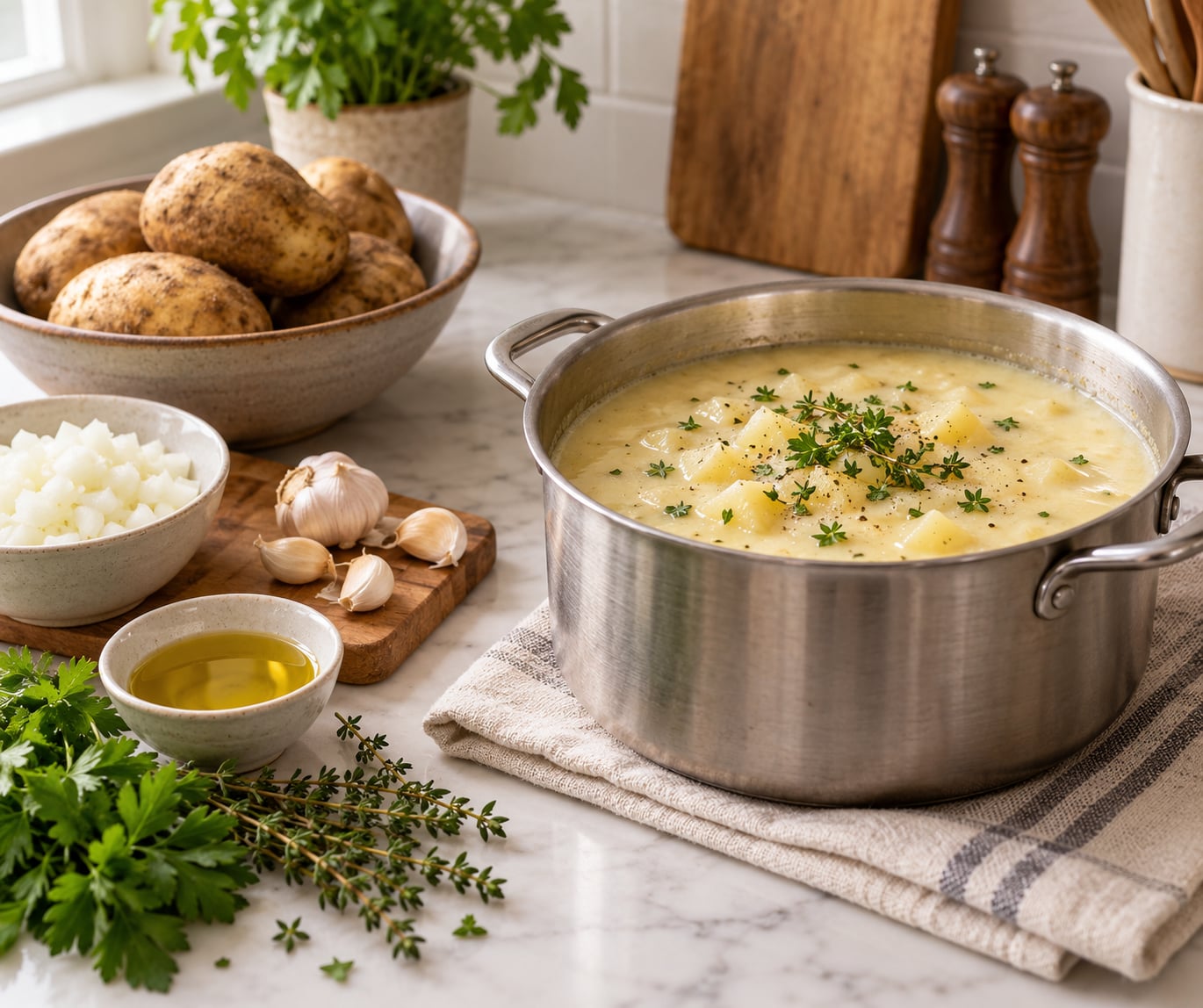
To make potato soup without heavy cream, simmer diced russet potatoes in broth, then blend about a third of the pot until smooth and stir it back in. The starch the potatoes release gives you the body cream would have, and a splash of milk or warm water loosens it to the thickness you want.
That is the whole trick, and it takes about 45 minutes start to finish with one pot and a blender. Nothing needs to be thickened with flour, and the finished bowl is naturally gluten-free. You can keep it dairy-free by using unsweetened oat or soy milk and skipping the yogurt, or make it exactly as written for a richer, still-light version.
Table of Contents
- What You Need
- Ingredients for the soup
- Equipment
- What to use instead of heavy cream
- Step-by-Step
- Prepare the Aromatics and Potatoes
- Simmer the Soup Until Tender
- Blend for a Creamy Texture
- Finish and Season the Potato Soup
- Common Mistakes
- The soup is watery
- The soup is gluey
- The flavor tastes flat
- The soup is too thick
- The bottom scorched
- Reheating makes it split or grainy
- Can you skip the blender entirely?
- Make it ahead or freeze it
- Frequently Asked Questions
- What can I use instead of heavy cream in potato soup?
- How do I make potato soup thicker without cream or flour?
- Can I make this potato soup vegan and gluten-free?
- Why is my potato soup watery after blending?
- How long should homemade potato soup be stored in the refrigerator?
- Can I freeze potato soup without it separating?
- Conclusion
What You Need
Quantities below are for one large pot, roughly 6 to 8 servings. A deep stockpot or Dutch oven keeps the simmer steady and stops the potatoes from sticking to the bottom.
Ingredients for the soup
- 2 pounds (900 g) russet potatoes, peeled and cut into half-inch dice. Russets hold the most starch, and that starch is your thickener.
- 1 medium yellow onion, finely diced, about 1 cup.
- 2 cloves garlic, minced.
- 2 tablespoons extra-virgin olive oil, or 2 tablespoons vegan butter for a nuttier flavor.
- 6 cups (1.4 L) low-sodium chicken stock, or vegetable stock for a vegan pot.
- 1 bay leaf, 1 teaspoon kosher salt, and 1/2 teaspoon freshly ground black pepper. Start with less salt than you think, since broth is already salted.
- 1 cup (240 ml) whole milk or unsweetened oat milk, warmed to the touch. This is optional; the soup is creamy without it.
- 1/2 cup (120 g) plain Greek yogurt, stirred in off the heat. Optional, and the easiest swap for sour cream.
- 1 tablespoon lemon juice for brightness at the end.
- 1 tablespoon potato starch mixed with 3 tablespoons cold water, held back in case the soup needs more body.
- 1/3 cup chopped chives or scallion whites for garnish, plus more black pepper at the table.
Equipment
- A large pot with a lid, 6 to 8 quarts
- An immersion blender, or a countertop blender for blending in batches
- A potato masher, potato ricer, or a sturdy fork for the no-blender route
- A wooden spoon and a ladle
What to use instead of heavy cream
Measurements are for one pot of this soup, roughly 6 cups. Dairy-free swaps stay dairy-free and gluten-free as long as you use unsweetened, unflavored plant milk.
| Substitute | Amount for one pot | Texture you get | Best for |
|---|---|---|---|
| Whole milk | 1 to 1.5 cups, warmed | Light, silky, no thickness of its own | Everyday creaminess, the classic choice |
| Half-and-half | 3/4 cup | Silky with noticeably more body | A richer bowl without pouring on fat |
| Evaporated milk | 3/4 cup | Very smooth, faintly sweet, stable when reheated | Soup that will be made ahead |
| Plain Greek yogurt | 1/2 cup, stirred in off the heat | Tangy and thick, closest to cream | Adding richness and a little acidity |
| Unsweetened oat or soy milk | 1 to 1.5 cups, warmed | Creamy, close to dairy | Dairy-free and vegan versions |
| Coconut milk | 1/2 to 3/4 cup | Rich and slightly sweet | A vegan soup with a tropical edge |
| Cooked white beans, blended | 1/2 cup | Thick, starchy, neutral flavor | Dairy-free thickening with extra protein |
| Potato starch slurry | 1 tbsp starch plus 3 tbsp cold water | Glossy body, no dairy flavor | Gluten-free thickening that never tastes floury |
| Instant potato flakes | 2 to 3 tablespoons | Instantly thicker, slightly dry | A last-minute rescue for thin soup |
Step-by-Step
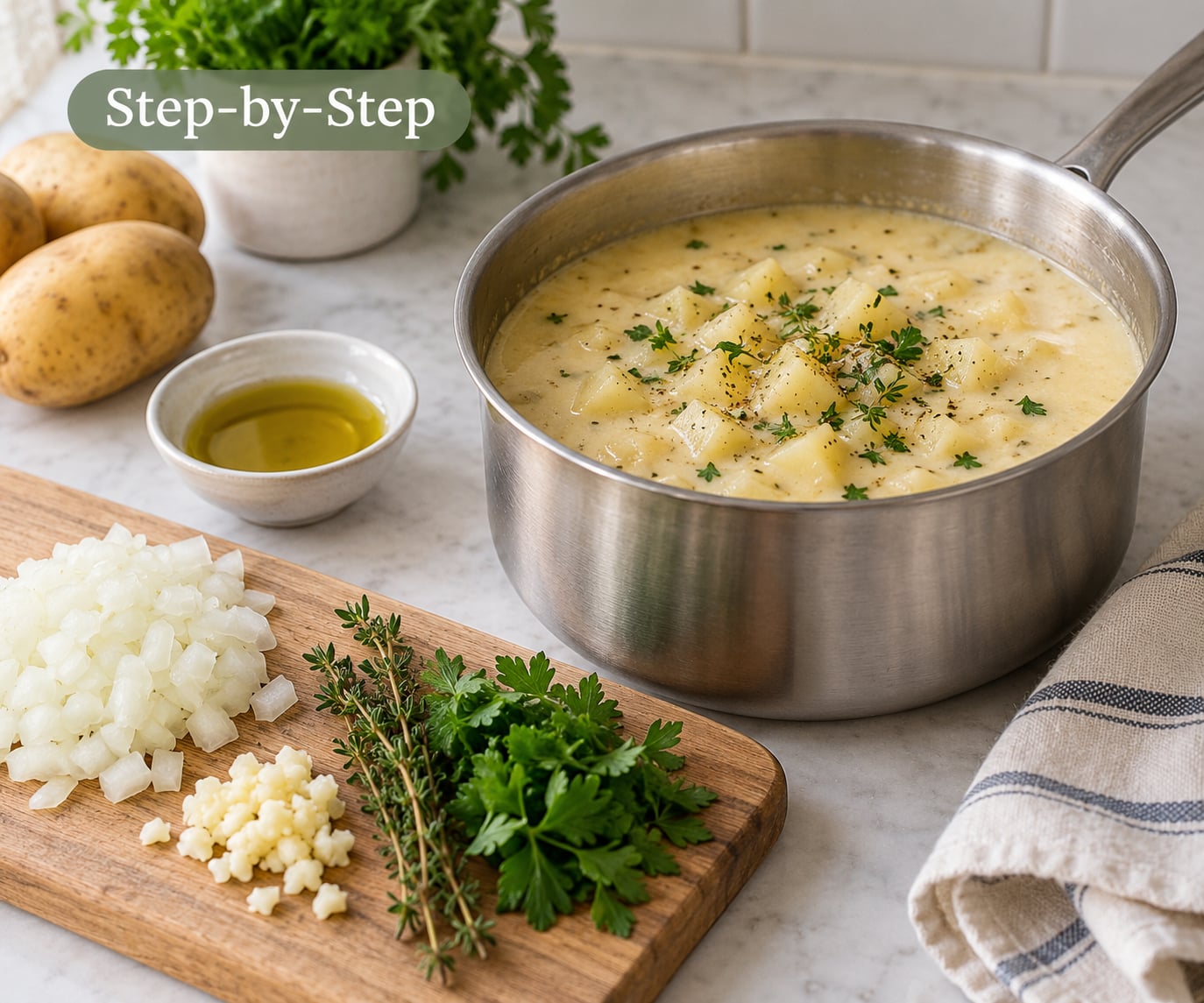
How to make potato soup without heavy cream comes down to three moves: cook starchy potatoes until they break down at the edges, blend some of them back into the broth, and season at the end instead of the start. Follow the order below and the thickness takes care of itself.
Prepare the Aromatics and Potatoes
Warm the olive oil in the pot over medium heat, add the onion with a small pinch of salt, and cook 5 to 7 minutes until the edges soften and the raw bite is gone. The onion should turn translucent and smell sweet rather than sharp.
Stir in the garlic for about 30 seconds, no longer, or it turns bitter. Add the diced potatoes, spread them into one layer, and let them sit undisturbed for 2 minutes before stirring. You are looking for the cut faces to look dry and chalky at the edges.
That drying step matters more than it sounds. Water on the surface of the potato keeps starch from escaping later, and you want every bit of it in the pot.
Simmer the Soup Until Tender
Pour in the stock, scrape the bottom of the pot to pick up the browned bits, and add the bay leaf, salt, and pepper. Bring it to a boil, then turn the heat down until you see one bubble every second or two.
Simmer uncovered for 20 to 25 minutes. Test with a fork: it should slide into a potato with no resistance at all. If it meets any pullback, give it another 5 minutes.
Before you blend anything, ladle out about 1 cup of the cooking liquid and set it aside. That liquid is loaded with starch and it is the easiest way to loosen the soup later without diluting it with plain water.
Blend for a Creamy Texture
With an immersion blender, leave it in the pot and pulse about a third of the soup, moving the blade around the edges and under the spoon marks. You are looking for that portion to go completely smooth while the rest of the potatoes stay in chunks. That mix is what gives you a full-bodied bowl that still has some chew in it.
For a countertop blender, ladle the soup into the jar no more than one third full, and blend in small batches. Hot liquid expands, so if your blender does not have a vent you trust, let the soup cool for five minutes first and hold the lid down with a folded towel. Filling a cold glass jar with boiling soup is how people end up cleaning a ceiling.
Blend off the heat and keep the pot at a low simmer. Starch that cooks too hard, or dairy added to boiling soup, turns the texture grainy and the flavor slightly sour.
Finish and Season the Potato Soup
Turn off the burner and let the soup stop steaming hard. Stir in the warm milk, the yogurt if you are using it, and the lemon juice. Adding dairy off the heat keeps it from scrambling.
Now taste twice, once plain and once with another pinch of salt, and add black pepper. Lemon is doing real work here: it wakes up a cream-free soup that tastes flat, and most people who skip it miss what was missing.
To test the consistency, dip a spoon in and pull it up the side of the bowl. A thin coat that stays on the back of the spoon is right. If it runs off, stir in the reserved cooking liquid a quarter cup at a time; if it sits like wet cement, whisk the potato starch slurry again and add it a tablespoon at a time.
Serve with chives, more pepper, and a hard hunk of crusty bread.
Common Mistakes
Most unhappy potato soup comes down to heat, potato choice, or how much liquid you let go. Here is what goes wrong and the fix for each.
The soup is watery
Not enough potato went in, the potatoes were waxy instead of starchy, or you skimmed solids off the top. Blend more of the pot next time, and keep a ladleful of the cooked potato chunks to stir back in at the end. Instant potato flakes work in a pinch, one tablespoon at a time.
The soup is gluey
Sweet, gluey potato soup means the potatoes cooked too long at a hard boil and dumped every bit of starch into the broth. Hold it at a bare simmer, blend only part of it, and pull it off the heat as soon as the potatoes are tender.
The flavor tastes flat
Remove cream and you also remove fat carrying flavor, so the salt and acid have to do more. Add a tablespoon of lemon juice or a splash of white vinegar, then salt again before reaching for the milk. Freshly ground pepper, chives, or a small spoon of horseradish at the table also wake it up.
The soup is too thick
Warm potatoes keep swelling as they sit, so a soup that was right at the table can turn gluey overnight. Store it slightly thinner than you want it and loosen it with hot stock or water while reheating, stirring often. Add thickeners only at the very end of reheating, never at the start.
The bottom scorched
Heavy starch, high heat, and a pot sitting on a hot burner. Stir more often than feels necessary, use a lower burner, and scrape the bottom every few minutes. A Dutch oven with a thick base survives starch better than a thin saucepan.
Reheating makes it split or grainy
Warm it slowly over low heat with a splash of liquid, and stir every minute or two. Never bring dairy-added soup to a rolling boil. If you froze it, expect some graininess from the dairy; a quick blend or an extra splash of stock fixes it in a minute.
Can you skip the blender entirely?
Yes. Mash about a third of the potatoes with a potato masher right in the pot and leave the rest in chunks. A potato ricer gives a finer, fluffier result, and a fork works in a pinch. Fork-mashing is coarser but just as creamy after it sits for a few minutes, because the starch keeps swelling in the hot broth.
Make it ahead or freeze it
Cool the soup fast, refrigerate it in a sealed container for up to 3 to 4 days, and reheat on the stove rather than in the microwave so it heats evenly. For freezing, leave out the milk and yogurt, freeze in a container with room for expansion, and add the dairy after thawing over low heat. Frozen soup keeps well for about 2 to 3 months.
Frequently Asked Questions
What can I use instead of heavy cream in potato soup?
The best stand-in is the potato itself: blend a third of the cooked soup until smooth and stir it back in, then loosen with warm milk, half-and-half, or unsweetened oat milk. Plain Greek yogurt stirred in off the heat gives the closest texture to cream with a little tang. For a fully dairy-free version, blend cooked white beans or whisk in a potato starch slurry instead.
How do I make potato soup thicker without cream or flour?
Three methods work. Blend some of the soup and return it to the pot, which adds released starch with no extra ingredient. Stir in a slurry of 1 tablespoon potato starch and 3 tablespoons cold water, which stays gluten-free and tastes clean. Finally, simmer the soup uncovered for 10 to 15 extra minutes so the liquid reduces and the starch concentrates.
Can I make this potato soup vegan and gluten-free?
Yes, with two swaps. Use vegetable stock instead of chicken stock, and unsweetened oat or soy milk instead of the dairy milk and Greek yogurt, or leave both out entirely and lean on blended potatoes for the body. Nothing in the base recipe contains gluten, since there is no flour and no roux involved. Check that your stock and plant milk are labeled gluten-free if you are strict about it.
Why is my potato soup watery after blending?
Blending alone often thins a soup because the purée spreads rather than absorbs. You likely used too much broth, waxy potatoes, or only pureed a small amount. Blend a larger portion and return it to the pot, keep some potato chunks for body, and use the reserved starchy cooking liquid rather than plain water to adjust. A tablespoon of potato starch slurry is the fastest fix.
How long should homemade potato soup be stored in the refrigerator?
Store it in a sealed container for up to 3 to 4 days at or below 40°F (4°C). Cool it on the stove first, then refrigerate it in shallow containers so it chills quickly. Reheat only the portion you plan to eat, over low heat with a splash of stock, and stir often. If it smells sour or the texture has turned gluey and pasty, discard it rather than trying to rescue it.
Can I freeze potato soup without it separating?
You can, but leave out the milk and yogurt before freezing, since dairy tends to split and turn grainy. Freeze the starchy potato base in a container with room to expand for up to 2 to 3 months, then thaw it in the refrigerator overnight. Whisk in the dairy on low heat after thawing, and add a splash of stock if it needs loosening.
Conclusion
Start with starchy russets, brown them briefly in oil so the edges dry out, and simmer them gently in broth. Blend about a third of the pot until smooth, stir it back in, and add milk or plant milk off the heat.
Blend in small batches and blend away from the burner. Season in stages with salt, pepper, and a squeeze of lemon, then adjust the thickness with the reserved starchy cooking liquid just before it hits the table. That is how to make potato soup without heavy cream, and why it tastes like comfort food rather than a compromise.