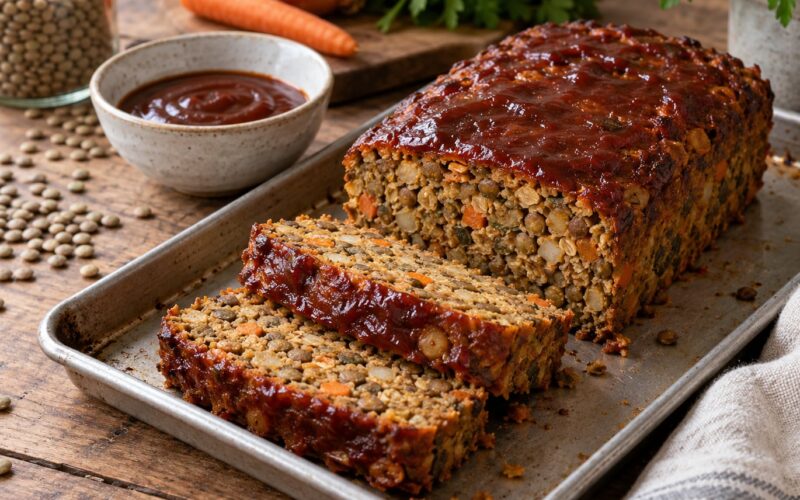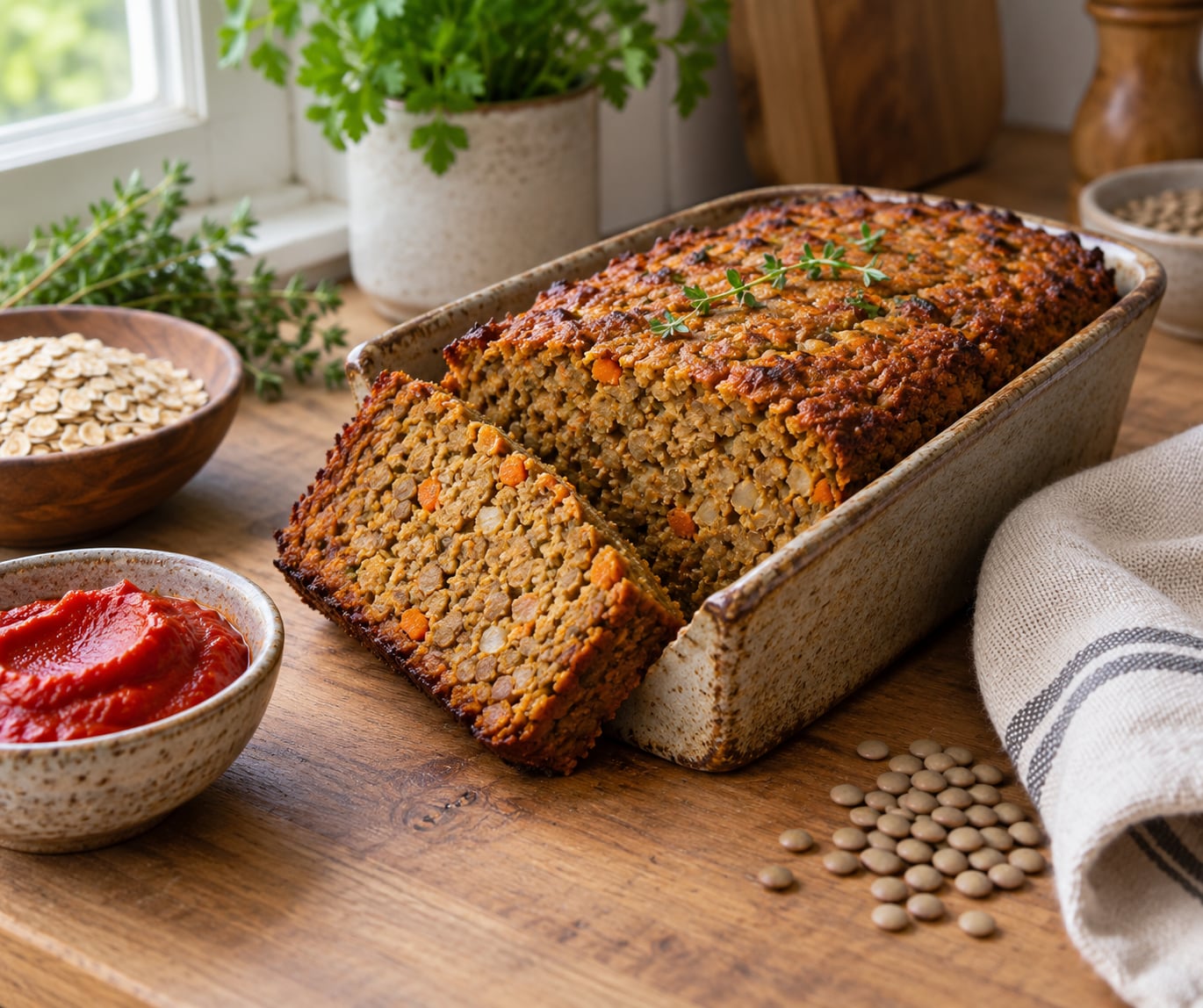
A moist lentil loaf comes down to four things: cook the lentils until completely soft, mash them while they are still wet, add a binder that holds water, and cover the pan with foil for the first part of the bake so the steam stays inside. Get those right and you get a tender, sliceable loaf that does not crumble or dry out by dessert. From prep to slicing it takes about an hour, most of it hands-off in the oven.
The loaf below is sized for an 8-inch pan and stays good vegan, gluten-free if you use the flax and oat route, and freezer-friendly. I have baked this version more than a dozen times, and the mistakes I made early on were all in the first two steps: undercooking the lentils and mixing too hard.
Table of Contents
- What You Need
- The base
- The binder
- The seasoning
- Equipment
- Which lentils to use
- Step-by-Step
- How to Keep Lentil Loaf Moist Before Baking
- How to Mix Lentil Loaf Without Making It Dense
- How Long to Bake Lentil Loaf for Moist Results
- Common Mistakes
- Frequently Asked Questions
- Why is my lentil loaf dry?
- Do I need to use a binder in lentil loaf?
- Can I make lentil loaf without eggs?
- How do I know when lentil loaf is cooked through?
- Can lentil loaf be made ahead and frozen?
- What side dishes go well with a moist lentil loaf?
- Conclusion
What You Need
Everything below fits a 9×5-inch loaf pan and serves four to six. Measure the lentils by weight if you can, since volume shifts a lot depending on whether they are cooked or dry, and weight is what tells you how much binder to add.
The base
- Lentils: 200 g (about 1 cup) dried brown or green lentils. Red lentils work too, with one caveat covered below.
- Water or vegetable broth: enough to cook the lentils plus 2 to 3 tablespoons extra.
- Tomato paste: 3 tablespoons. This is the single biggest moisture and flavour lever in the loaf.
- Vegetables: 1 small onion diced, 1 carrot grated, 2 to 3 stalks of celery diced. Mushrooms work well too and add a lot of umami.
- Oil: 2 tablespoons for the pan and the vegetables.
The binder
- Rolled oats, blended to flour: 1 cup. Oats hold noticeably more water than breadcrumbs, which is why oat-based loaves stay tender.
- Ground flaxseed plus water: 2 tablespoons flaxseed stirred into 6 tablespoons water, rested 10 minutes until gel-like. This is the egg replacer and the glue that keeps slices intact.
- Cornstarch: 2 tablespoons. It absorbs loose moisture and gives the crumb a slightly firmer set.
- Aquafaba: the liquid from a can of chickpeas, about 3 tablespoons, if you want more structure and a lighter crumb.
The seasoning
- 2 tablespoons nutritional yeast, 1 tablespoon tamari, 2 teaspoons smoked paprika, 1 teaspoon each of dried thyme, oregano and cumin, 1 teaspoon garlic powder, black pepper, and a pinch of salt.
- Half teaspoon baking powder, added right before the mixture goes in the pan so it has something to react with.
Equipment
A 9×5-inch loaf pan, a pot for cooking the lentils, a potato masher or food processor, a small skillet for the vegetables, and foil. A silicone or metal loaf pan bakes a little hotter than glass, so if you use one, check ten minutes early for doneness.
Which lentils to use
Cook time and water content decide how the loaf turns out, and most recipes skip that detail. Brown lentils hold their shape well and keep the most moisture, which makes them the safest first choice. Green and French lentils stay firmer, so pair them with more binder if using them whole. Beluga lentils are small and creamy but hold a lot of water, so drain them longer. Red lentils cook in 12 to 15 minutes and are very starchy, which makes them excellent binders but means they can go mushy; use them blended into a purée or mixed with a firmer lentil rather than alone.
Step-by-Step
How to Keep Lentil Loaf Moist Before Baking
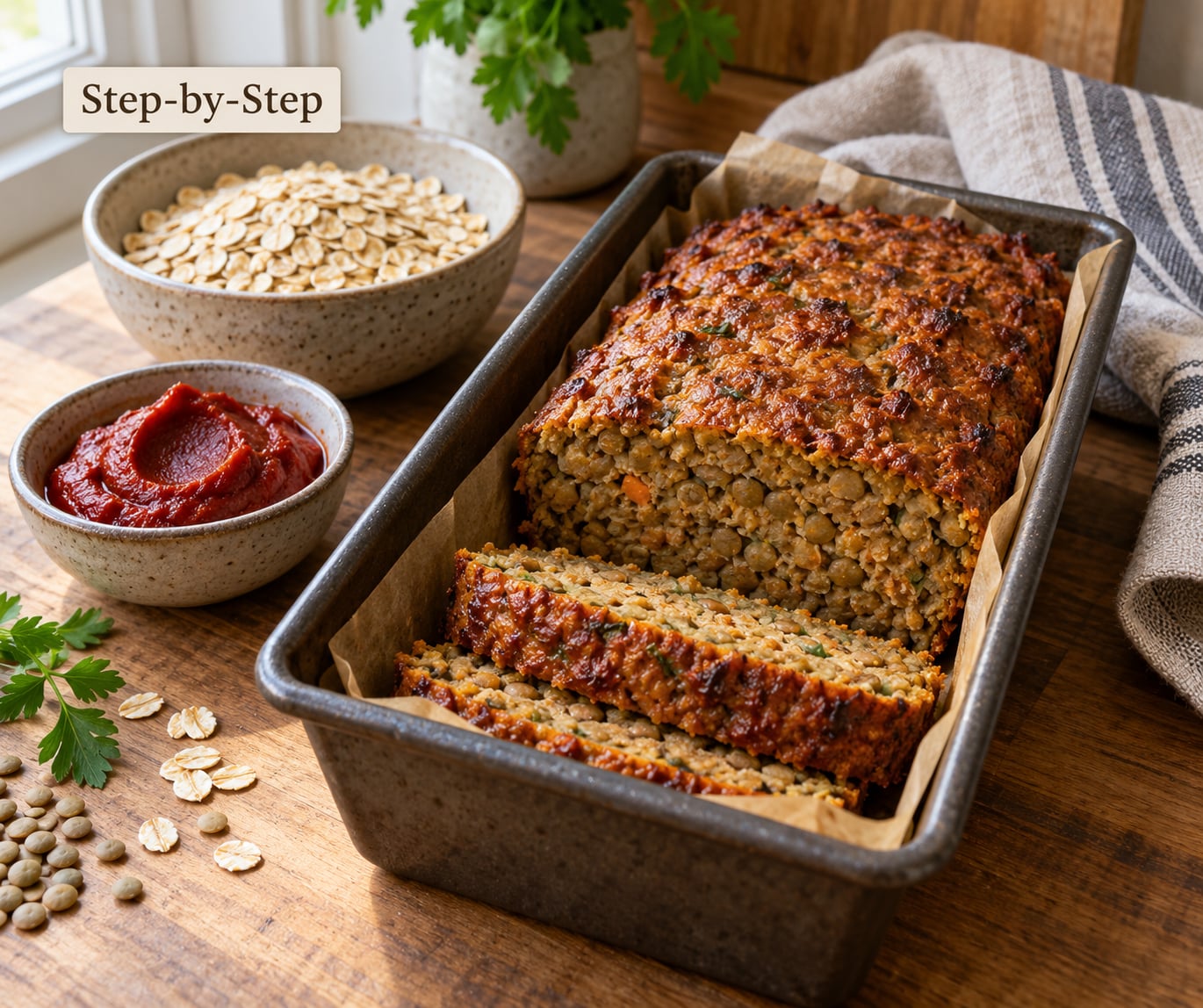
Cook the lentils in unsalted water or broth until they crush easily between two fingers, which takes 20 to 25 minutes for brown or green. Do not stop at “tender,” because undercooked lentils are the number one reason a loaf crumbles. Drain them and mash while they are still warm and wet, leaving about a quarter cup of the cooking liquid in the pot to add back. That leftover starch is free moisture and it helps the loaf bind.
Sauté the onion, carrot and celery in the oil for 6 to 8 minutes until soft and the pan looks dry. If you are using mushrooms, cook them until the water they release has boiled away and the pan bottom shows through. Skipping this step is the most common cause of a soggy bottom, and it is worth the extra five minutes.
Stir the tomato paste into the mashed lentils, then add the sautéed vegetables, the flax gel, the nutritional yeast, tamari and spices. Mix in the oat flour and cornstarch with a spoon until no dry pockets remain. The mixture should look like thick muffin batter: it holds its shape on the back of a spoon and slumps slowly when you tilt the spoon. If it clings in a stiff ball, add a tablespoon of broth at a time until it softens.
How to Mix Lentil Loaf Without Making It Dense
Stir the dry ingredients in first, wet ingredients second, then fold with a spatula. Mixing in circles with a spoon develops a tighter, cakier crumb, which is not what you want here. Fold until you can no longer see oat flour streaks and then stop, even if the mixture looks slightly uneven. A few small lumps are better than a dense loaf.
Do the squeeze test before the pan goes in. Scoop up a walnut-sized amount and squeeze it firmly in your fist. If it holds together as a solid piece without liquid squeezing out the top, the ratio is right. If it crumbles, you need more binder, and the cheapest fix is another tablespoon of oat flour. If water runs out of it, add oat flour and cornstarch together, a tablespoon each.
Scrape the mixture into a greased loaf pan and press it down evenly with the back of a spatula, leveling the corners. Compact it more firmly than feels comfortable. A dense-packed top bakes as one crust instead of breaking into cracks, and it gives you a cleaner slice later.
How Long to Bake Lentil Loaf for Moist Results
Heat the oven to 350°F (175°C). For a 9×5-inch pan, bake 30 minutes covered in foil, then 25 to 30 minutes uncovered at the same temperature. A 9-inch round or a loaf baked in two smaller pans will run 10 to 15 minutes longer, while 4-inch muffin portions bake in 22 to 28 minutes.
The foil stage does the real work. Lentil loaf dries out because the surface gives up water as vapour, and covering the pan traps that vapour so it condenses back into the loaf instead of escaping. Pull the foil off for the second stage so the top can brown and set, which also firms up the crust enough to hold a clean slice.
Skip the timer on your own and watch the loaf instead. It is done when a skewer pushed into the thickest part comes out with no wet batter clinging to it, the internal temperature in the centre has reached 200°F (93°C), and the top is deep golden brown. If the crust colours before the centre sets, tent a piece of foil over the pan instead of pulling the loaf out early, and give it another 10 minutes.
Rest the loaf in the pan for 10 minutes, then turn it out onto a rack and cool completely, usually 45 to 60 minutes, before slicing. Cutting into a warm loaf lets steam escape all at once and dries the crumb. The interior finishes firming as it cools, which is why a rested loaf slices cleanly and a rushed one falls apart.
Common Mistakes
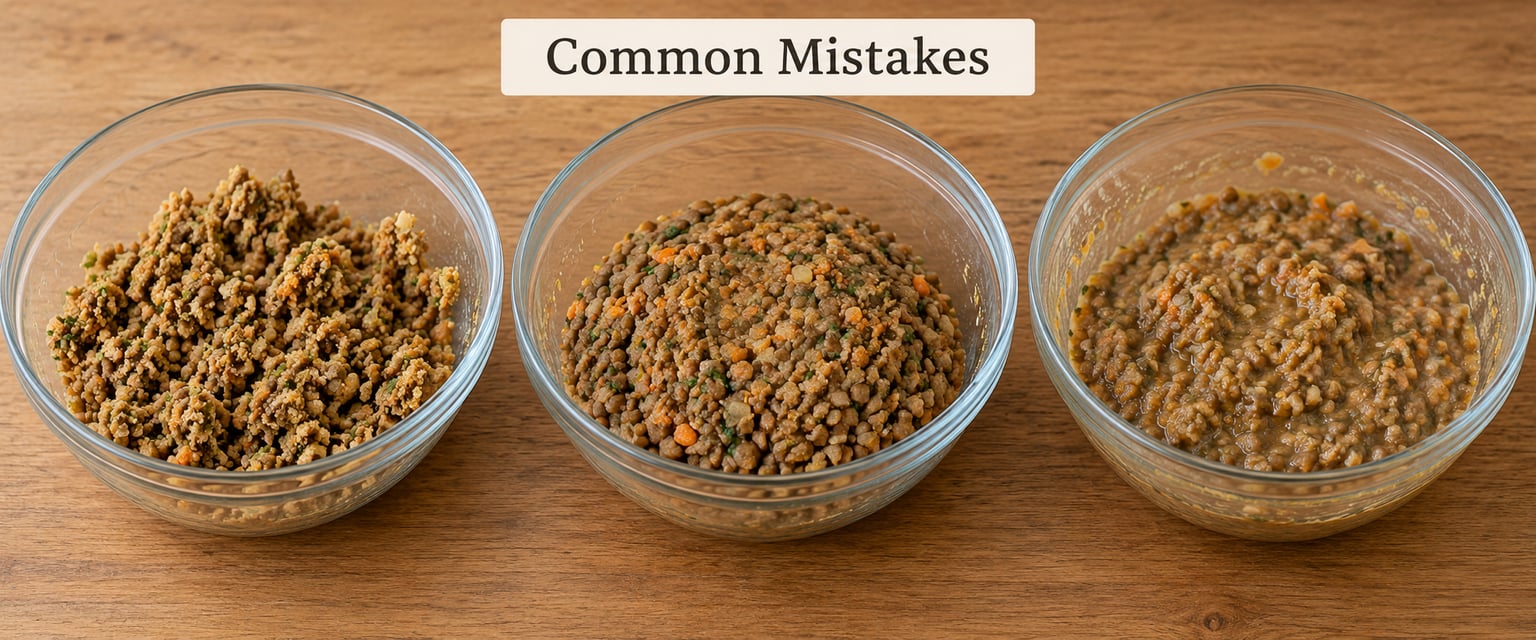
The loaf is dry and crumbly. Nearly always one of two causes: the lentils were undercooked, or the mixture was too lean. Cook them until they crush easily, keep a splash of cooking liquid in the mash, and add oats rather than breadcrumbs. If you are already following the recipe and it still dries out, wrap the top in foil for the entire bake and check the doneness temperature rather than the clock.
It falls apart when you try to lift a slice. The mixture was under-mixed or under-bound. Fold a further tablespoon of oat flour and a tablespoon of ground flaxseed with a splash of water into the remaining mixture, press it into the pan, and bake as directed. Also make sure you cooled it fully, since a warm loaf has not finished setting.
It comes out dense and heavy. You mixed too much. Freshly mashed lentils only need gentle folding, and a wooden spoon used like a whisk will compact them. Dense loaves also come from pressing too hard, so pack the mixture firmly but stop once the surface is level.
The bottom is soggy. Your vegetables released water into the batter. Sauté them until the pan is visibly dry, or drain the cooked lentils more thoroughly than feels necessary. Adding a couple of tablespoons of quick oats on top of the drained mixture draws up the free water before it reaches the pan.
The top cracks open. That is usually overbaking plus a dry surface, and occasionally a loaf that was pressed too loosely. Cover the pan for the first half of the bake and lower the temperature by 25°F if your oven runs hot.
Once baked, keep the loaf wrapped. Refrigerate it for up to four days and reheat slices in a dry skillet for two minutes a side, which crisps the edges and revives the texture better than a microwave. For longer storage, wrap the cooled loaf tightly in two layers of foil or seal it in a bag, freeze for up to three months, and thaw in the refrigerator overnight rather than on the counter. Thawing warm lets moisture out; a slow cold thaw keeps it in the loaf.
Frequently Asked Questions
Why is my lentil loaf dry?
Dryness usually comes from one of four things: undercooked lentils, a mixture that was too lean, a pan left uncovered for the whole bake, or slicing the loaf while it was still warm. Cook the lentils until they crush easily between your fingers, keep some cooking liquid in the mash, and cover the pan with foil for the first 30 minutes so the steam condenses back in.
Do I need to use a binder in lentil loaf?
You need something that holds water and sticks together, and the options are not equal. Oat flour is the most forgiving and holds the most moisture. Ground flaxseed mixed with water gels and acts like egg. Cornstarch firms the crumb and absorbs loose liquid. Breadcrumbs work, but they absorb rather than retain, so a breadcrumb loaf dries out faster than an oat one.
Can I make lentil loaf without eggs?
Yes, and most plant-based versions are egg-free anyway. Two tablespoons of ground flaxseed stirred into six tablespoons of water and rested for 10 minutes replaces one egg. Aquafaba, the liquid from a can of chickpeas, whips like egg white and gives a lighter loaf. For a gluten-free version use the flax with oat flour and cornstarch instead of wheat breadcrumbs.
How do I know when lentil loaf is cooked through?
Use three cues rather than the clock. A skewer in the thickest part comes out clean with no wet batter on it, the centre reaches 200°F (93°C), and the top is deep golden brown. If the crust colours early, tent foil over the pan and give it another 10 minutes, since a fast-browning surface does not mean the middle has set.
Can lentil loaf be made ahead and frozen?
Yes. Some cooks find it slices more cleanly after resting overnight in the fridge, which firms the crumb. Cool it completely, wrap it tightly in two layers of foil or seal it in a freezer bag, and freeze for up to three months. Thaw in the refrigerator overnight, then reheat slices in a dry skillet for two minutes per side.
What side dishes go well with a moist lentil loaf?
A moist loaf does not need much on the plate. A thin mushroom or onion gravy adds more moisture and suits a holiday table, while a cold yogurt or cucumber sauce balances the warmth and cuts the density. Roasted root vegetables, a green salad with a sharp dressing, and crusty bread for soaking up the pan juices all work well.
Conclusion
If you change one thing after reading this, make it the lentils. Fully cooked, mashed while wet, and mixed with a measured binder is the base that everything else builds on, and it is where a dry or crumbly loaf almost always starts. From there, fold gently rather than stir, cover with foil for the first half of the bake, and judge doneness with a skewer and a temperature reading rather than the clock. Let it cool fully before slicing and you will get a tender, sliceable loaf that still tastes good on day three.
The method is not fussy, and it has not changed much in 2026 because it never depended on anything trendy. It works whether you are after a vegan meatloaf substitute for a weeknight dinner or a make-ahead centrepiece for a holiday table.