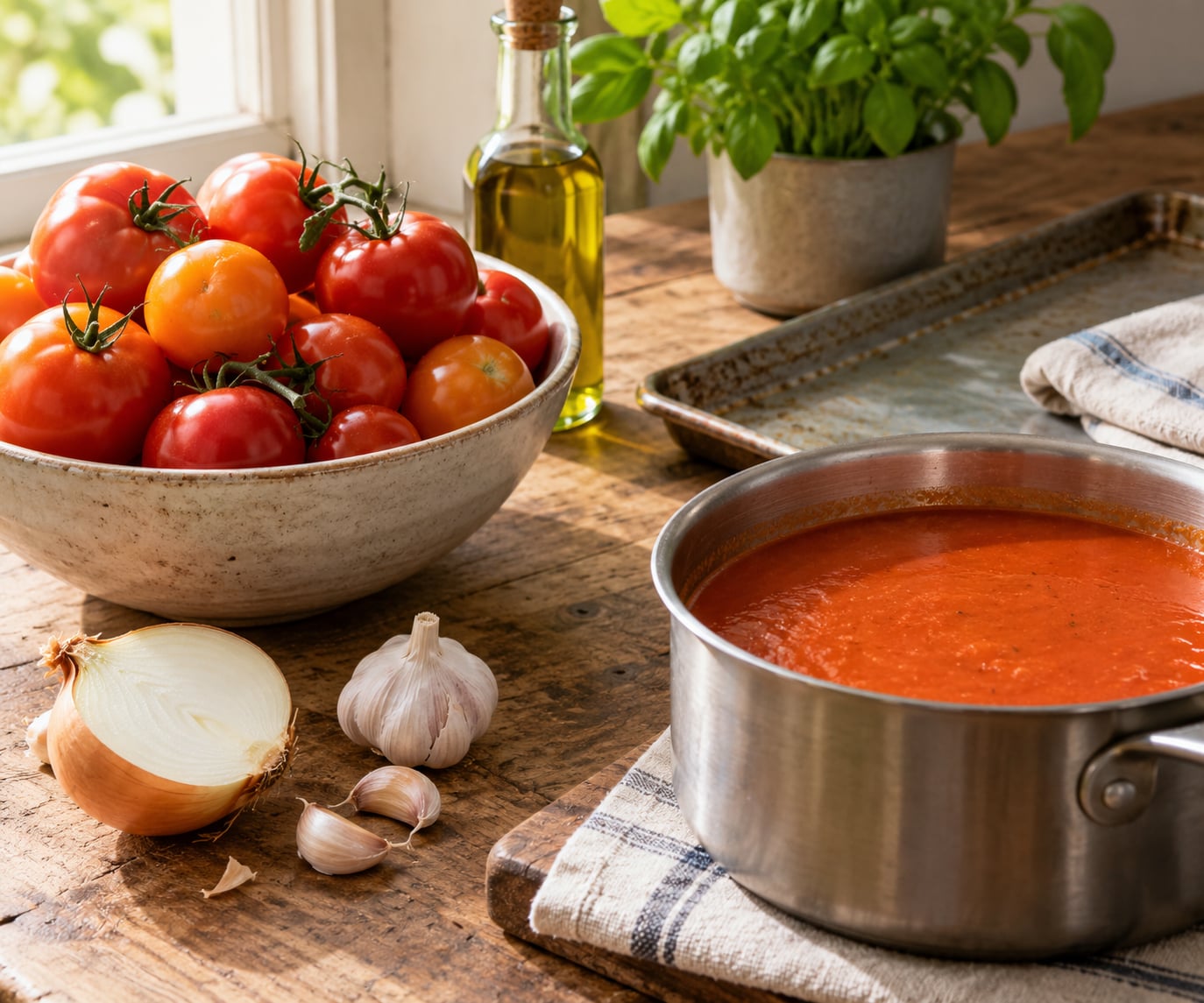
How to make tomato soup from fresh tomatoes comes down to three moves: roast the tomatoes hard, blend them smooth, then simmer briefly with aromatics and broth. A batch takes about an hour, most of it unattended in the oven, and the result tastes nothing like the canned stuff.
The reason to bother with fresh tomatoes at all is what roasting does to them. Oven heat drives off water and caramelizes the sugars along the cut edges, so a tomato that tasted merely okay raw becomes sweet and deep in thirty minutes. The same heat raises lycopene levels, which is the pigment that gives tomato soup its red color.
You’ll need about three pounds of ripe tomatoes for six servings, and the only real equipment is a sheet pan and something to blend with. If your tomatoes are peak-season and slightly imperfect, that’s exactly what you want. Save the ugly ones.
Table of Contents
- What You Need
- Produce
- Liquid and Seasoning
- Optional Finishes
- Equipment
- How ripe the tomatoes should be
- Step-by-Step: How to Make Tomato Soup from Fresh Tomatoes
- 1. Roast the tomatoes at 425F for 35 to 45 minutes
- 2. Build the base in the pot for 8 minutes
- 3. Add the roasted tomatoes and broth, then simmer 20 minutes
- 4. Blend until smooth, working in batches
- 5. Season, balance the acid, and finish
- Common Mistakes and Helpful Tips
- The soup is watery and tastes diluted
- The soup tastes too sour
- The dairy curdled into grains
- The bottom of the pot scorched
- No oven, or a hot summer day
- Using up a tomato glut
- Making it vegan and gluten-free
- Frequently Asked Questions
- What are the best tomatoes for fresh tomato soup?
- How do I make fresh tomato soup smooth without blending it hot?
- How can I thicken tomato soup made with fresh tomatoes?
- Can I make tomato soup with fresh tomatoes instead of canned ones?
- How long does homemade fresh tomato soup keep in the refrigerator?
- Is fresh tomato soup vegan and gluten-free?
- Conclusion
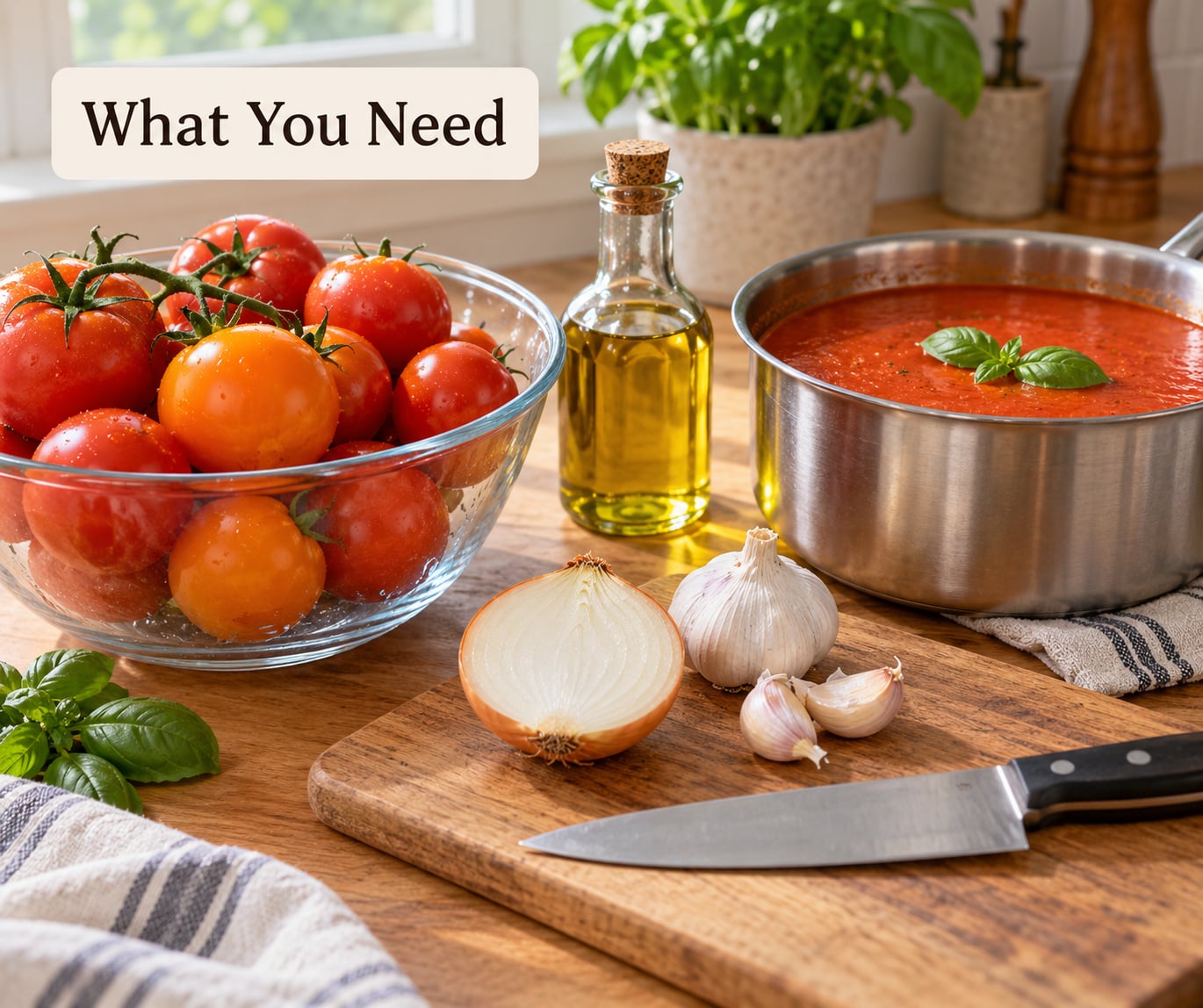
What You Need
Produce
- 3 pounds fresh ripe tomatoes, about 8 to 10 medium or 2 large Roma, halved
- 1 medium yellow onion or sweet onion, cut into wedges
- 6 cloves garlic, left in their skins
- 1/4 cup fresh basil leaves, torn, plus a few stems for the pot
Liquid and Seasoning
- 3 tablespoons olive oil, divided
- 2 cups vegetable broth or chicken stock
- 1 teaspoon smoked paprika
- 1/2 teaspoon dried oregano
- 3/4 teaspoon fine sea salt, plus more to taste
- 1/4 teaspoon black pepper
Optional Finishes
- 1/2 cup heavy cream or half-and-half, warmed through before adding
- 1 teaspoon sugar or a small pinch of baking soda, only if the soup tastes sharp
- 1 tablespoon balsamic vinegar, added off the heat
Equipment
A rimmed sheet pan, a large pot or Dutch oven, and either an immersion blender or a countertop blender. An immersion blender is easier and safer here because you blend in the pot. A food mill or fine mesh sieve gives you the silkiest texture if you want to push the pulp through after blending.
How ripe the tomatoes should be
Riper is sweeter and less acidic, which means less correcting later. Under-ripe tomatoes carry more acid and less sugar, and no amount of simmering fully hides that. Over-ripe ones that are a bit soft or oddly shaped are ideal for soup, since the roast will not care. Discard anything with a sour smell or a moldy spot.
Scaling is simple. Double the recipe for six pounds of tomatoes and use two sheet pans, since crowding the pan steams the tomatoes instead of roasting them. Tripling works in two ovens, or in batches on the same pan across an afternoon.
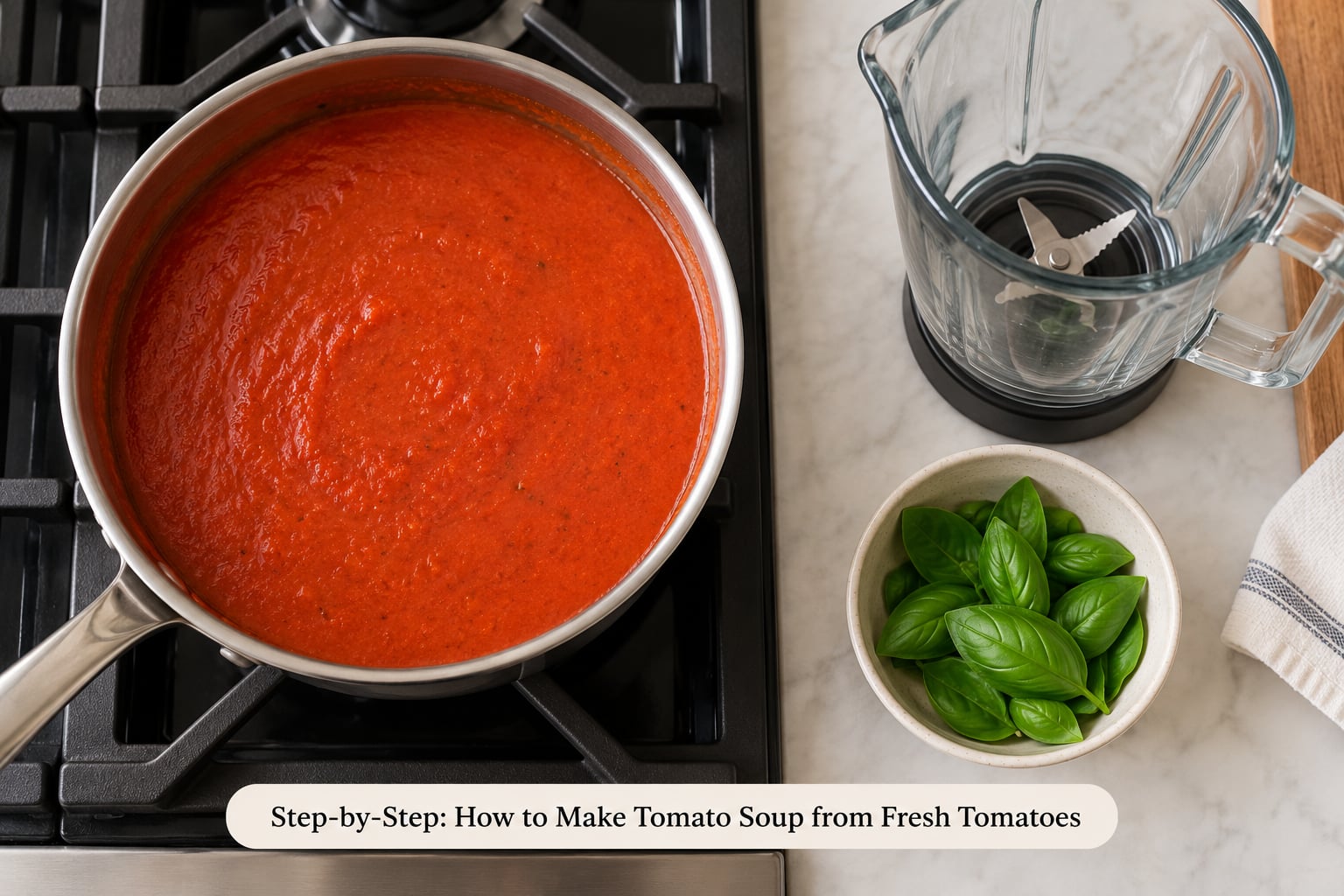
Step-by-Step: How to Make Tomato Soup from Fresh Tomatoes
1. Roast the tomatoes at 425F for 35 to 45 minutes
Heat the oven to 425F (220C). Toss the halved tomatoes, onion wedges, and unpeeled garlic with 2 tablespoons of the olive oil, then season with half the salt and pepper. Spread everything cut side down in a single layer on the sheet pan. Crowding traps steam, and steamed tomatoes never caramelize.
Roast until the cut faces are collapsed and caramelized at the edges, and a tomato juices when you press it with a spoon. That takes 35 minutes for ripe tomatoes and closer to 55 for firm heirlooms. If liquid pools in the pan near the end, spoon it out and keep going.
2. Build the base in the pot for 8 minutes
While the tomatoes roast, heat the remaining tablespoon of oil in your pot over medium heat. Add the onion with a pinch of salt and cook 6 to 8 minutes until soft and translucent. You want it lightly caramelized, not browned, or the whole soup turns bitter.
Squeeze the roasted garlic cloves out of their skins and stir them into the onion. Add the smoked paprika and oregano and stir for 30 seconds until fragrant.
3. Add the roasted tomatoes and broth, then simmer 20 minutes
Tip everything from the sheet pan into the pot, including all the roasting juices. Add the basil stems and the broth. Bring to a boil, then lower the heat so the soup barely bubbles, and simmer for 20 minutes. A hard boil is the single most common mistake in this recipe; it dulls the flavor and breaks any dairy you add later.
After 20 minutes, roughly half the liquid should have cooked away. That reduction is what makes the soup taste like more than a reheated can.
4. Blend until smooth, working in batches
Take the pot off the heat and let it stop steaming hard. If you have an immersion blender, blend directly in the pot, tilting the pot so the blade stays submerged and pulling it slowly up and down. Pulse rather than run the motor continuously, and keep the blade under the surface to stop splatter.
For a countertop blender, blend in two or three batches and never more than half full. Remove the center cap from the lid and cover the hole with a folded kitchen towel, then start on low. A sealed jar of hot soup builds pressure fast and will blast the lid off.
For restaurant-smooth texture, pass the puree through a fine mesh sieve or a food mill. Expect to lose a quarter of the volume, so skip the sieve if you want to keep the full yield.
5. Season, balance the acid, and finish
Taste before adding salt. Fresh tomatoes carry plenty of it already, and salting too early dulls the aromatics. If the soup is sharp, add a teaspoon of sugar or a scant quarter teaspoon of baking soda, stir, and taste again. If it tastes flat rather than sour, the answer is salt, not sugar.
Warm the cream in a small pan until it is barely steaming, then stir it in off the heat. It should never hit a boil, or the proteins will clump and the soup will turn grainy. Add the balsamic vinegar and torn basil at the very end.
Common Mistakes and Helpful Tips
The soup is watery and tastes diluted
This is the most common complaint in every home cooking forum, and it has four fixes. Simmer uncovered until the volume drops by a third, which takes 10 to 20 minutes. Next best, add a ladleful of the roasted tomato solids you set aside before blending. You can also blend in a slice of torn bread with the olive oil for a starch-free thickener. For protein and body, add half a cup of white beans and blend them in; nobody guesses.
Prevention is easier than repair. Roast to the point where the pan juices are nearly gone, and use firm tomatoes rather than the mushy ones.
The soup tastes too sour
- Taste with a clean spoon first, because sourness and lack of salt can feel identical.
- Add 1 teaspoon sugar and simmer 5 minutes, then taste again.
- If it is still sharp, add a scant 1/4 teaspoon of baking soda and stir. It neutralizes acid instantly, but too much flattens the flavor, so go slowly.
- For a creamy soup, finish with warm dairy, which rounds the acidity without dulling the tomato.
- Check your broth. Salty broth plus underseasoned tomatoes is a common source of thin, harsh soup.
The dairy curdled into grains
Once soup is grainy you cannot un-curdle it, so the fix is for next time. Add cream or milk off the heat with the soup below a simmer, warm the dairy first, and add it in a thin stream while stirring. Canned tomatoes are more acidic than fresh ones, so fresh-tomato soup curdles less often than most people expect.
The bottom of the pot scorched
Scrape the burnt layer off with a wooden spoon and move the rest to a clean pot. If it tastes bitter, salvage what you can with a little cream and more basil, but heavily scorched soup usually needs starting over. Stir every few minutes during the reduction, use medium-low heat rather than high, and use a pot with a heavy bottom if you have one.
No oven, or a hot summer day
Skip the roast and go straight to the stovetop. Sweat the onion, add 3 pounds of chopped fresh tomatoes with garlic, paprika, and broth, then simmer 30 to 40 minutes until the fruit collapses. Blend and season the same way. You lose the caramelized depth, so add a teaspoon of sugar even if the soup does not taste sweet yet.
A countertop slow cooker works too: three hours on high, or four to five on low, with everything in at once and no browning step. Texture is softer and the flavor is a little flatter, but nobody has to stand at the stove.
Using up a tomato glut
Home cooks with garden surpluses routinely roast, blend, and freeze the finished puree in portioned containers rather than juggling with whole raw tomatoes later. Roast the fruit, blend it with a splash of broth, and freeze flat in bags. For a winter soup, thin it with stock as it simmers and finish it off.
For preserving, follow a tested recipe from your state extension service or Ball. Do not improvise processing times, and note that dairy and fresh herbs do not belong in home-canned soup because neither is safe in a sealed jar.
Making it vegan and gluten-free
Use vegetable broth instead of chicken stock, olive oil instead of butter, and skip the cream entirely. A scoop of coconut milk stirred in off the heat adds the same richness and stays vegan. The base recipe already contains no wheat, so it is naturally gluten-free as written; watch the broth label, since some brands add wheat-based thickeners.
Frequently Asked Questions
What are the best tomatoes for fresh tomato soup?
Roma and plum tomatoes are the most reliable choice: dense flesh, few seeds, low water content, and a sweet-tart balance that survives roasting. Heirlooms work well and give more character, but pick ripe or over-ripe ones because firm heirlooms need a longer roast and taste sharper. Avoid pale, hard, under-ripe tomatoes entirely, since no amount of simmering removes their acidity.
How do I make fresh tomato soup smooth without blending it hot?
Push the cooled puree through a fine mesh sieve or a food mill. Blend it warm rather than cold for the best of both worlds: you keep most of the flavor and avoid the pressure risk of blending a screaming-hot pot. A hand-held mesh strainer over a second bowl, with a spatula pushing the pulp through, is the setup most home cooks end up using.
How can I thicken tomato soup made with fresh tomatoes?
Simmer the soup uncovered until it drops by about a third, stirring often, which concentrates flavor as well as texture. For more body, blend in half a cup of white beans or a torn slice of bread. Both add thickness without flour, and the beans also add protein. A tablespoon of cornstarch slurry works too, though it dulls the roasted flavor slightly.
Can I make tomato soup with fresh tomatoes instead of canned ones?
Fresh tomatoes are what you are doing here, and the whole method is built around them. If you have a jar of passata or plain tomato sauce on hand, you can use it as a shortcut base: add it to the pot with your roasted fresh tomatoes, skip the extra broth, and simmer for 10 minutes instead of 20. You get a faster soup with a little more body.
How long does homemade fresh tomato soup keep in the refrigerator?
Fresh tomato soup keeps about 3 to 4 days in the refrigerator, stored in a sealed container and cooled before it goes in. Fresh tomatoes carry more water and fewer preservatives than canned, so it does not hold as long. Reheat only the portion you plan to eat, over medium-low heat, stirring until it steams. Freeze anything beyond that window.
Is fresh tomato soup vegan and gluten-free?
The base recipe is both, as long as you use vegetable broth rather than chicken stock. Leave out the cream for a vegan soup, or stir in coconut milk at the end for a creamy texture that stays plant-based. Nothing in the soup contains wheat. Double-check your broth label, because some brands thicken with wheat or contain gluten-containing flavorings.
Conclusion
Start by roasting three pounds of ripe tomatoes cut side down at 425F until the edges caramelize, because that single step is what separates this from canned-tomato soup. Then simmer with aromatics for 20 minutes, blend carefully, and season only after you taste.
Once you make it a few times, treat the recipe as a starting point rather than a formula. More roasting for depth, less broth for body, coconut milk or cream at the end. A grilled cheese sandwich and a bowl of this is about as good as a weeknight meal gets.