How to peel tomatoes for sauce comes down to one short trick: blanch them. Drop ripe tomatoes into heavily boiling water for 30 to 60 seconds, shock them in ice water, and the skins slide off in your hand. The whole batch takes about 15 minutes including prep, and the difficulty is low once the ice bath is ready.
That process is called blanching, and it is what every Italian nonna and most restaurant kitchens rely on. I have made batch after batch of late-summer garden sauce this way, and it still beats every shortcut I have tried on more than a few tomatoes.
A few more methods work nearly as well. Freezing whole tomatoes and peeling them after they thaw is the least fussy option when you already have surplus. A vegetable peeler handles three or four very ripe tomatoes without any heat at all. Here is how each one works, and what each one costs you.
Table of Contents
- What You Need
- Step-by-Step
- How to Blanch and Peel Tomatoes
- How to Peel Tomatoes by Freezing
- How to Peel Tomatoes With a Vegetable Peeler
- Common Mistakes
- Frequently Asked Questions
- What is the easiest way to peel tomatoes for sauce?
- Do I need to peel tomatoes before making tomato sauce?
- Can I peel tomatoes without blanching or freezing them?
- How long should I blanch tomatoes so the skins come off?
- What kind of tomatoes are best for peeling?
- Should I remove the seeds before making tomato sauce?
- Conclusion
What You Need
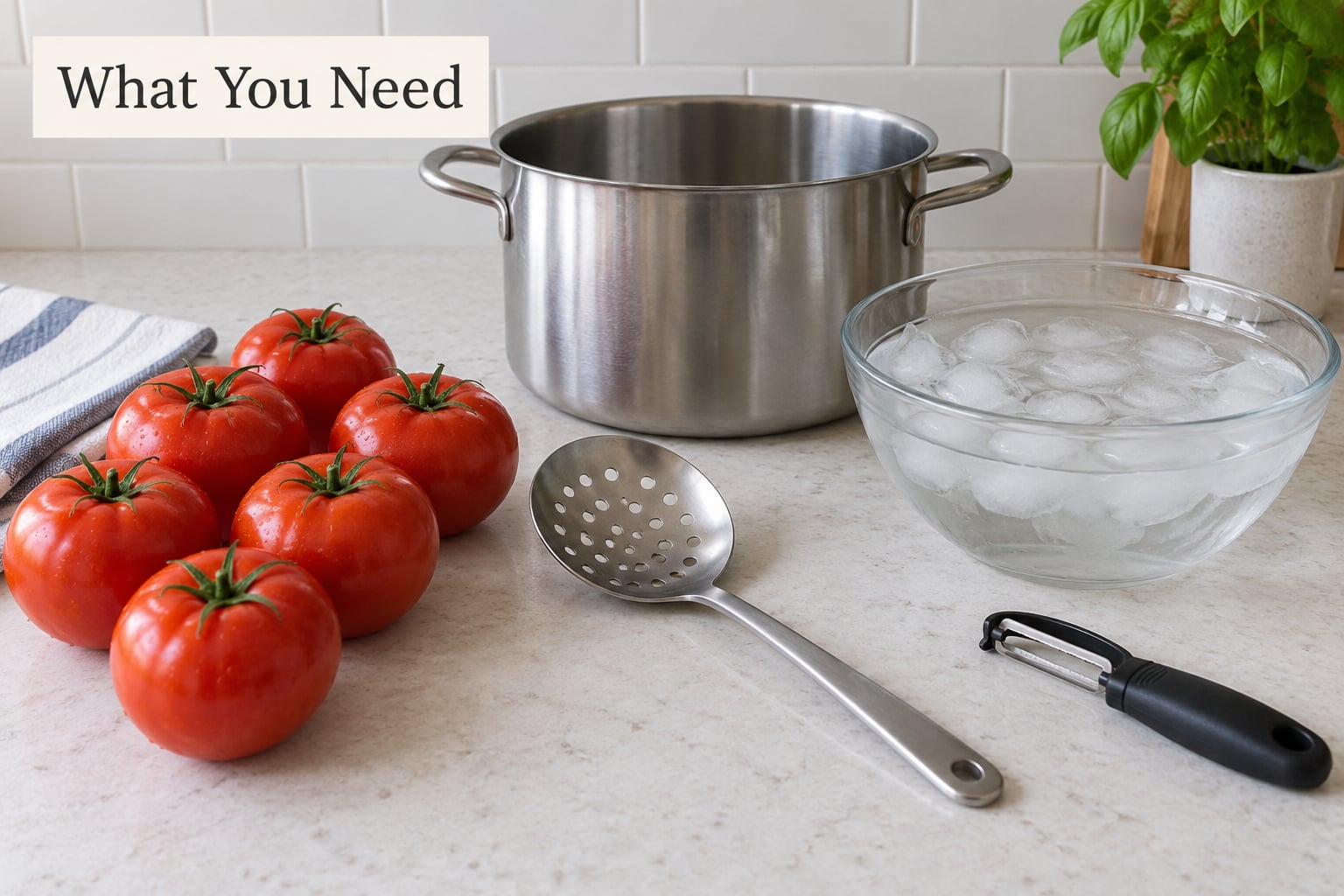
Pick tomatoes that are ripe, firm, and free of deep cracks. Underripe fruit has skin that will not loosen no matter how long you blanch it, and very soft tomatoes fall apart the moment they hit hot water. Roma and plum varieties are the easiest; cherry and grape tomatoes are the hardest.
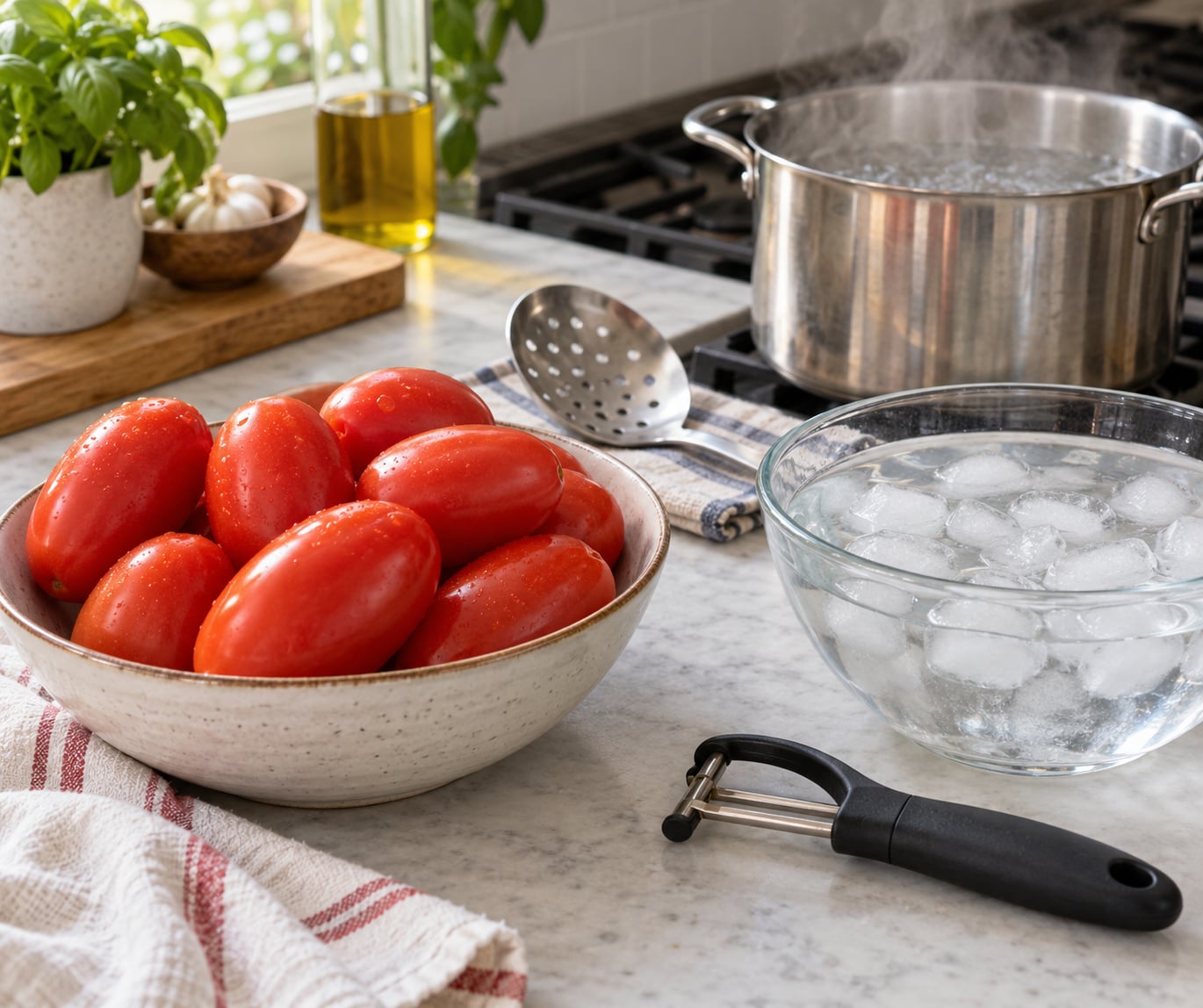
For the blanching method you need a large pot with enough water to submerge the tomatoes without crowding them, a big bowl of ice water set on the counter beside the stove, and a slotted spoon. Have the ice bath ready before the water boils. That is the step everybody rushes, and it is the one that makes the skins slip.
Cutting a shallow X in the bottom of each tomato comes next. A paring knife or a small sharp knife handles this in a few seconds per fruit. A colander or the pot’s own insert lifts the tomatoes out of the hot water.
The freezing method needs almost nothing but a freezer bag and a bowl. Set the tomatoes whole on a tray first if you are freezing more than a dozen, so they freeze individually instead of into one brick. The peeler method needs a Y-peeler and a paring knife for the stem end.
Optional extras that make a large batch easier: a food mill or a tomato press for the skin-heavy work later, and a colander set over a bowl to catch the pulp you squeeze out.
Step-by-Step
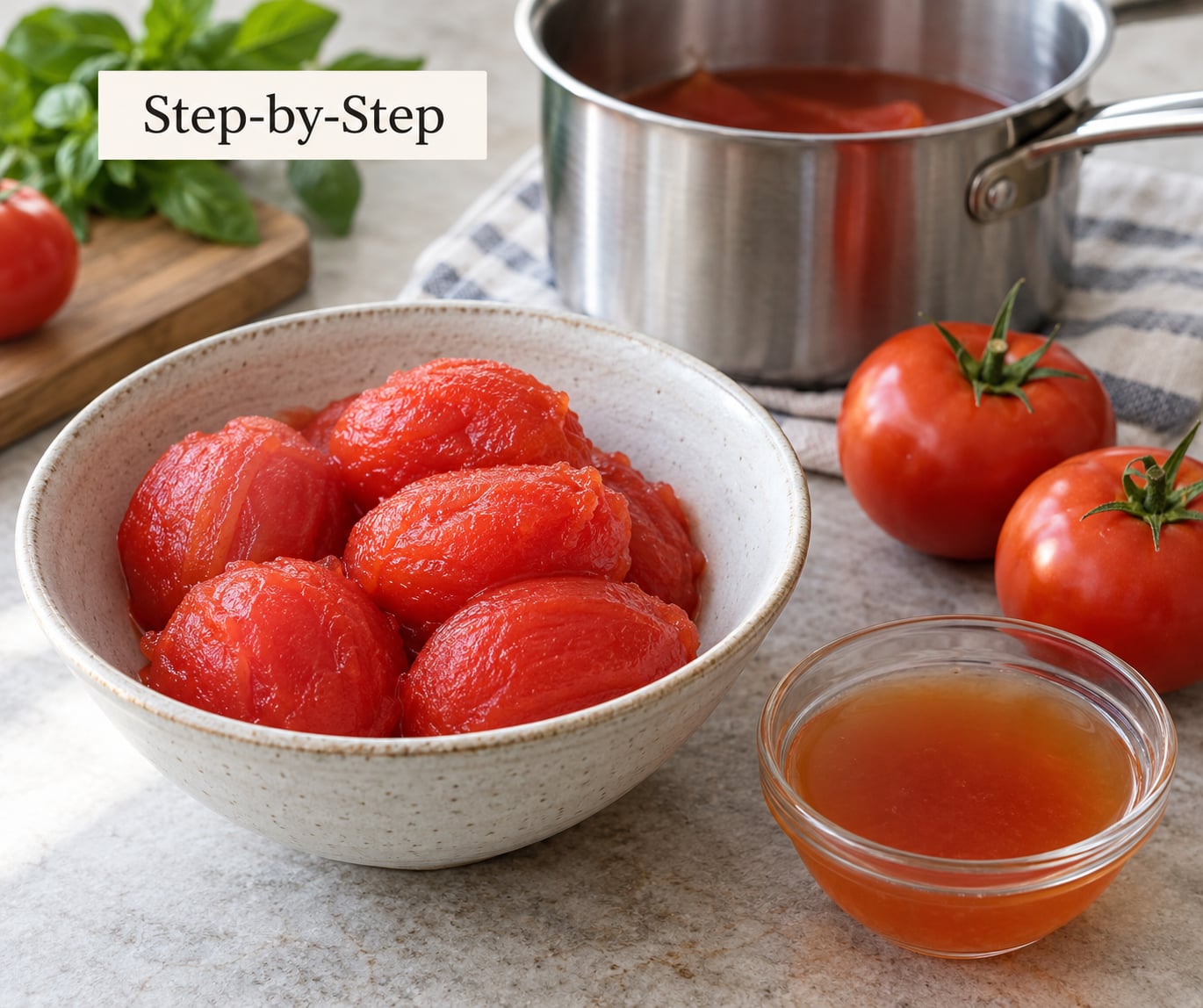
How to Blanch and Peel Tomatoes
- Score an X in the blossom end. The blossom end is the pale, dimpled side opposite the stem. Cut about a quarter inch deep so the skin breaks into four flaps that curl back. Scoring the stem end works too, but the blossom end gives you a cleaner lift.
- Bring a large pot of water to a rolling boil. It needs to be boiling hard, not simmering. Cold or lukewarm water is the single most common reason skins refuse to budge, because the temperature never gets high enough to break the skin’s cell walls fast.
- Lower the tomatoes in with a slotted spoon. Work in batches of a dozen or so. Lower each one slowly against the side of the pot, and use a spoon to hold it under for the first second so it does not float or burst. Do not drop them in from height.
- Blanch for 30 to 60 seconds. That is the whole window. You are looking for the skin to look dull and slightly wrinkled with the edges lifting away from the flesh, not the tomato turning soft. Larger Roma tomatoes sit at the upper end of that range.
- Move them straight into ice water for a minute or two. The cold shock stops the cooking instantly and lets steam condense between skin and flesh, which is what makes the peel separate cleanly instead of tearing.
- Peel with your fingers under a gentle stream of cool water. The skin comes off in whole strips. Under the tap you are not chasing slippery fruit around the bowl, and any juice that escapes goes down the drain instead of on the counter.
You do not need to peel a tomato in your hand at all. Slit the X with the paring knife, and once the tomato is cool, lift the four skin flaps and pull the skin off in one piece.
How to Peel Tomatoes by Freezing
Freezing is the method forum cooks recommend most, and it is the easiest one going. Freeze is not what makes it work; the slow thaw is. Ice crystals form between the skin and the flesh, and the skin loosens on its own during the thaw.
Wash the tomatoes and pull off the stem. Lay them on a tray, freeze them for two to four hours until solid, then move them to a bag or container so you do not have to chip at a block of ice later. Leave the lid cracked for the first few hours if condensation worries you.
Thaw overnight in a bowl in the fridge, or under cool running water for the fast version. Once thawed, the skins are paper-thin and rub off with a thumb. Do not thaw in a microwave for large batches. Uneven heating turns the outside to water while the center stays frozen solid.
Use this when your tomatoes are already destined for freezing anyway, since there is no second blanching step later. If you are canning instead, peel after thawing and pack the jars warm, since tomatoes that are only thawed can hold enough water to dilute the liquid in the jar.
How to Peel Tomatoes With a Vegetable Peeler
A vegetable peeler is the right tool for a small batch of very ripe tomatoes and the wrong tool for everything else. A firm tomato tears into ragged strips and takes a third of its flesh with the skin.
Score a shallow X at the blossom end with a paring knife. That breaks the skin’s grip, so you can set the peeler shallow and take off two or three thin passes rather than digging in.
Work in a bowl in the sink and save what comes off. Tomato juice runs fast and stains everything it touches. Peeling the fruit over a bowl catches that juice, and it goes straight into the sauce.
Save the peels too, if you keep a broth pot going. They go into the freezer bag with onion ends and carrot tops for a week of vegetable broth.
| Method | Time per batch | Best batch size | Texture result |
|---|---|---|---|
| Boiling water blanch | 15 minutes | 2 to 20 pounds | Firm, bright, skins gone clean |
| Freeze and thaw | Overnight plus 15 minutes | 5 pounds or more | Slightly soft, ideal for cooked sauce |
| Vegetable peeler | 3 minutes | 2 to 4 tomatoes | Any, but you lose some flesh |
| Broiler | 8 minutes at 500 degrees | 1 to 2 pounds | Roasted, sweet, good for soup |
| Food mill or press | 45 minutes, mostly simmering | Any size | Smooth, seeds out too |
One honest note: for a simple cooked sauce, plenty of experienced cooks skip peeling entirely. Chop the tomatoes, cook them down for 45 minutes, and run the result through a food mill, which strains out skins and seeds in one pass. If you have a mill, that is usually less work than peeling. For canning whole tomatoes, peeling still matters, because you want uniform pieces in the jar.
Common Mistakes
Overcooking is the number one mistake. Five minutes in boiling water turns a tomato into a bag of water and seeds. Watch for the skin wrinkling and lifting at the edges, then pull the batch out. If someone tells you to boil them for ten minutes, they are cooking a different dish.
Starting with cold water. Put the tomatoes in before the water boils and you will simmer them for ten minutes while nothing happens to the skins. Bring the water to a rolling boil first, then lower the tomatoes in.
Peeling damaged or very soft fruit. Bruised spots and splits turn to mush in hot water and clog the ice bath. Cut those away before blanching, or set damaged tomatoes aside for the compost heap rather than putting them in the pot.
Losing the juice while seeding. Cut the tomato in half across the equator, scoop out the seed pockets with a spoon, and press the pulp down into the bowl. Then squeeze the pulp over the seeds and drop them. That recovers most of what a hollowed-out tomato throws away.
Confusing peeling with seeding. These are separate jobs. Most home cooks who peel tomatoes leave the seeds in and cook them whole, because a long simmer softens them. Seed only when the texture bothers you or when you are packing jars, where clear liquid matters.
Forgetting the ice bath. Without it, the tomatoes keep cooking in the drain basket and the skins stick back to the flesh. Keep the water cold enough that it stays near fridge temperature through the whole batch.
Burning your fingers. A canning blogger called it the least favorite part of harvest season, and it is a fair description. Use the slotted spoon, keep a towel within reach, and drop the tomato in the ice bath rather than trying to peel it while it drips on the burner.
Frequently Asked Questions
What is the easiest way to peel tomatoes for sauce?
Blanching is the easiest method for most cooks. Score an X in the bottom, drop the tomato into heavily boiling water for 30 to 60 seconds, then move it to ice water for a minute or two. The skin wrinkles and loosens, then slides off under a stream of cool water. It takes about 15 minutes for a full batch and needs one pot, one bowl of ice, and your fingers.
Do I need to peel tomatoes before making tomato sauce?
Not for most cooked sauces. A long simmer softens tomato skins, and a food mill strains them out along with the seeds. Peeling matters when the texture of the skin shows, in cold sauces like gazpacho and ketchup, and when you are packing whole tomatoes in jars, where uniform pieces look and store better.
Can I peel tomatoes without blanching or freezing them?
Yes. Score a shallow X in the blossom end with a paring knife, then use a vegetable peeler in thin passes. This works on very ripe tomatoes in a small batch, where blanching is not worth the setup. It also works in reverse: run the skins under hot water for a few seconds and they often release on their own.
How long should I blanch tomatoes so the skins come off?
Thirty to sixty seconds in fully boiling water. Watch the skin rather than the clock: it should look dull, wrinkled, and lifting slightly at the cuts you made. If the tomato has gone soft and the flesh is breaking apart, you have gone a minute or two too far. Ice water stops the cooking instantly.
What kind of tomatoes are best for peeling?
Roma and plum tomatoes are the easiest. Their skins are thick but they hold their shape in hot water, and a ripe Roma releases its skin in 30 to 45 seconds. Beefsteak and slicing varieties work well too. Cherry and grape tomatoes are the hardest, since they are small enough to turn to mush before the skin loosens. The broiler handles them best.
Should I remove the seeds before making tomato sauce?
Most of the time you can leave them. Seeds break down in a long cook and add body to a sauce, and a food mill takes them out if you want them gone. Seed the tomatoes when the sauce is short on cooking time, when you are packing jars and want clear liquid, or when you are reducing a cold soup like gazpacho.
Conclusion
Start with blanching when you have more than a few pounds: 30 to 60 seconds in rolling boil, an ice bath, and the skins come off in whole strips. Freeze them if your tomatoes are going in the freezer anyway, and let the thaw do the work. Reach for the vegetable peeler when it is three or four very ripe tomatoes and you do not want to boil water. And if you own a food mill, consider skipping the peeling entirely.