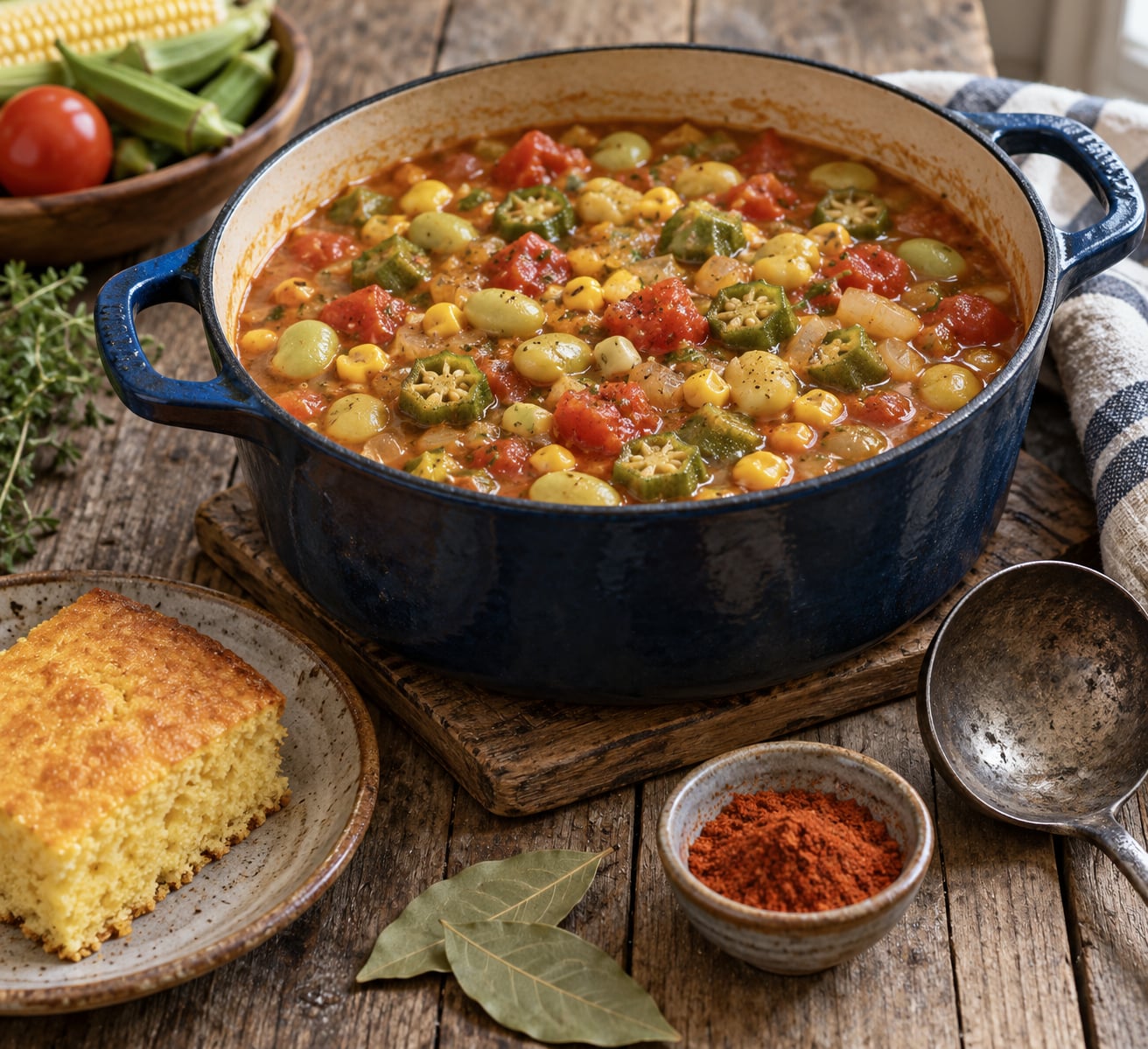
Brunswick stew without meat gets its weight from beans and browned plant protein instead of pork, and its soul from tomatoes, corn, okra and a measured hit of smoke. Brown the protein first, simmer everything in one pot for about 45 minutes, and mash a few potatoes into the broth to thicken it. It tastes like the real thing, not like a side dish pretending to be dinner.
The reason most meatless attempts fall flat is skipping the browning step and leaning on sweet barbecue sauce for flavor. Fix those two things and the rest is straightforward. Total time is about an hour, most of it hands-off.
Table of Contents
- What You Need for Brunswick Stew Without Meat
- Step-by-Step
- How to make brunswick stew without meat: build the vegetable base
- How to make brunswick stew without meat: add the tomatoes and beans
- How to make brunswick stew without meat: simmer until hearty
- How to make brunswick stew without meat: finish and serve
- Common Mistakes
- Why does my meatless Brunswick stew taste flat?
- How do I fix a watery or gluey stew?
- Why do my beans turn to mush?
- How do I cut the sweetness and keep it gluten-free?
- Frequently Asked Questions
- What makes Brunswick stew without meat taste hearty?
- Is this Brunswick stew recipe naturally gluten-free?
- What can I use instead of okra?
- How do I make vegan Brunswick stew thicker?
- How long does meatless Brunswick stew keep in the refrigerator?
- Conclusion
What You Need for Brunswick Stew Without Meat
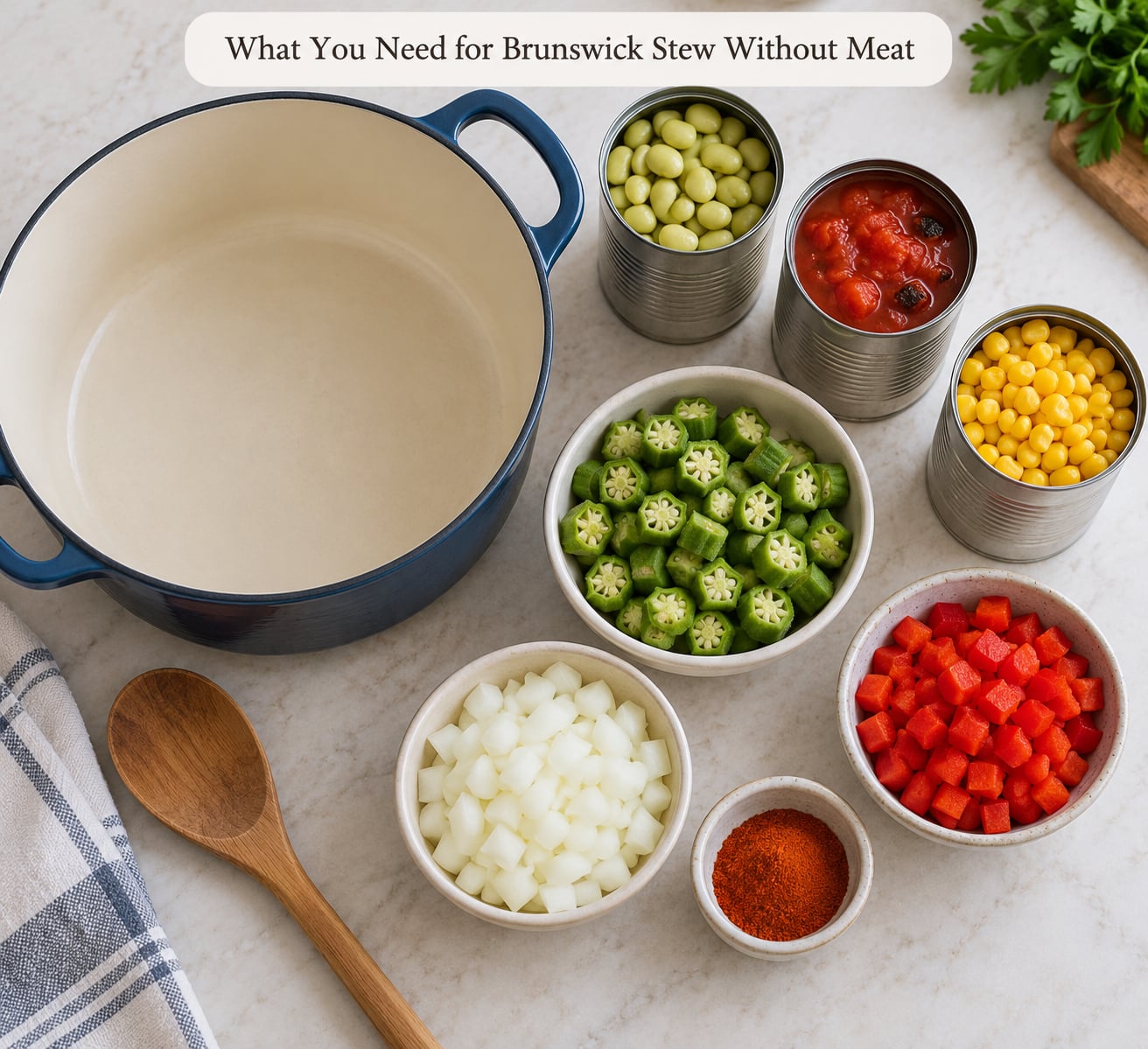
Almost everything here comes from a can or a bag, which is what makes this a weeknight pot rather than a project. The one rule is that the protein gets seared before it ever sees liquid.
For the stew:
- 2 tablespoons olive oil or avocado oil
- 1 large yellow onion, diced (about 1 cup / 150 g)
- 1 red bell pepper, diced (1 cup / 130 g)
- 2 stalks celery, diced (1 cup / 100 g), optional
- 4 cloves garlic, minced
- 1 medium russet or Yukon Gold potato, peeled and diced small (1 cup / 140 g)
- 1 (28 oz / 794 g) can crushed or fire roasted tomatoes
- 2 (15 oz / 425 g) cans lima beans or butter beans, drained and rinsed
- 1 cup (145 g) frozen or canned corn kernels
- 1 cup (120 g) sliced okra, optional but traditional
- 4 cups (950 ml) low sodium vegetable broth
- 3 tablespoons tomato paste
- 2 tablespoons vegetarian Worcestershire-style sauce (use a certified gluten-free brand, or coconut aminos)
- 2 tablespoons no-sugar-added barbecue sauce
- 1 to 2 teaspoons liquid smoke, divided
- 2 teaspoons smoked paprika
- 1 teaspoon garlic powder
- 1 teaspoon black pepper
- 1/2 teaspoon cayenne or red pepper flakes
- 2 bay leaves
- 1 tablespoon nutritional yeast (optional)
- Salt to taste, added near the end
For the plant protein, pick one or combine two: 1 (14 oz / 397 g) can shredded jackfruit, 8 oz / 227 g tempeh, 1 cup rehydrated TVP, or 6 oz / 170 g soy curls.
Equipment and timing: a heavy Dutch oven or 4-quart pot with a lid, a wooden spoon, and a potato masher. Prep takes about 15 minutes, cooking takes 40 to 50 minutes, and the pot yields six generous servings. It thickens further as it cools, so plan on loosening it with broth when reheating.
For the protein choice, texture matters more than anything else. All of these options are meatless and cook from a can or a dry package, but they behave very differently in a long simmer.
- Jackfruit shreds into strands, the closest match to pulled pork, and it drinks up smoke better than anything else on the list. The default choice when you want a meaty bowl.
- Tempeh is a firm cube that softens but keeps a bite, and it holds smoke well once seared. Good for adding body alongside jackfruit.
- TVP is spongy and drinks up broth fast, and it browns nicely if you give it a few minutes in a hot pan. The cheapest way to bulk up the pot.
- Soy curls start springy and turn chewy if they simmer too long, and they absorb smoke only fairly well. Add them for the last 20 minutes only.
- Seitan is dense, meaty and chewy, with excellent smoke absorption. The best choice for a gluten-tolerant eater.
- Mushrooms go soft and meaty when you brown them hard, and they take on smoke very well. The deepest umami per minute of effort.
Skip seitan if you are keeping the pot gluten-free, and reach for a certified gluten-free Worcestershire-style sauce since the standard one usually contains wheat.
Step-by-Step
How to make brunswick stew without meat: build the vegetable base
Heat the oil in the Dutch oven over medium heat. Add the onion, bell pepper and celery and cook for 8 to 10 minutes, stirring every couple of minutes, until the edges look translucent and a few pieces have picked up light brown spots. That browning is where the sweetness and depth come from, and skipping it is the most common reason a plant-based stew tastes thin.
Push the vegetables to the edges, add the garlic, and stir for 30 seconds until you can smell it from across the kitchen. Scrape the browned bits off the bottom of the pot with the back of your spoon. That fond is the closest thing this dish has to fat and smoke, and it goes straight into the broth.
How to make brunswick stew without meat: add the tomatoes and beans
Add the diced potato and stir to coat it in the oil for a minute, then pour in the crushed tomatoes and the tomato paste. Cook for 3 minutes, stirring, until the paste darkens from bright red to brick and the mixture stops smelling raw. This short step is what separates a real stew from tomato soup.
Now add the lima beans, corn and okra, the Worcestershire-style sauce, the barbecue sauce, the smoked paprika, the garlic powder, the black pepper, the cayenne and the bay leaves. Stir it all together, scraping the bottom clean.
Add the vegetable broth and the seared plant protein. Bring the pot to a boil, then turn the heat down. If the liquid sits more than an inch above the vegetables, you have too much, and you should either simmer it uncovered for longer or lift a cup of broth out with a ladle.
How to make brunswick stew without meat: simmer until hearty
Cover the pot and simmer gently for 30 to 35 minutes, stirring every 8 to 10 minutes so nothing catches on the bottom. You want a lazy bubble, not a rolling boil, and you want a bare wisp of steam escaping at the lid seam.
At the 20 minute mark, add the first 1/2 teaspoon of liquid smoke. Taste with a clean spoon, and if you want more, add the second 1/2 teaspoon. Liquid smoke goes from pleasant to acrid in about a teaspoon, so measure it rather than pouring.
The stew is ready when the potato is completely fork-tender and the liquid has reduced enough that a spoon dragged through the pot leaves a clean channel that closes slowly. Mashing a third of the potato right in the pot will thicken it further.
How to make brunswick stew without meat: finish and serve
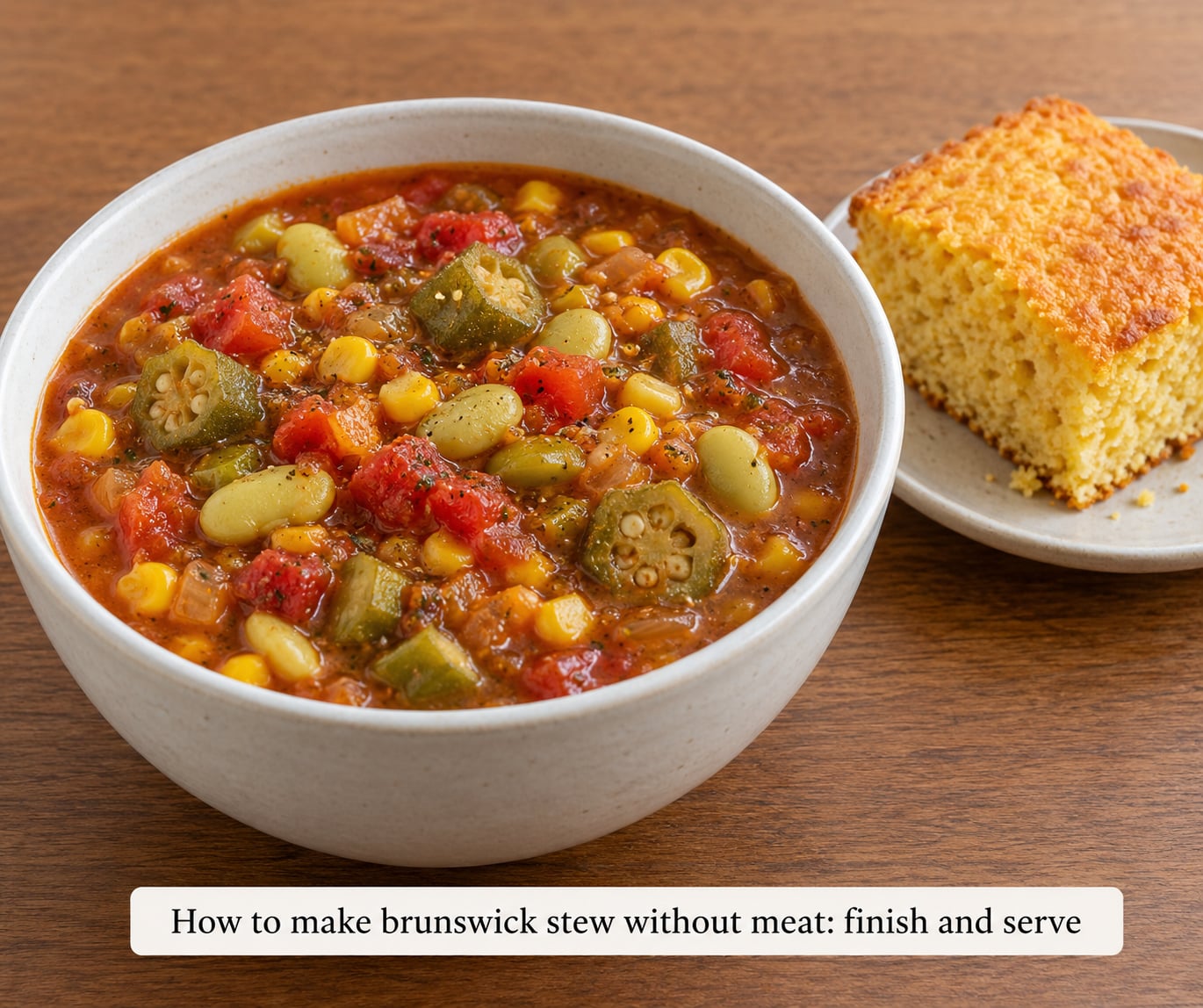
Kill the heat, fish out the bay leaves, and taste again. This is when the salt goes in, along with a splash of vinegar if the tomato reads as flat or too sweet. Stir in the nutritional yeast off the heat, then let the pot sit for 10 minutes so the flavors settle instead of fighting each other.
Serve it with cornbread, which is the traditional partner and the best use of the crumbs. A biscuit works just as well, and rice is a fine move if you want to stretch the pot further. A spoonful of pickled jalapenos or hot sauce on top cuts the tomato nicely.
For leftovers, cool the stew on the counter for no more than two hours, then refrigerate it in a covered container for up to four days. Reheat on the stove over low heat with a splash of broth, stirring often, and only add liquid while you are reheating so the thickness stays where you want it. For longer storage, freeze it flat in a sealed container for up to three months and thaw it in the fridge overnight.
Common Mistakes
Why does my meatless Brunswick stew taste flat?
Nine times out of ten, the protein went in raw. Sear jackfruit, tempeh, TVP or mushrooms in a hot pan with a little oil until they brown, then add them to the pot. Browning produces the savory compounds that a scoop of barbecue sauce cannot fake.
After that, check your salt. Tomato, beans and broth are all moderately salty on their own, and underseasoned stew reads as watery even when it is not. Add salt in small amounts at the end and taste between each pinch.
How do I fix a watery or gluey stew?
Too thin? Simmer it uncovered for another 10 to 15 minutes, stirring, until it reduces. You can also mash a ladleful of potato into the pot, or stir in a cornstarch slurry made from 1 tablespoon cornstarch and 2 tablespoons cold water.
Too thick? Loosen it with hot vegetable broth a quarter cup at a time. Remember that the stew thickens noticeably as it cools, so serve it slightly looser than you think you want.
Why do my beans turn to mush?
Long, unattended simmering is the cause. Add firm lima beans or butter beans during the last 25 minutes rather than at the start, and save delicate beans entirely for the end. Using canned beans instead of dried also helps, because they need only reheating, not cooking from scratch.
Soy curls and other quick-cooking proteins have the opposite problem. They go chewy and rubbery if they simmer for hours, so stir them in near the end of the cook.
How do I cut the sweetness and keep it gluten-free?
Most of the sugar in a traditional pot comes from bottled barbecue sauce and from sweet corn. Use a no-sugar-added sauce and add your own pinch of molasses if you miss the depth, or use a small amount of maple syrup and half the amount you would normally reach for.
For gluten-free, use certified gluten-free tamari or coconut aminos instead of soy sauce, a gluten-free Worcestershire-style sauce, and vegetable broth from a label you have checked. Corn and rice are naturally gluten-free, and okra, lima beans and most lentils are too. Skip the seitan and the croutons, and serve it with cornbread made from a gluten-free blend.
Frequently Asked Questions
What makes Brunswick stew without meat taste hearty?
Beans, browned plant protein and a starchy potato all do the work that meat does in a traditional pot. Lima beans give body and protein, seared jackfruit or tempeh gives chew, and mashed potato thickens the broth so a spoon stands up in it. Smoked paprika, a measured splash of liquid smoke, and tomato paste supply the savory depth that a bland vegetable broth cannot.
Is this Brunswick stew recipe naturally gluten-free?
Nearly so. Lima beans, corn, okra, tomato, potato, smoked paprika and liquid smoke are all naturally gluten-free, and nutritional yeast is usually fine too. Two things can break it: bottled Worcestershire-style sauce, which often contains wheat, and cross-contamination on a shared grill or cutting board. Use a certified gluten-free Worcestershire alternative and a tamari or coconut aminos instead of soy sauce.
What can I use instead of okra?
Okra is traditional and it thickens the broth naturally, but it is not essential. Green beans add a similar vegetable texture with a milder flavor, and they do not contribute mucilage, so your stew stays a little cleaner. Diced green bell pepper works if you want body without any grassy note, and simply leaving it out is fine. The beans and potato already handle thickening.
How do I make vegan Brunswick stew thicker?
Mash a ladleful of the cooked potato directly into the pot and stir it through. That is the oldest method and the best one, because the starch is already flavored by the broth. A cornstarch slurry made from 1 tablespoon cornstarch and 2 tablespoons cold water also works if you need a fast fix. Reduce the pot uncovered for 10 to 15 minutes if you would rather not add anything at all.
How long does meatless Brunswick stew keep in the refrigerator?
Four days is the safe window, stored covered in the refrigerator at or below 40 F. Cool the pot on the counter for no more than two hours first, then move it into the fridge rather than putting a steaming hot pot directly in. Plant proteins like TVP and soy curls keep well, but the vegetables soften, so expect slightly less texture on day four and add a splash of broth when reheating.
Conclusion
Dice the onion, pepper, celery and potato, drain the beans, and get the Dutch oven on the stove. That is the whole list of things standing between you and a pot of Brunswick stew without meat, and the browning step at the front is the one that decides how it turns out.
Simmer it until the potato gives way and the broth moves like a slow pour, then let it sit for ten minutes before you taste. Serve it with a square of cornbread while it is still hot, and save the rest for the days when you want dinner to be already made.