Morels must be cooked thoroughly before you eat them, every time, with no exceptions. Raw and undercooked morels can cause nausea, vomiting and abdominal pain, and the fix is heat: a dry sauté in a hot pan, then butter and aromatics, brings the mushrooms past the point where they are tender, browned and fully cooked through. Here is how to cook morel mushrooms safely, from cleaning to serving, in about 30 minutes of active time.
Morel season in the Appalachians runs roughly mid-April to mid-May, after a few days of rain followed by sunny days. If you have a basket on the counter right now, the order of operations matters more than the recipe. Inspect first, clean second, cook third.
Table of Contents
- What You Need
- Choosing morels that are worth cooking
- Storing fresh morels before you cook them
- What not to buy or eat
- Step-by-Step
- Step 1: Inspect and Clean the Morels Properly
- Step 2: Decide Whether to Cook Them Raw or First
- Step 3: Slice or Leave Whole Mushrooms
- Step 4: Cook Until Tender and Well Done
- Step 5: Season Near the End
- Step 6: Serve or Store the Cooked Mushrooms
- A note on the Appalachian way with morels
- Common Mistakes
- Soaking morels in standing water
- Expecting cooking to fix a bad identification
- Crowding the pan
- Adding fat too early
- Using low heat and patience
- Moving them too early
- Salting at the start
- Eating a mushroom someone identified on the internet
- Expecting food-safety advice to substitute for medical care
- Frequently Asked Questions
- Are morel mushrooms toxic if not cooked?
- Can you still eat false morels?
- How do you know if a mushroom is a real morel?
- What do you soak morels in before cooking?
- How long will morel mushrooms stay fresh in the refrigerator?
- I accidentally ate a raw morel mushroom. What should I do?
What You Need
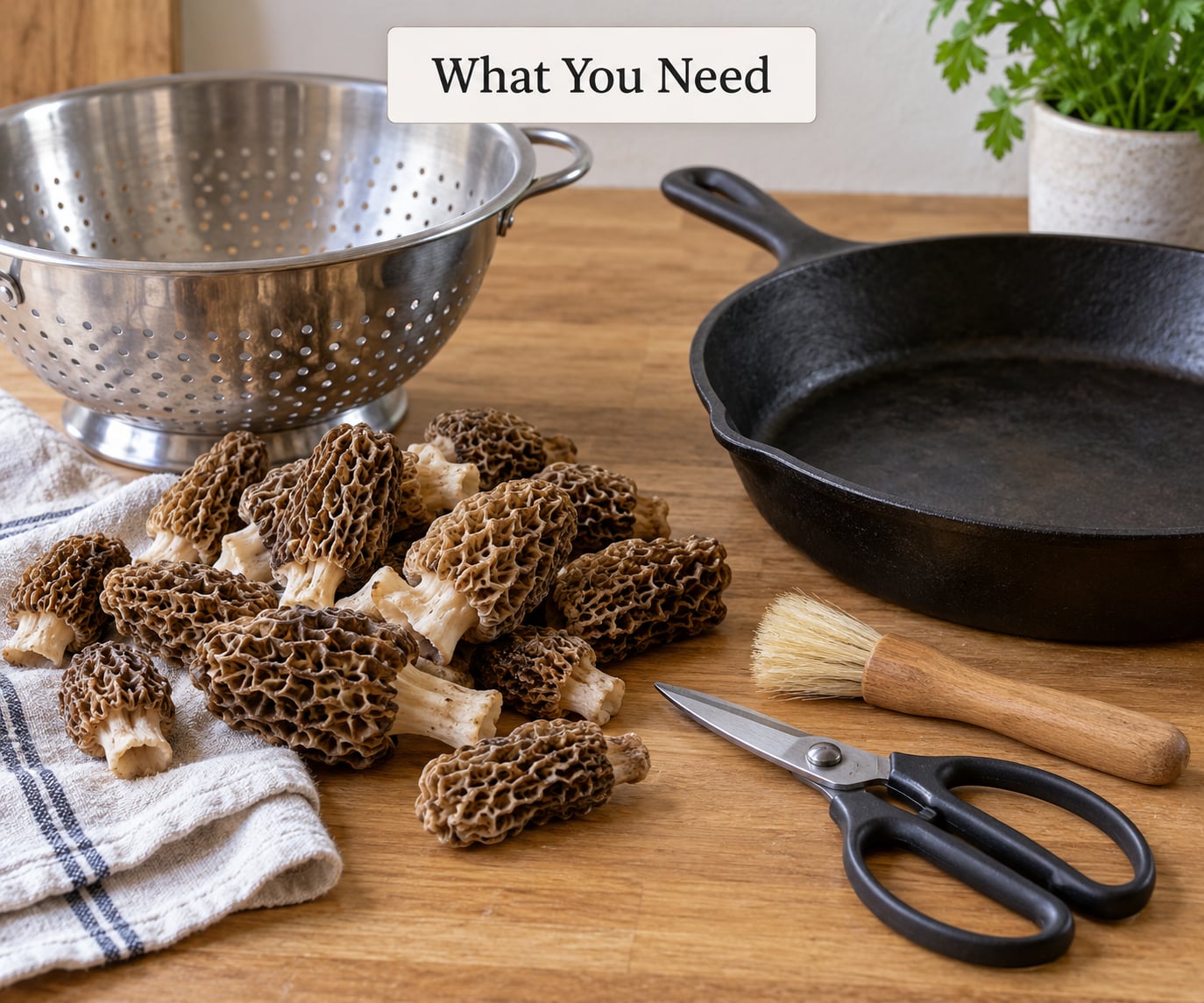
For the actual cooking you need very little: a heavy skillet, a little fat, salt, and something to cut with.
- Fresh morels from a farmers market, a specialty grocer, or your own foraged haul
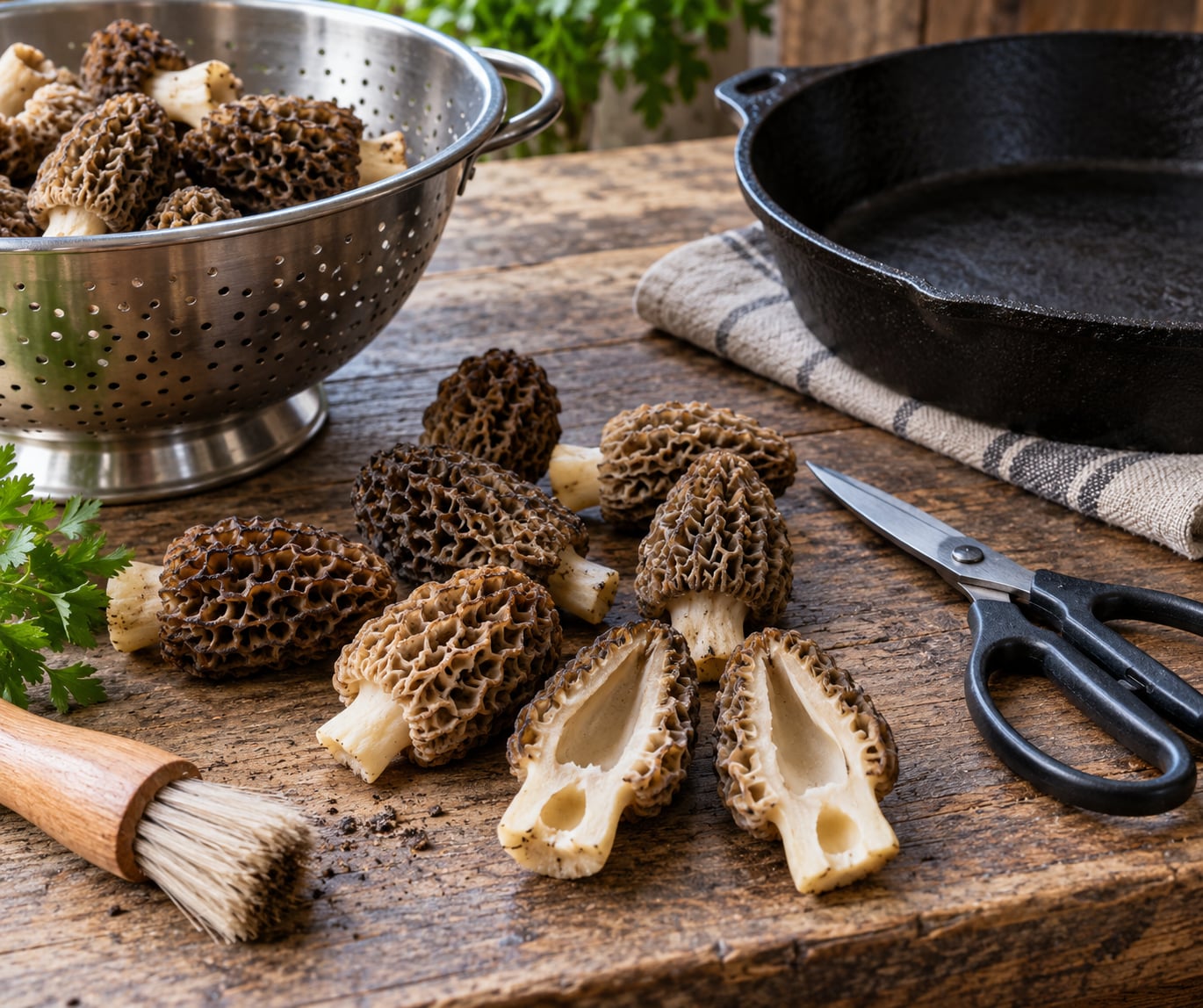
- A colander or basin plus a soft mushroom brush or a clean toothbrush
- Kitchen scissors for trimming dirty stem ends and cutting larger caps
- A heavy skillet — cast iron or stainless steel both work; cast iron gives you the best sear
- A neutral oil or butter, or both
- Salt and black pepper
- Optional aromatics: garlic, shallot, thyme, a splash of white wine or sake, and a squeeze of lemon
Choosing morels that are worth cooking
Freshness in a morel looks different than it does in a button mushroom. You are not looking for a taut, unbroken surface; you are looking for dryness and firmness.
Pick morels that feel firm for their size and weigh a little for their shape. Smaller, drier, tighter specimens keep their texture best. Larger older morels are still good, but they need a longer dry sauté and they lose more water in the pan.
Walk away from any morel that is slimy, has visible fuzzy mold, smells sour or off, or has a cap that has gone soft and black at the edges. A little browning on the ridges is normal. A hollow, collapsed, damp cap is not.
Storing fresh morels before you cook them
Do not wash morels before storing them. Moisture plus closed surfaces equals sogginess, and you cannot dry a soggy morel back.
Put the unwashed morels in a paper bag or a loosely closed container lined with a paper towel, and refrigerate them. Use them within two to three days. A sealed plastic container traps condensation and softens the caps faster than the paper does.
Longer storage means drying or freezing. Dried morels keep for months and need rehydrating before use, which we cover in Step 4.
What not to buy or eat
Morels cannot be farm-grown, so everything you buy or pick is wild, and wild means identification is your job. If a seller cannot tell you the species with confidence, or if a bag arrives unlabeled and unidentified, do not cook it on the assumption that cooking will sort it out.
That assumption is the single most dangerous myth in this article, and Step 1 takes it apart in detail.
Step-by-Step
Step 1: Inspect and Clean the Morels Properly
Cleaning morels well means removing dirt and bugs gently, without soaking them, and confirming you are holding true morels and not their lookalike.
Start with a dry inspection. Check each mushroom for dirt packed in the ridges, soft spots, mold, an unusual odor, or a damaged cap. Break off anything questionable. Morels are inexpensive relative to a hospital visit and plentiful in season, so do not feel obligated to save a questionable one.
Then check the structure. A true morel is hollow from the tip of the cap all the way through the stem, and the cap and stem are a single continuous piece. Break one in half and read the interior: a clean hollow tunnel from cap to stem is what you want to see.
False morels in the genus Gyromitra, the most commonly confused group in North America, look different inside and out. Here is the comparison that matters.
| Feature | True morel (Morchella) | False morel (Gyromitra) |
|---|---|---|
| Cap and stem | Joined as one continuous piece, pulling apart leaves a hollow cap | Cap sits on the stem like a thimble or brain-shaped lobe |
| Cut in half lengthwise | Hollow, clean tunnel from cap to stem | Cottony, woolly or chambered inside, often with brain-like folds |
| Cap surface | Deep pits and ridges with a honeycomb or sponge pattern | Wrinkled, lobed or brain-shaped, not a regular honeycomb |
| Stem | Long, hollow, attached, smooth to slightly grainy | Short, stubby or chambered, often bulging at the base |
| Texture when raw | Firm and brittle, snaps cleanly | Brittle or spongy, sometimes rubbery |
| Scent | Mild, earthy, sometimes faintly nutty | Chemical, mushroomy, sometimes oddly sweet or shoe-leather |
| After cooking | Cooked through, safe | Cooking does not reliably destroy gyromitrin — do not eat |
Only prepare mushrooms you have positively identified. There is no cooking method, however long or hot, that turns an unknown or toxic species into a safe one. Do not use strangers online as your identification authority either, however confident their replies sound; a photo is not an identification, and new foragers every season find mushrooms on social media and get an answer that happens to be wrong.
Once you are satisfied they are true morels, clean them. Hold a morel up to a window or lamp and look for grit and dark specks inside the hollow stem, then use a soft brush or a clean toothbrush to clean the ridges and the inside of the cap.
For bigger, dirtier specimens, a short soak in salt water helps: dissolve about a tablespoon of salt per two cups of cool or lukewarm water, submerge the morels, and weigh them down with a plate so they stay under the surface. Fifteen to thirty minutes is plenty for small morels. A couple of hours is the outer limit for large ones.
The overnight soak is a genuine disagreement in the foraging community, and readers here have argued about it in the comments under several morel recipes. The people who soak them overnight were raised that way, and they are not wrong about tradition. The people who forager professionally say bugs back out or die within about half an hour and that long soaks waterlog the caps, flatten the aroma, and stretch your cook time. Both camps agree the bugs are the reason for the soak. Where they split is on whether the texture cost is worth it.
My answer for beginners: skip the overnight soak and use a short one. Foraged morels usually need a quick dip and a brush. Store-bought ones are often already clean enough for the brush alone. Either way, rinse briefly under cool running water after the soak, then dry them thoroughly.
Step 2: Decide Whether to Cook Them Raw or First
Cook them. Do not eat morels raw, and do not serve them undercooked.
True morels contain compounds that can upset the stomach when they are raw or barely cooked. The principal concern is gyromitrin, which breaks down on heating into monomethylhydrazine, a chemical also produced in rocket fuel and tobacco smoke. Monomethylhydrazine is the compound behind the headaches, nausea and vomiting people report after a raw morel.
The good news is that this chemistry is heat-labile. Sustained, thorough cooking breaks it down, which is why properly cooked true morels have been eaten for generations without incident. Cook them until they are tender, shrunken and browned through, not merely warmed on the outside.
A note on certainty: toxin levels vary by species, age and growing conditions, and no published source gives a single verified internal temperature target for wild morels. That is why we give you time and visual doneness cues instead of a number, and why the answer is simply cook them through rather than cook them to a reading.
If morels give you any digestive trouble once cooked, or if you have a stomach condition, take that to your own doctor rather than working it out from a recipe blog. The same goes for anyone in your household who eats small portions, is pregnant, is on medication that affects the liver, or is immunocompromised.
Step 3: Slice or Leave Whole Mushrooms
Cut morels so they cook at the same rate, and you will have far less trouble telling when they are done.
Slice larger morels in half lengthwise, or into quarters if they are big and thick. That exposes the hollow interior to the pan so it browns instead of steaming, which is the difference between a browned mushroom and a soggy one.
Trim the stem ends first. Morels usually come up out of the ground with a stem base that is still dirty or slightly green, and that base never gets tasty no matter how long you cook it.
Leave small morels whole. There is no reason to cut a two-inch cap, and whole small ones hold moisture better through the dry sauté.
Then dry them well. Pat every piece with a clean towel and let them sit for a few minutes. Waterlogged mushrooms will stew in the pan no matter how hot your skillet is, and this is the most common reason a first attempt at morels turns out pale and limp.
Step 4: Cook Until Tender and Well Done
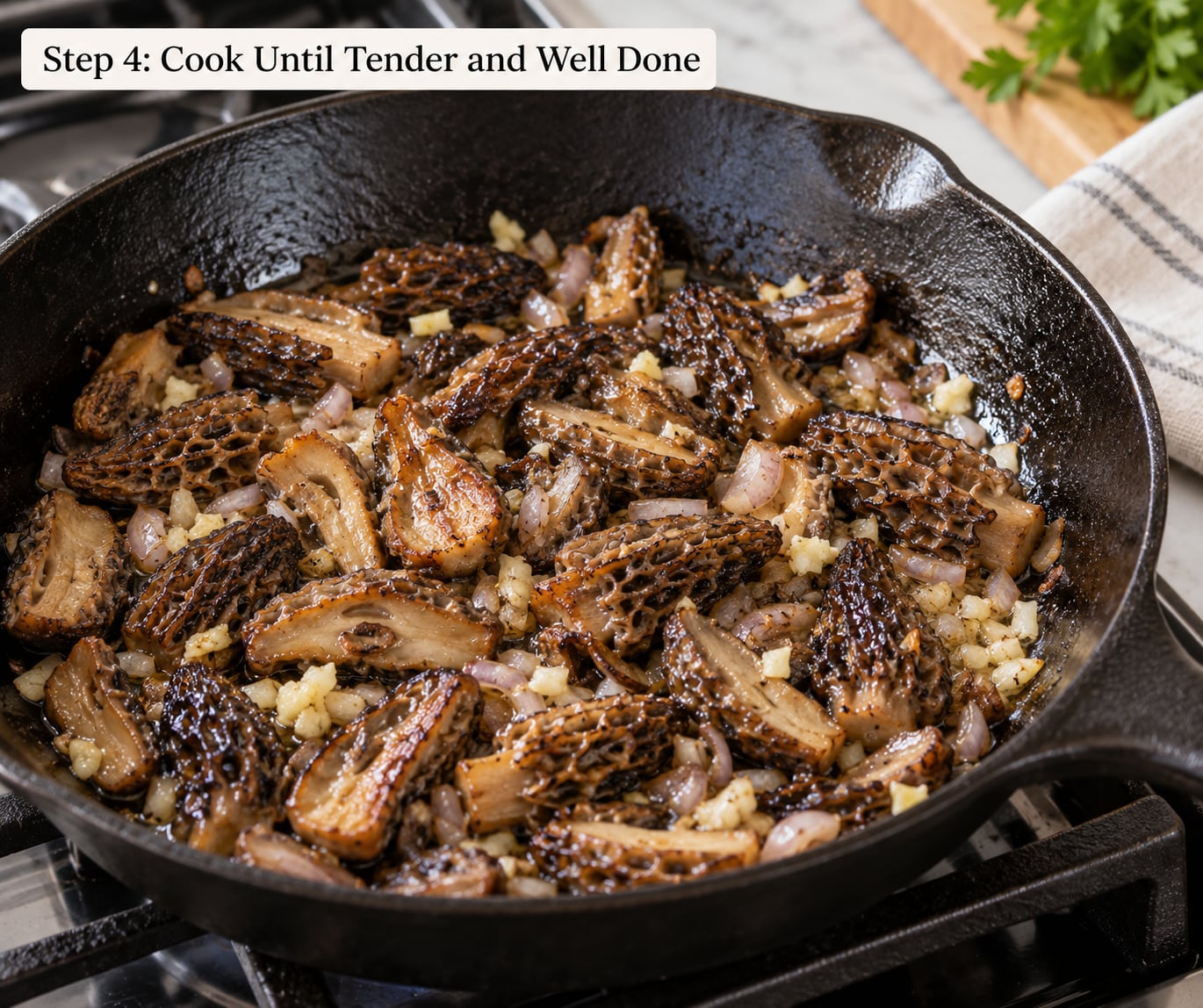
The safe method starts with a dry pan: preheat a heavy skillet over medium-high heat, add the morels with no oil at all, and cook them undisturbed until the moisture is gone and the edges have browned.
That first stage usually takes 10 to 15 minutes for halved morels. You will see steam, then bubbling liquid, then silence, then browning. When the pan goes quiet and the edges take on color, the water has left and the mushrooms can finally sear. Then add butter or oil, aromatics, and finish.
Here is the consolidated reference that answers how long to cook morel mushrooms by method. Every time assumes pieces cut to roughly even size, heated pan, and a single layer with space between the pieces.
| Method | Heat level | Time | How you know they are done |
|---|---|---|---|
| Dry sauté, then finish in fat | Medium-high | 10-15 min dry, plus 4-6 min in fat | Steam stops, edges deeply browned, pieces shrunken and tender |
| Butter pan-fry | Medium | 12-16 min total, turning once | Golden brown on both sides, juices run clear when pressed |
| Oven roast | 400F | 20-25 min | Edges crisp and brown, no liquid pooling in the tray |
| Air fryer | 400F | 12-16 min, shaking twice | Dry to the touch, browned at the ridges |
| Deep fry, flour-dredged | Medium, 350F oil | 3-5 min per batch | Crisp golden coating, interior fully cooked through |
| Dried morels, rehydrated | Medium-high | At least 30 min of cooking after soaking | Completely tender, sauce thickened, no raw mushroom texture |
Those numbers conflict on purpose with a lot of recipes you will find, because most recipes measure the visible browning rather than the time. A 6-minute-per-side pan fry from a popular recipe blog and a 15-minute dry sauté are not opposites; they are the same result measured two ways. Trust the cues in the last column over the clock.
Crowding is the usual reason home cooks stop short of the minimum. If you double a batch, use two pans. Mushrooms touching each other steam each other, and steamed is not cooked through in any meaningful sense.
For dried morels: soak them in cool water for at least four hours, or warm water for about an hour, until pliable. Pour the soaking liquid through a coffee filter and keep it, because that liquid is the best deglazing liquid you will ever find. Dried morels must be cooked considerably longer than fresh ones, so treat thirty minutes of cooking after soaking as a floor, not a suggestion.
Step 5: Season Near the End
Add salt, aromatics and acid late, and add fat late, because morels reward that order.
Once the mushrooms are browned, push them aside and add a tablespoon or two of butter. Let it foam, drop in sliced garlic or shallot, and cook another minute or two until fragrant but not brown. Deglaze with a splash of dry white wine or sake and let it reduce for a minute.
Now season. Salt is best added near the end so it does not pull water out of the caps earlier in the dry sauté. Fresh herbs go in last. A squeeze of lemon at the very end brightens the whole thing and cuts the fat.
The simple version worth learning first is skillet-cooked morels with garlic, thyme and lemon. Brown the morels dry, add butter, garlic and a few thyme leaves, deglaze with white wine, then finish with lemon juice, salt and pepper. Nothing else. Morels have a deep, woodsy, almost beefy flavor, and a heavy hand of seasoning just hides it.
Two variations worth trying once you have that down. Miso butter morels: swap half the butter for white miso at the end and add a teaspoon of soy. Creamy French-style morels: after the deglaze, splash in cream and let it reduce until it coats a spoon.
Step 6: Serve or Store the Cooked Mushrooms
Cooked morels keep a few days in the refrigerator and reheat better in a skillet than in a microwave.
Cool them, then refrigerate in a covered container and use them within three to four days. Reheat in a hot skillet with a little butter or oil over medium heat until hot through and the edges brown again.
For longer storage, cool completely, spread on a tray to freeze solid, then move to a freezer bag or container. Frozen cooked morels thaw watery, so freeze them flat rather than in a mound, and expect to cook them down hard in a pan after thawing.
The texture problem people complain about most is overcooking and repeated reheating. Morels are roughly 90 percent water, and every extra minute in the pan squeezes more of it out. They go from tender to rubbery fast. Cook them once, properly, and serve them.
A note on the Appalachian way with morels
Around here morels go into eggs. My grandmother pan-fried them in butter and folded them into scrambled eggs, and the whole thing was called morel eggs without much ceremony. It is still the way most Appalachian families cook them, and it is why morel season feels like an event rather than a grocery run.
Readers in Southern Indiana, Missouri and elsewhere have described the same pattern in their families: hunt from mid-April to mid-May after rain and sun, fill the buckets, bring them home by the wagonload, and cook them fast. One older commenter on a morel recipe recalled calling them dry land fish, which tells you how long this has been going on in the hills.
Search for spots around dead or dying elm, ash and sycamore. That is where you will find the base trees, and it is where you will find them again next year.
Common Mistakes
Almost every disappointing morel dish traces back to one of these.
Soaking morels in standing water
A soak should be brief and salted, not an hour of tepid standing water. Morels drink like sponges. Soak too long or wash under running water and they take on so much water they will not brown in your pan. Use cool or lukewarm water, 15 to 30 minutes for small morels, up to two hours for large ones, then dry them thoroughly.
Expecting cooking to fix a bad identification
This is the mistake with real consequences. Cooking destroys the compounds in true morels. It does not reliably destroy gyromitrin in false morels. If you are not certain, do not eat it, and no amount of high heat changes that.
Crowding the pan
One layer, with pieces not touching. Every mushroom you crowd is one that steams. Cook in batches if you have a haul, because the total time matters less than the heat reaching each piece.
Adding fat too early
Oil in a cold pan means the mushrooms fry in a puddle before their water leaves, and you get greasy and pale instead of browned. Start dry, add butter after the edges brown.
Using low heat and patience
Medium-high, not low. Morels are watery enough that low heat gives them time to simmer in their own liquid. Keep the pan hot enough that moisture leaves in a few minutes.
Moving them too early
Let them sit. You release them once the edges have browned and the pan has stopped steaming. Shuffling mushrooms around a hot pan before they release leaves tears and pale spots.
Salting at the start
Salt early and the caps give up water before the dry sauté finishes. Season after browning. Same for acid, and same for herbs.
Eating a mushroom someone identified on the internet
A photo and a confident comment are not an identification. New foragers ask strangers online every single season, and a confident wrong answer is more dangerous than no answer. If you cannot confirm it yourself, leave it.
Expecting food-safety advice to substitute for medical care
Recipe advice tells you how to cook a mushroom. It cannot diagnose you or treat a reaction. If someone is vomiting, having trouble breathing, or unusually drowsy after eating wild mushrooms, call emergency services and poison control rather than searching the internet.
Frequently Asked Questions
Are morel mushrooms toxic if not cooked?
Raw and undercooked morels can cause nausea, vomiting, abdominal pain and headache. The compounds involved include gyromitrin and its breakdown product monomethylhydrazine. Sustained, thorough cooking breaks them down, so the rule is simple: no raw morels, no partially cooked morels, and cook until tender, shrunken and browned all the way through.
Can you still eat false morels?
No. False morels in the genus Gyromitra can contain gyromitrin, and unlike the compounds in true morels it is not reliably destroyed by cooking. False morels have caused fatal poisonings in people who cooked them thoroughly first. Correct identification matters more than any cooking technique.
How do you know if a mushroom is a real morel?
Cut it in half lengthwise. A true morel is hollow from the tip of the cap all the way through the stem, the cap and stem are a single joined piece, and the cap has deep pits and ridges in a honeycomb pattern. A false morel has a cottony or chambered interior, a wrinkled or brain-shaped cap, and often a short stubby stem. If you cannot confirm it yourself, do not eat it.
What do you soak morels in before cooking?
Cool or lukewarm water with about one tablespoon of salt per two cups, for 15 to 30 minutes for small morels and up to two hours for large ones. Weigh them under the surface with a plate. Skip the overnight soak unless you grew up with it, since long soaks waterlog the caps and stretch your cook time. A soft brush and tweezers work well as an alternative.
How long will morel mushrooms stay fresh in the refrigerator?
Two to three days is realistic if you store them unwashed in a paper bag or a loosely covered container lined with a paper towel. Skip the plastic bag, which traps condensation and softens the caps. For longer storage, cook and freeze them, or dry them yourself. Morels cannot be farm-grown, so freshness depends entirely on how carefully they were handled after picking.
I accidentally ate a raw morel mushroom. What should I do?
Note the time and roughly how much you ate, then watch for nausea, vomiting, abdominal pain or headache, which most often show up within a few hours. Contact poison control for advice specific to you, in the United States that is 1-800-222-1222. Call emergency services right away for trouble breathing, severe vomiting, confusion or unusual drowsiness. Do not wait for symptoms to decide to call.
Two honest caveats. Sources disagree about the fine details of toxin chemistry in true morels, and that disagreement is why we tell you to cook thoroughly rather than cook to a specific reading. And no cooking technique can rescue a misidentified mushroom, which is the one mistake on this list that cannot be undone in the kitchen.
If you cook morels safely, the method is short: inspect and brush them, halve the big ones, dry sauté in a preheated pan over medium-high heat until the steam stops and the edges brown, then add butter, aromatics, a splash of wine and lemon at the end. Start there tonight.
If anyone in your household has stomach trouble after eating, or you are unsure about a wild mushroom, call your doctor or poison control rather than working it out at the stove.