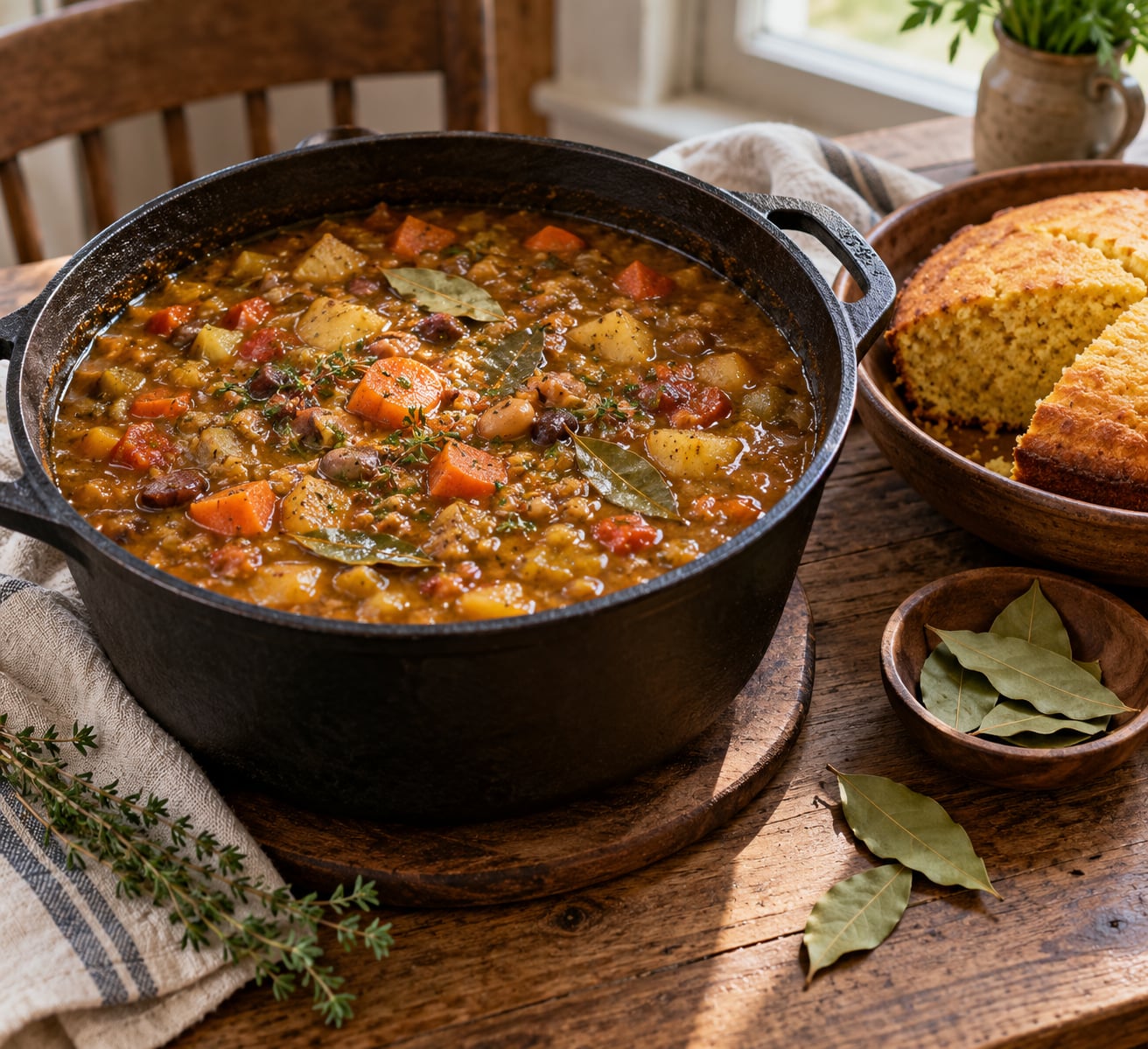
Burgoo is a Kentucky stew of mixed vegetables, lima beans, corn and okra cooked down in a tomato broth until it is thick enough to hold a spoon upright, and the name came from burgoo kettles hung over outdoor fires to feed whole communities at once. Learning how to make burgoo plant based is mostly a matter of building that same slow-cooked depth without meat: sweat your vegetables in stages, let a tomato and miso base simmer until it tastes concentrated, and finish with a cornmeal slurry for that unmistakable thick, spoon-coating consistency. Expect about an hour of hands-on work and roughly two hours from the first chopped onion to the last spoonful.
The tricky part is not the vegetables. It is the flavor. Traditional burgoo gets its depth from whatever combination of game and pork went into the kettle, so a plant-based version has to earn its savoriness from tomato paste, white miso, smoked paprika and a small splash of liquid smoke. Get those four right and nobody at the table is left wondering where the meat went.
One clarification before you start, since it comes up constantly: burgoo is not Brunswick stew. Brunswick stew is a thinner, corn-forward soup built largely from game, most associated with Virginia and Georgia. Burgoo is a thicker, okra-and-lima-bean stew of Kentucky and western Tennessee, and it is the one that gets thickened with cornmeal.
Table of Contents
- What You Need
- Step-by-Step
- 1. Build the Savory Vegetable Base
- 2. Simmer the Burgoo Until Tender
- 3. Thicken It the Kentucky Way
- 4. Finish and Serve the Stew
- Common Mistakes
- Why is my burgoo still watery?
- Why does my cornmeal finish taste gritty or gluey?
- Why does my stew taste flat even though I seasoned it?
- Why is the bottom of my pot scorching?
- Why are my beans still hard?
- Is my gluten-free burgoo secretly not gluten-free?
- Frequently Asked Questions
- What is the best way to thicken plant-based burgoo?
- Can I make this Kentucky burgoo recipe in a slow cooker?
- Is homemade plant-based burgoo gluten-free?
- What should I serve with burgoo?
- Can I freeze plant-based burgoo and reheat it?
- Get Your Burgoo Started
What You Need
Whether you make this burgoo plant based in a Dutch oven, a slow cooker or a pressure cooker, the list barely changes. Only the thickening step moves.
The vegetables and beans are what make the stew hearty:
- 1 large yellow onion, diced
- 2 celery stalks, sliced
- 4 garlic cloves, minced
- 2 medium carrots, cut into half-inch coins
- 2 medium Yukon gold or russet potatoes, cut into one-inch cubes
- 8 ounces king oyster mushrooms, torn into strips, or 10 ounces cremini, sliced
- 15 ounces cooked lima or butter beans, rinsed
- 1 cup corn kernels, fresh or frozen
- 1 cup sliced fresh or frozen okra (traditional, and it thickens on its own)
- 3 tablespoons olive oil, divided
These build the broth and the thickness:
- 6 cups low-sodium vegetable broth
- 28 ounces crushed tomatoes
- 2 tablespoons tomato paste
- 1/3 cup fine ground cornmeal plus 1/2 cup cold water for the slurry
- 1 tablespoon white miso paste
These are what make it taste like burgoo instead of tomato soup: 1 tablespoon smoked paprika, 2 teaspoons Cajun seasoning, 2 bay leaves, 1 teaspoon liquid smoke, a pinch of cayenne, and a splash of apple cider vinegar at the end.
To keep the whole pot gluten-free, check three things that trip people up. Most Worcestershire sauce contains wheat. Many dark beers and some barley-based stocks do too, so pick a certified gluten-free beer or skip it and let the tomato broth do the work. Cornmeal is naturally gluten-free, but some bagged cornmeal is milled in a facility that also handles wheat, and cornmeal blends sometimes include flour.
Step-by-Step
1. Build the Savory Vegetable Base
Heat 2 tablespoons of the olive oil in a heavy pot or Dutch oven over medium heat. Add the onion and celery with a good pinch of salt and cook 8 to 10 minutes, stirring often, until the onion is soft and translucent and the pot bottom starts to look dry. That dry moment is where the flavor comes from, so do not walk away, but do not chase a deep brown either.
Add another tablespoon of oil, then the garlic, carrots, potatoes and mushrooms. Cook another 8 minutes. You are looking for mushrooms that have lost their watery sheen and started to brown at the edges, and potatoes that look opaque all the way through. Stir in the smoked paprika, Cajun seasoning and bay leaves and let them toast for 30 seconds before anything wet goes in.
2. Simmer the Burgoo Until Tender
Pour in the vegetable broth and the crushed tomatoes, then stir in the tomato paste until no streaks remain. Add the lima beans and bring the pot to a simmer. Once you see a bubble every second or two, drop the heat to low, cover it, and give it 45 to 60 minutes.
How do you know it is ready? Push a spoon through the middle and drag a channel across the bottom. If the potatoes break apart under the spoon and the channel stays open for a beat before closing, the stew is done. If the broth still looks thin and watery in the gaps between the chunks, it needs another 15 minutes. Add the corn and okra for the final 15 minutes of simmering, since both turn to mush quickly.
For a slow cooker, brown the vegetables the same way in a skillet first, then transfer everything to the crock and cook on low for 6 to 7 hours or on high for 4 hours. For a pressure cooker, saute in the pot for 8 minutes, add the liquid and beans, pressure cook on high for 12 minutes, and let the pressure come down naturally for 15 minutes before you thicken.
Miso and liquid smoke go in at the very end, off the heat. Boiling them for an hour flattens both.
3. Thicken It the Kentucky Way
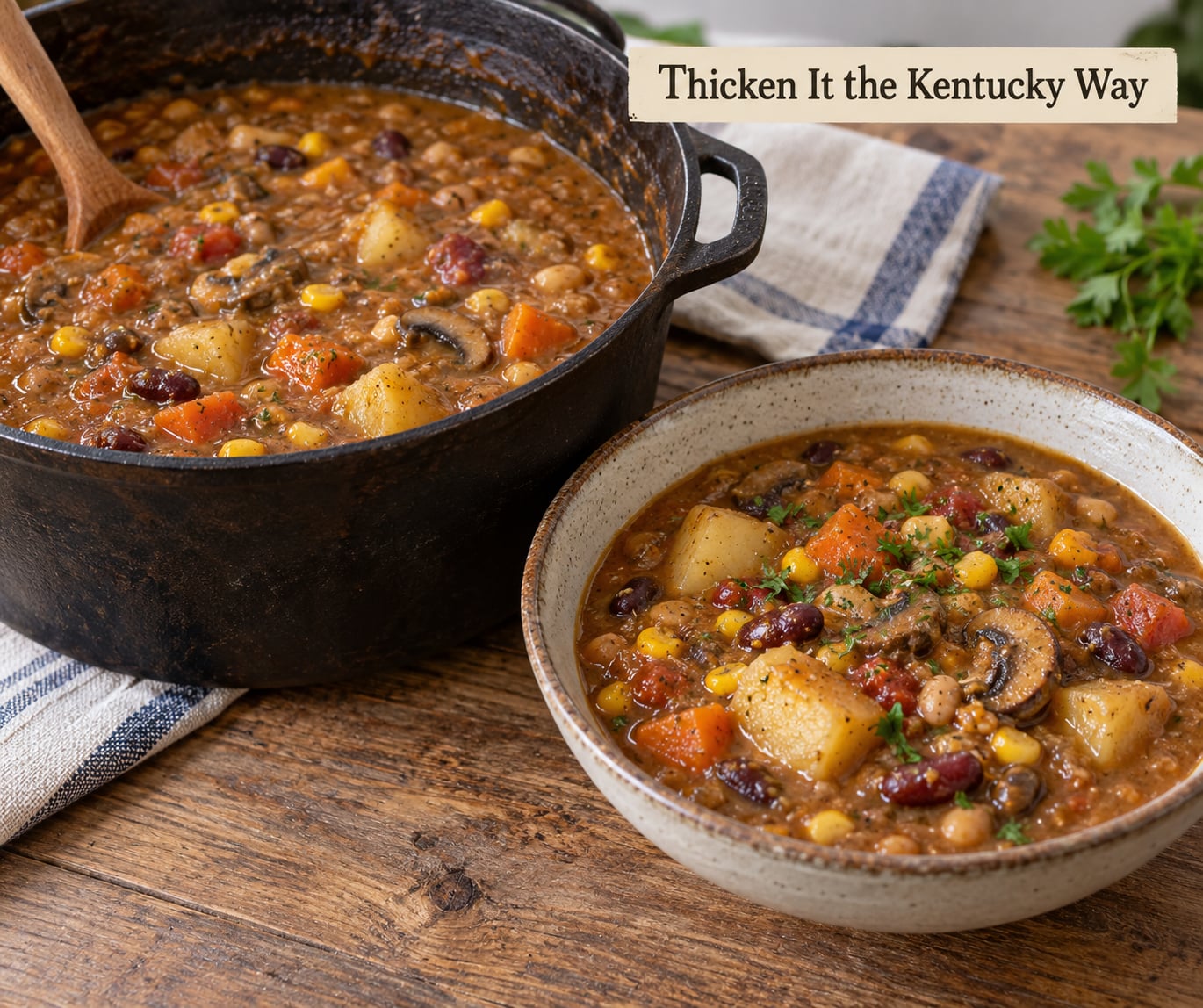
Burgoo gets its body from cornmeal, not from flour, and the difference in taste is real. Whisk 1/3 cup of fine cornmeal with 1/2 cup cold water until it is a smooth, lump-free slurry. Put the pot back over low heat and pour the slurry in while you stir, then keep the heat moving for 4 to 5 minutes.
Stirring is the whole trick. Keep the spoon moving the entire time the cornmeal cooks, and the finished stew will taste sweet, corn-forward and smooth. Stop stirring too early and you get a gritty, gluey coating on every vegetable.
If you overshoot and the stew turns into something closer to mashed potatoes, add hot vegetable broth a half cup at a time and stir until it loosens. You cannot thicken your way back, but you can always thin, so start with less cornmeal than you think you need.
4. Finish and Serve the Stew
Take the pot off the heat. Whisk 1 tablespoon of white miso with a spoonful of the hot broth, stir it back in, and add a few drops of liquid smoke. Season with salt and pepper, then taste again. Add a splash of apple cider vinegar at the very end; a small amount of acid wakes up a long-simmered stew that tastes flat even when it is not bland.
Let it rest, covered, for 15 minutes before serving. If you make this burgoo plant based a day ahead, the flavors meld and it is noticeably better on the second day, which makes it a good Sunday cook.
Serve it in bowls with a square of hot cornbread or a basket of biscuits. A spoonful of pickled onions or jalapenos on the side cuts the richness, and rice works too if you want to stretch the batch. Optional fresh herbs such as parsley or cilantro are a modern touch rather than a Kentucky one.
Common Mistakes
Why is my burgoo still watery?
Almost always a timing problem rather than a thickener problem. Corn and okra release starch late in the cook, so adding them at the start leaves them overcooked and adds less thickening power. Simmer the main vegetables for 45 minutes, add corn and okra for the last 15, then thicken. Also check that you reduced the pot uncovered for the final 10 minutes if the broth still looks thin before you reach for cornmeal.
Why does my cornmeal finish taste gritty or gluey?
Grit means the slurry never fully dissolved, and glue means it sat at a hard boil. Mix the cornmeal with cold water rather than dumping it dry into the pot, whisk it smooth before it goes in, and keep the heat low while you stir for a full 4 to 5 minutes. A fine grind works better than a coarse one for this dish.
Why does my stew taste flat even though I seasoned it?
Long simmering dulls salt and aromatics, so season in two passes rather than one. Salt the vegetables at the start, then taste and salt again just before thickening. If it still seems flat, the usual fix is acid rather than more salt: a tablespoon of apple cider vinegar or a squeeze of lemon, added off the heat, sharpens everything without making the stew salty.
Why is the bottom of my pot scorching?
Cornmeal and tomatoes are both prone to catching once the liquid drops below them. Keep the heat at a bare simmer, stir from the bottom every 10 or 15 minutes during the last half hour, and use a Dutch oven or heavy-bottomed pot if you can. Scraping the fond is worthwhile, but a burnt black ring is not; if you see one, transfer the stew to a clean pot and finish it there.
Why are my beans still hard?
Canned lima and butter beans should be tender after 45 minutes, so firm beans usually mean they were added early and simmered hard, or that they are dried beans that never got enough time. Use canned beans, or soak dried beans overnight and simmer them separately for 60 to 90 minutes before they go into the stew. Adding salt before they soften can also hold the skins tough, so salt them at the end of their own simmer.
Is my gluten-free burgoo secretly not gluten-free?
The usual culprits are Worcestershire sauce, barley-based stock and dark beer, plus any cornbread you serve alongside. Read the labels on all three, use a certified gluten-free beer if you want one in the pot, and check your cornmeal is not a blend. A thickener such as arrowroot in place of part of the cornmeal will keep the pot smooth if your cornmeal is cross-contaminated.
Frequently Asked Questions
What is the best way to thicken plant-based burgoo?
Whisk fine cornmeal with cold water to make a smooth slurry, then pour it into the simmering stew while stirring over low heat for 4 to 5 full minutes. Starting with less than you think you need keeps it spoonable, and you can always thin a batch with hot vegetable broth. Avoid dumping dry cornmeal straight into the pot, which is what creates a gritty, gluey finish.
Can I make this Kentucky burgoo recipe in a slow cooker?
Yes. Brown the onion, celery, carrots, potatoes and mushrooms in a skillet first for the best flavor, then transfer them to the crock along with the broth, tomatoes, tomato paste, lima beans and seasonings. Cook on low for 6 to 7 hours or high for 4 hours. Add corn and okra for the final 30 minutes, and thicken with a cornmeal slurry on the stove afterward.
Is homemade plant-based burgoo gluten-free?
It can be, once you check a few labels. Worcestershire sauce, barley-based vegetable broth and most dark beers contain gluten, and some cornmeal is milled alongside wheat. Choose certified gluten-free versions or leave the beer out entirely. Cornmeal itself is gluten-free, and it is the traditional thickener, so a cornmeal-thickened pot served with your own cornbread stays comfortably gluten-free.
What should I serve with burgoo?
Hot cornbread is the classic pairing and the one most people expect on the table. Biscuits work just as well and soak up the broth nicely. For something lighter, serve the stew over white rice, or add a side of pickled onions, jalapenos or a simple green salad to cut the richness. A cup of coffee alongside is more traditional than anything sweet.
Can I freeze plant-based burgoo and reheat it?
Yes, and it reheats well. Cool the stew quickly, portion it into airtight containers, and freeze for up to three months. Thaw overnight in the fridge rather than on the counter. Reheat on the stove over low heat with a splash of broth, stirring often, until it reaches 165 degrees Fahrenheit and is steaming hot throughout. Cornmeal thickens further as it sits, so keep that extra broth handy.
Get Your Burgoo Started
Start tonight with the vegetables: chop them, brown them properly, and give the pot an uninterrupted 45 minutes of low simmer. That simmer is where most of the flavor lives, and cutting it short is the fastest way to end up with thin, flat stew. Once it is tender, add the miso and a few drops of liquid smoke off the heat, then stir in the cornmeal slurry a little at a time. Adjust the thickness and the salt to suit your table, and you have a plant-based burgoo that eats like the kind served at a Kentucky community supper.