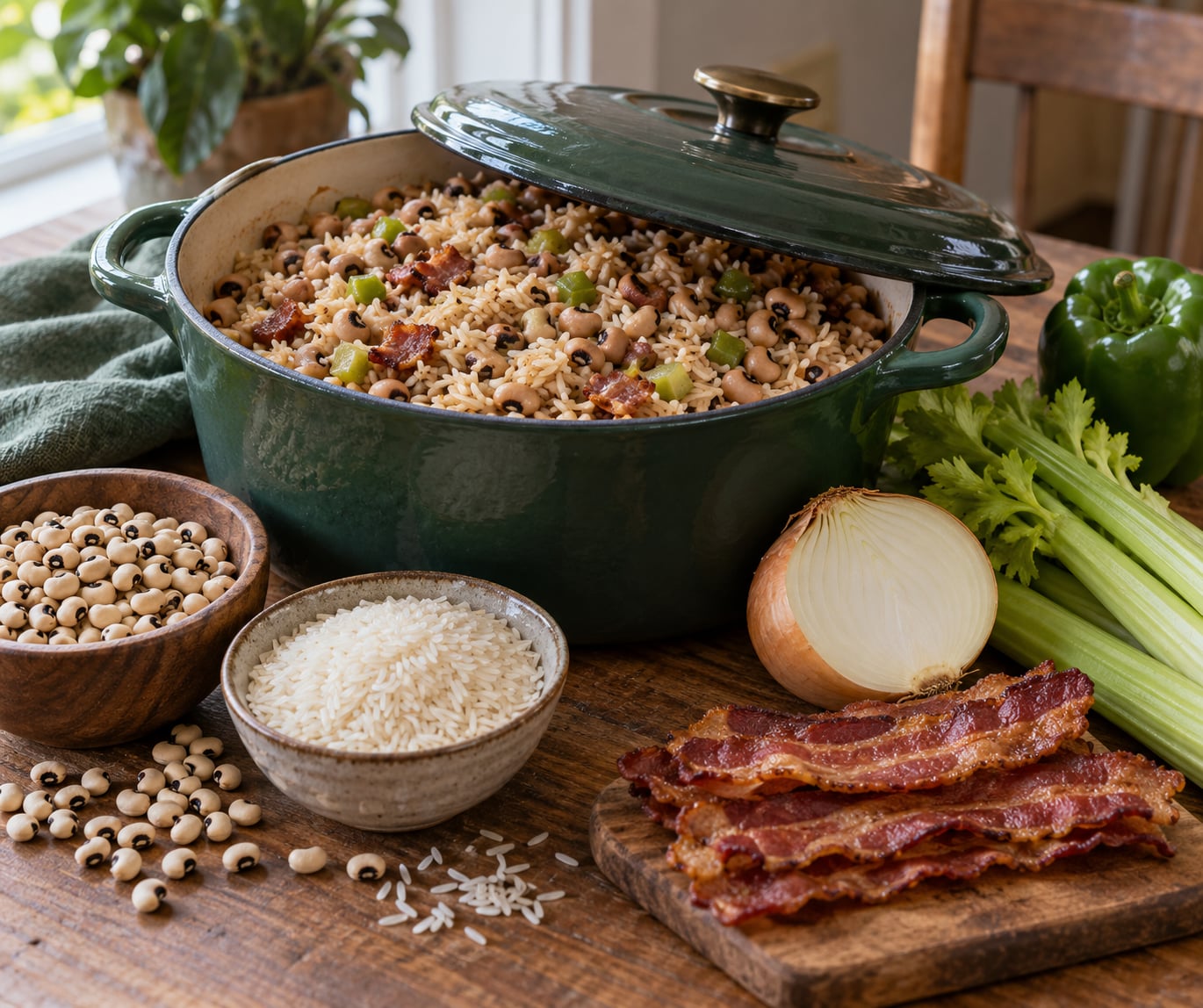
Hoppin’ John is a one-pot dish of dried black-eyed peas and long-grain rice cooked together in a seasoned broth, and learning how to make hoppin john for New Year is mostly about controlling texture: tender beans that still hold their shape, and rice that stays separate. It is a naturally gluten-free, easily veganized New Year’s meal served on January 1 for luck and prosperity. The pot takes about 25 minutes of hands-on work and roughly two hours of simmer time.
The peas stand in for coins, so they symbolize money in the year ahead. Collard greens stand in for folded bills, cornbread for gold, and a hog or a ham hock for prosperity. On some tables you will see three peas set aside on the corner of the plate, which is an old nod to a triple portion of coins. None of it requires any special equipment, and the whole thing is forgiving if you watch the liquid.
One piece of practical advice before anything else: buy your dried black-eyed peas by the end of the third week in December. Cans and bags of black-eyed peas get picked over fast in the last week of the year, and one recipe writer on a holiday cooking blog reported finding literally nothing on the shelf in Richmond on December 31. There is nothing wrong with canned beans for a shortcut pot, but dried is where the texture lives.
Table of Contents
- What You Need to Make Hoppin John (About Six Servings)
- How to Make Hoppin John Step-by-Step
- How to Make Hoppin John: Soak and Rinse the Beans
- How to Make Hoppin John: Cook the Beans Until Tender
- How to Make Hoppin John: Build the Seasoned Base
- How to Make Hoppin John: Add and Cook the Rice
- Finish and Check the Texture
- How to Make Hoppin John: Rest Before Serving
- Common Hoppin John Mistakes and How to Fix Them
- Tips for Good Hoppin John
- Frequently Asked Questions
- Do I need to soak black-eyed peas before making hoppin john?
- Is hoppin john traditionally served at midnight on New Year’s Eve?
- Is hoppin john vegan and naturally gluten-free?
- Can I make hoppin john ahead of time?
- How long does leftover hoppin john last, and how should it be reheated?
- Can I freeze hoppin john?
- Conclusion
What You Need to Make Hoppin John (About Six Servings)
The classic version builds flavor in layers: a smoked pork product for fat and salt, the holy trinity of onion, celery, and bell pepper, and enough broth to cook the rice in the beans’ own starch. Gather everything before you start, because the pot needs your attention in short bursts rather than constant stirring.
Shopping warning: dried black-eyed peas, field peas, or pigeon peas sell out earliest in the last ten days of December. Frozen field peas are a decent stand-in when the shelf is bare and cook in about half the time.
- 1 pound dried black-eyed peas (about 6 servings). Field peas, cowpeas, or crowder peas all work. Frozen field peas are the fast alternative.
- 1 cup long-grain white rice. Brown rice works but needs another 20 minutes of liquid and simmer time.
- 1 small yellow onion, diced — about half cup.
- 1 celery stalk, diced — about half cup.
- 1 green bell pepper, diced — about half cup. Leave it out for the strictest Lowcountry reading of the dish.
- 4 cloves garlic, minced.
- 4 slices thick-cut bacon, or 4 ounces smoked sausage ring, or 2 tablespoons olive oil plus 1 teaspoon smoked paprika for a vegan pot.
- 1 tablespoon smoked paprika and 1 teaspoon thyme leaves, plus 1 teaspoon black pepper.
- 6 cups chicken broth or water. Low-sodium broth lets you salt to taste at the end.
- 1 teaspoon salt for the bean water, added after the first simmer starts, plus salt for finishing.
- A heavy pot with a tight lid that holds about 8 quarts. A Dutch oven or a large saucepan with a lid both work.
Long-grain rice is the right call because it stays loose in the pot. Short-grain rice turns gluey at the absorption stage, which is the fastest way to turn a good pot into porridge.
How to Make Hoppin John Step-by-Step
Here is the whole method in order: soak and rinse, simmer the beans with aromatics, build the seasoned base, add the rice and steam it out, then rest the covered pot before serving. Each step below tells you the visual cue that tells you it worked, so you are never guessing.
How to Make Hoppin John: Soak and Rinse the Beans
Put the dried beans in a bowl, cover them with cool water by a couple of inches, and leave them on the counter overnight, roughly 8 to 12 hours. This softens the skins so the peas cook evenly and in less time.
Drain the beans into a colander and rinse them under cold running water, picking out any pebbles or shriveled beans. Rinsing also washes off extra starch, which is the main reason a pot turns gluey.
No soak is fine if you forgot. Unsoaked beans just need roughly an extra hour of simmering, and they will still taste good. Proceed either way rather than letting a missed soak talk you out of the dish.
How to Make Hoppin John: Cook the Beans Until Tender
Put the rinsed beans in the pot with 6 cups of broth or water, the onion, celery, and bell pepper. Bring to a boil over high heat, then lower the heat until the pot barely bubbles.
Cover partially, leaving a gap for steam to escape, and simmer for 60 to 90 minutes. Stir now and then so the beans cook evenly and nothing catches on the bottom.
Add the 1 teaspoon of salt once the water is boiling and bubbling, not before. Salt early toughens the skins. When you press a bean with the back of a spoon, it should give easily but still hold together, with a creamy interior and a slightly firm bite. If it collapses into paste, move on quickly; overcooked beans cannot be rescued by rice.
Top up with hot water or broth if the level drops below the beans during the simmer. You want the liquid to stay at the beans rather than drying out, because that liquid is your cooking liquid for the rice.
How to Make Hoppin John: Build the Seasoned Base
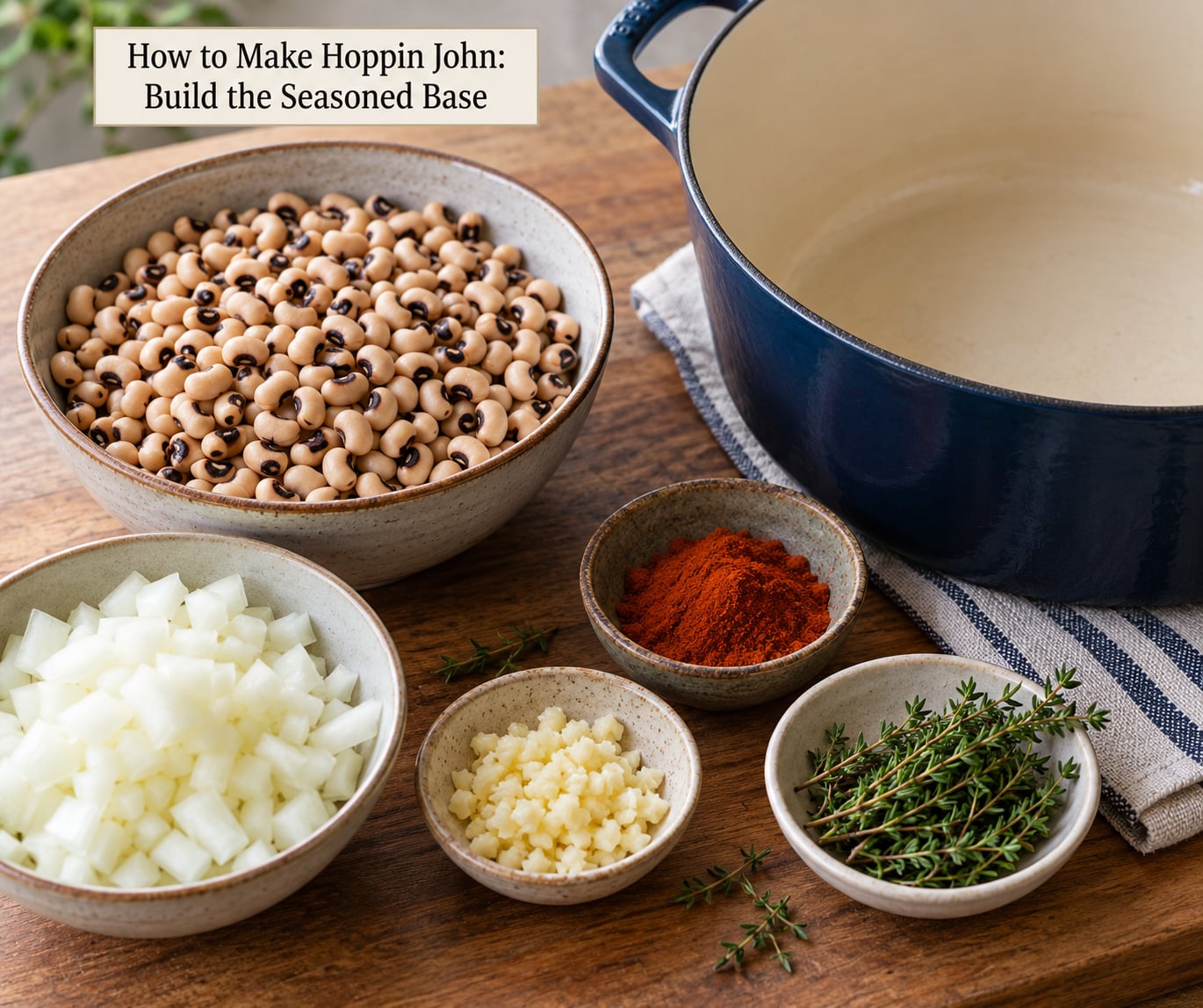
While the beans simmer, cook the bacon in a skillet over medium heat until the fat renders and the edges are crisp, about 6 to 8 minutes. Spoon out the meat with a slotted spoon and keep the fat warm. For the vegan version, warm olive oil in the same skillet and add 1 teaspoon of liquid smoke or a second teaspoon of smoked paprika.
Set about a cup of the beans and their liquid aside. Those reserved beans go back in at the end so a portion stays whole and plump while the rest seasons the rice.
Stir the garlic, thyme, and remaining smoked paprika into the rendered fat and cook for 30 seconds until fragrant. Pour the seasoned fat and the garlic into the pot of beans and stir. Season with the black pepper and a salt amount you can taste later rather than more now.
How to Make Hoppin John: Add and Cook the Rice
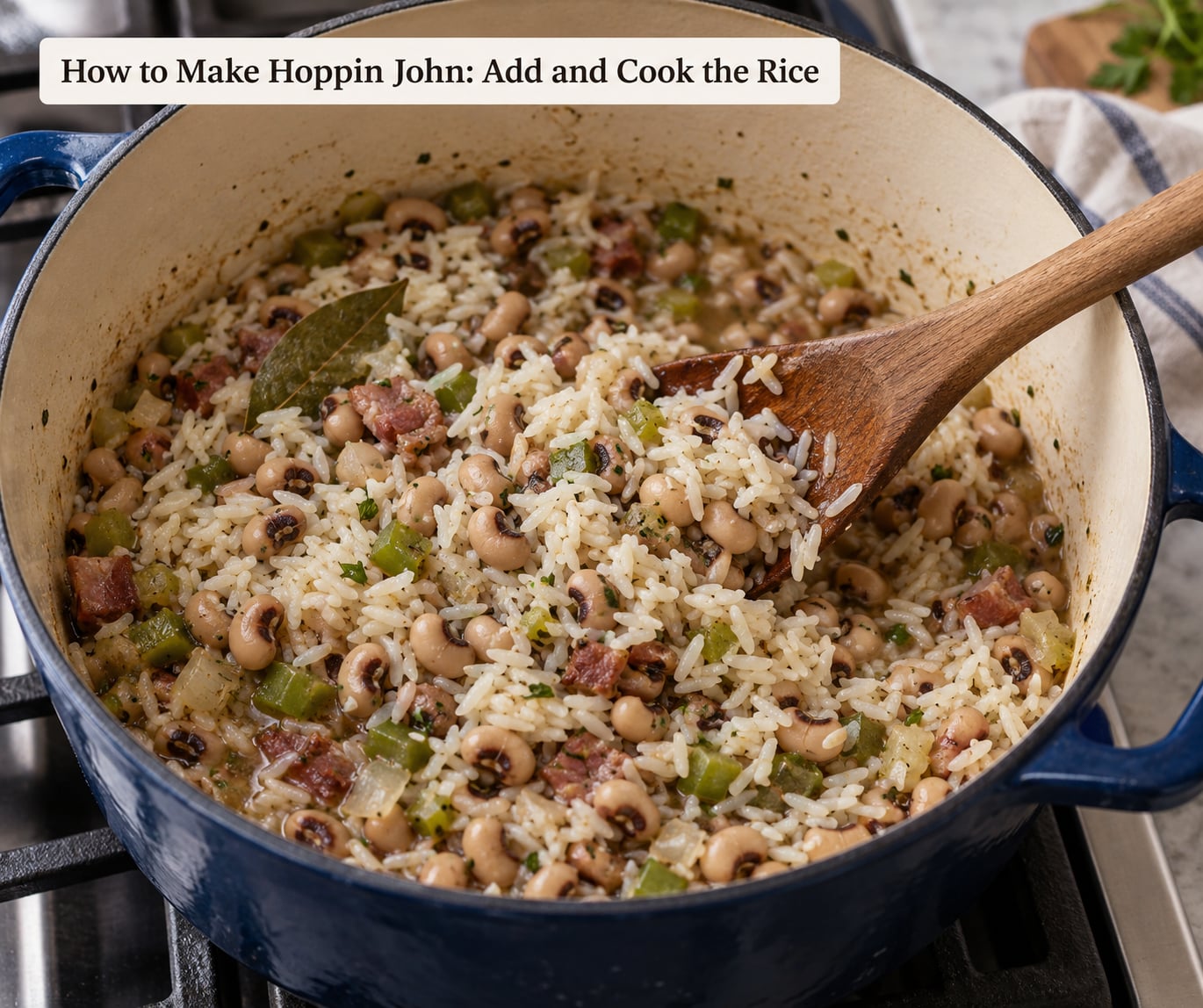
Measure 1 cup of dry long-grain rice and stir it into the beans along with the reserved beans and their liquid. The starchy bean broth is exactly what you want around the rice, so the grains absorb seasoning instead of plain water.
Bring the pot back to a boil, stir once gently to break up clumps, then cover tightly and drop the heat to the lowest setting your stove has.
Cook undisturbed for 18 to 20 minutes. Resist the urge to stir or lift the lid. Every peek lets steam out, and you will end up with dry grains on top and wet rice underneath.
When the time is up, the liquid should be gone and the rice grains should look tender and separate with a slight sheen. If you still see standing water, give it another 3 to 5 minutes over low heat with the lid on. If the bottom smells dry, add a quarter cup of hot water and give it 3 more minutes.
Finish and Check the Texture
Good hoppin john is moist and creamy but still spoonable, closer to a thick stew than to a side dish. Stir it gently and push a spoon to the bottom of the pot: if the beans drift in a creamy sauce, you are there.
Taste and season. Salt usually goes on here, along with a small spoon of hot sauce or a squeeze of vinegar if the broth tastes flat. Any of those, not a heavy hand of pepper, is the right finish.
How to Make Hoppin John: Rest Before Serving
Take the pot off the heat and leave it covered for 10 to 15 minutes. The carryover heat finishes the rice and lets the liquid settle, and it is the difference between a pot that looks right and a pot that eats right.
Fluff gently with a fork rather than a heavy spoon, taste once more, and keep it warm over a low burner if you are serving it later. Serve it in bowls with collard greens and a square of cornbread, hot sauce and pickled peppers on the table.
Common Hoppin John Mistakes and How to Fix Them
Almost every disappointing pot comes down to liquid, heat, or salt timing. Here are the four problems cooks run into most, and what to do about each.
- Mushy beans that collapse. They sat too long, or they simmered hard. Cook them at the barest bubble and check at 60 minutes instead of waiting the full time. Once a batch goes past creamy, there is no fix, so pull it a few minutes early.
- Rice that crunches in the center. Either the pot ran dry or the heat was too high. Keep the heat at its lowest setting and add hot water a quarter cup at a time.
- A watery, loose pot. You added too much liquid or lifted the lid too often during the rice stage. Take the lid off and hold it at a gentle simmer for five minutes to drive off the excess.
- Bland broth. Under-salting early is the usual cause, and so is using unsalted water. Season at the simmer and again after the rest, in small additions, tasting each time.
- Rice that turned gluey. Short-grain rice, too much stirring, or a pot that was more starch than liquid. Long-grain rice stirred once and left alone is what keeps grains separate.
- Dry leftovers the next day. Hoppin john thickens fast in the fridge. Loosen it with hot broth or water when you reheat, and add that liquid a little at a time.
Tips for Good Hoppin John
Soak when you can, skip when you cannot. An overnight soak cuts about half an hour of simmer time and improves the texture. Soaked or not, cook the beans until they are creamy before the rice goes in.
Save the potlikker. That starchy broth in the bottom of the pot is the best part of the dish. Skim nothing, discard nothing, and use it for the rice so the grains pick up bean flavor.
Keep the smoke without the pork. A vegan pot gets its depth from smoked paprika, a teaspoon of liquid smoke, or a tablespoon of nutritional yeast stirred in near the end. Mushrooms browned in olive oil add body and hold up to a long simmer.
Cook the greens alongside. Chopped collard greens go into the pot with the beans for the last 20 minutes. They carry the same symbolism and turn the dish into a full plate rather than a side.
Plan the calendar backwards. On December 26 or so, buy the beans and the rice. Soak the beans on December 29, simmer the beans and build the base on December 30, and keep the pot of beans chilled. On December 31, reheat the beans, add the rice, and let it rest before midnight. That way you are not cooking the beans at one in the morning.
Scale with pot size, not recipe arithmetic. For 20 to 25 guests, double the beans and the rice and use the largest pot you own, filling it no more than three-quarters full. Two smaller pots cook more evenly than one overflowing pot.
Store it properly. Move leftovers into shallow containers and refrigerate within two hours. Keep them no longer than three to four days, reheat only the portion you plan to eat, and bring it to 165°F / 74°C steaming hot.
For the freezer, cool the pot without the lid on, portion into bags or jars, press out the air, and freeze for up to three months. Thaw overnight in the fridge and loosen with broth while it heats.
Frequently Asked Questions
Do I need to soak black-eyed peas before making hoppin john?
No, but soaking helps. An overnight soak in cool water softens the skins so the peas cook evenly, and it cuts roughly half an hour off the simmer. If you are short on time, cook them unsoaked and add an extra hour of gentle simmering. Rinse the beans either way, and add salt only once the water is already boiling.
Is hoppin john traditionally served at midnight on New Year’s Eve?
New Year’s Day is the traditional day, January 1, and that is the framing most families use. Some hosts serve it at midnight on December 31 because the party runs long and nobody wants to cook beans at dawn. Either way the dish carries the same wish for luck and prosperity. Cook it ahead and reheat, since the texture is better after a rest.
Is hoppin john vegan and naturally gluten-free?
The traditional pot is not vegan, since it usually starts with bacon, ham hock, or smoked sausage. It is easy to convert: cook the aromatics in olive oil and add smoked paprika, a small splash of liquid smoke, or browned mushrooms for depth. The rice and black-eyed peas are naturally gluten-free, so use a broth labeled gluten-free and cornmeal cornbread instead of flour.
Can I make hoppin john ahead of time?
Yes, and it is the smarter plan for a holiday table. Cook the beans and the seasoned base a day ahead, chill them, and store them together. On the day you are serving, reheat the beans slowly, add the rice with a little extra liquid if the mixture thickened overnight, then steam it out with the lid on for 18 to 20 minutes and rest.
How long does leftover hoppin john last, and how should it be reheated?
Refrigerate it in shallow containers within two hours and eat it within three to four days. Reheat only the portion you need, with a splash of hot broth or water so it loosens back to a creamy consistency. Warm it slowly on the stove or in the microwave until it is steaming hot all the way through, reaching 165°F / 74°C, and stir once halfway through.
Can I freeze hoppin john?
Yes, it freezes well for up to three months. Cool the pot first with the lid off, then portion the mixture into freezer bags or jars, leaving headroom for expansion, and press out the air. Thaw overnight in the refrigerator rather than on the counter. When reheating, add hot broth a quarter cup at a time until the pot is creamy again instead of soupy.
Conclusion
Start with the soak and a good rinse, simmer the beans until they are creamy but still hold their shape, and only then add the rice to the potlikker. Give the covered pot its 10 to 15 minute rest, season at the end, and serve it with greens and cornbread. That sequence is the whole difference between a pot that turns creamy and one that turns to glue.