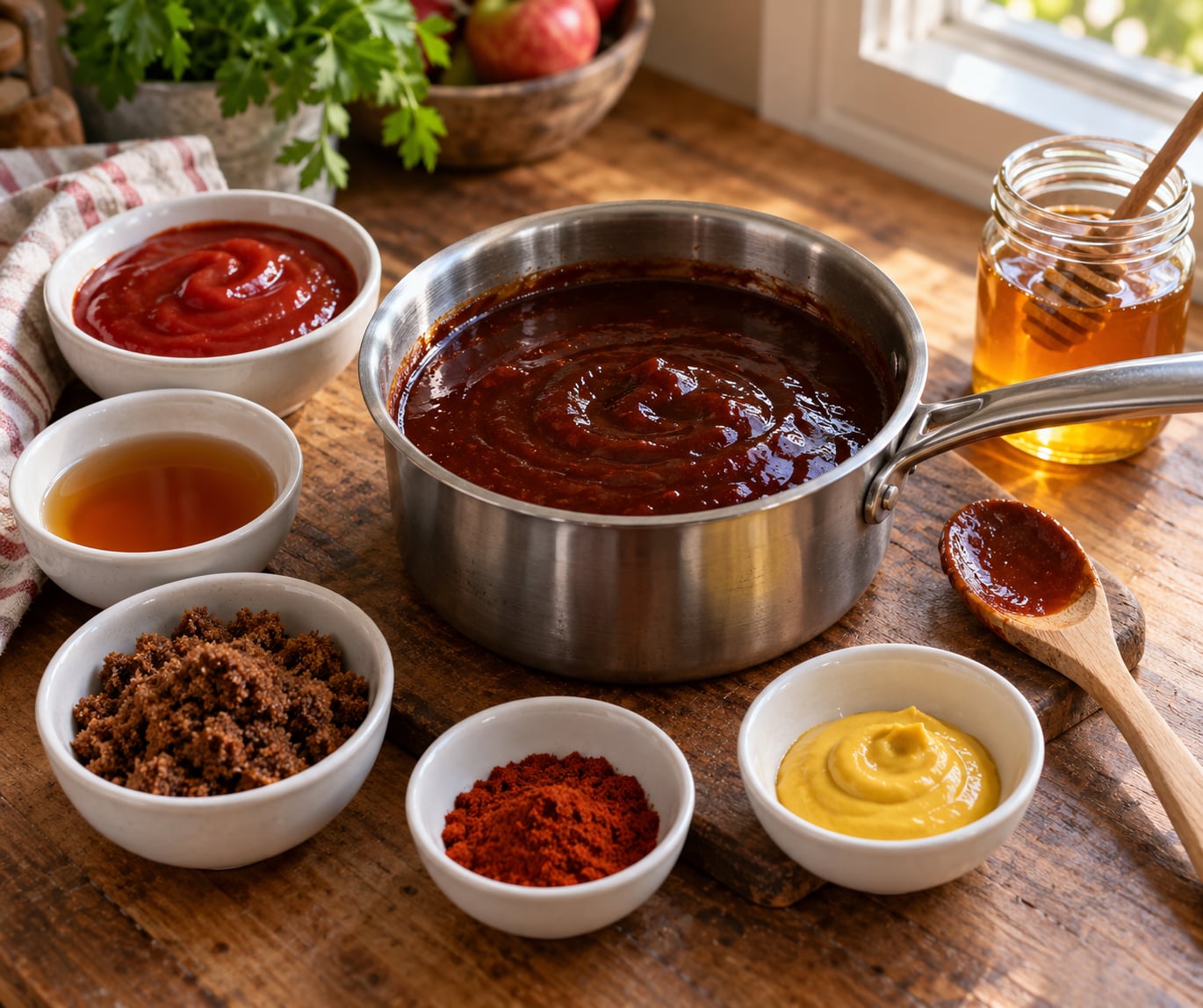
To make barbecue sauce without molasses, swap in an equal volume of dark brown sugar, honey, or maple syrup, then rebuild the dark, treasy depth with smoked paprika, Worcestershire sauce or tamari, apple cider vinegar, and a 20-minute simmer. It is a 25-minute stovetop job with a 3-ingredient version available if you want to keep it minimal.
Plenty of people drop molasses on purpose. Some get a sulfurous, mineral aftertaste they never liked, and kids usually notice it first. Others are cutting sugar, following a vegan or gluten-free pattern, or simply out of molasses on a grocery trip. None of those reasons require you to give up barbecue sauce.
Molasses is one route to a dark, treasy caramel sweetness, not the only one. Once you know which ingredient is doing which job, the substitution stops being a guess. This guide covers what to buy, how much to use, how to build the flavor molasses usually supplies, and how to fix a sauce that lands too sweet, too thin, or too flat.
Table of Contents
- What You Need to Make Barbecue Sauce Without Molasses
- The base recipe, 6 servings
- What each ingredient is actually doing
- Molasses substitute cheat sheet
- Unsulfured versus blackstrap, in one line
- Regional styles, and which ones never needed a substitute
- Equipment and dietary notes
- The 3-ingredient version
- Step-by-Step: How to Make Barbecue Sauce Without Molasses
- 1. Combine the sauce ingredients
- 2. Build the dark, treasy base that replaces molasses
- 3. Simmer until thick and glossy
- 4. Taste and balance barbecue sauce without molasses
- 5. Cool, store, and use the sauce
- Common Mistakes and Tips
- Frequently Asked Questions
- What can I use instead of molasses in barbecue sauce?
- How do I make barbecue sauce thicker without molasses?
- Can I make barbecue sauce without molasses on the stove or in a slow cooker?
- What is the best substitute for molasses in a barbecue sauce recipe?
- How can I make barbecue sauce smoky without adding liquid smoke?
- How long does homemade barbecue sauce without molasses keep?
- Conclusion: Start With a Balanced Tang
What You Need to Make Barbecue Sauce Without Molasses
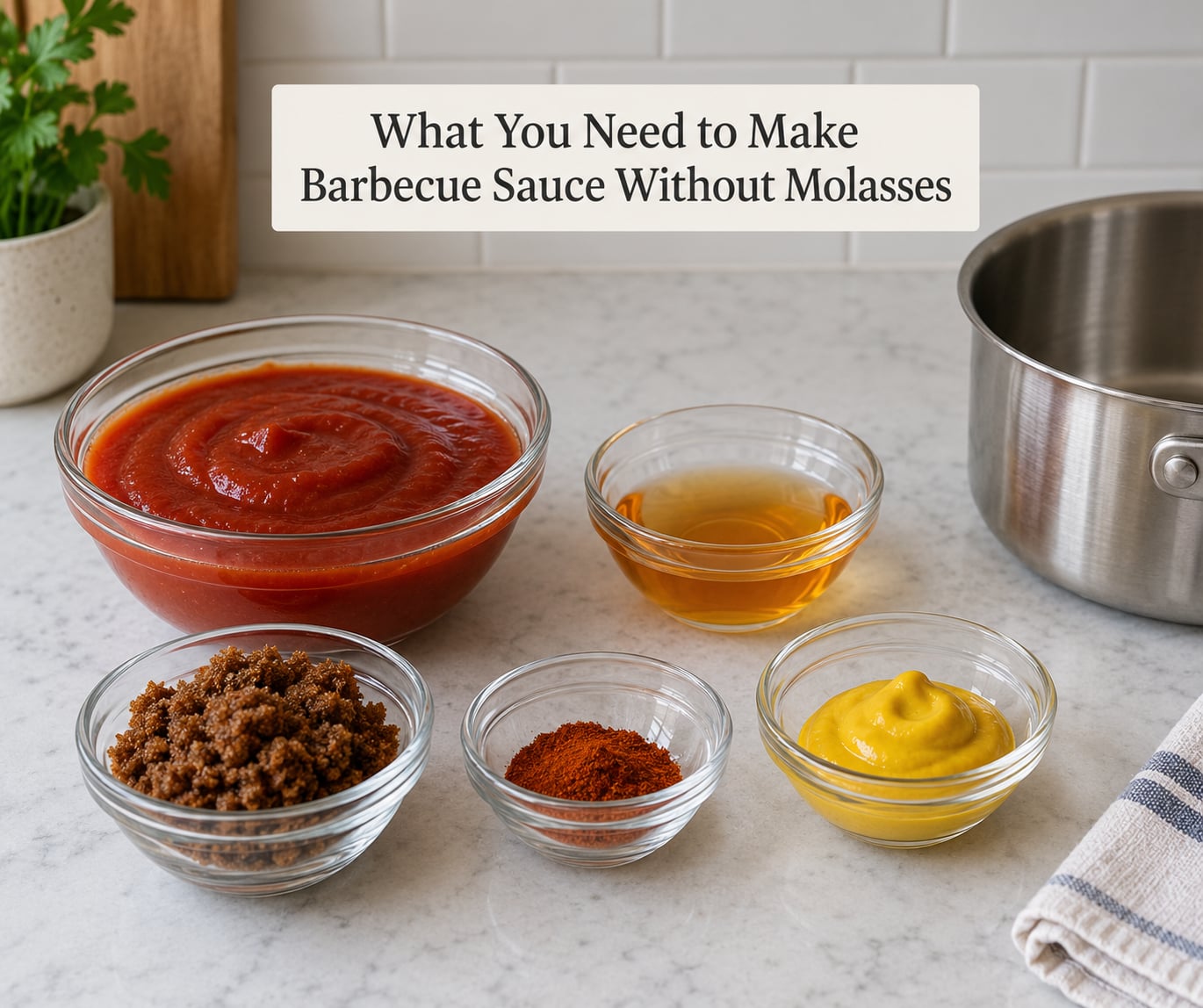
Every barbecue sauce is built from the same five moving parts: a thick base, an acid, a sweetener, a savory seasoning, and heat. Molasses only covers part of that, which is why removing it costs less flavor than most recipes admit.
The base recipe, 6 servings
- 2 cups ketchup, or 2 cups tomato sauce if you prefer less sugar
- 1/2 cup apple cider vinegar
- 1/3 cup dark brown sugar, packed, the best stand-in for molasses
- 2 tablespoons Worcestershire sauce, or tamari for a vegan version
- 1 tablespoon yellow mustard
- 2 teaspoons smoked paprika
- 1 teaspoon garlic powder
- 1 teaspoon onion powder
- 1/2 teaspoon chipotle chili powder
- 1/4 teaspoon black pepper
- 1 teaspoon kosher salt, plus more to taste
- 1 teaspoon liquid smoke, optional, start with half
The brown sugar is doing the molasses job here, so if you swap it, swap it with something of similar intensity. Honey or maple syrup in the same 1/3 cup measure works, and date paste works too, though it thickens the sauce on its own.
What each ingredient is actually doing
Read it this way and you can rebuild the sauce from scratch any time. Ketchup or tomato paste supplies body, color, and a built-in sweetness. Apple cider vinegar supplies the tang that stops the sauce tasting like sweetened ketchup, which is the single most common complaint about homemade versions. Brown sugar supplies the rounded, treasy caramel note. Worcestershire sauce or tamari supplies umami and saltiness, and it is the ingredient that keeps the sauce from reading as candy.
Smoked paprika is your smoke. Chipotle adds a low background heat, and it can be scaled back or removed without collapsing the sauce. Garlic powder and onion powder round out the aromatics. The liquid smoke is optional, and it is the easiest thing to overuse, so add half a teaspoon, taste, then decide.
Molasses substitute cheat sheet
This is the ratio to use when a recipe calls for 1/2 cup of molasses and you do not have any. Measure by volume, not by weight.
| Substitute | Amount for 1/2 cup molasses | Flavor impact | Best for |
|---|---|---|---|
| Dark brown sugar | 1/2 cup, packed | Closest match, caramel and treasy, slightly less bitter | Kansas City-style, ribs, brisket |
| Maple syrup | 1/2 cup | Sweeter, cleaner, no sulfur note, thinner | Chicken, wings, a lighter sauce |
| Honey | 1/2 cup | Floral and bright, caramelizes fast, needs a slow simmer | Glazing, pork, a kid-friendly sauce |
| Date paste | 1/4 cup | Very dark and sweet, adds body, can gummy up | Vegan sauces, thick, glossy finish |
| Blackberry or mango preserves | 1/2 cup, stirred in late | Fruity, rounds the edges, not molasses-like on its own | Glazed meats, a sweeter glaze |
| Corn syrup, dark | 1/3 cup plus 1 tbsp brown sugar | Glossy and thick, sweet, little depth | Sticking and thickening a thin sauce |
One reader of a well-known barbecue recipe swapped molasses for maple syrup and skipped the preserves and liquid smoke, and said the recipe still worked. Another cut both and leaned on the apple cider vinegar for fruitiness. Both are sound calls, and they tell you the molasses is not carrying the whole sauce.
Unsulfured versus blackstrap, in one line
Unsulfured molasses is the lighter, smoother syrup pulled from the first boil of cane juice. Blackstrap is the final, darkest boil with much of the sugar removed, so it is far more bitter, more mineral, and roughly half as sweet. Most barbecue recipes mean unsulfured, and the sharp, sulfurous bite people describe is the blackstrap flavor, not molasses in general.
Regional styles, and which ones never needed a substitute
| Style | Base | Sweetener | Needs a molasses substitute? |
|---|---|---|---|
| Kansas City | Tomato and vinegar | Molasses traditionally, dark brown sugar works well | Yes, brown sugar or date paste |
| Carolina | Vinegar and pepper, no tomato | None or a little sugar | No, it was never molasses-based |
| St. Louis | Tomato and vinegar | A moderate amount of sugar | Not really, sugar carries it |
Carolina-style sauce is the answer for anyone who wants barbecue flavor with no sweetener debate at all. Simmer apple cider vinegar, yellow mustard, black pepper, and cayenne for 20 minutes and you have a dip that needs nothing standing in for molasses.
Equipment and dietary notes
All you need is a medium saucepan, a whisk or wooden spoon, and a splatter screen. A screen is not optional once the sauce starts to bubble; the sugar and vinegar together throw grease across your stovetop. A wide pan reduces faster than a narrow one, so a 10-inch skillet works if your saucepan is tall and skinny.
For a vegan sauce, swap Worcestershire for tamari, which is gluten-free soy sauce and usually made without fish. For gluten-free, check that your ketchup and Worcestershire are certified, since many brands add wheat. Honey is the one non-vegan sweetener in the base recipe, so maple syrup or brown sugar covers that swap.
The 3-ingredient version
When you have nothing in the pantry beyond basics, use 1 cup ketchup, 2 tablespoons apple cider vinegar, and 2 tablespoons honey or maple syrup. Whisk it in a saucepan, simmer 5 minutes, and stop. It is thin, but it works as a dip or a quick glaze. Add a teaspoon of smoked paprika and a tablespoon of Worcestershire if you have them, and it starts tasting homemade.
Step-by-Step: How to Make Barbecue Sauce Without Molasses
1. Combine the sauce ingredients
Whisk 2 cups ketchup, 1/2 cup apple cider vinegar, 1/3 cup packed dark brown sugar, 2 tablespoons Worcestershire sauce, 1 tablespoon yellow mustard, the paprika, garlic powder, onion powder, chipotle, black pepper, and salt together in a medium saucepan. The sugar will look like it is not dissolving at first, and it will not fully dissolve in cold liquid. That is normal; the heat and the simmering take care of it.
You should be able to tell the mixture is combined when the color is even and there are no streaks of dry spice clinging to the surface. Scrape the bottom of the pan, because ketchup plus sugar plus heat scorches quickly, and the bottom is where it catches first.
2. Build the dark, treasy base that replaces molasses
Molasses brings three things to a sauce: a dark color, a rounded caramel sweetness, and a faint bitterness that keeps the sweetness in check. Brown sugar covers the color and the sweetness. The rest comes from what you add around it.
Start with the paprika and Worcestershire already in the pot, then add a half teaspoon of liquid smoke now rather than at the end, so it melds into the sauce instead of sitting on top of it. If you are using honey instead of brown sugar, let it simmer the full 20 minutes so it caramelizes rather than staying floral, and add a pinch more smoked paprika to compensate for the lighter color. Chipotle powder carries a smoky, low heat, so it covers part of what liquid smoke would have given you if you would rather not use it at all.
You are looking for a sauce that smells sweet and slightly burnt rather than sour or raw, and the color should have deepened from bright red to a brick tone by the end of this stage.
3. Simmer until thick and glossy
Bring the sauce to a gentle simmer over medium heat, then drop the heat so you see a bubble every second or two. A rolling boil is the mistake here: it drives off the acidity you want and scorches the sugar. Stir every 3 to 4 minutes, more often once it thickens.
Plan on 20 to 25 minutes. The test is a clean swipe: drag the back of a spoon through the sauce, and if the lane closes slowly and the surface holds its shape, it is done. A thin sauce runs back together almost instantly. If you want it looser for glazing, stop at 15 minutes instead.
Stirring with a wooden spoon shows you the consistency better than a metal one, since the cool surface helps the sauce tell you what it is doing. If you want a thicker sauce without molasses and without cornstarch, keep simmering instead. Reduction is the answer every time.
4. Taste and balance barbecue sauce without molasses
Taste it now, warm, and fix one thing at a time. Add small amounts and taste again, because three fixes in a row is how a good sauce turns into a bad one.
- Too sweet: add 1 to 2 tablespoons apple cider vinegar, then a tablespoon of Worcestershire. Acid is the fastest fix, and it is the right one most of the time.
- Too tart: add a tablespoon of brown sugar or honey. Tomato-heavy sauces need it more often than vinegar-heavy ones.
- Too thick: whisk in warm water or stock a tablespoon at a time until it ribbons off the spoon.
- Too thin: keep simmering, or add a tablespoon of date paste or dark corn syrup and stir for 2 more minutes.
- Not smoky enough: add 1/2 teaspoon liquid smoke, or 1 teaspoon chipotle chili powder for a smokier version without liquid.
- Flat or dull: a tablespoon of Worcestershire or tamari, plus another 1/2 teaspoon of smoked paprika, fixes most flat sauces.
- Hot: more brown sugar, more vinegar, or a splash of water. Heat is easier to dilute than to remove.
If the sauce is only for dipping, taste for balance and stop. If you plan to brush it on a grill, aim slightly thicker than you think, because it thins in the heat of the coals.
5. Cool, store, and use the sauce
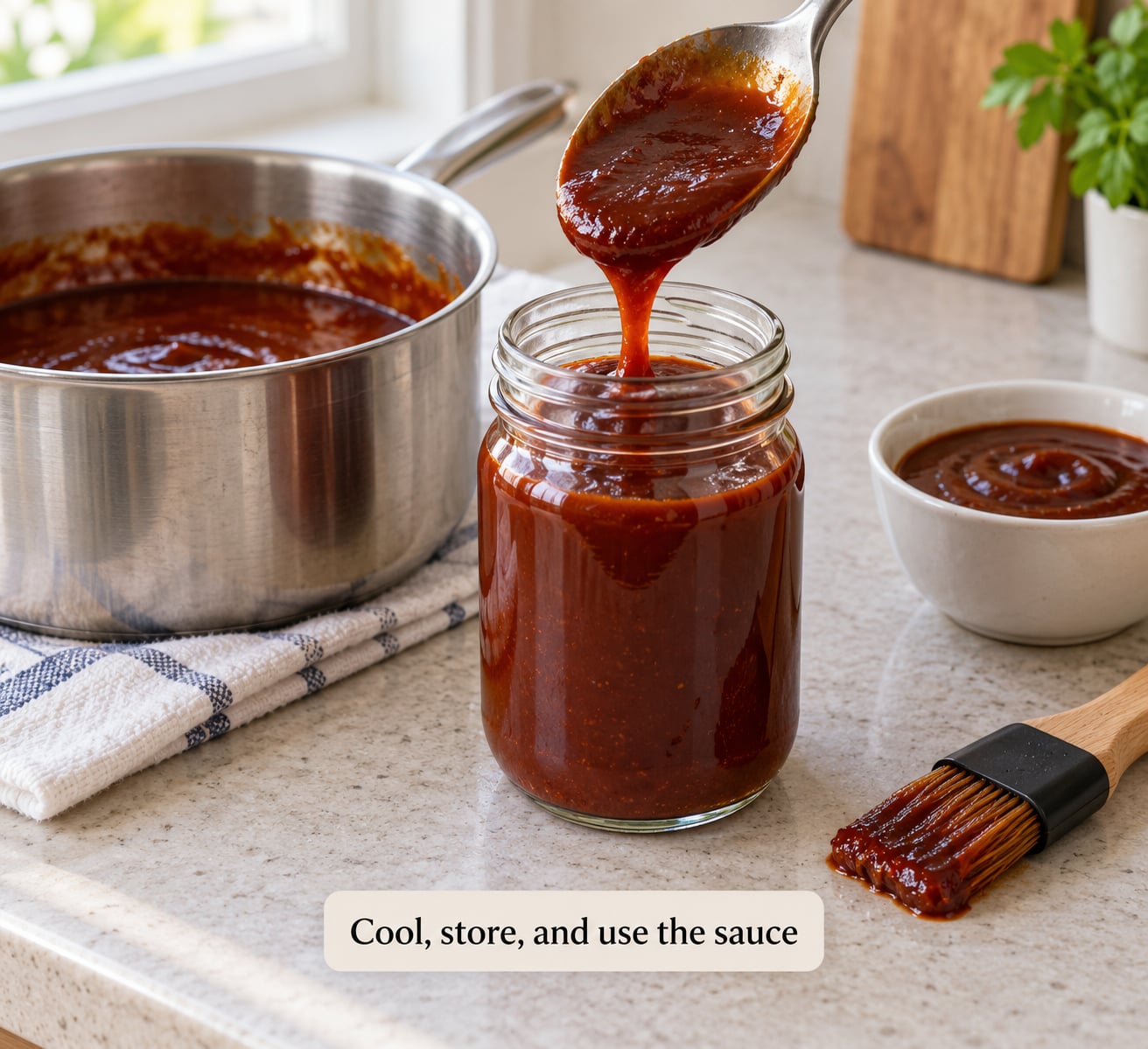
Let the sauce cool in the pan until it is no longer steaming, then spoon it into a clean jar. USDA guidance for cooked sauces and gravies is to refrigerate them within 2 hours and use them within 3 to 4 days. Do not leave the pan on the counter overnight, even if the recipe has vinegar in it, because the acidity is not high enough to be protective on its own.
For longer storage, freeze it in a freezer-safe container or in silicone ice cube trays, leaving a finger of headroom. It keeps about 3 months frozen, and thaw it in the refrigerator overnight. Thaw by microwaving in short bursts with a damp lid, since the sauce spatters badly when the sugars turn to steam.
Canning is a different project. Home water-bath canning of a tomato-based barbecue sauce is not a safe or approved method, because the acidity of most barbecue sauces is not reliably low enough to prevent botulism risk. Use a tested canning recipe from a source like the Ball brand or a state extension service, and follow it exactly.
Thin it with warm water or a little stock when reheating, since it thickens as it sits. Stir in a splash of vinegar if the flavor has gone flat in the fridge. It is at its best for about two weeks of refrigerated life for eating quality, and safely within the 4-day window above.
Where people use it: brushed on pulled pork and brisket, tossed with BBQ cauliflower or jackfruit, wings, ribs, burgers and sloppy joes, a dipping sauce for onion rings and fries, folded into baked beans, thinned for a pizza sauce or a dip, or used as a marinade diluted with olive oil.
Common Mistakes and Tips
It tastes like sweet ketchup. That means there is not enough acid, and it is the most common failure. Add apple cider vinegar a tablespoon at a time until the sweetness stops leading. You can also add Worcestershire, which cuts the impression of sweetness as well as the acid does.
The sauce is too thin. You either did not simmer long enough or you reduced too hard and then stored it while still warm. Keep it at a gentle simmer and test with the spoon swipe. Sauce poured into a jar while warm continues to reduce and ends up overly thick.
The bottom is burning. Sugar and ketchup scorch at the same rate, and a narrow pan makes it worse. Use a wider pan, lower the heat once it bubbles, and stir more frequently as it thickens. A splatter screen reduces mess but not scorching, so stirring is the fix.
It is clumping, or the spices taste raw. Whisk the dry spices into the cold liquid before any heat goes on, and use cornstarch nowhere. Reducing too fast cooks the outer notes before the inside joins in, which is why the simmer should be gentle.
It tastes thin on barbecue flavor. Smoked paprika is the base layer and chipotle is the top note. Add a half teaspoon of liquid smoke at the simmer stage rather than the end, and remember that Worcestershire is doing more work than most people give it credit for.
It scorched on the grill. Sugar burns. Baste with a thicker sauce, apply it in the last 10 minutes rather than from the start, and glaze on a cooler part of the grate with the sweet spot facing away from the coals.
It did not last. It sat out too long, or the jar was not clean. Cool it fast, refrigerate within 2 hours, and use it within 4 days.
A few tips that cover a lot of ground. Pick your sweetener by the style you are chasing, not by what you have: maple and honey lean clean and bright, brown sugar goes caramel and dark. Adjust the heat level with chipotle, since it adds smoke and warmth at once. Scale by doubling everything, and remember a bigger sauce needs a bigger pan or it reduces in half the time. Cooking the sauce covered for the first 10 minutes speeds up the reduction, then uncover it to keep the flavor from turning boiled.
Frequently Asked Questions
What can I use instead of molasses in barbecue sauce?
Use an equal volume of dark brown sugar, honey, maple syrup, or fruit preserves for each 1/2 cup of molasses. Dark brown sugar is the closest match, because it supplies the same dark caramel and treasy note. Date paste is stronger, so use about half the amount. To rebuild the depth molasses gives, add smoked paprika, Worcestershire sauce or tamari, and a splash of liquid smoke, then simmer 20 to 25 minutes.
How do I make barbecue sauce thicker without molasses?
Simmer it longer. Keep the heat at a gentle bubble and stir every few minutes until a spoon drawn through the sauce leaves a lane that closes slowly. Because molasses contributed body as well as sweetness, removing it can leave the sauce thin, and reduction is the fix. If you need it thicker immediately, whisk in a tablespoon of date paste or dark corn syrup and simmer for 2 more minutes. Avoid cornstarch, which dulls the flavor.
Can I make barbecue sauce without molasses on the stove or in a slow cooker?
Both work. On the stove, combine everything in a saucepan, bring it to a gentle simmer, and cook 20 to 25 minutes until it coats a spoon. In a slow cooker, add the same ingredients and cook on low for 4 to 5 hours, stirring once or twice. The slow cooker reduces the sauce more slowly, so check it often near the end and use high for the final 30 minutes if it needs thickening.
What is the best substitute for molasses in a barbecue sauce recipe?
Dark brown sugar is the best substitute for most barbecue sauce recipes, used at a 1-to-1 ratio by volume for packed molasses. It delivers the dark color, caramel sweetness, and body that molasses provides. Maple syrup or honey also work one-for-one, though they produce a sweeter, cleaner sauce that benefits from a little extra smoked paprika.
How can I make barbecue sauce smoky without adding liquid smoke?
Use smoked paprika as the base layer and chipotle chili powder for a deeper, smoky warmth. Start with 2 teaspoons of smoked paprika and 1 teaspoon of chipotle for a 6-serving batch, then taste. Chipotle adds heat as well as smoke, so reduce the cayenne or black pepper if you also add it. Another option is to char half the onion before blending it into the sauce, which gives a grilled note without any liquid.
How long does homemade barbecue sauce without molasses keep?
Homemade barbecue sauce keeps in the refrigerator for 3 to 4 days, per USDA guidance for cooked sauces. Cool it in the pan, then refrigerate it within 2 hours of finishing. For longer storage, freeze it in a freezer-safe container for about 3 months and thaw it in the refrigerator overnight. Do not water-bath can barbecue sauce at home unless you follow a tested recipe from a canning authority, since most sauces are not reliably acidic enough for safe home canning.
Conclusion: Start With a Balanced Tang
A good barbecue sauce without molasses comes down to one move: pair a rounded sweetener with real acid, then let a low simmer do the rest. The first practical step is to make the base recipe exactly as written, with dark brown sugar, smoked paprika, and Worcestershire, so you can taste the balance before you start adjusting it.
From there, treat the sauce as five separate levers, sweetness, tang, smoke, heat, and thickness, and change one at a time. Most people who say they cannot do barbecue without molasses simply need the ratio in front of them, and the answer turns out to be about a third of a cup of brown sugar.