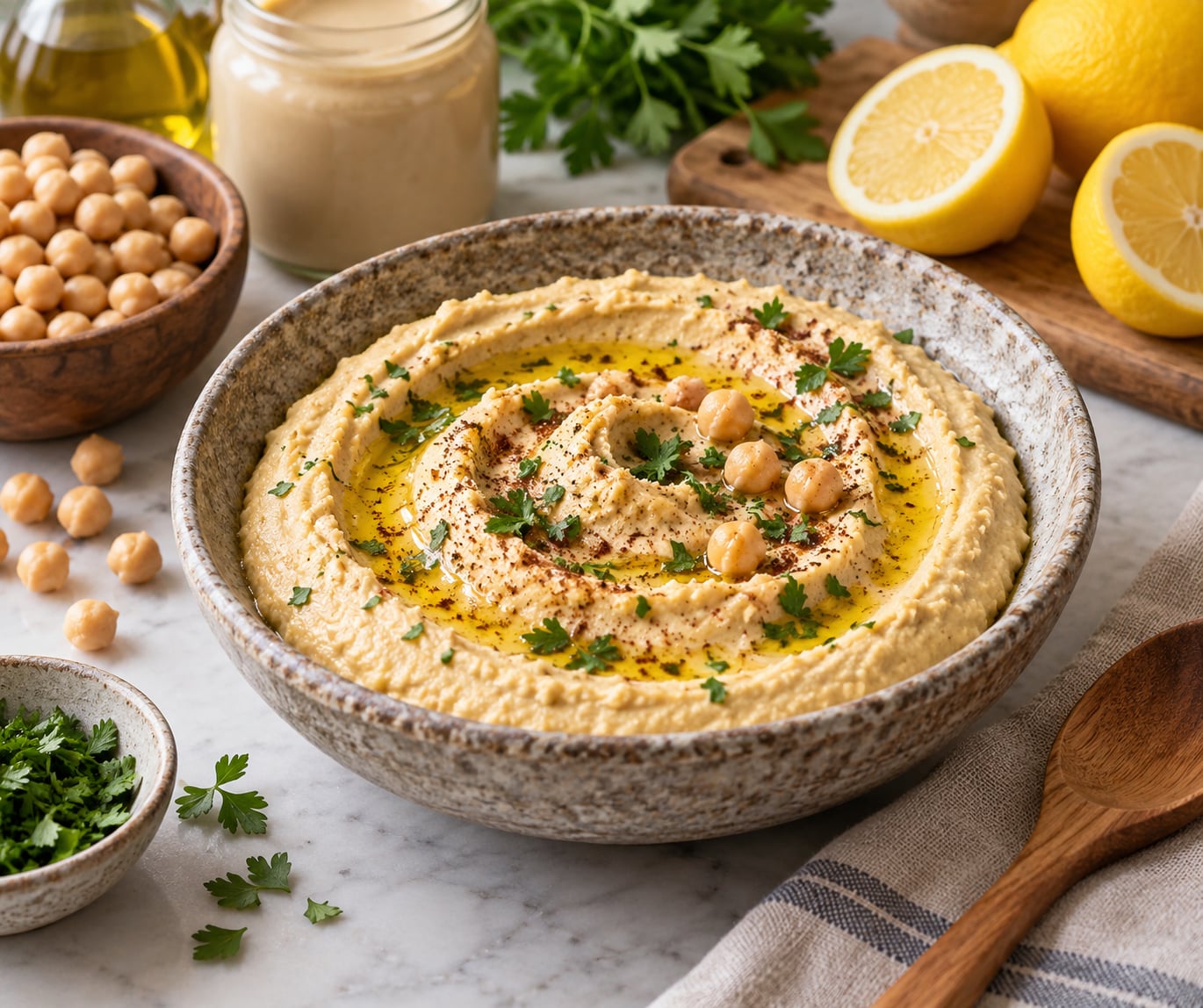
How to make hummus smooth and creamy comes down to three things: chickpeas soft enough to collapse, tahini loosened into an emulsion before it meets the beans, and cold liquid added slowly while you blend. Most grainy batches fail at the first one, and most gluey batches fail at the second. Get those right and the rest is patience at the blade.
It takes about 20 minutes of active work, plus however long you soak or cook the chickpeas. The texture difference between a rushed batch and a slow one is enormous, and you can hear it as much as taste it: silky hummus spreads clean across a warm pita without tearing it.
Table of Contents
- What You Need
- Step-by-Step: How to Make Hummus Smooth and Creamy
- 1. Soak and Cook the Chickpeas Until Soft
- 2. Peel the Chickpeas and Chill the Ingredients
- 3. Blend the Tahini and Liquid First
- 4. Add Chickpeas in Small Batches
- 5. Blend Until Completely Silky
- 6. Adjust the Seasoning and Consistency
- 7. Taste and Chill for the Best Flavor
- Common Mistakes
- Frequently Asked Questions
- Why is my hummus bitter or grainy?
- How can I make canned-chickpea hummus smoother?
- Do I need ice water to make hummus smooth and creamy?
- How do I make hummus thicker without adding more chickpeas?
- How long does homemade hummus last in the refrigerator?
- Conclusion
What You Need
The quantities below give roughly 1.5 cups of finished hummus, which is about what most home cooks want from one batch.
- Chickpeas: 1 can (about 15 oz / 425 g), drained, or 3/4 cup dried chickpeas cooked from scratch
- Tahini: 1/3 cup (about 80 g). Use a pourable, light tahini from a Lebanese or Israeli shop rather than a stiff paste.
- Liquid: 1/4 cup ice-cold water, plus more as needed. Reserved chickpea liquid (aquafaba) works in place of some or all of the water.
- Lemon juice: 2 tablespoons, freshly squeezed
- Garlic: 1 small clove, grated or minced
- Olive oil: 2 tablespoons for blending, a little more for the top
- Seasoning: 3/4 teaspoon fine sea salt, 1/2 teaspoon ground cumin, a pinch of smoked paprika if you like
Tools. A food processor with a 2-cup work bowl does the cleanest job, because you can work in small batches without heating the whole machine. A blender works, but the narrow throat makes it awkward for thick mixtures, and friction heats the hummus faster, which dulls the flavor.
Optional texture boosters. Extra tahini makes it richer and nuttier rather than smoother. A tablespoon of olive oil blended in at the end gives the glossy mouthfeel restaurant hummus has. A spoonful of aquafaba whipped to soft peaks adds air, which is the one move that makes hummus look lighter and fluffier.
Step-by-Step: How to Make Hummus Smooth and Creamy
1. Soak and Cook the Chickpeas Until Soft
Dried chickpeas beat canned for texture, mostly because home cooks control the softening. Cover them with cold water by a few inches, add a teaspoon of baking soda, and let them sit overnight, or use the quick-soak: boil for two minutes, cover, and rest for an hour.
Then simmer in fresh water with another teaspoon of baking soda for 60 to 90 minutes, until a chickpea crushes with no resistance between two fingers. The soda raises the pH of the cooking water, which loosens the cell walls so the beans collapse instead of staying bouncy.
For canned chickpeas, the equivalent trick is a short boil: warm them in their liquid with a teaspoon of baking soda for 15 minutes, then drain. Skip this and the skins stay tough, no matter how long you blend.
2. Peel the Chickpeas and Chill the Ingredients
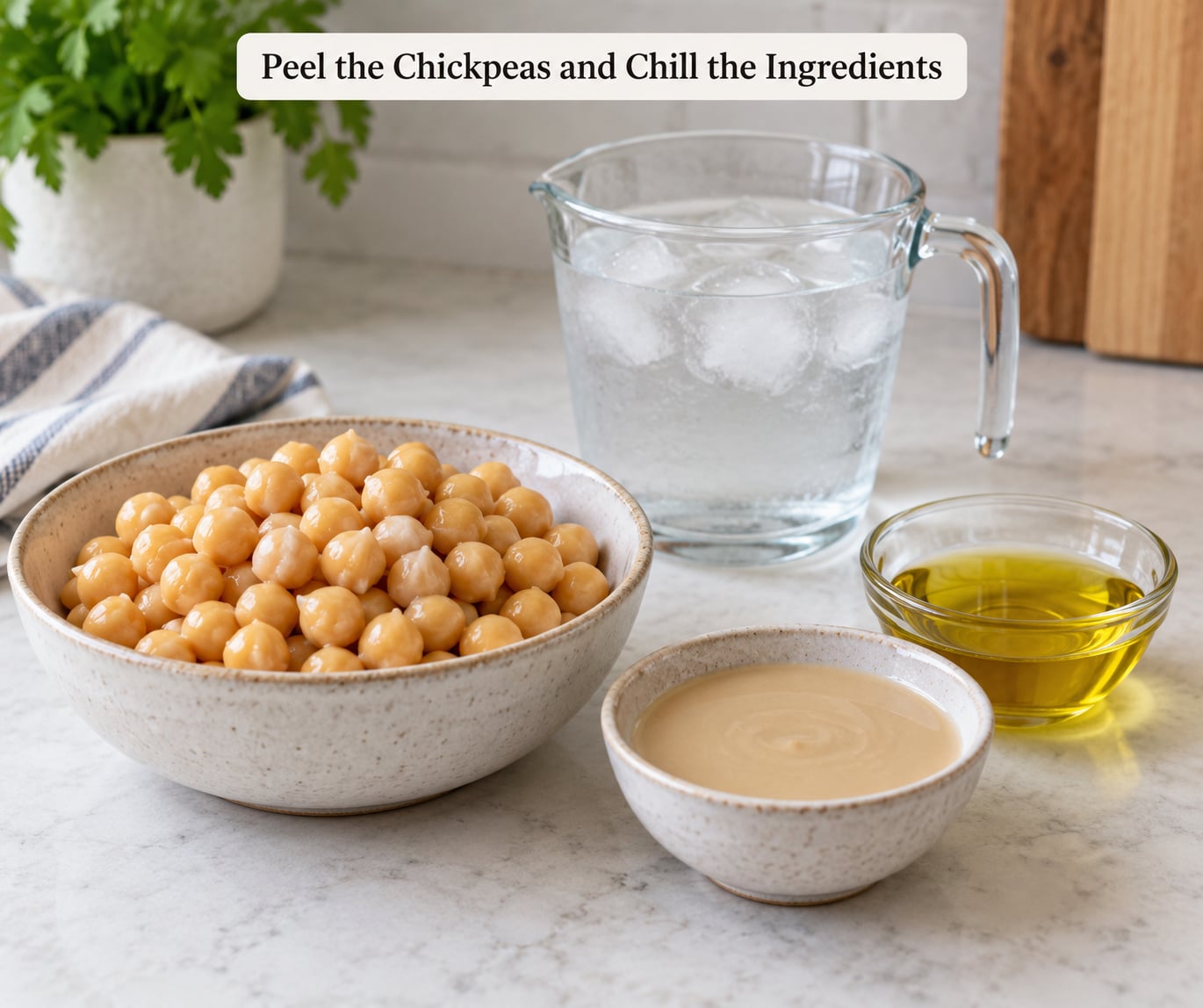
Rub the loosened skins off with your fingers and discard them. It takes a few minutes and it is the single most reliable texture upgrade, though home cooks argue about whether it matters much. In my kitchen it does, especially if the chickpeas were cooked with baking soda and the skins have gone papery.
Then chill everything you can. Cold chickpeas, cold tahini and cold water keep the motor from heating the mixture, and heat is what turns airy hummus into paste.
3. Blend the Tahini and Liquid First
Put the tahini and 2 tablespoons of the ice water in the processor and blend for a full minute. It will seize into a stiff paste and look worse than when you started. Keep going.
Keep blending and streaming in cold water a tablespoon at a time. After two or three additions it loosens dramatically, turns pale, and goes glossy. That is an emulsion, and it is the difference between hummus that tastes of sesame and hummus that tastes of glue.
4. Add Chickpeas in Small Batches
Add about half the chickpeas and blend until the mixture is a rough paste. Stop and scrape down the sides, add the rest, and repeat. Watching the texture as it builds lets you stop at the consistency you want instead of committing the whole batch to a loose purée.
For dipping, stop when a spoon dragged across the bowl leaves a clean channel that holds its shape. For spreading, go a little further.
5. Blend Until Completely Silky
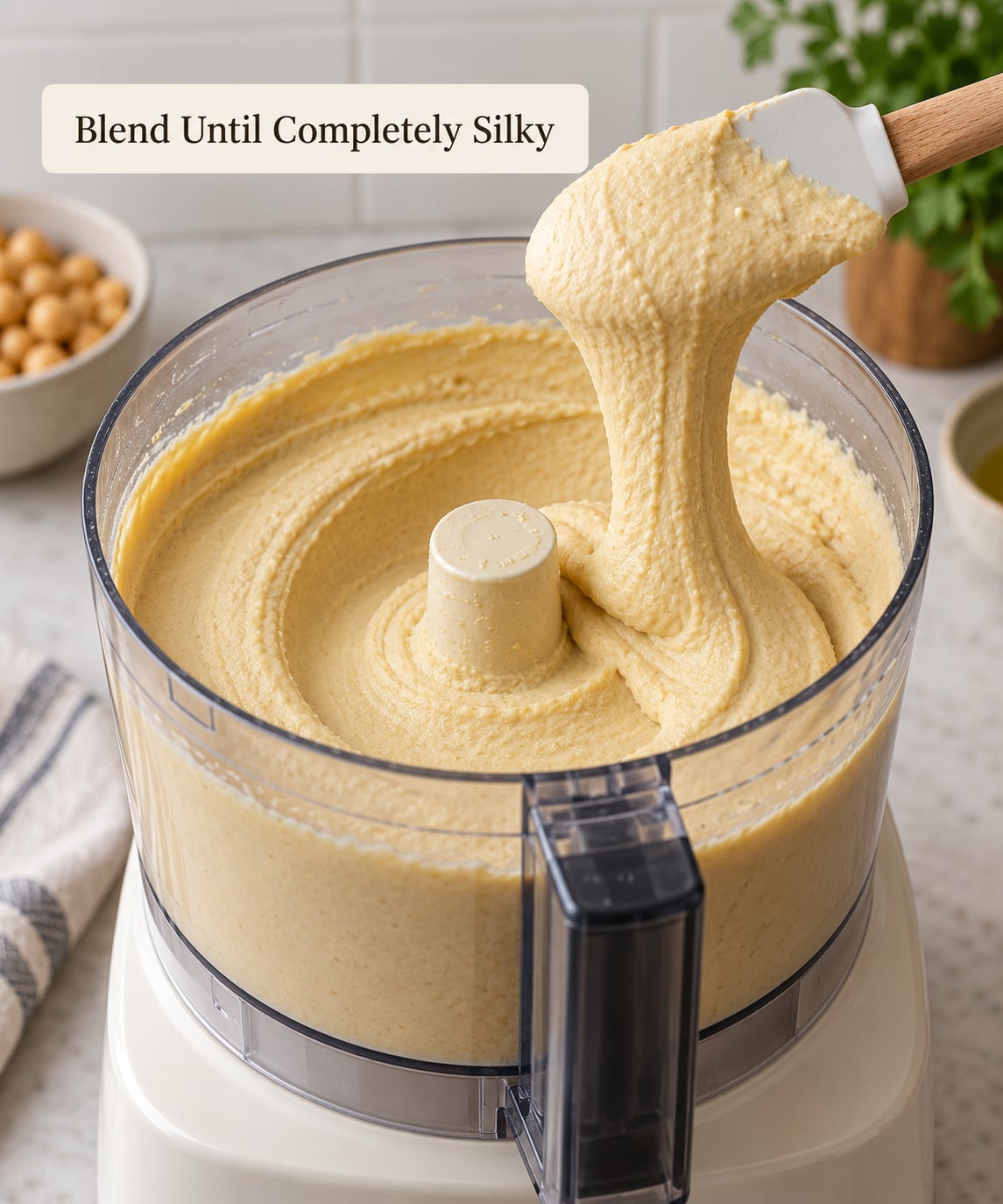
In a food processor, pulse ten or twelve times to break up the remaining chunks, then switch to continuous blending. Scrape the bowl down two or three times, because the paste clings to the sides where it never gets hit by the blade.
Count roughly two full minutes of blending. If you still see flecks or a faint graininess on the spoon, give it another 30 to 60 seconds. You are done when the color is a uniform pale ivory, the surface is glossy, and a ribbon lifted on a spatula holds together without breaking.
With a blender, work in two-cup batches, never more than half full, and use the tamper. A masher can get you there too, but expect a coarser, more rustic result.
6. Adjust the Seasoning and Consistency
Only now add the lemon juice, salt, garlic, cumin and olive oil. Blending is what releases garlic’s raw edge into something mellow, and seasoning before the texture is right means you are guessing at flavor you have not finished building.
Start with 3/4 teaspoon salt and 2 tablespoons lemon, blend ten seconds, and taste. Then fix the body: too thick for dipping, beat in cold water a tablespoon at a time; too loose for a spread, add a tablespoon of tahini or a handful of chickpeas and blend again.
7. Taste and Chill for the Best Flavor
Taste for four things before you stop. Is it salty enough? Does the lemon have a clean bright note rather than just sourness? Can you taste tahini as tahini? Is there warmth from the cumin without dustiness?
Refrigerating the hummus firms it and lets the flavors meld. Make it at least a few hours ahead if you can, and store it airtight in the fridge for up to four days. Stir and add a splash of cold water before serving if it thickened overnight.
Common Mistakes
Gritty texture that never goes away. The chickpeas were undercooked, or their skins are still attached. There is no blend-time fix for this one; soften the beans further, peel them, and try again. Some people also add a small pinch of baking soda to the boiling water, which works because alkaline water breaks down the starches holding the beans together.
Hummus that is loose and watery. Too much liquid went in too fast. You cannot take water back out, so add a tablespoon of tahini or some reserved chickpeas and blend again. Next time, add ice water in smaller increments and trust the texture a step earlier than feels right.
Dull, flat flavor. Usually underseasoned or blended with a hot motor. Taste twice, and refrigerate the finished batch for a few hours before serving. The flavor opens up noticeably after it chills.
Watery tahini that never emulsified. Not enough liquid, or it was added too fast. Whip tahini alone first with an ice-cold liquid for a full minute before the chickpeas go anywhere near the bowl.
A gray, dull, gluey batch. The machine ran hot. Chill the ingredients, work in smaller batches, and rest the motor for thirty seconds between rounds.
Quick troubleshooting checklist: are the chickpeas soft enough to crush with a fingernail? are the skins off? is the tahini loosened before the beans go in? are the ingredients cold? did you scrape the bowl down more than once?
Frequently Asked Questions
Why is my hummus bitter or grainy?
Bitter hummus usually means undercooked chickpeas, and grainy hummus means the same thing. Beans that are firm or slightly underdone leave hard fragments that no amount of blending will remove. Simmer them longer with a teaspoon of baking soda until they crush between two fingers, and peel the skins. Another cause is overloading the processor, which forces the motor hot and scorches the tahini against the bowl.
How can I make canned-chickpea hummus smoother?
Give canned chickpeas a short treatment first. Warm them in their own liquid with a teaspoon of baking soda for 15 minutes, drain, then rub off the loosened skins before blending. Start the tahini emulsion with ice water before adding any beans, add the chickpeas in two batches, and blend for a full two minutes with a scrape-down in the middle. That sequence gets canned chickpeas close to the texture of dried ones.
Do I need ice water to make hummus smooth and creamy?
Ice-cold water helps, though it is not the only thing that works. The temperature matters because cold liquid keeps the mixture from heating up during blending, and heat is what dulls flavor and thickens the paste. Plain cold tap water will get you most of the way there. Aquafaba, the liquid from the chickpea can, is the better option when you want extra body, and a tablespoon of olive oil at the end adds gloss without thinning.
How do I make hummus thicker without adding more chickpeas?
Reduce the liquid and add something with body. Chill the hummus in the fridge for 30 minutes, since it firms noticeably when cold, then beat in a tablespoon of tahini or a spoonful of aquafaba reduced on the stove until a little thicker. Another option is a handful of ice cubes blended in at the end, which loosens the mixture slightly and then stiffens it as the ice melts. Avoid powdered thickeners, which taste dusty.
How long does homemade hummus last in the refrigerator?
Homemade hummus keeps about four days in the refrigerator when stored airtight and kept below 40F. That is shorter than a store-bought tub because nothing has been added to slow spoilage. Press plastic wrap directly onto the surface to limit air contact, use a clean spoon each time rather than dipping into the bowl twice, and if the color or smell seems off, discard it rather than tasting. Do not leave it out longer than two hours.
Conclusion
The sequence matters more than any single ingredient. Use chickpeas tender enough to crush, peel them, whip the tahini with cold liquid until it turns glossy, add the liquid in small amounts, and pulse until not a fleck remains.
Start tonight: soak dried chickpeas with a teaspoon of baking soda, and set your tahini and water in the fridge so they are cold by the time you blend.