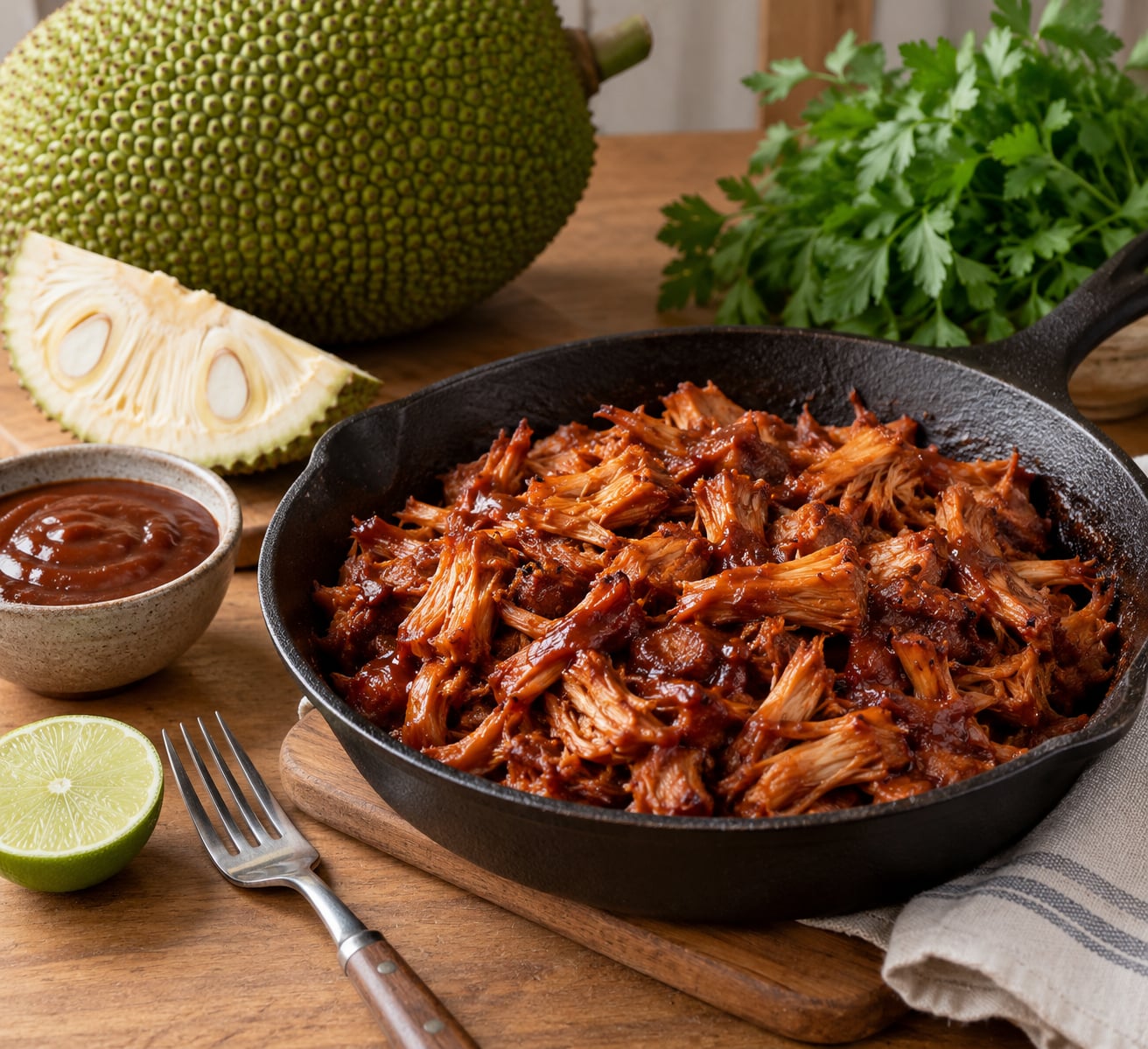
Vegan barbecue jackfruit takes about 30 minutes and one wide skillet. Drain and rinse canned young green jackfruit, tear it into strands, sear it until the edges brown, then simmer it in a smoky barbecue sauce until the fruit turns tender and glossy. Done right, it shreds and eats like pulled pork without a smoker or an all-day cook.
Knowing how to make vegan barbecue jackfruit comes down to a few cues, and most of them happen before the sauce goes in. The pale, wet, faintly briny versions that disappoint usually trace back to a skipped rinse or a crowded pan, and both are easy to fix.
Below is the method I cook, with the cues I watch at each step and the fixes for the four problems that come up most: mushy texture, brine flavor, a sauce that pools in the pan, and a glaze that scorches.
Table of Contents
- What You Need
- Step-by-Step: How to Make Vegan Barbecue Jackfruit
- 1. Drain and Rinse the Jackfruit
- 2. Separate the Jackfruit Strands
- 3. Mix the Barbecue Sauce
- 4. Simmer Until Tender
- 5. Crisp the Edges Under the Broiler
- 6. Season and Check the Flavor
- Common Mistakes
- How to Adjust the Flavor
- Frequently Asked Questions
- Can I use fresh green jackfruit for vegan barbecue jackfruit?
- How long does vegan barbecue jackfruit last in the refrigerator?
- Can I make vegan barbecue jackfruit ahead of time?
- What should I serve with vegan barbecue jackfruit?
- Can I make vegan barbecue jackfruit without liquid smoke?
- Conclusion
What You Need
Two 20-ounce (567 g) cans of young green jackfruit give roughly 2 1/2 cups (about 350 g) of drained fruit, which serves four as a main. That drained weight refers to the contents of both cans, so a single can is a two-serving recipe with no other changes.
- 2 (20 oz / 567 g) cans young green jackfruit in brine or water, not in syrup
- 1/2 cup (120 ml) barbecue sauce, plus extra for serving
- 1 Tbsp (15 ml) liquid smoke
- 1 Tbsp (15 ml) apple cider vinegar
- 1 Tbsp (15 ml) molasses or dark brown sugar
- 1 tsp smoked paprika
- 1/2 tsp garlic powder and 1/2 tsp onion powder
- 1/2 tsp fine salt, less if your barbecue sauce is already salty
- 1 Tbsp (15 ml) neutral oil, such as canola, avocado, or grapeseed
- 1/4 cup (60 ml) water, kept nearby in case the skillet dries out
- Pinch of red pepper flakes, optional
Buy young green jackfruit, which is firm, pale, and fibrous. Mature yellow jackfruit is soft, sweet, and holds no strands, so it cannot be shredded and turns to mush in a skillet. Brine-packed cans are fine as long as you rinse them properly; water-packed cans need less salt, so taste the sauce before adding any.
All you need for equipment is a 10 to 12 inch (25 to 30 cm) skillet with a lid, two forks, and a colander. A broiler or an oven set to high heat handles the last step of crisping the edges.
Step-by-Step: How to Make Vegan Barbecue Jackfruit
1. Drain and Rinse the Jackfruit
Open both cans and press the fruit out into a colander set over the sink. Press firmly on each piece with your palm until the packing liquid runs out, then rinse under cold water and work each piece between your fingers until the water runs clear.
This is the step people skip, and it is the reason finished jackfruit tastes salty no matter how much sauce you add. Taste one strand now. If it is noticeably salty, give the fruit a second rinse and let it sit in the colander for five minutes.
Pat the drained pieces dry with a clean towel. To learn how to make vegan barbecue jackfruit that stays tender instead of watery, keep going while the fruit still feels firm. Soft, collapsing pieces are already past the point where they can shred.
2. Separate the Jackfruit Strands
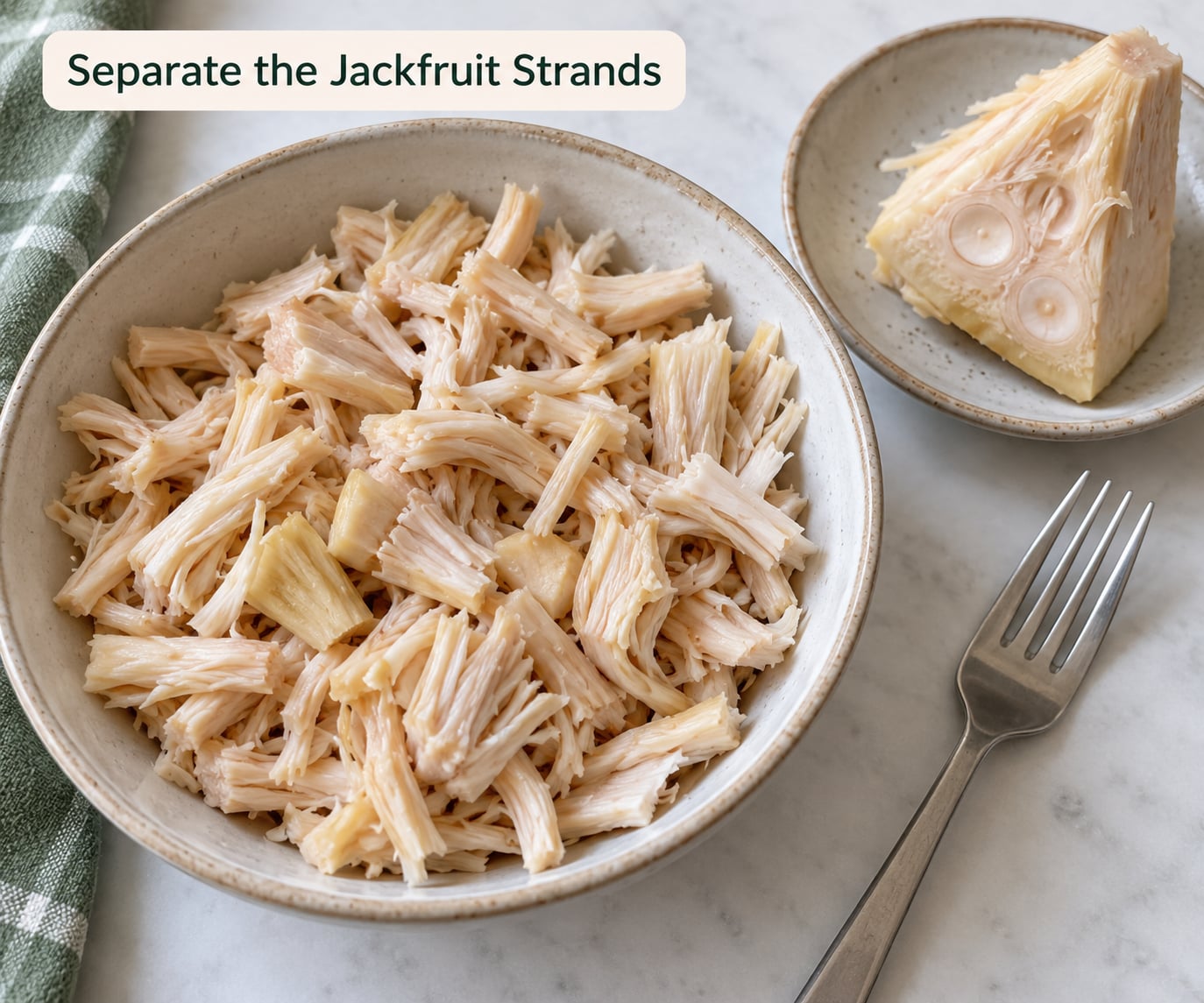
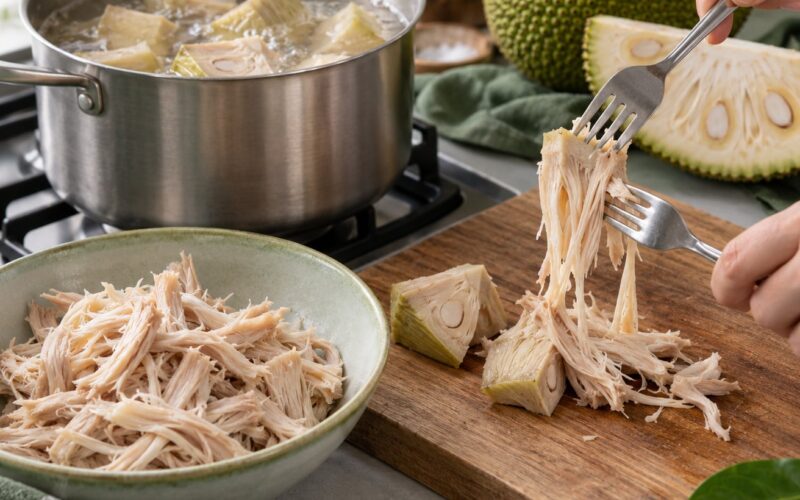
Set a piece on the board and pull it apart along its length with your fingers. It splits into long, uneven strands, the way cooked pork shoulder does. Two forks facing each other work too, and they leave slightly shorter pieces.
Cut away the pale, rubbery core at the center of each piece and toss it. Most young jackfruit also carries a hard tan seed inside the core, which comes out with it.
Keep a mix of long shreds and shorter chunks. The long strands give the dish its pulled-meat look, and the shorter pieces are what hold the bun together at the bottom.
3. Mix the Barbecue Sauce
In a bowl, whisk the barbecue sauce, liquid smoke, vinegar, molasses or brown sugar, smoked paprika, garlic powder, onion powder, salt, and chili flakes if you are using them. Stir until the molasses dissolves and the color darkens slightly.
For a thicker glaze, stir in another tablespoon of sauce. For sharper barbecue flavor, add a second teaspoon of vinegar. If you are using a sweet store-bought sauce and want more smoke, a second teaspoon of liquid smoke is safer than more sugar, which is what turns a glaze bitter on the broiler.
4. Simmer Until Tender
Heat the oil in the skillet over medium-high heat. Add the shredded jackfruit in a single layer and leave it alone for two to three minutes until the underside picks up color, then stir and repeat.
Pour the sauce over the fruit, toss to coat, cover, and drop the heat to low. Simmer gently, not boiling, for 10 to 15 minutes, stirring every few minutes. A hard boil pushes all the liquid to the bottom of the pan and leaves strands sitting in sauce instead of absorbing it.
Test a strand with a fork. When it slides apart with no resistance and the sauce has reduced to a sticky coat, it is ready to crisp. If the skillet looks dry before the fruit gives, splash in a little of the reserved water and continue.
5. Crisp the Edges Under the Broiler
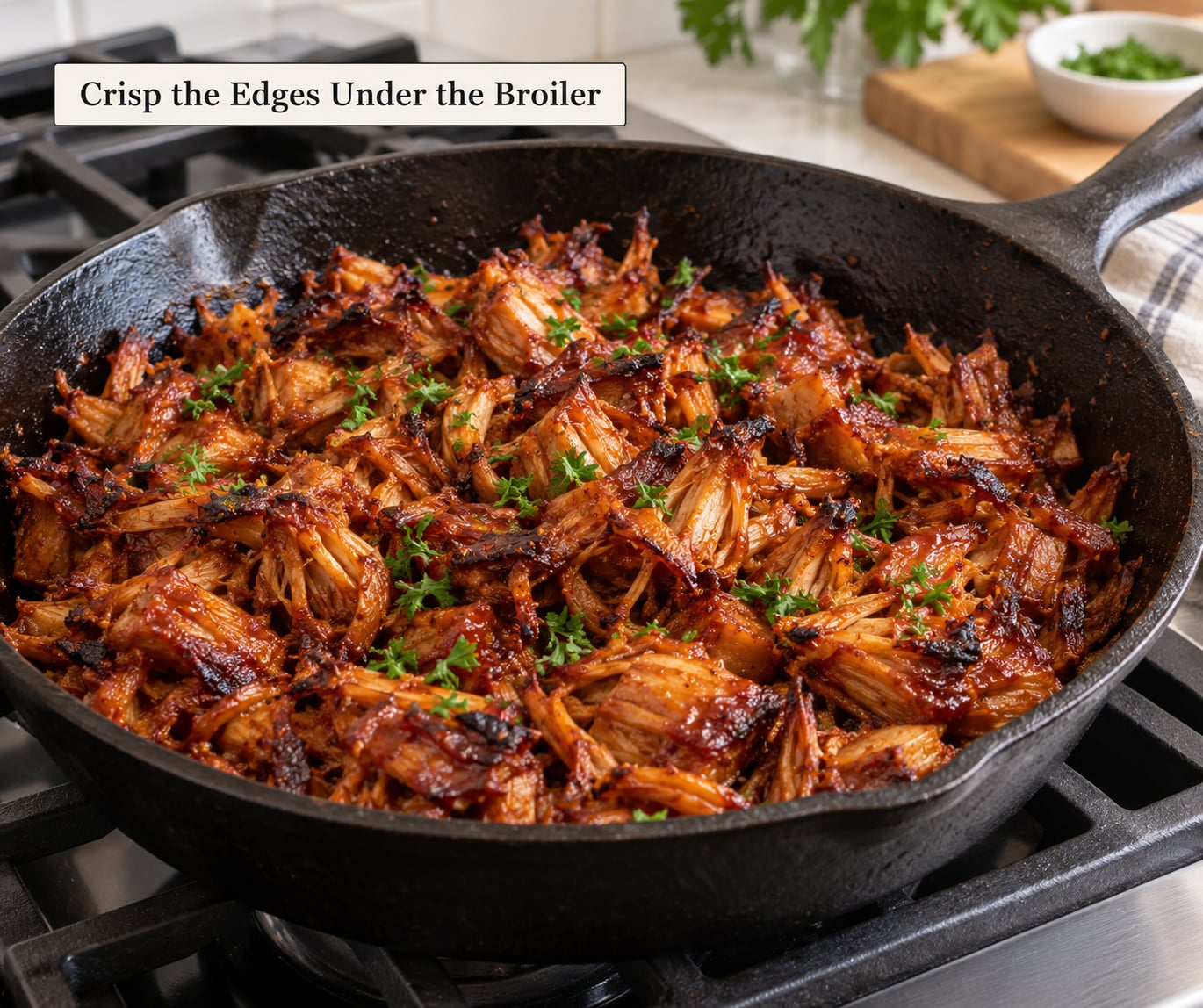
Spread the jackfruit in one even layer, spooning any remaining sauce over the top. Set the skillet under the broiler for 2 to 4 minutes, watching the whole time.
Broiler intensity varies a lot between ovens, so use the color rather than the clock. Pull the pan when the top edges look set and deep brown. Stir, spread again, and repeat for another 2 to 3 minutes until a good share of the strands have crisp, dark edges and the middle still looks moist.
No broiler? A 450°F (230°C) oven works just as well. Roast for 10 to 12 minutes, stirring once halfway through.
6. Season and Check the Flavor
Taste a strand now that the sauce has soaked in and the edges have browned. It will read differently than it did straight from the pot, usually a little sweeter and smokier.
Fix what is actually missing rather than adding everything. Thin with a splash of vinegar for flatness, a teaspoon of barbecue sauce for weak tang, more smoked paprika for faded smoke, brown sugar for a dull glaze, and hot sauce or more chili flakes at the table for heat. A pinch of salt is usually unnecessary because the canning brine and the sauce have already salted the dish.
Add extra sauce only at the table, one drizzle per serving. Stirring it in at the end of cooking loosens the glaze and gives you a soggy plate.
Common Mistakes
- Using mature yellow jackfruit. It is sweet, soft, and holds no strands. Only young green jackfruit shreds.
- Skipping or rushing the rinse. Press and rinse until the water runs clear, then taste a strand.
- Shredding too small. Jackfruit has no grain to work against, and a food processor turns it into paste. Pull it apart by hand and leave some pieces chunky.
- Crowding the skillet. A heaped pan steams instead of searing. Cook in two batches if you need to.
- Simmering at a rolling boil. Reduce to a low simmer so the strands absorb sauce rather than sit in it.
- Adding all the liquid smoke early. Long cooking flattens it. Add half in the sauce and half after the sauce reduces.
- Broiling wet fruit. Broil only after the sauce has reduced, or the sugar burns before the edges crisp.
- Making the glaze too sweet or too thick. Balance it with vinegar, not more sugar, and thin it with water rather than loosening it with sauce.
How to Adjust the Flavor
- Classic barbecue. Keep the recipe as written and finish with apple cider vinegar.
- Spicy barbecue. Swap the chili flakes for one chopped chipotle in adobo, added with the sauce. Chipotle brings a little heat and more smoke. For clean heat, stir in hot sauce after reducing.
- Sweet-smoky. Double the molasses, use a barbecue sauce with molasses or dark brown sugar, and add a teaspoon of maple syrup only after the sauce reduces.
- Lighter and vinegar-forward. Cut the barbecue sauce to a third of a cup, add two tablespoons of extra vinegar, and skip the molasses. The thinner sauce will not cling, so give the fruit a longer roast in step five.
A sugar-free barbecue sauce works, but it reduces differently. Without sugar it stays thin, so add it later and let the fruit broil longer to build the sticky glaze.
Frequently Asked Questions
Can I use fresh green jackfruit for vegan barbecue jackfruit?
Yes, as long as it is young and green, not ripe. Cut it into quarters, remove the seed and most of the pale core, and simmer the pieces in salted water for 15 to 20 minutes until a fork slides in easily. Drain, cool briefly, then shred and follow the same skillet method. Boiling fresh fruit in a bay leaf broth is common but not required; the canning brine on canned fruit already does that job.
How long does vegan barbecue jackfruit last in the refrigerator?
Cooked jackfruit barbecue keeps in the refrigerator for 3 to 4 days when stored in a sealed container. Cool it uncovered for the first 20 minutes so condensation does not settle on top, then cover and refrigerate at or below 40°F (4°C). Reheat on a skillet over medium heat rather than in the microwave, and cook until steaming hot throughout, about 165°F (74°C).
Can I make vegan barbecue jackfruit ahead of time?
Yes, and it often tastes better the next day. Simmer the shredded fruit in the sauce and refrigerate it before broiling, since the crisp edges need to happen last. Reheat in a hot skillet with a teaspoon of barbecue sauce, then broil for two or three minutes to bring the edges back. Leftovers also shred into tacos, nachos, and quesadillas without reheating first.
What should I serve with vegan barbecue jackfruit?
On a toasted bun with a vinegar slaw and pickles is the closest match to a pulled-pork sandwich. Sliders with mustard on small brioche-style buns work for a crowd. It also fills tacos with charred corn and avocado, tops a rice or grain bowl with black beans, or becomes loaded fries under nachos and queso. Because the fruit alone is light, serve it with something filling like slaw, beans, or cornbread.
Can I make vegan barbecue jackfruit without liquid smoke?
You can, and the dish still tastes like barbecue. Double the smoked paprika to two teaspoons and add a teaspoon of ground cumin plus a pinch of cayenne. The flavor leans more warmly spiced than smoky, which suits a vinegar-forward sauce. If you want smoke without liquid smoke, char the strands under the broiler for an extra minute or two before saucing them.
Conclusion
Start by draining the fruit while you mix the sauce, then pull the drained pieces into strands and get them into the hot skillet before anything else. Sear first, sauce second, simmer low, and stop to taste a strand before the broiler goes on.
Those three cues, firm going in, tender coming out, and browned on top, are what separate shredded jackfruit from a plate of warm fruit. Once you have the method down, how to make vegan barbecue jackfruit becomes a 30-minute weeknight main, a cookout centerpiece, or a cooler filling for sandwiches the next day.