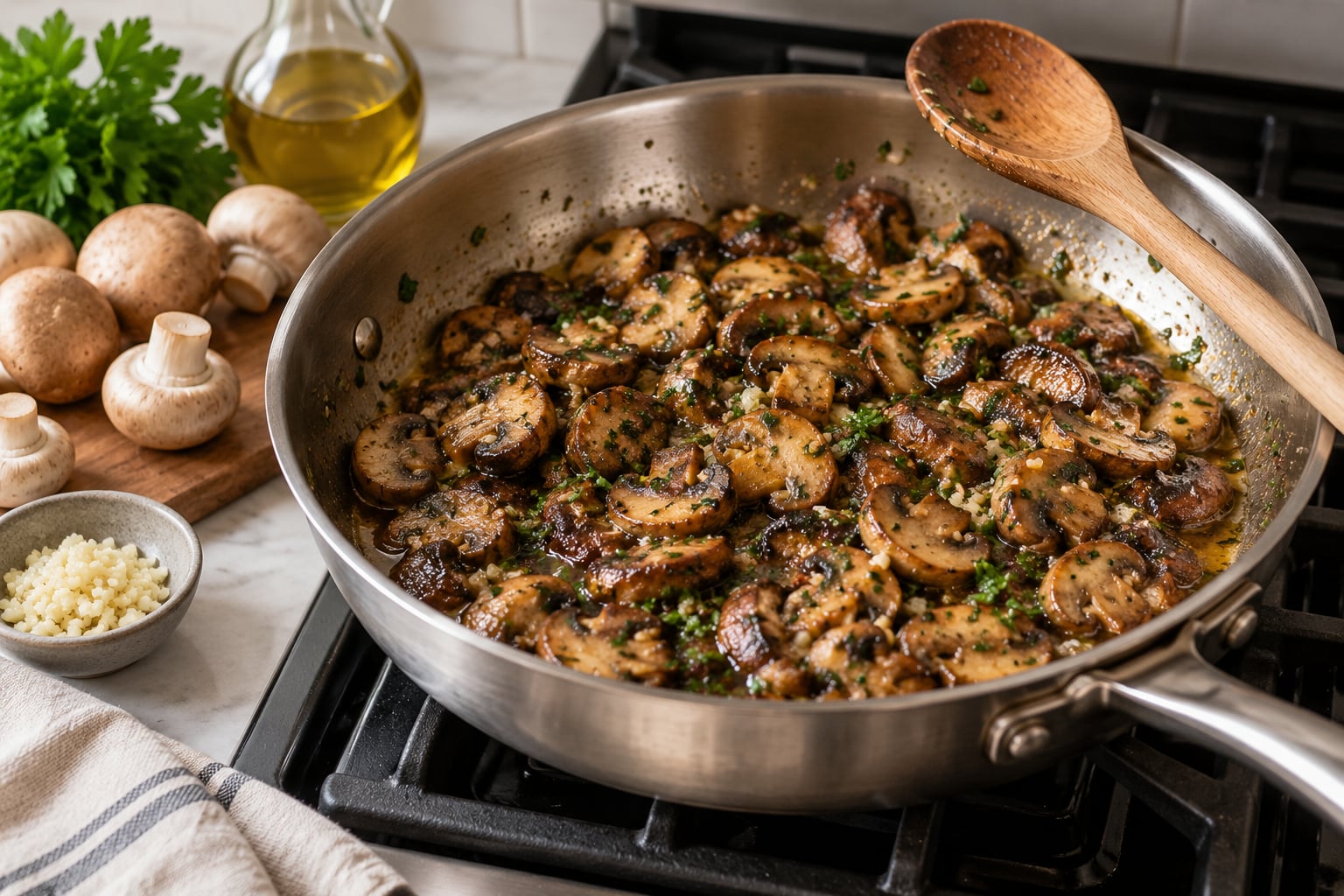
Mushrooms steam instead of browning because they hold roughly 90 percent water, and wet surfaces cannot take on color. To learn how to cook mushrooms so they brown instead of steam, you need three things working together: a very hot wide pan, one uncrowded layer of mushrooms, and salt added at the end rather than the start.
The whole method takes about 10 minutes for a pound of sliced mushrooms, and there is nothing tricky about it once you know what the pan is telling you. Listen for the sizzle, watch for the liquid, and wait until the pan reads dry again.
Table of Contents
- What You Need
- Step-by-Step: How to Cook Mushrooms So They Brown Instead of Steam
- 1. Prepare the Mushrooms
- 2. Heat a Wide Pan
- 3. Add Mushrooms in a Single Layer So They Brown Instead of Steam
- 4. Let Them Brown Undisturbed
- 5. Finish and Season
- Common Mistakes
- Frequently Asked Questions
- Do different types of mushrooms need different cooking times?
- How do I saute frozen mushrooms without making them watery?
- Should I rinse mushrooms before cooking them?
- When should I add salt, garlic, and butter to sauteed mushrooms?
- Can I get browned mushrooms in a nonstick skillet?
- How do I know mushrooms are browned rather than just cooked?
- Conclusion
What You Need
A wide stainless-steel or cast-iron skillet is the one piece of equipment that matters. Width gives you evaporation surface, and mushrooms brown by driving off water rather than by absorbing heat, so a 12-inch pan cooks a pound faster and more evenly than a small one.
For the fat, use a neutral high-heat oil such as canola, grapeseed, or avocado. Butter adds flavor and a better color in the last minute, but its milk solids burn fast, so keep butter as a finisher rather than the primary cooking fat.
Everything else is pantry basics: salt, black pepper, and optional aromatics like minced garlic, thyme, parsley, or a splash of wine. No special equipment, no thermometer, no marinating step.
Step-by-Step: How to Cook Mushrooms So They Brown Instead of Steam
1. Prepare the Mushrooms
Wipe or brush the caps clean with a damp paper towel. Most commercial mushrooms carry only a thin layer of field dirt, and rinsing soaks water into the spongy flesh that has to boil off before browning can start.
Dry them thoroughly. If you rinsed any mushrooms, blot them with paper towel or spin them in a salad spinner until the surface no longer feels damp. Trim the dry, dark ends of the stems, then slice caps into even 1/4-inch pieces or tear them into ragged chunks, which catch more surface area and crisp at the edges.
Keep the cut pieces in a dry bowl and get them to the pan within a few minutes. Any salting or sitting time in a bowl pulls water out of the cells, and that liquid pooling at the bottom of the bowl is the first step toward steamed, grey mushrooms.
2. Heat a Wide Pan
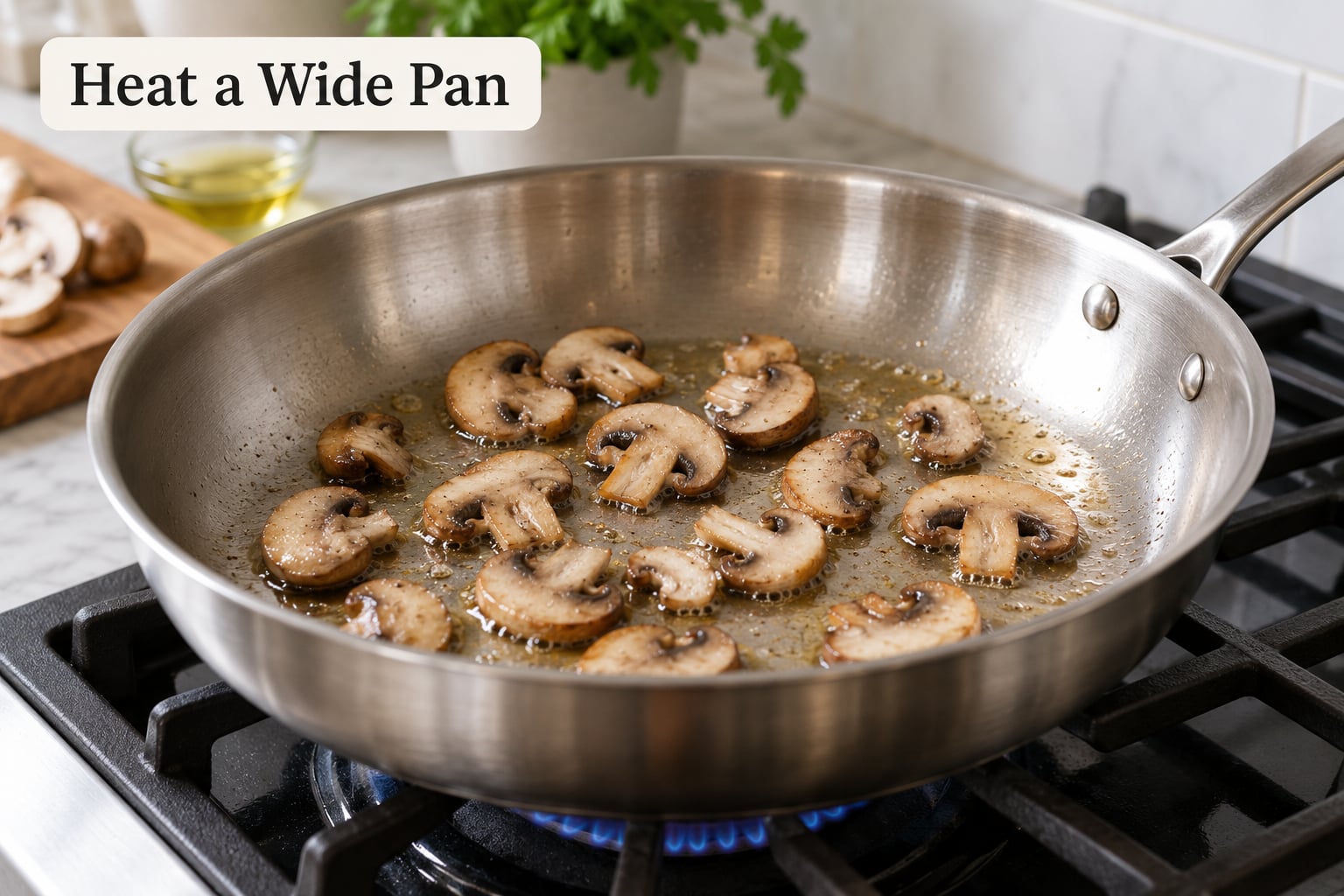
Set the skillet over medium-high heat and let it heat before the oil goes in. A cold pan makes the oil coat the mushrooms instead of the pan, and the mushrooms cook slowly in their own liquid rather than searing.
Add about a tablespoon of oil for every 10 ounces of mushrooms. You are looking for a shimmer across the surface and the first wisp of smoke, not a cloud. That shimmer is the cue the fat is hot enough; if the oil sits flat and dull, give the burner another 30 seconds.
Note the difference between the burner setting and the oil temperature. A gas flame set to 6 and a glass cooktop turned to 6 produce very different pan temperatures, so judge the fat, not the dial.
3. Add Mushrooms in a Single Layer So They Brown Instead of Steam
Tip the mushrooms in and spread them out with a wooden spoon so every piece touches the pan. A crowded pile drops the pan temperature fast and traps released water between the mushrooms, which keeps the surface above the boiling point of water and produces pale, soggy food.
If your mushrooms do not fit in one loose layer with a little space between pieces, cook them in batches. Two batches in the same clean pan beat one thick pile, and you can keep the second batch waiting in a dry bowl rather than a salted one.
4. Let Them Brown Undisturbed
For the first 2 to 3 minutes, do not stir. The mushrooms should hiss loudly on contact, then quiet as they release their water. That quiet bubbling stage is the pan steaming off the moisture, and interrupting it puts cool liquid back onto the surfaces trying to sear.
When the bubbling slows to almost nothing and the sound climbs back to a sizzle, the water is gone. Stir once, turn the pieces, and give them another 2 to 4 minutes until the pan looks dry and the edges turn deep golden brown.
Salt only now, along with the pepper. Salt early pulls water out of the cells by osmosis, so an early-salted batch spends most of its time boiling off liquid that should have browned. Learning how to cook mushrooms so they brown instead of steam is mostly learning to wait out that quiet boiling stage. Food safety is not an issue here; mushrooms go in the pan dry and come out cooked.
5. Finish and Season
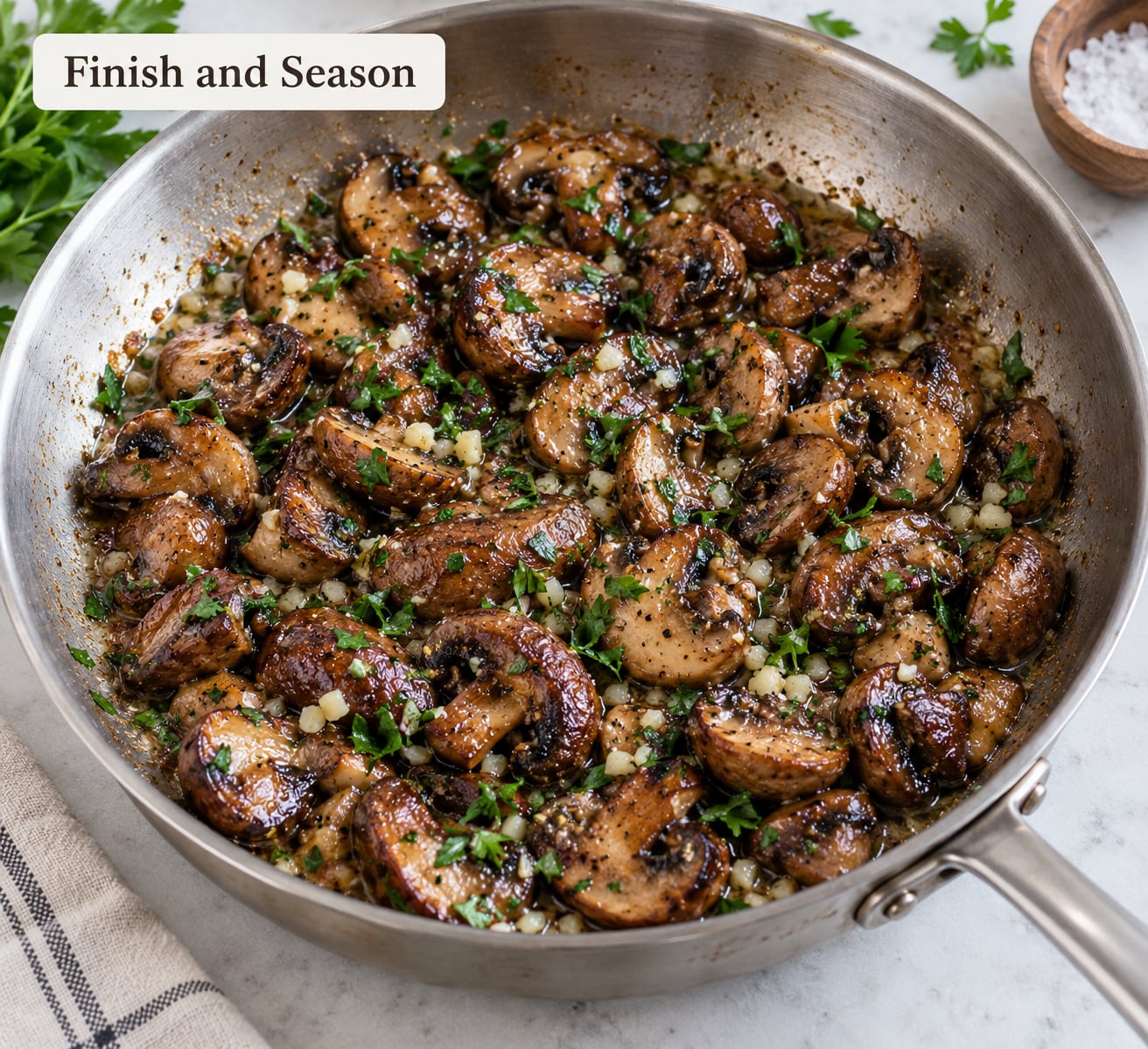
Once the mushrooms are browned, add a tablespoon or two of butter and let it foam around them. Minced garlic goes in now for 30 seconds, long enough to turn fragrant without turning bitter.
Deglaze the brown bits stuck to the pan with a splash of wine, stock, or water, scraping as you pour. That fond is concentrated mushroom flavor, and it is the easiest sauce in the kitchen.
Finish with chopped parsley or thyme, a squeeze of lemon, and more pepper. They are ready when the pieces are browned outside, tender and yielding at the center, and the pan has no standing liquid left in it.
Common Mistakes
Almost every soggy mushroom batch traces back to one of six problems. Fix the cause rather than adding more heat at the end, which scorches the outside while the center stays wet.
| Mistake | What happens | The fix |
|---|---|---|
| Crowded pan | Pan temperature crashes, water traps between pieces | Cook in batches so mushrooms lie in one loose layer |
| Wet mushrooms | Surface water must evaporate before browning can start | Brush clean and dry thoroughly instead of rinsing |
| Cool pan and cool oil | Mushrooms sweat and absorb oil instead of searing | Preheat the skillet, then add oil until it shimmers |
| Constant stirring | Liquid keeps flowing back over searing surfaces | Leave undisturbed for 2 to 3 minutes, then turn once |
| Salting at the start | Salt draws out water and slows the drying out | Season after the browning is done |
| Small burner, low flame | Uneven heat browns some pieces and steams others | Use the widest burner available and medium-high heat |
Thin slices brown in about 5 minutes total; whole caps need 8 to 10 minutes on the first side before you flip them, since a dense cap holds water in the center. Frozen mushrooms can never brown as well as fresh because they release a large amount of ice water at once, so pat them dry, cook them at higher heat first to drive that water off, and only then lower the heat to brown and finish.
Thin-skinned varieties like oyster mushrooms brown quickly and burn quickly, so keep them moving more often. Sturdy wild mushrooms such as cremini, hen of the woods, and rehydrated dried porcini take longer and reward the same rule: leave them alone until the liquid is gone. On the safety side, cook fresh mushrooms promptly and refrigerate them in a paper bag rather than a sealed plastic bag, which traps condensation and speeds spoilage.
Frequently Asked Questions
Do different types of mushrooms need different cooking times?
Yes. Oyster and other thin varieties brown in 4 to 5 minutes and need more stirring, while dense caps like portobello and whole cremini take 8 to 10 minutes before they release their water. Shiitake sit in the middle at about 7 minutes. The reliable signal is not the clock but the pan: when the bubbling stops and the sound turns back to a sizzle, the water is gone and browning has started.
How do I saute frozen mushrooms without making them watery?
Pat them dry, then cook them in a wide pan over medium-high heat with a generous film of oil and do not salt until the end. Frozen mushrooms release a lot of water, so the first stage is evaporation: keep the heat up and cook until the pan looks dry, then continue until the pieces brown. Cooking them in batches and crowding the pan is what keeps frozen mushrooms grey and watery.
Should I rinse mushrooms before cooking them?
Usually not. Mushrooms absorb water like a sponge, and that water has to boil off before browning can happen. Most commercial mushrooms only carry a light film of dirt, so brushing them with a damp towel or wiping them clean is enough. Rinse only when dirt is heavy, and blot the caps completely dry before they go in the pan.
When should I add salt, garlic, and butter to sauteed mushrooms?
All three go in after browning. Salt early draws water out of the cells by osmosis and slows the drying out, butter burns before mushrooms brown, and garlic turns bitter in a very hot pan. Once the pan reads dry and the edges are golden, add butter first, then garlic for about 30 seconds, then salt and pepper.
Can I get browned mushrooms in a nonstick skillet?
You can, but a stainless-steel or cast-iron pan gives you more color. Nonstick coatings top out at a lower temperature, so the mushrooms sear less aggressively. Use your nonstick pan the same way: medium-high heat, a single loose layer, and mushrooms that are dry going in. You will get light browning and less fond on the bottom of the pan.
How do I know mushrooms are browned rather than just cooked?
Color is the tell. Cooked but uncolored mushrooms look pale grey or beige, while browned mushrooms show a deep golden to mahogany tone, especially on the cut edges. The sound confirms it: a soft steady simmer means water is still leaving the pan, while a sharp sizzle means the moisture is gone and the surface is searing.
Conclusion
Start by drying your mushrooms and giving a wide skillet a full preheat before the oil goes in. Add one loose layer, leave it alone through the quiet bubbling stage, then season only once the pan is dry and the edges are golden brown.