Building a spice cabinet for southern cooking takes two decisions, not one: where the jars live and what goes in them. Get the storage right and any seasoning fits; get the list right and you can season a pot of beans, a cast-iron skillet of cornbread, or a peach cobbler without a second trip to the store. Most people can have a working cabinet in one weekend with a few jars and an afternoon of labeling.
The reason I lean on a dedicated cabinet is boring and specific. Home cooks describe digging past five to ten containers just to reach one jar, and that friction quietly flattens the seasoning in everything they cook. Southern cooking leans on a short list of high-frequency flavors applied in layers, so the cabinet is less about storage capacity than about putting those layers within arm’s reach of the stove.
Table of Contents
- What You Need to Build a Spice Cabinet for Southern Cooking
- Step-by-Step
- 1. Start With the Southern Flavor Foundations
- 2. Add Spices for Meat, Beans, and Greens
- 3. Include the Warm Baking Spices
- 4. Choose Blends That Fill Real Gaps in Your Spice Rack
- 5. Organize by How You Cook
- 6. Store Spices for Freshness and Easy Access
- Common Spice Cabinet Mistakes to Avoid
- Frequently Asked Questions
- How many spices do I actually need to start?
- What order should spices be organized in?
- How do I store spices so they actually stay fresh?
- Should I use glass jars or plastic?
- Is a spice rack or a spice drawer better for southern cooking?
- Conclusion
What You Need to Build a Spice Cabinet for Southern Cooking
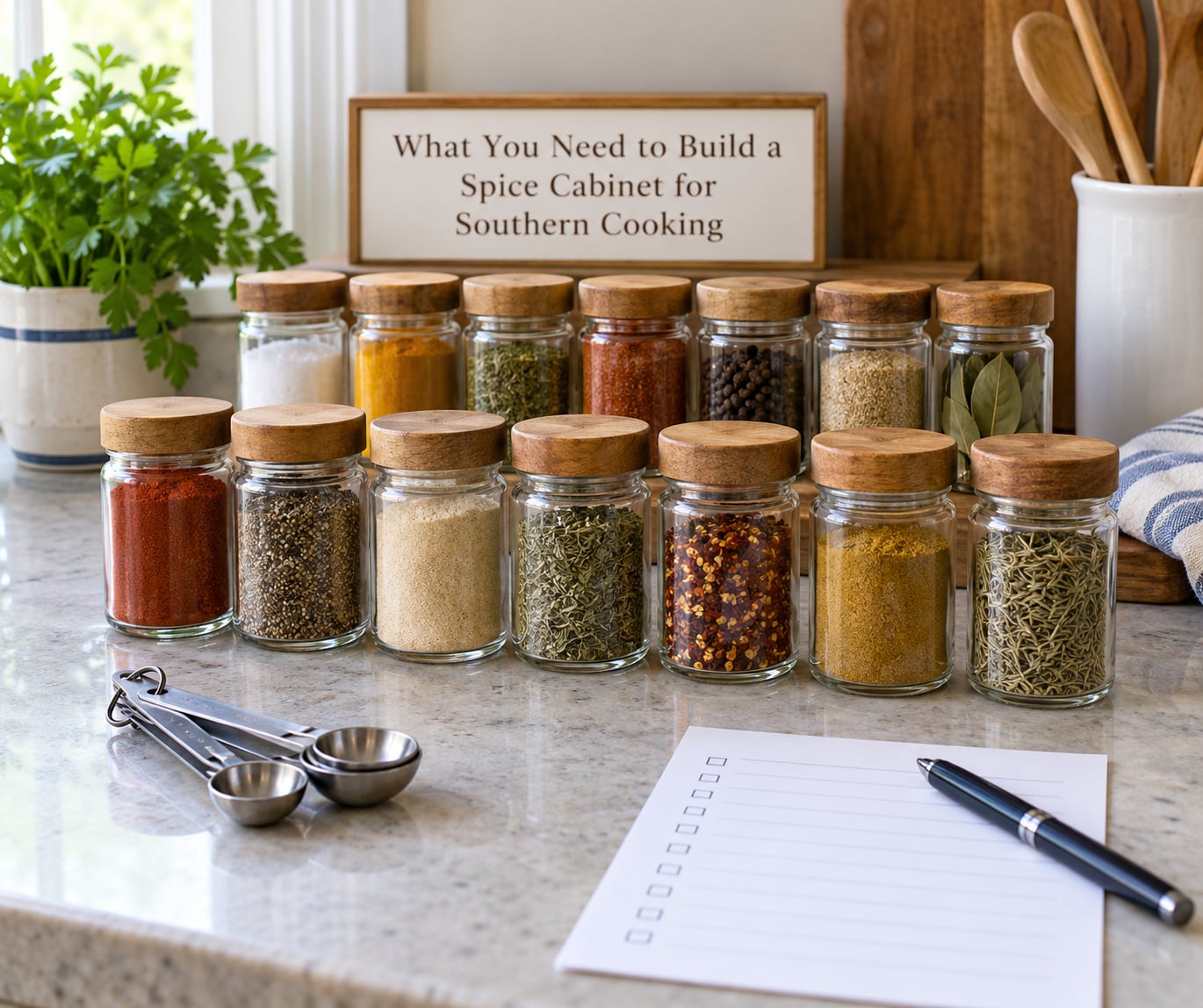
You need four things to start, and only one of them is wood. The rest are cheap and decide whether the cabinet stays usable six months from now.
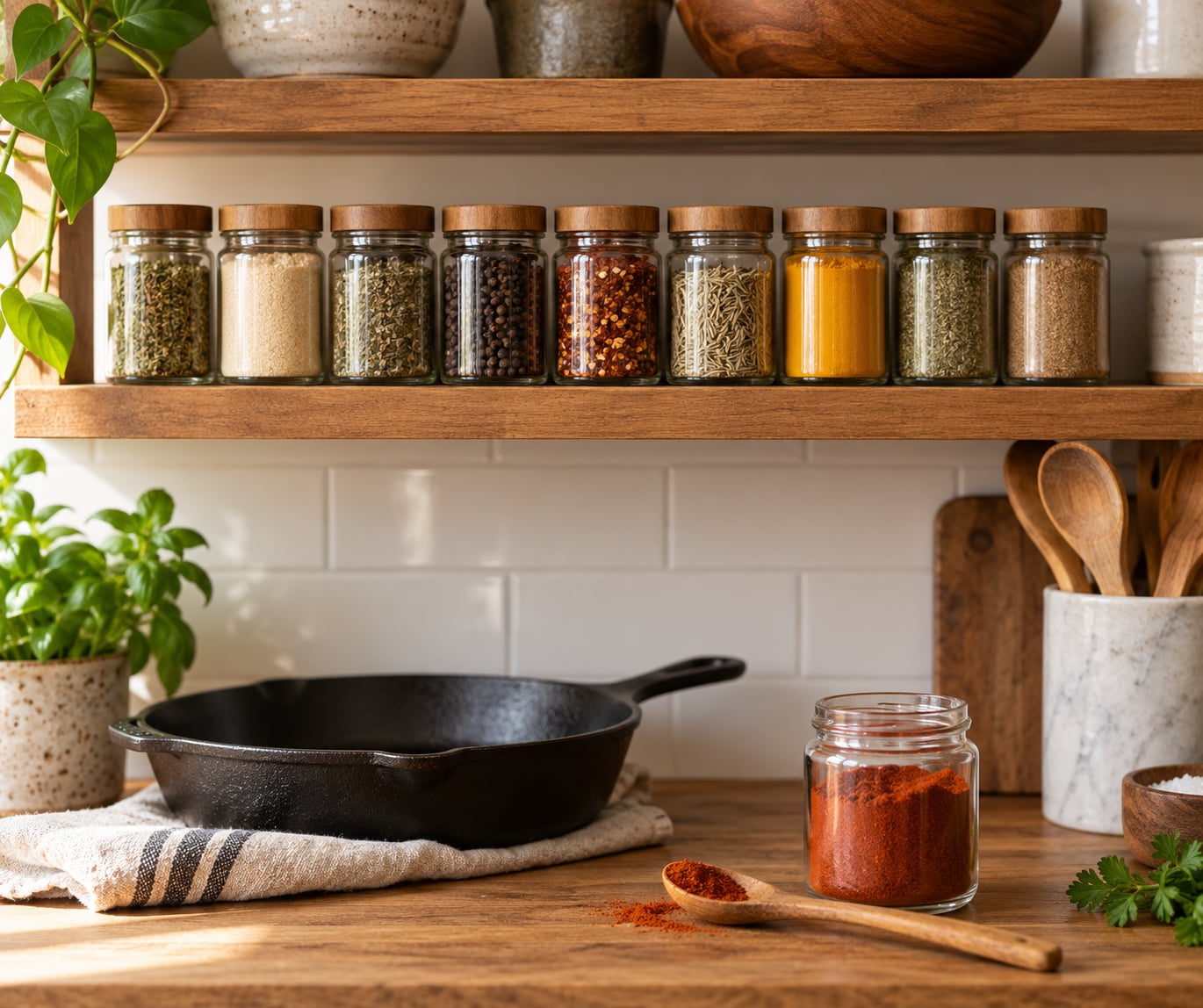
- Airtight containers. Small glass jars with screw lids hold spices well and let you see what’s inside. Aim for one uniform size, roughly the 4-ounce range, so the shelf stays tidy and every jar fits the same space.
- Lid labels. Write the spice name and the month you opened or bought it directly on the lid. A woodnet poster I read described keeping spices in alphabetical order and naming them on top so the jar never comes off the shelf, and that single habit is the reason their collection still made sense after a few years.
- Measuring spoons you trust. A small set of quarter- and half-teaspoons matters more than a full organizer. Seasoning built on guesswork is how a pot of greens ends up salty and flat at the same time.
- An inventory sheet. A single page listing what you own, with a checkbox column, stops the duplicate-bottle problem. It takes five minutes and it is the difference between a cabinet and a junk drawer that smells like cumin.
If you want a physical rack, add 3/4-inch plywood or pine boards, a handful of screws, sandpaper, and a stain or paint. Depth around 2 to 2.5 inches and spacing of about 5.5 inches between shelves will fit nearly every spice jar sold today, and those two numbers solve most sizing problems before you cut anything.
Step-by-Step
1. Start With the Southern Flavor Foundations
Buy these first and you can season most southern meals before anything else goes on the shelf. Black pepper, salt, cayenne, paprika, chili powder, garlic powder, onion powder, cumin, and dried thyme form the spine of the cooking.
Each one does a specific job. Black pepper and salt are the baseline you adjust at every stage. Garlic and onion powder give savory depth without the sharpness that fresh garlic and onion add late in a dish. Paprika supplies color and a mild sweetness, while cayenne brings heat without the fruitiness of a chopped pepper. Chili powder is a blend in practice, built from ground dried chile with cumin and other spices folded in, which is why it behaves differently from plain cayenne. Cumin warms beans and rice, and dried thyme is the quiet workhorse in stocks, gumbo, and slow-cooked meat.
2. Add Spices for Meat, Beans, and Greens
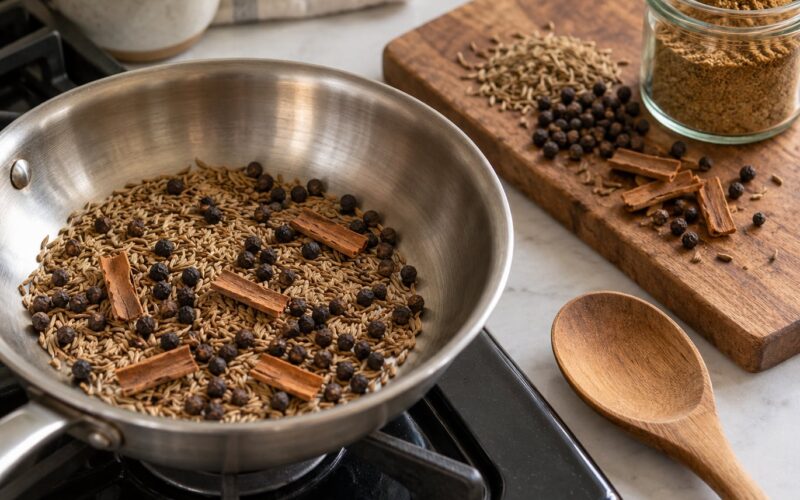
Beans and greens are where a southern kitchen earns its reputation, and they lean on a small group of spices used in generous amounts. Ground cumin goes in the pot with the beans, allspice and a small amount of cinnamon show up in soups and stews, and mustard powder gives ham, pork, and corn a sharp background note that nobody can quite name.
For barbecue and meat rubs, the useful additions are smoked paprika, more chili powder, brown sugar or a dark muscovado, and plenty of black pepper. Coriander seed works for rubs when you crush it, and it is worth keeping whole if you ever want to grind it fresh. A r/Cooking commenter called bay leaf their most-used spice, pointing to gumbo and delicate white sauce, and that single jar earns its shelf space more often than most beginners expect.
3. Include the Warm Baking Spices
Southern baking leans on warm spices, and a cabinet built for biscuits and stack cakes without them sends you to the store mid-project. Cinnamon, nutmeg, cloves, ginger, and allspice cover most of the territory.
Use them in small amounts. Ground cinnamon shows up in apple stack cake and sweet potato pie, nutmeg matters for custard and biscuits, cloves for ham and mincemeat, ginger for gingerbread and some preserves, and allspice for pies and pickled fruit. Keep this group in a single labeled bin on a shelf away from the burn zone, since heat and steam fade baking spices faster than they fade pepper.
4. Choose Blends That Fill Real Gaps in Your Spice Rack
A blend is efficient when you cook with it constantly and cannot name its parts. That describes chili powder, curry powder, poultry seasoning, jerk seasoning, and Creole or Cajun seasoning. Each one replaces five or six jars that would otherwise sit unused and go stale.
The trade-off is control. A blend takes its own salt and heat level with it, so you season more carefully and adjust with acid rather than more powder. The workable rule is simple: keep a blend for the flavor you cook with every week, and keep individual spices for the flavors you adjust to taste. If you season a pot of greens by feel, individual garlic powder and black pepper serve you better than a premixed bottle.
5. Organize by How You Cook
Group the cabinet into four zones that match how you actually move around the kitchen: everyday cooking, meat and vegetables, baking, and blends. Put the everyday group nearest the stove at eye level, since those are the jars you reach for while something is already cooking.
From there, sort each group alphabetically so a missing jar is obvious at a glance, and put the rarely used items on the top shelf or the back row. A discusscooking user organizes herbs and spices on a three-tier lazy Susan in a corner cabinet, with oils, vinegars, and extracts up top, which is a good model for the baking and blend groups specifically. Frequency order works for the working shelf; alphabetical order works for the rest of the cabinet.
6. Store Spices for Freshness and Easy Access
Store spices airtight, away from heat, humidity, and direct light, which is harder in a southern kitchen than it sounds. A kitchen that runs a cast-iron burner or a low-and-slow smoker gets smoke and temperature swings that pull moisture out of ground spices faster than a cool pantry would.
Use the lid test. Open the jar, smell it, and look at the color. If the aroma is faint or the powder has gone pale and dull, replace it. Ground spices hold their flavor for roughly six to twelve months after opening, while whole spices like peppercorns, cloves, and nutmeg keep considerably longer, which is an argument for storing those whole and grinding as needed. Mark the opening month on the lid and you will not have to guess.
Common Spice Cabinet Mistakes to Avoid
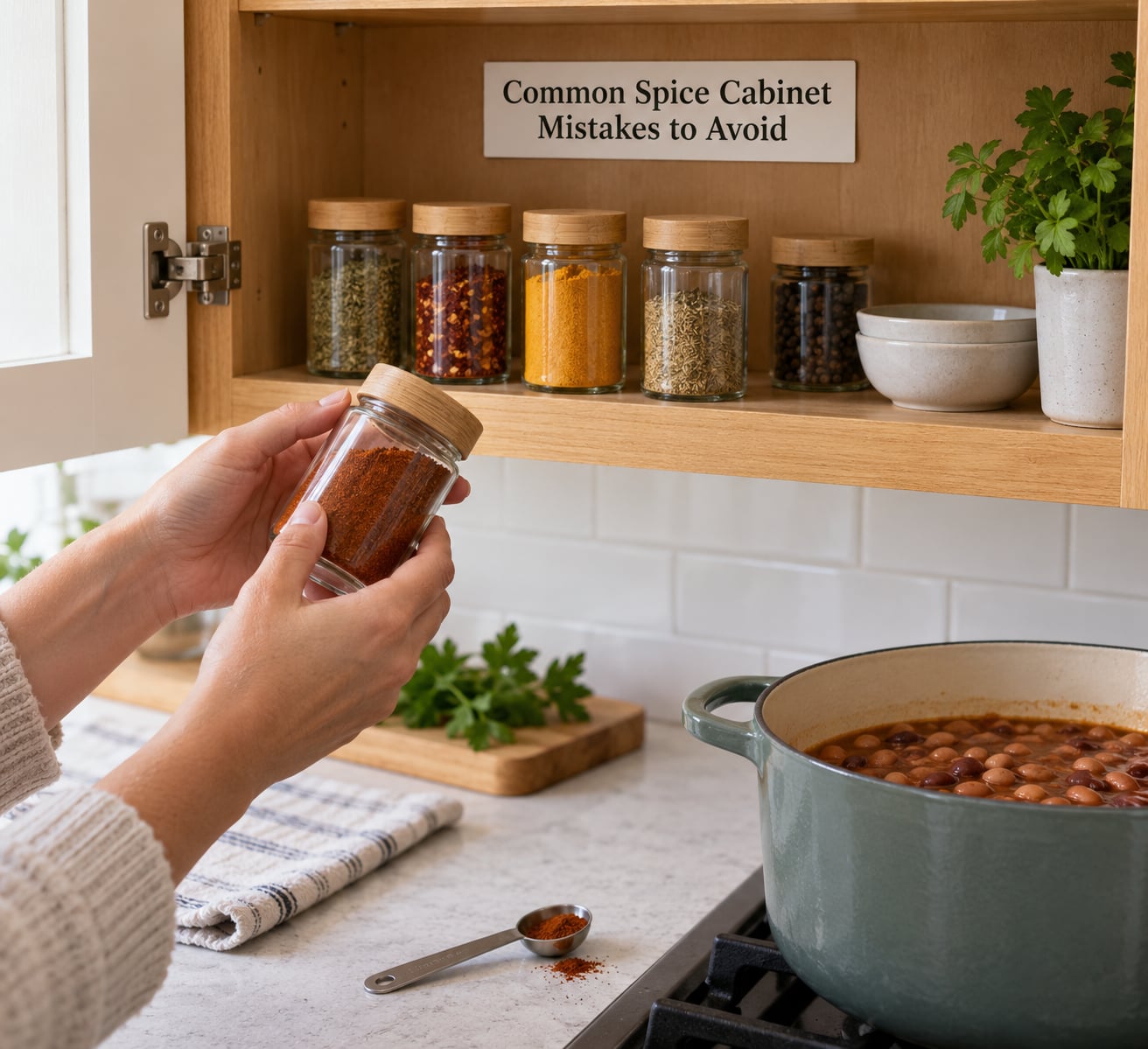
Most cabinet problems trace back to one of six mistakes, and all six have quick fixes.
- Buying jars before building the shelf. Mismatched sizes are the most common build failure. Choose the container first, then size the shelf to it.
- Storing spices near the stove or window. Heat, steam, and sunlight dull flavor faster than age does.
- Skipping labels. An unlabeled jar becomes a mystery jar, and mystery jars get thrown out or duplicated.
- Hiding seldom-used spices up high. If you cannot see the back row, you will buy a third bottle of the same thing.
- Grinding everything in advance. Pre-ground spices lose aroma within months; whole spices do not.
- Filling the cabinet in one trip. Two hundred bottles on day one guarantees duplicates and dead jars within the year.
Start with fifteen jars and add only what a dish actually needs. Measure with spoons rather than shaking from the jar, and add seasoning in stages, tasting between each addition. Once you know a dish is undersalted but already hot, you cannot fix it except by starting over.
As for whole versus ground: buy whole anything you use weekly, grind small amounts with a coffee grinder reserved for spices, and buy ground for the occasional recipe. It costs a little more effort and buys you months of aroma.
Frequently Asked Questions
How many spices do I actually need to start?
Most home cooks can cover southern cooking with fifteen jars: black pepper, salt, cayenne, paprika, chili powder, garlic powder, onion powder, cumin, dried thyme, mustard powder, smoked paprika, allspice, cinnamon, nutmeg, and one blend you cook with weekly. Add from there only when a recipe asks for something you do not own, which keeps the cabinet small enough that you actually use everything in it.
What order should spices be organized in?
Alphabetical order inside each cooking group is the most reliable system because you spot a missing jar instantly. Then tier by frequency: the spices you use every week go at eye level near the stove, occasional ones go on the middle shelf, and baking and blend items go in a bin on the top shelf. Frequency handles reach, alphabetical handles recall.
How do I store spices so they actually stay fresh?
Airtight containers, moderate room temperature, and no direct light. Keep jars off the shelf directly above the stove and away from a window, because heat and steam pull the volatile oils out of ground spices. Label each lid with the opening month and replace anything that smells faint or looks pale. Ground spices are good for roughly six to twelve months after opening; whole spices hold much longer.
Should I use glass jars or plastic?
Glass wins on two counts. You can see the color and fill level of each spice without opening it, and glass does not absorb odors or stain permanently after years of cumin and paprika. Plastic is lighter and cheaper, which matters in a small cabinet, but it works best for blends and spices you use up quickly rather than for a long-term display shelf.
Is a spice rack or a spice drawer better for southern cooking?
A rack or open shelf works best when you season food at a hot stove, because you see every jar at once and grab one without pulling out a drawer. A drawer organizer is better for a small kitchen, renters, and anyone who wants spices hidden and protected. Whichever you choose, the working rule is the same: the spices you reach for mid-cook live closest to the burn zone.
Conclusion
Start with the fifteen foundational spices, put them in uniform airtight jars, and group them so the ones you reach for while cooking sit closest to the stove. Then build outward: add a meat and vegetable group, a small baking group, and one blend you actually use. A cabinet you keep stocked beats a bigger one you never finish organizing, and 2026 is a fine year to fix that.