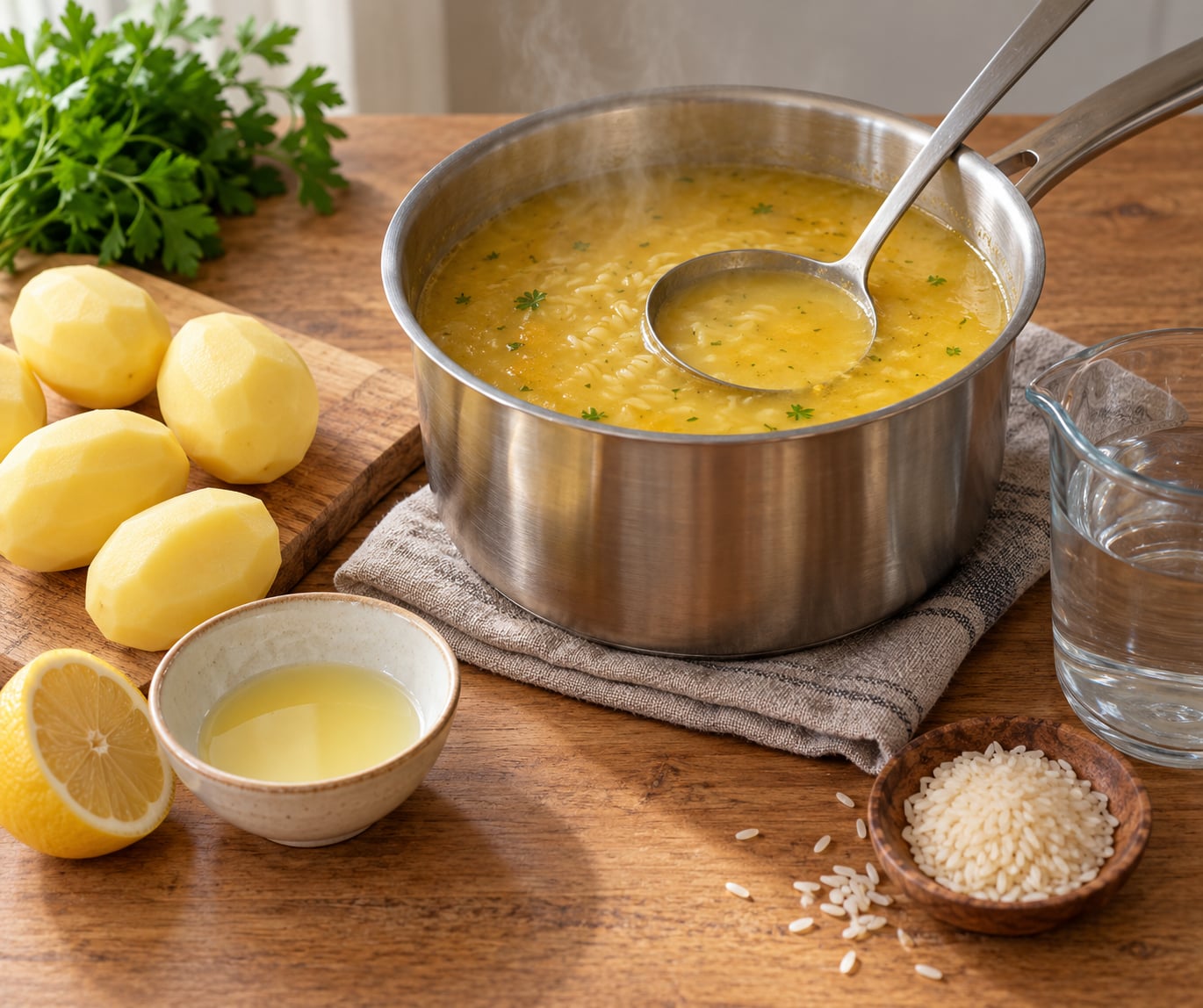
If you need to know how to fix oversalted soup, the fastest fix is to add unsalted liquid to dilute the sodium, or to add a raw potato, which soaks up salty broth and gets fished out. Most rescues take 10 to 15 minutes from the moment you taste the pot.
Good news first: an oversalted pot is almost never ruined. Soup is cooked in enough volume that a tablespoon of salt too much can be spread across every serving, and there is always something in your kitchen that will take the edge off.
The tricky part is that the right remedy depends on what is actually in the pot. A clear chicken broth and a loaded potato soup need opposite corrections, and the fix that saves one can flatten the other. That is why I start every time by tasting, deciding on the smallest possible adjustment, and adding it gradually rather than dumping in a whole stockpot of water.
Below is the order I work in. Each step says how much to add and how long it takes, so you can do this while the soup is still simmering.
Table of Contents
- What You Need
- For diluting
- For absorbing
- For balancing
- For splitting
- Step-by-Step: How to Fix Oversalted Soup
- 1. Taste the soup and identify the real problem
- 2. Dilute with water or unsalted broth
- 3. Add a mild, absorbing ingredient
- 4. Balance the flavor with acid or a little sweetness
- 5. Split the soup and combine batches
- Which fix fits which soup
- Common Mistakes
- Frequently Asked Questions
- What cancels out saltiness?
- What cancels a salty taste the fastest?
- How do you counteract the taste of too much salt?
- My stew is too salty. How can I fix it?
- Does adding a potato to soup actually reduce salt?
- Why does my soup taste too salty after I salted it at the end?
- Conclusion
What You Need
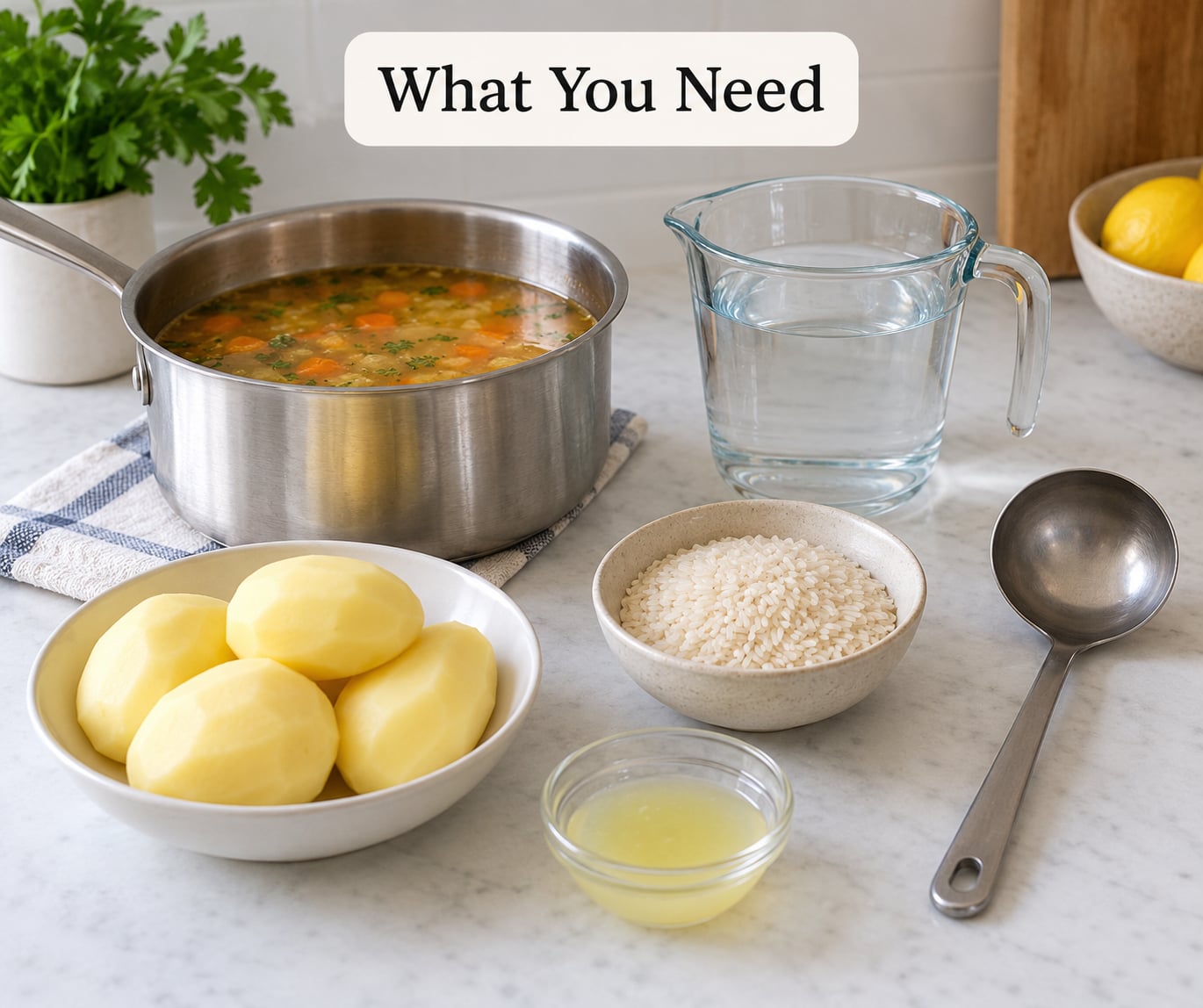
None of this is required. Pick the one item that matches the remedy you are about to try and you can rescue the pot with almost nothing.
For diluting
- Cold water
- Unsalted homemade stock, or low-sodium broth with no added salt on the label
- Milk, for a soup that can take it
For absorbing
- One or two peeled potatoes, raw, whole or grated
- Plain long-grain rice or a small handful of noodles
- Carrots, celery, potatoes, or other mild vegetables, cut small
For balancing
- Lemon juice, plus a little vinegar or tomato paste
- Heavy cream, sour cream, or plain yogurt
- A spoonful of sugar or honey, for tomato and chili-based pots
For splitting
- A second pot
- Enough fresh vegetables, stock, or both to make one unsalted batch
- A ladle and a strainer
A note on stock, because this trips up a lot of people. A carton of chicken broth almost always carries added salt, and pouring it into a salty soup makes the problem worse. Read the label and look for a sodium count under about 350 mg per cup, or use broth you made yourself.
Step-by-Step: How to Fix Oversalted Soup
1. Taste the soup and identify the real problem
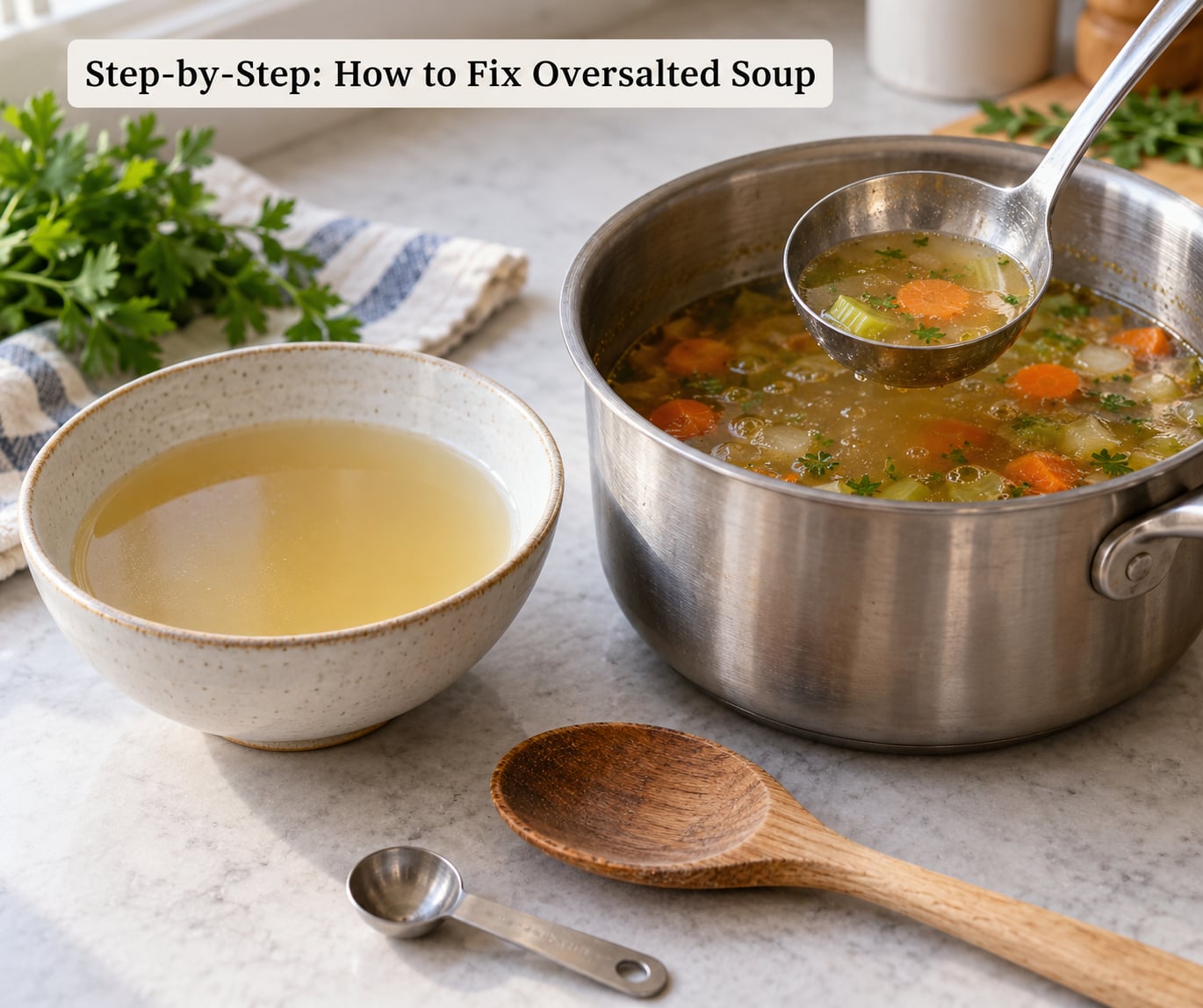
Before you add anything, taste a spoonful and ask what you are actually tasting. A pot can taste wrong because of salt, or because the stock tasted salty, or because it needs acid, or because it is bland and you are reaching for the shaker out of habit.
That last one is worth pausing on. Plenty of under-seasoned soup gets salted repeatedly because the cook keeps tasting mid-simmer, and salt added at the end has no time to dissolve into the whole pot. If the soup tastes thin rather than aggressive, the fix is acid and time, not more salt.
Also taste it hot, and then again after a minute. Saltiness reads stronger when a soup is very hot, so a pot that tastes aggressive at a boil may taste properly seasoned at serving temperature. Cooling costs you time, though, so on most days I make the first correction hot and do a second check off the heat.
2. Dilute with water or unsalted broth
Dilution is the most reliable fix and the one to reach for first, because it changes nothing about the flavor profile of the soup. Add a cup of unsalted liquid at a time, stir it in well, let the pot come back to a simmer, and taste again. Four or five minutes of gentle simmering mixes everything evenly, which matters more than the exact amount you add.
As a rough guide, one cup of unsalted liquid spreads about a teaspoon of excess salt across a typical two-quart pot. But judge by your tongue, not the arithmetic, since soups vary so much in volume and saltiness. Some cooks find a quarter cup at a time works better on a delicate fish soup, where water dulls the flavor faster than it lowers the salt.
Prefer water for tomato-based and highly seasoned soups, and unsalted stock for vegetable soups where you want the body kept intact. Add the liquid warm, not cold, so you do not drop the temperature and stop the cooking.
3. Add a mild, absorbing ingredient
Dilution thins a soup, and sometimes that is exactly wrong. When you need to lower the salt without losing the consistency, use a raw potato. Grate one medium potato coarsely, stir it into the soup, and simmer for 7 to 8 minutes. The starch takes on the salty broth, and then you strain the potato out along with a good part of the salt it carried.
It is worth being clear about why this works. Salt dissolves in liquid; it does not evaporate off a potato. The potato does not remove the sodium itself, it pulls in broth, and the salt goes out with the potato when you fish it out. That is why removing it is the whole point of the trick. Cooks on cooking forums frequently describe the whole potato going in and, to their own surprise, getting served.
A whole peeled potato works too, and it takes 20 to 30 minutes to do its work, which makes it better when you want to walk away from the pot. Two people on slow-cooking threads wrap the potato in a piece of cheesecloth first so it can be pulled out in one motion. That is the version I use.
Rice and noodles do the same job and finish faster, about 10 minutes, but they thicken the soup as they cook, so they suit a thinner broth and a chili better than a clear soup. Extra carrots, celery, or potatoes add salt-free bulk and only need 15 minutes of simmering. Raw beans, soaked but uncooked, work the same way in a bean soup and add protein rather than starch.
After you remove the potato, taste again. If the soup has gone thin from everything you added, simmer it hard, uncovered, until it reduces back to where it started.
4. Balance the flavor with acid or a little sweetness
Saltiness is easier to hide when something else is doing some of the talking. A squeeze of lemon, a teaspoon of vinegar, or a tablespoon of tomato paste will soften the perception of salt without adding any sodium, and this is often the step that turns an almost-fixed pot into a finished one.
Start with a teaspoon of lemon juice for a two-quart pot, stir it through off the heat, and taste. Acid in a tomato soup or a curry sharpens and brightens; in a creamy soup it does almost nothing, so do not waste it there. Vinegar works on bean soups and chilis, where it echoes the cumin and vinegar already in the pot.
Sweetness works in the opposite direction. A teaspoon of sugar or half a teaspoon of honey in a tomato soup or a chili will round out the harsh edge without making the dish taste sweet, and it is the standard move in a lot of chili and barbecue cooking.
Dairy is a fourth version of the same idea. Sour cream, plain yogurt, or heavy cream adds no salt, softens the heat of a hot spice, and quietly dilutes. Half a cup is plenty to start.
5. Split the soup and combine batches
Sometimes there is not enough liquid left to add and nothing to absorb it. That is the moment to make the batch bigger rather than fight the pot. Ladle out a portion of the salty soup into a second pot, fill that pot with unsalted stock, water, and extra vegetables, simmer it for 20 minutes, then stir it back into the original.
This is the rescue that saves a whole dinner instead of a few bowls, and people use it more often than you would think. Doubling the batch with an identical unsalted pot is the fastest version: two pots, same ingredients, and the second one goes together while the first cools a few degrees. You end up with a bigger pot of good soup instead of a smaller pot of salty one.
Which fix fits which soup
This is the shortcut I use when I do not want to think. Start at the top and pick the row that matches your pot.
| Dish | Best first move | Timing | Watch out for |
|---|---|---|---|
| Thin broth soup, chicken or vegetable | Unsalted stock or broth | Add a cup at a time, simmer 4 to 5 minutes | Water dulls a delicate broth faster than it dilutes it |
| Tomato soup | Cold water, then a little sugar | 5 minutes, taste again | Milk splits in a hot tomato base, so add it off the heat |
| Cream-based soup | Grated raw potato | Simmer 7 to 8 minutes, then strain | Starch can make an already thick soup gluey, go easy |
| Potato soup | Unseasoned potatoes or extra milk | 15 minutes of simmering | You are adding starch to a starch, so keep the amount small |
| Chili and bean soup | Unsalted beans or a second unsalted pot | 20 to 30 minutes | Store-bought broth with added salt makes it worse |
| Curry | Coconut milk, then a little lime | 5 minutes, then taste | Curry powders vary wildly in salt, so add seasoning last |
| Sauce and gravy | Unsalted stock, stirred in cold | 3 to 4 minutes | Starch-based sauces thicken as you add liquid, so go slowly |
Common Mistakes
The first mistake is the most expensive one: adding store-bought broth. It is convenient and almost always salted, and now you have more salt in the pot than when you started. The second is adding everything at once. Liquid goes in a cup at a time, starch goes in with a plan for removal, and acid goes in by the teaspoon.
Then there are the two myths. The ice cube trick going around social media does not fix anything. A cube of ice melts, adds about an ounce of water to a pot, and does nothing to the sodium in the rest of the pot. A potato does work, because the starch physically takes the broth and therefore the salt with it. Those are two different mechanisms, and only one of them is real.
Adding more salt to a soup that seems flat is the other myth, and it is how a mildly seasoned pot becomes a ruined one. Salt on a plate makes food taste more salty. In a pot of broth with space to dissolve, it raises the sodium for every serving.
The mistake nobody warns you about is leaving the potato in. It sits in the pot softening and releasing starch, and by the time dinner is on the table it is a lump of salty mush in the bottom of the bowl. Pull it out, or put it in cheesecloth first so it comes out whole.
To keep this from happening, salt in layers rather than at the end. Taste the stock before you build on it, since an entire pot can inherit a salty carton. Add salt early and in smaller amounts than feel necessary, remembering that a reduction concentrates it, and taste with a clean spoon each time so you are not compounding a bias. If you use canned tomatoes, look for no-salt-added, and if you want more seasoning without more sodium, reach for acid, smoked paprika, a little vinegar, or a salt substitute such as green spice blend, which carries roughly half the sodium of table salt.
One safety note. If a soup sat over-warm for hours after being salted and went into the fridge late, the rescue is not the question. Cool it within two hours and discard it otherwise.
Frequently Asked Questions
What cancels out saltiness?
Acid and fat do the best job. A teaspoon of lemon juice or a splash of vinegar per two-quart pot softens the perception of salt without adding any sodium, and heavy cream or sour cream does the same while cooling any heat. A little sugar or honey rounds out a harsh tomato or chili base. None of these remove the salt, they just stop your tongue from reacting to it, so pair them with dilution or a potato.
What cancels a salty taste the fastest?
Unalted liquid, added one cup at a time. It is the fastest fix because it takes effect the moment it mixes in, and it changes nothing about the flavor of the soup. Simmer for 4 to 5 minutes after each addition so the dilution is even, then taste. If the soup is already the right thickness and cannot take more liquid, go to a grated raw potato instead.
How do you counteract the taste of too much salt?
You lower the sodium concentration. Add unsalted liquid to dilute it, or add a raw potato whose starch soaks up the salty broth, then strain the potato out. Balance with a little acid or cream if it is still harsh. Do not add more salt and do not add ice, which only contributes an ounce or two of water to the pot and does nothing to the sodium.
My stew is too salty. How can I fix it?
Stew has enough body to take a starch, so grate a raw potato into it and simmer 7 to 8 minutes, then pull the potato out. That lowers the salt without thinning a sauce that you spent hours reducing. If it is still sharp, finish with a tablespoon of vinegar and a teaspoon of sugar. For a large batch, double it with an identical pot of unsalted stew and stir them together.
Does adding a potato to soup actually reduce salt?
Yes, as long as you take it out. The potato does not pull salt out of the soup; its starch absorbs salty broth, and that broth and everything dissolved in it leaves with the potato. Simmer a grated potato for 7 to 8 minutes or a whole peeled one for 20 to 30 minutes, then fish it out before serving. A potato left in the pot keeps softening and does nothing for anyone eating it.
Why does my soup taste too salty after I salted it at the end?
Salt added at the end never gets a chance to dissolve and spread. It sits in the bottom of the pot in a concentrated layer, so the first ladleful tastes aggressive while the rest of the pot barely changes. Once the pot has simmered for several minutes the level evens out, and it often tastes correct. Salt earlier and in smaller amounts, and always taste with a clean spoon.
Conclusion
If you remember one thing, make the smallest adjustment your soup will accept: taste it, add a cup of unsalted liquid or a grated potato, simmer for five to eight minutes, and taste again. If one adjustment is not enough, add a little acid before you reach for a second, and save the split-batch rescue for the pot that has nothing left to give.