To make hominy from dried corn, soak 4 cups of dried field corn in 1 gallon of water with 2 tablespoons of pickling lime (calcium hydroxide), then simmer, rinse, and rub the loosened hulls off. The alkaline soak dissolves the tough outer layer and the kernel swells to roughly twice its size.
Hominy is not dried corn under a fancier name. It is field corn that has been through nixtamalization — an alkaline soak that loosens the pericarp (the corn hull), lets it wash away, and makes the kernel softer and creamier. After the soak, cooking takes 20 to 40 minutes, not hours.
The part that trips people up is time, not technique. A typical batch wants 12 to 18 hours of soaking, and most of that happens while you sleep. Plan about 30 minutes of actual hands-on work, one overnight soak, and a 40-minute simmer.
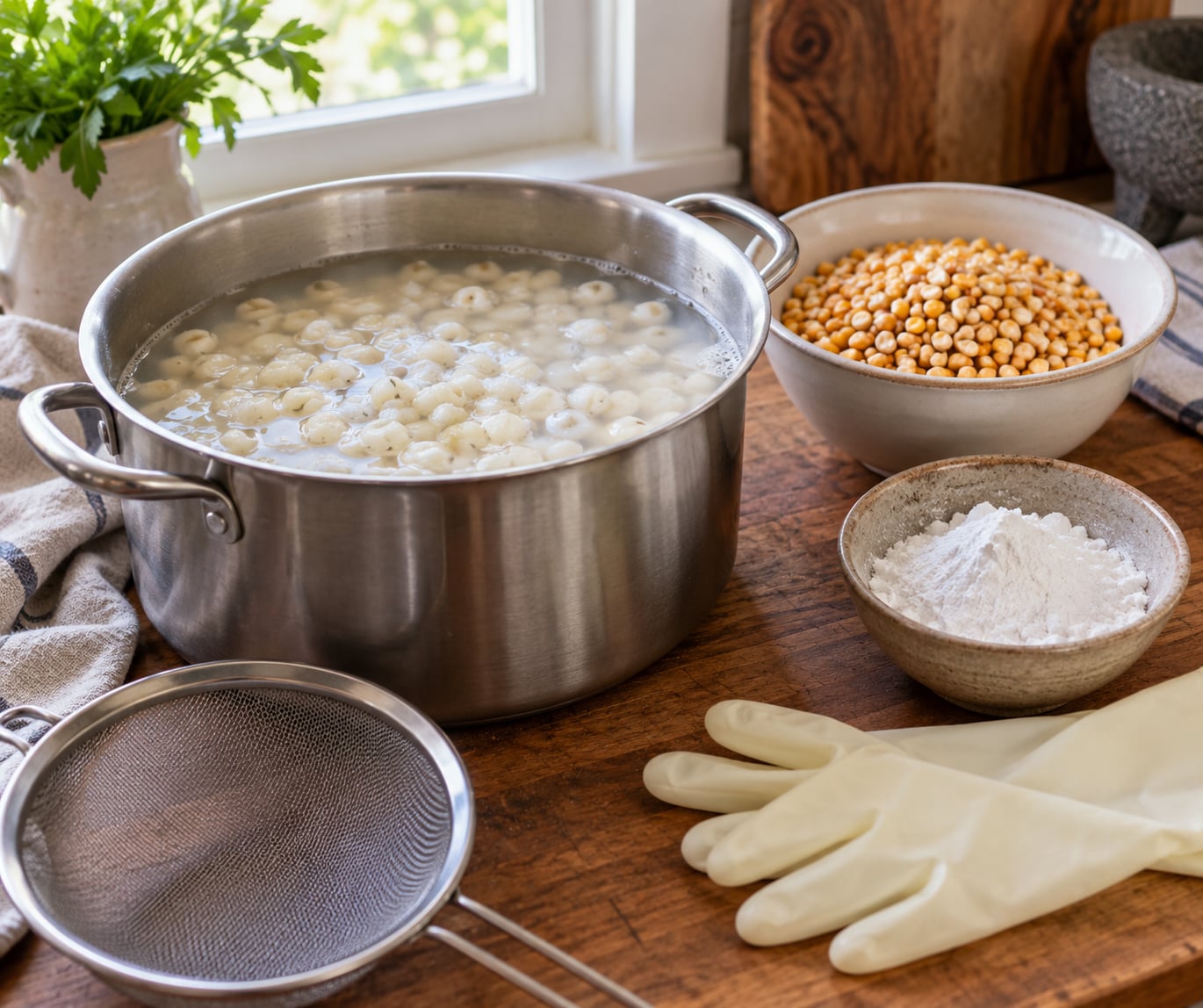
A word on equipment before you start, because it is the one rule you cannot bend: use a stainless steel, enamel-coated, or glass pot. Pickling lime is a strong alkali and it reacts with aluminum, which will gray the pot and put metal into the bath. Rubber gloves are not optional either.
Table of Contents
- What You Need
- Field corn, flint corn, or dried sweet corn?
- Ratios and timing at a glance
- Step-by-Step: How to Make Hominy from Dried Corn
- Step 1: Choose and Rinse the Dried Corn
- Step 2: Soak the Kernels
- Step 3: Simmer the Hominy Slowly
- Step 4: Check the Texture and Finish the Hominy
- Common Mistakes and Tips for Tender Hominy
- Frequently Asked Questions
- Can I make hominy from dried sweet corn?
- Do I need to add baking soda when making hominy from dried corn?
- How long does it take to cook hominy from dried corn?
- How do I know when dried corn hominy is done?
- Can I soak dried corn overnight instead of using a quick soak?
- Can I cook hominy in a pressure cooker or slow cooker?
- Conclusion
What You Need
Shopping list is short. The whole thing comes down to decent corn, a proper alkaline agent, a big pot you can live with, and something to strain with.
- 4 cups dried field corn — dent or flint variety, unshelled kernels
- 2 tablespoons pickling lime — also sold as calcium hydroxide, hydrated lime, slaked lime, builder’s lime, or simply “cal.” Not lime juice. Never citrus.
- 1 gallon cold water for the alkaline bath, plus 2 to 3 quarts for rinsing
- A large pot — stainless steel, enameled cast iron, or heavy glass. Never aluminum.
- A long-handled spoon, rubber gloves, and a colander or fine mesh strainer
- Optional: 1 teaspoon baking soda for a milder flavor, salt for seasoning at the end, and a little butter, lard, or corn oil for serving
Field corn, flint corn, or dried sweet corn?
Field corn is the right answer, and dent corn is the easiest variety to find. Flint corn works too — the hard, glassy old-fashioned kind — but it takes longer in the bath, sometimes 24 hours, because the kernels are so dense. Purple and blue corn is in the same category: beautiful, and slow.
Sweet corn is the wrong tool for the job. Dried sweet corn has more sugar and a softer pericarp, so it swells less, breaks apart more, and turns to mush before it ever gets that pleasantly chewy nixtamal texture. One gardener on a gardening forum put it bluntly: triple-sweet garden corn is worth eating fresh and should not be sacrificed to a lime bath. I agree with him. Save the sweet corn for the skillet.
Where do you find field corn when you do not grow it? A Mexican grocery is the easiest stop, since the same shops that sell cal usually sell maize. Feed and farm stores sell field corn in the bag as deer corn or bird feed, which is plain field corn, and hardware and garden stores carry the pickling lime itself. Home growers can dry their own field corn on the cob, or shell and store the kernels airtight in the freezer.
Ratios and timing at a glance
These numbers are the baseline. Scale by volume rather than by doubling a pot you can no longer stir.
| Dried corn | Pickling lime | Water | Boil | Soak | Yield (wet, hulled) |
|---|---|---|---|---|---|
| 1 cup | 1/2 tablespoon | 1/2 gallon | 10 minutes | 12-18 hours | about 2 cups |
| 4 cups (about 1 pound) | 2 tablespoons | 1 gallon | 10-15 minutes | 12-18 hours | about 8 cups |
| 8 cups (about 2 pounds) | 3 tablespoons | 2 gallons | 15 minutes | 18-24 hours | about 16 cups |
A common homesteading-forums ratio of 3 liters of water to 3 large tablespoons of lime is a little richer than the 4-cup batch above, and it lands in the same neighborhood. When in doubt, go slightly heavier on the lime for hard flint corn and slightly lighter for dent corn you plan to grind into masa.
Step-by-Step: How to Make Hominy from Dried Corn
Four steps, and only the first one takes real effort. Set up before you turn on the heat.
Step 1: Choose and Rinse the Dried Corn
Pour the dried kernels onto a rimmed baking sheet and pick through them. Pull out anything cracked, hollow, dark, or webbed with insect damage, along with any bits of cob or husk. A mouse in the corn bin is not a hypothetical.
Rinse the kernels under cool running water until the water runs clear, about four or five changes. Then put them in the pot and cover them with the gallon of cold water plus about 2 inches. Let them sit while you measure out the lime, which gives the kernels a few minutes to start taking up water.
Step 2: Soak the Kernels
Now make the bath. Lift the corn out temporarily (or drain and keep the kernels in a second pot), bring the gallon of water to a rolling boil, and stir in 2 tablespoons of pickling lime. Stir for a full minute until the water turns cloudy and no grit sits on the bottom. Put the corn back in, bring it back to a boil, cover, and take it off the heat.
There are two soak options, and the difference is real.
- Overnight soak (12-18 hours, off the heat): the classic. It gives the gentlest, most even result and is what I default to. The pot sits on the stove or the counter, covered, and does its slow work.
- Warm soak (6-8 hours, kept just under a simmer): faster, and it works, but you have to stay nearby and keep the temperature low. A bare flicker of boil will cook the kernels to mush before the hull has let go.
How do you know the soak has done its job? The kernels will look noticeably plumper, roughly half again their dry size, and the water will be cloudy and chalky. The real test comes later when you rub a kernel between your fingers.
Two adjustments worth knowing. Hard flint, blue, or purple corn gets 24 hours or more; home canners report 18 hours being right for two pounds of dried blue corn. And keep batches single-color if you can — a poster on a tomato-growing forum learned the hard way that mixing white and purple corn in one pot means the white kernels over-process while the purple is still going, and the white ends up gluey.
A plain-water soak is not the same thing. Soaking dried corn overnight with no lime gives you softer corn for grits, but the hull stays welded on and you have not made hominy. The alkaline bath is the step that matters.
Step 3: Simmer the Hominy Slowly
Drain off the alkaline bath and discard it. Do not taste it, do not pour it down a storm drain, and do not reuse it on food. Rinse the kernels three or four times with cool water, rubbing them gently with your fingers between rinses, until the water runs noticeably clearer.
Return the rinsed corn to the pot with fresh unsalted water, about 2 inches above the kernels. Bring it to a boil, then drop the heat to the lowest simmer your stove will hold. Lid cracked, not sealed, so steam can escape.
Cook 20 to 40 minutes, stirring from the bottom every five minutes or so. Two things cause most failures here: heat that is too high, and a pot that is too full. If the kernels start bouncing or scraping, turn the heat down and add a cup of hot water. Keep the water level above the corn and the simmer barely bubbling.
Step 4: Check the Texture and Finish the Hominy
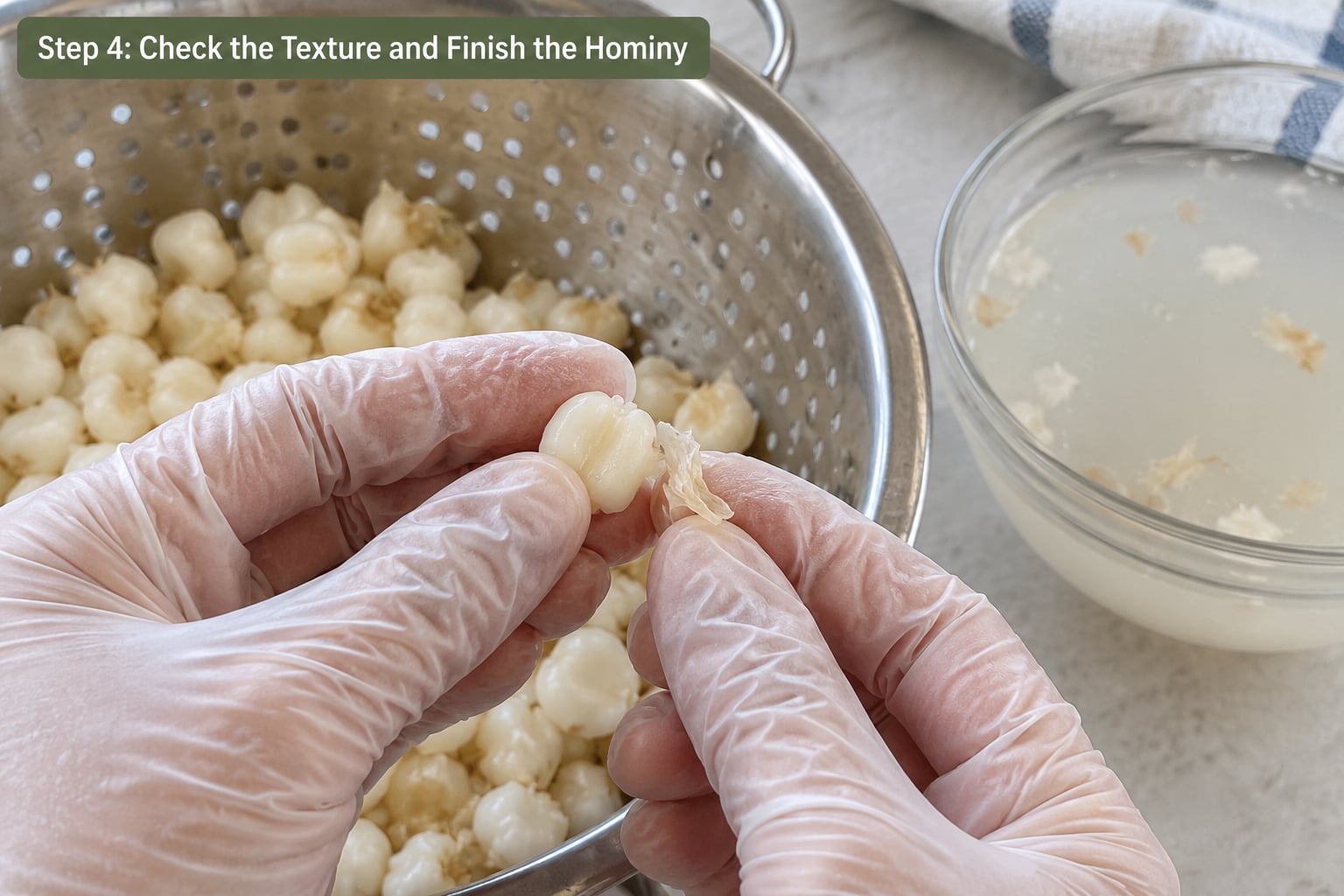
The doneness cue is tactile, not timed. Pinch one kernel and scrape it with your thumbnail. If the thin skin slides off and the inside is chalky white and soft all the way through, you are done. If it feels springy or waxy in the center, give it another 10 minutes. If the hull still grips hard, the soak was short and the simmer will not fix it — soak it again.
You are also looking for the finished kernels to be roughly double their dry size and completely white inside. A faint sour or ammonia smell means the cal has not been rinsed away enough. Rinse again under running water, rubbing the kernels between your fingers, and re-check.
Salt near the end, not the beginning — season during the last 10 minutes of the simmer, or after draining. Salt early, and the outside of the kernel toughens before the middle gives.
Now eat it. The simplest serving is a bowl of hominy with butter and salt, or with fried eggs and hot sauce. In Appalachia it goes into hog ‘n’ hominy, a whole-hog stew with pork knuckles, shoulder, and sometimes a head, cooked down for hours until the meat falls apart. In Mexico, the same kernels go into pozole with ancho and guajillo chiles. A cup of cooked hominy also thickens soups and stews, makes a fine base for grits when coarse-ground, or gets blended wet into masa for tortillas and tamales.
Common Mistakes and Tips for Tender Hominy
Almost every bad batch of hominy traces back to one of five things. Here is what goes wrong and what fixes it.
The kernels are still hard in the center. The soak was too short or the lime too dilute. Give hard corn a full 24 hours, and check the lime measurement — tablespoons that are heaped rather than level make a big difference. A simmer alone will not rescue under-soaked corn; the alkaline bath is what softens the interior.
The hominy is mushy. You boiled it instead of simmering it, or you mixed kernel types with very different cook times. Mushy hominy cannot be undone, but it still makes an excellent thickener for soup, so do not throw it out.
The hulls will not come off. This is the step everyone calls the hardest part, and it is a technique, not a chore. Rub the kernels between your thumb and forefinger under running water. Agitate them in the pot with a spoon. Push them through a coarse mesh strainer a few times. Skip the lime and no amount of friction will help.
It tastes soapy or bitter. Under-rinsing. Keep rinsing until the water runs clear and the kernels no longer smell sharp. Very hard tap water leaves a chalky film on the kernels too; filtered water fixes that.
It burned to the bottom. Too much heat and not enough water. Keep the simmer low, stir the bottom more often than feels necessary, and never let the water drop below the corn.
Two habits that make this easier every time. Weigh the lime instead of spooning it, because a heaped tablespoon is closer to a third more than you think. And use the same pot every time, scrubbing it well after each batch — a pot permanently dedicated to the job takes the worry out of the aluminum question entirely.
On safety: gloves on for the soak and the hull removal, the pot rinsed and put away after, and the lime kept sealed, labeled, and stored somewhere a curious kid cannot reach it. Do not drink the soaking liquid. If you want the Appalachian version, hardwood ash steeped in hot water for about 2 hours gives you a potash lye bath that works in the same slot as the pickling lime, and a few people combine the two. It tastes earthier and takes longer to boil down, which suits a pot of hominy destined for a long stew.
Finally, the question every batch raises: what do you do with a big kettle of it? Refrigerate it in shallow containers for about four days, freeze it in meal-sized bags, or spread it thin on trays and dehydrate it into dry hominy you can grind into grits or cook like dried beans. A few people pressure can it, but follow a current tested canning recipe rather than a forum post, because pressure canning times depend on jar size and packing method.
Frequently Asked Questions
Can I make hominy from dried sweet corn?
You can, but expect a different result. Dried sweet corn has more sugar and a softer pericarp, so the kernels swell less and turn soft and pasty sooner than field corn does. You will need a shorter simmer to avoid mush, and the hull may never loosen as cleanly. Most cooks reserve sweet corn for eating fresh and use field or flint corn for hominy, masa, and pozole.
Do I need to add baking soda when making hominy from dried corn?
No. Pickling lime is the active ingredient, and it is what dissolves the hull and frees bound niacin. Baking soda is much weaker and mostly neutralizes acid, which is why home attempts with baking soda and an overnight plain-water soak tend to come back under-soft. If you want a milder flavor, add about a teaspoon of baking soda alongside the lime, not instead of it.
How long does it take to cook hominy from dried corn?
Plan on 12 to 18 hours of soaking, then 20 to 40 minutes of simmering. Hard flint, blue, or purple corn needs 24 hours or more in the alkaline bath. A warm soak held just below a simmer cuts the soak to 6 to 8 hours but needs attention, and a full boil instead of a simmer will turn the kernels to paste long before the hull releases.
How do I know when dried corn hominy is done?
Use your thumbnail. Pinch a kernel and scrape it: the thin hull should slide off easily, and the inside should be chalky white and soft all the way to the center. The kernels should look about twice their dry size. If the hull still grips hard, the soak was too short and simmering longer will not help. If the kernel springs back, give it ten more minutes.
Can I soak dried corn overnight instead of using a quick soak?
The overnight soak is the better option. Leaving the pot covered and off the heat for 12 to 18 hours gives the alkaline bath time to work evenly, and it is the gentlest route to tender kernels. A warm 6 to 8 hour soak is faster but needs you standing nearby to hold the temperature just under a simmer. Never boil the kernels for the long soak.
Can I cook hominy in a pressure cooker or slow cooker?
Both work, but only after the alkaline soak and the rinses are done. A slow cooker holds a steady low temperature and needs about 4 to 6 hours, which is a hands-off way to cook a large batch. A pressure cooker does it in roughly 20 to 25 minutes at high pressure, then a natural release. Use a stainless steel liner, not an aluminum one, with any alkaline product.
Conclusion
Start with the overnight soak. Get a bag of dried field corn, measure 2 tablespoons of pickling lime per 4 cups of corn and per gallon of water, put it in a stainless steel pot, and walk away for 12 to 18 hours. Everything else follows from that one decision.
Boil, cover, take it off the heat. Rinse until the water runs clear. Simmer gently, rub the hulls off, and salt at the end. Follow that and you will get tender, chalky-white kernels about twice the size they started.
When the first batch is done, put it to work. A pot of hog ‘n’ hominy with pork knuckles is the Appalachian answer, and a pot of pozole with ancho chiles is the Mexican one. Either way, you have turned a bag of dried corn into something that feeds a table all afternoon.