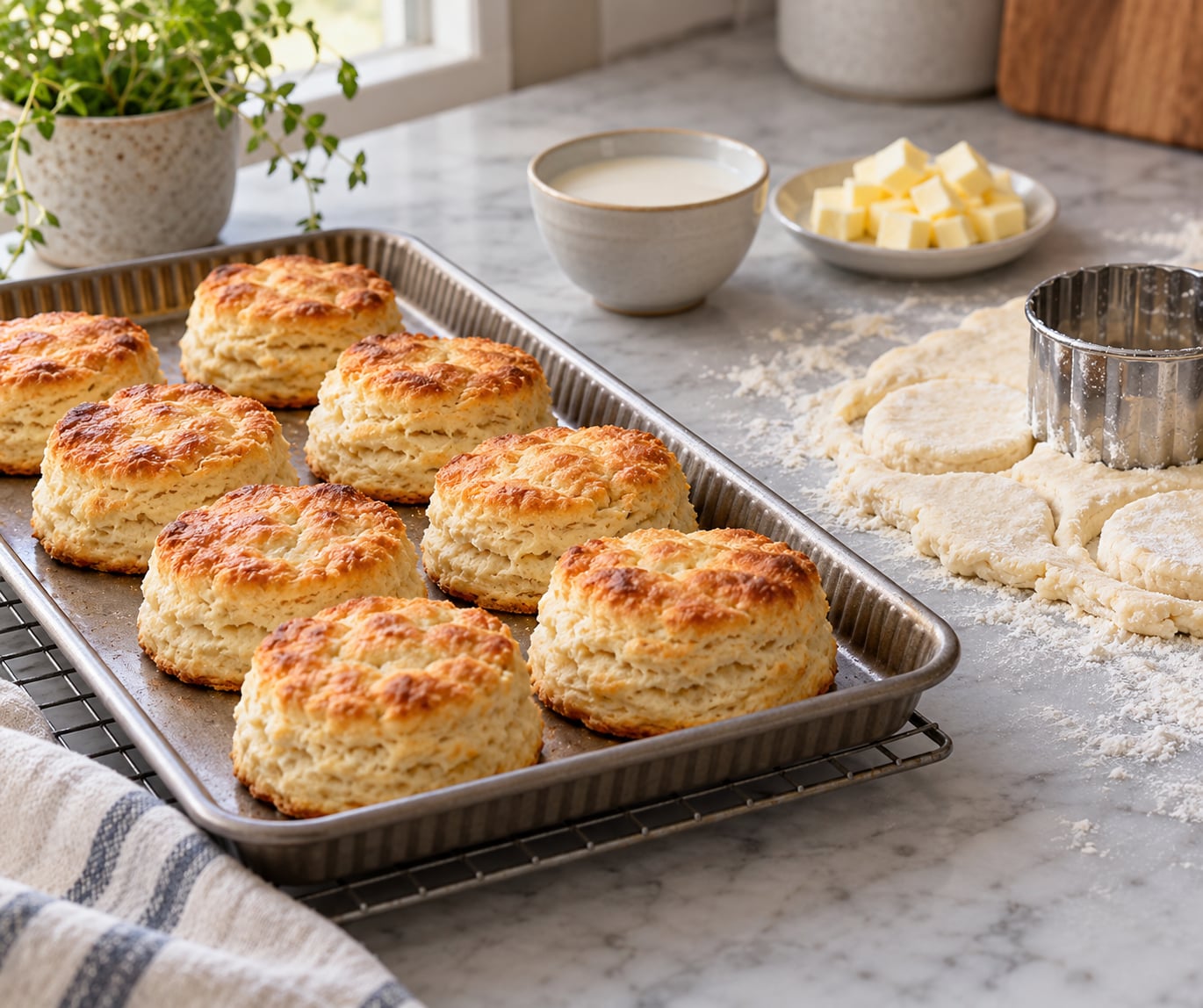
Learning how to make vegan buttermilk biscuits takes about 30 minutes and about the same effort as the dairy version, because the trick is not a specialty ingredient. It is cold vegan butter, a tangy acid-base reaction, and a hot oven.
Curdle unsweetened plant milk with a tablespoon of apple cider vinegar, cut cold fat into the flour, and fold the dough just a few times. You get a tall biscuit with visible flaky layers and a tender crumb, and no eggs or dairy anywhere in the bowl.
I bake these in a 450 F oven because the oven spring is where the height comes from, and they are done in 12 to 15 minutes. Start with cold ingredients, handle the dough gently, and do not skip the freezer rest on the shaped biscuits.
Table of Contents
- What You Need to Make Vegan Buttermilk Biscuits
- Dry ingredients
- Fat
- Wet ingredients
- Tools
- Which plant milk makes the best vegan buttermilk
- Step-by-Step: From Buttermilk to Golden Biscuits
- Make the Vegan Buttermilk
- How to Make Vegan Buttermilk Biscuit Dough Without Overworking It
- Shape and Cut the Biscuits
- Bake Until Golden and Tender
- Common Mistakes and How to Fix Them
- Why Are My Vegan Buttermilk Biscuits Flat or Dense?
- Frequently Asked Questions
- Can I make vegan buttermilk biscuits without a special vegan butter?
- What is the best vegan milk for buttermilk biscuits?
- How do I keep vegan biscuits flaky instead of dense?
- Can these vegan buttermilk biscuits be made gluten-free?
- How should I store and reheat vegan buttermilk biscuits?
- Can I freeze vegan biscuit dough or baked biscuits?
- Conclusion
What You Need to Make Vegan Buttermilk Biscuits
This makes 8 to 9 biscuits about 2 inches wide, enough for two people at brunch or a batch of breakfast sandwiches. Everything is pantry-shelf except the plant milk and the vegan butter, and both have easy swaps.
Dry ingredients
- 2 cups (250 g) all-purpose flour, spooned in and leveled, not scooped
- 2 teaspoons (8 g) baking powder, the double-acting kind
- 1/2 teaspoon fine sea salt
- 1 teaspoon sugar, optional and traditional in a sweet biscuit, skip it for a fully savory one
Low-protein Southern flour such as White Lily is the classic biscuit flour because its gluten is weaker and the biscuit rises taller. Any unbleached all-purpose flour works, and half whole wheat flour swapped in for part of the white gives a nuttier crumb without sinking.
Fat
- 6 tablespoons (85 g) cold vegan butter, stick form, cut into 1/2-inch cubes
Sticks matter here. Tub-style spread softens at room temperature, so it smears into the flour instead of staying in distinct pieces, and you lose the layers that make a biscuit flaky. Country Crock, Earth Balance, Miyoko’s, and Melt all bake well from the stick in a cold kitchen. Shortening works too, or cold coconut oil for a nuttier flavor.
Wet ingredients
- 3/4 cup (180 ml) unsweetened plant milk, soy or oat preferred
- 1 tablespoon apple cider vinegar or fresh lemon juice
- 2 tablespoons melted vegan butter or neutral oil, for brushing the tops
Make sure the milk has no sugar and no added vanilla. Sweetened milk plus sugar plus baking powder is one path to a bitter, browned biscuit, which is the most common complaint I see in the comment sections of the big vegan biscuit recipes.
Tools
A pastry cutter or two knives for cutting in the fat, a rolling pin, a 2-inch round biscuit cutter (a glass works), a rimmed baking sheet lined with parchment, or a 10-inch cast iron skillet. A bench scraper makes the folds easier than a knife does.
Which plant milk makes the best vegan buttermilk
Any unsweetened plant milk curdles with acid, but they are not equal in the dough. Protein and fat give structure, so a thin milk produces a flatter biscuit.
| Plant milk | Flavor | Effect on the dough | Verdict |
|---|---|---|---|
| Soy | Neutral to very faint bean note | About 7 g protein per cup, the most structure of the dairy-free options | Best all-around choice, and the one most biscuit recipes are tested with |
| Oat | Mild, faintly sweet cereal note | Thick and creamy, holds up well; can turn gummy if overmixed | Second choice, and the one you want for a creamier crumb |
| Cashew | Smooth, mild, slightly rich | Medium body with good fat content | Very good, expensive compared to the others |
| Almond | Thin, watery, a hint of nut | Low protein, so less structure and a shorter rise | Works, but expect slightly flatter biscuits |
| Coconut (light) | Tropical | Nearly all fat and water, no protein | Acceptable in a pinch |
| Coconut (full-fat canned) | Rich, tropical | So thick it barely absorbs, and it greases the dough | Skip it. It makes a greasy biscuit that spreads on the pan |
Make the dough with a gluten-free 1-to-1 baking blend if you need a gluten-free result, then add 2 to 3 tablespoons more milk because those blends are thirsty, and expect a slightly tighter crumb with less lift. I have not tested spelt or einkorn in this dough. Einkorn in particular is thirsty enough to need extra liquid, so if you try it, add milk by the tablespoon.
Step-by-Step: From Buttermilk to Golden Biscuits
Read this once before you start. The oven goes on first, at 450 F (230 C). Then you make the buttermilk, cut in the cold butter, mix until the dough is shaggy, fold it three times, cut rounds, rest them in the freezer, and bake.
Make the Vegan Buttermilk
Vegan buttermilk is unsweetened plant milk curdled with acid. Stir 1 tablespoon apple cider vinegar or lemon juice into 3/4 cup of soy or oat milk, leave it on the counter for 5 minutes until it looks slightly thickened with fine curds, then use it as-is. Do not strain it and do not worry if it looks split; that curdled texture is exactly what a buttermilk biscuit wants.
This mixture is doing two jobs. The acid reacts with the base in the baking powder, which releases carbon dioxide gas that inflates the dough in the first minutes of the bake, and the tang also relaxes gluten slightly so the crumb stays tender instead of tight. Real buttermilk is the tenderizing agent in classic Southern biscuits, which is why biscuits made without it come out denser than biscuits made with it.
Use lemon juice for a brighter, cleaner tang and apple cider vinegar for a rounder, more traditional flavor. One tablespoon is the right amount. Two tablespoons leaves a sharp vinegar bite that no amount of salt will balance.
How to Make Vegan Buttermilk Biscuit Dough Without Overworking It
Whisk the flour, baking powder, and salt together in a large bowl so the baking powder is distributed evenly, then add the cold butter cubes. Cut the fat through the flour with a pastry cutter in quick, light strokes until the mixture looks like coarse crumbs with a few pea-sized pieces left. Those last pieces are your layers.
Freezing the butter first and grating it with a box grater is the fastest version, and it is the most-upvoted tip in the biscuit comment sections I read. Grating distributes the fat evenly and keeps it cold, which cuts the mixing time.
Make a well in the center, pour in the curdled milk, and stir with a fork until the dough holds together. It will look shaggy and slightly sticky, and that is the point. As soon as you see no loose flour, stop. Flour has no fat or moisture to stop gluten development, so mixing keeps tightening the dough the longer you go, and a tight dough bakes into a hockey puck.
Tip the dough onto a lightly floured surface and give it three folds. Press it with the heel of your hand, fold it in thirds, rotate it 90 degrees, press and fold again. Three folds is enough for visible lamination. Six or more and you are making bread dough instead of biscuit dough.
If your baking powder ran low, you can build your own: 1 teaspoon baking soda plus 1/4 teaspoon cream of tartar equals 1 teaspoon baking powder. The general ratio for biscuits is about 1 teaspoon of baking powder per cup of flour, or half that amount of homemade baking powder. If you use both baking powder and plain baking soda, halve the baking powder, because the extra acid from the buttermilk will activate the soda on its own.
Shape and Cut the Biscuits
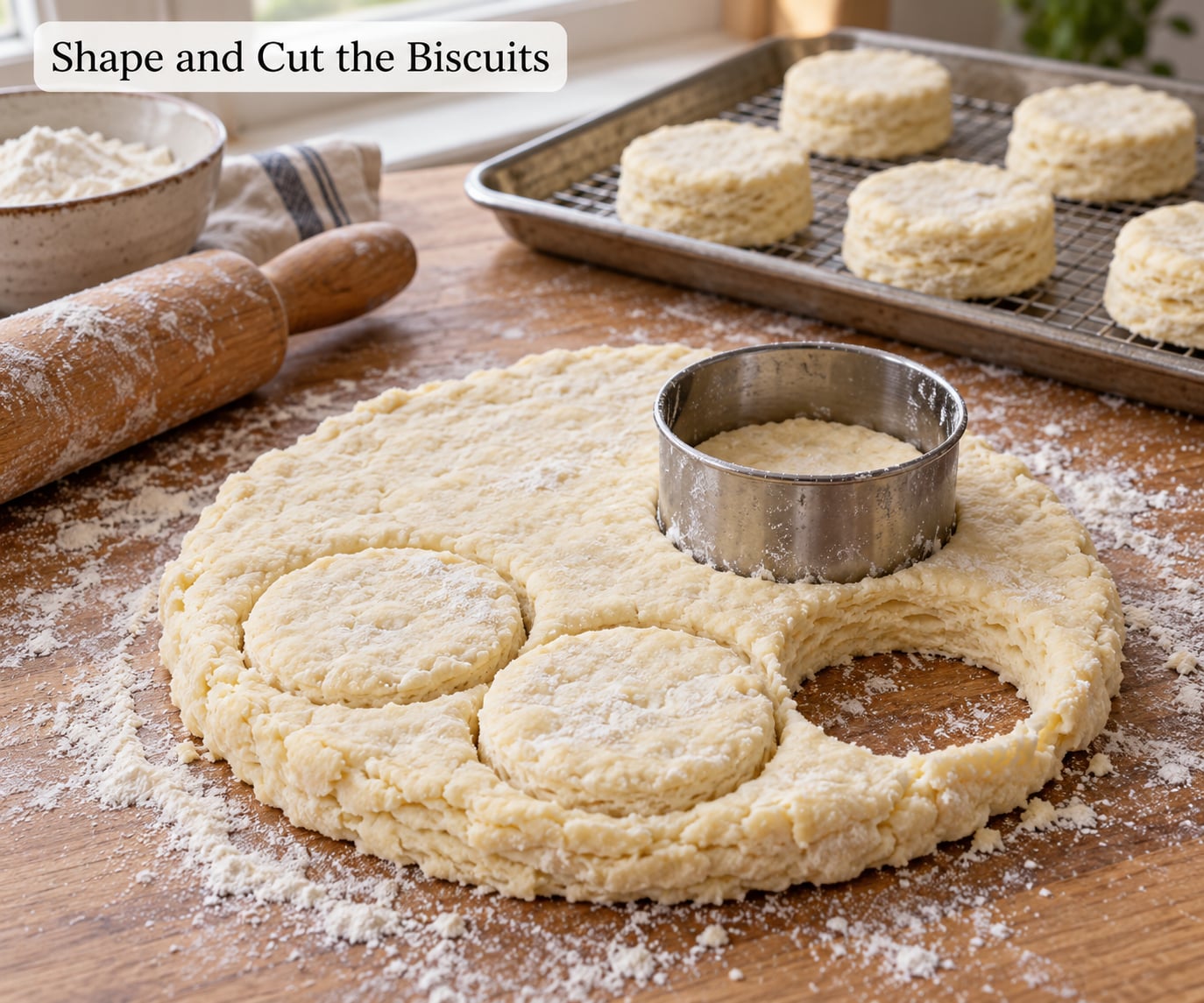
Pat the folded dough into a 3/4-inch-thick round. Thicker dough rises taller, so do not roll it out thin. Cut rounds straight down with a floured 2-inch cutter and do not twist it, because twisting drags the top layer around and seals the cut edge shut. Press the scraps together, roll to the same thickness, and cut again; expect about 8 to 9 biscuits, fewer if you go free-form.
Once the biscuits are cut, put the tray in the freezer for 10 to 15 minutes. A short chill after shaping firms the fat into distinct sheets, and frozen butter means a flakier biscuit. Biscuits baked straight from the freezer, with no thawing, are reported as flakier still, so this is the step I would not skip.
Biscuits placed close together on the tray rise taller, because the neighbors keep the rising dough from spreading sideways. Leave a small gap or let them touch, and skip the spray of cooking oil, which keeps the bottom from crisping.
For a cast iron skillet version, heat a 10-inch skillet in the oven for 15 minutes with a thin coat of oil, then set the raw biscuits in the hot pan. The preheated cast iron gives the bottoms a crisp, browned base that a sheet pan never will, which is how skillet biscuits have always been made.
Bake Until Golden and Tender
Brush the tops with melted vegan butter or a little plant milk mixed with neutral oil. A dairy-free egg wash is just plant milk plus oil, and it gives the same sheen and browning an egg wash would.
Bake at 450 F (230 C) for 12 to 15 minutes on the middle or lower rack. On a preheated cast iron skillet it can take closer to 15 to 18 minutes, because the pan holds more heat than a sheet pan. If you prefer a gentler bake, 425 F (220 C) works, but the biscuits come out a little shorter and need 15 to 18 minutes.
They are done when the tops are deep golden brown, the edges look set, and the bottom releases from the tray without resistance. A pale biscuit is underbaked, so keep going. The mistake almost everyone makes is baking them two minutes past done because they want to be certain, and those extra minutes are what turn a flaky biscuit into a dry one.
Cool them on the tray for 5 minutes. The crumb is still setting as it cools, so cutting too early makes it look gummy even when it is fine.
Common Mistakes and How to Fix Them
Almost every bad vegan biscuit comes back to one of four things: warm fat, a wet work surface, too much mixing, or a pan that is too cool. Here is the symptom, the cause, and the fix.
- Flat and dense, the number one complaint. The dough was mixed too long, the flour was packed in tightly, or the fat was soft. Fix all three: spoon and level the flour, work with butter straight from the fridge, and stir only until the dough clumps.
- Spread out on the pan. The dough was too thin, too warm, or there was too much liquid. Roll to 3/4 inch, chill the shaped biscuits, and measure the milk with a cup instead of pouring to the bottom of the bowl.
- Tough and chewy. Overdeveloped gluten from mixing or from a high-protein flour. Handle the dough three times and no more, and try a lower-protein biscuit flour.
- Greasy and oily layers that pooled on the tray. You used tub-style vegan butter, or you melted the fat before cutting it in. Use stick butter, keep it cold, and cut it in rather than melting it in.
- Pale with a flat top. The oven was too cool or the biscuits went in cold. Heat the oven fully to 450 F and do not let the tray sit out while you wait. For even browning, the butter wash goes on before the oven, not after.
- Bitter or harsh. Too much vinegar and not enough salt. Use 1 tablespoon of acid per 3/4 cup of milk and keep the full 1/2 teaspoon of salt. A miss-measured cup of flour does the same thing.
- Too salty and tough in every other way. You assumed a Southern biscuit is salty, then doubled the salt. Keep it at 1/2 teaspoon and let the acid supply the tang. Salt and vinegar have to stay in balance.
- Gummy layer somewhere in the middle. A seam that never welded during baking, usually from twisting the cutter or pulling a stuck biscuit off the tray. Cut straight down and lift with a spatula.
- Coconut-flavored or soapy. Almond or coconut milk has enough flavor to show. Use soy or oat if the biscuit tastes like a plant beverage.
Why Are My Vegan Buttermilk Biscuits Flat or Dense?
If the biscuits came out short, work down this list. Weigh the flour instead of scooping it, a 1/4 inch difference in a packed cup is enough to sink a batch. Confirm your baking powder is fresh, since it loses lift a few months after opening. Keep the fat cold all the way to the bowl, and chill the shaped biscuits for 15 minutes before baking. Finally, mix with a fork and stop at shaggy. Four checks, in that order, fix most flat biscuits.
Before you start, chill what you can: the bowl, the rolling pin, the cutter, and the tray. That sounds fussy, but it takes two minutes and cold tools buy you a full extra minute of handling time before the butter softens.
Frequently Asked Questions
Can I make vegan buttermilk biscuits without a special vegan butter?
Yes. Cold vegan shortening or coconut oil works in place of vegan butter, and so does a stick-form margarine. All three bring the cold fat that creates layers. Skip tub-style spread, which is too soft at room temperature to hold distinct sheets in the dough. For the brushed-on top, melted coconut oil or a spoonful of oil and plant milk does the same job as melted vegan butter.
What is the best vegan milk for buttermilk biscuits?
Unsweetened soy milk is the most reliable because its protein gives the dough the most structure, and it is what most biscuit recipes are tested with. Oat milk is a close second and gives a creamier crumb. Almond is thin and can leave you with flatter biscuits. Full-fat canned coconut milk is too thick and rich, so it makes a greasy dough that spreads.
How do I keep vegan biscuits flaky instead of dense?
Keep the fat cold and the dough barely mixed. Cut or grate butter straight from the fridge into the flour, stop mixing when the dough is shaggy, and fold it no more than three times. Chill the shaped biscuits for 10 to 15 minutes before baking, and brush the tops with melted fat so the steam lifts them. Flour is pure starch with nothing to stop gluten development once it is wet.
Can these vegan buttermilk biscuits be made gluten-free?
Yes, with a 1-to-1 gluten-free baking blend in place of the all-purpose flour. Those blends absorb more liquid, so add 2 to 3 tablespoons extra milk and rest the dough longer so it hydrates. Expect a slightly tighter crumb and a bit less lift than a wheat biscuit, and check the blend for xanthan gum, which is what holds the layers together without gluten.
How should I store and reheat vegan buttermilk biscuits?
Keep plain baked biscuits in a sealed container on the counter for up to two days, where they stay flaky. Anything with gravy, cooked eggs, or meat goes into the fridge within two hours and lasts three to four days. Reheat at 350 F for 5 to 8 minutes, or 30 seconds in a microwave with a damp paper towel. Biscuits with a wet filling reheat best in the oven.
Can I freeze vegan biscuit dough or baked biscuits?
Both. Shape the biscuits, place them on a tray to freeze solid, then move them to a bag or container; they keep about three months and bake from frozen, with 2 to 3 minutes added to the bake time, and come out flakier. Baked biscuits freeze well for up to two months, though a fresh bake is always better if you have the time. Thaw baked ones in the container at room temperature.
Conclusion
Start with the cold fat. Freeze the vegan butter, chill the bowl, and pour in the curdled milk only after the dry ingredients are cut through with crumbs. Three folds, a 15 minute freezer rest, and a 450 F oven will do the rest, and that is how to make vegan buttermilk biscuits with the height and flaky layers you would expect from the dairy version.
Serve them split and buttered with jam and flake salt, stacked with scrambled tofu and hot sauce, or next to a pan of mushroom gravy for the version that started the argument in the first place. Bake a double batch and freeze half unbaked, because the freezer biscuits are the ones you will be grateful for at 8 on a Sunday morning.