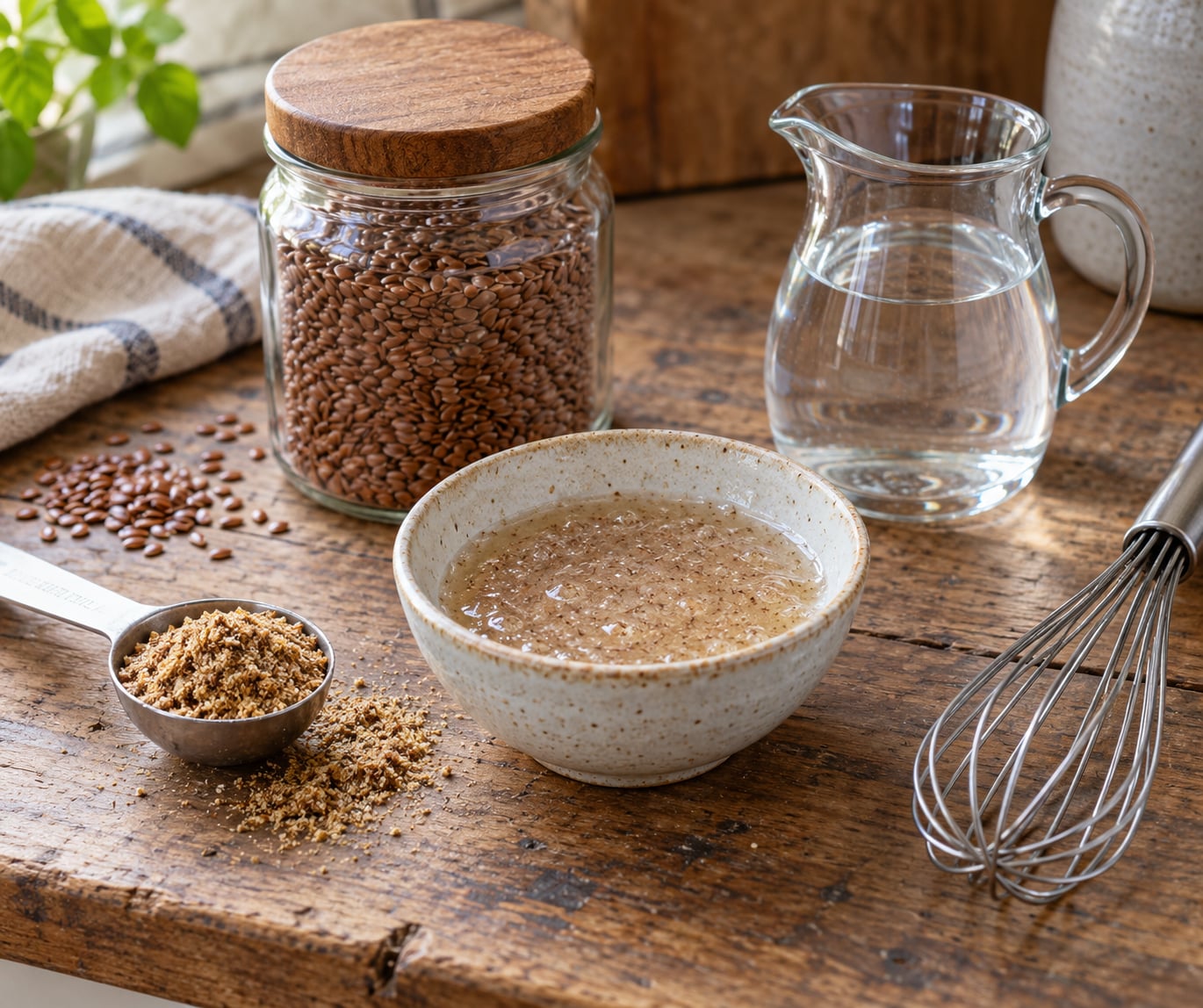
To replace one large egg, mix 1 tablespoon of ground flaxseed with 3 tablespoons of water and let it sit 5 to 15 minutes until it thickens into a gel. Use that gel anywhere an egg is holding batter together. That is the whole trick behind how to replace eggs in baking with flax, and it works in most cookies, brownies, muffins, quick breads, and pancakes.
It is not, though, a straight swap everywhere. An egg does four jobs in a batter, and flax only fills two of them well. It binds and it adds moisture. It does not whip air into a meringue, and it will not give you a tall layer cake on its own. Knowing that difference up front is what separates a good swap from a flat, gummy disappointment.
I keep a jar of ground flaxseed on the shelf by the stove and mix one every week or so. Whole flaxseeds sold for eating are not interchangeable with the ground stuff, and that trips up more beginners than anything else.
Table of Contents
- What You Need
- Step-by-Step: How to Replace Eggs in Baking With Flax
- Prepare the Flax Egg: 1 Tablespoon Flax, 3 Tablespoons Water
- Choose the Right Amount for Each Egg
- Add the Flax Egg at the Right Time
- Common Mistakes and How to Fix Them
- How to Adjust Flax Eggs for Different Bakes
- How to Store a Prepared Flax Egg
- Frequently Asked Questions
- How much ground flaxseed and water replace one egg?
- Do I need to grind whole flaxseeds before making a flax egg?
- How long should a flax egg rest before it is used?
- Can I use a flax egg in cookies, muffins, and cakes?
- Will a flax egg make baked goods rise as well as an egg?
- Conclusion
What You Need
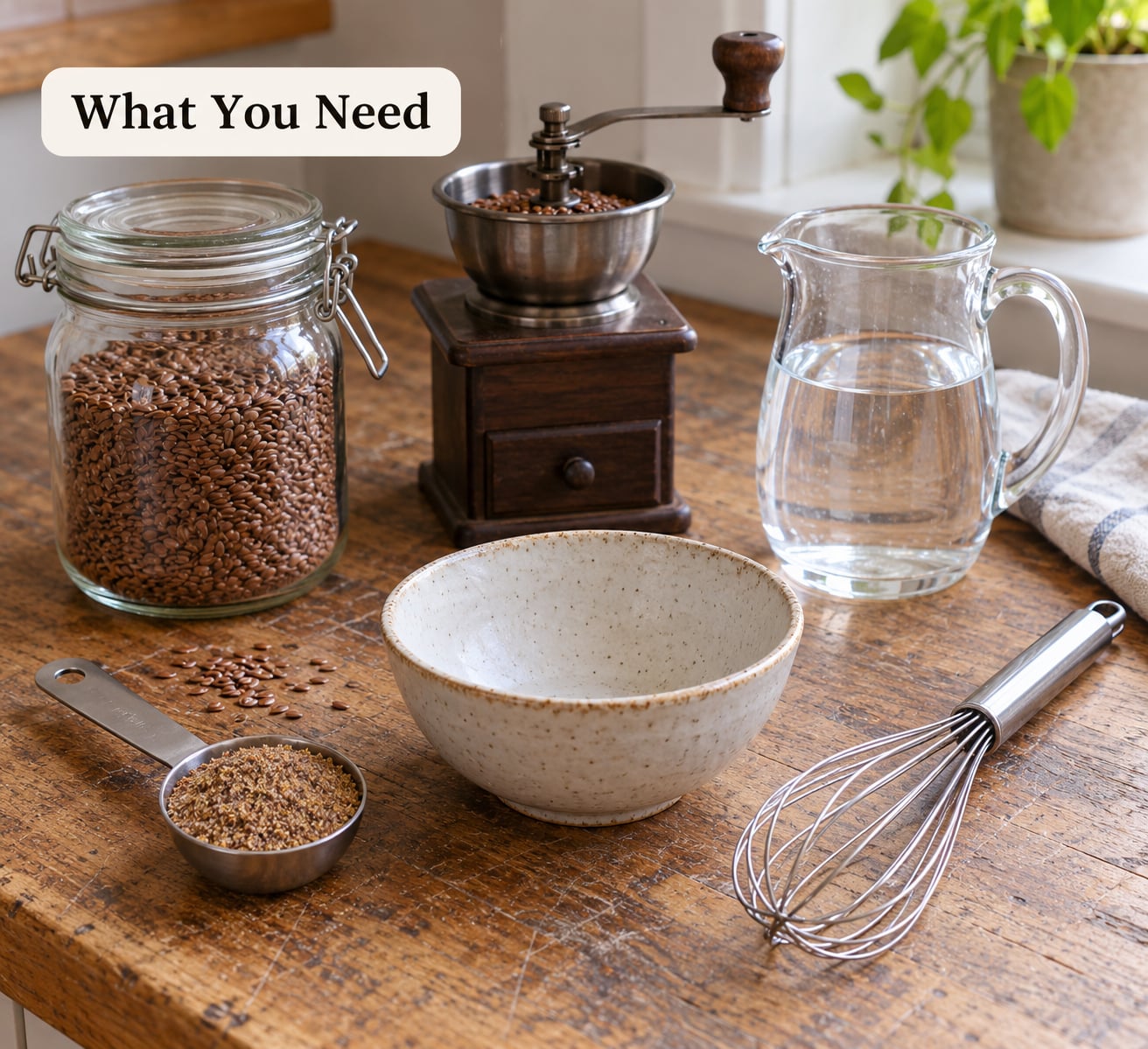
- Ground flaxseed, flaxseed meal, or flaxmeal — 1 tablespoon per egg. Flaxseed meal and ground flaxseed are the same product under different names.
- Whole flax seeds — only if you plan to grind them yourself, and only if you have a coffee grinder or spice grinder.
- Water — 3 tablespoons per egg, cool or warm both work.
- A small bowl or jar — wide enough to whisk in.
- A whisk, fork, or small whisk — a fork works but takes longer.
- Measuring spoons — this is not a recipe where you eyeball it.
One warning about the grinder. Ground flax leaves a stubborn oily film in a coffee grinder, and the smell sticks around for several bakes. A dedicated spice grinder you do not mind sacrificing is kinder to your coffee setup.
Step-by-Step: How to Replace Eggs in Baking With Flax
Start here, then scale up. The method is the same every time; only the measuring changes.
Prepare the Flax Egg: 1 Tablespoon Flax, 3 Tablespoons Water
Measure 1 tablespoon of ground flaxseed into a small bowl. Add 3 tablespoons of water and whisk briskly for about 30 seconds, scraping the bottom, until no dry flour-like pockets remain.
Now wait. The mixture will loosen, then thicken into a gel that looks a little like raw egg white. Five minutes is the bare minimum. Ten to 15 minutes is the sweet spot, and I use that window most of the time. A full hour in the refrigerator also works and some older recipes call for it, so if you have time, a longer rest only makes the gel more reliable.
How do you know it is ready? It should hold its shape when you tilt the bowl and it should drag slowly off the whisk rather than run like milk. If it looks like loose seed specks in watery liquid, it needs more time, not more flax.
Using whole seeds? Grind about 1 tablespoon plus a small extra for loss, sift out the fine dust, and measure the powder. Whole seeds straight from the bag will not work. They pass through the batter mostly intact, which leaves you with specks and no binder.
Choose the Right Amount for Each Egg
One flax egg equals one large egg. Scale it straight up from there.
| Eggs in the recipe | Ground flaxseed | Water |
|---|---|---|
| 1 | 1 tablespoon | 3 tablespoons |
| 2 | 2 tablespoons | 6 tablespoons (1/4 cup plus 2 tablespoons) |
| 3 | 3 tablespoons | 9 tablespoons (1/2 cup plus 1 tablespoon) |
| 4 | 1/4 cup | 3/4 cup |
| 6 | 3/8 cup | 1 1/4 cups |
You will see some recipes calling for 2.5 tablespoons of water instead of 3. That lower amount is right for dry, crumbly bakes like sugar cookies and shortbread, where extra water pushes the dough past the point where it sets. If your cookies spread flat or come out soft in the middle, that extra half tablespoon is the first thing to cut back.
For a double batch, mix the flax and water in one jug rather than making four separate ones. Rest time is the same, not four times as long.
Add the Flax Egg at the Right Time
Pour the gel straight into the wet ingredients and mix as usual. It drops in exactly where a cracked egg would, and you do not need to warm it, strain it, or do anything else to it.
Do not drizzle it over the top of a dry mix unless the recipe specifically calls for that. Pooled gel that never gets worked in leaves you with a wet spot in the batter and a raw patch in the crumb.
Two adjustments are worth knowing. Eggs contribute fat from the yolk, so bakers often add an extra tablespoon of oil or melted butter per flax egg, especially in brownies and quick breads. And a cake that relies on eggs for lift may need a nudge: add an extra half teaspoon of baking powder, or a spoonful of applesauce for moisture, before you blame the flax.
Common Mistakes and How to Fix Them
- Using whole seeds. They do not gel. Grind them or buy ground flaxseed.
- Skipping or rushing the rest. Thin gel that has not hydrated will not bind. Give it the full 10 minutes.
- Too much water. Gummy cookies, wet cake crumb, and flat spreading all trace back to a loose gel. Use 2.5 tablespoons water for crumbly bakes.
- Confusing flaxmeal with whole-seed flour. They look alike. Flaxmeal is ground whole seed, pale brown and fine. It is what you want.
- Expecting egg-white lift. Flax gives no foam and no structure of its own. Anything that depends on whipped whites needs aquafaba or real eggs.
- Forgetting the flavor shift. Flax is nutty and earthy. Spiced bakes like gingerbread hide it well; plain vanilla cake will not.
How to Adjust Flax Eggs for Different Bakes
Cookies and brownies. The easiest place to start. One flax egg per egg, sometimes with an extra tablespoon of oil in brownies for the missing yolk fat. Watch the bake time, because these batches can set a few minutes sooner.
Muffins and quick breads. A clean swap. Banana bread, pumpkin bread, and cornbread all take a flax egg without complaint. Here an egg’s leavening job matters less, since the batter is already relying on baking powder or soda.
Layer cakes and pound cakes. This is where expectations need adjusting. A flax egg binds and moistens, but the cake will rise less and the crumb will be slightly tighter. Compensate with a little extra leavening and keep an eye on the bake time, since a tall narrow cake can overbrown before the center sets.
Pancakes and waffles. Use it. The gel disappears entirely into the batter, and nobody will taste the difference.
Meatless patties and meatballs. One flax egg holds a mix together in the same way, though the gel makes the mixture a little softer, so chill formed patties before cooking.
Where flax does not work. Custards, creme brulee, meringue, souffles, and anything that needs whipped egg whites for lift. Aquafaba, the liquid in a can of chickpeas, whips into a convincing meringue and bakes closer to the real thing. Commercial egg replacer powder does well in cakes for the same reason.
Applesauce is the other common swap. It works, but it adds sugar and water, so cut the recipe sugar and liquid a little. It also tends to make cakes heavier, which is why bakers chasing a light crumb reach for flax first.
How to Store a Prepared Flax Egg
A mixed flax egg keeps in the refrigerator in an airtight container for about 3 to 4 days. It thickens further as it sits, so whisk or shake it back to a gel-like consistency before using it.
Discard it if it smells sharp or bitter, or if a film has formed on top. Realistically, though, most bakers mix a fresh one each session. The whole process is under 15 minutes and the jar gets a rinse.
Far more important is storing the dry flaxseed. Ground flax goes rancid quickly because the oils are already exposed, and rancid flax tastes bitter in the finished bake. Keep it in an airtight jar in the refrigerator for a few months, or freeze it for longer storage. Whole seeds keep much longer on their own, which is another good reason to grind small amounts as you need them.
Frequently Asked Questions
How much ground flaxseed and water replace one egg?
One large egg takes 1 tablespoon of ground flaxseed and 3 tablespoons of water. Two eggs take 2 tablespoons and 6 tablespoons. Four eggs take a quarter cup of flax and three-quarters cup of water. Scale it straight up and by volume, not by weight. For crumbly cookies and shortbread, pull the water back to 2.5 tablespoons per egg so the dough does not spread.
Do I need to grind whole flaxseeds before making a flax egg?
Only if that is what you have. Whole seeds will not gel and will pass through the batter mostly whole, so using them straight from the bag gives you specks and no binder. Grind about a tablespoon plus a small extra in a coffee or spice grinder, or buy flaxseed meal, also called ground flaxseed or flaxmeal. It is the same product, pre-ground.
How long should a flax egg rest before it is used?
Give it 10 to 15 minutes for the most reliable gel. Five minutes is the bare minimum, and an hour in the refrigerator works well if you are batching ahead. It is ready when it holds its shape when you tilt the bowl and drags slowly off the whisk instead of running like milk. If it still looks watery, give it more time rather than more flax.
Can I use a flax egg in cookies, muffins, and cakes?
Yes to all three, with one caveat on cakes. Cookies, brownies, muffins, quick breads, and pancakes take a flax egg cleanly at a one-for-one ratio. Cakes get the binding and moisture but not the leavening lift an egg provides, so add about half a teaspoon extra baking powder and expect a slightly tighter crumb. Never use it where whipped egg whites are needed.
Will a flax egg make baked goods rise as well as an egg?
Not on its own. Flaxseed gel does the binding and moisture jobs of an egg, but it traps no air and cannot be whipped, so it gives your bake none of the structure or lift an egg does. That is why it works well in muffins, quick breads, brownies, and cookies, and falls short in meringue, souffles, custards, and tall layer cakes that depend on egg white foam.
Conclusion
Start with the simple part: mix 1 tablespoon of ground flaxseed with 3 tablespoons of water, whisk, and leave it 10 minutes. Pour that gel in wherever a cracked egg would go and bake something you already know well, like a batch of muffins or a pan of brownies.
After that, adjust by the recipe rather than by the ratio. Less water for crumbly cookies, an extra tablespoon of oil for brownies, a little extra leavening for cakes. Knowing that flax binds and moistens but never leavens is the difference between a swap that works and one that disappoints. Make a small test batch first, and you will have your own answer for the rest.