To clean a rusty cast iron pan, scrub the rust off the bare iron, dry the pan completely, then bake on a fresh coat of oil to rebuild the seasoning. Light surface rust comes off in roughly half an hour of scrubbing. Heavier rust needs a vinegar soak first, and a deeply pitted pan takes a full afternoon plus drying time overnight.
Rust is not a food safety hazard. You can keep cooking on a rusty skillet if you scrub it back to clean metal and dry it before storing, but the rust does wreck the seasoning, can leave a metallic taste in food, and will keep creeping back if the pan sits damp.
Appalachian kitchens have a long memory of cast iron, and most of the pans people still cook with were never treated gently. They got wet, put away in a damp cabinet, and rusted. Restoring one is worth the hour, especially an inherited skillet, because the metal underneath is still solid.
Table of Contents
- What You Need
- Step-by-Step: How to Clean a Rusty Cast Iron Pan
- Step 1: How to Remove Loose Rust and Food
- Step 2: Scrub Away the Remaining Rust
- Step 3: Rinse and Dry the Pan Completely
- Step 4: Apply a Thin Layer of Oil
- Step 5: Bake or Heat to Form a New Seasoning
- Common Mistakes
- Frequently Asked Questions
- Can you use a rusty cast iron pan for cooking?
- Should I remove all the seasoning when cleaning rust off a cast iron pan?
- What is the best way to remove stubborn rust from cast iron?
- Is baking soda or vinegar better for cleaning a rusty skillet?
- How long should I bake cast iron after re-seasoning it?
- Why does my cast iron pan feel sticky after seasoning?
- Start With the Simplest Method That Works
What You Need
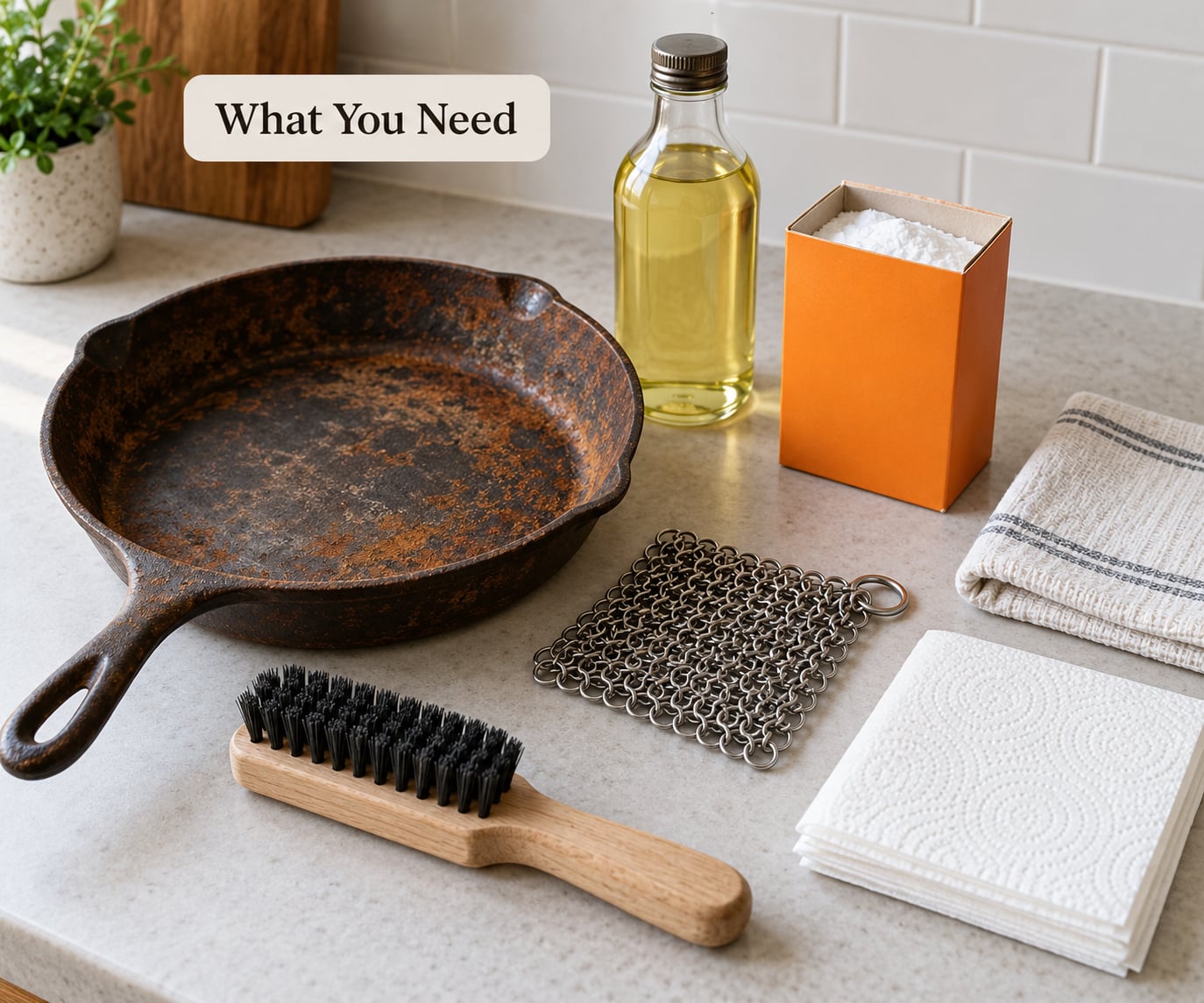
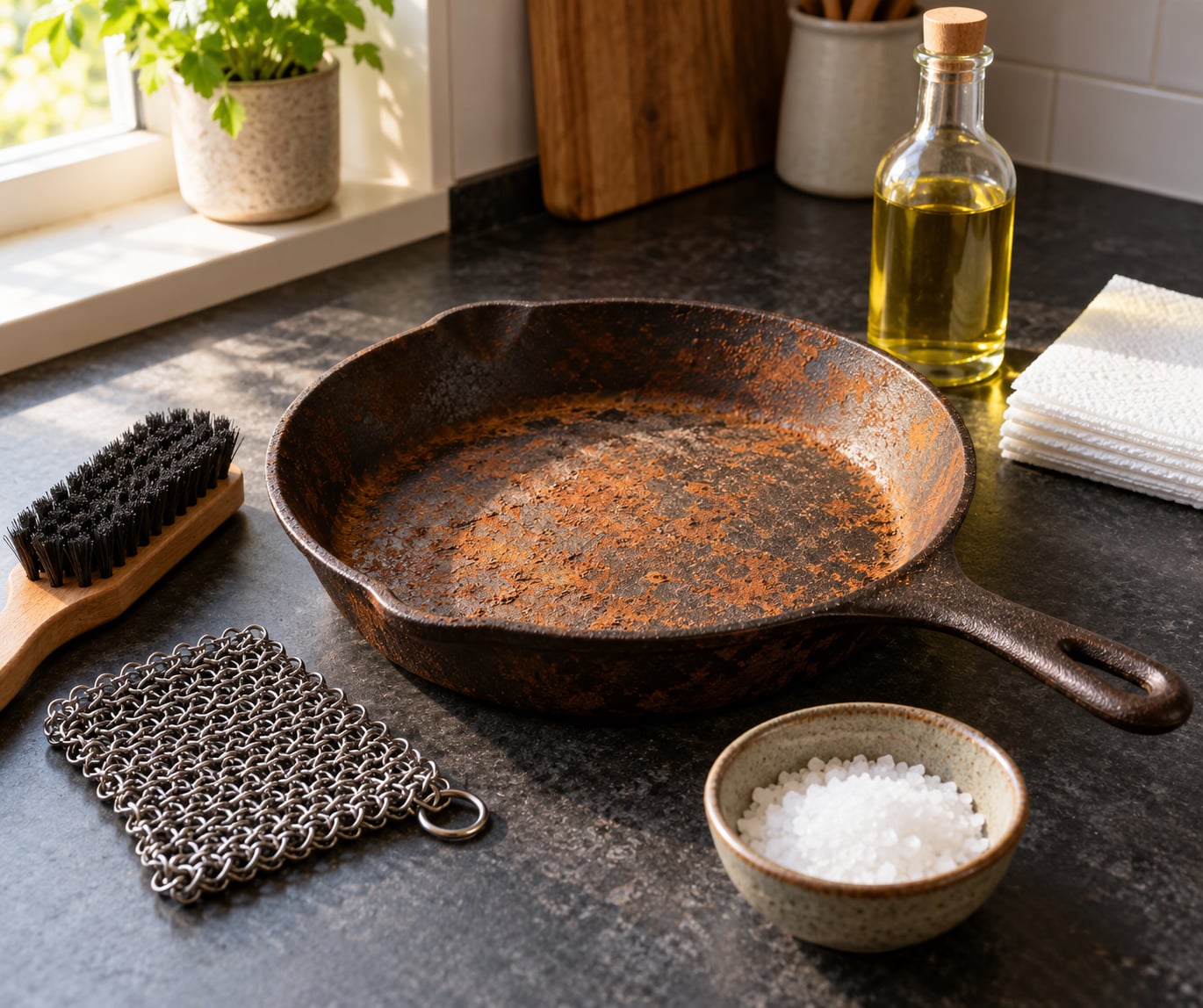
Everything on this list is cheap and most of it is already in your kitchen. Pick it up before you start so you are not hunting for a rag with bare metal soaking in a sink.
- A basin or sink large enough to hold the pan flat
- White vinegar, for the soak
- A stiff nylon brush, a chainmail scrubber, or a rust eraser block
- Baking soda, for a paste on stubborn spots
- Coarse table salt and a raw potato, for the no-chemical scrub
- Fine-grit sandpaper or 0000 steel wool, only as a last resort
- A neutral cooking oil such as canola, grapeseed, vegetable or flaxseed oil
- Paper towels, a dish towel, and a heatproof surface or stovetop
You will also want a working oven for the last step, or a cooktop if your skillet has a flat base. Set aside about 30 minutes for light rust and up to three hours for heavy rust, most of it waiting.
Step-by-Step: How to Clean a Rusty Cast Iron Pan
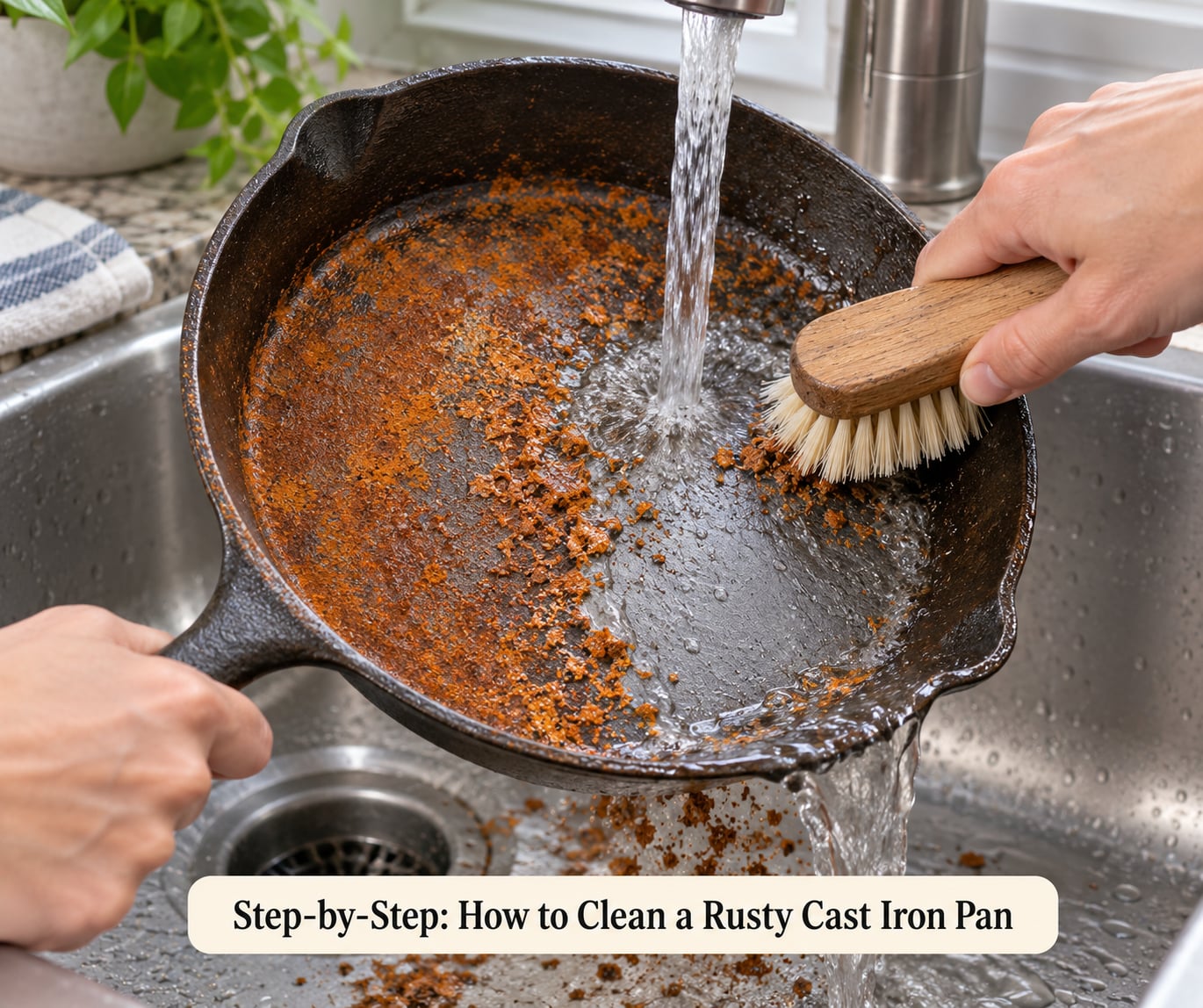
Before you start, look at the pan honestly and match the method to the damage. This is the step most guides skip, and picking wrong is how people end up sanding a pan that only needed a scrub.
| What you see | Best method | Time needed |
|---|---|---|
| Orange or grey haze, wipes off with your thumb, no texture | Chainmail or stiff brush with hot water, no soak | 15 to 30 minutes |
| Flakes that come off with a scrubber, light orange patches | 50/50 vinegar and water soak, then scrub | 45 to 90 minutes |
| Deep brown or black rust, pitted or rough to the touch | Vinegar soak, baking soda paste, then fine sandpaper on the pits | Half a day, with an overnight dry |
Step 1: How to Remove Loose Rust and Food
Fill the pan with hot water and drop in a squirt of dish soap. Let it sit five to ten minutes while you grab your brush, then scrub in small circles, starting on the rustiest areas. Cooked-on bits and loose rust flakes lift away with the hot water alone.
Work around the rim groove, the inside curve of the walls, and under the handle bracket. Those corners hold the most rust and the least seasoning, and a stiff nylon brush reaches all of them.
Step 2: Scrub Away the Remaining Rust
Scrub in the direction of the grain until the black or grey iron shows through. Rust erasers and chainmail scrubbers cut the work down; salt and a cut raw potato work too, the coarse salt acting as the abrasive as the potato starch softens the rust.
For stubborn spots, mix baking soda with just enough water to make a paste and spread it over the rust. Leave it ten minutes, then scrub. Rinse and check the surface under a bright light, since the transition from brown to grey is easy to miss.
Skip the wire wheel. A wire wheel or heavy steel wool sands the surface glassy smooth, and seasoning needs a slightly rough surface to grab onto. Fine sandpaper on 0000 is a reasonable compromise when pitting is the only thing left.
Step 3: Rinse and Dry the Pan Completely
Rinse away every trace of grit and paste, then dry the skillet on a burner set low for two or three minutes until it is too hot to hold comfortably. Air drying on a rack is how people end up with rust the very next morning.
Wipe it with a paper towel while it is still warm, then again with a dry dish towel. The metal should feel completely dry and slightly tacky, not damp anywhere.
Step 4: Apply a Thin Layer of Oil
Put a teaspoon of neutral cooking oil in the middle of the warm pan and wipe it around with a paper towel, covering the base, the walls, the rim and the handle bracket. The towel should come away looking faintly greasy, not shiny.
Then wipe the pan again with a clean, dry paper towel to pull off the excess. This is the step that decides whether your seasoning turns out fine or sticky, and most sticky pans trace back to oil that was left too thick.
Step 5: Bake or Heat to Form a New Seasoning
Put the pan upside down on a rack in the middle of a hot oven at 450 to 500°F and bake for one hour. The upside-down position keeps oil from pooling in the base, and a foil sheet under the pan keeps drips off your oven floor. Open a window and run the fan, since polymerizing oil puts off smoke.
Let the pan cool on the burner for another half hour or so. Wipe it with a dry paper towel, and it should be matte and dry to the touch, not tacky. If it looks patchy, run the bake a second time.
Do not try to cook a fried egg on the first outing. Two or three cooking sessions will build enough of a seasoning layer to feel the difference.
Common Mistakes
- Over-sanding the pan. Steel wool and wire wheels smooth the iron until seasoning has nothing to hold onto. Use them only on pitting you cannot scrub out another way.
- Soaking the pan in vinegar overnight. Vinegar dissolves seasoning and can etch the iron. Thirty minutes for light rust, up to one hour for heavy rust, then scrub. Long soaks leave you with bare metal and a spotty finish.
- Leaving water in the pan. Even an hour of standing water is enough to start new rust. Dry on the burner every time.
- Putting too much oil on. Thick oil bakes to a sticky, gummy layer that peels. Wipe on, then wipe off.
- Heating an empty oiled pan on the stovetop at high heat. It will smoke and the seasoning can flake. Use the oven, or warm the pan low and slowly on a burner.
- Running cast iron through the dishwasher. The detergent strips the seasoning and the rinse cycle leaves it wet for hours, which means flash rust by morning.
- Storing the pan damp or nested in a damp cupboard. A folded paper towel in the bottom of the pan absorbs what moisture is left.
Soap is worth a note too. A little dish soap is not the enemy people think it is. A drop of it in hot water during a restoration clean is fine, and rinsing well afterward is what matters.
Once it is seasoned, wipe it with a paper towel while it is still warm, put a single drop of oil in the pan, and spread it around. That habit takes five seconds and prevents nearly all repeat rust.
Frequently Asked Questions
Can you use a rusty cast iron pan for cooking?
Rust on its own is not a health hazard, and it does not make the pan unsafe to eat from. You can cook on a rusty skillet, but scrub the rust back to clean metal, dry it fully and rebuild the seasoning first. Rust left in place damages the existing seasoning, can give food a metallic taste, and will spread to anything the pan touches in storage.
Should I remove all the seasoning when cleaning rust off a cast iron pan?
Only where the seasoning is loose, sticky or flaking. Sound seasoning is a hard polymerized oil layer bonded to the iron, and you cannot remove it without also removing some metal. Rust forms where seasoning has failed, so scrub the rusted areas back to bare iron and leave the sound black layer alone wherever it stays attached.
What is the best way to remove stubborn rust from cast iron?
Fill the pan with a 50/50 mix of white vinegar and water and let it sit for 30 minutes for light rust, up to one hour for heavy rust. Then scrub with a chainmail scrubber, stiff nylon brush or rust eraser until grey or black iron shows through. A baking soda paste helps on spots that stay behind. Never leave the pan soaking overnight.
Is baking soda or vinegar better for cleaning a rusty skillet?
Vinegar does the dissolving and baking soda does the scrubbing. A short vinegar soak loosens iron oxide so it will lift, and baking soda provides a mild abrasive that will not scratch the metal. Many people use both in order: soak in vinegar, rinse, then scrub the remaining spots with a baking soda paste and a brush.
How long should I bake cast iron after re-seasoning it?
One hour at 450 to 500°F with the pan upside down on a rack in the middle of the oven. Then let it cool completely on the burner and wipe it with a dry paper towel. If the surface still looks patchy or feels tacky, repeat the hour-long bake once more before you use it for cooking.
Why does my cast iron pan feel sticky after seasoning?
The oil layer was too thick, so it baked into a gummy film instead of polymerizing into a hard seasoning. Strip it back with coarse salt and a paper towel, or a chainmail scrubber and hot soapy water, then dry the pan and re-season with a much thinner coat of oil. Wipe the pan again with clean dry paper towel after oiling to pull off the excess.
Start With the Simplest Method That Works
Most rusty skillets do not need anything more than hot soapy water, a stiff brush, a thorough dry-down on the burner, and an hour in a 450°F oven with a thin coat of oil. Save the vinegar soak for rust that will not scrub off, and save the sandpaper for pits. Start at the top of that list and work down, and the pan you inherited will be cooking again this week.