If you want to know how to use sorghum syrup in baking, treat it as a liquid sweetener you can pour straight into the bowl. It replaces sugar, honey, maple or light molasses cup for cup, adds moisture, and gives cookies, cakes and breads a deeper color and a toasted, almost buttery flavor. Most swaps need no other change to the recipe.
That answer covers about ninety percent of the work. The rest is knowing when to pull back a little liquid, when to add spice, and how to stop a cake from sinking in the middle.
A jar of sorghum syrup usually costs more than a bottle of molasses, and people often buy it without a plan for it. A simple way around that: start with a batch of gingersnaps or a banana quick bread, both forgiving recipes that show off the flavor fast. I keep the syrup for biscuits, cornbread and a ginger loaf, and drizzle the remainder over pancakes instead of maple.
This guide takes about ten minutes to read and none at all to prepare. Difficulty is low, but the swaps only work if you measure by weight, so a kitchen scale is worth having on hand.
Table of Contents
- What You Need
- Light or dark sorghum syrup
- A scale and a set of measuring spoons
- Baking soda for flavor, not just leavening
- Step-by-Step: How to Use Sorghum Syrup in Baking
- 1. Match Sorghum Syrup to the Bake You Are Making
- 2. How to Use Sorghum Syrup in Place of Sugar Without Ruining Texture
- 3. Adjust the Liquid When the Batter Turns Sticky
- 4. Balance the Flavor and Browning
- 5. Bake and Check Doneness
- Common Mistakes
- Swapping by volume without weighing
- Leaving the liquid in the recipe
- Using it as the only sweetener in a molasses recipe
- Expecting pure sweetness
- Crowding the sheet
- Cutting too early
- Frequently Asked Questions
- Can I use sorghum syrup instead of brown sugar?
- How much sorghum syrup should I use for sugar in cookies?
- Do I need to reduce other liquids when using sorghum syrup?
- Is sorghum syrup suitable for gluten-free baking?
- Will sorghum syrup make my cookies or cakes too soft?
- How should I store baked goods made with sorghum syrup?
- What to Do First
What You Need
To swap sorghum syrup into a recipe, you need three things: the right syrup, an accurate measure, and a sense of which bake you are making. Grab these basics and most batters come together without a second attempt.
Light or dark sorghum syrup
Light sorghum syrup is the everyday baking choice. It is amber, thin enough to pour, and mildly sweet with a toasted grain note that reads as buttery rather than bitter. Most cookies, cakes and quick breads are built around it.
Dark sorghum syrup carries more of the caramel and spice character, and it is noticeably less sweet per spoonful. Use it when the recipe already has molasses in it, or for spice cakes and gingerbread where you want a deeper edge. If a recipe calls for blackstrap molasses, dark is the closer match.
A scale and a set of measuring spoons
Volume measures are where swaps go wrong. Spooning syrup into a cup leaves a film behind, and thick sweeteners do not level the way granulated sugar does. Weighing by gram is faster and more accurate once you get used to it. If you do not have a scale, measure syrup in a cup with room temperature water nearby and rinse and dry between uses.
Baking soda for flavor, not just leavening
Sorghum syrup is mildly acidic, and baking soda reacts with that acidity to give lift plus a deeper, toastier flavor. Most cookie recipes built around molasses or honey already include it. If you are converting a plain sugar cookie, add about one-eighth teaspoon of baking soda per cup of sorghum syrup and expect the flavor to round out. Test a small batch first if the bake is a delicate one.
Step-by-Step: How to Use Sorghum Syrup in Baking
1. Match Sorghum Syrup to the Bake You Are Making
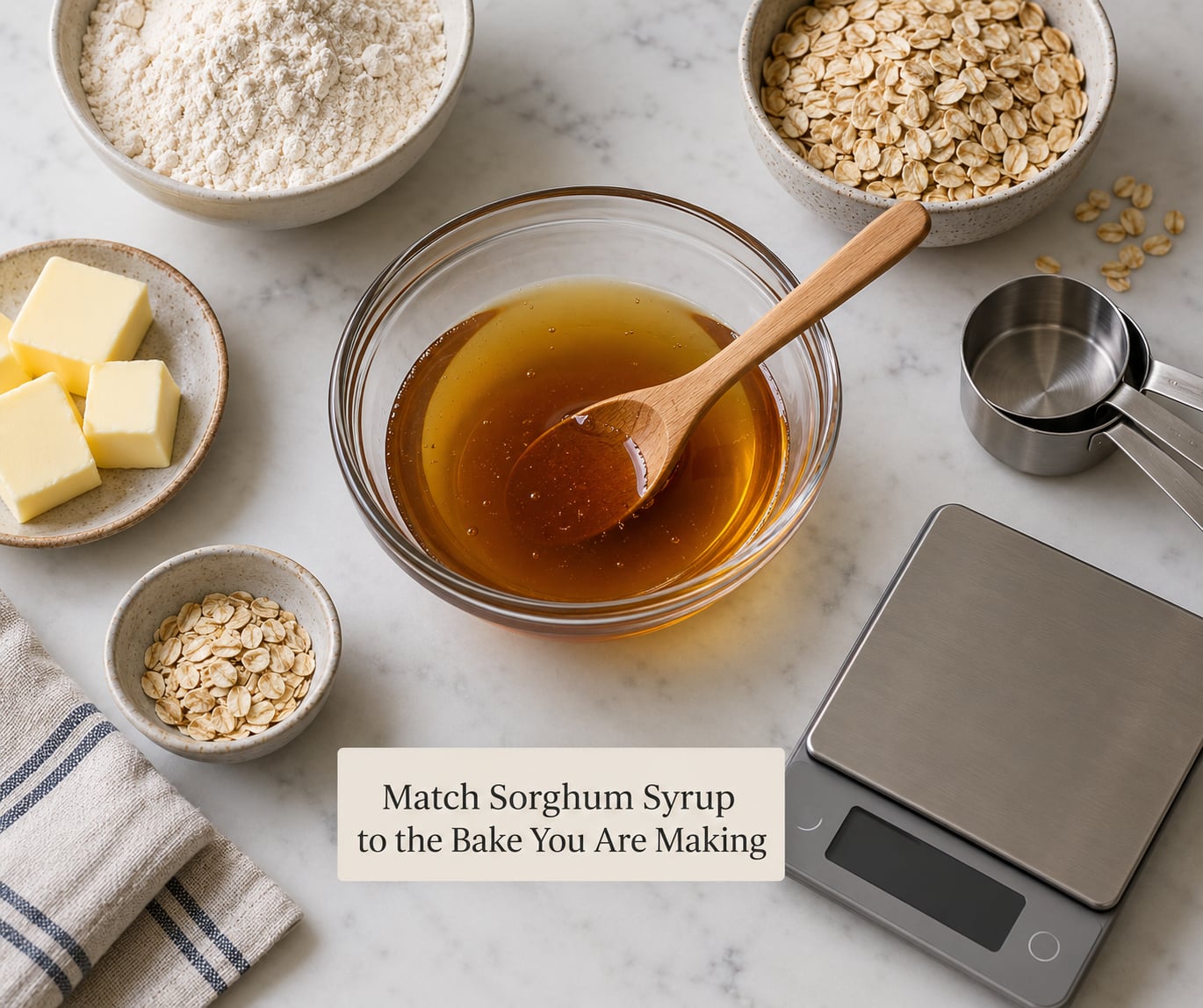
Sorghum syrup works in cookies, cakes, quick breads, muffins, pies and granola bars, and each one uses a different part of its flavor. Pick your bake first, then decide how much of the recipe to convert.
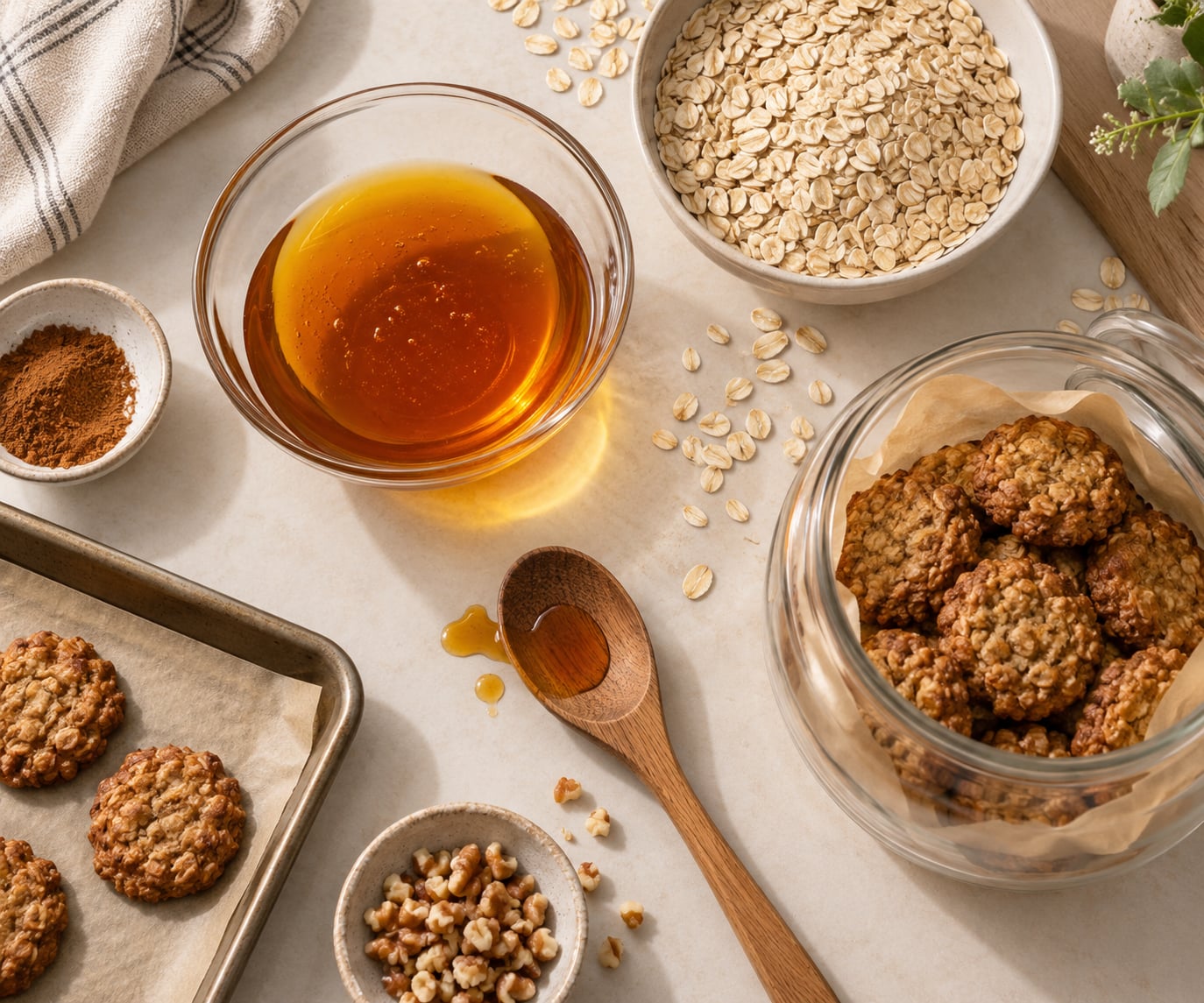
- Cookies. Gingerbread, gingersnaps, spice cookies and oatmeal cookies all benefit. The syrup gives a soft, slightly chewy center and a darker top edge.
- Cakes and cupcakes. Chocolate cake, spice cake and a syrup stack cake all work. Expect a darker crumb and a faint caramel note.
- Quick breads and muffins. Banana bread, cornbread and buttermilk muffins take it well because the batter is already moist.
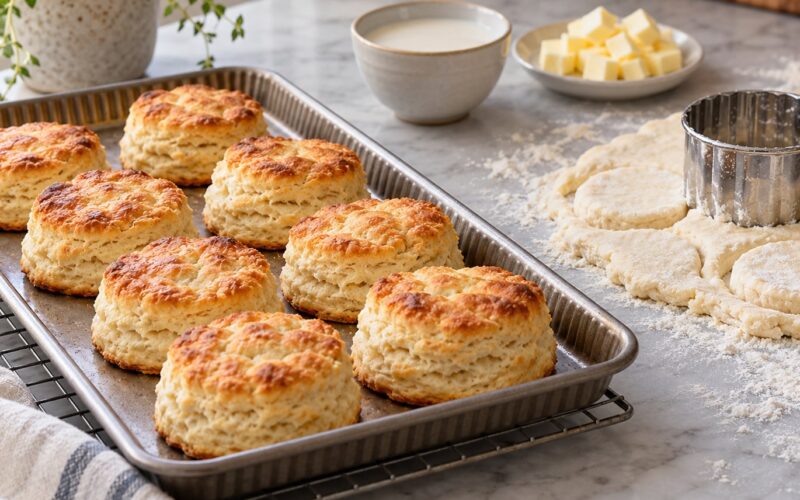
- Biscuits and scones. Cream softened butter with 1/4 cup syrup until smooth, then proceed as written. It seasons the dough from the inside.
- Pies and tarts. Pecan pie filling takes a straight 1:1 swap for light molasses. Cane syrup works the same way, which is why plenty of Southern bakers reach for either one.
- Granola bars and oat clusters. Boil the syrup with a splash of water and a pinch of salt until it coats a spoon, then toss with the dry ingredients. It sets into a brittle, fudge-like binder.
- Fruit desserts and cobblers. Drizzle over apple crisp, or mix a few spoonfuls into the topping sugar.
Where sorghum syrup is weaker is delicate meringue pies and sugar cookies that rely on crisp edges, since it slows crystallization and can push cookies to spread. That is a manageable problem once you know where it comes from.
2. How to Use Sorghum Syrup in Place of Sugar Without Ruining Texture
Most sugar swaps are 1:1 by volume, with one adjustment per row that matters. The table below covers the common ones.
| What it replaces | Amount to use | What to watch |
|---|---|---|
| Granulated sugar | 1 to 1 | Slightly sweeter and moister; drop 10 percent if you want the sorghum flavor forward |
| Light molasses | 1 to 1 | Milder and less bitter; add a spice if the flavor disappears |
| Dark molasses or blackstrap | 3/4 cup syrup plus 1 tablespoon molasses | Keeps the depth without the harsh edge |
| Honey | 1 to 1 by weight | Honey has more water, so syrup can make the bake slightly firmer |
| Maple syrup | 1 to 1 | Swap in the reverse direction if the recipe is a maple cake |
| Corn syrup | 1 to 1 | Sorghum browns faster, so watch the color near the end |
| Brown sugar | 3/4 cup syrup plus 1 tablespoon packed brown sugar per cup | The brown sugar keeps the molasses flavor and the crumb texture |
| Cake recipe with no liquid | 1 to 1, then subtract 2 tablespoons of milk or buttermilk | Prevents a heavy, gummy crumb |
One row deserves its own explanation. You can make brown sugar from scratch by mixing about 3/4 cup sorghum syrup with 1 tablespoon of brown sugar, then letting it sit until the sugar dissolves. That blend also softens brown sugar that has hardened in the pantry, which happens more often in humid summers than people expect.
A useful rule for the whole table: sorghum syrup is about as sweet as light molasses, so a straight 1:1 swap rarely makes anything cloying. The people who complain that the results are too sweet are usually converting a recipe that already had honey or corn syrup in it, and adding sorghum on top of that. One sweetener per recipe is plenty.
3. Adjust the Liquid When the Batter Turns Sticky
If your batter looks heavy, pulls into a stiff paste or barely pours, subtract liquid before you add flour. Start by taking out 2 tablespoons of milk, buttermilk, water or egg per cup of sorghum syrup you added, mix again, and look at the batter.
The right texture for most cakes and muffins is a thick ribbon that falls off the spoon and leaves a soft peak that levels out after a few seconds. For cookies, the dough should hold together when you pinch it but still break at the edge.
Make a small test batch if you are nervous, and this is the one place a test batch earns its keep. A single cupcake or one cookie from a corner of the sheet tells you in ten minutes whether the ratio is right, instead of discovering a heavy loaf an hour later.
Do not cut liquid in recipes with a lot of fat or an existing syrup, such as a glaze or a bourbon pecan filling. Those are already moist, and trimming liquid there can make the filling stiff enough to slide off the pie.
4. Balance the Flavor and Browning
Sorghum syrup tastes toasted and buttery with a faint sour edge, and it browns faster than white sugar because it caramelizes at a lower temperature. That means two things: pair it with spice, and pull the oven down a notch.
Warm spices are the natural match. Cinnamon, ginger, cloves, nutmeg and black pepper all push the syrup flavor forward instead of letting it vanish into brown butter. Apple, pear, banana and sweet potato work the same way. With cocoa and dark chocolate, the syrup reads as caramel and stops tasting grainy. Rye flour, pecans, walnuts and bourbon lean into it too, which is why it works so well in a bourbon pecan pie.
Drop the baking temperature by 25 degrees for anything that browns on top, and start checking earlier than the recipe says. Cookies go from gold to scorched in about two minutes near the end.
If the flavor comes out mild and you want the old-fashioned depth, two moves work better than reaching for more syrup. Mix in a tablespoon of molasses for every cup of sorghum, or cut the other sugar in the recipe by two tablespoons and add a pinch of cinnamon and ginger. This is also the fix for the complaint I hear most: people swap a full cup of molasses for a full cup of sorghum and then wonder why it tastes like nothing happened. The 1:1 rule holds for light molasses, not for the dark stuff.
5. Bake and Check Doneness
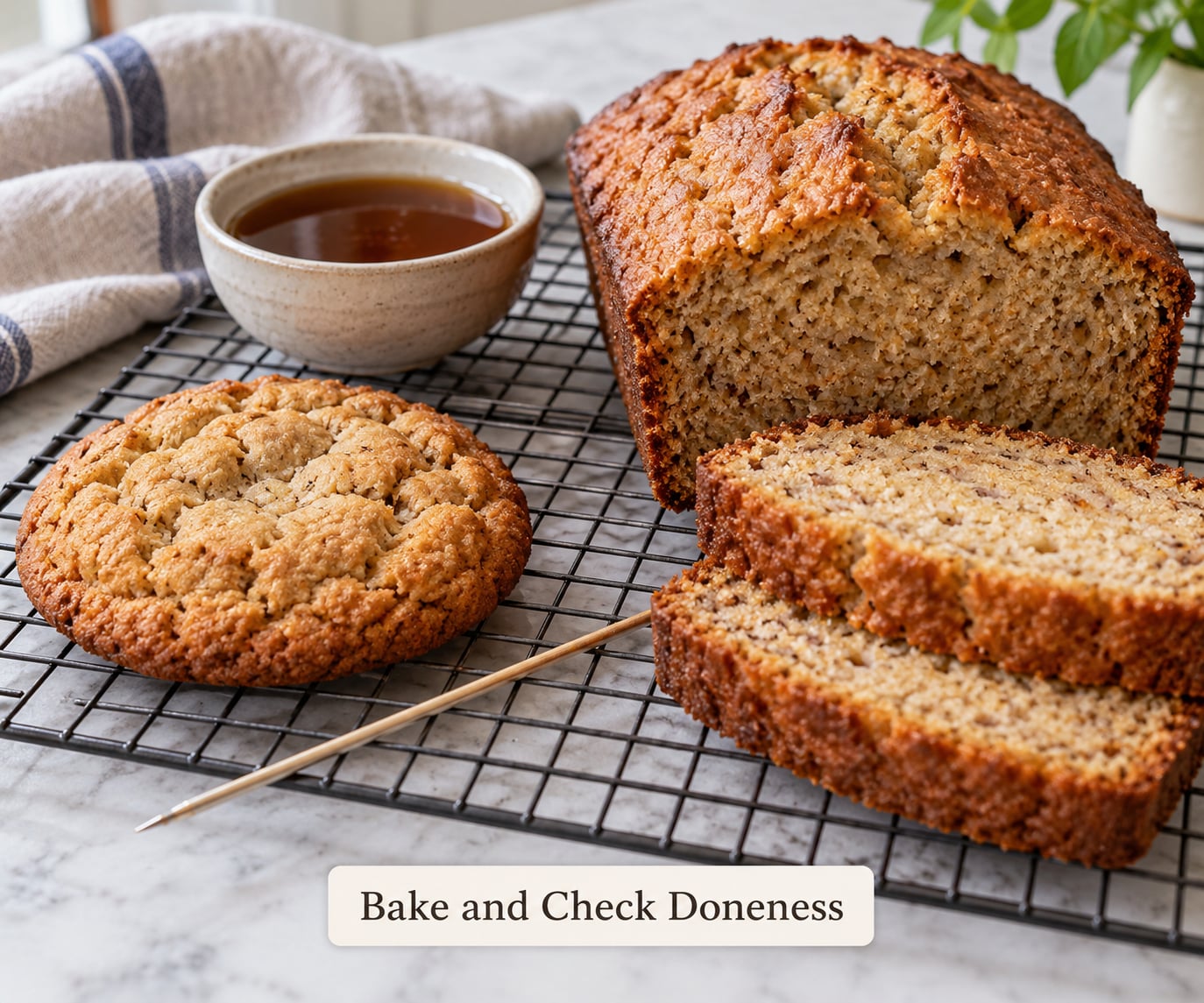
Sorghum syrup slows evaporation a little, so a cake or loaf may look done before the inside has caught up. A tester or thin skewer inserted in the deepest part should come out with no wet batter clinging to it. A couple of moist crumbs are fine; a shiny wet streak means another five to ten minutes.
If the top is dark and the tester still shows wet crumbs, tent the loaf loosely with foil rather than lowering the temperature. That keeps the crumb from setting while the heat stops browning the crust.
Let cakes cool in the pan for the full time the recipe calls for, usually ten to fifteen minutes, then turn out onto a rack. Quick breads and layer cakes both crumble if you cut them warm, and sorghum syrup makes the crumb a little more tender, so it crumbles more, not less.
Common Mistakes
Almost every failed sorghum bake traces back to one of six mistakes. Fix them as they come up and the syrup behaves like any other good sweetener.
Swapping by volume without weighing
Syrup clings to the measuring cup, so you can lose a tablespoon or more per measure. Weigh it instead. If you have no scale, fill the cup, let it drain ten seconds, and refill the low spot rather than scraping the top level.
Leaving the liquid in the recipe
Sorghum syrup is around 20 percent water, so a cake batter gets wetter twice over. Take out 2 tablespoons of milk or buttermilk per cup of syrup. The extra tip: reduce the liquid before you reduce the flour, since flour changes the crumb in ways you cannot undo.
Using it as the only sweetener in a molasses recipe
A straight 1:1 swap for blackstrap leaves a dessert that tastes thin. Use 3/4 cup sorghum plus a tablespoon of molasses per cup. The molasses brings the mineral, bitter edge back without the color going black.
Expecting pure sweetness
There is none. If you want the classic taste of the recipe, cut the other sugar and add spice rather than pouring in more syrup. In a spice cookie, 1/2 teaspoon cinnamon and 1/2 teaspoon ginger per cup of syrup does more than doubling the syrup.
Crowding the sheet
Sorghum cookies spread a little more than sugar cookies because they hold onto moisture longer. Give each cookie two inches of space and bake on a room-temperature or lightly warmed sheet. A cold sheet plus a sugary dough gives you flat, merged cookies.
Cutting too early
The syrup keeps the crumb tender, so it needs the full cooling time and then some. Wait the full pan time for quick breads and layer cakes, and let cookies set on the sheet for two minutes before moving them. Stacking warm cookies steams the bottoms and softens them further.
Frequently Asked Questions
Can I use sorghum syrup instead of brown sugar?
Yes, with one adjustment. For every cup of brown sugar, use about 3/4 cup sorghum syrup plus 1 tablespoon of packed brown sugar. The small amount of real brown sugar keeps the molasses flavor and the crumb texture that plain syrup alone will not deliver. You can also use this blend to soften brown sugar that has hardened in the pantry.
How much sorghum syrup should I use for sugar in cookies?
Use equal amounts by volume, so 1 cup of granulated sugar becomes 1 cup of sorghum syrup. In cookie dough that already contains brown sugar or honey, convert only part of the sugar, usually half, since those sweeteners bring their own moisture. Drop the baking temperature by 25 degrees because the syrup browns faster, and give the cookies extra space on the sheet.
Do I need to reduce other liquids when using sorghum syrup?
Usually in cakes, muffins and quick breads. Remove about 2 tablespoons of milk, buttermilk, water or egg for each cup of sorghum syrup you add, then check the batter before mixing in any flour. Cookies, pies and glazes rarely need it because those doughs and fillings are already moist, and trimming liquid there can make a filling too stiff to spread.
Is sorghum syrup suitable for gluten-free baking?
Yes. Sorghum syrup is a liquid sweetener with no wheat protein in it, so it works in gluten-free bakes without any change to the recipe. It pairs especially well with sorghum flour, which can taste slightly bitter on its own. Sorghum syrup is a different product from sorghum flour, and people often mean the flour when they search for a sorghum substitute.
Will sorghum syrup make my cookies or cakes too soft?
It can make them softer, which is usually a bonus in cookies and quick breads. If the crumb turns gummy, you added too much syrup or left too much milk in. Reduce the next batch by 2 tablespoons of liquid per cup of syrup. Cakes are less forgiving than cookies, so test a single cupcake first when you are converting an unfamiliar recipe.
How should I store baked goods made with sorghum syrup?
Cool the bake completely, then store it in an airtight container at room temperature. Cookies and bars hold around three days that way, and refrigerated in a sealed container they stay good about a week. Wrapped slices of cake or quick bread can be frozen for up to three months and thawed on the counter. Cool fully first, because trapped steam makes the crust soggy.
What to Do First
Pick one forgiving bake and convert it fully: gingersnaps, a banana quick bread or a pan of cornbread all show the flavor without much risk. Weigh the syrup, cut 2 tablespoons of liquid if the batter looks heavy, drop the oven by 25 degrees, and let the smell of toasted caramel tell you when it is right.
Once you have the swap down, keep the syrup for biscuits and a glaze, and it will stop feeling like a jar you bought by accident.