You can peel peaches without a blanching mess, and for most home cooks the no-water methods work better than boiling them. Broil halved peaches cut side down at 400F for two to three minutes until the skins wrinkle and slip off, soak the fruit in hot water and lift the skin with a spoon, or pull it away with your fingers when the peaches are very ripe.
Blanching earns its reputation when you are working through a basket of fruit, and even then it leaves the flesh a little waterlogged. The reason it feels like a chore for three peaches is mostly scale: a tall pot, tongs, a cooling bowl, a towel, and a sink full of steam for fruit that took ten seconds to pick.
Ripeness decides which method you reach for. A ripe peach gives a little when you press it near the stem and smells like peaches there; a hard, silent one will fight every method on this page.
Table of Contents
- What You Need to Peel Peaches Without a Blanching Mess
- Step-by-Step
- How to Broil Peaches Without a Pot of Water
- How to Blanch Peaches Without Making a Mess
- Peel Peaches with Warm Water Instead
- Peel Peaches with a Spoon
- When You Can Skip Peeling Entirely
- Common Mistakes
- Blanching too long
- Trying to peel hard, silent fruit
- Peeling while the fruit is hot and wet
- Cutting the X too deep
- Peeling a whole batch at once
- Setting up for a preserving batch when you have four peaches
- Forgetting the pit after peeling
- Frequently Asked Questions
- Can you peel peaches without blanching them?
- How long should peaches be blanched before peeling?
- Why are my peaches mushy after blanching?
- How do I peel peaches that are not ripe enough to blanch?
- Can peeled peaches be frozen for later use?
- What is the easiest way to peel a large batch of peaches?
- Conclusion
What You Need to Peel Peaches Without a Blanching Mess
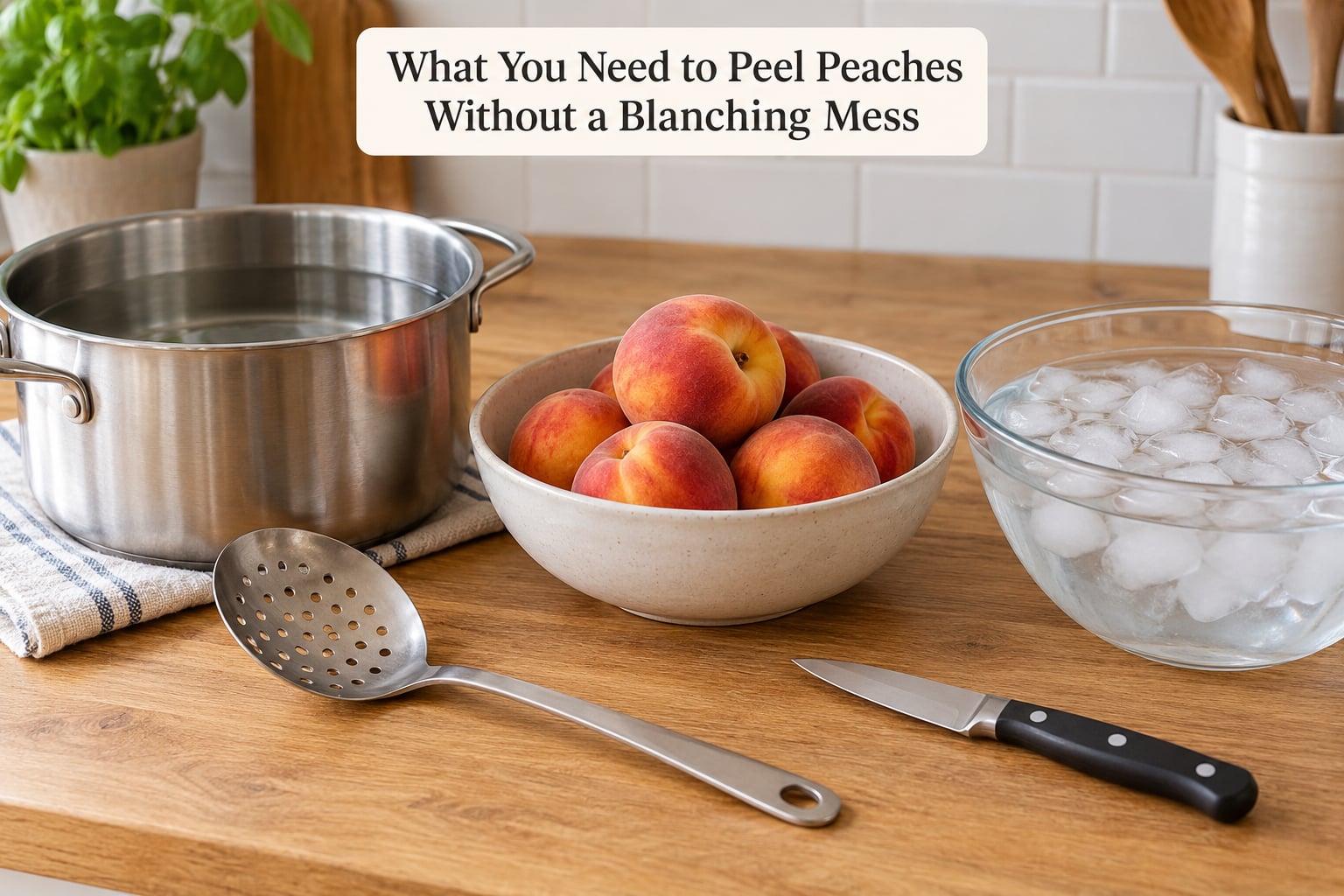
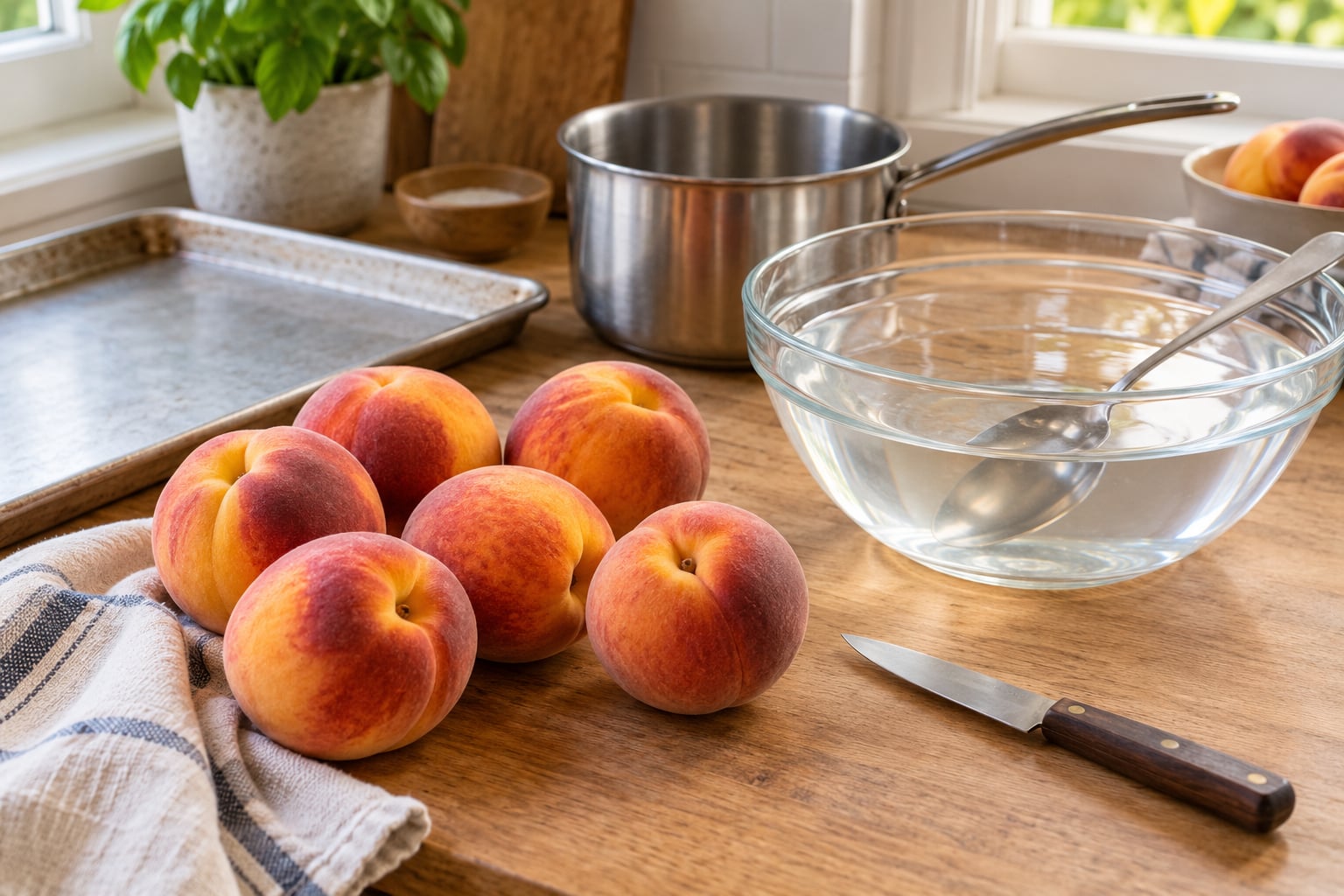
You need less equipment than a canning guide implies, and you should set up only the tools for the method you picked. Pulling the whole pantry out for a bowl of fruit is how a quick job turns into a project.
- Broil method: a rimmed baking sheet, parchment or a silicone mat, tongs or clean dry hands, and a broiler or toaster oven.
- Warm water method: a wide bowl deep enough to submerge one peach at a time, a kettle or a small pot to heat water, a spoon, and a paring knife for the seam.
- Spoon method: the bowl and spoon above, plus a paring knife with a 3 to 4 inch blade and a tip for nicking the skin.
- Blanching, when you have a real batch: a tall pot with a few inches of water, a saucepan to heat it, tongs, a second bowl or colander for cooling, a clean towel, and one big bowl for the finished fruit.
Choose freestone peaches when you can. Their flesh releases from the stone, so the pit lifts out clean and the skin comes off in fewer, larger pieces; clingstone fruit grips the pit and tends to tear near it no matter how you peel.
Step-by-Step
Here is how the three methods compare before you commit to one. Each one keeps the fruit under five minutes of hands-on work.
| Method | Time | Tools | Cleanup | Texture | Best for |
|---|---|---|---|---|---|
| Broil | 2-3 minutes | Baking sheet, broiler | One pan | Firm | One peach or a small batch |
| Warm water soak | 2-3 minutes soak | Bowl, kettle, spoon | One bowl and a cup | Firm to soft | Ripe peaches, pies, freezing |
| Spoon | 1-2 minutes | Spoon, paring knife | One bowl | Soft | Very ripe, fragrant fruit |
| Blanch and shock | 30-45 seconds in water | Tall pot, tongs, bowl | Pot, tongs, bowl | Softest of the four | Large batches for canning |
| Skip peeling | 0 | Knife and board | Nothing extra | Best of all | Cobblers, salsa, grilling |
How to Broil Peaches Without a Pot of Water
Broiling is the least messy of the three and the fastest for a single peach or a bowlful, since the only thing to wash afterward is one pan.
- Set the broiler to high and move the rack about 4 inches from the element. Line a rimmed baking sheet with parchment or a silicone mat so the sugars do not bake onto the metal.
- Halve the peaches and lay them cut side down. A stone left in the half blocks the heat, and the skin will stick to it.
- Broil for two to three minutes and watch the whole time. The skins blister and wrinkle, and they pull back at the cut edge when they are done.
- Rest the tray a minute so the fruit stops steaming, then press a skin with a fingertip. If it slides, it is ready; if it does not, give it another 30 seconds.
- Lift each half and peel from the cut edge outward with your thumb. The flesh underneath stays firm, which is why this method beats blanching for pies.
Broiling dries the fruit slightly, so add the peach to a pie or cobbler right away rather than letting it sit and lose the heat.
How to Blanch Peaches Without Making a Mess
Blanching works because heat breaks the thin bond between skin and flesh. Thirty seconds does it for a ripe peach, and the gap between thirty seconds and two full minutes is the gap between fruit that holds its shape and fruit you scoop into a pie.
- Score a shallow X in the skin at the base of each peach, cutting through the skin only. A paring knife held almost flat takes a couple of seconds per peach.
- Fill a tall pot about two inches deep with water and bring it to a boil. The deeper the water, the more of it boils over, so this is where you get the mess control for free.
- Lower in three or four peaches with tongs. Do not drop them, which is what sends water across the burner.
- Count 30 to 45 seconds for a ripe peach, up to 60 for a large firm one. Watch the seam of the X, which lifts and curls back on its own.
- Move them straight into a bowl of cold running water, or a bowl set in the sink with the tap running over the fruit. The shock stops the cooking, and it needs no second pot of ice.
- Pat the peaches dry on a towel before you touch them. Wet fruit and wet fingers is how the skin tears instead of sliding.
- Pull the skin off starting at the X, then roll the rest of it away with your thumb.
If the skins cling, put the fruit back in the boiling water for another 20 seconds rather than digging with a knife. And if the peach is a clingstone, expect a little flesh to stay behind near the pit; that is the variety, not your technique.
A few habits keep this job clean: blanch three or four fruit at a time instead of filling the pot, keep the towel within arm’s reach of the sink so drips land on it, and pour the cooling water down the drain while the fruit is still warm. If you are blanching a season’s worth, work in small batches and use acidulated water to hold the peeled fruit, which stops the browning that gets worse the longer the batch sits.
Peel Peaches with Warm Water Instead
Warm water is the method for ripe peaches you are not about to can. It loosens the skin without cooking the flesh, and the fruit comes out closer to its picked texture.
- Heat water in a kettle until it is steaming and just off the boil, roughly 195F. Let it stand for a minute before you use it.
- Pour the water into a wide bowl and lower in one or two peaches so they sit under the surface.
- Soak for 2 to 3 minutes. After two minutes, test the skin at the base with a fingernail; if it lifts easily, it is ready.
- Score a small X in the softened skin with a paring knife tip.
- Pull the skin at the X and slide it off with your thumb or the back of a spoon. The skin comes away in sheets, usually with no flesh attached.
- Drain and use the fruit right away, or hold it in water with a squeeze of lemon added.
This is the method to reach for when the fruit is fragrant and gives under your thumb, since ripe skin lets go on its own. It is gentler than blanching, which makes it a good fit for pies, cobblers, and freezing where you want slices that hold.
Peel Peaches with a Spoon
A spoon gets the skin off very ripe fruit without any heat at all, which is useful when the peaches are soft enough that blanching would turn them to paste.
- Rinse the peach and slice it in half around the stone. Twist the halves apart, lift out the pit, and take a spoon or your thumb to any flesh clinging to it.
- Score a shallow X in the skin on the cut face, or score a line around the widest part of the half.
- Soak the halves in hot water for 1 to 2 minutes, or hold them over a steamer for 30 seconds. Very ripe fruit often needs only the warm water, not the heat.
- Slide the bowl of the spoon under the edge of the skin and scrape it away in short strokes, following the curve of the fruit.
- Turn the half over, dig the spoon under the loosened skin at the base, and peel toward the far end. Keep the blade shallow; you want the skin off, not a layer of peach with it.
Once the skin starts moving, you can usually finish with your fingers. Thin-skinned regional peaches go further: canners in one Florida forum thread described simply halving them, pulling the skin off with their fingers, and chopping, with no blanching step at all.
When You Can Skip Peeling Entirely
Most peach recipes do not need a bare peach. Cobblers, crisps, and pies bake long enough to soften the skin, and grilling or salsa wants that skin for texture. Peeling earns its effort for jam, preserves, canned fruit, smoothies, and freezing sliced fruit.
Common Mistakes
Almost every disappointing bowl of peaches traces back to one of these.
Blanching too long
Sixty seconds is already long for a ripe peach, and two minutes cooks the fruit. Watch the X curl instead of setting a timer and walking away.
Trying to peel hard, silent fruit
Underripe peaches will not peel cleanly by any method; the skin tears and takes flesh with it. Leave them on the counter for two or three days, or use them for cobbler where nobody will notice.
Peeling while the fruit is hot and wet
Cool and dry first. Damp skin stretches instead of releasing, and hot fruit is uncomfortable to hold. A paper towel under the fruit helps with grip.
Cutting the X too deep
The score only needs to reach the skin. Cut into the flesh and you have opened a channel for water and for the skin to tear along.
Peeling a whole batch at once
Peel in small batches and drop finished fruit into water with about two tablespoons of lemon juice or a teaspoon of citric acid per gallon. Cut flesh browns in minutes, and it gets faster as the pile grows.
Setting up for a preserving batch when you have four peaches
That is the whole problem this article solves. Use a bowl and a spoon, not a pot and tongs.
Forgetting the pit after peeling
Halve the peach at the seam and twist; freestone halves come apart. Then scoop out the stone and check the crease, because a loose pit hides there often enough to find at the table.
Frequently Asked Questions
Can you peel peaches without blanching them?
Yes. Broil halved peaches cut side down at 400F for two to three minutes until the skins wrinkle, soak ripe fruit in hot water for two to three minutes and lift the skin with a spoon, or pull it off by hand when the fruit is very ripe. Blanching is only necessary for large batches going into jars.
How long should peaches be blanched before peeling?
Thirty to 45 seconds for a ripe peach in near-boiling water, and up to a full minute for a large or slightly firm one. Score an X in the skin first so you can see the edges lift. Anything past about 90 seconds starts cooking the flesh instead of just the skin.
Why are my peaches mushy after blanching?
Usually time and water. Longer blanching breaks down the flesh, and fruit that sits in the cooling water absorbs it, so drain and dry the peaches right away. If you want slices that hold their shape for a pie, use the warm water soak instead; it loosens the skin without cooking the fruit.
How do I peel peaches that are not ripe enough to blanch?
Underripe fruit will not peel cleanly by any method, so let it ripen on the counter for two or three days until it gives slightly and smells sweet at the stem. If you cannot wait, peel with a vegetable peeler or paring knife, expect to take some flesh with the skin, or skip peeling and use the fruit skin-on.
Can peeled peaches be frozen for later use?
Yes. Slice or halve the peeled fruit, spread the pieces on a tray so they freeze separately, then bag them up. Toss with a little lemon or honey to slow browning. Frozen peeled peaches are softer than fresh, which works well for smoothies and cobblers but not for a salad.
What is the easiest way to peel a large batch of peaches?
Blanch and shock is still the fastest route at scale, but keep it tidy: two inches of water in a tall pot so it cannot boil over, three or four fruit per batch, 30 to 45 seconds, then straight into cold running water. Pat the fruit dry before peeling, and hold peeled pieces in acidulated water until you need them.
Conclusion
If you have a handful of ripe peaches, skip the pot. Broil them cut side down at 400F for two to three minutes, cool for a minute, and the skins will slide off under your thumb with the flesh still firm underneath. That one method, a baking sheet, and a bowl of cold water handle almost everything a home cook does with peaches.
Reserve blanching for the weekend you are filling jars, and even then keep the water shallow, the batches small, and the time short. And before you peel a single one, ask whether the recipe needs it: most cobblers and salsas do not.