Ramps and wild onions cook fast once they are clean and dry. Trim the roots and any papery outer skin, wash the bulbs under cool running water, pat them dry, slice the bulbs thin, and cook them in a hot pan with a little fat over medium heat until they soften, about 6 to 8 minutes. Add the chopped greens for the final 1 to 2 minutes and season at the end. The whole thing takes about 15 minutes and needs a skillet, a knife, and a bowl of cold water.
The part that trips people up is not the heat. It is the water. Ramp bulbs come out of the ground holding clay, and a bulb that goes into the pan wet steams instead of searing and turns gray and limp by the time you serve it.
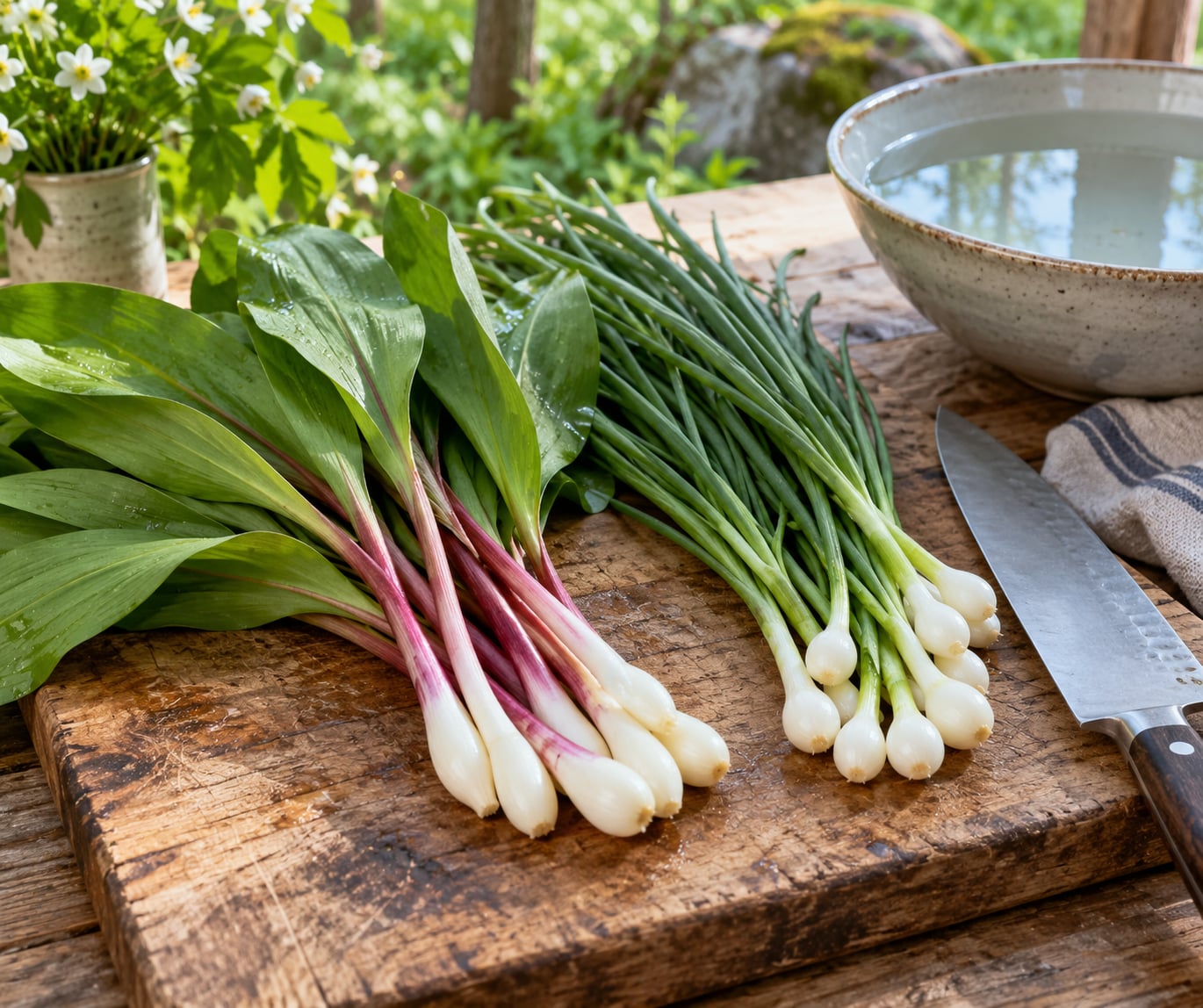
A few words before we start, since the names get tangled. A ramp (Allium tricoccum, also called wild leek) is a spring ephemeral with two broad flat leaves, a slender white bulb, and a pink or burgundy stem base. A true wild onion is one of several other Allium species with narrow hollow round leaves and a rounder bulb. Both cook the same way. So do walking onions, which are a third thing again.
Table of Contents
- What You Need
- Choosing between ramps and wild onions
- Which parts to use
- The basic kit for each method
- Step-by-Step: How to Cook Ramps and Wild Onions
- Step 1: Trim the roots and the loose skins
- Step 2: Wash the bulbs thoroughly
- Step 3: Dry them completely
- Step 4: Slice the bulbs and chop the greens separately
- Step 5: How to cook ramps and wild onions in a skillet
- Step 6: Roast them instead
- Step 7: Grill them over a flame
- Step 8: Simmer them into soup
- Common Mistakes
- Muddy greens
- Cooking wet plants
- Soggy texture
- Bitterness and lost aroma
- Tough, fibrous stems
- Picking the wrong plant
- Frequently Asked Questions
- Are ramps and wild onions the same thing?
- What part of ramps and wild onions can you eat?
- How long does it take to cook ramps and wild onions?
- Can ramps and wild onions be frozen?
- Is it okay to eat ramps raw?
- What can be mistaken for wild onions?
- The Short Version for Next Time
What You Need
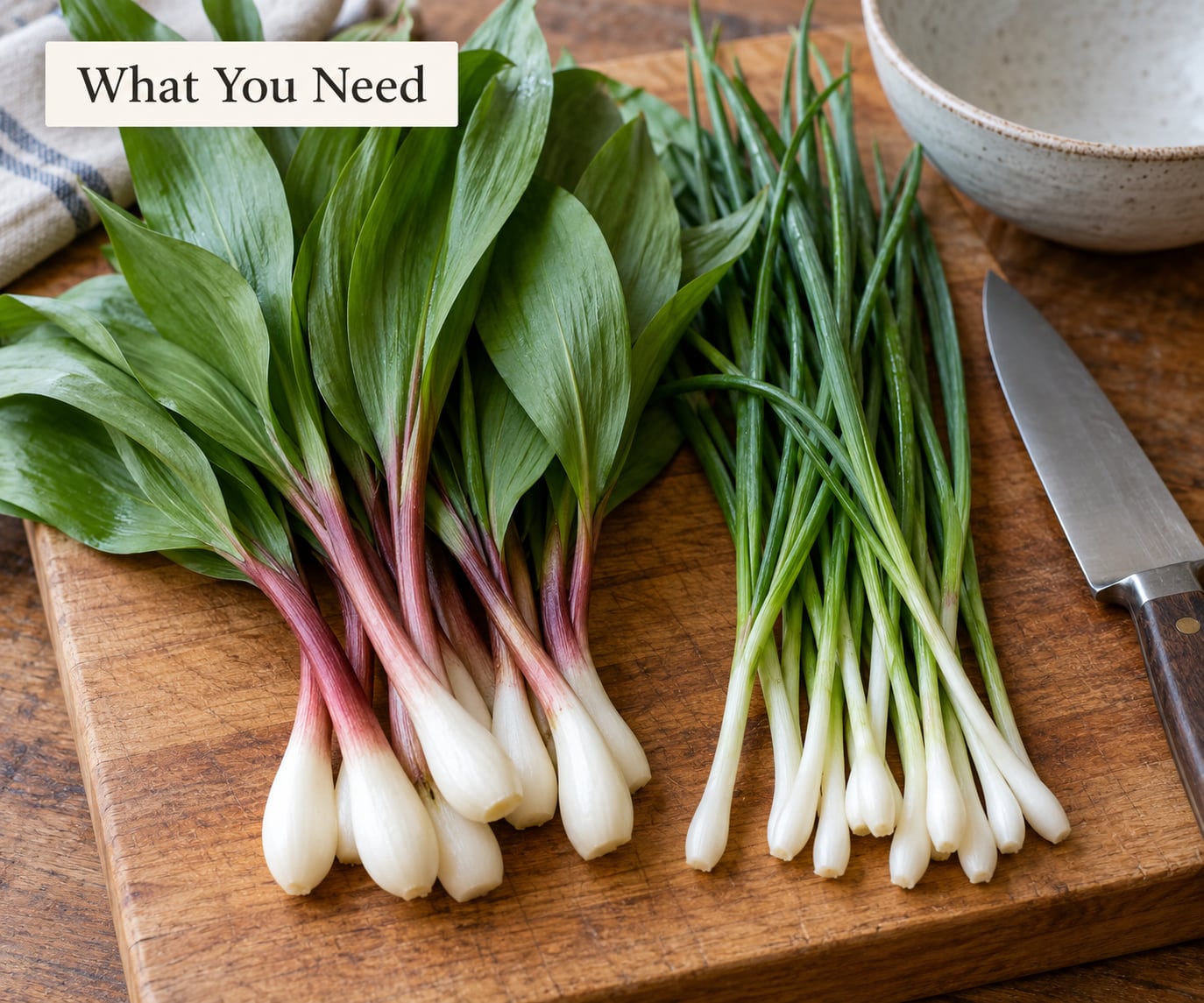
You need very little. A sharp knife, a large skillet, a bowl of cool water, a colander, and a clean towel. That covers sautéing, roasting, grilling, and simmering.
Choosing between ramps and wild onions
Use whichever you have. Ramp leaves are wider and hold more sauce; wild onion greens are hollow tubes that blister and char nicely on a grill. If you are picking, crush a leaf and smell it first. A sharp onion-garlic scent confirms an allium. No scent, no harvest.
Ramps usually grow in colonies under hardwood forest canopy, often on north-facing slopes. Wild onions spread from bulbs and turn up in lawns, edges, and old fields. Check whether the ground has been sprayed or fertilized recently before you pick anything.
Which parts to use
The whole trimmed plant is edible. That means the bulbs, the pale stem between bulb and leaf, and the green tops. Discard the stringy roots and any tough outer layer that slides off easily.
The bulb is milder and denser than the leaf. The green top carries most of the raw bite and the aroma that fades with long cooking.
The basic kit for each method
- Sauté: skillet, olive oil or butter, a splash of water, salt, pepper, sliced garlic.
- Roast: sheet pan, 425°F oven, a little oil, flaky salt for the top.
- Grill: cast iron or a grate, medium-hot coals, a little oil to stop sticking.
- Soup or simmer: pot, stock, potato or cream if you want body, a lid.
Step-by-Step: How to Cook Ramps and Wild Onions
Step 1: Trim the roots and the loose skins
Use the tip of your knife to scrape the roots off the base of each bulb, then pull off any outer layer that comes away with a fingernail. Do not peel a ramp the way you peel a cultivated onion. Those skins are thin and tear easily, and forcing them off takes the tender bulb with them.
You can tell the trim worked when the base is clean and pale with no hairlike roots attached.
Step 2: Wash the bulbs thoroughly
Fill a bowl with cool water, drop in a handful of ramps, and swish them around for 20 to 30 seconds. Let them settle, then lift them out and rub each bulb between your fingers under the tap until no grit remains. Two short washes beat one long soak, which just drives water deeper into the layers.
Watch the water in the bowl. When it runs clear after the second pass, you are done.
Step 3: Dry them completely
Spin or shake out the water, lay the ramps on a clean towel, and pat the bulbs dry. Greens take longer than bulbs, so give them a few extra minutes. Water left in the stems will hit the pan as steam and keep the greens from browning.
Step 4: Slice the bulbs and chop the greens separately
Cut the bulbs into thin coins, about a quarter inch thick, and chop the greens into pieces roughly a half inch long. Keep them in separate piles. Bulbs and greens go into the pan at different times because they cook at different rates.
Step 5: How to cook ramps and wild onions in a skillet
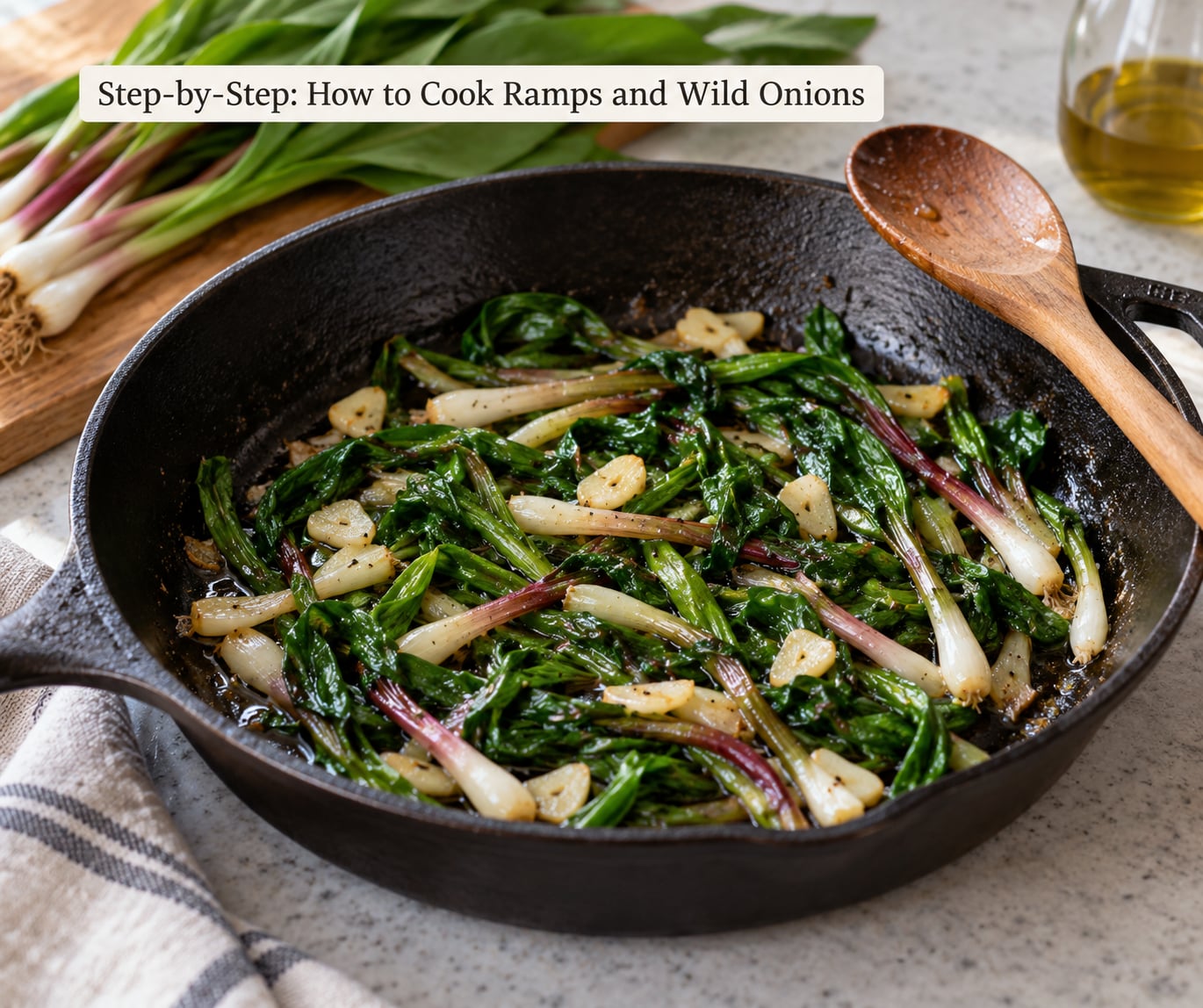
Heat a tablespoon of oil in a skillet over medium-high until it shimmers, then add the sliced bulbs in a single layer. Do not crowd it. Cook without moving them for about 3 minutes, then stir and continue until they take on light color, roughly 6 to 8 minutes total.
Add a splash of water and the chopped greens. Let the greens collapse, about 1 to 2 minutes, then season with salt and pepper and pull the pan off the heat. Seasoning at the end keeps the aroma; salting at the start and cooking hard draws out water and dulls the flavor.
You know they are done when the bulbs bend without snapping and the greens are wilted but still bright green rather than olive drab.
Step 6: Roast them instead
Heat the oven to 425°F. Toss the bulbs and greens with a little oil and salt on a sheet pan in one layer, and roast for 12 to 15 minutes. The bulbs should be soft with browned edges.
For deeper caramelization, keep the greens out for the first 8 minutes, add them on top, and give everything another 6 to 8 minutes. Dry heat does this without the steaming problem of a wet pan.
Step 7: Grill them over a flame
Coat the bulbs in a little oil and lay them on a medium-hot grate. Turn every 2 to 3 minutes for about 10 minutes total, until the cut faces are browned and the layers separate a little. Wild onion greens blister on their own and need only about 4 minutes.
Salt them off the grill. Salt on the grill turns the sugars bitter in under a minute.
Step 8: Simmer them into soup
Cover sliced bulbs with broth or water, bring to a simmer, and cook for 12 to 15 minutes until completely soft. Add the greens for the last 3 minutes so they keep some color. A potato added at the start thickens the broth, and cream or a handful of white beans turns it into something closer to a bisque.
Ramp soup is good cold the next day, which is one reason it has survived as much as it has.
Common Mistakes
Almost every disappointing plate of ramps traces back to one of six things. They are all fixable before you turn on the stove.
Muddy greens
Dirt hides in the leaf folds and in the layers of the bulb. Swishing in a bowl of water and rinsing each bulb by hand is the fix. Skip the soaking; long soaks let the bulbs take on more water than they can shed.
Cooking wet plants
Wet bulbs hit a hot pan, release water, and simmer in their own liquid. That is the whole reason for the drying step. A towel and five minutes of patience make the difference between searing and steaming.
Soggy texture
Crowding the pan drops the temperature and traps steam. If the greens never hit the hot surface, they wilt slowly and turn soft and gray. Use a wider skillet, or cook in two batches.
Bitterness and lost aroma
High heat plus a long cook is what turns ramps bitter and dulls the garlic-onion smell. Keep the skillet at medium-high for the quick sear and finish the greens fast, and stop while the leaves are still visibly green. If you are braising them, add butter or cream at the end, which rounds out the edge.
Tough, fibrous stems
The thick pale stem takes longer than the leaves. Slice stems thinner than you think necessary, or give them a head start of two to three minutes before the greens go in. Bulb slices cut thicker than a quarter inch will still be firm in the center after eight minutes in the pan.
Picking the wrong plant
Look-alikes grow in the same ground. Lily-of-the-valley, false hellebore, and jack-in-the-pulpit are the ones that cause the worry, and there are plenty of accounts on foraging forums of people finding a plant, guessing, and cooking it before anyone checked.
The rule that ends the guessing: crush it and smell it. A real allium hits you with onion and garlic. Anything that smells like nothing, like a cucumber, or like nothing at all does not belong in your skillet. Two leaves on a ramp, a pink or burgundy stem base, and an onion-garlic smell together give you a confident yes.
Frequently Asked Questions
Are ramps and wild onions the same thing?
Ramps and wild onions are related but not the same plant. A ramp, or wild leek, is Allium tricoccum: a spring ephemeral with two broad flat leaves, a slender white bulb, and often a pink or burgundy stem base. True wild onions are other Allium species with narrow hollow leaves and rounder bulbs. Both are edible and both take the same cooking methods, and ramps taste milder and sweeter than a leek.
What part of ramps and wild onions can you eat?
The whole trimmed plant is edible: the bulb, the pale stem above it, and the green tops. Discard the stringy roots and any loose papery outer skin that slides off without force. Wash everything thoroughly, since plants gathered outdoors carry soil from the bulb and grit held in the leaf folds. Avoid pulling plants from ground that was sprayed or fertilized in recent years.
How long does it take to cook ramps and wild onions?
Sautéed greens usually need only 3 to 7 minutes over medium heat, depending on how thick you slice the stems. Bulbs take longer, and cuts thicker than a quarter inch may need 8 to 12 minutes before the center softens. They are done when the greens are wilted but still bright green and the bulbs bend without snapping. Long, hot cooking is what makes ramps turn bitter and mushy.
Can ramps and wild onions be frozen?
Yes. Blanch the cleaned bulbs and stems in boiling water for 30 to 60 seconds, plunge them into ice water, drain well, and freeze in airtight portions. Freezing softens the texture, so thawed ramps work best in soups, sauces, eggs, and cooked dishes rather than as a crisp side. Ramp butter, pickled bulbs in cider vinegar, and ramp salt all hold their flavor far better than plain freezing.
Is it okay to eat ramps raw?
Raw ramps are good, with a sharp bite and a strong onion-garlic flavor that cooking softens. Thinly slice the bulbs and add them to salads, potato salad, eggs, or sliced fish such as trout or salmon. Just confirm the plant by crushing a leaf and smelling onion and garlic before you eat anything. Raw does not mean unidentified.
What can be mistaken for wild onions?
The troublesome look-alikes are lily-of-the-valley, false hellebore, and jack-in-the-pulpit, along with wild garlic and walking onions that people label ramp without being one. The difference shows in the smell: every true allium smells sharply of onion and garlic when crushed. Walking onion has a long tubular stem topped with small bulbils, and wild garlic has star-shaped flowers. If the smell is wrong, do not cook it.
The Short Version for Next Time
Get the water out. That single habit, from trimming the roots through drying the greens, decides whether your ramps taste garlicky and green or gray and dull.
Then remember the order: hot pan, sliced bulbs first, greens last, salt at the end. Knowing how to cook ramps and wild onions is mostly knowing when to stop, which is earlier than most recipes suggest.