Most salads don’t fail because of bad recipes. They fail in the last five minutes, when somebody tosses underseasoned leaves with bottled dressing and serves it in a bowl nobody wants to reach into. The fix is a handful of habits: salt every component on its own, balance acid against fat, build contrast between crisp and soft, and dress at the last possible second.
That is the whole answer, and it takes about 20 minutes of active work. The rest of this guide is the detail, what to put in the bowl, how much dressing per person, and how to rescue one that already turned to mush.
Table of Contents
- What You Need for a Salad People Actually Want Seconds Of
- Step-by-Step
- 1. Build a sturdy, flavorful salad base
- 2. Add contrast and substance
- 3. Make a dressing people want to taste
- 4. Toss at the right moment
- 5. Finish with fresh, bold details
- Common Mistakes
- Frequently Asked Questions
- How can I make a salad more interesting?
- Why does lettuce wilt when left in salad dressing?
- How can I fix a salty salad dressing?
- What is 10 things you can put in a salad for texture and flavor?
- How much dressing should I use per person for a salad?
- How do I make salad that stays crisp overnight for lunch?
- Conclusion
What You Need for a Salad People Actually Want Seconds Of
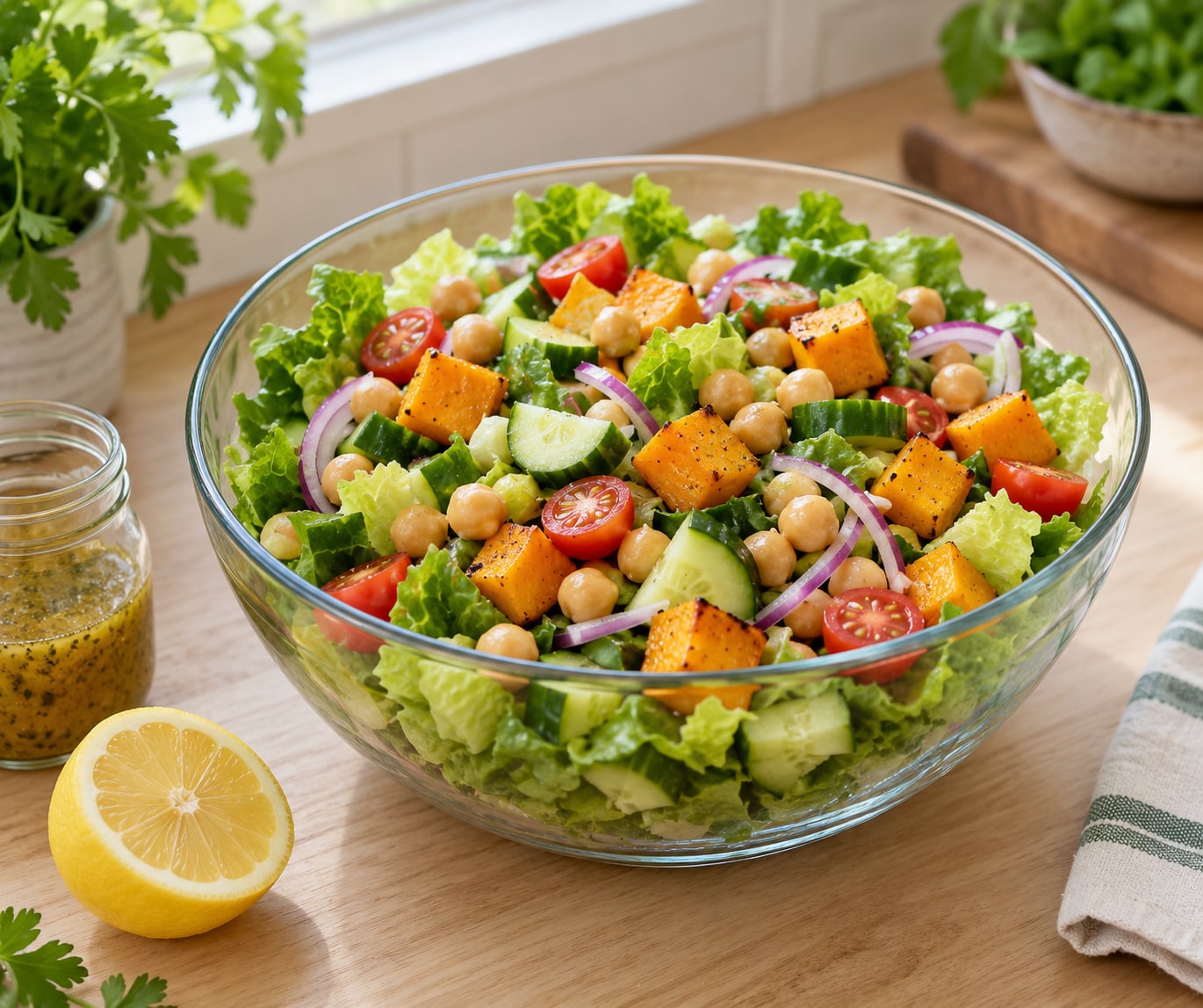
A crowd-pleasing salad isn’t a pile of leaves with ranch on top. It’s six components doing six different jobs, and if one is missing the bowl feels unfinished.
- A sturdy base. Romaine hearts, chopped romaine, green or purple cabbage, butterhead, or a mix of baby spinach and arugula. Tender leaves alone collapse under any weight.
- A crunch. Cucumber, celery, radish, bell pepper, cabbage, or crisp toppings like toasted nuts, seeds, or croutons.
- Something substantial. Grilled chicken, chickpeas, white beans, roasted squash, corn, or cooked grains. Without this it’s a side dish, and nobody takes seconds of a side dish.
- Fresh herbs. Parsley, dill, chives, basil, or cilantro. Torn, not chopped, and added late.
- A balanced dressing. An acid (lemon, vinegar, pickle brine) plus an oil, emulsified with a little mustard or starch.
- One bold finishing bite. Something salty, sharp, or spicy in a small quantity, like pepperoncini, bacon, feta, blue cheese, or toasted seeds.
Most of that swaps easily. Leave out beans, use leftover roast chicken, or trade cucumber for celery. The two things worth protecting are a sturdy base and a real crunch, because those are what keep the bowl from turning into soup.
Step-by-Step
1. Build a sturdy, flavorful salad base
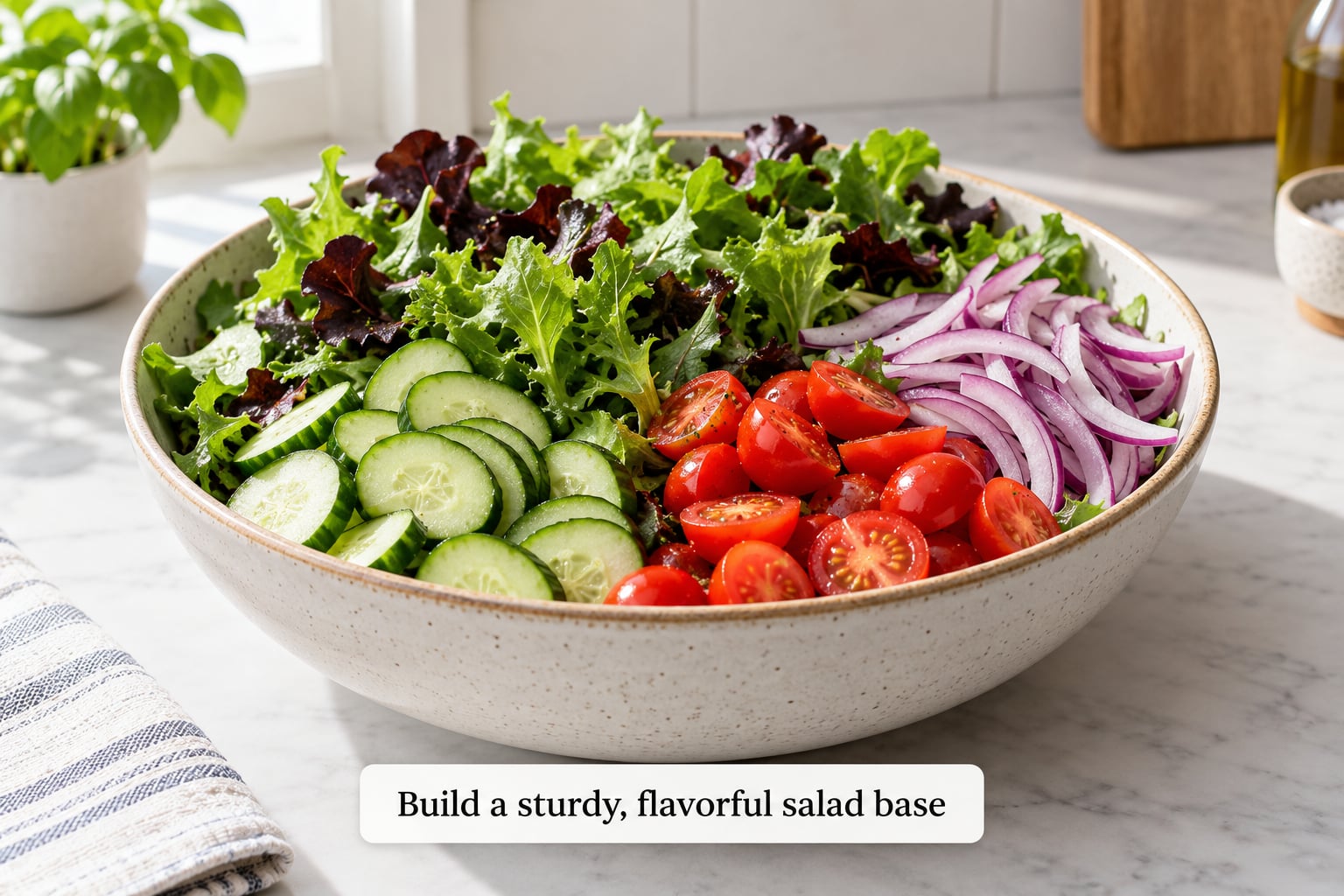
Wash your greens, then dry them properly. A salad spinner works; a clean towel and a few minutes of patience works too. Water sitting on the leaves is the single most common cause of a watery bowl.
Season the base before anything else goes in. For roughly 4 cups of chopped greens, use about 1/2 teaspoon of kosher salt, several twists of black pepper, and a squeeze of lemon or a teaspoon of vinegar. Toss with your hands for about 20 seconds until the leaves look faintly glossy.
You’ll know it worked when the raw cabbage or romaine smells like something, not like nothing. Greens with no salt on them at this stage will taste flat no matter how good the dressing is later.
2. Add contrast and substance
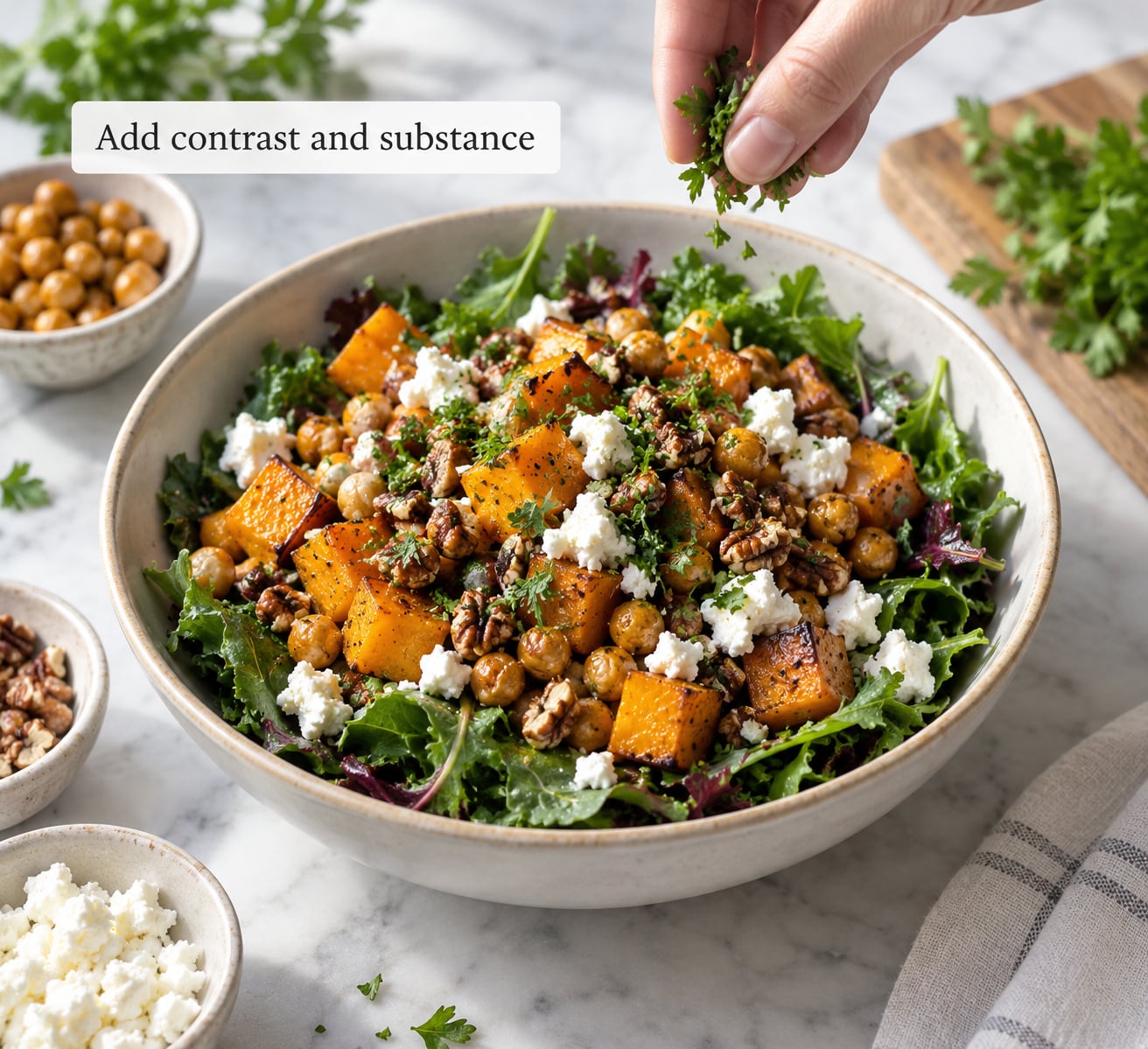
Now add your vegetables and your substantial ingredient. Think in pairs: something crisp with something soft, something raw with something cooked. Roasted squash against cold cucumber, or warm chickpeas against crisp romaine, gives each forkful two textures instead of one.
Season each new component as it lands. A pinch of salt on the roasted squash, a squeeze of lemon on the cucumber, a few pepper flakes on the chickpeas. Seasoning the whole bowl at the end only works if nothing was watery to begin with.
For a main-course salad, aim for roughly 1/2 cup of the substantial ingredient per person. Three or four tablespoons of beans or grilled chicken per serving, doubled if it’s the only thing on the table.
3. Make a dressing people want to taste
A vinaigrette is just oil and acid held together in an emulsion, plus salt and something to bind them. The ratio decides whether it tastes balanced or whether one side wins.
- 1:1 oil to acid: sharp and very light. Best for fish, cucumber-forward salads, and very light greens.
- 2:1: balanced and bright. The everyday ratio for greens plus beans and most weeknight bowls.
- 3:1: rounder and more coating. Best for hearty greens, grains, and bowls that need to feel rich.
- 4:1: soft and mellow. Suits delicate leaves, fruit, and strongly bitter greens.
For four servings, start with 1/4 cup acid and 1/2 cup extra virgin olive oil, then 1/2 teaspoon salt, 1/2 teaspoon Dijon or a spoon of mayonnaise, and a grind of pepper. A teaspoon of honey or maple syrup softens a sharp vinegar if you want it rounder.
Whisk the acid and mustard together first, then add the oil in a thin stream while whisking. That order is what keeps the dressing from separating. If it splits, add a tablespoon of water and whisk again. It usually comes back together.
The visual cue for balance: the dressing should taste complete on a spoon, and it should taste slightly brighter than you think it should when it’s in the bowl. Greens dilute it, so dress a little heavier than feels right in the jar.
4. Toss at the right moment
Add 2 to 3 tablespoons of dressing per person, and put it on the leaves plus the sturdy vegetables only. Hold back the delicate greens and the crunch until the last moment, so nothing goes soft while the salad waits.
Toss with your hands, from the bottom up, for about 30 seconds. You want every leaf lightly coated, not shiny and dripping. If dressing pools at the bottom of the bowl, you have too much, so add a handful of dry greens or plain chopped lettuce and toss again to absorb it.
Fold the crunch in last, right before the bowl hits the table. If you’re dressing it more than 15 minutes ahead, add only a third of the dressing now and the rest when you serve.
5. Finish with fresh, bold details
Finish with a handful of torn herbs, a final grind of pepper, and something sharp in a small amount. A few sliced pepperoncini, a spoonful of pickled onions, a crumble of salty cheese. Small quantities of strong flavors read as deliberate; large quantities read as heavy.
Zest of lemon or a squeeze of citrus right before serving wakes up a bowl that tasted fine but flat. Taste one more forkful than feels necessary. If it’s good on the last bite, it was good on the first.
Common Mistakes
The bowl is watery. Water on the leaves. Dry them again, add a layer of dry greens, and hold watery vegetables like tomatoes to the last minute. If it’s already pooled, scoop off the liquid before serving and add fresh crunch to replace what went soft.
The salad tastes flat but not bad. It’s underseasoned. Add salt a pinch at a time and taste, then add acid rather than more oil. Nine times out of ten it’s missing lemon or vinegar rather than dressing.
Everything’s coated and heavy. Too much dressing. Toss in a cup of undressed greens, or a couple of torn bread cubes, and the bowl lightens up fast.
The greens are bitter and people call it spoiled. Bitterness reads as rot to anyone not expecting it. Use a pinch more salt, add acid, and mix in a milder green like butterhead or spinach to dilute it. Mild salad dressing also helps, and so does a sweet add-in like sliced apple or grapes.
It’s a salad and nothing else. Add substance. Beans, roasted squash, corn, eggs, grilled chicken, or a grain turn a side into dinner. If you add chicken, cook it to 165°F (74°C) and cool it before it goes in the bowl.
It went limp after an hour. Salt pulls water out of leaves, and dressing finishes the job. For a lunch that sits for hours, pack the components and the dressing separately and toss at lunch. For a picnic, sturdy cabbage and roasted vegetables hold; arugula and tomatoes do not.
Nobody wants seconds. Make a second batch on purpose. Half a bowl of dressed leftovers never competes with fresh food, so plan to make roughly one and a half times what the table actually eats. In my house that’s usually a modest bowl of dressed greens plus a larger one of undressed components and a jar of dressing, so the second helping is a thirty-second job rather than a second dinner.
Feeding a crowd? Plan on about 1 cup of base greens, 1/2 cup of vegetables, and 1/2 cup of substance per person, and mix the dressing in a jar so you can shake and pour instead of whisking at the last second.
For salad skeptics specifically, start with something that reads as a composed dish rather than a pile of leaves. Cabbage, roasted squash, chickpeas, sharp vinegar. Skip the mild pastel look. A bowl that looks interesting gets tasted, and a bowl that gets tasted is the only bowl that gets finished.
Frequently Asked Questions
How can I make a salad more interesting?
Build contrast in every forkful: something crisp with something soft, something raw with something cooked, something mild with something sharp. Add three or four different add-ins rather than one big pile, and season each one separately before it goes in the bowl. A spoonful of pickled onions, a crumble of feta, or a few toasted nuts does more for a plain bowl of greens than doubling the dressing.
Why does lettuce wilt when left in salad dressing?
Two things happen. Salt in the dressing draws water out of the leaf cells, and water sitting on washed leaves dilutes the dressing and speeds that up. The fix is to dry greens thoroughly before they go in the bowl, use less salt than you think, and add the crisp, watery vegetables at the very last second. For a lunch that sits for hours, pack dressing separately and toss at the last minute.
How can I fix a salty salad dressing?
Add more of the other main ingredients rather than water. Whisk in extra oil and a little extra acid, plus a spoonful of mustard or honey, and the salt recedes. If the whole bowl is too salty, add undressed greens and unsalted toppings to dilute it. Water makes a vinaigrette taste thin, so reach for oil and vinegar first.
What is 10 things you can put in a salad for texture and flavor?
Chopped nuts or seeds, cucumber, celery, radish, roasted squash or sweet potato, chickpeas or white beans, corn, crisp bacon or pancetta, crumbled feta or blue cheese, pickled onions or pepperoncini, fresh herbs, and toasted croutons or homemade breadcrumbs. Pick at least one from the crisp column, one from the substantial column, and one salty or sharp accent, and the bowl changes character.
How much dressing should I use per person for a salad?
Start with 2 to 3 tablespoons per person and taste before adding more. Greens dilute the dressing, so it should taste slightly bright on a spoon before it hits the bowl. If liquid collects at the bottom after tossing, you have gone too far: add a handful of dry greens or a couple of bread cubes to absorb it rather than scraping the bowl.
How do I make salad that stays crisp overnight for lunch?
Store the components separately and dress at lunch. Keep sturdy items like cabbage, celery, roasted vegetables, and cooked grains in one container, delicate greens in another with a paper towel, and the dressing in a jar. A small amount of salt in the greens is fine overnight, but skip it if the greens are very tender. Tossed salad is a next-day lunch at best, not a next-day dinner.
Conclusion
Start with one sturdy base, one crunchy ingredient, one substantial ingredient, and a dressing you built yourself at a 2:1 oil-to-acid ratio. Season each of them separately, toss at the table, and save the herbs and the crunch for last.
That’s how to make a salad people actually want seconds of. Not a fancier recipe, just five habits applied in the right order. Adjust the add-ins to what your table already likes, and make more than you think you need.