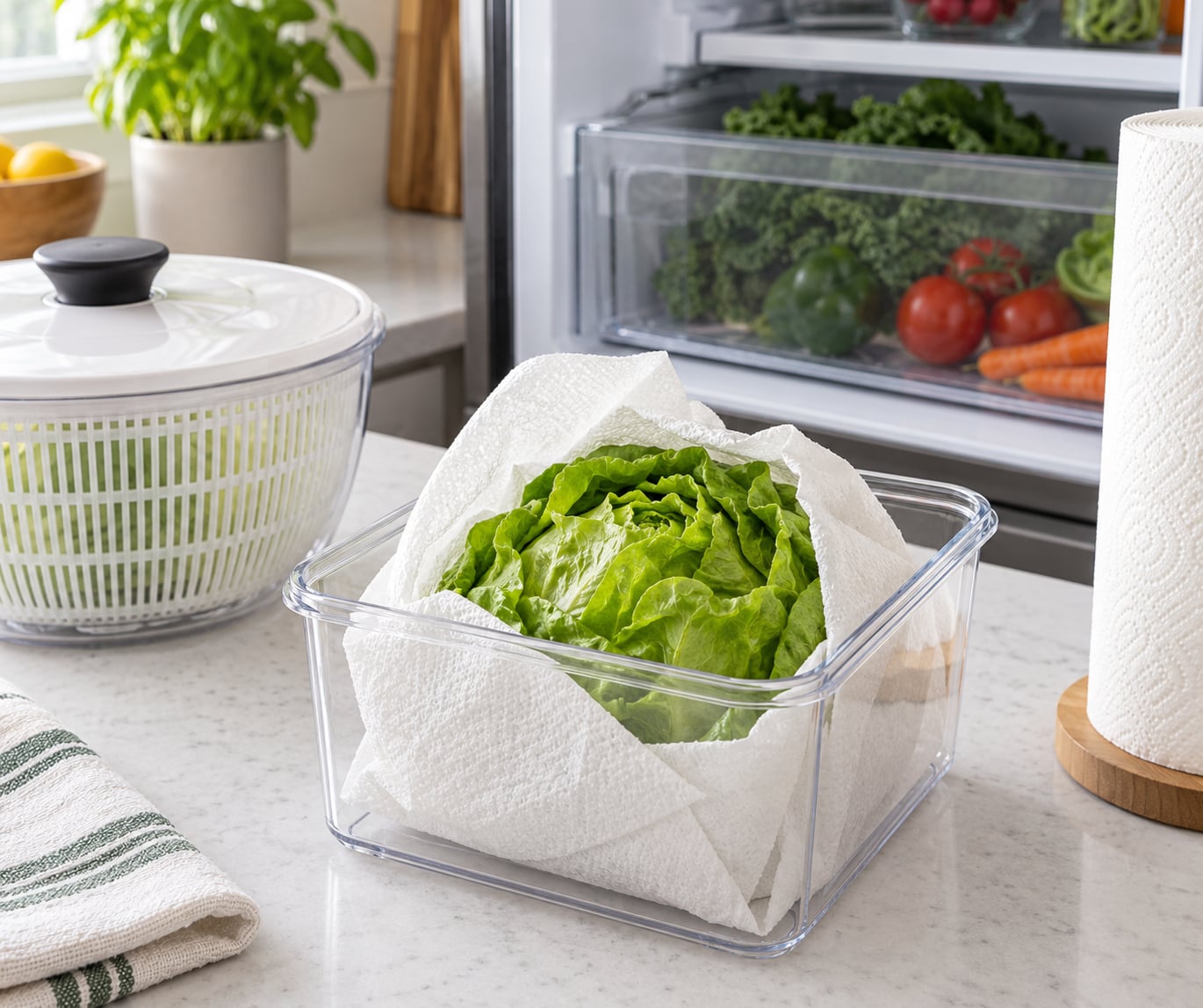
You can keep lettuce fresh for two weeks if you start with a whole, sturdy head, dry it completely, and store it in the crisper drawer inside a hard-sided container lined with paper towels. Two weeks is realistic for romaine, butterhead and iceberg stored whole. It is not realistic for pre-washed bagged shreds or delicate mesclun.
The whole trick is moisture control. Leaves need water inside their cells to stay crisp, but water sitting on the surface feeds bacteria and molds that turn a head slimy within days. Get the drying right and everything else gets easier.
Last updated October 2026.
Table of Contents
- What You Need to Keep Lettuce Fresh for Two Weeks
- Step-by-Step
- 1. Choose Lettuce That Is Fresh and Intact
- 2. Remove Damaged Leaves and Rinse Gently
- 3. Dry the Lettuce Completely
- 4. Wrap the Lettuce for the Right Kind of Storage
- 5. Store the Lettuce in the Refrigerator
- 6. Check and Rewrap It During the Two Weeks
- How to Revive Lettuce That Is Slightly Wilted
- How Long Does Lettuce Last in the Refrigerator?
- Common Mistakes
- Frequently Asked Questions
- Can I really keep lettuce fresh for two weeks?
- Should I store lettuce in a paper towel or plastic bag?
- Why does my lettuce get soggy in the refrigerator?
- Does romaine or butter lettuce stay fresh longer than iceberg lettuce?
- How should I store pre-cut lettuce?
- How can I tell when lettuce has gone bad?
- Conclusion
What You Need to Keep Lettuce Fresh for Two Weeks
You do not need anything exotic. Everything below is either already in your kitchen or cheap to replace.
- Crisp whole lettuce. One head of romaine, butterhead, red leaf or iceberg that feels heavy for its size with no slime at the core.
- A clean sink or basin for a quick rinse, plus a colander.
- A salad spinner and a clean absorbent towel or several dry kitchen towels for the pat-down.
- Paper towels. A full sheet or two per head. Cheap, and the single most useful item on this list.
- A hard-sided container with a lid, ideally with ridged sides, or a breathable produce bag if you prefer softer storage.
- A dry clean towel to line the bottom of the container.
- A marker for dating the bag, which sounds fussy and turns out to matter at day 10.
A head of romaine in good shape costs the same as a head that goes slimy on day four. The difference is entirely in what happens after the store.
Step-by-Step
1. Choose Lettuce That Is Fresh and Intact
Pick a head that is firm, heavy and bright, with ribs that snap rather than bend. Check the cut base of the core: a clean white or pale green center is fine, a brown or mushy one is not.
Two-week results only apply to lettuce that starts genuinely fresh and intact. Pre-cut, pre-washed shreds and spring mixes have far more exposed surface area, and a head that is already limp on the shop floor will not be rescued by any method below.
A useful shortcut is to buy whole heads rather than bags. Whole heads have an intact structure that loose shreds do not, so they lose water more slowly.
2. Remove Damaged Leaves and Rinse Gently
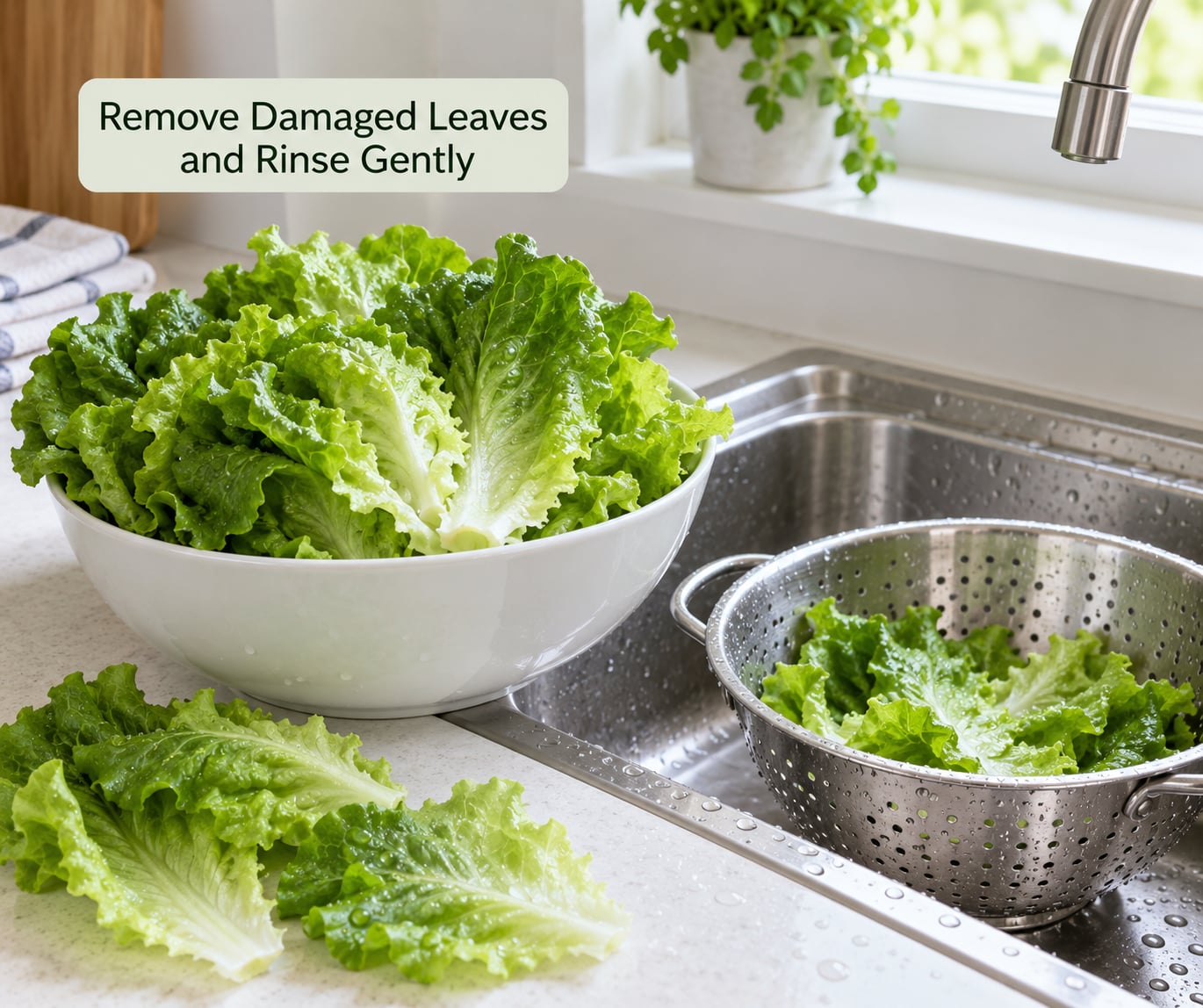
Strip away every outer leaf with a tear, a bruise, a dark spot or any slime. Peel down to the clean inner leaves. Discarded outer leaves are not a loss either: they go into soups, stocks and stews, which is a better fate than the compost bin.
Rinse the remaining leaves in cool running water for a few seconds, moving them gently. Do not soak the head, and do not leave it sitting in a bowl of water while you run other errands. Standing water is the fastest route to a slimy core.
One food-safety note that is easy to gloss over: washing is the higher-risk step, not the storage step, because soil and contaminated water can carry bacteria such as E. coli onto leaves that go straight into the fridge. Wash under cool running water rather than in standing water, and treat any lettuce that smells off at the sink as already past saving.
3. Dry the Lettuce Completely
Spin the leaves in a salad spinner in batches, then pat them dry with a clean absorbent towel. Repeat once more if you can hear water sloshing when you shake a handful.
Residual water is the number one reason home-stored lettuce goes bad. Surface moisture sitting between folded leaves creates the warm, wet pocket that bacteria need, and it is the difference between a head that lasts ten days and one that lasts three.
The pat-dry step is not fussiness. Spinning alone routinely leaves more water behind than people expect, and most soggy lettuce in the fridge was washed and skipped straight to the crisper.
4. Wrap the Lettuce for the Right Kind of Storage
Lay one dry paper towel flat in the container, arrange the leaves in a single loose layer or a whole unwrapped head, then lay a second paper towel over the top.
The towel should feel slightly damp from the leaves you just dried, not soaking and not bone dry. Paper towels wick stray moisture away by capillary action, which is the whole mechanism. They also give the leaves something to breathe against instead of pressing wet surfaces together.
For a whole head, an uncut romaine or an iceberg with its original tight plastic wrap on is the exception that proves the rule. Iceberg keeps its own wrap because the tight film holds humidity against the leaves. Loosen it or replace it with a paper towel if the wrap goes loose or wet.
Change the towels every three or four days, or any time they feel damp. Soggy towels are what stain leaves brown, and a towel swap takes ten seconds.
5. Store the Lettuce in the Refrigerator
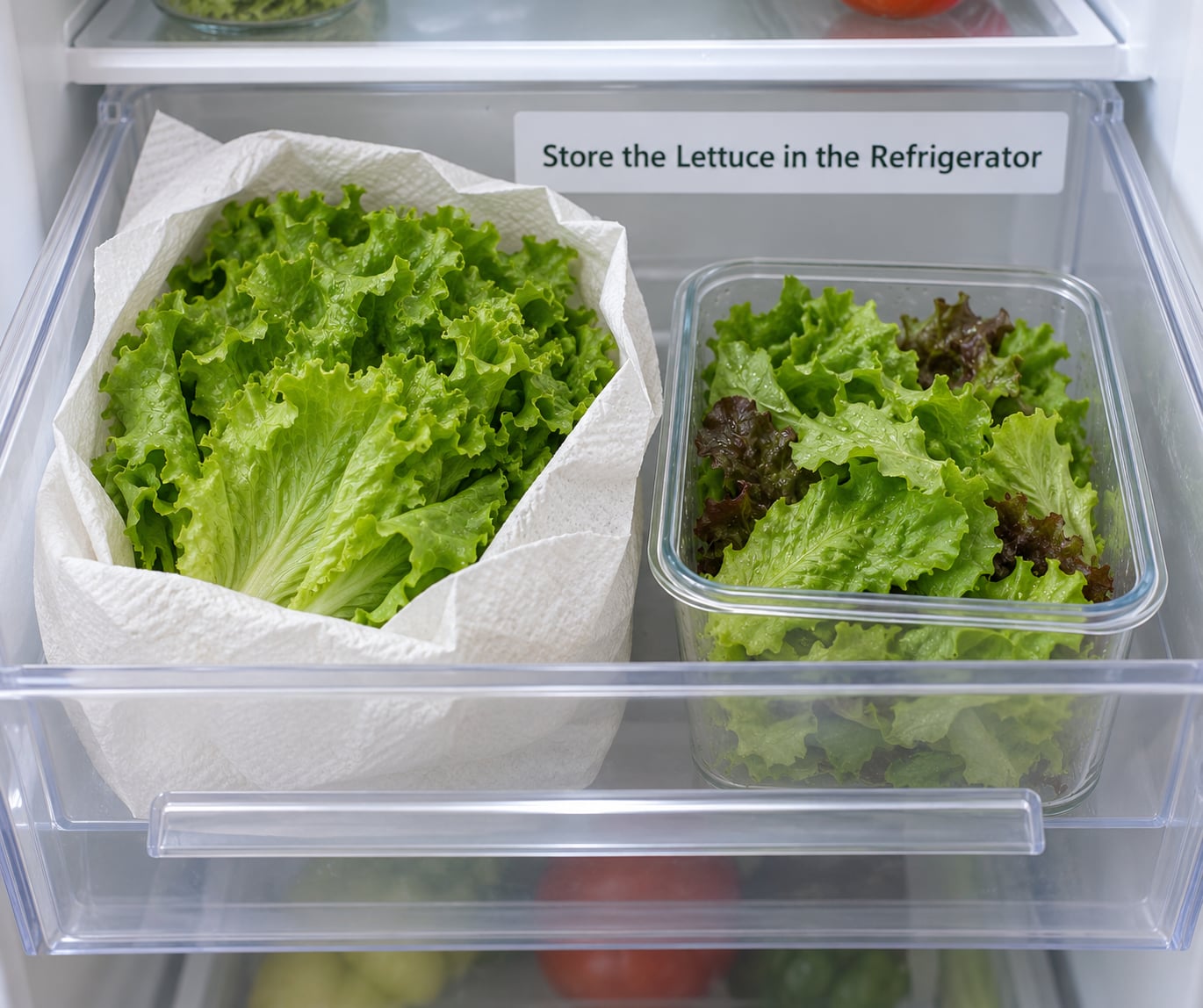
Put the container in the crisper drawer, which is the coolest, most humid and lowest-airflow compartment in the refrigerator. If your crisper has a humidity slider, set it to the higher-humidity setting for leafy greens.
Aim for roughly 95 percent relative humidity around the leaves. Lettuce keeps crisp when it is hydrated but not wet, and the crisper is the only place in a typical refrigerator that runs that combination. Too much airflow dries the edges out and browns the cut edges; too little and trapped moisture wins.
Keep lettuce away from apples, bananas, tomatoes, avocados and pears. Those fruits release ethylene gas, a ripening hormone that green leafy vegetables are highly sensitive to. Ethylene speeds up wilting and browning faster than almost anything else you do in the fridge.
A home cook on the r/foodhacks thread about this question put it the way most people think about it: wrap the heads of romaine in paper towels and change the towels out periodically once they look too wet. That is the entire method, and it works.
6. Check and Rewrap It During the Two Weeks
A two-minute check every three to four days is what converts storage into preservation. Open the container, look at the towel, and smell the head.
- Day 3: swap the paper towels if damp. The leaves should look dry and matte with no darkening at the cut edges.
- Day 7: this is where poor storage shows. Mushy edges, a sour smell or a slimy core means the head is done.
- Day 10: good lettuce still snaps. Outer leaves soften first, and the inner leaves usually keep another week.
- Day 14: use it. If the leaves still have turgor and no odor, you have made the full two weeks honestly.
Use the oldest leaves first, especially the outer ones, and store the remainder in one layer rather than piling it. A stuffed container crushes its own contents, and bruised tissue browns far faster than whole intact leaves.
How to Revive Lettuce That Is Slightly Wilted
Wilted is not the same as spoiled, and the two are separated by smell and texture rather than time. If the leaves are limp but still smell clean, submerge them in a bowl of ice water for five minutes, gently swish, then drain.
Cold water and the shock of temperature firm up the cells again. Five minutes is the limit I use; much longer and the outer leaves start absorbing water and go soft and heavy instead of crisp.
Dry the leaves thoroughly again before putting them back in the container. A revived head that goes straight back onto damp paper towels is a head that will be slimy in two days.
How Long Does Lettuce Last in the Refrigerator?
Here is the honest range. A whole sturdy head stored dry in a lined container reaches the fourteen-day mark. Loose leaves reach ten to fourteen days. Pre-washed shredded bagged greens realistically manage five to seven days and rarely more, because they are washed, cut and already damp before you ever open the bag.
Storage method matters more than variety, and the table shows how far the gap runs.
| Storage method | What you need | Condition at 7 days | Condition at 14 days |
|---|---|---|---|
| Hard-sided container with paper towels | Container, lid, two paper towels | Crisp | Usually still crisp for whole heads |
| Resealable bag with a paper towel | Bag, one paper towel | Crisp | Good for loose leaves, watch for bruising |
| Original store packaging | Nothing | Fair, varies widely | Unreliable unless it stays sealed and cold |
| Loose bag in the crisper | Nothing | Crushed against other produce | Poor |
| Head standing in a glass of water | Glass, water, refrigerator space | Leaf looks hydrated but goes limp at the base | Poor. See the note below |
That last row deserves a word. A home cook in a Facebook recipe group posted that standing lettuce in water works for her, and plenty of people echo it. It hydrates the leaves, but the submerged base sits in water around the clock, and the head usually goes soft and brown at the cut end well before two weeks. A quick ten-minute chill works far better than leaving it standing.
Variety shifts the ceiling slightly, but less than most people expect.
| Lettuce type | Whole head shelf life | Washed loose leaves | Two-week viable |
|---|---|---|---|
| Romaine | 10 to 14 days | 7 to 10 days | Yes, whole and unwashed until needed |
| Butterhead or Bibb | 7 to 10 days | 5 to 7 days | Sometimes, at the edge |
| Iceberg | 14 days with original wrap | 7 to 10 days | Yes, the most forgiving variety |
| Red leaf | 10 to 12 days | 7 days | Often, watch the color |
| Mesclun or spring mix | 3 to 5 days | 3 to 5 days | No |
| Arugula or baby spinach | 5 to 7 days | 3 to 5 days | No |
Romaine and iceberg hit the two-week mark most reliably. Butterhead sits right at the edge, and mesclun and baby greens never get there, no matter what you do. Shoppers who ask how to store romaine lettuce for longer get the easiest answer of the bunch: it is the most forgiving of the common heads.
Common Mistakes
Most soggy lettuce is a mistake in the first ten minutes after washing, not a refrigerator problem. Here is what goes wrong and what to do instead.
Storing wet lettuce. This is the big one. Spin, then pat dry, then store. Every other error on this list is smaller.
Sealing it airtight forever. A closed container is right, but it needs paper towels and a swap every few days. Air with no moisture control turns the head into a greenhouse.
Leaving spoiled leaves attached. One slimy leaf spoils the neighbors by day 3. Strip damaged leaves at prep time, not at the compost stage.
Crowding the container. A stuffed box crushes its own contents. One loose layer beats two packed ones every time, and ridged sides protect the leaves from anything pressing on the lid.
Parking lettuce next to fruit. Apples, bananas, tomatoes, avocados and pears give off ethylene gas that turns leaves limp and brown early. Give the crisper its own drawer if you keep a lot of fruit.
Treating cut lettuce like a whole head. Chopped and shredded lettuce has far more exposed surface, so it needs to be eaten inside a week. If you want it to last, buy the whole head and cut it as you go.
Storing lettuce unwashed for weeks and hoping. Washing is fine and often better, but only if you dry it properly. Unwashed heads carry field soil and moisture into the crisper, which is a slower route to the same slimy result.
A few habits stretch things further. Rotate the container so the older bag comes forward, and date the bag with a marker so you are not guessing at day 8. Chop the stems and add them to stock, soups and stews instead of throwing them away.
And if you are dealing with a garden or farmers market haul, two weeks is not the right target. Blanch the surplus greens for 30 seconds, cool them in ice water, drain hard, and freeze them in flat bags for cooked dishes. Pickling works too, and neither route is about freshness but about not wasting a good week of lettuce.
Frequently Asked Questions
Can I really keep lettuce fresh for two weeks?
Yes, for whole sturdy heads like romaine, butterhead and iceberg, provided you dry them thoroughly, line a hard-sided container with paper towels, and store it in the crisper drawer. Check and swap the towels every three to four days. Pre-washed bagged shreds and delicate mesclun realistically reach five to seven days instead, and a head that is already limp when you buy it will not last.
Should I store lettuce in a paper towel or plastic bag?
Use both, in that order. Paper towels go inside whatever holds the lettuce, because they wick away stray moisture that would otherwise sit on the leaves and turn them slimy. A resealable bag or a hard-sided container goes on the outside to hold humidity steady and protect the leaves from bruising. Never seal damp lettuce in plastic without a towel layer.
Why does my lettuce get soggy in the refrigerator?
Almost always because it went in wet or because moisture had nowhere to go. Leaves that are not fully dried hold water in the folds, and a closed container with no absorbent layer traps it. Swap in fresh paper towels every three to four days and keep the container only loosely full so air can move.
Does romaine or butter lettuce stay fresh longer than iceberg lettuce?
Romaine and iceberg are the two most forgiving whole heads, each reaching about two weeks when stored dry in a lined container. Butterhead and Bibb are softer and usually land closer to seven to ten days, so treat them as a week-plus vegetable. Red leaf is in between, and mesclun or spring mix will not make it to two weeks at all.
How should I store pre-cut lettuce?
Keep the bag sealed or reseal it firmly and use it within five to seven days. Cut and washed greens have far more exposed surface than a whole head, so they dry and spoil faster. If you want lettuce that lasts a full two weeks, buy whole heads and cut them as you need them rather than storing them chopped.
How can I tell when lettuce has gone bad?
Smell first. Fresh lettuce smells clean and green; anything sour, musty or distinctly rotten means it is gone. Beyond odor, look for slimy or translucent leaves, a slimy or browned cut base, and a mushy core. Limp leaves alone are not spoilage, and a short ice-water bath can revive them.
Conclusion
Start by washing fresh, intact lettuce, drying it completely, wrapping it in a slightly damp paper towel, and refrigerating it in the crisper drawer. That single combination is what turns a four-day head into a two-week one.
Method matters more than the calendar. A sturdy whole head stored dry in a lined container can genuinely reach the fourteen-day mark, while pre-cut shreds and mesclun will not, and no container fixes either of those. Check every few days, swap the towels, and use the oldest leaves first.