Garlic confit is garlic cloves poached slowly in olive oil until they turn soft, sweet and spreadable, and to make it in a crockpot you layer about 3 to 4 heads of peeled cloves into the pot, pour in enough oil to cover them completely, and cook on low for 3 to 4 hours. Prep takes roughly 15 minutes. After that the slow cooker does the work while you go do something else, and you come back to both the garlic and a jar of garlic-infused oil worth saving.
I use the crockpot for this because it asks the least of you. Oven confit at 250°F wants about two hours and a kitchen you walk through every so often to make sure nothing is drying out. The slow cooker sits on the counter next to the coffee maker and does the identical slow poach with no supervision, which makes it the method I trust most for a workday or a meal-prep Sunday.
One thing to settle before you start: confit is a refrigerator staple, not a pantry staple. Garlic sitting under oil in a sealed, oxygen-poor environment is exactly the combination that makes botulism a real question, and I will walk through that in the storage section below. Everything else is straightforward.
Table of Contents
- What You Need
- Step-by-Step: How to Make Garlic Confit
- 1. Prepare the Garlic and Jar
- 2. Layer the Garlic and Oil
- 3. Cook the Garlic Slowly
- 4. Cool and Check the Texture
- 5. Store and Serve Garlic Confit
- Common Mistakes
- Tips for Better Garlic Confit
- Frequently Asked Questions
- How long do I confit garlic in a crockpot?
- How do I know when garlic confit is done?
- Can you confit garlic too long?
- How do I keep garlic confit safe in the fridge?
- Can I use a neutral oil instead of olive oil?
- What do you eat with garlic confit?
- Conclusion
What You Need
Here is the base batch. It scales up cleanly, but keep the ratio of oil to garlic the same or the cloves will not stay submerged.
- 3 to 4 large heads of garlic, about 12 oz or 2 cups of peeled whole cloves. A quart jar of pre-peeled cloves works and skips the most tedious part.
- 1 to 2 cups extra-virgin olive oil, enough to rise about an inch above the garlic once everything settles.
- 3 sprigs fresh thyme and 1 sprig rosemary. Dried herbs work, but fresh ones hold their shape through the long cook.
- 1/4 teaspoon kosher salt, scattered in layers rather than all dumped on top.
- A small pinch of whole black peppercorns. Whole, not ground: the pepper slowly gives up its heat over four hours without turning bitter.
For a sharper edge, add 1/2 teaspoon of crushed red pepper flakes, a bay leaf, or a strip of lemon peel. The lemon is the one I like for fish and chicken, and the red pepper is the one that makes the oil taste good on beans.
You also need a crockpot or slow cooker, a silicone spatula or slotted spoon, and either a wide-mouth glass jar to cook inside the slow cooker or the stoneware insert itself. I cook directly in the insert when the manufacturer says it is glazed stoneware, which keeps the cleanup to one pot. If your insert is nonstick, set a heat-safe glass jar inside it instead so you can lift the finished garlic out and pour the oil off without scraping.
Step-by-Step: How to Make Garlic Confit
This is the crockpot method from start to finish. The oven version is the same idea at 250°F for about two hours, so if your kitchen is already warm you can swap methods without changing anything else on this list.
1. Prepare the Garlic and Jar
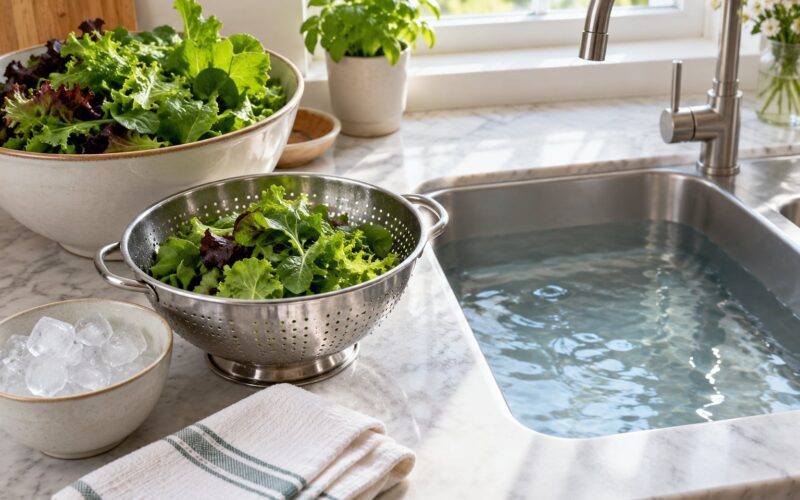
Peel the cloves and leave them whole. If you are peeling by hand, put the heads in a bowl with a few ice cubes, cover the bowl, and shake it for about 30 seconds; the skins come off in handfuls. A rubber plunger pushed down over the top of each head is faster if you do not mind a little mess.
Give each clove a light crush with the flat of a knife. You are not trying to mash them, just cracking the surface so the oil gets in and the cloves soften at the same rate. Pat them dry with a towel.
That drying step is the one people skip and regret. Water trapped under oil turns to steam during the cook and thins the oil, and any moisture carried into the storage jar is exactly what you do not want sitting in a sealed container for a week.
2. Layer the Garlic and Oil
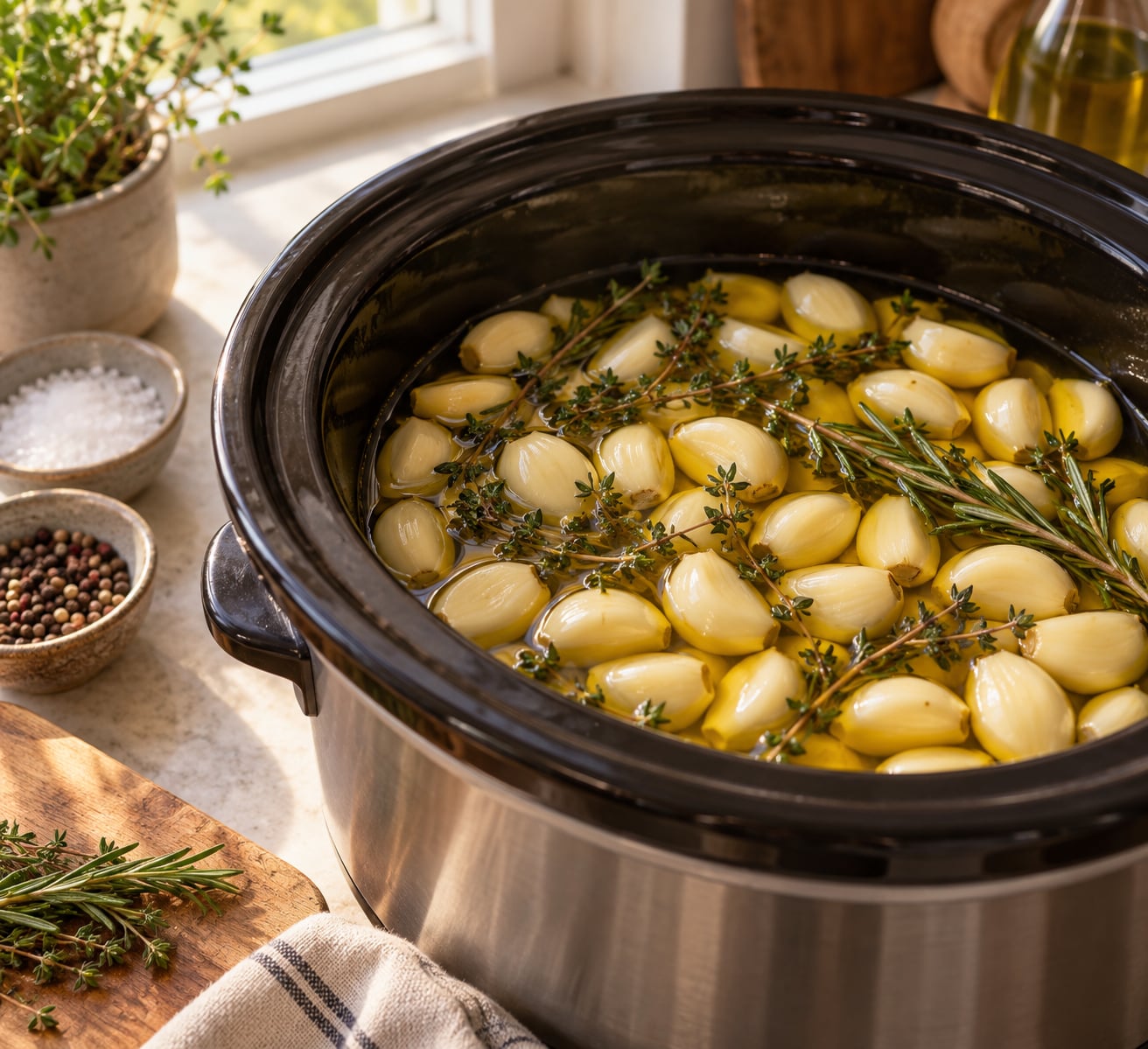
Layer the cloves in the insert or jar, sprinkling a little salt between each layer so the seasoning reaches every clove instead of sitting on the top one. Tuck the thyme and rosemary sprigs and the peppercorns in among them, then pour in the olive oil.
Push the cloves down gently so the oil gets between them, and keep adding oil until every clove is covered with a good inch of it. Garlic that pokes above the oil line browns in the open air, and browned garlic in oil is where the bitterness starts.
Leave the pot uncovered. A lid traps steam, the cloves cook unevenly, and you lose the slow reduction that concentrates the flavor.
3. Cook the Garlic Slowly
Set the crockpot to low and cook for 3 to 4 hours. Do not stir. Every time you lift the lid and stir, you expose the cloves to air and heat and set the cook back by a few minutes.
Start checking at the 3-hour mark. You are looking for three things at once: the cloves have gone from opaque white to a pale gold, the surface is giving off tiny bubbles, and the kitchen smells sweet and roasted rather than sharp. A slow cooker running hot cooks this in closer to 2 hours, so if you have a model that runs warm, give it a look sooner.
Long cook times are not the enemy here. The slow, wet heat is what breaks down the cell walls and turns a crunchy clove into something jammy. What ruins confit is heat without liquid, which is really just roasting.
4. Cool and Check the Texture
Turn the crockpot off and let the garlic cool in its oil with the lid off, on the counter, for no more than 2 hours. USDA guidance for garlic in oil is to get it into the refrigerator within two hours, and a slow cooker full of hot oil can easily take longer to cool than you think.
Test one clove when it is warm enough to handle. A fork or the tip of a spoon should slide in with almost no resistance, and the clove should press flat under a finger. If the outside is soft but the center still has a hard core, give it another 30 to 45 minutes and check again.
Undercooked cloves stay firm and taste raw-sharp. Overcooked ones go past pale gold into deep brown, lose their sweetness, and turn bitter. The window between the two is wide, so start checking early rather than cooking on autopilot.
5. Store and Serve Garlic Confit
Scoop the garlic and oil into a clean airtight container, wide-mouth jar or small deli container. Press the garlic down so the oil covers it completely, then refrigerate at or below 40°F. Use it within 1 to 2 weeks.
The oil in the fridge goes cloudy and partly solid, which is normal. Stand the container on the counter for 15 minutes before opening and it re-liquefies. For longer storage, freeze it: spoon single portions into an ice cube tray, freeze until solid, then move the cubes to a freezer bag and keep them up to 3 months.
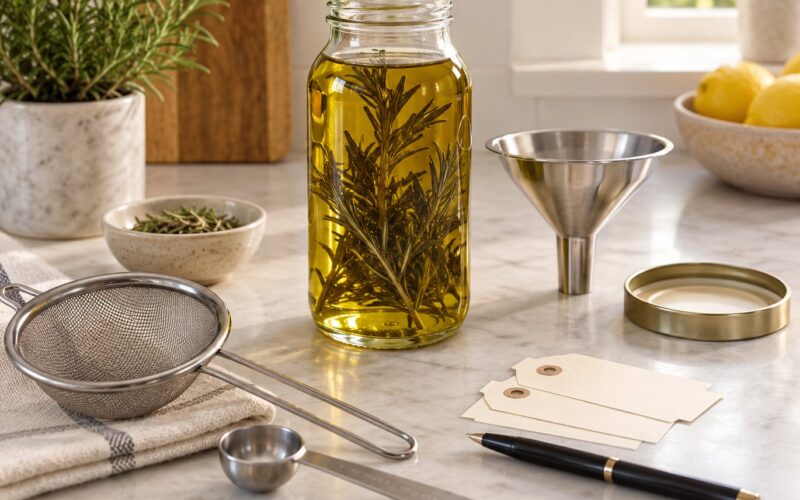
Use the garlic as a spread on toast, crostini or a hot biscuit, mash it into potatoes, whisk it into a pan gravy or a squash soup, or rub it over roast chicken or pork before the oven goes on. The leftover garlic-infused oil is a second product, not waste. Dress grilled vegetables with it, spoon it over pinto beans with cornbread, or use it in place of olive oil when you make spaghetti aglio e olio.
Common Mistakes
- Starting with wet garlic. Water under oil steams instead of confitting, thins the oil, and can carry moisture into the jar. Pat the cloves dry after peeling.
- Not covering the cloves completely. Any garlic above the oil line dries out and browns, and browned garlic in oil turns bitter fast. Add oil until everything sits an inch under.
- Cooking on high. High heat skips past the slow poach and into roasting. Low for 3 to 4 hours is the whole trick.
- Putting the lid on. Trapped steam makes the cloves cook unevenly and keeps them watery. Cook uncovered.
- Jarring the garlic while it is hot. Hot oil and warm garlic cool inside a sealed container, which creates condensation and a warm, closed environment. Cool it on the counter, no more than 2 hours, then refrigerate.
- Leaving the jar on the counter for hours or days. This is the one that matters. Garlic in oil at room temperature is the classic botulism setup. If a jar has sat out for more than 2 hours, discard it. Reheating does not make it safe again.
One cosmetic surprise worth naming: a faint green or blue-green tint on a few cloves is a known reaction between garlic and the trace minerals in some waters and salts. It is harmless, but the flavor is often sharper, so those cloves are better in cooking than on a cracker.
Tips for Better Garlic Confit
Six methods reach the same destination, and only the temperature and the time change. Here is the honest comparison, since the timings floating around online rarely agree with each other.
| Method | Temperature | Time | Best for |
|---|---|---|---|
| Crockpot | Low setting, no fixed temperature | 3 to 4 hours | Hands-off cooking and the best texture |
| Oven, slow | 250°F (120°C), fan oven | 2 to 3 hours | The classic method, very even heat |
| Oven, fast | 325°F (165°C) | 45 to 55 minutes | A weeknight batch, less sweet, less headroom |
| Stovetop | Lowest simmer, oil never boiling | 45 to 60 minutes | Small batches you want in an hour |
| Air fryer | 300 to 325°F, oil below the fill line | 25 to 35 minutes | Quick small batches, watch it closely |
| Sous vide | 194 to 196°F water bath | 2 to 3 hours | The most controlled result, needs a circulator |
For the stovetop version, put the cloves and oil in a saucepan over the lowest heat your stove has and hold them at a lazy simmer, never a rolling boil. Stir once or twice, since the top layer cooks against the hot metal. It is the fastest route to a small batch and the easiest to overdo.
On oil, extra-virgin olive oil is the classic because it carries flavor and does not overpower the cloves. A neutral oil such as avocado or grapeseed works and takes on the garlic cleanly, which some people prefer for dressings, but you lose the peppery green note that olive oil brings. Avoid anything with a strong flavor of its own, and use enough of it to keep the garlic covered.
On seasoning, whole peppercorns and thyme are the steady baseline. Bay leaves, a strip of lemon peel, or a halved dried chili each push the batch somewhere different, and a spoonful of honey stirred into the oil at the end makes an unusually good glaze for roasted roots.
On scaling, plan about 2 cloves per person for a spread, and 4 if the garlic is going into a main dish. Ten heads in a 6-quart slow cooker cooks the same way as three, it just takes closer to 4 hours. Do not crowd a small pot: if the cloves are stacked more than two deep, the ones underneath cook in their own trapped moisture instead of confitting.
On serving, the trick is treating it as both an ingredient and a condiment. A spoonful stirred into mashed potatoes disappears into dinner. The same spoonful spread thick on toast with flaky salt and a few roasted grapes is the plate people ask about. Around here it earns its place over pinto beans with a piece of cornbread, whisked into a ramp vinaigrette for green beans, or folded into the pan drippings when a roast chicken comes out of the oven.
Frequently Asked Questions
How long do I confit garlic in a crockpot?
Three to four hours on the low setting for 3 to 4 heads of garlic, which is the standard batch. Start checking at the 3-hour mark by pressing a clove with a finger. It is ready when the cloves are pale gold and yield to a spoon with no resistance. Slow cookers that run warm can finish closer to 2 hours, so an early check is always worth it.
How do I know when garlic confit is done?
Look at color, texture and aroma together. The cloves should be pale gold to light amber, never deep brown, and the oil should be giving off tiny bubbles in the second half of the cook. A fork should slide into a clove with almost no resistance and it should press flat under a finger. If the outside is soft but the core is still firm, give it another 30 to 45 minutes.
Can you confit garlic too long?
Yes, and it is the one mistake that is hard to undo. Once the cloves pass pale gold into deep brown, the sugars have gone past caramelizing into bitter, and the flavor will not come back. The upside is that at 250°F in the oven or low in a crockpot, the window between perfectly tender and overcooked is a full hour wide, so checking every 20 minutes from the 3-hour mark is plenty of protection.
How do I keep garlic confit safe in the fridge?
Garlic sitting in oil creates an anaerobic, low-acid environment where Clostridium botulinum can grow, so the rules are simple: refrigerate within 2 hours of finishing, keep the garlic fully submerged under oil in an airtight container, use a clean spoon every time rather than a used one, and eat it within 1 to 2 weeks. If a jar has been at room temperature longer than 2 hours, discard it. Reheating does not make it safe.
Can I use a neutral oil instead of olive oil?
Yes. Avocado, grapeseed and canola all work and the garlic flavor comes through cleanly, which many people like for dressings. The tradeoff is that you give up the peppery green note extra-virgin olive oil adds, and a neutral oil is more expensive per cup than a basic olive oil. Whatever you choose, use enough to cover the cloves completely and store the finished garlic under that same oil.
What do you eat with garlic confit?
Treat it as an ingredient and a condiment at once. Spread it on toast, crostini or a hot biscuit; mash it into potatoes; whisk it into pan gravy, soup or a vinaigrette; rub it under the skin of a roast chicken or over pork before roasting; drizzle the leftover garlic-infused oil over roasted vegetables, beans or griddled bread; or spoon it over burrata, goat cheese or labneh. It is also the whole point of spaghetti aglio e olio.
Conclusion
Start with one small batch this week: three heads of garlic, enough olive oil to cover them, three sprigs of thyme, and four hours on low. Taste it straight from the jar the next day, decide how much you actually use, and scale from there.
Two habits make the whole thing repeatable. Check the garlic from the 3-hour mark instead of trusting the timer, and get it into the refrigerator within two hours with the cloves still under oil. Everything else about garlic confit is forgiving, and the jar you finish will quietly improve about a dozen meals before it is gone.