To make kimchi without fish sauce, swap it for Korean soup soy sauce (guk-ganjang) plus a ripe pear or sweet apple, and add a blended rice or potato starch so the lactic acid bacteria have something to eat. The salt, the glutamates, and the fermentation all happen exactly as they do in a traditional batch. About 45 minutes of active work, then a jar on your counter for two to five days.
The honest part first: fish-free kimchi lands a shade less complex than a batch made with saeujeot and fish sauce. It will not taste identical, and anyone who tells you otherwise is selling something. What it will taste like is kimchi — sour, garlicky, hot, and alive — because almost everything that makes kimchi kimchi comes from the cabbage, the salt, and the gochugaru, not the seafood.
I keep a batch going through late summer and fall, when cabbage is cheap by the head and the kitchen is warm enough to ferment without slowing down. If you have ever worried about botulism, salt math, or a jar that turned to mush, this method walks through all three.
Table of Contents
- What You Need
- Vegetables
- Umami and Aromatics
- Brine, Starch, and Vessel
- Fish sauce substitutes, side by side
- Step-by-Step
- How to Make Kimchi Without Fish Sauce at a Glance
- Prepare and Salt the Vegetables
- Blend the Fish-Sauce-Free Kimchi Paste
- Mix, Taste, and Pack the Kimchi
- Ferment and Check for Readiness
- Common Mistakes
- Why the kimchi is watery and soft
- Why it is too salty to eat
- Why it tastes flat
- Why it will not ferment
- Why the color went gray or dull
- Frequently Asked Questions
- What can I use instead of fish sauce in kimchi?
- Can kimchi be made without fermentation?
- How long should vegan kimchi ferment at room temperature?
- Why is my fish-sauce-free kimchi watery?
- How salty should kimchi taste before it ferments?
- How should homemade kimchi be stored after it is finished?
- Conclusion
What You Need
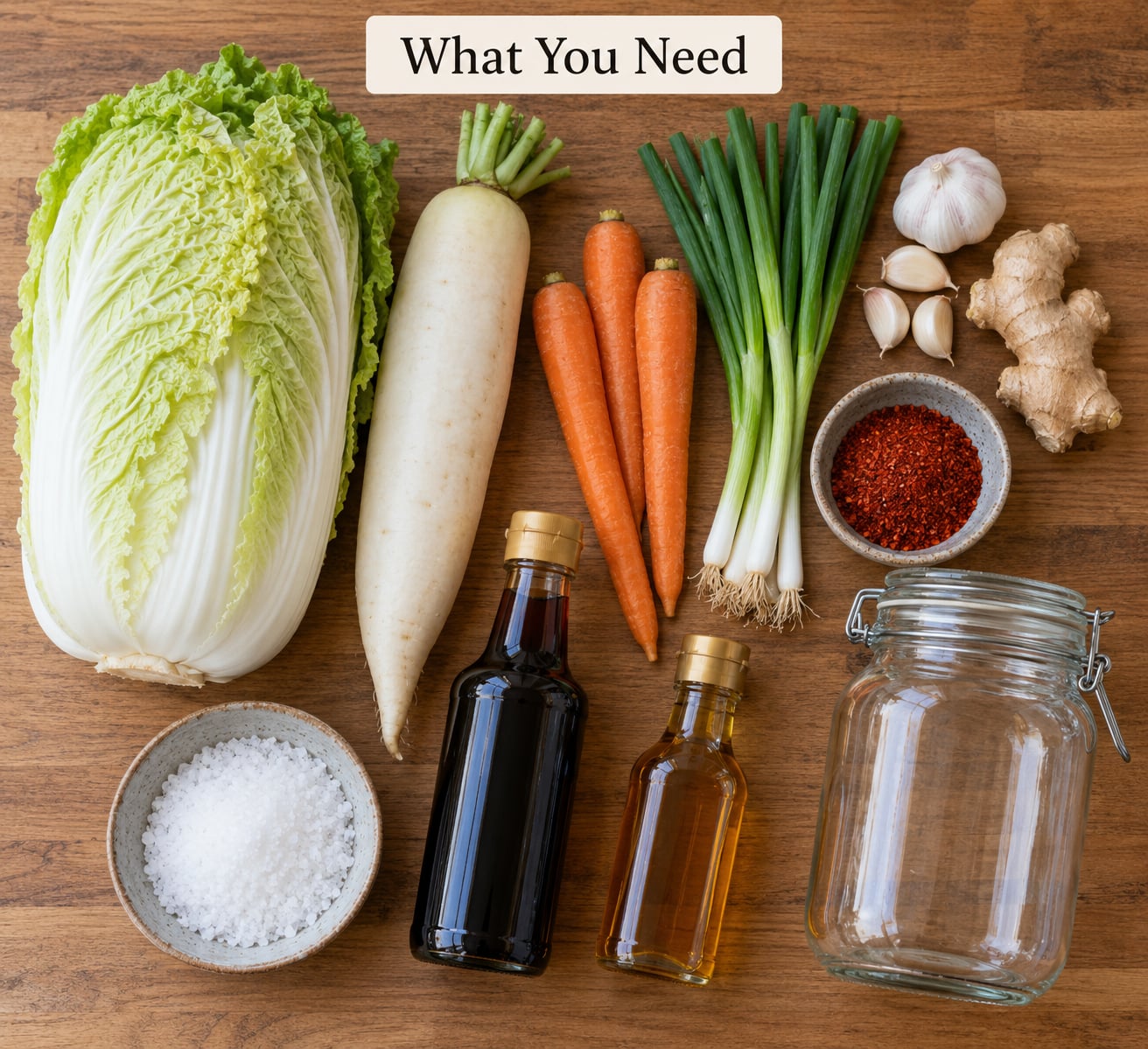
This batch makes about 4 quarts of banchan, enough for a couple of weeks of fried rice and jjigae. Measurements are US volume and weight, temperatures are Fahrenheit.
Vegetables
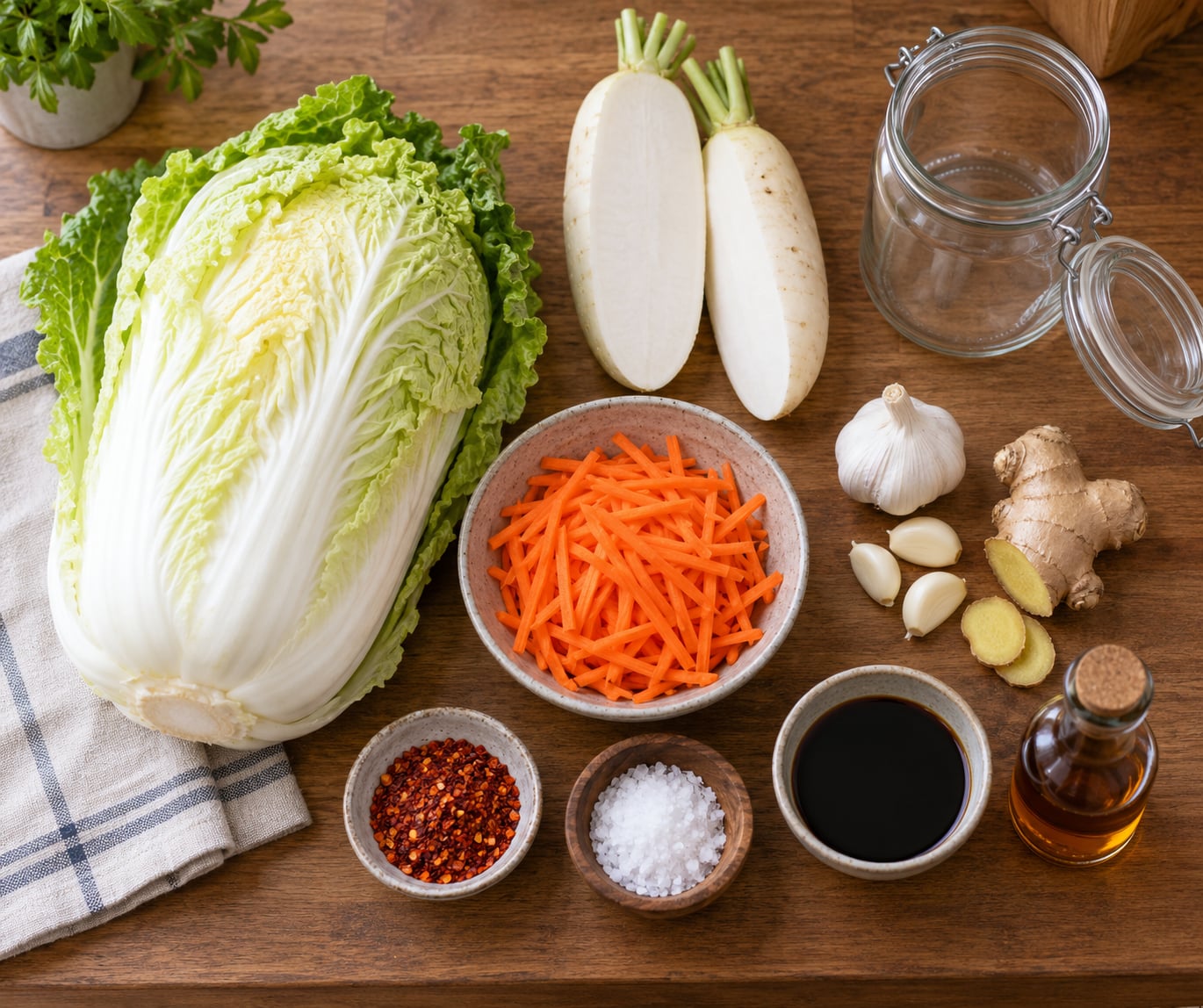
- Napa cabbage — 2 large heads, about 2 pounds, quartered lengthwise then cut into 2-inch pieces
- Korean radish (mu) or daikon — 1 cup, cut into matchsticks
- Carrots — 1/2 cup, julienned
- Scallions — 1 bunch, green parts only, cut into 1-inch lengths
Umami and Aromatics
- Guk-ganjang (Korean soup soy sauce) — 2 tablespoons. This is the single most important swap.
- Ripe Asian pear or sweet apple — 1/2 cup, cored and diced. Pears tenderize the cabbage with their enzymes; apples give you the same sugars with a cleaner flavor.
- Garlic — 6 cloves
- Ginger — 1 tablespoon, freshly grated
- Gochugaru (Korean red pepper flakes) — 1/2 cup. Cayenne will heat the kimchi but it will not carry the smoky, fruity note.
- Gochujang — 1 tablespoon, optional, for body and a little sweetness
- Sesame oil — 1 tablespoon, added after blending
- Mushroom seasoning or a pinch of white miso — 1 teaspoon, optional, the fix for flat flavor
Brine, Starch, and Vessel
- Coarse sea salt — 3/4 cup for brining, plus 1 tablespoon for the paste
- Cooked rice or potato starch — 2 tablespoons of cooked white rice (or 1 tablespoon of potato starch) for the paste
- Kombu (dashima) — a 2-inch square, optional, steeped in the blending water
- Wide-mouth glass jars — 2 quart-size, washed in hot soapy water and rinsed. Leave 2 inches of headspace.
If you have no Asian grocery store nearby, the substitution ladder runs like this: any soy sauce for guk-ganjang, a sweet apple for the Asian pear, plain table pepper flakes for gochugaru, a white or red wine grape for the pear, and dried shiitake soaked in hot water for the kombu. The result leans Western but it ferments and it tastes like kimchi. One reader in Uruguay wrote that she makes it for a household with a serious shellfish allergy and cannot find fish sauce locally at all — she uses apple, kelp granules, and whatever red flakes she can get, and it works.
Fish sauce substitutes, side by side
This is the part most recipe pages skip, so here it is plainly. Any of these will replace fish sauce in how to make kimchi without fish sauce; they land differently.
| Substitute | Flavor strength | Salt per tablespoon | Color impact | Closest to traditional? |
|---|---|---|---|---|
| Guk-ganjang | High, fermented and deep | High — cut back the brine salt | Deepens the red, no darkening | Yes — this is the one |
| Tamari or soy sauce | Medium | Medium | Neutral to slightly darker | Close, a little flatter |
| Coconut aminos | Low | Low | No change | Add extra pear and mushroom seasoning |
| White miso | Medium, slightly sweet | Medium | May dull the red | Good, use only 1 tablespoon |
| Mushroom seasoning or kombu | Low alone, high in a pair | Near zero | No change | Best used to boost, not to replace |
| Nutritional yeast | Low, faintly savory | Near zero | No change | Add it last; more makes it taste like dust |
One label note that matters if you care about gluten: traditional doenjang meju is 100 percent soy, but most commercial guk-ganjang in a US grocery store adds wheat or rice. Tamari is the gluten-free swap there. Read the label rather than trusting the word “soy.”
Step-by-Step
How to Make Kimchi Without Fish Sauce at a Glance
Salt the cabbage 1.5 to 2 hours, rinse it three times, blend a pear-based paste with gochugaru and starch, coat everything until the pepper turns brick red, then pack it tight and leave it on the counter until the brine rises and the sourness arrives.
Active time is about 45 minutes. Passive fermentation at a warm kitchen temperature runs 2 to 5 days for lightly sour kimchi, longer for the full funk. The substitution to hold onto is guk-ganjang for fish sauce, plus fruit for the sweet backbone.
Prepare and Salt the Vegetables
Cut the cabbage into 2-inch pieces and drop it into a large bowl. Mix the 3/4 cup coarse salt through it with your hands, working from the bottom up, until the pieces glisten and a layer of juice collects in the bottom of the bowl. Add the daikon and carrots and toss again.
Weight the vegetables down with a plate and let them sit 1.5 to 2 hours at room temperature. Turn them once at the 1-hour mark. You are drawing water out by osmosis, and that water is the brine your kimchi will live in.
Drain off the brine and rinse the vegetables three times under cold running water, squeezing each handful firmly. Most watery kimchi happens here, when people skip the rinse because the salt looks like it has already done its job. It has not — the brine is far saltier than you want to eat directly.
Blend the Fish-Sauce-Free Kimchi Paste
Put the pear or apple, garlic, ginger, scallion greens, guk-ganjang, the cooked rice or potato starch, the 1 tablespoon of salt, and the gochugaru into a blender with about 1/3 cup of water. If you have kombu, steep it in that water for 15 minutes first and use the liquid.
Add the sesame oil after blending, not before — heat and friction strip its aroma. Blend 45 to 60 seconds until the paste is smooth and very red. It should smell fruity and peppery and taste aggressively salty and hot. Taste it on a finger. If it is not quite overwhelming, the vegetables will dilute it during mixing, which is exactly how you want it.
Mix, Taste, and Pack the Kimchi
Put the rinsed vegetables back in the bowl, add the paste, and use clean gloves to toss until every piece is coated. The color should turn a deep brick red and a thick paste should cling to the ribs of the cabbage.
Taste a raw piece now. This is your only chance to adjust. Too salty, and you cannot fix it later, so rinse in a colander under cold water for 10 minutes. Too flat, and you can fold in another teaspoon of guk-ganjang or mushroom seasoning. Too mild, stir in more gochugaru, a half tablespoon at a time.
Pack the mixture into your sterilized jars, pressing down firmly with a clean spoon or a small glass weight so no air pockets remain. Leave 2 inches of headspace because the vegetables will expand and the brine will rise. Seal and set the jars on a plate or tray in case of overflow.
Ferment and Check for Readiness
Leave the jars at room temperature, roughly 68 to 75°F, and check them once a day. Lift the lid briefly, press down on the contents, and put the lid back. You are venting CO2 and letting the lactic acid bacteria keep working, not letting oxygen in.
| Day | What you will see and smell |
|---|---|
| Day 0 | Packed, bright red, barely sour, heavy pepper aroma |
| Day 1 | Bubbles at the top, cloudy brine rising a third of the way, faint fizz when you open the lid |
| Day 2 | Distinct tang, brine to the shoulders, color deepening toward brick |
| Day 3 | Pleasant sharpness, crunch still firm — the usual window to stop and refrigerate |
| Day 7 | Deeply sour and funky, softer texture; this is aged baechu kimchi territory |
| Day 14 | Very acidic, past most people’s preference, but still good |
If your kitchen runs cool, under about 65°F, fermentation stalls. Move the jars to a warm cupboard or beside the oven while it is on, and give it extra days. If your kitchen runs hot, above 78°F, cut the salt slightly and refrigerate after the first day.
On salt and safety: the finished kimchi should land between 2 and 3 percent salt by weight of the packed vegetables. Weigh your cabbage and radish before brining, aim for roughly 2 percent, and keep every other step the same. That salt level is what keeps unwanted organisms out while lactic acid bacteria, which tolerate salt well, do the work. Keep the jars submerged in their own brine, do not dilute with fresh water, and if you taste anything off or see pink, fuzzy, or filmy growth, discard it rather than trying to rescue it. Nobody has ever lost a small batch of kimchi to a bad decision at the refrigerator door, and plenty have lost a whole ferment.
When the flavor is where you want it, move the jars to the refrigerator. Cold slows the bacteria down to a crawl, so the kimchi keeps improving at maybe a percent a month instead of a percent a day.
Common Mistakes
Why the kimchi is watery and soft
You did not rinse, or you rinsed but did not squeeze. The pulled brine should go down the drain before the vegetables meet the paste. Squeeze each handful hard until only a trickle comes out. Soft kimchi also happens when you brine in cold water instead of dry salt, since the vegetables sit in dilute brine and lose the crunch that osmosis gives you.
Why it is too salty to eat
Two causes: the guk-ganjang added salt on top of an under-rinsed brine, or the brine sat far longer than two hours. Fish-free recipes are saltier by default than traditional ones because the soy sauce carries both salt and flavor in one pour. If your kimchi is already mixed, soak the packed jars in cold water for 30 minutes, drain, and taste again. Next time, drop the brine salt to a scant 1/2 cup and rinse twice.
Why it tastes flat
This is the complaint that comes up most, and it is nearly always the same cause: no umami anchor. Fish sauce supplies a big, specific hit of glutamates and amino acids that plain salt cannot imitate. Fix it by folding in 1 teaspoon of mushroom seasoning and a teaspoon of guk-ganjang per quart, or steep a 2-inch square of kombu in warm water and use that liquid in the paste. Ripe pear is the second lever; an underripe apple gives you sugar without the enzymes and the aroma.
Why it will not ferment
Three usual reasons. Too much salt, too little salt leaving room for mold, or too little food for the bacteria. The bacteria eat fermentable sugars and simple starches, which is exactly why the paste contains pear and cooked rice starch. Also check your jar seal: an airtight anaerobic environment keeps the good bacteria dominant, while a half-covered jar lets the wrong organisms win. No visible brine within 24 hours means something is off, and moving the jar to a warmer spot usually restarts it.
Why the color went gray or dull
Fermented kimchi shifts toward olive and brown over weeks, and that is normal. A gray kimchi on day three is not, though, and it comes from oxidation. Blanch the cabbage 60 seconds in boiling salted water before brining and the enzymes that drive oxidation get deactivated. Keep the paste fully covering the vegetables and pack jars as tightly as you can to limit air exposure. Fresh gochugaru also holds its red better than chile flakes that have been sitting open for years.
Frequently Asked Questions
What can I use instead of fish sauce in kimchi?
Korean soup soy sauce, or guk-ganjang, is the closest match because it delivers salt and fermented glutamates together, the same two jobs fish sauce does. Tamari or plain soy sauce works and is more widely stocked. White miso, coconut aminos, kombu water, and mushroom seasoning all work too, though each needs a pairing partner like ripe pear to round it out. Use whichever is still salty, fermented, and savory on its own.
Can kimchi be made without fermentation?
Yes, and it is a common shortcut: salt the vegetables, rinse, coat them in the paste, and eat it fresh from the fridge the next day. You get all the seasoning and crunch in a salad-style kimchi, sometimes called geotjeori, with none of the tang. The trade is real though. Without fermentation you miss the lactic sourness and the depth that makes kimchi worth fermenting, so treat the no-ferment version as a side dish, not as a substitute for the real thing.
How long should vegan kimchi ferment at room temperature?
At a warm kitchen temperature of 68 to 75°F, plan on 2 to 5 days for lightly sour kimchi you will want on the table, and up to two weeks for deeply sour aged kimchi. Check the jar daily. Stop when it smells pleasantly tangy and the brine has risen, then refrigerate to slow the fermentation to a crawl. Cooler kitchens need more time, so go by taste and smell rather than the calendar.
Why is my fish-sauce-free kimchi watery?
Almost always one of two things. You brined in water instead of dry salt, which leaches less and leaves the cabbage limp, or you rinsed the salted vegetables and failed to squeeze out the brine before mixing in the paste. Rinse three times under cold running water and squeeze each handful hard until only a trickle comes out. Also check your headspace: kimchi needs about 2 inches of room to expand and push its own brine up.
How salty should kimchi taste before it ferments?
It should taste noticeably too salty when you first mix it, because the vegetables continue pulling salt and flavor inward over the next few hours, and the salt drops as the brine dilutes during fermentation. Aim for roughly 2 to 3 percent salt by weight of the packed cabbage and radish. If it tastes right at the mixing stage, it will taste underseasoned later. Weigh your vegetables if you want the number to be honest.
How should homemade kimchi be stored after it is finished?
Refrigerate it in sealed glass jars with the vegetables submerged under their brine, and keep the fridge at or below 40°F. Cold storage slows the bacteria down enough that the kimchi keeps improving slowly for months while staying safe to eat. Press down on the contents whenever you open a jar so the cabbage stays submerged. A small wedge of baking soda in a separate container absorbs the smell of active fermentation in the fridge.
Conclusion
Start by salting the cabbage in dry coarse salt for two hours, rinsing it three times, and squeezing every handful dry. That step decides whether your kimchi stays crunchy, and it is the one most often skipped.
Then blend pear, garlic, ginger, scallions, guk-ganjang, starch, and gochugaru, taste the paste, and keep it bolder than feels right. Once the vegetables are coated, taste again and adjust for salt before it goes in the jar.
Packing is the easy part. The waiting is where kimchi becomes itself. Let it sit on your counter two to five days, check it daily, and move it to the refrigerator the moment the tang and the crunch both feel right to you.