Learning how to grocery shop for plant based eating on a budget comes down to three habits: plan meals before you plan purchases, build most of your cart from dried grains and legumes plus frozen vegetables, and treat perishable produce as the flexible part of the trip rather than the foundation. Most people overshoot because they shop from a mood instead of a list. The whole process takes about 30 minutes of planning and an hour in the store.
I’ve been cooking plant-forward in the Appalachian South for years, mostly out of a small town where the nearest full supermarket is a 25-minute drive. That shaped every habit in this guide: cook from what keeps, shop what is in season, and never let a single ingredient decide the whole week. Here is the system I use, step by step.
Table of Contents
- What You Need
- Step-by-Step: How to Grocery Shop for Plant Based Eating on a Budget
- How to grocery shop for plant based eating on a budget: start with a meal plan
- Build a budget-friendly pantry foundation
- Shop seasonal produce and flexible fresh ingredients
- Compare unit prices instead of sticker prices
- Use markdowns and discounts without overbuying
- Shop in an order that reduces impulse spending
- Check out, organize, and store food safely
- Common Mistakes
- Frequently Asked Questions
- What are the cheapest plant-based foods to buy?
- How much should I spend on groceries for one person each week?
- Are frozen vegetables and beans cheaper than fresh or canned options?
- How can I shop for produce without wasting food?
- Should I buy plant-based meat substitutes on a budget?
- Is buying in bulk cheaper for a plant-based diet?
- Conclusion: Start With Your Weekly Staples
What You Need
You do not need coupons, an app, or a membership. You need five things, and three of them are free.
- A weekly spending cap. Pick the number you can hit for the week including everything you will eat, not just dinner. Then aim under it so you have room for the one week a month something goes wrong.
- A meal plan with servings written down. Not recipes. Just what you will cook, how many times, and how many people eat it.
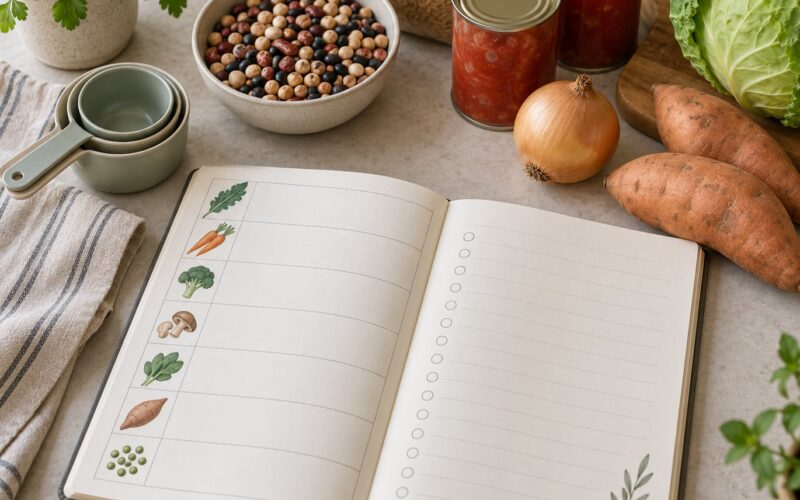
- One written list, sorted into categories. Pantry, frozen, produce, and the small flavor-builders you already have at home.
- Container and freezer space. Stacking containers and a few freezer bags turn one cooking session into five meals. Check the space before you decide to buy bulk.
- A rough sense of current store prices. Glance at the shelf tags for the five or six items you buy every single week. Prices shift with the season, and your memory is usually a few months stale.
If you skip the list, everything else on this page gets harder. People on tight budgets consistently name the list as the thing that makes the difference.
Step-by-Step: How to Grocery Shop for Plant Based Eating on a Budget
How to grocery shop for plant based eating on a budget: start with a meal plan
Pick meals you already know how to cook. This is where budget plans fall apart, because beginners plan ambitious dinners and end up buying specialty ingredients for one meal that never gets eaten twice.
Write each meal down with a serving count. Four cups of cooked rice is not an abstract number; it is two bowls tonight and two bowls packed for lunch. When you know the servings, the shopping quantities write themselves and you stop buying produce in hopeful amounts.
Then set the cap and subtract. Decide your total for the week, subtract the pantry items you already have, and give yourself the remainder for the store. Finally, sort the list into four sections so your route through the store matches your list order. It sounds fussy, but it is the difference between one pass through the store and four.
Build a budget-friendly pantry foundation
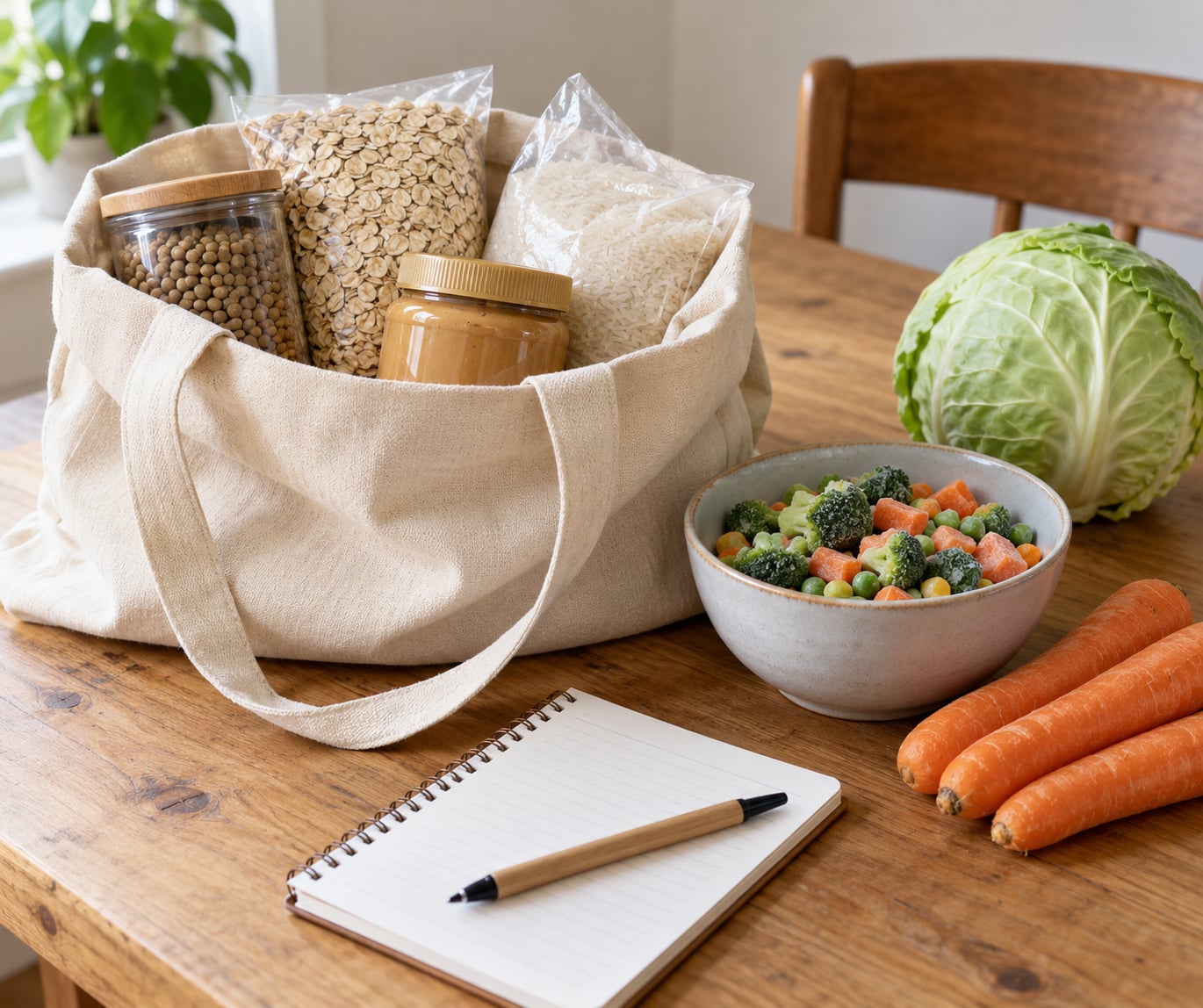
The cheapest plant-based eating runs on staples that keep for months. Start with a base of oats, rice, dried beans, and lentils, which form the backbone of more meals than most people expect once you stop treating them as filler.
Add potatoes, onions, canned tomatoes, peanut or seed butter, and a few dried herbs and spices. Those are your flavor builders, and they do more work than any packaged substitute. Buy rice and oats in sizes you can finish in a month or two. Beans and lentils are different: they are the one category where the largest bag is almost always the right call for a household of three or more.
For a household of one or two, that math flips. Bulk packaging for a single person is the most common complaint in budget forums, because a bag meant for ten meals sits in a cupboard for three months and then gets thrown out. Buy the medium size and split the difference, or find a store that sells legumes by weight so you can buy exactly what you need.
Shop seasonal produce and flexible fresh ingredients
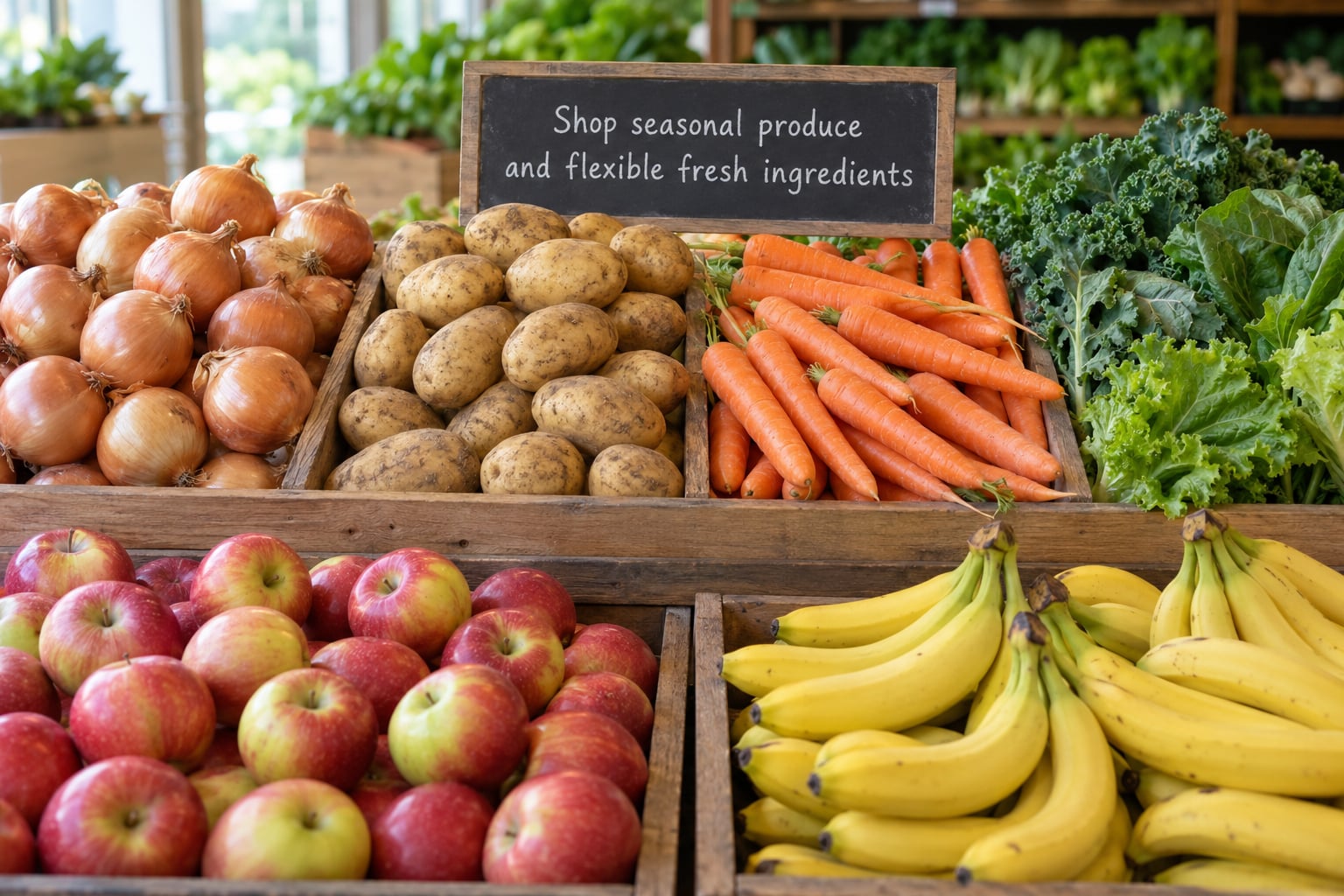
Seasonal produce is the section where the savings hide, because prices swing hard through the year. Compare the prices of the same item across the cases, and check what is genuinely in season right now rather than what you wish were.
Buy a mix instead of all of one thing. Firm vegetables like onions, potatoes, carrots, and squash keep for weeks, so they cover the week’s base cooking. Fresh herbs and a couple of ripe fruits go in for the meals you will eat first. That ordering keeps waste down, which matters more than any single price.
Check freshness before you commit: firm to the touch, heavy for its size, no soft spots, and greens that are crisp rather than limp. Buy imperfect produce when you see it discounted. A scarred apple roasts, simmers, and freezes perfectly well.
Compare unit prices instead of sticker prices
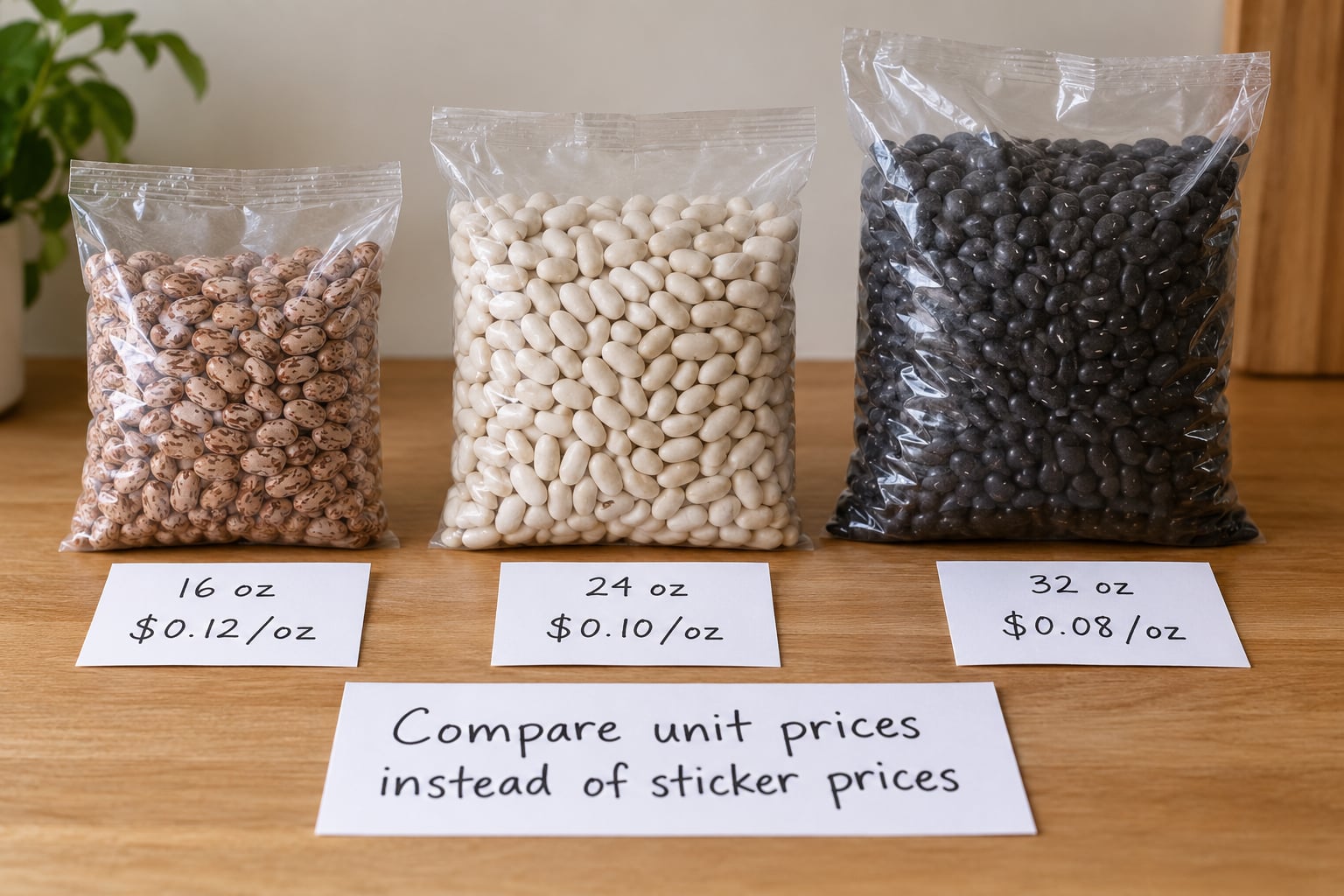
The sticker tells you what one package costs. The small number underneath tells you what the food actually costs per 100 grams or per ounce, and that is the only comparison that matters when two packages are different sizes.
Read the unit price across categories, not just within one shelf. Compare dried beans by weight against canned beans by weight, canned tomatoes by weight against fresh, frozen vegetables by weight against the whole fresh head. Store brands are usually the best-value version of the same product, and on things like canned beans, rice, and canned tomatoes they are frequently indistinguishable in the pan.
One habit worth building: note the unit price of your ten regular items on the back of your list each trip. After a few months you will know exactly which items have quietly gotten expensive and which ones you can buy whenever they are marked down.
Use markdowns and discounts without overbuying
Marked-down produce is not a deal if you cannot eat it. Before you take a half-price item, ask whether you already have something similar at home, whether your freezer has room, and whether the meal you would use it in is on the list. Two discounts stacked on the wrong ingredient still cost you money.
Rotating grocery deals are worth planning around. When your regular beans, rice, or tofu are marked down, buy the size you would buy on a normal week and adjust next week’s menu to match. That is where the real savings compound, because you simply stopped paying full price for a meal you were already making.
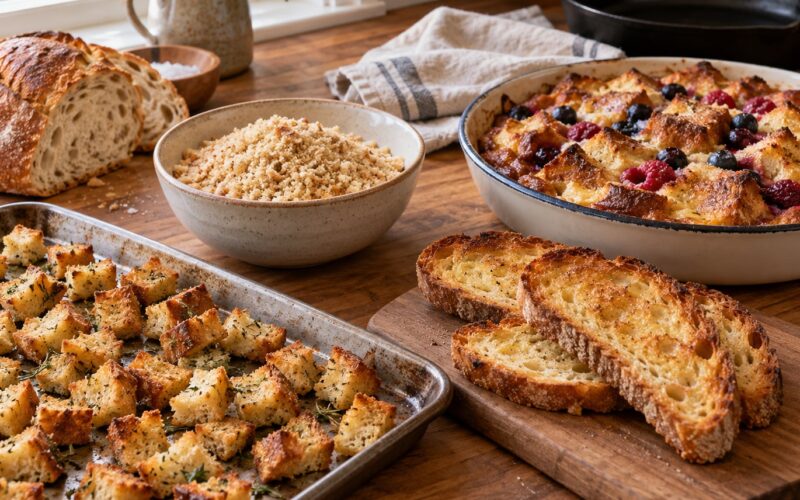
Bakery discounts are worth checking too, particularly day-old loaves and end-of-day items. Markdowns on things your household will genuinely eat are the best deals in the store. Everything else is just a coupon for food waste.
Shop in an order that reduces impulse spending
Walk your list order and resist the detour. Produce, pantry, frozen, canned, then the small flavor-builders last, which puts the bakery and snack aisles at the end of the trip rather than the middle of it.
Shopping hungry is the single most reliable way to blow a grocery cap, so eat something with protein before you go. Pick up an item only if it is on the list or fits a planned meal for the week. If you are off the list twice, you are shopping from a mood again.
Checking the frozen and canned aisles even when your list says otherwise is the one exception worth making. It is where the rotation deals live, and it takes two minutes to look.
Check out, organize, and store food safely
At checkout, keep raw meat, poultry, and seafood separate from the produce and ready-to-eat items you will be eating uncooked. Use the bags the cashier offers as a barrier if you are bagging groceries at a store that uses them. Plant-based shopping trips rarely involve raw meat, but plenty of households buy both on the same run.
At home, refrigerate what needs cold within two hours, put frozen food away first, and thaw in the refrigerator or the microwave rather than on the counter. Cooked beans and grains keep about three to four days in the fridge, so plan two days of meals ahead and freeze the rest in single portions right away.
Wash produce before cutting it, use clean containers for anything you plan to eat ready to eat, and date leftovers so the older ones get used first. Safe storage is not the exciting part of budget shopping, but throwing out a container of cooked food on Thursday undoes the savings from the whole trip.
Common Mistakes
Buying ingredients for a meal you have never made. Aspirational shopping is the most expensive habit in this whole guide. A single-use specialty ingredient costs full price and usually ends up in the compost bin. Fix: only buy for meals on your written plan, and add a new recipe only after you have cooked the plan twice.
Treating a coupon as savings. A coupon on an item you would not have bought is not a discount, it is a marketing department’s favorite outcome. Fix: apply sales and coupons last, to staples already on your list.
Confusing package price with value. The larger bag is not always the better deal, and the smaller bag is not always the worse one. Fix: read the unit price every time, especially when comparing dried against canned against frozen.
Shopping hungry. Every study and every person I have shopped with agrees on this one. Fix: eat before you go, and walk the list order without backtracking.
Buying bulk without a storage and usage plan. Bulk works when you cook it constantly and have freezer space. Fix: check how fast you actually cook a given item. Fast turnover means buy big, slow turnover means buy medium.
Skipping storage planning. Produce bought without a meal attached to it gets wasted, and the waste is larger than the savings. Fix: attach each fresh item to a specific meal the day you shop, and freeze what will not get used.
One more worth naming: shopping for everyone else. In a mixed household, the plant-based groceries often end up bought separately from the main list, which doubles the trip cost. Fix: cook plant-forward meals the whole household eats, rather than buying separate specialty items for one person.
Frequently Asked Questions
What are the cheapest plant-based foods to buy?
Dried beans and lentils are the best value in the store by a wide margin, and buyers on tight budgets say so consistently. Rice, oats, potatoes, and onions fill out the base. Frozen vegetables hold their nutrition and cost less than out-of-season fresh. Canned tomatoes and store-brand peanut butter add variety without a big jump in the bill. Cooked beans alone can carry several meals a week.
How much should I spend on groceries for one person each week?
There is no single right figure, because prices vary by region and by household size, and because people define the week differently. A more useful approach is to pick your own cap based on what you can afford, plan a week of familiar meals, and shop from a short list. Track actual spend for four weeks and adjust the cap from what you really spend, not from what you hoped to spend.
Are frozen vegetables and beans cheaper than fresh or canned options?
Usually, yes, and the reason matters. Frozen vegetables are picked and frozen at peak, so they cost less than fresh produce that traveled a long way out of season, and you only cook what you need, so less gets thrown away. Dried beans cost far less per serving than canned but need soaking and cooking time. On a busy weeknight, the time saved by canned beans is a fair trade for the extra cost.
How can I shop for produce without wasting food?
Shop for what you will cook this week, and attach each fresh item to a specific meal before you buy it. Buy firm, sturdy vegetables in quantity and delicate greens and ripe fruit in small amounts for the meals you will eat first. Buy imperfect produce when it is marked down, since quality damage rarely matters once food is cooked. Freeze surplus berries, greens, and cooked beans in single portions.
Should I buy plant-based meat substitutes on a budget?
Treat them as an occasional ingredient rather than a staple. Branded plant-based burgers and meat substitutes carry a large markup over the whole-food ingredients they are made from, and budget shoppers routinely describe them as unaffordable. If you enjoy them, buy them on rotation when marked down. For everyday protein, dried beans and lentils, tofu on sale, and eggs if you eat them will stretch the same meals much further.
Is buying in bulk cheaper for a plant-based diet?
It is cheaper per unit, but only if you use it before it goes bad. Bulk pays off for items you cook weekly, like rice, oats, dried beans, and lentils, and for households of three or more. For one or two people, bulk packaging is the most common source of waste, and medium sizes or scoop-and-weigh stores are usually the better deal. The real question is turnover, not package size.
Conclusion: Start With Your Weekly Staples
Budget plant-based shopping is a system, not a list of bargain-hunting tricks: plan familiar meals with servings written down, stock the pantry with dried grains and legumes, buy frozen and seasonal produce, compare unit prices instead of sticker prices, and shop your route without backtracking. Pick three or four meals you already love and repeat them until the shopping is boring, because boring is what keeps a household inside its budget.
Start this week by setting one spending cap, writing down four meals and their serving counts, and building a short categorized list from the staples you already own. Shop that list, freeze half of what you cook, and check what you actually spent at the end of the week.
Last updated for October 2026.