If you want to know how to store onions and potatoes so they last, the whole method fits in one sentence: cure the onions, keep both vegetables in their own breathable container, and put those containers in a cool, dark, dry, ventilated place between about 45 and 55°F (7 to 13°C). Never seal them in plastic, never put them in the same bag, and skip the refrigerator for whole onions and uncut potatoes.
Done well, you’ll get two to four months out of a bag of onions and one to three months out of a box of potatoes in an ordinary pantry. Done badly, you’re throwing soft, sprouting vegetables into the bin after two or three weeks.
Table of Contents
- What You Need
- How to Store Onions and Potatoes So They Last Longer Step by Step
- Step 1: Sort the Onions and Potatoes You Bought
- Step 2: Cure Onions Before They Go Into Storage
- Step 3: Put Onions in Something That Breathes
- Step 4: Store Potatoes Cool, Dark, and Airy
- Step 5: Keep Onions and Potatoes Apart So They Last Longer
- Step 6: Check Stored Vegetables Once a Week
- Onions vs Potatoes: Storage Conditions Side by Side
- Storing Onions and Potatoes With No Root Cellar
- What to Do With Sprouted Onions and Greening Potatoes
- Why the Refrigerator Is the Wrong Place
- Common Mistakes That Ruin Stored Onions and Potatoes
- Frequently Asked Questions
- Can onions and potatoes be stored together?
- Can I refrigerate onions and potatoes?
- How long should onions and potatoes last when stored properly?
- Are sprouted potatoes safe to eat?
- Should onions and potatoes be washed before storing?
- What is the best container for storing onions and potatoes?
- Conclusion
What You Need
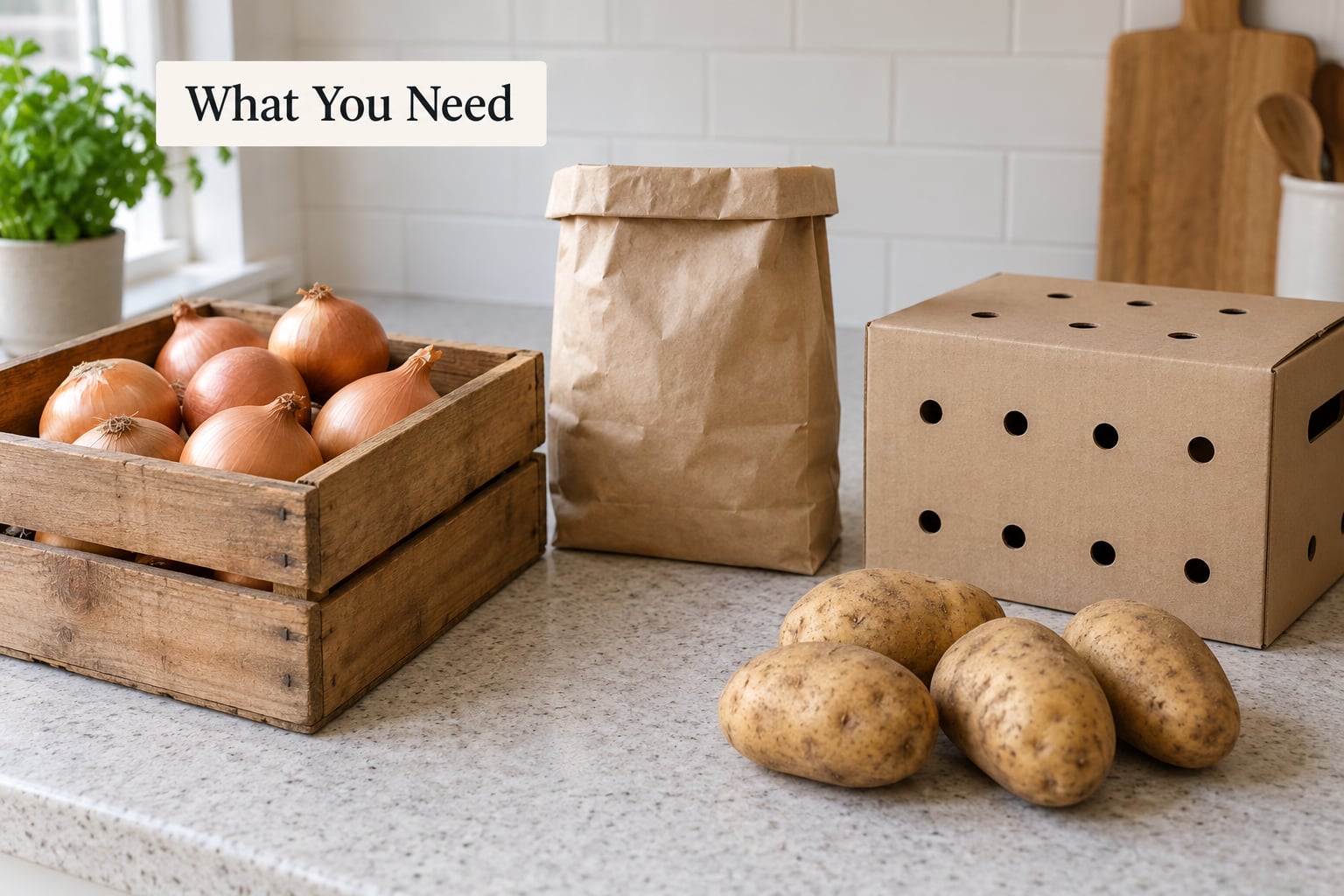
Storage for these two vegetables is less about gear and more about finding one decent spot in your house. Here’s the short list.
- A curing spot for onions: a wire rack, a screen, or a flat surface somewhere dry, shaded and breezy. A covered porch, a garage with the door cracked, or the top shelf of a closet works.
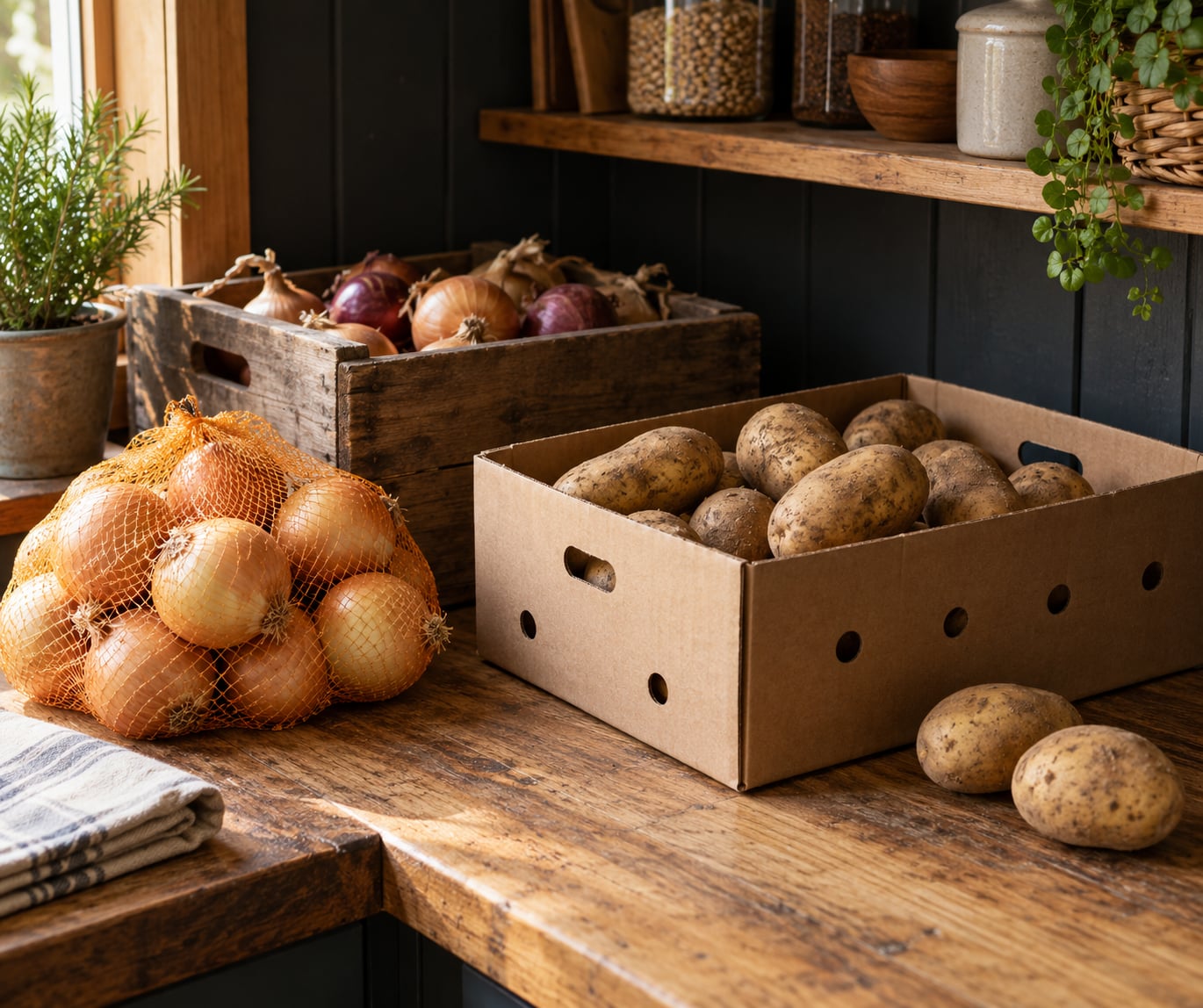
- Breathable storage for onions: a mesh produce bag, an open wire basket, a slatted crate, or a string for hanging a braid.
- Breathable storage for potatoes: a ventilated cardboard box, a wooden crate, or a wire basket, plus something opaque to block light if the container is clear.
- A cool dark place: a pantry, an unheated basement, a closet in the coolest room of the house, or an unheated garage that stays under about 60°F (16°C).
- Five minutes a week: a habit of opening the containers, looking at them, and pulling anything soft.
Paper bags and cardboard boxes are worth keeping around. A paper bag breathes just well enough for a few onions, and a grocery box with a few pencil holes punched in the sides does the same job for potatoes.
How to Store Onions and Potatoes So They Last Longer Step by Step
Step 1: Sort the Onions and Potatoes You Bought
Put the whole batch out on the counter and pick through it before anything goes into storage. Anything bruised, soft, leaking, split, or already fuzzy with mold goes straight in the compost or the dinner pot that night.
Sort the onions by type while you’re at it. Sweet onions, yellow onions, and red onions have different shelf lives, and mixing a bag of quick-cooking sweets with long-keeping storage onions means the sweets quietly spoil the whole basket.
Step 2: Cure Onions Before They Go Into Storage
Curing is simply drying the onion until its outer skin goes papery and its neck seals shut. Spread the bulbs in a single layer on a rack or cardboard in a dry, shaded, well-ventilated place, out of direct sun.
Expect about two to three weeks, longer if the air is humid. Turn them occasionally so the undersides dry too. If the skin rustles when you rub it and the neck is dry and tight rather than thick and damp, they’re done.
You can skip curing for onions from the grocery store, because they’ve usually already been dried commercially. Home-harvested onions must be cured, and it’s the single biggest reason home-grown onions rot in storage.
Step 3: Put Onions in Something That Breathes
Whole cured onions need moving air, not containment. Skip sealed plastic bags, airtight canisters, and the plastic wrap clamshell they came in.
A mesh produce bag, an open wire basket, a slatted crate, or a hanging braid all work. Sweet onions and green-then-dried onions do best hung or in a shallow basket where air reaches every surface. Storage onions hold up fine in a mesh bag tucked on a pantry shelf, as long as the shelf is dry and the bag is not pressed against a wall.
If a bag smells strongly of onion right after you seal it up, that’s moisture trapped inside. Take the onions out, spread them out, and let them dry before putting them back in something breathable.
Step 4: Store Potatoes Cool, Dark, and Airy
Potatoes want 45 to 55°F (7 to 13°C), low humidity, and no light at all. Darkness is the rule people skip: light triggers chlorophyll formation in the skin, and green tissue is where glycoalkaloids build up.
Airy doesn’t mean humid. Potatoes need ventilation so moisture from the tubers can escape rather than sit against them. A ventilated box, crate, or wire basket on a shelf away from the oven, the dishwasher, and the sink handles this.
Watch the cold end of the range too. Potatoes stored below about 40°F (4°C) can pick up sugar and suffer chilling injury, which shows up as a sweet, off flavor after cooking. Warm storage has its own penalty: at 70°F (21°C) and above, potatoes sprout faster and lose weight to moisture loss.
Step 5: Keep Onions and Potatoes Apart So They Last Longer
They can share a room or a cellar, but not the same container. Potatoes and onions both keep respiring after harvest, giving off moisture and small amounts of ethylene gas. Packed together, that gas and that moisture speed up onion sprouting and decay and speed up potato sprouting too, which is exactly what ruins the batch.
Plenty of people store both in a shared cellar and get away with it by separating them physically. Layers of straw or folded newspaper between baskets work, so does keeping onions hung on a wall hook and potatoes in a bin across the room. The point is that air moves between them.
Step 6: Check Stored Vegetables Once a Week
Open both containers every week and pick them over. On a potato, look for green patches, sprouts, soft spots, or skin that rubs off. On an onion, look for a soft bulb, a neck that’s gone slimy or moldy, or an overpowering sour smell in the container.
Sprouted potatoes are fine to eat if you cut well past the sprout and the green, but any potato that’s extensively green, bitter-tasting, or soft going to mush belongs in the trash. Any onion that’s moldy or leaking gets removed immediately, and you check the ones around it.
Push the freshest stock to the front and older stock to the back. That first-in, first-out habit is the difference between using what you bought two months ago and finding it soft.
Onions vs Potatoes: Storage Conditions Side by Side
| Storage factor | Onions | Potatoes |
|---|---|---|
| Ideal temperature | 45 to 55°F (7 to 13°C) | 45 to 55°F (7 to 13°C) |
| Humidity | Dry, 65 to 70 percent relative humidity | Humid, 85 to 95 percent relative humidity |
| Light | Dark, or they sprout | Dark, or they turn green |
| Best container | Mesh bag, wire basket, hanging braid | Ventilated box, crate, wire basket |
| Pantry shelf life | 2 to 4 months, sweet onions 2 to 6 weeks | 1 to 3 months |
| Cool cellar shelf life | Up to 6 months if kept near 32 to 40°F (0 to 4°C) | 4 to 6 months at 40 to 45°F (4 to 7°C) |
| Refrigerator | No for whole onions, yes for cut or green onions | No for most types, yes for waxy or pre-cooked potatoes |
| Store together? | No, separate container | No, separate container |
The humidity line is the one people miss. Onions want a drier room; potatoes want more moisture in the air around them. That’s why a vented produce bin on the counter works well for onions and a closed-in cardboard box in a cool closet works well for potatoes.
Storing Onions and Potatoes With No Root Cellar
Most households reading this don’t have a root cellar. That’s fine; the rule is a cool, dark, ventilated room, and you can build one out of an apartment.
- Best potatoes in an apartment: a ventilated box or crate on the floor of the coolest closet, away from baseboards and pipes that carry heat. Add a layer of newspaper between the potatoes and the bottom of the box to block stray light.
- Best onions in an apartment: a mesh bag hung on a hook inside the same closet door, or on a wall in the coolest room. Never on top of the refrigerator, where heat rises.
- Unheated porch or garage: works in winter in most places, provided it stays under about 60°F (16°C) and freezes don’t occur. An insulated chest cooler packed around the produce buys you a few weeks in a warm garage.
- Countertop spot: workable, but pick the wall farthest from the stove and the sink, and change the whole batch every two weeks or so. Wet hands and stove heat are what turn a countertop basket into a mold experiment.
What to Do With Sprouted Onions and Greening Potatoes
Sprouting and greening look alarming, and they’re not the same problem. Green patches come from light, and the light-exposure window that produces visible green is short.
Greening potatoes: small green spots get cut away generously, well past the color, and the potato is fine. A potato that’s green over a large area, bitter when tasted raw, or sprouting into a soft wrinkled tuber gets discarded, because glycoalkaloid levels rise with both greening and sprouting and don’t come down with cooking.
Sprouted onions: a green shoot coming out of the top of a storage onion is harmless. Peel it, cut off the top, and use the rest. A bulb with a soft, mushy neck or mold is not a storage problem to solve; it’s a bulb to throw out.
Onions that already sprouted at the store: cook them first. Sprouted onions are past their raw-eating window but perfectly usable in soup, caramelized onions, or a batch of mirepoix that gets cooked down for twenty minutes.
Why the Refrigerator Is the Wrong Place
A refrigerator is cold and humid, and both of those qualities work against you. Cold converts the potato’s starches to sugar and can leave it tasting sweet after cooking, while the fridge’s humidity lets condensation sit on skins and invites mold.
Refrigerated onions sprout as soon as they’re taken out, because the cold-then-warm cycle mimics spring. The exceptions are sensible: green onions and scallions, cut onions, and peeled boiled potatoes all belong in the fridge. Whole cured storage onions and uncut potatoes do not.
Common Mistakes That Ruin Stored Onions and Potatoes
- Storing onions before they’re cured. Thick, damp necks trap moisture and the bulbs rot from the top down. Cure for two to three weeks until the skin is papery.
- Sealing either vegetable in plastic. Condensation forms, and both vegetables need to shed moisture, not trap it. Use mesh, crate, or vented box.
- Washing potatoes before storage. Water on the skin invites rot. Brush off the dirt and store them dirty; wash at the moment of use.
- Leaving potatoes in the light. A clear bin by the window produces green potatoes within days. Cover the container or move it into a closet.
- Storing both vegetables in one bag or bin. Their combined moisture and ethylene make the whole batch spoil faster.
- Parking the storage spot beside the sink or stove. Both add warmth and airborne moisture, which is the exact environment that spoils them.
- Never checking the batch. One soft onion or potato spreads mold to everything touching it. A weekly five-minute check is the whole maintenance routine.
Frequently Asked Questions
Can onions and potatoes be stored together?
They can share a room, but not the same bag or box. Both vegetables release moisture and small amounts of ethylene gas as they respirate, and packed together those off-gases trap humidity and speed up sprouting and rot in both. Keep onions hanging or in a mesh basket on one shelf and potatoes in a separate ventilated box, ideally across the room.
Can I refrigerate onions and potatoes?
Not for whole onions and uncut potatoes. Cold temperatures make potatoes taste sweet after cooking and can cause chill damage, while refrigerated onions sprout as soon as they leave the fridge. Green onions, scallions, and cut onions are exceptions that do belong in the refrigerator, since you are using them within days.
How long should onions and potatoes last when stored properly?
Cured storage onions keep two to four months in a cool pantry, and sweet onions only two to six weeks. Potatoes last one to three months in a pantry and four to six months in a cool cellar around 40 to 45°F (4 to 7°C). Warm, humid, or sealed conditions cut those times to a matter of weeks.
Are sprouted potatoes safe to eat?
Small sprouts and small green patches are fine once you cut well past them, removing several extra millimeters of tissue. Potatoes that are extensively green, bitter tasting raw, or soft and wrinkled should be discarded, because glycoalkaloid levels rise with greening and sprouting and cooking does not reduce them. When in doubt, throw it out.
Should onions and potatoes be washed before storing?
No. Store both unwashed and dry, with any dirt gently brushed off. Moisture left on the skin is the main reason stored potatoes rot and onions turn moldy. Wash them right before you cook, not before you store them, and skip the washing step for onions entirely.
What is the best container for storing onions and potatoes?
For onions, a mesh produce bag, open wire basket, slatted crate, or hanging braid keeps air moving around the bulbs. For potatoes, a ventilated cardboard box or wooden crate in a dark, cool spot works, with a layer of newspaper to block light. Avoid sealed plastic bags and airtight canisters for both vegetables.
Conclusion
Start with the onions: cure them until the skins are papery, then put them in a mesh bag or open basket in a cool, dark, dry, ventilated place at 45 to 55°F (7 to 13°C). For the potatoes, find the coolest dark spot you have, box them separately, and keep light off them so they never green.
Once a week, open both containers and pull anything soft, moldy, or heavily sprouted. Use the softened vegetables first rather than waiting for them to become waste.