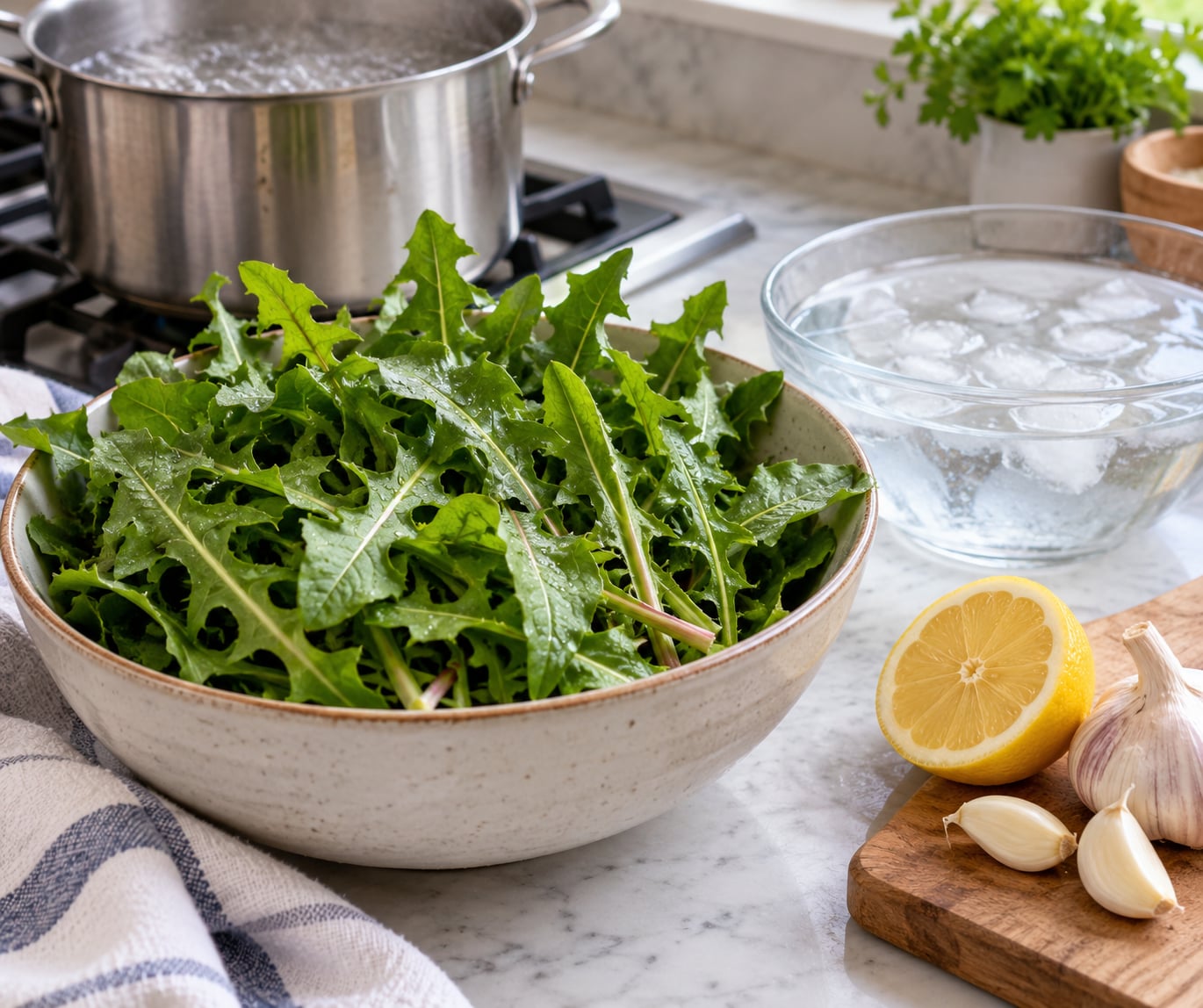
Blanching is what turns dandelion greens from a lawn weed into a side dish. Drop the greens into heavily salted boiling water for 30 to 60 seconds if they’re young and tender, or 5 to 10 minutes if they came off a plant that already flowered, then cool them in ice water, squeeze them dry, and finish them in fat and acid. The whole job takes about 15 minutes.
That sounds obvious once you know it. Most people meet the problem the hard way instead. They pull a bowl of greens, dump them in a hot skillet, and take the first bite expecting spinach. What they get is a bitterness so sharp it reads as a mistake rather than a flavor, and they conclude the leaves must be bad.
Nothing is wrong with the leaves. The bitterness is a compound, and heat plus salt plus water leaches it out into the pot where you can throw it away.
Table of Contents
- What You Need
- Step-by-Step: How to Make Dandelion Greens Less Bitter
- Trim and Wash the Dandelion Greens
- Blanch the Greens to Remove Bitterness
- Squeeze and Cook the Greens
- Common Mistakes When Cooking Bitter Dandelion Greens
- Skipping or rushing the wash
- Crowding the pot
- Under-salting the water
- Skipping the ice bath
- Skipping the squeeze
- Expecting salt alone to fix it
- Frequently Asked Questions
- How long should dandelion greens be blanched to reduce bitterness?
- Do I need to remove the stems and flowers from dandelion greens?
- Can I reduce bitterness without blanching the greens?
- Why do my dandelion greens taste bitter even after cooking?
- Are the roots and flower heads safe to eat?
- What foods pair well with milder dandelion greens?
What You Need
You need a big pot, a slotted spoon, a bowl of ice water, and a kitchen towel. That is the whole equipment list.
- Young dandelion greens — picked before the plant opens a yellow flower, or bought fresh at a farm stand
- Kosher salt — roughly 1 tablespoon per quart of water, and no shy about it
- A large pot — greens need room to move or they cook unevenly and bruise
- A bowl of ice water — a second bowl of cold tap water works if you change it often
- Olive oil or butter — for the pan
- Lemon juice or vinegar — the acid does as much work as the blanch
- Garlic, onion, black pepper — optional, but they carry a bowl of greens a long way
The salt is doing actual work, not seasoning. Bitter compounds in greens are water-soluble, and salt water pulls them out faster than plain water does. The ice bath is not optional either. It stops the cooking and holds the green color.
Step-by-Step: How to Make Dandelion Greens Less Bitter
Trim and Wash the Dandelion Greens
Pull the leaves off at the crown and cut away the thick, pale stem end where the leaf met the root. That base stays fibrous no matter how long you cook it. Leave the thin tender stems, because they hold onto flavor and cook down fast.
Dump the greens in a colander and run cold water over them, working the leaves through your fingers. Dandelion leaves are deeply lobed, and sand hides in the pockets where the lobes meet the rib. Most people rinse once, find grit on the plate, and blame the plant.
Use at least three changes of water. Swish, lift, drain, repeat. The water should run nearly clear by the third bowl. If you picked the greens after flowering, strip out any flower stalks, buds and yellowed leaves you find along the way.
Young leaves need almost none of this. They are tender enough that a rinse and a quick trim is plenty, and they barely need blanching at all.
Blanch the Greens to Remove Bitterness
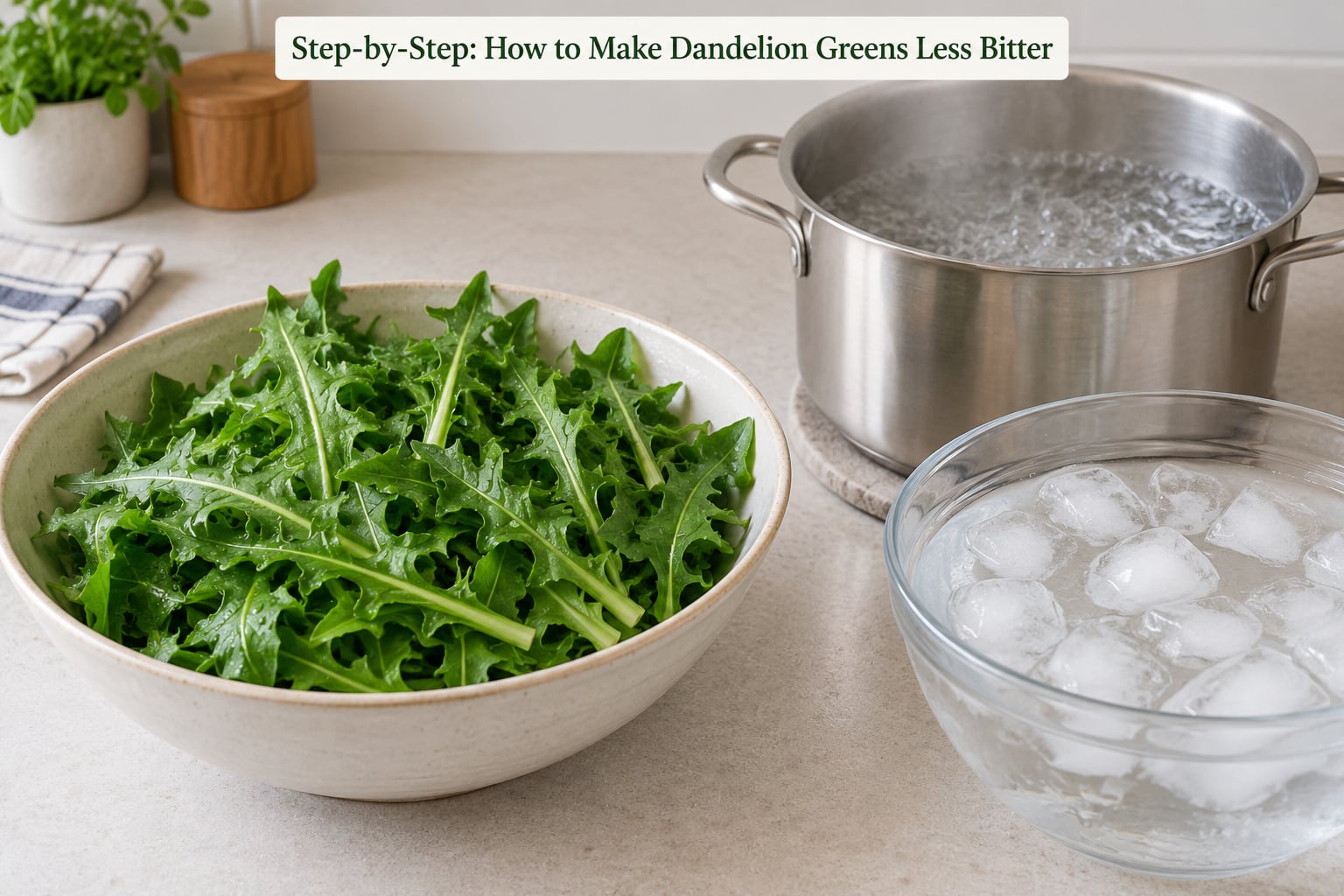
Bring a large pot of water to a rolling boil and salt it heavily, about a tablespoon per quart. It should taste distinctly like the ocean.
Add the greens and stir once so every leaf is wet. Then time it:
- Baby leaves, pre-flowering: 30 to 60 seconds
- Full-sized leaves, pre-flowering: 1 to 2 minutes
- Mature leaves or any greens cut after the plant flowered: 5 to 10 minutes
You’ll know it worked when the leaves collapse from crisp to soft and turn a darker, olive-leaning green. Older greens going limp and glossy is the signal that the water has pulled out what it can.
Lift them straight into the ice water with the slotted spoon. Thirty seconds in cold water stops the residual cooking and sets the color back to bright green.
One more note for the toughest leaves: if a mature plant has already flowered, boil the greens, drain them, throw the water away, then boil them again in fresh salted water. A double boil takes care of what a single blanch cannot, and the result ends up tasting close to creamed spinach once you add butter or cream.
Squeeze and Cook the Greens
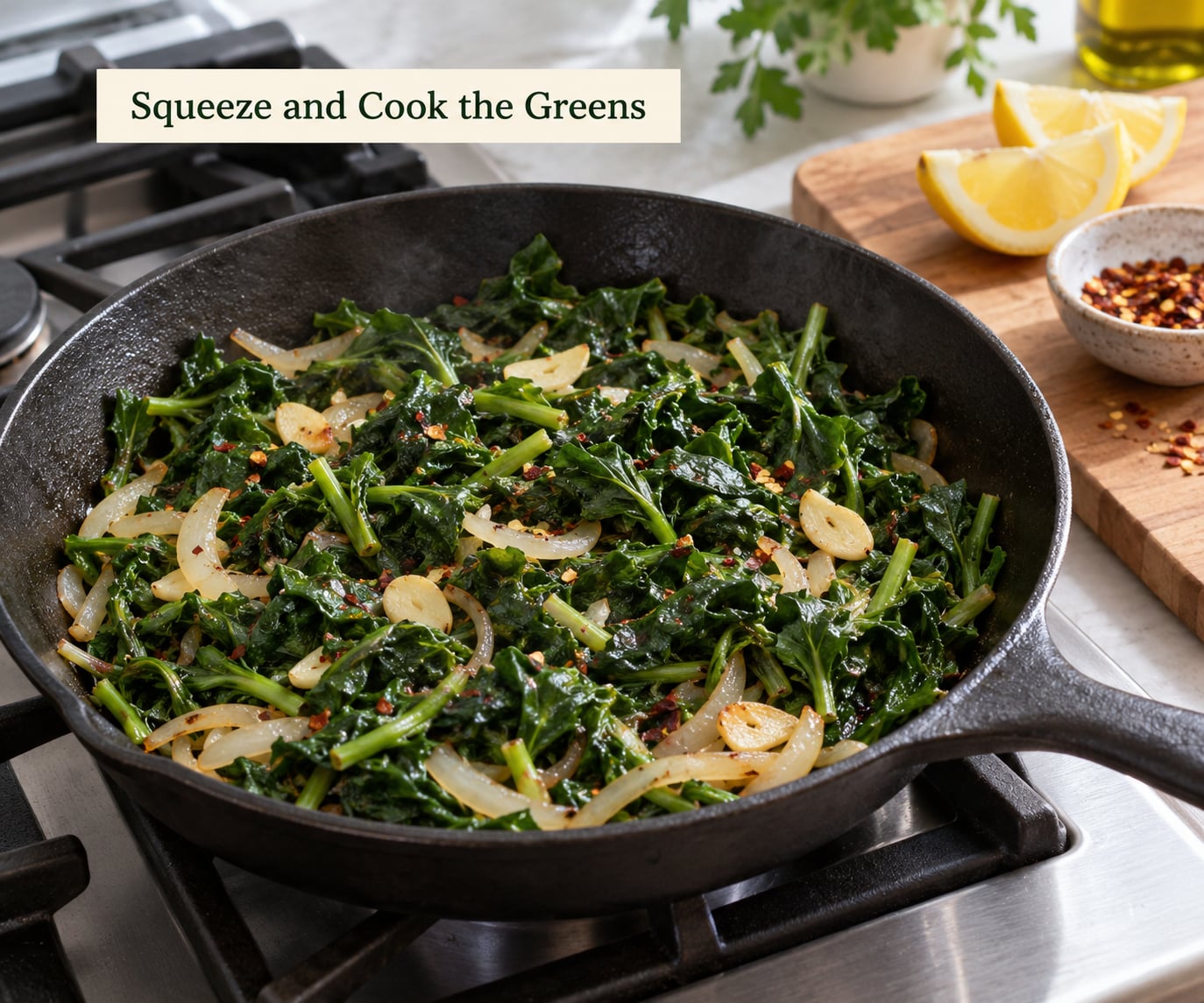
Gather the cooled greens into a clean towel or a bare handful and squeeze hard. Waterlogged greens steam in the pan instead of sautéing, which dilutes every flavor you add afterward. Squeeze until the bundle barely drips, then move on.
For the simplest preparation, warm a glug of olive oil in a skillet over medium heat, add two or three sliced garlic cloves, and cook them about 30 seconds until fragrant but not brown. Add the squeezed greens, toss to coat, and let them wilt for two or three minutes. Finish with a squeeze of lemon, a decent amount of salt, and black pepper.
For the version my grandmother made, slice a yellow onion thin, let it cook down in bacon drippings or oil until soft and sweet, then add the greens and cook until they collapse. A few grinds of black pepper, a splash of the cooking liquid or broth, and the bitterness has nowhere left to hide.
Other fast routes: steam the squeezed greens for four minutes and dress them with vinegar and oil, fold them into a soup or bean pot in the last ten minutes, or blitz blanched greens with garlic, lemon and olive oil into a pesto.
Common Mistakes When Cooking Bitter Dandelion Greens
Greens usually stay bitter for one of six reasons, and all six are fixable.
Skipping or rushing the wash
Grit has a bitter edge of its own, and it will convince you the blanch failed. Three changes of cold water, hands working the leaf lobes, no exceptions.
Crowding the pot
Greens packed into a pot fold over themselves, cook unevenly, and hold bitter compounds in the layers that never get hot water. If the pot looks full, use two pots. The greens shrink by more than half once cooked, so buy yourself room.
Under-salting the water
Plain boiling water leaches bitterness. Heavily salted water leaches it faster. If your pot of water tastes mild, add more salt.
Skipping the ice bath
Residual heat keeps cooking the leaves after you pull them out, and it also dulls the color. Thirty seconds in ice water costs you nothing.
Skipping the squeeze
Wet greens simmer, then steam, then go dull. Squeeze them dry and they sear in fat like any other green.
Expecting salt alone to fix it
Salt seasons. It does not neutralize. The two ingredients that actually soften a leftover bitter note are acid and fat, in that order. A spoonful of lemon juice or a splash of vinegar at the end of cooking does more than any extra pinch of salt.
Balance is the last layer. Fat coats the leaves and slows bitterness on the tongue: butter, olive oil, cream, sour cream. Acid cuts it: lemon, vinegar, pickle brine, a little tomato. Sweetness rounds it: a touch of maple syrup, sugar, or a sweet onion. Strong flavors crowd it out: garlic, anchovy, cured meat, roasted pepper.
And if you would rather not fight it, mix the greens in. Fold blanched dandelion into spinach, Swiss chard, or mustard greens at one part dandelion to two parts milder greens. Most people cannot pick it out of the blend.
Frequently Asked Questions
How long should dandelion greens be blanched to reduce bitterness?
It depends on the leaf. Young, tender leaves picked before the plant flowers need only 30 to 60 seconds in heavily salted boiling water. Full-sized leaves take 1 to 2 minutes. If you harvested after flowering, give them 5 to 10 minutes, and boil them twice in fresh salted water if they are still too tough. Cool them in ice water right away, then squeeze dry.
Do I need to remove the stems and flowers from dandelion greens?
Take off the thick stem base, where the leaf met the root crown, because it stays fibrous no matter how long you cook it. Leave the thin tender stems, which are edible and soften in a couple of minutes. Flower stalks, buds and yellowed leaves should go in, especially on a plant that has already bloomed, since they carry the most bitterness.
Can I reduce bitterness without blanching the greens?
You can improve the flavor, but you will not remove much bitterness. Soaking young leaves in cold salted water for 30 to 60 minutes pulls out a small amount and keeps more nutrients than boiling, which is why nutrition guides mention it. From there, strip the midrib from each mature leaf and lean hard on acid, fat and sweetness. Mature, post-flowering greens really do need heat.
Why do my dandelion greens taste bitter even after cooking?
Usually the greens were harvested after the plant flowered, when bitter compounds and the milky latex sap have built up. A single short blanch will not touch that level, so double-boil them. Other culprits: under-salting the water, crowding the pot so leaves cook unevenly, skipping the ice bath, and leaving the greens wet when they hit the pan, which steams them instead of sautéing.
Are the roots and flower heads safe to eat?
Both are edible. Roots are roasted for tea and coffee, and the bitter greens you have been cooking come from the same plant, so roasting mellows rather than removes the root bitterness. Young flower heads are good battered and fried. Never eat greens from a lawn that has been treated with weed killer or grown beside busy roads, and skip the whole plant if you are allergic to ragweed, daisies or chrysanthemums.
What foods pair well with milder dandelion greens?
Think in the four balancing categories. Acid: lemon juice, vinegar, pickle brine, or chopped tomato. Fat: butter, olive oil, sour cream, or grated cheese. Sweet: maple syrup, a pinch of sugar, or sweet onion. Strong flavor: garlic, anchovy, smoked bacon, or hot pepper flakes. Starch also works well, since potatoes and cornmeal carry a mild side dish without competing.
Start with the blanch. Salt your water heavily, cook the greens until they go limp and dark, ice bath, squeeze dry, then finish with lemon and olive oil. Do that once and you will not think of dandelions as a weed again.
One last question, because it changes the method: are these wild-picked from your yard, or bought? Mature, post-flowering greens get the double boil, while young store-bought leaves barely need the pot at all.