Learning how to make cornmeal mush and fried mush takes two stages, and the second one surprises almost everybody. You cook a simple pot of yellow cornmeal and water into a thick porridge, chill it until it holds its shape, cut it into slabs, then pan-fry those slabs in butter until the outside is golden and the middle stays soft and creamy. From start to finish you are looking at about 45 minutes of active work plus a few hours of chilling time.
The whole thing comes down to two pantry ingredients. That is why Appalachian families cooked it for breakfast for generations, and why it still shows up on diner menus and Saturday brunch tables across the South. The step most home cooks skip is the chill, and skipping it is why so many first attempts turn to crumbs in the skillet.
Below is the complete method: what you need, the exact ratio, heat levels, times, the fry stage, and the fixes for the mistakes that trip people up.
Table of Contents
- What You Need
- Choosing your cornmeal
- Step-by-Step
- How to Make Cornmeal Mush and Fried Mush
- How to Make Fried Mush from Cornmeal Mush
- Serving Suggestions and Variations
- Common Mistakes
- Frequently Asked Questions
- Can I make cornmeal mush without butter?
- How do I know when cornmeal mush is thick enough to fry?
- Should I chill cornmeal mush before frying it?
- What oil is best for frying cornmeal mush?
- Can I make fried cornmeal mush ahead of time?
- How do I keep fried mush crisp after serving?
- Conclusion
What You Need
The boiled base uses very little. For a standard 9 by 5 inch loaf pan you need 1 cup yellow cornmeal, 3 cups water, 1 teaspoon salt, and an optional tablespoon of sugar for the sweeter Southern version. A cup of milk in place of the last cup of water makes it richer and closer to a breakfast porridge.
The fry stage needs a fat that browns rather than smokes. Butter is the traditional choice and gives you the flavor people are actually looking for. Bacon grease or lard works and is what many mountain cooks reach for first. A neutral oil like canola or peanut works if you are avoiding dairy, but you lose the buttery flavor.
You also need a whisk or fork for the slurry, a heavy pot with a lid for the mush, a loaf pan or square dish for chilling, a sharp knife for slicing, and a skillet. A cast iron skillet holds heat best and gives the darkest crust. A nonstick skillet is more forgiving and lets you use less fat. Both work.
Choosing your cornmeal
Yellow cornmeal is the traditional choice for Southern and Appalachian mush. It has the stronger corn flavor and the color people expect on a plate. White cornmeal is finer and sweeter and makes a smoother, more delicate loaf.
Stone-ground cornmeal keeps some of the corn germ and bran, so it tastes fuller and cooks a little faster. It also goes rancid faster, so buy it in quantities you can use within a few months. Enriched cornmeal has had its nutrients added back and cooks smoothly, which matters if you are serving someone who wants the fiber of the whole-grain version.
Polenta is not the same thing, even though it starts from corn. Grits get their texture from wet milling, which removes some of the germ, and they cook smoother and creamier. Cornmeal mush is coarser and starchier, which is exactly what lets a chilled slice hold together in a hot skillet.
Step-by-Step
How to Make Cornmeal Mush and Fried Mush
Cornmeal mush is cooked cornmeal stirred slowly into boiling salted water until it thickens into a smooth, creamy porridge. The classic ratio is 1 cup of cornmeal to about 3 cups of water, and you can add a fourth cup for a looser breakfast porridge.
First, whisk the cornmeal and salt together with 1 cup of cold water in a bowl until no dry streaks remain. This cold water slurry is the single best defense against lumps, and it is the step most recipes skip. Letting the dry cornmeal hit boiling water directly is what creates the gluey pockets nobody wants.
Bring the remaining 2 cups of water to a rolling boil in a heavy pot with a pinch of salt. Slowly pour in the slurry while whisking, and keep whisking until the mixture is smooth and pourable again.
Turn the heat to medium-low and keep the pot moving. Stir every minute or so for the next 8 to 10 minutes, scraping the bottom, until the mush pulls away from the sides of the pot and leaves a clean line when you drag a spoon through it. The texture should be thick enough to mound on a spoon rather than run off it.
Cover the pot, drop the heat to low, and let it simmer for 5 more minutes. That covered time cooks off water and firms the starch so the loaf sets properly in the fridge. Skipping it is the second most common reason a finished mush stays too soft to slice.
Turn off the heat and let the pot sit for 2 minutes so it stops bubbling hard. Then spoon the mush into a lightly greased loaf pan, press the surface flat with the back of a spoon, and let it cool until it is no longer steaming before you refrigerate it.
| Stage | Time | Heat level |
|---|---|---|
| Whisk slurry | 1 minute | No heat |
| Bring water to boil | 5 to 7 minutes | High |
| Stir to thicken | 8 to 10 minutes | Medium-low |
| Covered simmer | 5 minutes | Low |
| Chill in refrigerator | 2 hours minimum, overnight is better | No heat |
| Fry slices | 8 to 10 minutes per batch | Medium, then medium-high |
How to Make Fried Mush from Cornmeal Mush
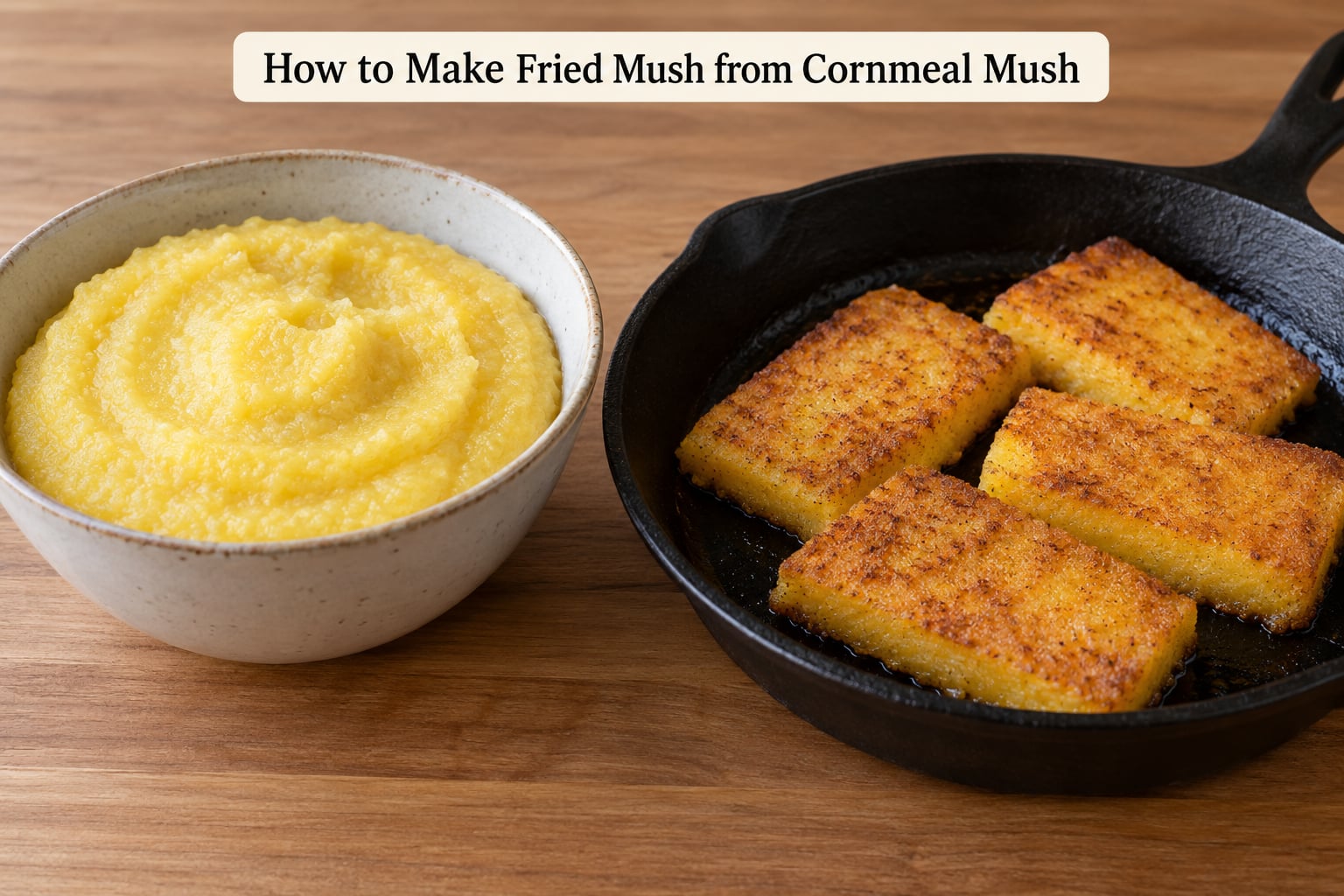
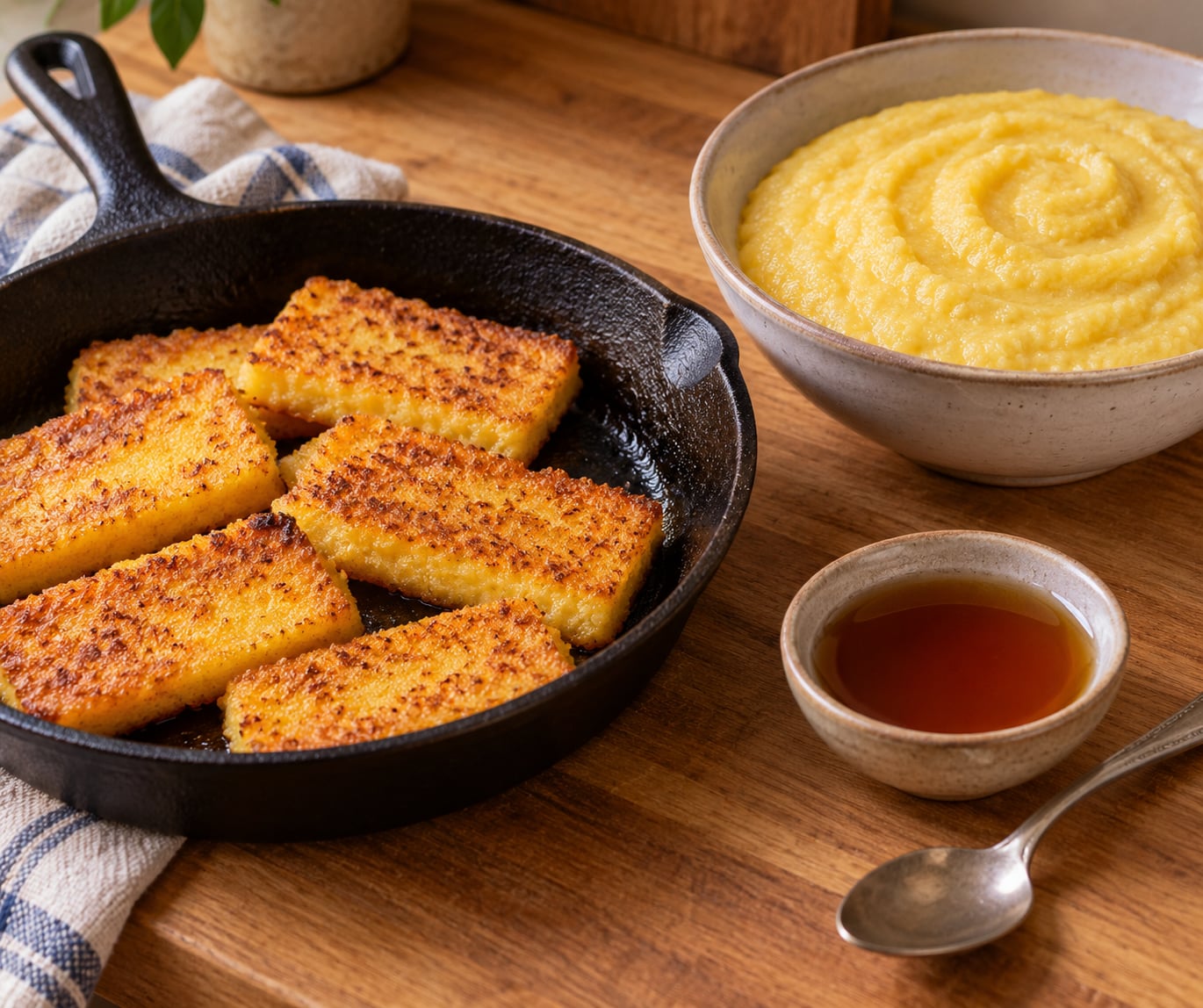
Fried mush is chilled cornmeal mush, unmolded, sliced into slabs, and pan-fried until the outside is crisp and the center stays creamy. Chilling is not optional, because cooling sets the cooked corn starch into a firm sliceable loaf. Skip it and you are frying porridge.
Refrigerate the pan for at least 2 hours, and overnight is better if you can plan ahead. Run a knife around the edges, lay a plate or a second pan over the top, and flip it out in one motion. The loaf should hold its shape with no hesitation.
Cut it into slabs about half an inch thick. Thinner slices get crispy but risk splitting, and slices much thicker than half an inch stay cold in the center. Cut straight down with a sharp knife and try not to saw, which tears the crumb.
Heat a quarter inch of butter, bacon grease, or lard in a skillet over medium heat. The fat should be hot enough to shimmer and a drop of water should sizzle and skate across the surface, but it should not be smoking or turning brown. Lay the slices in and let them sit undisturbed for 3 to 4 minutes.
Flip once and cook another 3 to 4 minutes. If you want a darker crust, raise the heat to medium-high for the final minute on each side. Watch the fat rather than the clock, since a cast iron skillet runs hotter than nonstick and the slices can go from golden to burnt in under a minute once the moisture is gone.
Transfer the fried mush to a rack or a paper towel so the bottom stays crisp, and serve it while it is still hot.
Serving Suggestions and Variations
Fried mush with maple syrup poured over the top is the version almost everyone pictures, and it is the one most people grew up eating. Sorghum syrup and honey are the traditional Appalachian alternatives, and melted butter with a little powdered sugar is a common sweet finishing for kids.
For a savory plate, skip the sugar in the mush itself and serve the fried slices alongside fried eggs, strips of bacon, or a scoop of breakfast sausage. The butter or bacon grease you fry in already carries plenty of salt, so season the mush lightly and taste before adding more.
One regional difference worth knowing: Amish and Mennonite families in the Midwest cook a simple water-and-salt mush with a little sugar or molasses and serve it at breakfast with syrup and butter. There is no special technique, and the result is thinner and more porridge-like than the loaf you fry. No secret ingredient, just a plain pot of cornmeal done consistently.
Plain cornmeal is naturally gluten-free, so this works for anyone avoiding wheat as long as you use cornmeal labeled gluten-free and keep the pan and utensils free of flour. It is meat-free by default, so it suits a vegan pantry if you fry in a neutral oil and skip the butter on top.
Two other variations come up constantly. A teaspoon of grated cornmeal mixed into the batch gives a slightly denser, cakier loaf. And a tablespoon of flour and a tablespoon of sugar blended into the cornmeal produces a fry that is more tender and cake-like, which is how many family recipes are written.
Common Mistakes
The most common failure is lumpy mush. It happens when dry cornmeal is poured into boiling water, and the fix is the cold water slurry described earlier. Whisk the cornmeal into a cup of cold water first until completely smooth, then stir that into the pot.
Mush that is too thin and will not set means it needed more time or more cornmeal. Give it another few minutes over medium-low heat, stirring, or stir in a couple of tablespoons of dry cornmeal. If it still runs off the spoon, chill it anyway and expect a softer, more fragile fry.
Slices falling apart in the skillet happen when the fat is too cool. Heat the butter until it shimmers and a water droplet skates across the surface before you add the mush, and lay the slices down rather than dropping them.
A soggy crust with a cold center means your slices were too thick or your heat was too high. Cut closer to half an inch, and start at medium heat so the center gets a chance to heat through before the outside browns.
Scorching on the bottom of the pot during cooking means the heat was too high. Cornmeal scorches faster than people expect once it thickens, so drop to medium-low and scrape the bottom more often, especially during the last two minutes.
Fried mush that goes soft after serving has nothing to do with the fry itself. It is sitting in a closed pile or a sealed container. Spread the pieces in a single layer on a rack so steam can escape.
Frequently Asked Questions
Can I make cornmeal mush without butter?
Yes, and the base recipe never calls for butter anyway. Butter enters the picture at two points: frying the chilled slices, and topping the finished mush. Use a neutral oil such as canola, peanut, or sunflower for the fry, and skip the butter on top if you are keeping the dish dairy-free. Bacon grease and lard also work, but they add animal fat even though they are not dairy.
How do I know when cornmeal mush is thick enough to fry?
Spoonable thick, thick enough to mound and hold its peak, is the sign. Drag a spoon across the surface and watch for a clean line that stays open for a second or two before filling back in. If the mixture levels itself out, it is still too thin. Cool a teaspoon on the counter for a minute; if it holds its shape, the batch will chill into a sliceable loaf.
Should I chill cornmeal mush before frying it?
Yes, always. Cooling sets the cooked corn starch, which is what turns loose porridge into a firm loaf that can be cut into slabs and lifted into a hot skillet without falling apart. Two hours in the refrigerator is the minimum. Overnight is better because the loaf firms all the way through and slices cleanly. Some cooks set the pan outside on a porch in cool weather instead of refrigerating it.
What oil is best for frying cornmeal mush?
Butter browns the best and is the traditional choice, which is why so much good fried mush tastes the way people remember it. Bacon grease and lard come close for flavor and handle high heat well. A neutral oil like canola or peanut keeps the dish dairy-free and does not smoke as early. Olive oil works but tastes more of the oil than of the corn.
Can I make fried cornmeal mush ahead of time?
Cook the mush and chill the loaf up to three days ahead, keeping it covered in the refrigerator. Fry close to serving if you can, since the crust softens in a container. If you must fry ahead, hold the pieces on a rack in a single layer in a loosely covered container at room temperature for an hour or two, rather than sealing them hot, and re-crisp in a hot oven for eight minutes.
How do I keep fried mush crisp after serving?
Put the pieces on a wire rack or a lined plate so air circulates underneath, and never pile them on top of each other. Crispness comes from the crust staying dry, so skip wax paper and plastic while the mush is still warm. It is also worth cooking in two smaller batches instead of one crowded batch, since a full skillet drops the fat temperature and produces a greasy, soggy result.
Conclusion
Start with 1 cup of yellow cornmeal whisked into a cup of cold water, then stir that into 2 cups of boiling salted water over medium-low heat for 8 to 10 minutes, and cover for 5 more. Get it as thick as it will get, then cool it in a loaf pan before you refrigerate.
That chill is the whole trick. Two hours minimum, overnight if you can, and the cornmeal mush recipe turns into a loaf firm enough to slice half an inch thick and fry to a golden crust with a creamy middle. Fry in butter, drain on a rack instead of a plate, and eat it while it is hot.