To make banana pudding without eggs, you thicken the milk with cornstarch instead of egg yolks: whisk 1/3 cup of cornstarch into a cup of cold milk to make a slurry, stir that into 2.5 cups of heated milk, and simmer until the sauce turns glossy and coats the back of a spoon. Layer it with ripe banana slices and vanilla wafers, then give it at least four hours in the refrigerator. The whole thing takes about 30 minutes at the stove and a long, unhurried wait afterward.
There are plenty of good reasons to cook it this way. Egg allergies, a vegan table, or a potluck where you cannot be sure what went into the other dishes will all point you here, and a pudding made from spotted bananas is a decent answer to a bunch of fruit going soft on the counter. It is also more forgiving than a traditional custard, since there is no egg to scramble if the heat gets away from you.
Two things do change without the eggs. The color is a shade paler, closer to cream than to the deep yellow of a baked custard, and the texture comes from starch rather than protein, so it firms in the fridge instead of setting from proteins knitting together. Both differences are small once the recipe is balanced properly.
Table of Contents
- What You Need
- Custard base
- For the layers
- Topping, optional
- Step-by-Step: How to Make Banana Pudding Without Eggs
- 1. Combine the dry ingredients
- 2. Make the slurry
- 3. Heat the remaining milk
- 4. Add the slurry and stir
- 5. Stop one shade short
- 6. Finish off the heat
- 7. Layer and chill
- How Thick Should the Pudding Be?
- Can You Use Cornstarch Instead of Eggs in Banana Pudding?
- How Do You Keep Bananas from Browning?
- Common Mistakes
- Tips for Serving and Storing
- Frequently Asked Questions
- What can I use instead of eggs to thicken banana pudding?
- Is banana pudding supposed to be thick or runny?
- Can I make banana pudding without cooking the starch mixture?
- Can egg-free banana pudding be made with plant milk?
- How long does banana pudding need to chill before serving?
- Can I add vanilla wafers to the pudding before chilling?
What You Need
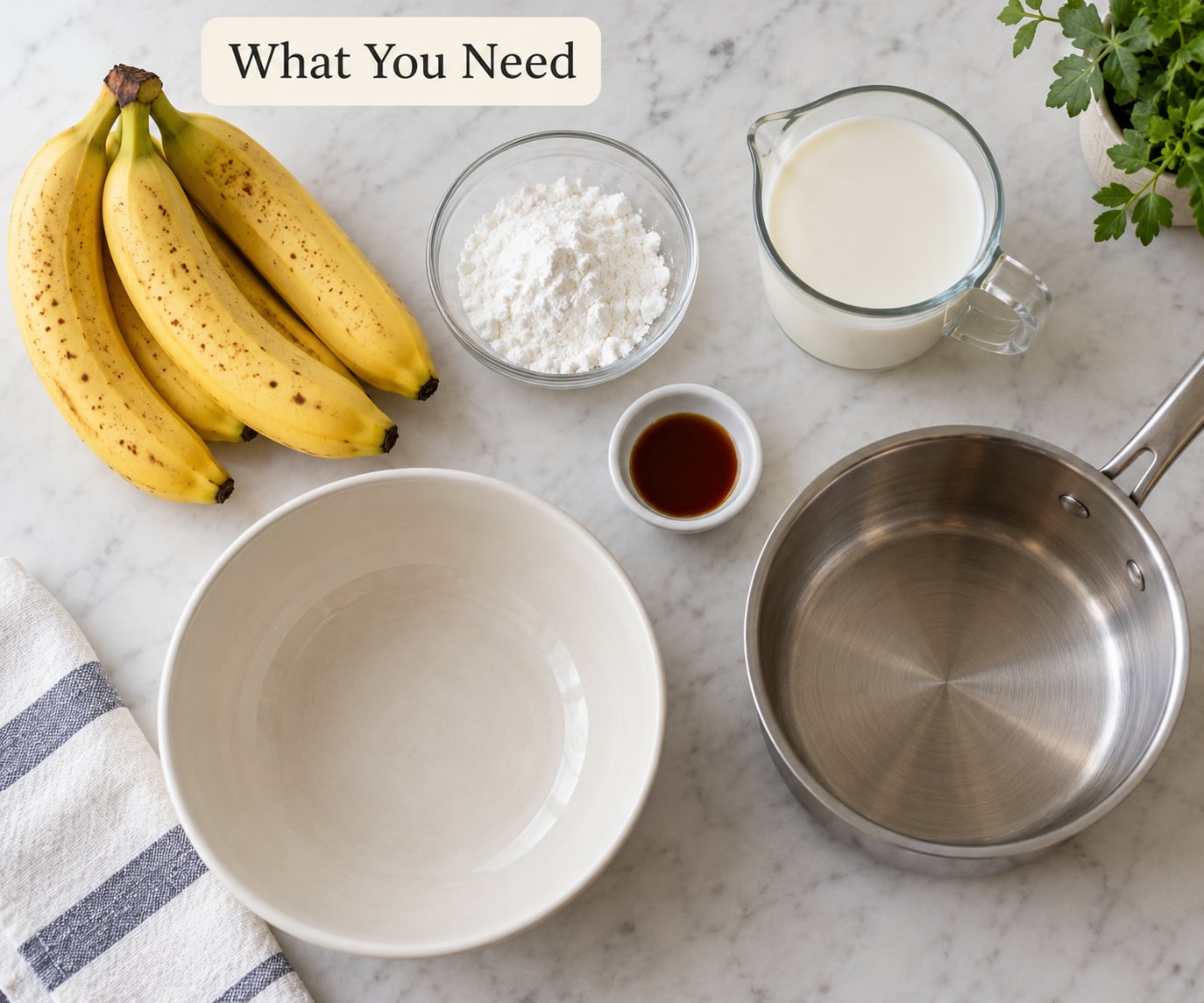
The custard base is a short list, and almost everything in it is probably already in your pantry. Measure the cornstarch before you start, because it settles and the second half of your pudding deserves the same thickness as the first.
Custard base
- 2/3 cup (150 g) granulated sugar, or 1/2 cup (100 g) packed light brown sugar
- 1/3 cup (40 g) cornstarch
- 1/4 teaspoon fine salt
- 2.5 cups (590 ml) whole milk
- 2 tablespoons (30 g) unsalted butter
- 1.5 teaspoons pure vanilla extract
For the layers
- 3 to 4 very ripe bananas, peeled and sliced or mashed
- 8 ounces (225 g) vanilla wafers, or shortbread or graham crackers
- 1 tablespoon lemon juice or pineapple juice, for the sliced bananas
Topping, optional
- 1 cup (240 ml) heavy whipping cream plus 2 tablespoons powdered sugar, whipped to soft peaks
- Or a store-bought whipped topping, which holds its shape longer in a hot room
- Chopped toasted walnuts or pecans, for crunch against the soft layers
For equipment, you need a whisk, a medium saucepan with a heavy bottom, a rubber spatula for scraping, and either a trifle dish, a 9 by 13 inch baking pan, or a row of mason jars if you want single servings. Press plastic wrap straight onto the surface of each portion before it goes in the refrigerator. That is the cheapest way to stop a skin forming on top of the custard.
Step-by-Step: How to Make Banana Pudding Without Eggs
1. Combine the dry ingredients
Whisk the sugar, cornstarch, and salt together in a medium bowl. Mixing the cornstarch into the sugar first is what keeps it from clumping when it hits liquid later.
2. Make the slurry
Pour 1 cup (240 ml) of the cold milk into the bowl and whisk until the cornstarch is completely dissolved, with no white streaks left in the bottom. Set the bowl on the counter while you heat the rest of the milk. A slurry made with cold liquid dissolves evenly; cornstarch thrown straight into hot milk will clump no matter how hard you stir.
3. Heat the remaining milk
Pour the other 1.5 cups (360 ml) of milk into the saucepan and warm it over medium heat until you see small bubbles at the edges and it feels just warm at the back of your wrist, roughly 170 F. Do not let it come to a rolling boil.
4. Add the slurry and stir
Give the slurry one more quick whisk, pour it into the warm milk, and turn the heat down to medium-low. Whisk constantly for the next two to three minutes as it thickens. You will feel it happen in a rush, almost all at once, which is the starch doing its work.
5. Stop one shade short
Cook until the sauce is glossy and coats the back of a spoon so you can draw a clean line with your finger. Then take it off the heat. Cookers who post in baking forums say this batch is the one that puzzles people, and their advice is the right one: egg-free pudding thickens noticeably as it chills, so pulling it a minute early protects you from a stiff, gluey set.
6. Finish off the heat
Stir in the butter until it melts, then the vanilla, then a pinch more salt if the sweetness feels forward. Pour the pudding into a bowl and let it sit at room temperature for 30 minutes, stirring once or twice to let the steam escape. Skim the thin film off the top.
7. Layer and chill
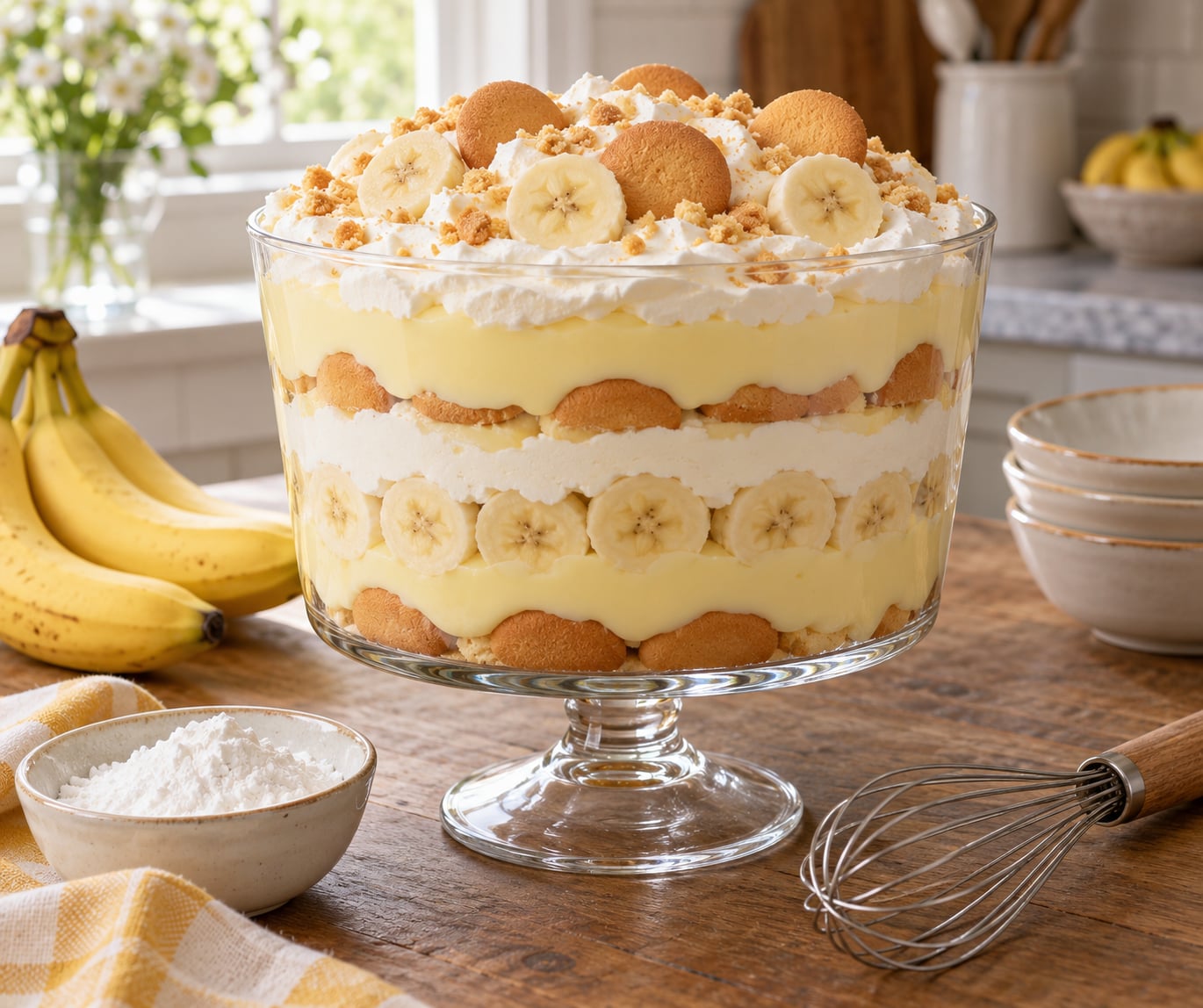
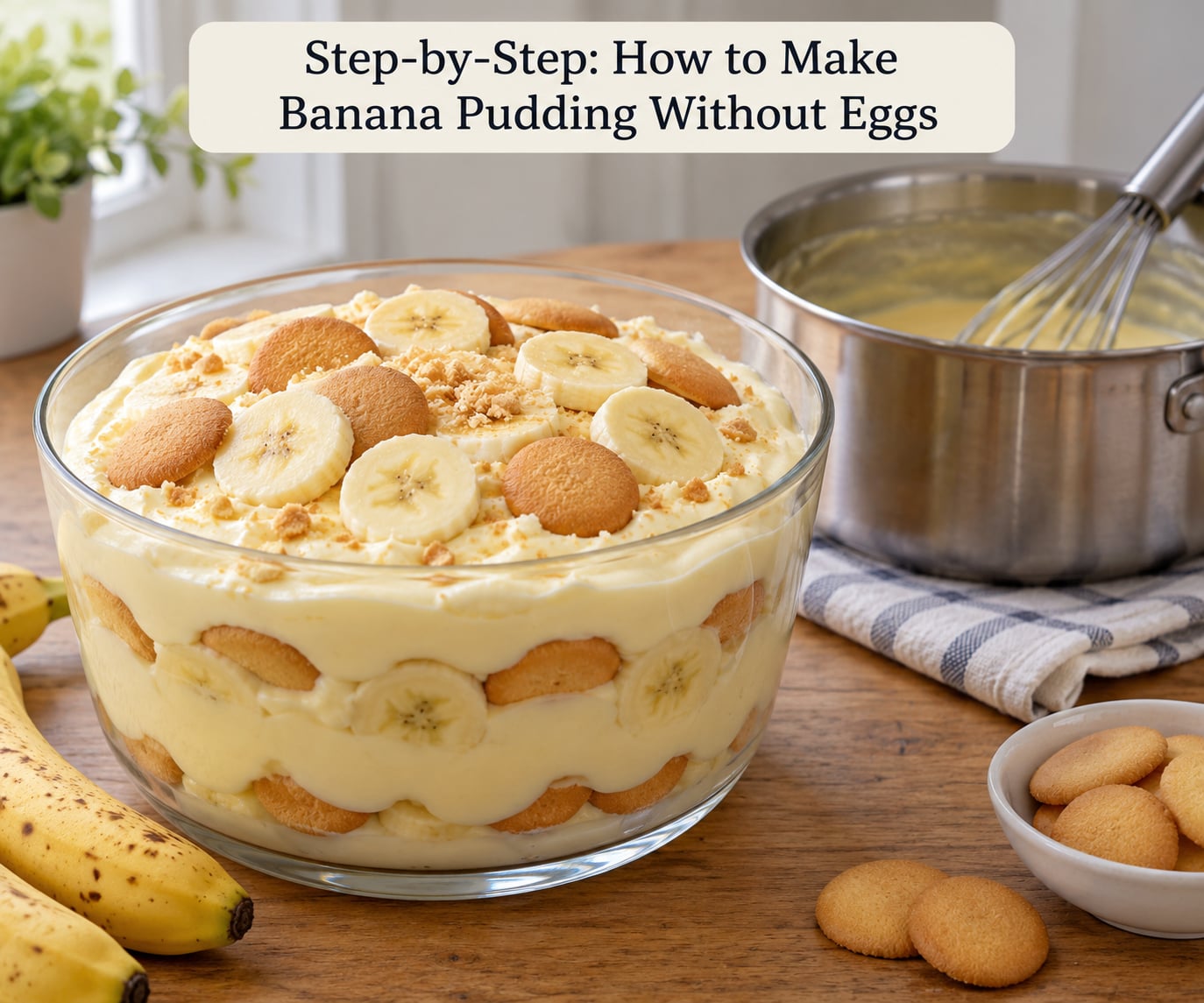
Put a layer of vanilla wafers in the bottom of your dish, spread half the pudding over them, add a layer of banana slices, then repeat. Pour a thin final layer of pudding so the top banana slices stay hidden and stay pale. Cover and refrigerate for 4 hours, or overnight for the cleanest slices. Decorate with the whipped cream just before serving.
How Thick Should the Pudding Be?
While it cooks, you are looking for a sauce that has lost its watery quality and gone glossy and slightly gel-like. Tilt a spoon and the sauce should fall off slowly in a ribbon rather than running like milk. The single best test is the finger swipe: dip a clean finger into the sauce and drag it across the back of the wooden spoon. If the line stays clean and open, stop. If it fills back in, keep cooking.
Be careful in both directions, because neither failure is fixable after the fact. Too loose and the pudding stays soupy in the fridge no matter how long you chill it, since a thin batch has too little starch to hold water. Too firm and the pudding turns gummy and rubbery, especially in the layers underneath. If you have gone too far, soften it with a splash of cold milk, whisked in a little at a time, and chill again.
If a batch comes out loose, there is a rescue. Whisk an extra tablespoon or two of cornstarch with a quarter cup of cold milk, warm that slurry in a separate cup until thick, and stir it back into the pudding. That is the fix people in r/Baking reach for, and it works better than dumping dry starch into a cold bowl, which is how you get a grainy result.
Can You Use Cornstarch Instead of Eggs in Banana Pudding?
Yes, and it is the standard swap. Eggs are in classic banana pudding for one job only: thickening. Yolk proteins unfold as the custard heats and bond with each other, trapping water in a soft gel. Cornstarch does the same job a different way. Starch granules swell in hot liquid, a process called gelatinization, and the swollen granules pack together into a network that holds water just as well.
The tradeoff is flavor and behavior. Egg custard tastes rich and faintly savory on its own, and it bakes to a firm set. A starch pudding tastes cleaner and more like the banana and vanilla you put into it, and it keeps thickening as it cools. Anything else thickens a stovetop pudding just as reliably:
| Thickener | Amount for 2.5 cups milk | Cook time | Resulting texture | Notes |
|---|---|---|---|---|
| Cornstarch | 1/3 cup (40 g) | 2 to 3 minutes | Clean, silky, spoon-coating | The best all-round choice, and the one this recipe uses |
| All-purpose flour | 1/3 cup (40 g), whisked with the milk | 4 to 5 minutes | Slightly heavier, more rustic | Can taste faintly pasty; cook it longer than cornstarch |
| Arrowroot starch | 2 tablespoons (16 g) | 1 to 2 minutes | Very smooth and glassy | Dissolves more readily, but loosens again as it chills. Add it only to hot liquid |
| Tapioca starch | 2 tablespoons (16 g) | 2 to 3 minutes | Elastic and bouncy rather than creamy | Users describe it as a rubbery, odd texture in a pudding. Not my choice |
| Agar-agar powder | 1 teaspoon (2 g) | 3 to 5 minutes | Clean and sliceable, sets firm and fast | Vegan and gluten-free, but it sets like a straight jelly. Use less than you think |
| Plain gelatin | 1 tablespoon (7 g) bloomed | Warm, not boiling | Light, silky, closest to egg texture | Not vegan, but it behaves beautifully and sets in the fridge |
| Instant pudding mix | 1 small box | Whisked in cold milk, no heat | Thick and sweet, almost fudgy | Works, but it reads as artificial next to the real version |
The recipe works with whole milk, and it also works with plant milk. Oat and soy milk behave most like dairy because of their protein and fat content. Almond milk is thinner and needs the same cornstarch amount plus a minute more cooking. Coconut milk adds a distinct flavor that is not invisible in the finished dish, so it is a deliberate choice rather than a straight swap.
How Do You Keep Bananas from Browning?
Cut the bananas last, and treat the slices you plan to top the dish with. Toss them in a tablespoon of lemon juice or pineapple juice and they will stay pale for the length of a fridge chill. The acid slows the browning without changing the banana flavor, which is more than can be said for most other kitchen tricks.
For the layers inside the dish, browning hardly matters, because the slices are covered by pudding. Mash two of the bananas instead of slicing them and you get a stronger banana flavor and a softer texture, plus fewer visible brown edges. Save the third banana for the top layer and treat it with acid. Some cooks add the sliced bananas after chilling, right before serving, which keeps them bright but gives you a dish that needs finishing at the table.
Common Mistakes
Most disappointing batches come down to one of six things, and each one has a fix.
| What went wrong | Why it happened | The fix |
|---|---|---|
| Pudding is runny in the fridge | The slurry was under-cooked, or the cornstarch did not fully dissolve in the cold milk | Whisk more cornstarch into cold milk, warm it in a cup, and stir it back into the pudding |
| Pudding is gluey or rubbery | The sauce was cooked past the coat-the-spoon stage and set hard as it chilled | Next time, pull it from the heat one shade earlier. Whisk in cold milk a little at a time to soften what you already have |
| Banana slices turned grey | Oxidation on cut fruit, worsened by air and time | Toss slices in lemon juice, cut them right before assembling, and keep the top layer covered by pudding |
| Lumpy or grainy sauce | Cornstarch hit hot milk without being fully dissolved first, or a skin on the surface got whisked back inAlways make the slurry in cold milk and whisk it smooth before it meets any heat | |
| Pudding is too sweet | Ripe bananas add plenty of their own sugar, and the custard was not quite set | Cut the added sugar to 1/2 cup, use very ripe bananas, and stop cooking one shade early |
| Wafers went soggy | They were sitting in a puddle of loose custard | Layer wafers first as the base, press them down into the pudding, and keep the top layer thinly covered |
Two smaller habits prevent most of that list. Press the wafer layer down gently as you build so it sits inside the custard instead of floating. And skim the surface before chilling, since that film turns into a tough skin nobody wants to cut into.
Tips for Serving and Storing
Four hours in the refrigerator sets a standard batch, and overnight gives you the cleanest layers when you want to slice it. If you are in a hurry, 30 minutes on an ice bath followed by 90 minutes in the fridge firms a shallow dish faster, and pressing a sheet of plastic wrap straight onto the surface helps the top layer set instead of forming a skin.
For a potluck, church supper, or a picnic, this behaves better than most desserts because it travels cold and holds its shape. Layer it in a trifle bowl in the kitchen, chill it whole, and carry the bowl on ice. Mason jars are the easiest single-serve version for a crowd, and they are a good way to freeze portions you are not serving that week.
Keep it refrigerated and use it within three to four days. Cover it tightly, since pudding absorbs odors from the fridge readily. Some cooks dust the top with a little cinnamon or nutmeg before serving. I am not one of them, but plenty of people around here are, and it is a good excuse to use the bananas you never got to.
Frequently Asked Questions
What can I use instead of eggs to thicken banana pudding?
Cornstarch is the standard replacement. Whisk 1/3 cup of it into a cup of cold milk to make a slurry, stir that into 2.5 cups of heated milk, and simmer until the sauce is glossy and coats a spoon. Flour, arrowroot, agar-agar, and plain gelatin also work, each with a different texture. What eggs provide is structure, and starch provides structure too, so a banana pudding made this way sets properly in the refrigerator.
Is banana pudding supposed to be thick or runny?
It should be thick enough to hold a spoon upright for a moment, but still soft enough to fall slowly from the lifted spoon. If it sheets off and leaves a clean line when you drag a finger across the back of the spoon, that is the mark. It will firm up further as it chills, so stop cooking just short of that point. A pudding that is set like a flan has been cooked too far.
Can I make banana pudding without cooking the starch mixture?
You can, but plain cornstarch is not the right thickener for a no-cook method. Instead use agar-agar powder or plain gelatin, which set in the refrigerator without any heat at all. One teaspoon of agar-agar or a tablespoon of bloomed gelatin works for 2.5 cups of milk. Expect a firmer, sliceable set rather than a soft spoon-coating custard, and add extra vanilla if you thin it with water.
Can egg-free banana pudding be made with plant milk?
Yes, and the same cornstarch amount works with oat, soy, and almond milk. Oat and soy are the closest stand-ins for whole milk because of their protein and fat. Almond milk is thinner, so give the sauce an extra minute of cooking and check the finger-swipe test before you stop. Coconut milk works too, but it brings its own flavor that you can taste in the finished dessert.
How long does banana pudding need to chill before serving?
Plan on at least four hours in the refrigerator for a standard batch, and overnight if you want clean, sharp layers for slicing. Egg-free pudding sets from starch rather than protein, which means it firms gradually rather than all at once. An ice bath can speed up the first part of the chill, and pressing plastic wrap onto the surface helps the top layer set without forming a skin.
Can I add vanilla wafers to the pudding before chilling?
Yes, and that is the traditional way to build it. Put a layer of wafers down first, spread pudding over them, add banana slices, and repeat. Layering it like a lasagna gives you a more even dessert and keeps the wafers from floating in loose custard. The tradeoff is that the cookies soften as they absorb liquid, so add the final wafer layer just before serving if you like them crisp.
If you make one thing different from the steps above, make it the slurry. Whisk the cornstarch into cold milk until no white streaks remain at the bottom of the bowl, and stop the sauce one shade short of finished, because starch pudding keeps firming as it chills. Everything else in how to make banana pudding without eggs is forgiving, including the wafers, the sugar amount, and the type of milk you pour in.