Last tested and updated for October 2026.
To make brown sugar from white sugar, mix 1 cup of granulated white sugar with 1 tablespoon of unsulphured molasses for light brown sugar, or 2 tablespoons for dark brown sugar. It takes about five minutes, needs no cooking, and works as a straight swap in cookies, cakes, glazes, and oatmeal.
That is genuinely all it is. White sugar is made by spinning cane juice to strip out the molasses, and brown sugar is what you get when a measured amount of molasses is mixed back into those crystals. The bagged stuff on the shelf is the same two ingredients, so a bowl and a spatula will get you the same result.
Home bakers reach for this when a recipe calls for brown sugar and the cupboard is empty, when they want to control the molasses level, or when they would rather use up a jar of molasses that has been sitting in the pantry since gingerbread season.
Table of Contents
- What You Need to Make Brown Sugar from White Sugar
- Step-by-Step
- How to Make Light Brown Sugar
- How to Make Dark Brown Sugar
- How to Make Brown Sugar From White Sugar While You Cream the Butter
- Common Mistakes
- Why brown sugar goes hard, and how to store it
- How to soften hardened brown sugar
- How to make brown sugar without molasses
- Frequently Asked Questions
- Can you just add molasses to sugar to make brown sugar?
- How much brown sugar can I make from 1 cup of granulated sugar?
- How much molasses do I need for 2 cups of brown sugar?
- Do white sugar and honey make brown sugar?
- What to put in brown sugar so it stays soft?
- What is the apple trick for brown sugar?
What You Need to Make Brown Sugar from White Sugar
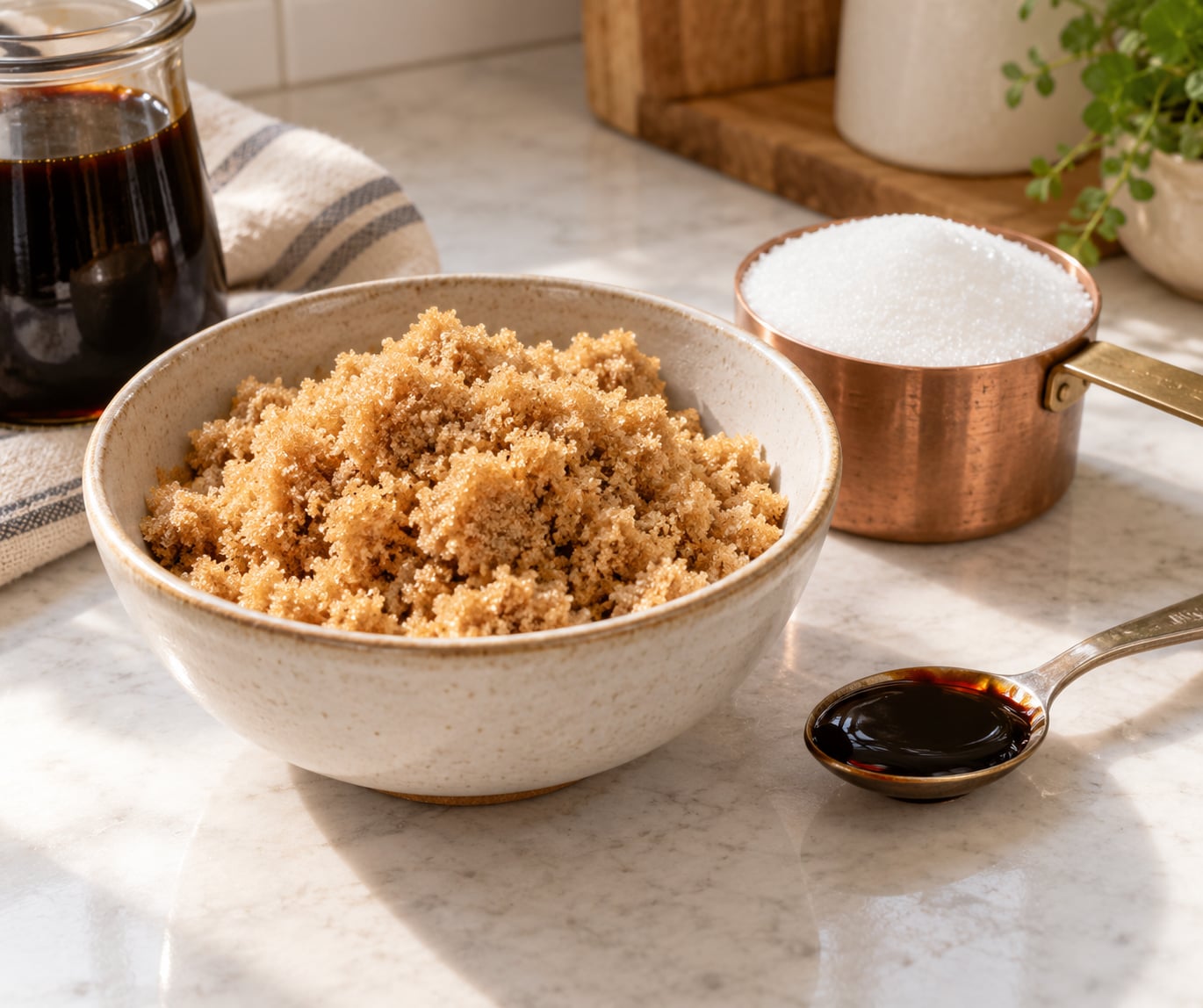
You need granulated white sugar, unsulphured molasses, and a bowl with a spatula. That is the whole shopping list.
- 1 cup (about 200 g) granulated white sugar — regular granulated, not powdered, not raw.
- 1 tablespoon unsulphured molasses for light brown sugar, or 2 tablespoons for dark brown sugar.
- A medium bowl and a silicone spatula or the back of a spoon for breaking up clumps.
- Optional: a food processor, or a stand mixer with the paddle attachment.
Unsulphured molasses is the syrup left over from refining sugar, and it is the only real difference between the two colors. Any unsulphured brand works — Grandma’s and Brer Rabbit both turn up constantly in home bakers’ cupboards, and nobody can tell which one you used. Sulphured molasses is also edible here; it just tastes a little sharper.
Skip blackstrap molasses. It is boiled down further after the sugars are gone, which is exactly what makes it bitter, and a whole batch of cookies can end up inedible because of one over-eager tablespoon.
One note for beginners: a fresh jar of molasses smells strong and sharp when you first open it. That is normal and it is not a sign the jar went bad. Spoiled molasses smells sour or vinegary, more like old cider than like candy.
Here are the four ratios worth committing to memory:
- Light brown sugar: 1 cup white sugar (about 200 g) plus 1 tablespoon unsulphured molasses (about 15 ml). Mild, mostly caramel.
- Light brown sugar, double batch: 2 cups white sugar (about 400 g) plus 2 tablespoons molasses. Mild, mostly caramel.
- Dark brown sugar: 1 cup white sugar (about 200 g) plus 2 tablespoons unsulphured molasses (about 30 ml). Deep, bittersweet molasses.
- Dark brown sugar, double batch: 2 cups white sugar (about 400 g) plus 4 tablespoons molasses. Deep, bittersweet molasses.
One more thing recipes depend on: brown sugar is measured firmly packed, meaning you press it into the measuring cup until it is solid and level, then scoop it out. Loose brown sugar gives you roughly half the amount a recipe asked for, and that is where a lot of failed cookies come from.
Step-by-Step
Three steps, five minutes, no heat. Follow them in order and the molasses disappears completely into the crystals.
- Combine. Put the cup of white sugar in a bowl and pour the molasses over the top. It will sit in a dark puddle on the surface and look nothing like brown sugar at this point.
- Crush the clumps. Press the back of the spatula firmly against the inside of the bowl and smear the molasses through the dry sugar. The molasses pulls into hard little balls at this stage, and pressing them against the bowl is what breaks them apart. Scrape the sides as you go.
- Mix until uniform. Keep folding and pressing until every crystal is the same shade of tan and no dark streaks or hard lumps remain. Rub a pinch between your fingers; it should feel slightly damp and completely even, not gritty in patches.
How you tell it worked: the color is uniform from the top of the bowl to the bottom, and a pinch squeezed between your fingers holds together slightly instead of falling apart like plain sugar. If it still looks streaky, keep going. Under-mixing is the single most common reason homemade brown sugar looks blotchy.
A stand mixer on medium or medium-high, or a food processor in short pulses, both disperse the molasses faster than hands do. Pulse the food processor five or six times, checking between each one, because a food processor can turn the whole batch into fine powder if you let it run.
How to Make Light Brown Sugar
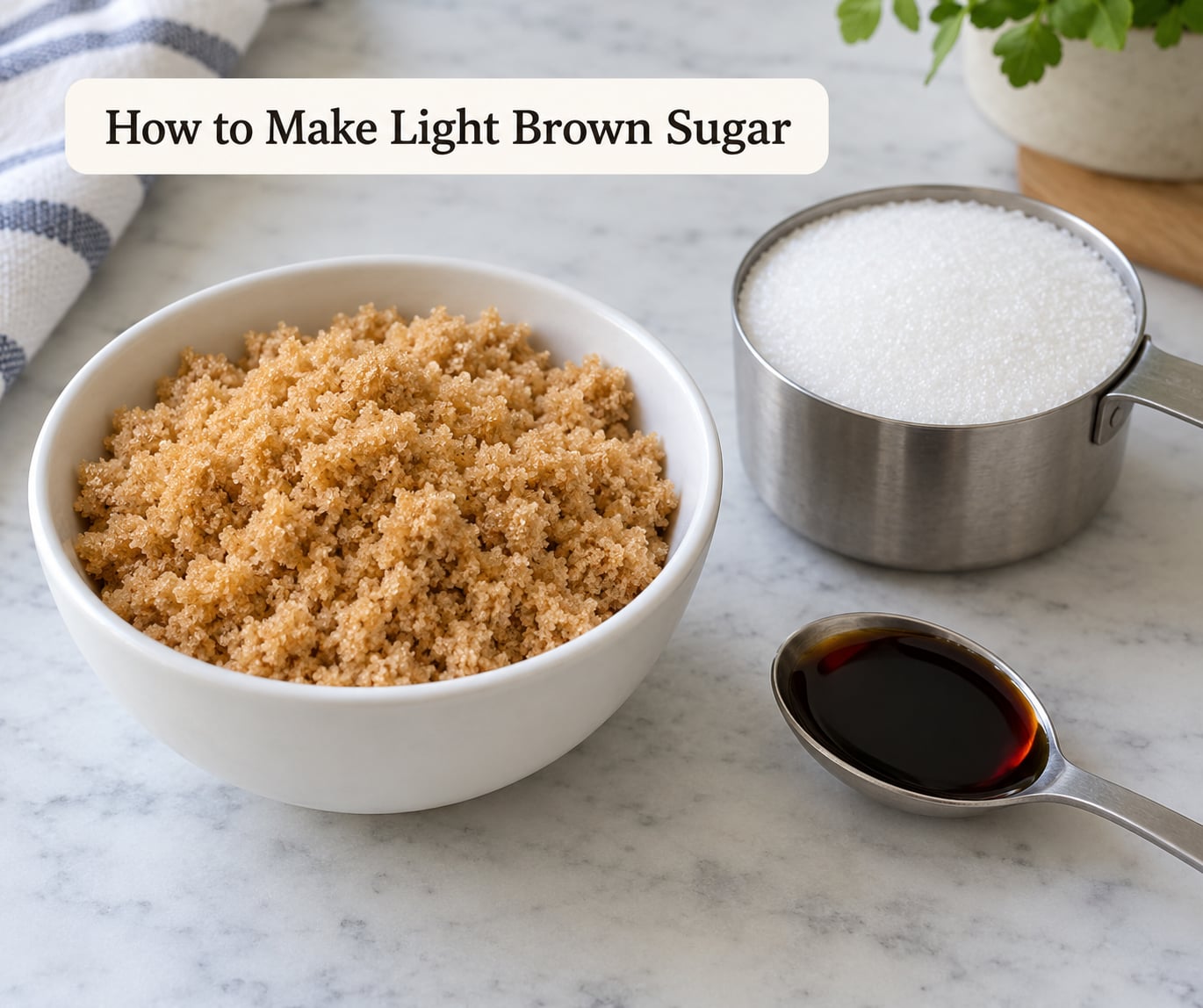
Light brown sugar is the one to reach for in most recipes. Use 1 cup of white sugar and 1 tablespoon of unsulphured molasses.
Pour the molasses in and press it through the sugar with the back of your spatula until no streaks of molasses remain. Finished, it should look like a uniform pale tan, the color of a toasted oat, with a faint caramel smell and nothing sour in it.
If you overdo it slightly, you have not ruined anything. Stir in another tablespoon of plain white sugar and the batch pulls back toward light.
How to Make Dark Brown Sugar
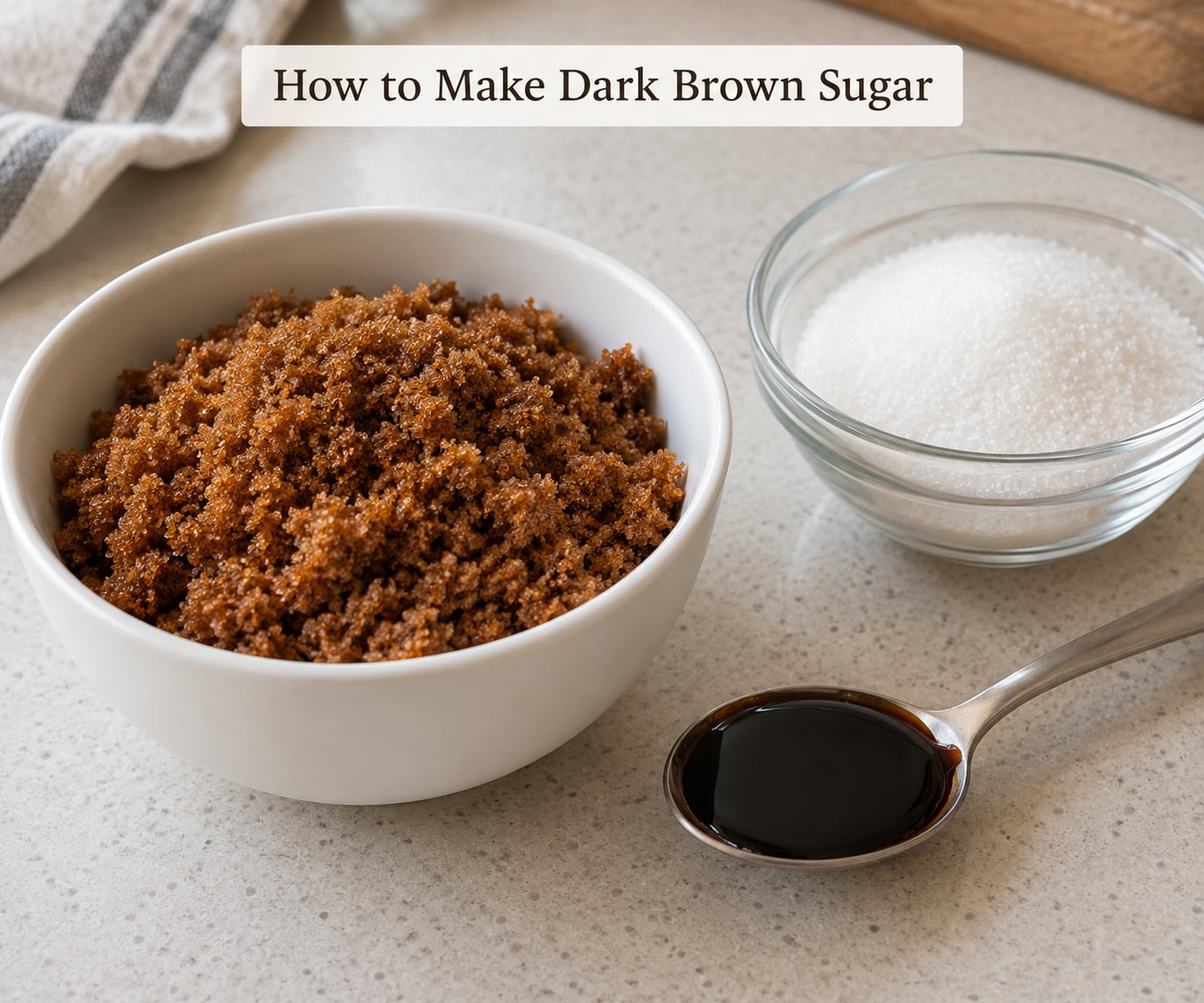
Dark brown sugar takes 2 tablespoons of molasses per cup of white sugar. The color lands somewhere between a chestnut and a soft chestnut shell, with a real bittersweet edge.
Dump both ingredients in and mix harder than you did for the light version. With the double dose of molasses the clumps form faster and stickier, so give the bowl a few extra minutes of pressing rather than stirring only on the surface. The finished texture should look slightly moist and hold a clean line where the spatula passed through it.
If you went a shade too dark, a tablespoon of white sugar per 2 tablespoons of molasses brings it back without diluting the flavor much.
How to Make Brown Sugar From White Sugar While You Cream the Butter
You can skip the separate bowl entirely. Measure the white sugar into your mixing bowl, add the molasses on top of the butter, and let the creaming step do the work: the paddle pulls the molasses through the sugar as the mixture pales and aerates, and by the time you scrape once you have brown sugar and creamed butter in the same bowl.
The only reason to pre-mix separately is small batches. A stand mixer with a paddle attachment sometimes cannot work a half-cup batch properly, and you end up with molasses streaks that never disperse. A cup of sugar in a bowl with a spatula takes two minutes and never fails.
For a double batch of cookies, I make it in a separate bowl first, then add it to the creamed butter. It costs almost nothing and removes the guesswork.
Common Mistakes
Nearly every disappointing batch traces back to one of four things: not enough mixing, too much molasses, poor storage, or the wrong molasses. Here is the fix for each.
Blotchy, streaky sugar. The molasses sat on top instead of dispersing. Press the clumps against the bowl wall rather than stirring, then keep folding until the color is even from edge to edge.
Sugar that is too wet and sticky. You used dark-brown ratios for a light recipe, or added molasses twice. Spread the sugar on a baking sheet, let it sit uncovered for an hour, and stir it now and then. If it is still tacky, add white sugar a tablespoon at a time.
Bitter cookies. That was blackstrap molasses. There is no amount of sugar that fixes the batch; start over with unsulphured molasses.
Sugar that turned hard in a week. Storage, not the recipe. Read on below.
Why brown sugar goes hard, and how to store it
Brown sugar does not crystallize the way salt does. The molasses coating on each crystal pulls moisture out of the surrounding air, and as that moisture leaves, the crystals pack tighter and fuse together. An airtight container blocks the exchange, which is why the same sugar can sit soft for months in a sealed jar and turn to a brick in an open canister on the counter.
- Use a resealable bag with the air squeezed out. A zip-top bag with as much air pressed out as you can manage beats a rigid container, because it leaves almost no headspace. Bakers on cooking forums consistently report this as the fix that works best.
- Or press plastic wrap directly against the surface of the sugar inside a container. It eliminates the air gap that lets the sugar dry out.
- Keep it away from the stove and the sink, where humidity swings are biggest.
- Make only what you need for the next few weeks. A fresh batch in five minutes beats hoarding a jar.
- Freeze extras in single-use portions in small bags, press the air out, and thaw to room temperature when you need them.
How to soften hardened brown sugar
Once a batch has fused into a lump, the moisture is still inside the sugar, not gone. You are just redistributing it.
- Bread method. Bury the sugar in a sealed bag with a slice of plain white bread. Leave it overnight. The bread pulls moisture out of the air in the bag and hands it back to the sugar.
- Microwave method. Put the sugar in a microwave-safe bowl, cover it with a damp paper towel, and heat it in 15-second bursts until soft. Stir between bursts. A splash of water in the bowl helps on a bad batch.
- Oven method. Spread the sugar on a baking sheet, dampen it with a few drops of water, and warm it in a low oven until soft, then let it cool before measuring.
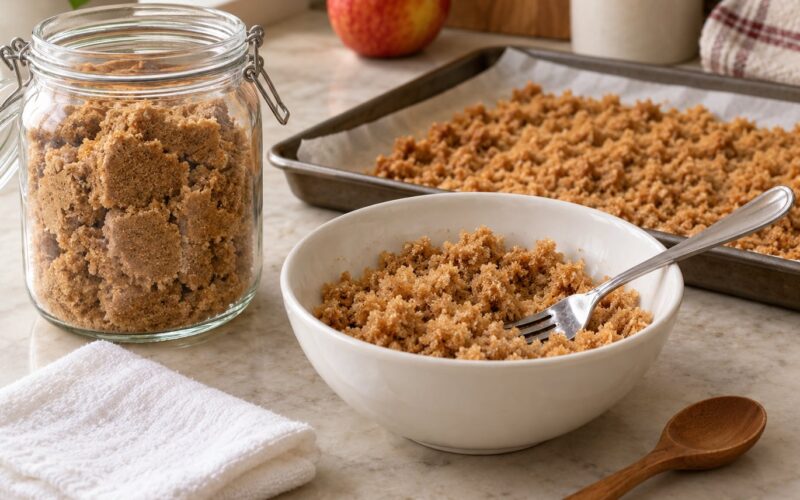
- The apple trick. A slice of apple, a few apple peels, or a couple of marshmallows dropped into the container do the same job as the bread overnight, without leaving a bread flavor behind. A terracotta sugar saver works on the same principle; it holds water behind a porous wall that gives it back slowly.
How to make brown sugar without molasses
You can, though you get a different flavor. For each cup of white sugar, use these in place of molasses:
- Black treacle: 1 tablespoon for light, 2 for dark. The closest match to molasses, and the one I use when I am out.
- Buckwheat honey: 1 to 2 tablespoons. Dark, malty, and far from sweet enough on its own to ruin a cake. Regular clover honey works but pushes the batch toward sweetness, so cut the white sugar slightly if you use a lot.
- Maple syrup: 1 to 2 tablespoons. Fine for cookies and oatmeal, less good for cakes where you want depth.
- Agave syrup: 1 tablespoon. Milder than molasses, so the color comes out too pale and needs a spoon of white sugar stirred in to stiffen.
If you have no molasses at all, the fastest brown sugar substitute you already own is one cup of muscovado or demerara raw sugar for every cup of white sugar the recipe calls for. Those are unrefined and already carry molasses. Coconut sugar works one to one too, though it is drier, so add a tablespoon of honey or a splash of water to the batter. Jaggery is the closest match in sweetness and can be used one to one, but pull back the added white sugar by a couple of tablespoons since it already carries its own.
Sweeteners made of honey, maple, or corn syrup need the sugar removed from the recipe entirely, and then you drop a tablespoon or two of water or apple juice in to make up for the moisture the granulated sugar was providing.
In Appalachian kitchens, the local version is usually sorghum molasses or buckwheat honey rather than the grocery-store jar. Both work at the same ratios. Sorghum syrup is sweeter and thinner, so use it for pies and sauces, and let the sugar cook a shade longer so the flavor has time to caramelize rather than tasting raw.
Frequently Asked Questions
Can you just add molasses to sugar to make brown sugar?
Yes. Put 1 cup of white sugar in a bowl, add 1 tablespoon of unsulphured molasses for light brown sugar or 2 for dark, and mix until the color is even with no clumps. You can also skip the separate bowl and add both straight to your mixing bowl during the creaming step, as long as you are mixing a full batch rather than a small one.
How much brown sugar can I make from 1 cup of granulated sugar?
One cup of granulated sugar makes about 1 cup of brown sugar, measured firmly packed, which works out to roughly 16 packed tablespoons. The volume looks closer to 1.25 cups if you scoop it loose, so pack it down with the back of a spoon before measuring or your recipe will come up short.
How much molasses do I need for 2 cups of brown sugar?
Use 2 tablespoons of unsulphured molasses for light brown sugar and 4 tablespoons for dark. Any unsulphured brand works. Do not use blackstrap molasses here, because it is boiled down past the point where the bitter compounds have been removed, and it will make the finished baked goods unpleasant to eat.
Do white sugar and honey make brown sugar?
Not in the same way. Molasses is what browns and moistens the sugar; honey mostly sweetens it. Buckwheat honey is the exception worth trying, because its dark malty flavor mimics molasses reasonably well at 1 to 2 tablespoons per cup of sugar. For the real thing, use molasses, black treacle, or a raw sugar such as demerara or muscovado instead.
What to put in brown sugar so it stays soft?
Air is what dries it out, so remove as much as you can. A zip-top bag with the air squeezed out works better than a rigid container, and pressing plastic wrap directly against the surface inside a jar works too. A slice of plain white bread, some apple peels, or a few marshmallows in the container will soften sugar that has already hardened by pulling moisture back out of the trapped air.
What is the apple trick for brown sugar?
The apple trick means adding a slice of apple, some apple peels, or even a marshmallow or two to your brown sugar container and sealing it. The fruit holds moisture against the sugar and gives it back slowly, which firms up hardened brown sugar without changing its flavor. Leave it overnight and remove the peel in the morning.
If you only remember one thing, remember the ratio: 1 tablespoon of unsulphured molasses per cup of white sugar for light, 2 for dark. Measure the white sugar, add the molasses, press the clumps against the bowl until the color is even, and pack it down firmly when you measure. Five minutes of work, and the result behaves like the store-bought kind in any recipe.