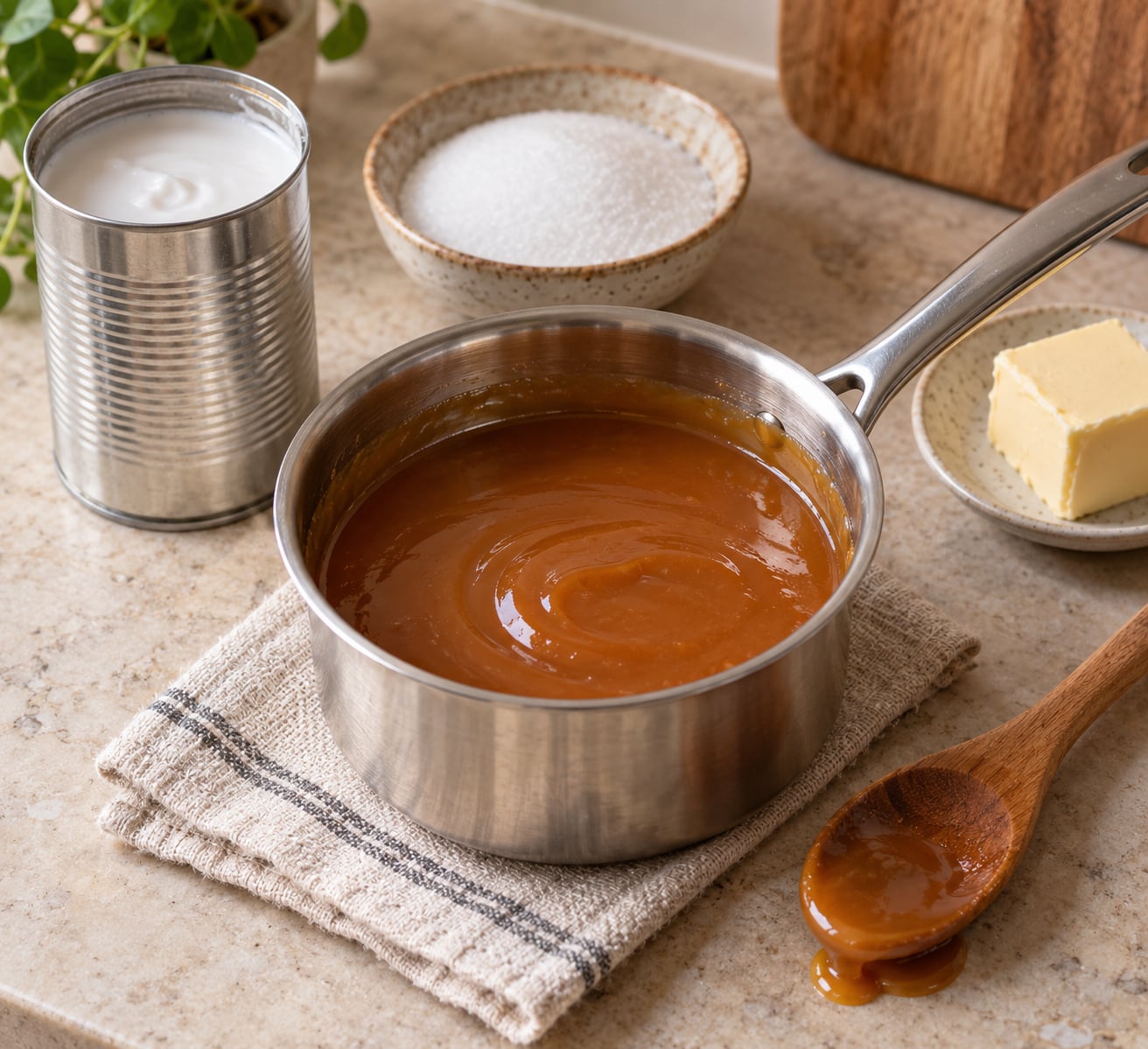
Vegan caramel sauce is sugar cooked to an amber caramel, then loosened with full-fat coconut milk and vegan butter until glossy and pourable. Most people get it wrong for one of three reasons: they stir too early, they add the milk to sugar that is already too dark, or they walk away from the pan. Fix those three things and you can make vegan caramel sauce in about 20 minutes with a saucepan, a wooden spoon and nothing else. The hardest step is simply standing still while the sugar changes color.
There are three reliable routes, and they are not equally difficult. The stovetop method gives the deepest, closest-to-dairy caramel flavor. The pressure cooker method is nearly hands-off and uses sweetened condensed coconut milk. The no-cook date method takes five minutes and skips heat entirely, though it never has the same roasted depth. Pick based on what you own and how much patience you have, not on which sounds most impressive.
Dairy is easy to swap out because caramel does not actually depend on cream for its structure. It depends on dissolved sugar plus fat. Sugar supplies the body and the glossy pour, fat supplies the roundness that dairy butter contributes, and salt keeps the sweetness from flattening everything.
Table of Contents
- What You Need
- Which method should you use?
- Step-by-Step: How to Make Vegan Caramel Sauce
- How to Make Vegan Caramel Sauce Without Sugar
- How to Keep Vegan Caramel Sauce Smooth
- Common Mistakes and How to Fix Them
- Storing and reheating vegan caramel sauce
- What to serve it on
- Frequently Asked Questions
- Can I make vegan caramel sauce without condensed milk?
- Why did my vegan caramel sauce turn grainy or crystallize?
- How do I keep vegan caramel sauce from burning?
- How long does vegan caramel sauce last in the refrigerator?
- Can I reheat vegan caramel sauce without it hardening?
- What can I use vegan caramel sauce on?
- Conclusion
What You Need
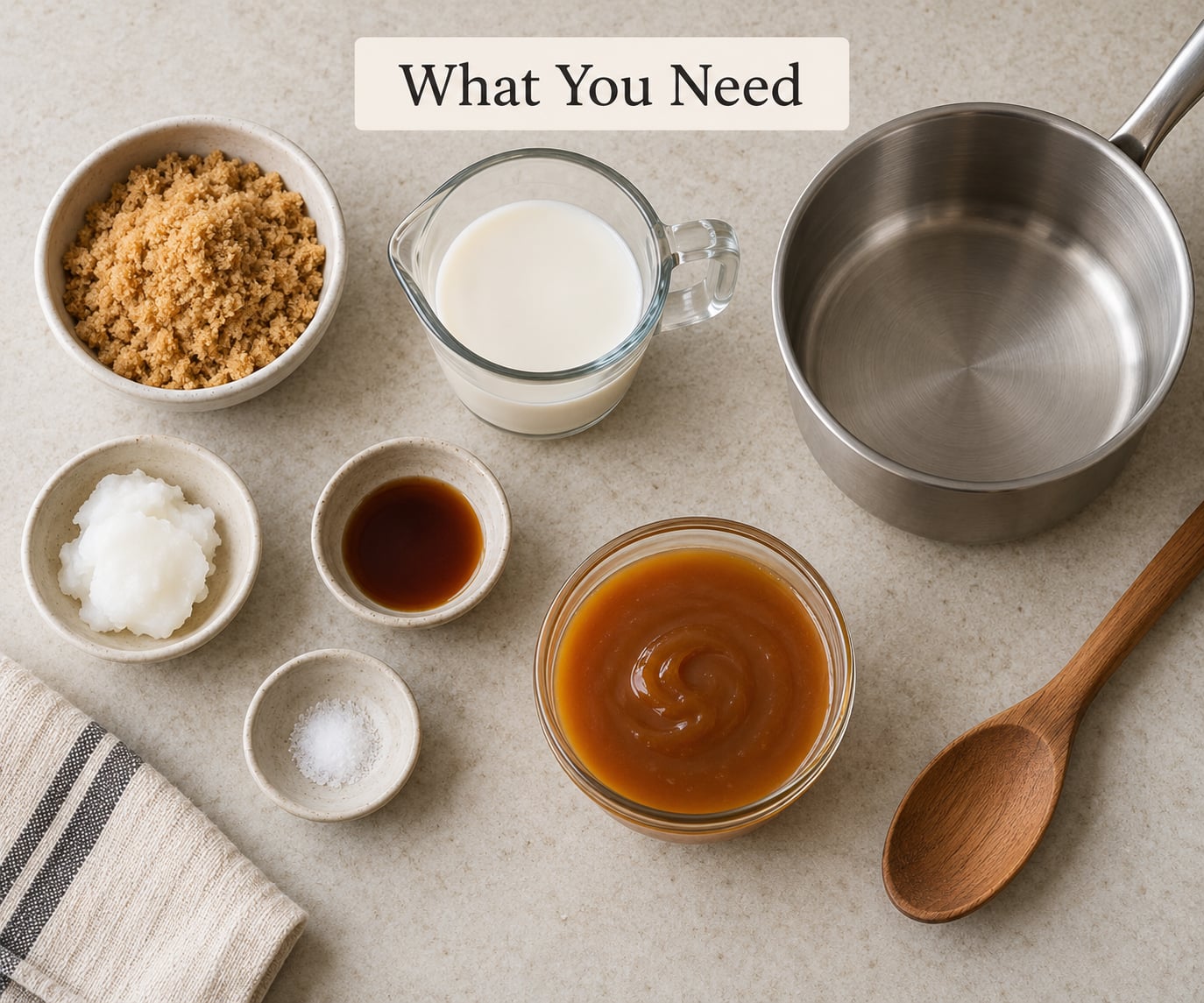
For the stovetop method, gather the ingredients before you turn on the heat. Once sugar starts coloring, you will not have a free hand.
- 1 cup granulated white sugar
- One 13-ounce can full-fat coconut milk, chilled
- 2 tablespoons vegan butter, plus more for the pan
- 1 teaspoon pure vanilla extract
- 1/2 teaspoon fine sea salt, plus flaky salt for finishing
- 1/4 teaspoon baking soda, optional
The pan matters more than people expect. Use a heavy-bottomed saucepan, ideally 2 to 3 inches deep with a flat base. A thin-walled pan heats unevenly, and the sugar at the edge browns while the middle is still melting, which is how you end up with a bitter ring and a pale middle.
You also need a wooden spoon or heatproof silicone spatula, a heatproof measuring cup, and a jar or bowl that can take boiling liquid. A candy thermometer helps, but it is not required, and there are visual cues listed below.
Skip the thermometer and you are watching color, not temperature. The stages run clear, then pale gold, then deep amber with a distinctly toasted smell, then dark brown with thin smoke. Stop at deep amber. Most people carry on two stages too long because they are waiting for a visible smoke, and by then the flavor is already bitter.
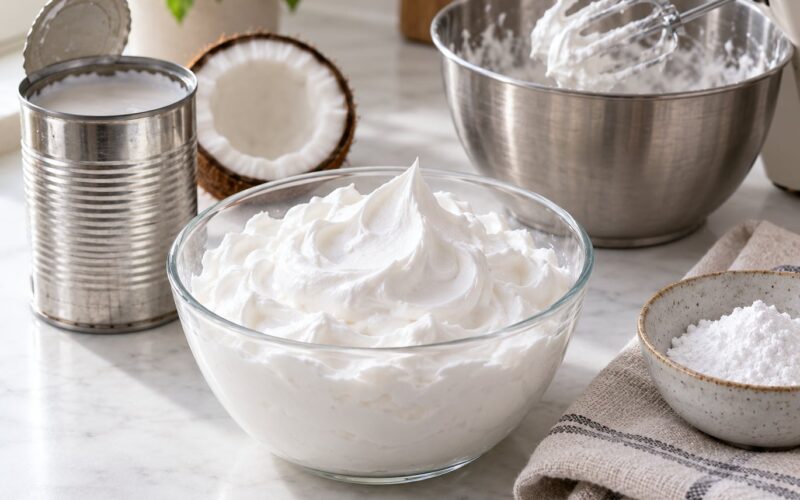
Full-fat coconut milk is the best base here. The light varieties and the sweetened varieties do not behave the same way. Full-fat coconut milk separates into cream and water in the can, and you want that separation: you scoop the thick cream off the top for the sauce and reserve the thin water for adjusting consistency later.
Which method should you use?
| Method | Total time | Equipment | Flavor profile | Watch out for |
|---|---|---|---|---|
| Stovetop coconut caramel | 20-25 minutes | Saucepan, spoon | Deep, roasted, closest to dairy caramel | Burning, needs constant attention |
| Pressure cooker condensed coconut milk | 60-70 minutes, mostly hands-off | Pressure cooker | Smooth, very coconut-forward | Coconut flavor runs strong |
| No-cook date caramel | 5-15 minutes | Blender or food processor | Fruity, mild, whole-food | Grainy unless dates are soft |
If you have no pressure cooker and no blender, the stovetop method is the only one that will work, and it is the best flavor anyway. If you want the fastest route and own a blender, the date method wins outright.
Step-by-Step: How to Make Vegan Caramel Sauce
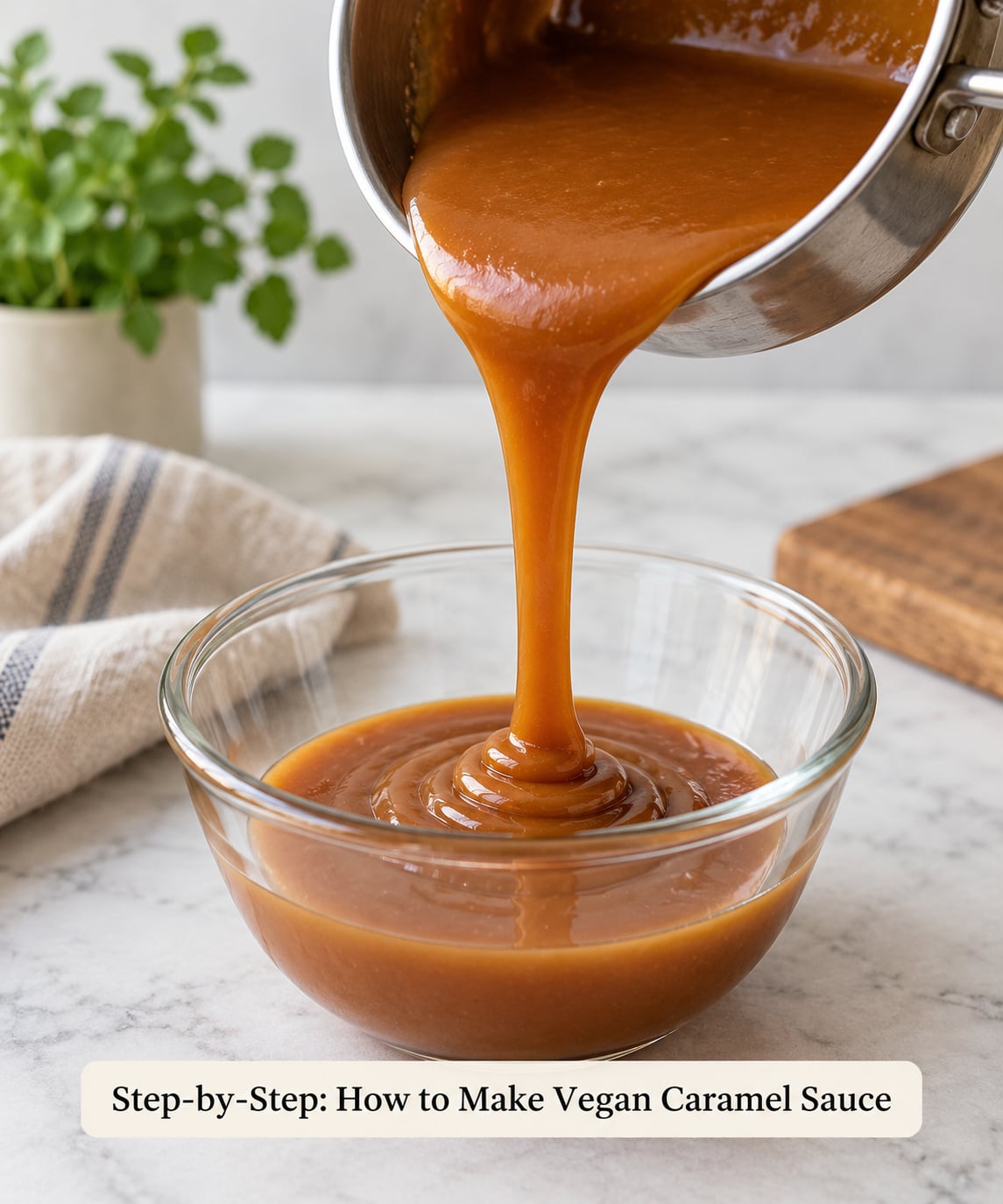
Read through the whole sequence once before you start, because steps 4 and 5 happen fast and in order.
1. Prep everything first. Scoop the thick coconut cream from the top of the chilled can into a heatproof measuring cup and leave the clear water behind. Cut the vegan butter into cubes, measure the vanilla and salt, and have the spoon in your hand.
2. Start the sugar dry. Put the sugar and 1 tablespoon of the vegan butter into the saucepan over medium heat. Stir just until the butter melts and the sugar looks like wet sand. Then stop stirring and let it melt on its own.
3. Cook without stirring. Swirl the pan by the handle every 20 to 30 seconds so the hot center moves to the edges. When the melted sugar reaches a deep amber color and smells like toasted nuts rather than plain sugar, move on.
4. Add the coconut cream off the heat. Take the pan off the burner. Slowly pour in one cup of the thick coconut cream while whisking with the other hand. It will hiss and steam violently, and the mixture will seize into a clumpy paste for a second. That is normal. Keep whisking and return the pan to low heat.
5. Whisk until it comes together. Over low heat, whisk steadily until the paste loosens into a smooth sauce, usually three to four minutes. Add the remaining vegan butter a cube at a time, whisking until each one disappears. It should look like loose cream sauce now, and it will thicken noticeably as it cools.
6. Finish off the heat. Stir in the vanilla, the salt and the baking soda if you are using it. The soda makes the sauce slightly lighter and more pourable, which helps if you plan to glaze a cake. Taste before you add more sugar, because the sauce sweetens noticeably as it cools.
Pour it into your heatproof bowl and let it cool at room temperature rather than on the stove, where the trapped steam can keep it thinner than you want.
A pressure cooker takes a different path entirely. Pour one can of sweetened condensed coconut milk into the pot, seal it, and cook at high pressure for 45 minutes. Let the pressure release naturally, then open the lid carefully and let the can cool completely, at least two hours, before stirring. It thickens as it cools and needs nothing else added. This is the method people with no patience for stovetop sugar end up recommending, and the honest downside is that the coconut flavor is unmistakable.
How to Make Vegan Caramel Sauce Without Sugar
The no-cook route uses dates as the sweetener, so it is refined-sugar free and takes about five minutes of active work. Soften first, blend long, and you avoid the graininess that makes people give up on date caramel.
- 1 cup pitted Medjool dates, roughly 10 to 12
- 1/2 cup hot water, plus more as needed
- 1 tablespoon vegan butter or coconut oil
- 1 teaspoon vanilla extract
- 1/4 teaspoon sea salt
Cover the dates with the hot water and let them sit for 10 minutes so they soften all the way through. Hard, dry dates are the number one reason this sauce ends up grainy. Drain, then blend on high for at least two full minutes with a wet paste forming before you add anything else. Scrape down the sides once.
Drain off any soaking water you do not need, add the vegan butter, vanilla and salt, and blend another 30 seconds. Taste and add water a teaspoon at a time until it ribbons off the spoon. For a thicker, quicker caramel, blend the dates without any added liquid first, then loosen at the end.
How to Keep Vegan Caramel Sauce Smooth
Smoothness is mostly a temperature and blending problem, and both are fixable after the fact.
Cool the sauce fully before storing. Caramel thickens as it cools, and judging it warm is how people overcorrect with water and end up with a thin sauce. It should coat the back of a spoon and fall off in a slow ribbon at room temperature.
If it is grainy, warm it gently and blend again for a minute. Room temperature blending does very little; the sugar crystals need heat and agitation to dissolve.
To thin it, whisk in the reserved coconut water or a splash of plant milk, one tablespoon at a time, off the heat. To thicken it, simmer for three to five more minutes, or blend in a spoonful of coconut cream. Adding more sugar to thicken ruins the balance, since it just makes the sauce sweeter and cloying.
Common Mistakes and How to Fix Them
The sauce burned. It went past deep amber into dark brown and started smoking. That is not fixable, only salvageable, so dilute it with warm water or plant milk to soften the bitterness and use it as a glaze rather than a sauce. Next time, take it off the heat 30 seconds earlier than feels right, because residual heat keeps cooking it.
Sugar crystallized into a hard mass. Crystals form when sugar is disturbed or when a drop of water or a bit of undissolved sugar gets in. If it happens early, add a splash of water and a spoonful of the warm coconut cream, then swirl gently until it dissolves. If the sugar has set rock hard, warm it over low heat and stir until it melts again, then carry on.
The sauce is grainy, especially a date caramel. Under-blended dates are the usual cause. Blend longer, with more liquid than you think, and let the machine rest a few seconds between bursts if it heats up. A powerful blender gets this right in two minutes; a small food processor needs four or five and a scrape-down in between.
The fat separated from the liquid. This happens when the coconut cream hits sugar that is too hot or when the heat is too high. Whisk hard and steadily, and keep the burner on low. If it looks broken, bring it just to a simmer and whisk until the emulsion comes back.
The sauce hardened in the fridge. Starch-thickened or date-based sauces tighten up cold. Warm a jar in a bowl of hot water, or microwave in ten-second bursts with a spoon in the jar, stirring between each. Never microwave a sealed jar.
It tastes flat or too sweet. More salt fixes more problems than anything else here. Add a quarter teaspoon of flaky salt at the end and let it sit for a few minutes.
Storing and reheating vegan caramel sauce
A stovetop caramel keeps about one week refrigerated in an airtight jar, and it thickens as it sits. The no-cook date version lasts around ten days. Both freeze for up to three months in a jar with headroom, and neither needs to be frozen.
Always use a clean spoon. The biggest cause of spoilage in a jar of caramel is dipping in with a spoon that has been in someone’s mouth, since sugar does not inhibit bacterial growth the way people assume.
What to serve it on
Drizzle it over pancakes and waffles, spoon it onto vanilla or coconut ice cream, or use it as a dip for apple slices and pears. It works as a brownie topping, a drizzle on a sheet cake, a filling between layers, or a stir-in for cold brew and iced coffee. Adding a pinch of flaky salt turns any of these into salted caramel.
For variations, stir in dark chocolate for a chocolate caramel, a tablespoon of espresso powder for coffee caramel, or cinnamon and ginger for a spiced version suited to apple pie. Tahini mixed in at the end gives a nutty caramel that works over roasted sweet potatoes.
Frequently Asked Questions
Can I make vegan caramel sauce without condensed milk?
Yes, and most people do. The classic stovetop version needs just sugar, full-fat coconut milk, vegan butter, vanilla and salt. Condensed coconut milk is a shortcut for the pressure cooker method rather than a requirement. If you want the shortest ingredient list possible, the date caramel uses dates, water, vanilla and a pinch of salt, blended until smooth.
Why did my vegan caramel sauce turn grainy or crystallize?
Two causes cover almost every case. In cooked caramel, crystals form when undissolved sugar gets splashed back into the pan or when the coconut cream goes in before the sugar has fully melted. In date caramel, the cause is under-blending or dates that were too dry and hard. Add a splash of liquid and blend or swirl again, and soften or soak your dates next time.
How do I keep vegan caramel sauce from burning?
Use a heavy-bottomed saucepan, keep the heat on medium rather than high, and stay in the kitchen. Swirl the pan by the handle instead of stirring once the sugar melts. Pull it off the heat at deep amber, before it looks dark, because the residual heat keeps darkening it for another half minute or so. If smoke appears, that stage has already passed.
How long does vegan caramel sauce last in the refrigerator?
A cooked stovetop caramel keeps about one week refrigerated in an airtight jar, and the no-cook date version holds roughly ten days. It thickens noticeably as it cools, so loosen it with a splash of plant milk when you open the jar. Use a clean spoon every time, since caramel is not a safe medium for bacterial growth.
Can I reheat vegan caramel sauce without it hardening?
Yes. Warm it slowly in a bowl of hot water for a few minutes, or microwave in ten-second bursts with a spoon inside the jar and stir between each. If it has set solid, that low gentle heat is what brings it back to a pourable sauce. Avoid boiling it, which cooks the sauce further and can make it grainy or scorched.
What can I use vegan caramel sauce on?
It is a topping for pancakes, waffles, ice cream and yogurt, and a dip for apple and pear slices. It works as a brownie or cookie topping, a cake filling, or a drizzle over a finished dessert. Add it to cold brew or iced coffee for a dessert-adjacent drink, and finish anything you drizzle with a pinch of flaky salt for salted caramel.
Conclusion
Start by prepping your coconut cream, vanilla and salt before the sugar hits the heat, and stop stirring the moment it melts. That single habit, plus pulling the pan off the burner at deep amber instead of dark brown, is the difference between a smooth glossy vegan caramel sauce and a bitter one. From there the sauce is forgiving: loosen it with coconut water if it thickens, add salt if it tastes flat, and keep a jar in the fridge for pancakes, ice cream and apple slices all week.