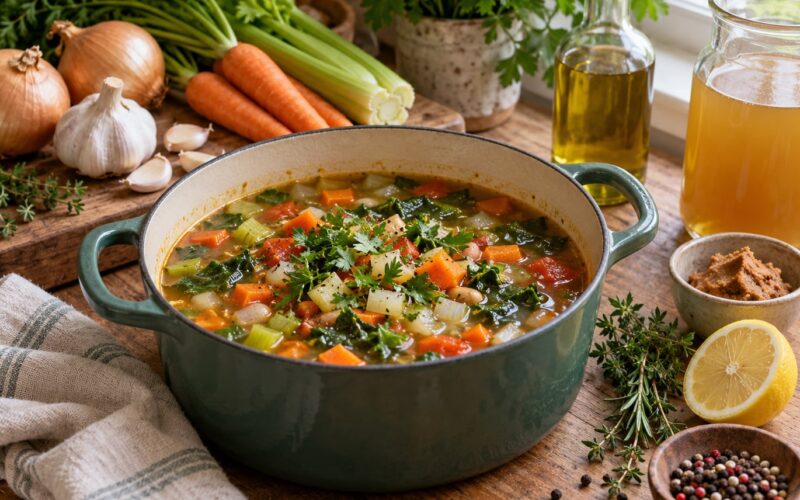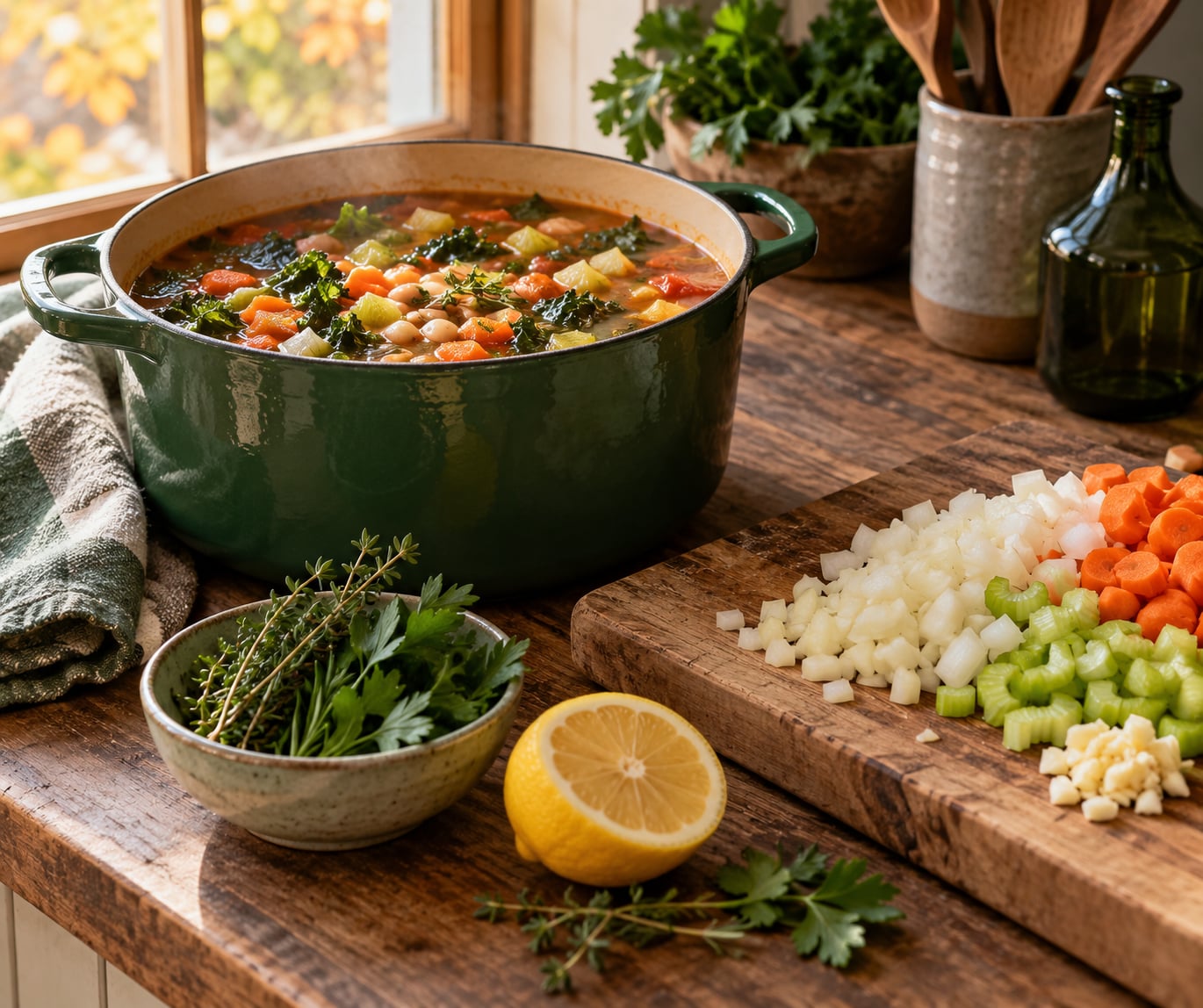
Most flat vegetable soups are missing two things: acid and umami. Add a splash of vinegar or lemon juice and a spoonful of tomato paste, miso, or a pinch of MSG, and the pot tastes completely different. Everything else — browning the vegetables, using real stock instead of water, blooming the spices — builds on that.
Vegetables are mostly water and mild sugar, so dropped into a pot of broth they give you aroma, not depth. I used to make soup by dumping everything in at once, boiling it, and hoping. Now I brown first, season in layers, and taste before serving. That is the whole method, and it takes about the same time.
Table of Contents
- What You Need
- Step-by-Step: How to Make Vegetable Soup With More Flavor
- 1. Build a Flavor Base
- 2. Toast Spices and Aromatics
- 3. Add Umami and Acid
- 4. Simmer for Layered Flavor
- 5. Finish with Freshness
- 6. Taste and Adjust
- Common Mistakes and Why Vegetable Soup Tastes Flat
- Frequently Asked Questions
- How can I fix a bland vegetable soup right now?
- Is stock or water better for vegetable soup?
- When should I add herbs to vegetable soup?
- How long should I simmer vegetable soup?
- Why does my vegetable soup have no flavor?
- How do I fix soup that is too acidic?
- Conclusion
What You Need
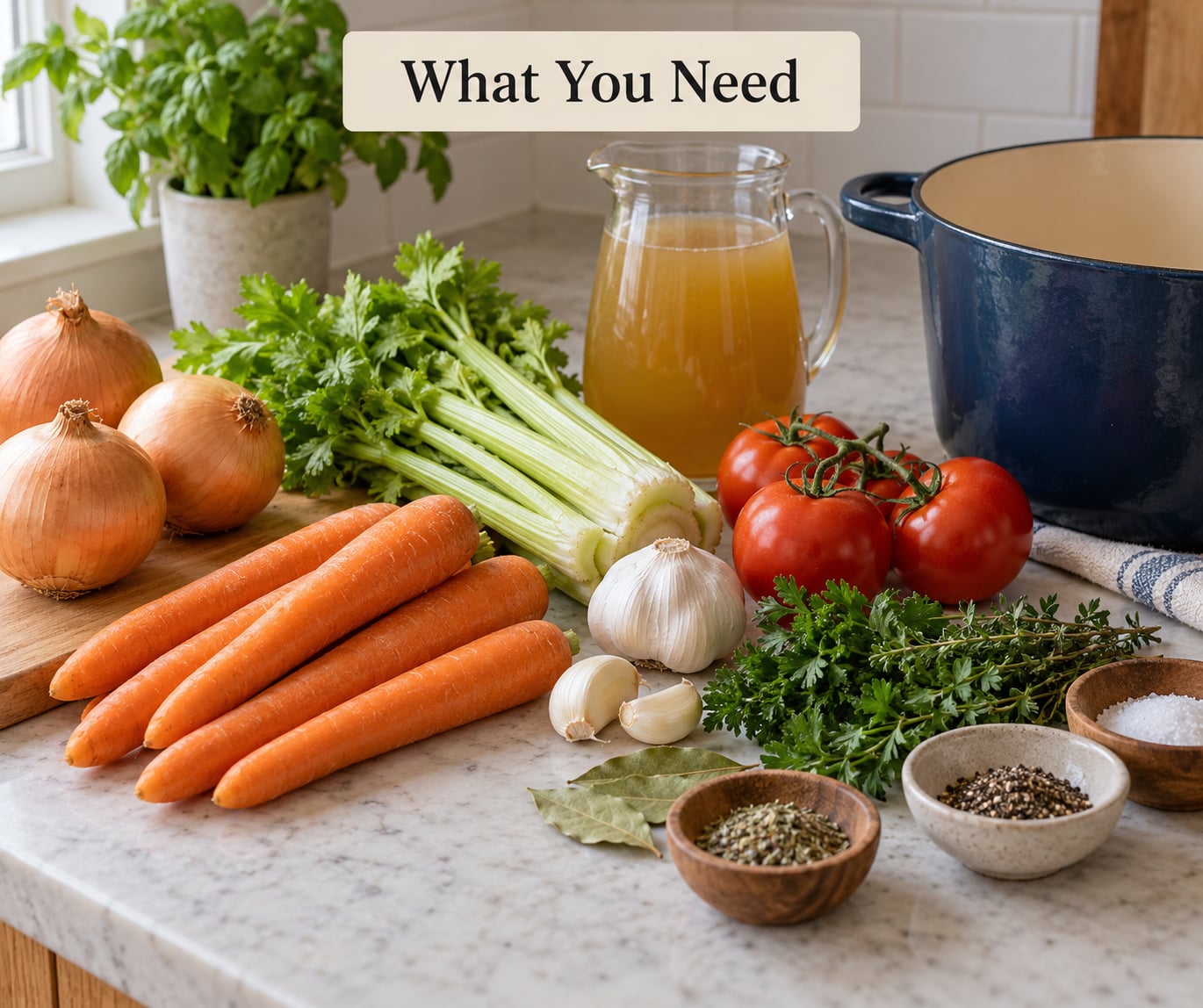
You do not need a long list. You need one item from each of these groups, and the rest is technique.
- Aromatics: onion, celery, carrot. This trio is called a mirepoix, and it is the base most French, Italian, and American soups start from. Garlic goes in with them, not later.
- Sturdy vegetables: potato, winter squash, turnip, cabbage, or dried beans. These hold their shape and give the soup body.
- Liquid: homemade stock if you have it, low-sodium vegetable or chicken stock otherwise. Water dilutes; stock carries.
- Fat: olive oil, butter, or a spoonful of rendered bacon fat if you eat meat. Fat is the carrier that makes flavor cling to the vegetables.
- Umami boosters: tomato paste, miso, soy sauce, dried mushrooms, Parmesan rind, or MSG. Umami is the savory fifth taste, the one that makes food read as cooked and hearty.
- Acid: lemon juice, cider vinegar, red wine vinegar, or a bit of tomato paste doubled as both umami and acid.
- Herbs: bay leaf, thyme, marjoram, parsley, basil, or cilantro. Add dried herbs early, fresh herbs at the very end.
For seasonal swaps, treat winter roots as the sturdy base in cold months and swap in zucchini, green beans, or fresh corn in summer. Add summer vegetables late so they keep some bite. For a vegan pot, use olive oil instead of butter, nutritional yeast or white miso for depth, and skip the Parmesan rind.
Step-by-Step: How to Make Vegetable Soup With More Flavor
1. Build a Flavor Base
Heat a tablespoon of fat in a heavy pot over medium heat. Add diced onion, carrot, and celery with a pinch of salt, then cook uncovered for 8 to 10 minutes until the edges soften and start to turn translucent. Add garlic for the last minute. You know it worked when the pot smells sweet rather than raw.
Do not salt the onions heavily at this stage if you want them to soften quickly. A cooking forum regular made this point clearly on StackExchange: sweat the onions and season separately. The color matters more than the seasoning here.
If you want deeper flavor, take the vegetables past translucent to browned. Sautéing, roasting, broiling, and steaming do very different things to a vegetable:
| Method | Time and heat | Flavor result | Best for |
|---|---|---|---|
| Sauté | 8-10 min, medium, uncovered | Sweet, soft aromatics; light browning if you push it | Weeknight soups, the standard base |
| Roast | 25-30 min at 425°F / 220°C | Deep sweetness, caramelized edges, nutty notes | Squash, carrots, sweet potato, tomatoes |
| Broil | 4-6 min under the broiler, oiled and salted | Fast char on the top surface only | A shortcut when you have no oven time |
| Steam | 5-7 min over boiling water | Vegetables keep color but develop almost no flavor | Delicate greens only |
Pour in a cup of stock and scrape the bottom of the pot clean. That browned fond stuck to the pan is more flavorful than most of the ingredients you will add later.
2. Toast Spices and Aromatics
Add ground spices to the hot fat and stir for 30 to 45 seconds until fragrant, then add the liquid. Blooming spices means toasting them briefly in fat so their aromatic oils release into the oil instead of escaping as steam. Paprika, cumin, coriander, and chili all need this. Whole spices like bay leaf and peppercorns can go straight into the liquid and cook longer.
If you are skipping the sauté entirely, roast the vegetables instead. That idea comes up constantly in home cooking threads and it works — roasting throws in a layer of caramelized sweetness that sautéing at medium heat cannot reach in the same time.
3. Add Umami and Acid
Add the liquid, then add umami before you add more salt. Stir in two tablespoons of tomato paste and let it cook two minutes, or dissolve a tablespoon of white miso, a teaspoon of soy sauce, or half a teaspoon of MSG into a ladle of hot broth. A Parmesan rind simmered alongside works too. These give you savory depth that plain vegetables simply do not have.
Quantities matter here, because too much acid is worse than none:
| Finisher | Amount per 4 cups of soup | What it does | Add it |
|---|---|---|---|
| Lemon juice | 1 to 2 tablespoons | Brightens, lifts the aromatics | Off the heat, just before serving |
| Apple cider vinegar | 1 to 2 teaspoons | Rounds out sweet vegetables | Off the heat |
| Red wine vinegar | 1 teaspoon | Adds depth to tomato-based soups | Off the heat |
| Tomato paste | 1 to 2 tablespoons | Umami and mild acid at once | Cook two minutes in the pot |
| Plain yogurt or sour cream | 2 tablespoons per bowl | Cools and brightens without vinegar | Stirred into the bowl |
| MSG | 1/2 to 1 teaspoon | Savory depth with less salt than salt itself | Any time, taste after |
4. Simmer for Layered Flavor
Bring the pot up to temperature, then drop it to the barest simmer. A rolling boil keeps vegetables moving in hot liquid, which cooks them unevenly and dulls their aroma. Simmer gently for 20 to 40 minutes and you get a rounder broth.
Stagger your additions by firmness. Root vegetables and dried beans go in first. Carrots and celery join next. Frozen peas, green beans, leafy greens, and summer squash go in for the last 5 to 10 minutes. Squash and sweet potato will soften and sweeten a soup, so if they dominate the pot, balance them with vinegar or a little heat.
To fix thin, watery soup, mash about a cup of the cooked vegetables against the side of the pot and stir it back in. Beans do the same job. That is body without cream or flour.
5. Finish with Freshness
Chop fresh herbs and add them off the heat. Boiling fresh herbs for even five minutes turns basil and parsley into something close to hay. Cilantro and chives are the exception; they hold up a little better but still taste better added last.
Finish with a hard crack of black pepper, a thread of good olive oil, or a little citrus zest. Add salt now, in small increments, and taste between each pinch.
6. Taste and Adjust
Taste for four things separately, not for salt first. Is it bright enough? Is it savory enough to register as hearty? Is the sweetness balanced? Does it have body? Each failure has a different fix, and reaching for salt when the real problem is acidity is the most common mistake.
- Flat but not salty: add acid first, then taste again.
- Salty but dull: more broth, then more acid.
- Thin: mash some vegetables or add beans.
- Bitter: add a small amount of sugar or molasses and more fat.
- Watery: simmer uncovered for 10 minutes to reduce, or add stock.
Common Mistakes and Why Vegetable Soup Tastes Flat

Flat soup has a short list of causes. Skipping the aromatics means the pot has no base at all. Boiling hard instead of simmering dulls the aroma and turns vegetables to mush. Throwing in all the herbs at the start buries the fresh ones. Using water instead of stock gives you something diluted by definition. And adding every seasoning at the end in large amounts is how soups get over-seasoned and still boring.
The specific mistakes, and the fix for each:
- Skipping the mirepoix. Add onion, carrot, and celery and give them the full 8 to 10 minutes. This is the base everything else sits on.
- Overcrowding the pot. Vegetables steam instead of brown. Cook in two batches if your pot is full.
- Boiling instead of simmering. Turn the heat down until the surface barely moves.
- Adding all herbs early. Pull the dried herbs down to a simmer; save the fresh ones for the bowl.
- Using bland stock. Simmer trimmings in a freezer bag of carrot ends, celery leaves, onion skins, mushroom stems, and parmesan rinds for a few hours. Freeze the bag up and build up a supply over a few weeks — it is the cheapest stock improvement available.
- Over-salting. Add salt in layers at each stage. You can always add more, never less.
- Ignoring acidity. A spoonful of lemon or vinegar at the end fixes more flat soups than any spice.
- Cooking in a pressure or slow cooker without browning first. Do the sauté and spice blooming in a pan on the stove, then transfer. The appliance does not replace that step.
Leftovers fade by day two mostly because the fresh herbs and the bright finish get dulled through storage. Hold back your lemon, vinegar, and fresh herbs and add them when you reheat. Keep refrigerated soup in the fridge no more than three to four days and reheat only the portion you plan to eat, reheating it to 165°F / 74°C.
Frequently Asked Questions
How can I fix a bland vegetable soup right now?
Add acid first: one to two tablespoons of lemon juice or a teaspoon of cider vinegar per four cups, stirred in off the heat. Then add umami, such as a tablespoon of tomato paste, miso, or half a teaspoon of MSG. Salt only after you retaste, since acid often reveals salt that was already there.
Is stock or water better for vegetable soup?
Stock, every time. Water gives you a diluted pot with no savory base, and the flavor you add later has nothing to sit on. If you only have water, simmer it for twenty minutes with the vegetable trimmings first, or use bouillon as a compromise. Homemade stock from a freezer bag of scraps is the cheapest upgrade available.
When should I add herbs to vegetable soup?
Dried herbs such as bay leaf, thyme, and marjoram go in at the start of the simmer and cook for twenty minutes or more. Fresh herbs go in off the heat, right before serving. Boiling fresh herbs for even five minutes dulls them to something close to hay, and no amount of lemon will bring that flavor back.
How long should I simmer vegetable soup?
Twenty to forty minutes at a bare simmer covers most soups, with root vegetables needing the longest and summer vegetables the least. Keep the heat low enough that the surface barely moves. A rolling boil cooks unevenly, breaks down the vegetables, and drives off the aromatics you worked to build.
Why does my vegetable soup have no flavor?
Three causes account for most cases: no browning, no acid, and no umami. Vegetables that go straight from the cutting board into broth never develop caramelized sweetness. Broth that has never been brightened reads as flat, and plain vegetables carry little savory depth on their own. Fix the base first, then the finishing flavors.
How do I fix soup that is too acidic?
Add more stock or water to dilute, then rebuild the flavor you lost. A rounded tablespoon of tomato paste or a teaspoon of honey will soften sharp vinegar without leaving the soup sweet, since both carry flavor of their own. Mash in some potato or beans to give the diluted soup back some body.
Conclusion
Start with the two steps that change the most: brown your aromatics in fat for 8 to 10 minutes until they smell sweet, and cook in real stock rather than water. Everything after that — blooming the spices, a spoon of tomato paste, a splash of vinegar at the end — sharpens what those two steps built.
Taste the pot once before it leaves the stove and once at the table. If it seems dull, add acid before salt. You will taste the difference in the next batch you make.