You do not need a cellar to keep roots for months. Working out how to store root vegetables without a root cellar comes down to coolth, darkness, airflow and a little planning: give each crop its own container in the coolest dark spot you have, cure it first if it came straight from the garden, and pull anything soft or moldy the moment you notice it. Here is the short version, and then the details for each vegetable.
- Pick the coolest dark spot you have. A closet, garage, interior cabinet or insulated bin between about 45 and 55°F beats a warm kitchen cupboard every time.
- Separate the crops. Potatoes and onions must never share a container, and carrots want different humidity again.
- Control moisture, not just temperature. Some roots want high humidity in sand, others want dry air and a breathable bag.
- Check weekly and cull ruthlessly. One soft potato turns a whole box into compost in a few weeks.
Table of Contents
- What You Need
- Step-by-Step: How to Store Root Vegetables Without a Root Cellar
- 1. Sort and remove damaged vegetables
- 2. Choose the coolest available storage space
- 3. Do not wash vegetables unless necessary
- 4. Keep crops separate according to their needs
- 5. Use the right container for each vegetable
- 6. Check stored vegetables regularly
- How Long Can Root Vegetables Be Stored Without a Root Cellar?
- Common Mistakes
- Storage Methods by Vegetable
- Frequently Asked Questions
- Can you store potatoes and onions together in the same container?
- What three vegetables should never be refrigerated?
- Can I store onions in the basement?
- How long can you store root vegetables without refrigeration?
- How do you store root vegetables in an apartment with no basement?
- Conclusion
What You Need
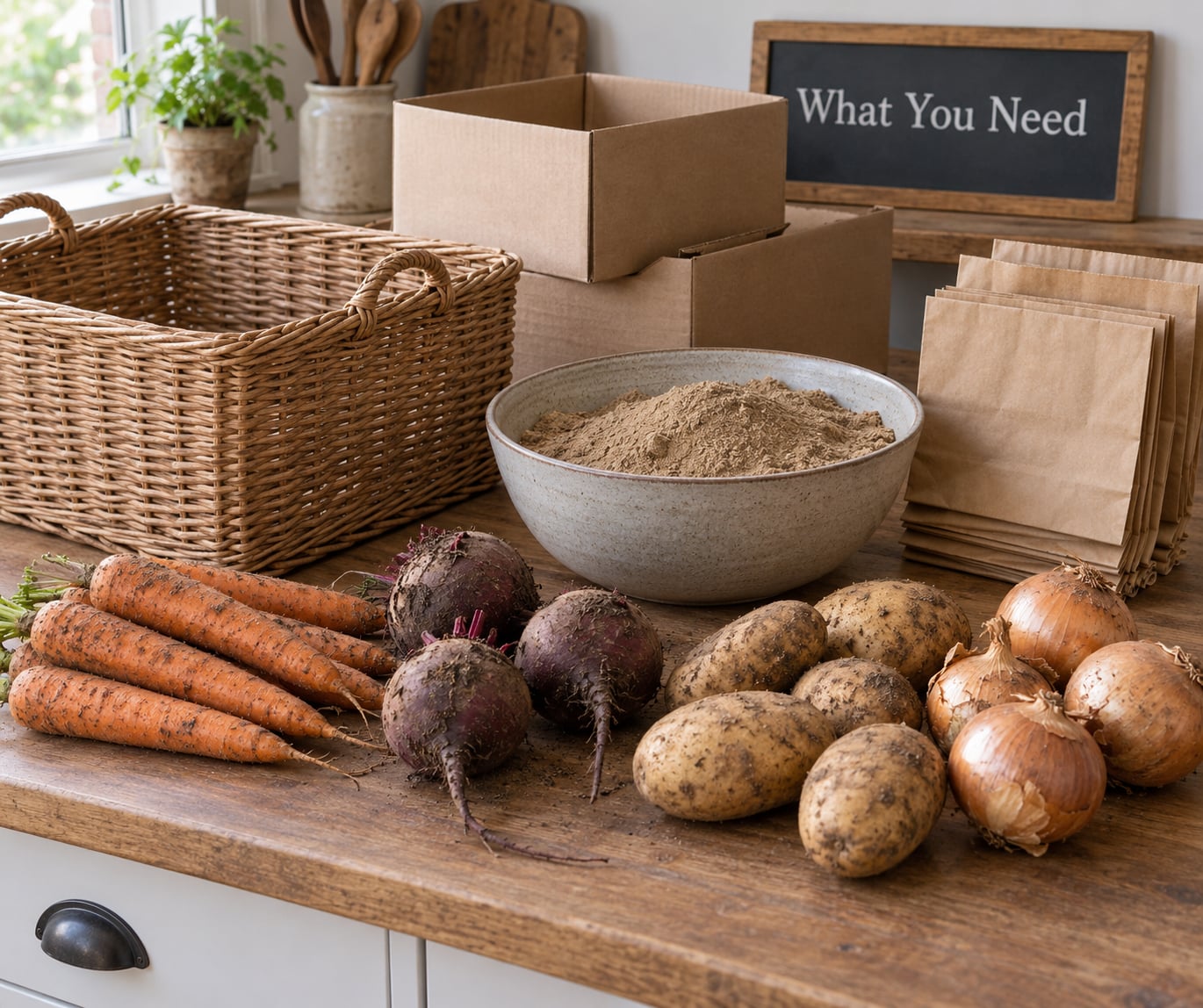
Most of what you need is already in the house. Cardboard boxes, paper bags, mesh produce bags, woven baskets and glass or plastic bins cover every crop on the list.
Airtight containers are the one thing most people reach for that they should skip. Sealed plastic traps the moisture roots give off, and that trapped damp turns into mold and rot within weeks. If a bin has no ventilation, drill a few holes in the side or leave the lid cracked.
For moisture-loving crops you also want a dry medium: plain sand, clean sawdust, or slightly damp shredded newspaper. Both keep humidity around the vegetable instead of letting it dry out and shrivel.
The other supply is a thermometer and a hygrometer, the cheap stick-in-a-drawer kind. Guessing at conditions is how a harvest gets lost.
Step-by-Step: How to Store Root Vegetables Without a Root Cellar
1. Sort and remove damaged vegetables
Sort the harvest the day you bring it in and cut your losses immediately. Anything bruised, soft, split, frost-bitten or already showing fuzzy mold goes into the compost, not the box.
Damaged pieces respire faster and spread decay to the sound ones. One spoiled tuber can take a whole batch down with it, so sorting is not optional housekeeping. It is the thing that decides whether you keep the harvest or lose it.
Leave an inch of stem on beets and turnips, and do not wash anything yet.
2. Choose the coolest available storage space
Root vegetables are still alive after harvest. They respire, they transpire, and slow coolth is what pushes that process down to a crawl. Aim for 45 to 55°F, dark, with moving air.
A basement is ideal, but most people reading this do not have one. Here is how the ordinary options rank.
- Interior closet or hall cabinet: usually the coolest room in an apartment, especially on an interior wall away from outside walls and radiators. Boxes on the floor hold the steadiest temperature.
- Unheated garage or shed: usually good through the cold half of the year, then check it weekly on the coldest nights, because an unheated garage in a freeze can destroy the whole bin. Bring crops indoors if the forecast drops below 32°F.
- Kitchen pantry or cabinet over the refrigerator: the warm end of the scale and the reason so many roots turn green and sprout in weeks. Use it for onions and potatoes in small quantities, not for a winter supply.
- Refrigerator: a crisper drawer at 32 to 40°F with high humidity is genuinely useful for carrots, beets, parsnips, turnips and rutabagas. It is the wrong tool for potatoes, onions, garlic and sweet potatoes, which need warmer, drier air.
- Insulated cooler or bin: a picnic cooler with a tight lid, or a stackable plastic bin with foam board insulation, buys you a stable temperature in a hot apartment. Keep it in the darkest room you have and open it once a week.
Two situations get their own advice. If you are in a humid climate, the South, the Gulf Coast or the wet Pacific Northwest, indoor humidity works against you: pick the drier of two spaces, run the room dehumidifier if you own one, and avoid basements that smell damp. Apartment and condo households without a single cool room should lean on the refrigerator drawer and small batches, refreshed weekly, rather than trying to stock a cupboard.
3. Do not wash vegetables unless necessary
Store roots unwashed. The moisture left on the surface plus a wound in the skin is exactly the combination that starts rot, and a root that was rinsed and then stacked wet is a root that will not last the month.
When you must wash, dry completely before storing: spread on towels, not in a closed bin. Farm market carrots often come with a dry brush of soil still clinging on, and that is fine. Leave it.
4. Keep crops separate according to their needs
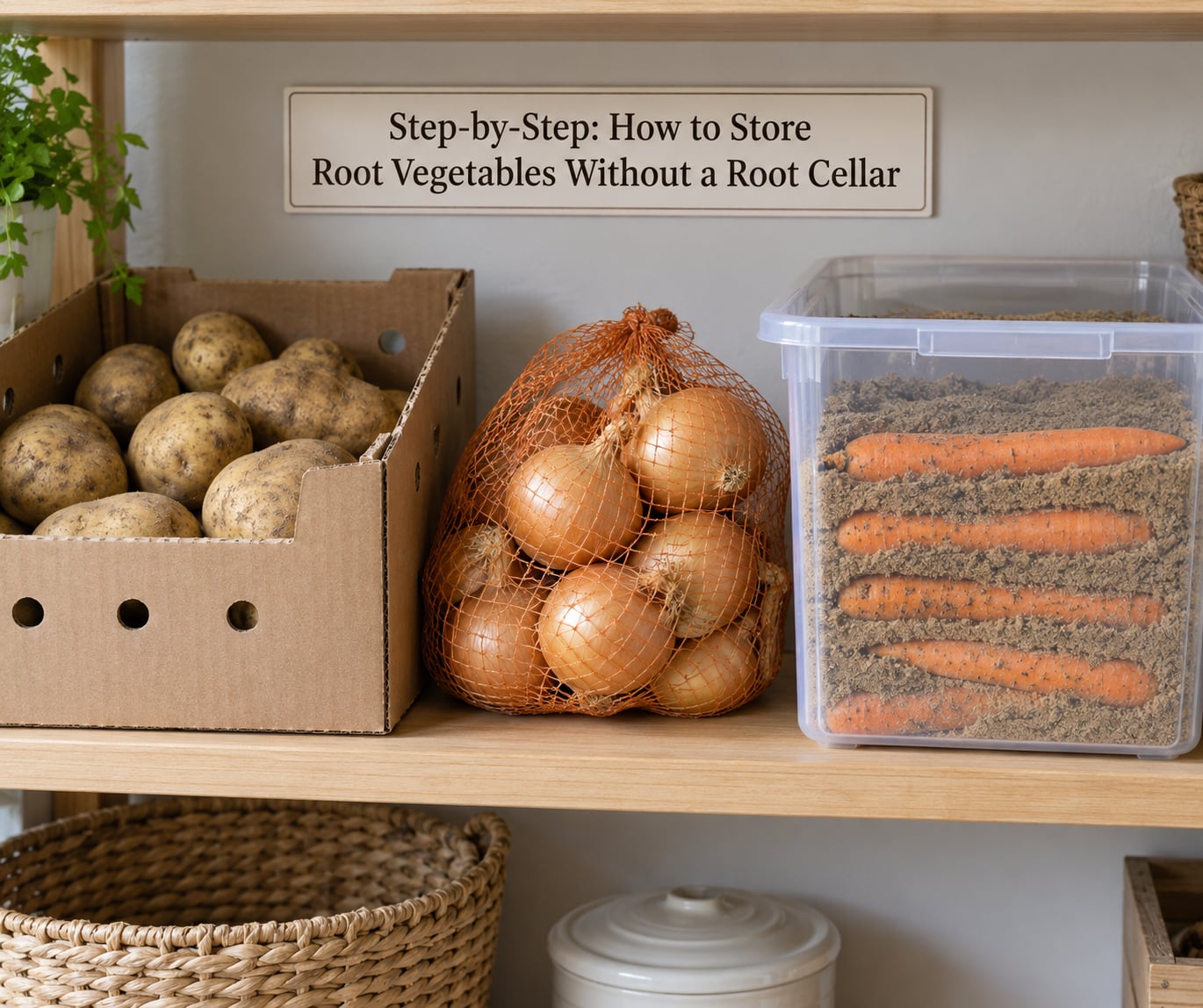
Never store potatoes and onions in the same container, bag or box. Potatoes give off moisture and gases that make onions spoil faster, onions dry out the potatoes, and the combination in a closed cupboard is how people lose both crops within a month.
Keep garlic and shallots away from potatoes for the same reason. Carrots, beets, parsnips and turnips tolerate each other in a shared bin of damp sand. Sweet potatoes want their own warm, dry, ventilated spot, not the potato box.
5. Use the right container for each vegetable
Match the container to the crop’s needs rather than to whatever is in the cupboard.
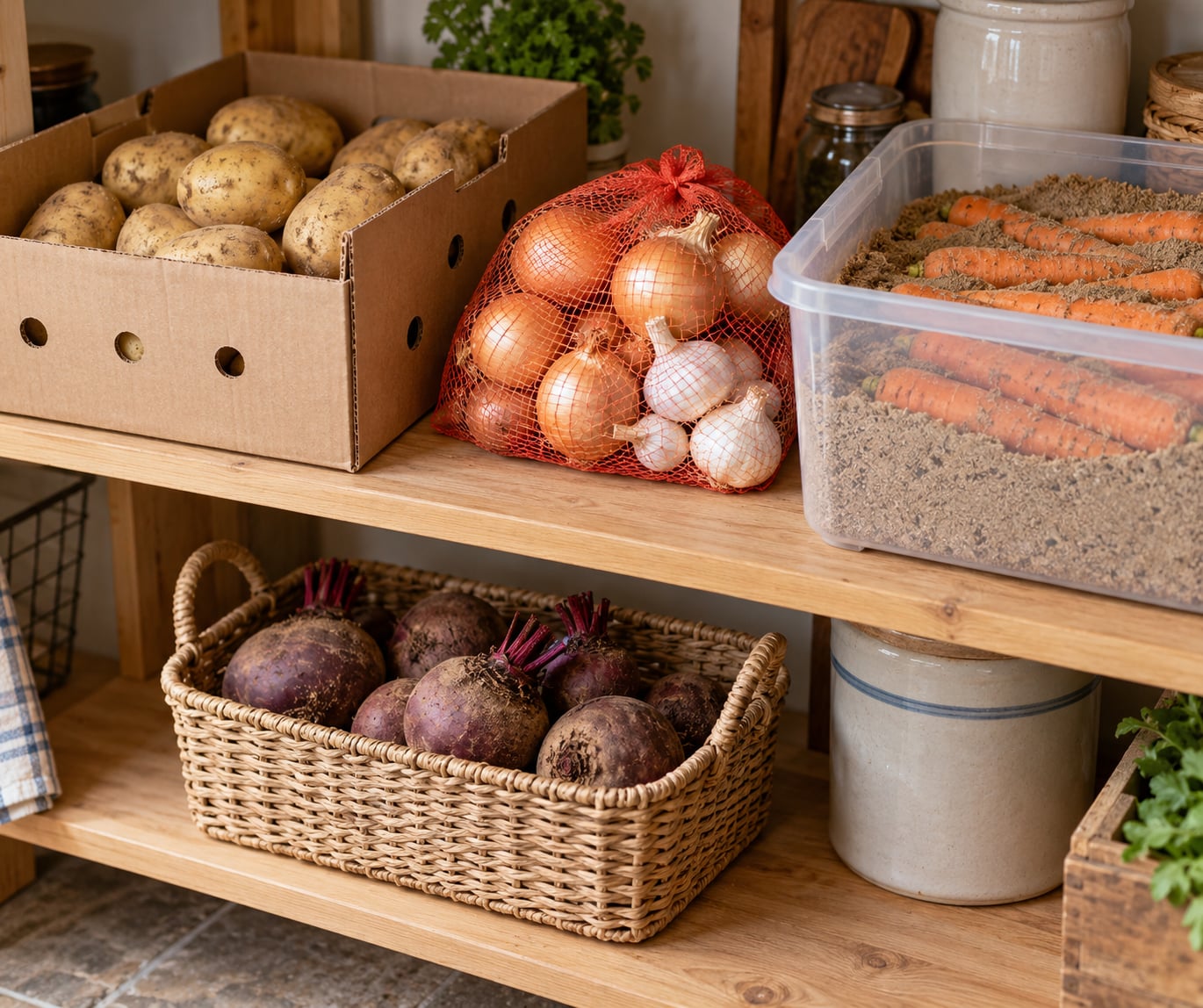
- Mesh or produce bags: best airflow for onions, shallots and garlic. They get air, they hold almost nothing, and they let you see a bad onion fast.
- Paper bags or a rolled paper bag: the classic for onions and potatoes in a cool closet. Paper breathes and keeps light out.
- Ventilated cardboard boxes: the best all-purpose choice for potatoes and for mixed hard roots. Line with newspaper for insulation, and lift the flaps or punch holes for airflow.
- Wooden crates: excellent airflow and they stack badly, which is a fair trade. Old apple crates are worth hunting down.
- Clay crocks or unglazed pots: genuinely good at holding steady humidity for carrots and beets while still letting moisture pass. Harder to find, worth it if you have one.
- Plastic bins with holes: cheap and stackable, which matters for a bulk harvest. Only use them if you vent them.
- Damp sand layering: the traditional method for carrots, parsnips and beets. Fill a bin with a couple of inches of barely damp sand, lay the roots in so they do not touch, add more sand, and repeat until the bin is full.
Two habits do more than the container choice. Keep something in the middle of the pile that lets you look, a slotted inner crate, so you can check without unstacking the whole bin. And use first in, first out, storing newer harvests behind older ones so you pull from the front.
6. Check stored vegetables regularly
Ten minutes on a Sunday does more for your harvest than any container upgrade.
- Feel. Squish is rot. Firmness means the vegetable is still holding water.
- Look. Green patches on potatoes mean light exposure and solanine, so cut those off deeply or discard them. Mold on onions or soft spots on sweet potatoes mean the batch needs culling.
- Watch for condensation. Water on the lid or walls means humidity is too high for that crop.
- Check for sprouting. Soft, pale sprouts on potatoes, onions or rutabagas mean the crop is warming up or the light is leaking in.
- Look for pests. A single web in a box of carrots shows up fast, and beetles tunnel into potatoes in storage.
Remove problems the same day and increase ventilation at the next inspection. Left alone, one soft potato in a dark box is a month of lost food.
How Long Can Root Vegetables Be Stored Without a Root Cellar?
Here are realistic durations, not marketing ones. These assume cool, dark, ventilated storage around 45 to 55°F, produce that was firm and undamaged when it went in, and weekly culling. If you have never checked the numbers, the table below is the quickest way to see whether your space is even worth the effort.
| Crop | In a cool pantry or closet | In a refrigerator drawer | In an apartment cupboard |
|---|---|---|---|
| Potatoes | 2 to 3 months | Do not refrigerate | 2 to 5 weeks |
| Onions | 2 to 4 months | Do not refrigerate | 3 to 6 weeks |
| Garlic | 4 to 6 months | Do not refrigerate | 1 to 2 months |
| Carrots | 3 to 6 months in damp sand | 1 to 2 months | 2 to 4 weeks |
| Beets | 2 to 4 months | 1 to 2 months | 2 to 4 weeks |
| Turnips and rutabagas | 2 to 4 months | 1 to 2 months | 2 to 4 weeks |
| Parsnips | 3 to 4 months | 1 to 2 months | 2 to 3 weeks |
| Sweet potatoes | 2 to 3 months | Do not refrigerate | 1 to 2 months |
| Radishes | 2 to 4 weeks | 2 to 4 weeks | About 1 week |
Four things move those numbers. Freshness at harvest matters most: roots pulled weeks before storage and kept somewhere else lose ground the whole time. Variety matters too, since late storage cultivars run weeks past what an early or tender one will hold. Damage means short numbers by definition. And your space decides the rest, because a cupboard at room temperature is doing its job in the table above when it says two weeks, and no container fixes that.
Shrivelling, sprouting and rotting are three different failures and each tells you something. Shrivelling is too little humidity, so add damp sand or a wet towel in the crisper. Sprouting or greening is warmth or light, so darken the bin and move it somewhere cooler. Soft rot is too much humidity or a damaged item, so open the container and cull harder.
When a crop is going soft rather than rotten, peel and cut it, blanch it briefly in boiling water, chill it fast and freeze it. Roots freeze well for soups, stews and sides. Pickling and dehydrating are the other two exits, and both turn a shrinking pile of food into a shelf-stable one.
Common Mistakes
Almost every failed batch traces back to one of these.
- Washing before storing. The fix is simple: skip the rinse, or dry roots completely before they go anywhere near a closed container.
- Sealed plastic bins. Airtight means trapped moisture and mold. Fix it with drilled holes, a cracked lid or a breathable bag.
- Potatoes and onions together. They shorten each other’s life noticeably. Fix it with two containers in two different spots.
- Sweet potatoes in the potato box. They want warmer, drier air and a vented spot. Fix it by giving them their own crate.
- Light leaking in. An open crate in a lit hallway will green potatoes in a few weeks. Fix it with a lid, a cardboard cover or an opaque bin.
- Storing damp roots from the field. Garden soil holds enough water to start rot. Fix it by laying roots out for a day or two in a cool, airy place.
- Skipping the weekly look. Fix it with a calendar reminder, or by keeping a small basket of the same crop in the kitchen that you always go through first.
- Freezing damage. A garage bin in a hard freeze ruins everything. Fix it by moving roots indoors before the first hard frost, or by burying a lidded metal can in the ground with a foot of mulch over the lid, an old trick that works because soil holds temperature steady.
Storage Methods by Vegetable
Roots do not all want the same conditions, and this chart is worth taping inside the pantry door.
| Crop | Temperature | Humidity | Container | Refrigerate? | How long |
|---|---|---|---|---|---|
| Potatoes | 45 to 55°F | 85 to 90% | Dark box or paper bag | No | 2 to 6 months |
| Onions | 45 to 55°F, dry | Low, 65 to 70% | Mesh or paper bag | No | 2 to 4 months |
| Garlic and shallots | 45 to 55°F, dry | Low | Mesh bag or open basket | No | 4 to 6 months |
| Carrots | 32 to 40°F | 90 to 95% | Damp sand in a bin | Yes, crisper | 3 to 6 months |
| Beets | 32 to 40°F | 90 to 95% | Damp sand or crisper | Yes, crisper | 2 to 4 months |
| Turnips and rutabagas | 32 to 40°F | 90 to 95% | Damp sand or crisper | Yes, crisper | 2 to 4 months |
| Parsnips | 32 to 40°F | 90 to 95% | Damp sand in a bin | Yes, crisper | 3 to 4 months |
| Sweet potatoes | 55 to 60°F | Moderate, ventilated | Loose in a crate or bag | No, chills and hardens | 2 to 4 months |
| Celeriac | 32 to 40°F | 90 to 95% | Damp sand in a bin | Yes, crisper | 2 to 3 months |
| Ginger | 45 to 55°F | Moderate | Paper bag or ventilated tub | Freezer for long term | 1 to 3 months |
| Radishes | 32 to 40°F | 90 to 95% | Crisper or damp sand | Yes, crisper | 2 to 4 weeks |
Potatoes. Cure harvested potatoes one to two weeks in a dark, airy place at about 50 to 60°F until the skins feel set and the eyes are no longer soft, then move them to the cooler dark spot. Skip light completely. Green patches mean solanine, and you should cut deeply or discard rather than taste-test. Potatoes go off by two things above all else: light and warmth.
Onions and garlic. Cure onions until the neck is papery and dry, two to three weeks for sweet varieties and up to three for storage types, then trim the tops to a stub. A bathroom with a fan running works fine for this, and so does a dry closet. Once cured, keep them dry, dark and ventilated at 45 to 55°F. Any onion with a thick, moist neck rots in storage, so it never goes in the bag.
Carrots, beets, parsnips, turnips, rutabagas and celeriac. These want the opposite treatment: cold and humid, and out of any sunlight that greens them. Trim the tops to an inch, bury them in barely damp sand or layered damp newspaper, and store at 32 to 40°F. Without a cellar the refrigerator crisper drawer does this job well, and a cardboard box of damp sand in a cool corner works nearly as long.
Sweet potatoes. Warm and dry beats cold here, since refrigerator temperatures harden the sugars and leave the flesh uncooked and unpleasant. Store them loose in a crate or ventilated bag at 55 to 60°F, out of light and away from ripening fruit, which gives off ethylene gas and speeds their spoilage.
Radishes and ginger. Radishes are a short crop with a short window, usually two to four weeks in the crisper. Ginger keeps a couple of months in a paper bag in a cool cupboard, and freezes well grated if you want it longer.
If you buy rather than grow, pick for storage. Choose firm, heavy roots with no soft spots or splits, no green or rubbery patches, and for onions and garlic, dry papery skin with a neck that is completely dry. Avoid anything already sprouting or with a cut surface, and buy the larger sizes if you are planning on storage, since small roots dehydrate first.
Frequently Asked Questions
Can you store potatoes and onions together in the same container?
No. Potatoes give off moisture and gases that shorten the life of onions, and onions dry the potatoes out. Stored together in a closed cupboard, both crops spoil faster than either would alone. Keep them in separate containers in separate spots, and give sweet potatoes their own ventilated crate, because they need warmer and drier air than potatoes do.
What three vegetables should never be refrigerated?
Potatoes, onions and garlic are the three you should keep out of a refrigerator. Cold starch to sugar conversion makes stored potatoes taste sweeter and can affect frying, while onions turn soft and lose their papery texture. Garlic goes limp and develops mold at refrigerator temperatures. All three want cool, dry, dark and ventilated air instead, which a pantry, closet or garage provides.
Can I store onions in the basement?
Yes, if the basement is cool, dry and ventilated, and as long as the onions are fully cured first. Two or three weeks of curing until the neck is papery is what stops them rotting on the shelf. Bag them in mesh or paper, off the floor and away from any wall or furnace that gives off heat, and check the bag monthly. A damp basement is a bad spot, because the humidity will rot the bulbs.
How long can you store root vegetables without refrigeration?
In a cool dark pantry around 45 to 55°F, potatoes last two to three months, onions two to four, carrots three to six months in damp sand, and beets, turnips and parsnips two to four. In a warm kitchen cupboard the same crops last a few weeks at most. If your only space is a cupboard, buy in small quantities and refill often rather than storing a winter supply.
How do you store root vegetables in an apartment with no basement?
Split the difference between a room-temperature cupboard and the refrigerator. Store carrots, beets, turnips and parsnips in the crisper drawer, and keep potatoes, onions and garlic in the coolest interior cabinet you have, away from outside walls, the oven and the refrigerator, which radiates heat. Small quantities, weekly shopping and a ten-minute Sunday check will take you much further than one big box.
Conclusion
Start the day your harvest comes in, not the week it starts going soft. Sort out every bruised or soft vegetable, pick the coolest dark space you have, give each crop its own breathable container, and set a recurring ten-minute check on the calendar. Get those four habits in place and learning how to store root vegetables without a root cellar stops being a project and just becomes Tuesday.