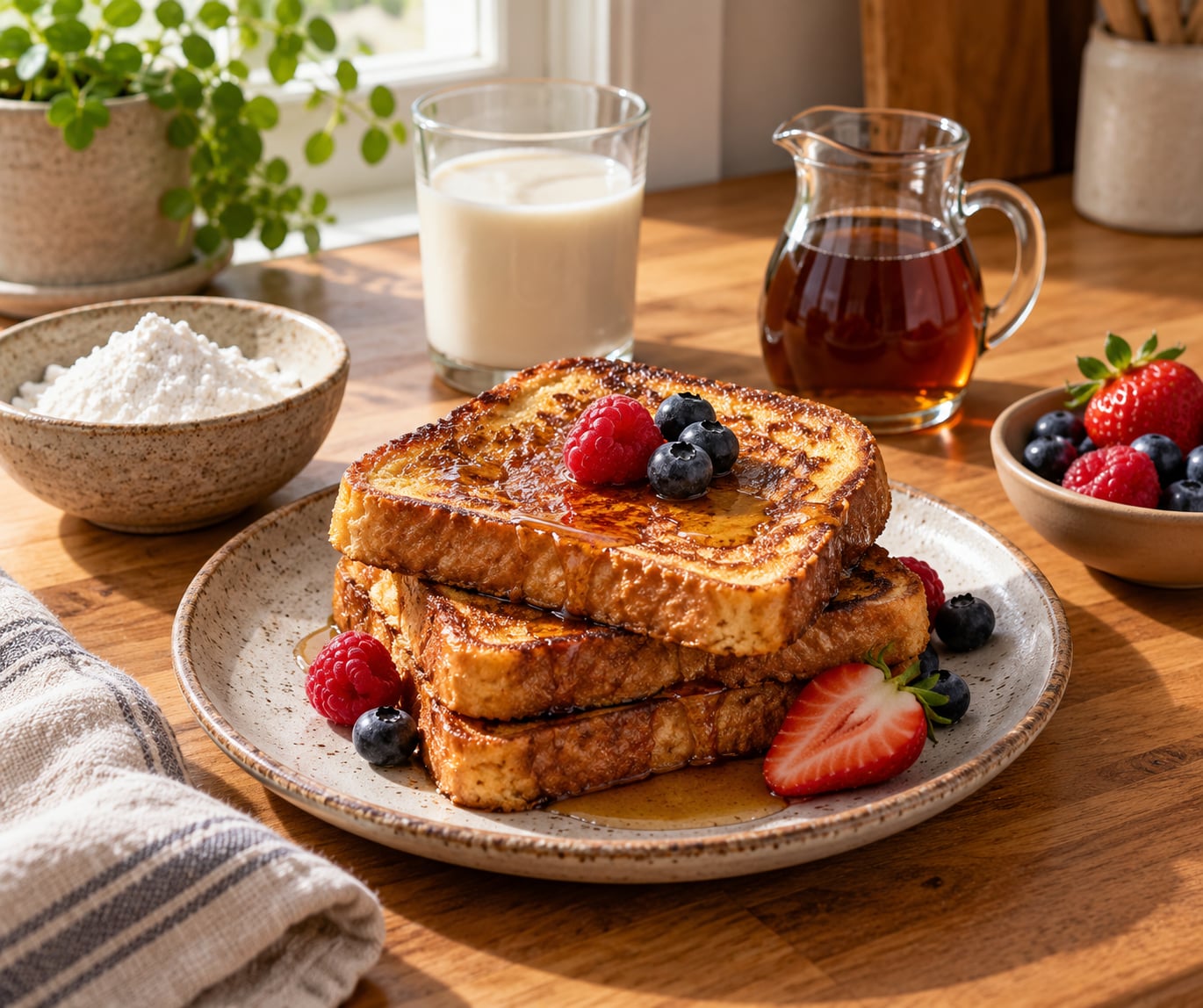
How to make French toast without eggs is easy once you know the swap: whisk cornstarch into your milk to get a thick, custard-like batter that clings to the bread and cooks into a golden shell with a creamy middle. No eggs, no weird aftertaste, about 20 minutes from counter to plate.
I make a version of this every Sunday when we’ve run out of eggs, and the trick is always the same — cornstarch, not flour, and enough of it to make the mixture drag a spoon across the bottom of the bowl. Here’s the full method, with the small adjustments that matter for thick sourdough, day-old sandwich bread, and gluten-free loaves.
Table of Contents
- What You Need
- The bread matters more than anything else
- The batter
- Optional flavor additions
- Tools
- Step-by-Step: How to Make French Toast Without Eggs
- 1. Mix the egg-free batter
- 2. Soak the bread without making it soggy
- 3. Cook until golden and set
- 4. Add toppings and serve
- Common Mistakes
- The middle stays wet
- The bread falls apart in the dish
- It burns before the center cooks
- It tastes flat or faintly eggy
- It’s pale and flat
- Storing and reheating
- Frequently Asked Questions
- What can I use instead of eggs in French toast?
- Can I make French toast without eggs using regular milk?
- Will egg-free French toast become soggy?
- What bread works best for French toast without eggs?
- Can I make this French toast gluten-free?
- How do I keep the French toast from burning?
- Conclusion
What You Need
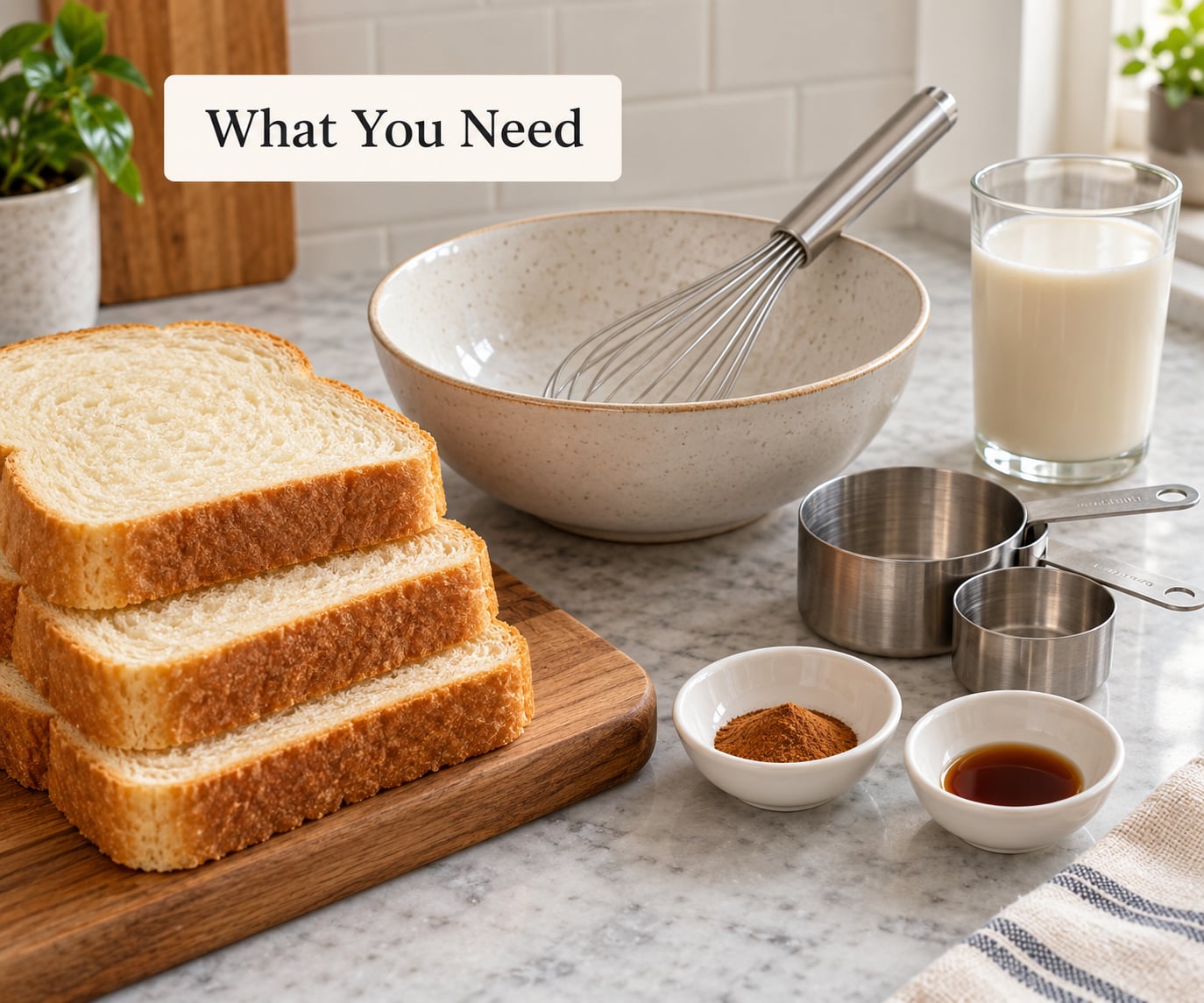
You need very little, and most of it is already in the pantry. The core list is thick-cut bread, milk or plant milk, cornstarch, a sweetener, vanilla, cinnamon, and a fat for the pan.
The bread matters more than anything else
Thick-cut bread is the one thing worth shopping for. Texas toast, sourdough, brioche, challah, and rustic country loaves all soak up batter without falling apart. Regular sandwich bread is the main reason people end up with mush — thin slices drink the mixture, then tear when you lift them.
Stale or day-old bread works even better than fresh, which sounds backwards until you think about what drying does. Dried-out crumb drinks batter instead of dissolving into it, so the slice holds together in the pan. If your loaf is fresh, toast it dry for a few minutes first and let it cool.
The batter
- 1 cup milk or plant-based milk — oat and soy are the richest and brown best, almond is lighter, coconut is the richest but adds a faint coconut note.
- 2 tablespoons cornstarch — this is the egg replacement. Arrowroot or tapioca starch works too; use the same amount.
- 1 tablespoon maple syrup, honey, or brown sugar
- 1 teaspoon vanilla extract
- 1 teaspoon ground cinnamon, plus a pinch of nutmeg or mixed spice if you like
- Pinch of salt — it sharpens the cinnamon and stops the sugar tasting flat
- 1 tablespoon ground flaxseed or chia seeds + 3 tablespoons water, optional, for extra binding and a softer crumb
Optional flavor additions
A tablespoon of cocoa powder turns it into chocolate French toast without the syrup. A spoonful of thick yogurt stirred into the batter adds protein and a tangy edge. Orange zest is good with the cinnamon if you want something brighter.
Tools
A wide nonstick skillet or a griddle, a shallow dish wide enough for one slice, and a whisk. If you have a shallow casserole or pie dish, use it — the low sides mean you can soak both sides without the slice sitting in liquid too long.
Step-by-Step: How to Make French Toast Without Eggs
1. Mix the egg-free batter
Whisk the cornstarch into about a third of the milk in a bowl until there are no lumps left — do this first, with the thin milk, because dumping cornstarch into a full cup of milk always leaves chalky pockets in the bottom. Then whisk in the rest of the milk, the sweetener, vanilla, cinnamon, salt, and any flax or chia mix you’ve prepared.
You’re looking for a consistency closer to thin pancake batter than to cream: it should coat the back of a spoon and leave a visible trail for a second or two. If it feels like plain milk, add another teaspoon of cornstarch. That slightly thick texture is what produces the puffy, set center instead of a wet one.
2. Soak the bread without making it soggy
Dip one slice at a time. For standard sandwich bread, 10 to 15 seconds per side is plenty. For thick-cut Texas toast, sourdough, or brioche, 20 to 30 seconds, and press it gently with a fork so the liquid reaches the middle.
Longer soaking is the single most common mistake. Thirty seconds is the ceiling for anything except a very dense loaf. Let each slice drip for a few seconds over the dish before moving it to the pan so you don’t carry a pool of batter into the skillet.
3. Cook until golden and set
Heat a nonstick skillet or griddle over medium heat and add butter, vegan butter, or coconut oil. Medium is the right call — high heat browns the outside before the inside cooks through, which gives you the burnt-outside, raw-middle result that sends people back to the egg version.
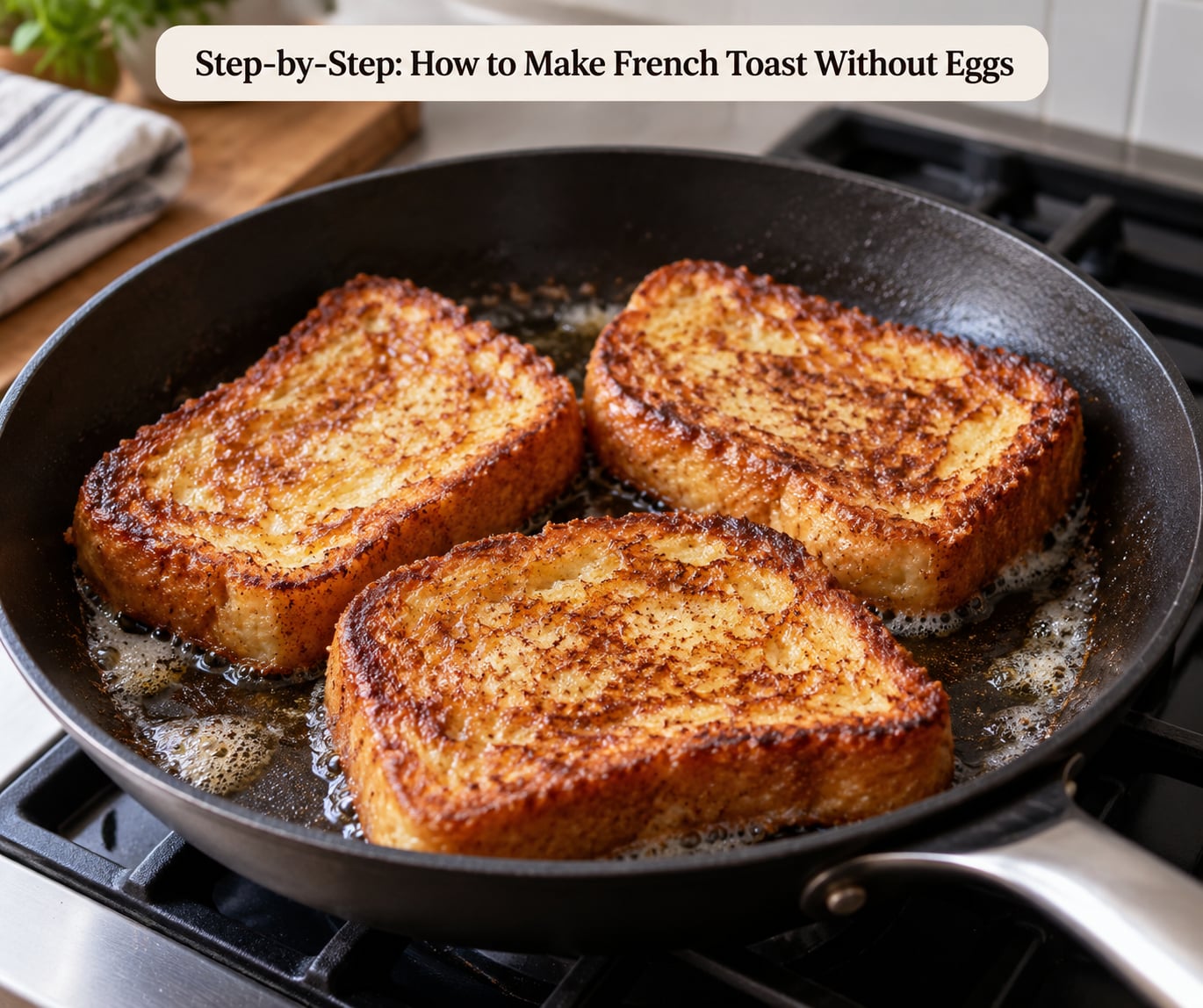
Cook for 3 to 4 minutes per side, until the edges look set and deeply golden. Press gently on the center with a spatula: if it feels spongy and springs back, it’s done. If it dents and looks wet, give it another 30 to 45 seconds and flip. You want a golden-brown crust and a pale, custardy middle, the same contrast you get from a classic egg version.
4. Add toppings and serve
Maple syrup is the obvious one. Beyond that: fresh berries and a dusting of powdered sugar, sliced bananas with peanut butter, sliced apples cooked down with cinnamon and a splash of cider vinegar, or a spoonful of thick yogurt with honey drizzled over.
Hold off on wet toppings until the toast is on the plate. Syrup poured in the pan or on the griddle melts into the crust and makes it soggy underneath, which is fine for some people and a waste of good bread for everyone else. Powdered sugar and dry toppings go on at any point.
For savory, skip the cinnamon and sugar. Garlic powder, black pepper, and a little nutritional yeast in the batter make a decent French toast sandwich filler, and it works well on day-old bread.
Common Mistakes
The middle stays wet
Either the batter was too thin or the slices sat in it too long. Fix both by going thicker and shorter: add a teaspoon of cornstarch per cup of milk, and cut soak time by about a third. If the center still squishes, the fix is to lower the heat slightly and give it an extra minute on that side.
The bread falls apart in the dish
The bread is too thin or too fresh. Swap to thick-cut bread, or dry it out in the oven for 10 minutes at 325°F first. Stale bread is structurally stronger when wet, which is the opposite of how it sounds.
It burns before the center cooks
Your pan is too hot. Drop to medium or medium-low and add a little more fat if the first slice sticks hard. Thin bread needs less heat than Texas toast, so a large thick slice over a blazing pan is the worst case.
It tastes flat or faintly eggy
Faint egginess usually comes from a commercial egg replacer, which is built to mimic the flavor and texture of egg. Cornstarch, flax, and chia leave no such trace. Blander batches are usually a sweetness issue — a bit more maple syrup in the batter and a pinch of salt will fix it.
It’s pale and flat
You’re cooking on a griddle at low heat with too many slices at once, so the pan temperature drops. Cook in batches of two or three, and wait for the fat to shimmer before laying the bread down.
Storing and reheating
Refrigerate leftover French toast in a single layer or in an airtight container for up to 3 or 4 days, per standard leftovers guidance. For longer storage, freeze the slices flat on a baking tray until solid, then move them to a freezer bag so they don’t stick together. They’ll keep for up to 2 months.
Reheat in a toaster or toaster oven for 3 to 4 minutes at 350°F. The microwave makes it rubbery and damp, so skip it. Freezer-to-toaster is also the fastest route to a hot breakfast on a busy weekday.
Frequently Asked Questions
What can I use instead of eggs in French toast?
Cornstarch is the most reliable swap: whisk 2 tablespoons into 1 cup of milk and let it thicken before you add the bread. Ground flaxseed or chia seeds mixed with water (1 tablespoon seeds to 3 tablespoons water, rested 10 minutes) add binding and a softer crumb. Mashed banana works but sweetens noticeably, and commercial egg replacers can leave an eggy taste.
Can I make French toast without eggs using regular milk?
Yes, and dairy milk is the easiest version. Whole milk gives the richest, most custardy center because the extra fat browns the outside and keeps the inside creamy. Low-fat milk works fine, just leaner. If you’re avoiding dairy too, oat and soy milk are the closest matches; almond is lighter and coconut is the richest.
Will egg-free French toast become soggy?
It can, but it’s a fixable problem. Sogginess comes from a batter that’s too thin or from soaking too long. Aim for a spoon-coating consistency that leaves a trail for a second, hold each slice 10 to 15 seconds per side for regular bread and up to 30 for Texas toast, and let slices drip before they hit the pan.
What bread works best for French toast without eggs?
Thick-cut bread holds up best because it soaks without tearing. Texas toast, sourdough, brioche, and challah all work well. Day-old or stale bread is even better than fresh, since dried-out crumb absorbs batter instead of disintegrating. Avoid thin sandwich bread and anything very soft, like potato or milk bread, which soak through in seconds.
Can I make this French toast gluten-free?
Yes. Use a gluten-free bread that’s at least three-quarters the thickness of standard sliced bread, since thin gluten-free loaves get fragile when wet. Toast it first to firm it up, shorten the soak to about 10 seconds per side, and add flax or chia for extra binding. Cook on medium rather than high, as gluten-free bread browns faster.
How do I keep the French toast from burning?
Cook over medium heat, not high, and wait for the butter or oil to shimmer before adding bread. Thick slices hold more moisture and need less heat than thin ones. If the first slice browns in under two minutes, the pan is too hot. Crowding the pan drops the temperature and leaves a pale, greasy result, so cook two or three slices at a time.
Conclusion
Start with the basic batter: 1 cup of milk, 2 tablespoons of cornstarch whisked smooth, a tablespoon of sweetener, vanilla, cinnamon, and a pinch of salt. Cook it on medium heat with thick-cut bread and you get what people are actually after from French toast — crisp golden edges, a center that’s creamy rather than eggy, and no egg required.
After that, adjust one thing at a time. Swap the bread if the slices are falling apart, add a teaspoon of cornstarch if the middle stays damp, and choose oat milk for richness or almond for something lighter. Once you’ve got the base down, the toppings do all the interesting work anyway.