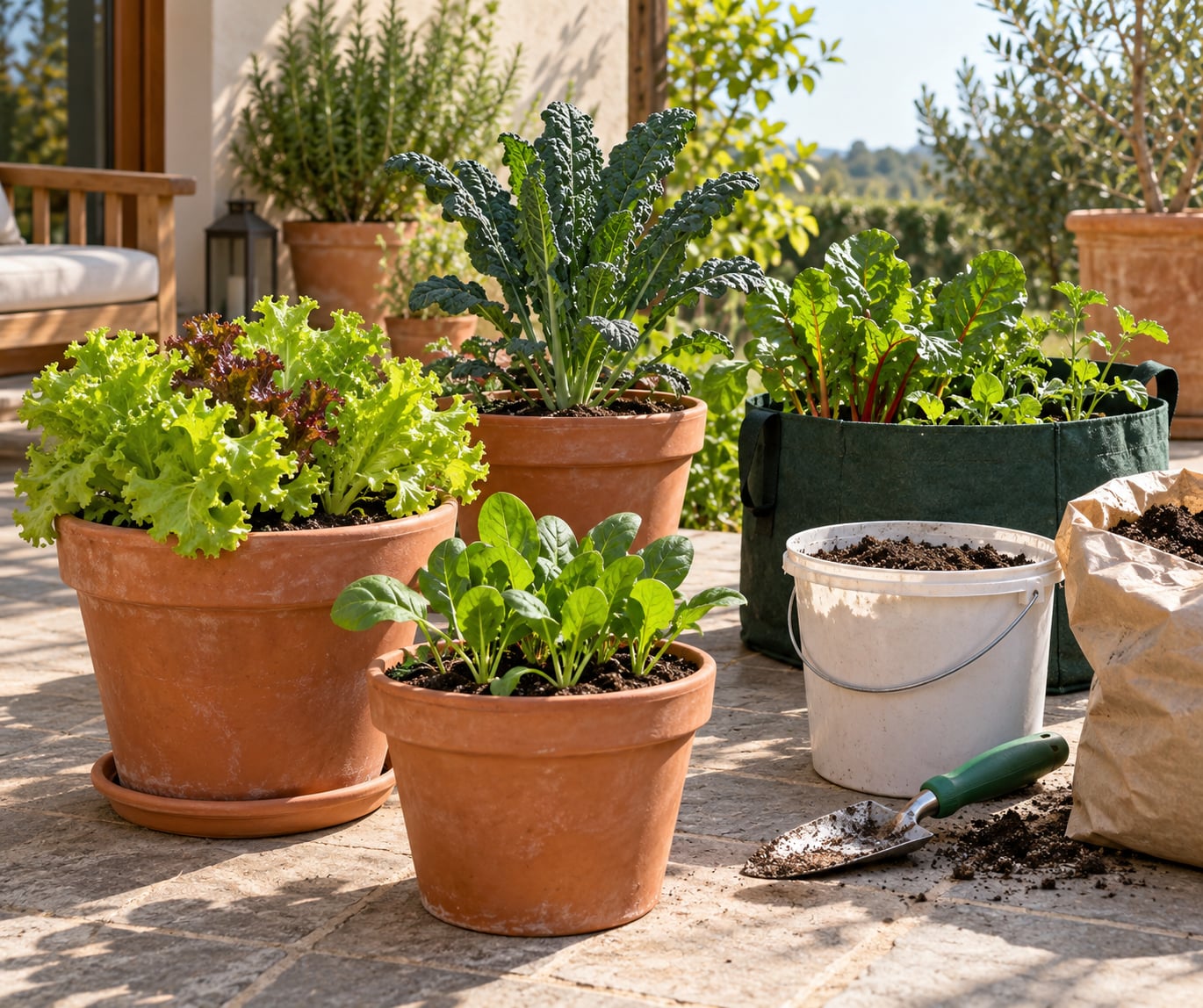
Learning how to grow greens in containers is mostly about three things: a pot with drainage holes, loose potting mix instead of garden soil, and steady moisture. Lettuce, arugula, spinach, kale, chard and collards all have shallow root systems, so a wide container six to twelve inches deep is genuinely enough. Most people can sow a first tray in an afternoon and cut salad greens about a month later.
Here is the whole process, in the order it actually happens.
Table of Contents
- What You Need to Grow Greens in Containers
- Step-by-Step
- 1. Choose a Location With the Right Light
- 2. Select Containers and Greens
- 3. Fill the Pots With Quality Potting Mix
- 4. Plant or Sow the Greens
- 5. Water Greens in Containers for Steady Growth
- 6. Feed Plants and Mulch the Surface
- 7. Harvest Without Removing the Whole Plant
- 8. Know When to Replace an Exhausted Crop
- Common Mistakes
- Frequently Asked Questions
- How deep should a container be for growing greens?
- Can I grow leafy greens indoors with grow lights?
- How long does it take to grow greens in a container?
- Why are my container greens bitter or bolting?
- Should I replace potting mix after harvesting greens?
- How do I keep harvested greens safe to eat?
- Start With One Easy Crop
What You Need to Grow Greens in Containers
You need less than a gardening store would have you believe. Start with a container, a bag of potting mix, seeds, and something to water with.
- Containers: terracotta pots, plastic or fiberglass planters, fabric grow bags, window boxes, or five-gallon buckets with holes drilled in the bottom. Match the width to the mature size of the plant, not the seed.
- Drainage: holes in the base plus a saucer or tray to catch the runoff. Without holes, water sits at the roots and you get root rot within days.
- Potting mix: a bagged, soilless container mix. Never dig up yard soil or buy topsoil for a pot; it compacts, drains badly, and brings weeds with it.
- Seeds or starts: lettuce, spinach, arugula, kale, Swiss chard, mustard greens, collards or turnip greens. A mesclun mix gives you variety in one tray.
- Fertilizer: a balanced vegetable fertilizer, either slow-release granules or liquid fish emulsion.
- Tools: a hand trowel, a watering can with a rose or a hose nozzle, and a pair of scissors for harvesting.
On depth, the answer people search for most: leaf lettuce needs a container at least six inches deep and twelve inches wide, head lettuce needs twelve to sixteen inches deep, and crops like kale, collards and Swiss chard want a twelve-inch depth with one plant per five-gallon container or grow bag.
Step-by-Step
1. Choose a Location With the Right Light
Leafy greens want at least four to six hours of direct sun, and they handle more light than people expect as long as water does not run out. Less light does not kill them; it produces pale, thin, bitter-tasting leaves.
Watch your space for two or three days before you buy anything. Note where the sun lands in the morning and where a building or tree blocks it by mid-afternoon. A south-facing patio is the easy case. A north-facing balcony will still work if you grow spinach, kale or a shade-tolerant lettuce and accept smaller leaves.
You succeeded at this step if you can point to a spot that gets several hours of sun and that you can reach with a watering can.
2. Select Containers and Greens
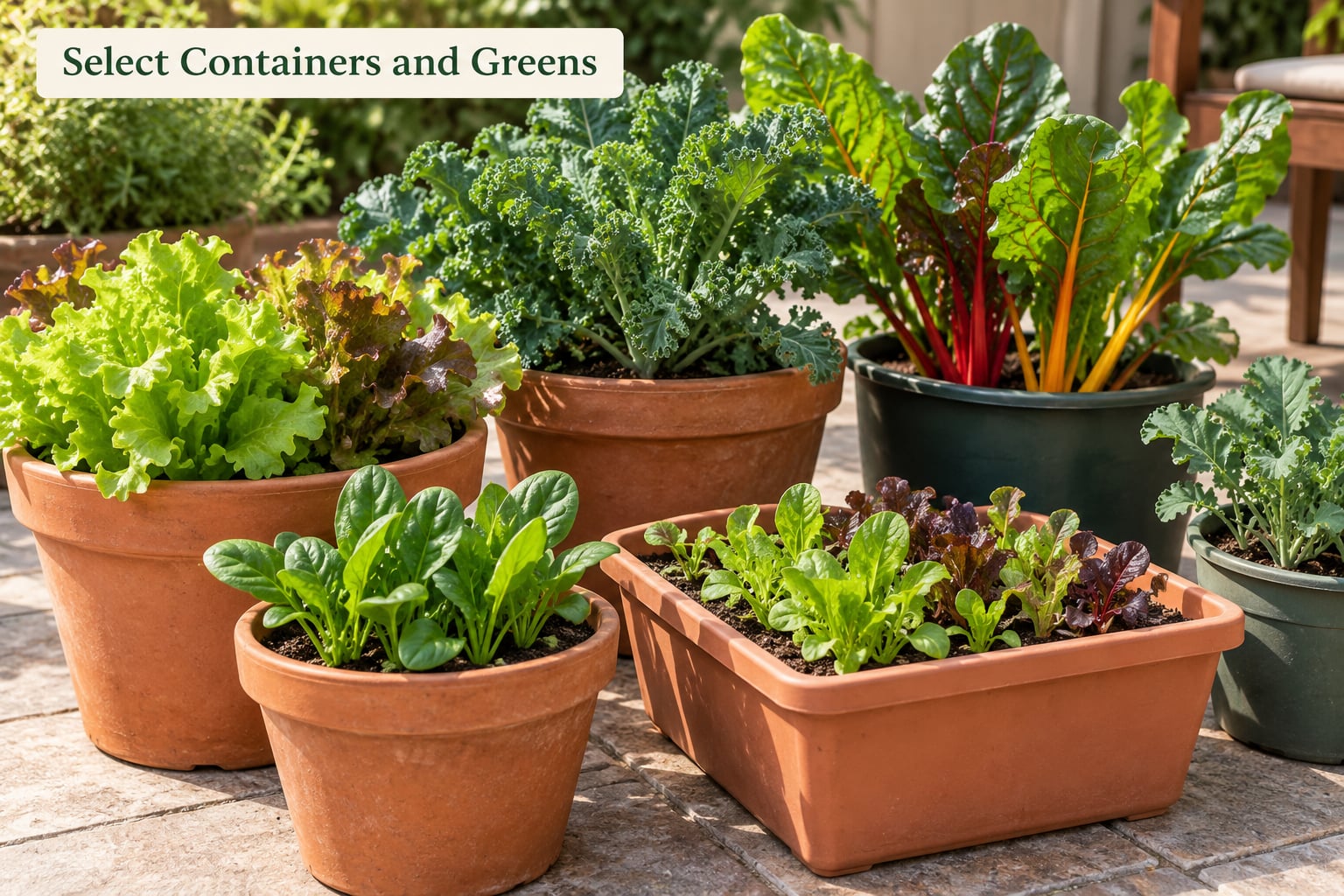
Width matters more than depth for greens, because their roots spread sideways rather than down. A shallow wide bowl or window box holds more plants than a tall narrow pot of the same volume, and it dries out more slowly.
| Green | Minimum depth | Spacing | Days to baby-leaf harvest | Heat tolerance |
|---|---|---|---|---|
| Leaf lettuce | 6 in | 4-6 in | 30-45 | Low |
| Arugula | 4-6 in | 2-3 in | 25-35 | Moderate |
| Spinach | 6 in | 4 in | 40-50 | Low |
| Kale | 12 in | 12-18 in | 55-70 | High |
| Swiss chard | 12 in | 12 in | 50-60 | High |
| Collards | 12 in | 18-24 in | 60-80 | High |
| Mustard greens | 8-12 in | 6-8 in | 40-55 | Moderate |
Yes, you can scatter lettuce seeds rather than spacing them one at a time. Sprinkle them about an inch apart, then thin the seedlings once they show two true leaves. Crowding is the single most common reason a container crop fails, so plan to thin even if it feels wasteful.
The Appalachian and Southern greens — collards, mustard greens and turnip greens — do well in containers and are more forgiving than lettuce in summer heat. Many gardeners in the Southeast run one collard plant per five-gallon container, which gives you a plant that keeps producing for months.
3. Fill the Pots With Quality Potting Mix
Fill the container to within an inch or two of the rim. Mix in a shovelful of compost if you want to enrich it, and a handful of perlite if the mix feels dense. Water moves through it faster and the roots get air.
Set the container on its saucer before you fill it, and confirm the holes are open. Do not pack the mix down hard; settle it by watering rather than by stomping on it. Leave the crown of a transplant sitting level with the soil surface, not buried, or the stem can rot.
4. Plant or Sow the Greens
Sow small seeds a quarter inch deep and cover with a light layer of mix. Lettuce and arugula need light to germinate well, so press them in rather than burying them deeply.
Handle transplants by the leaves, never the stem. Slide them into holes cut with your finger or a trowel, tuck mix around the roots, and water them in. Most lettuce seedlings germinate in seven to fifteen days; arugula is faster, spinach is slower.
Label every container, including the date. Cut-and-come-again varieties and heading types mature at different rates, and mixing them in one pot means something goes to waste.
5. Water Greens in Containers for Steady Growth
Stick a finger an inch into the soil before you water. If it feels cool and damp, wait. If it feels dry or warm at that depth, water until you see runoff coming out of the bottom, then empty the saucer an hour later so the roots do not sit in water.
Check daily in warm weather, since a shallow container on a sunny patio can dry out in a single afternoon. Small pots, fabric grow bags and plants at baby-leaf stage dry fastest. Watering less often but more deeply beats a daily splash that only wets the top inch.
Inconsistent moisture is what turns lettuce bitter, so treat watering as a job with a time of day rather than an afterthought.
6. Feed Plants and Mulch the Surface
Potting mix starts with a limited supply of nutrients and loses the rest through frequent watering. Begin feeding about three to four weeks after sowing, or sooner if leaves look pale. Use a balanced vegetable fertilizer at the label rate, or dilute fish emulsion and apply every two to three weeks.
Skip the heavy feeding in the first two weeks; soft young roots cannot handle concentrated fertilizer. More is not better here, and an overfed crop is leafy and bitter.
A thin layer of mulch on the surface slows evaporation. Shredded leaves, straw or a little chopped bark is enough. Keep it a finger’s width away from the stem so the crown stays dry.
7. Harvest Without Removing the Whole Plant
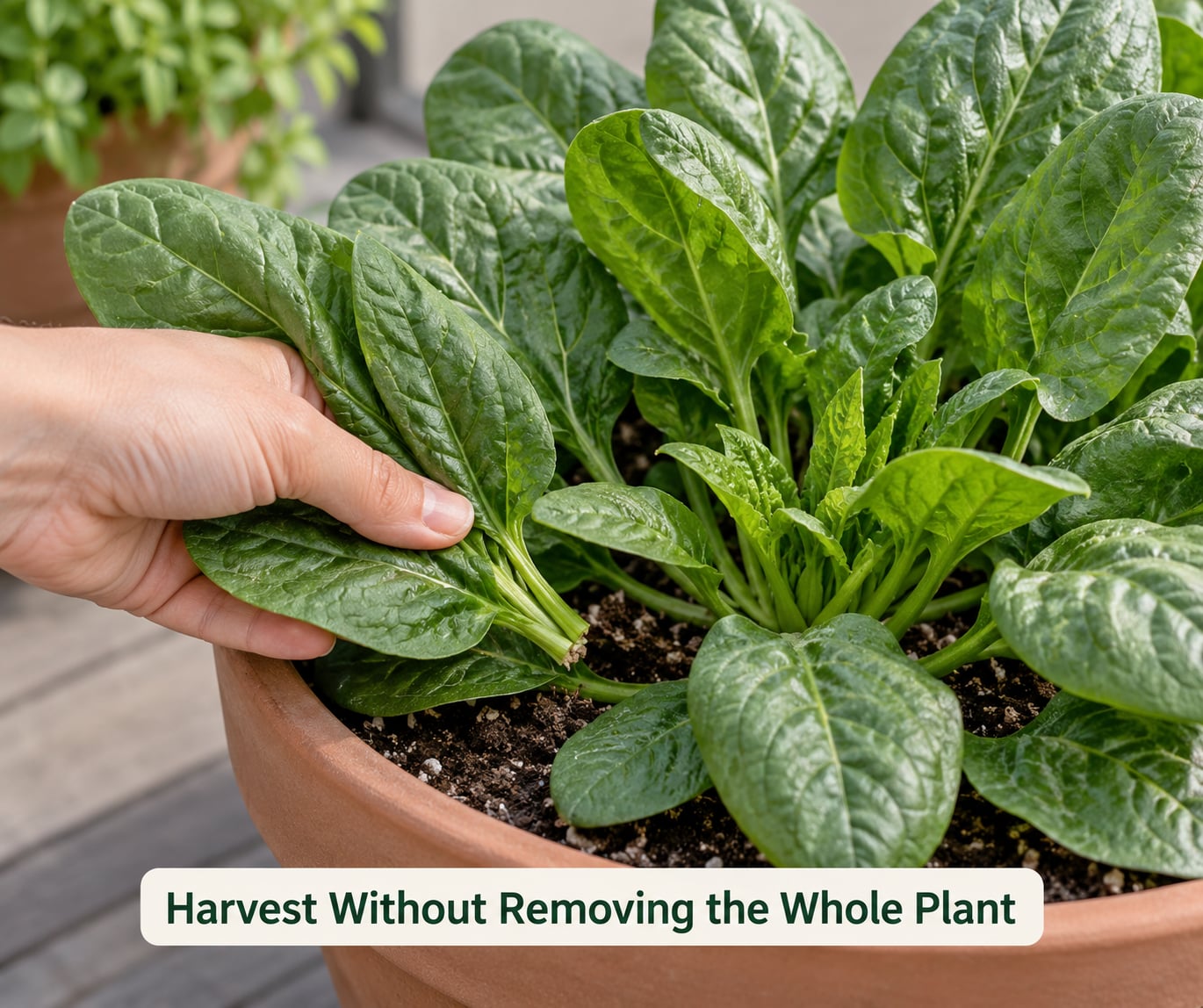
Cut-and-come-again harvesting is what makes containers worth the effort. Take the largest outer leaves, cut the rest at the base of the plant, and leave the growing point in the middle untouched. An inch of stem above the soil is often enough of a stump to regrow from.
For lettuce and spinach, pick outer leaves or snip everything an inch above the crown once the plant reaches the size you want. You will get two or three cuts per planting before it slows down. Kale, collards and chard are cut from the bottom up and keep producing for months.
Harvest in the morning when the leaves are full of water. Rinse under cool running water, shake out the grit, dry thoroughly with a salad spinner or clean towel, and refrigerate in a breathable bag or a covered container lined with a paper towel.
Wash greens just before you eat them, and use them within a few days. If greens have been sitting in standing water, or if animals have had access to the container, throw them out rather than rinsing them.
8. Know When to Replace an Exhausted Crop
A container crop has a shelf life. Lettuce and arugula usually give three or four weeks of good harvests after their first cut; kale, collards and chard go much longer.
Replace the planting when yields drop sharply, when the soil stays wet for days after watering, when leaves come back small and bitter, or when disease keeps coming back in the same spot. Dump the old mix rather than reusing it, scrub the pot, and start fresh.
Succession planting keeps the harvest coming. Sow a new tray every two to three weeks so a fresh batch matures as the earlier one winds down. Two or three containers at staggered stages give you greens from early spring into fall without greenhouse space.
Common Mistakes
Using garden soil. Yard soil and topsoil compact inside a pot and hold water too long. Use bagged potting mix every time.
Pots with no drainage. Roots suffocate and rot. Check the bottom of every container before you fill it.
Too many seeds, no thinning. A dense tangle of stunted lettuce is the most reported problem on gardening forums. Thin seedlings to their proper spacing when they have two true leaves, and use the thinnings as salad.
Wrong light. Deep shade gives floppy, pale, bitter leaves. Move the container rather than buying a bigger one.
Erratic watering. Wet and dry cycles stress roots and push plants toward bolting. The finger test takes five seconds.
Overfertilizing. Container mix has less to give than garden soil, but that does not mean more fertilizer. Follow the label.
Waiting too long to harvest. A lettuce left untouched bolts and turns bitter. Pick outer leaves early and often.
Frequently Asked Questions
How deep should a container be for growing greens?
Six inches is the practical minimum for leaf lettuce, arugula and spinach, and twelve inches works well for kale, collards, mustard greens and Swiss chard. Head lettuce needs twelve to sixteen inches of depth. Width matters as much as depth, since greens root shallowly and spread outward, so a wide window box at six inches deep holds more plants than a narrow tall pot.
Can I grow leafy greens indoors with grow lights?
Yes. Greens are among the easiest crops to grow indoors because they are fast and shallow-rooted. Give them twelve to sixteen hours of light per day from a full-spectrum fixture set a foot or so above the canopy, and use a shallow tray with drainage. Seedlings take to baby-leaf harvest in three to five weeks. Watch the light height and raise it as the plants grow, or they will stretch.
How long does it take to grow greens in a container?
Lettuce and arugula can be cut as baby leaves about 25 to 35 days after sowing, and ready for a full cut-and-come-again harvest around 40 to 50 days. Spinach takes roughly 40 to 50 days. Kale, collards and Swiss chard are slower at 55 to 80 days, but a single planting keeps producing for months. Cold weather stretches all of these by a week or two.
Why are my container greens bitter or bolting?
Bitter leaves and bolting usually share two causes: heat and stress. Lettuce bolts when temperatures climb and days get long, and it turns bitter right before sending up a flower stalk. Dry soil, overfertilizing and letting roots bake in a small pot make it worse. Move the container into afternoon shade, keep moisture even, and harvest young. Arugula, kale, collards and chard tolerate heat far better.
Should I replace potting mix after harvesting greens?
Usually yes, especially after a full crop. Repeated watering leaches nutrients out and compacts the mix, and tired soil spreads damping-off and root rot to the next planting. Dump it, wash the container, and refill with fresh potting mix, adding a shovelful of compost if you have it. You can top up with a layer of fresh mix and a light feeding once, but plan on replacing it before the next crop.
How do I keep harvested greens safe to eat?
Harvest in the cool of the morning, then rinse under cool running water and dry it completely before storing. Refrigerate unwashed greens only if you dry them first; trapped moisture turns leaves slimy in a day. Keep them in a breathable bag or a container lined with a paper towel in the fridge and use them within a few days. Wash again right before eating, and discard anything that was exposed to animals or sat in standing water.
Start With One Easy Crop
Pick one green you already like to eat and grow only that on the first pass. Choose a container at least twelve inches wide with drainage holes in the bottom, fill it with potting mix, sow the seeds a quarter inch deep, and set the pot where it gets four to six hours of sun.
Check the soil with your finger every morning. That single habit is what separates a container full of bitter, bolted lettuce from a container that keeps handing you salad for two months. Grow a second tray a couple of weeks later and you have never bought a bag of greens since.