Yes, you can cook dried beans without soaking them. Start them straight from the bag and they hydrate and cook in one step, which costs you time rather than quality: expect roughly 90 minutes to two and a half hours on the stovetop, or 25 to 40 minutes in a pressure cooker. Soaking is pre-hydration, not a safety rule, and skipped beans often taste better because nothing leaches into water you pour down the drain.
The reason soaking exists is that a dried seed coat is hard and slow to let water in. Without that soak, the boil has to hydrate the bean and cook it at the same time, so it needs more liquid, a gentler heat, and patience. If you have wondered how to cook dried beans without soaking and worried you were ruining something, you are not. You are just adding an hour you can spend doing something else.
Table of Contents
- What You Need
- Step-by-Step: How to Cook Dried Beans Without Soaking
- How to Cook Dried Beans Without Soaking: Sort and Rinse
- How to Cook Dried Beans Without Soaking: Simmer Until Tender
- Add Fresh Water and Keep the Beans Simmering
- Check the Beans for Tenderness
- Drain, Season, and Store the Beans
- Common Mistakes
- Frequently Asked Questions
- How long does it take to cook dried beans without soaking?
- Can I add salt before the beans are cooked?
- Can I cook dried beans in a slow cooker without soaking them?
- Why are my dried beans still hard after several hours?
- Should I add baking soda to beans that will not soften?
- Can I cook dried beans from frozen?
- Conclusion
What You Need
You need a short list and about ten minutes of setup. None of it requires a soaking container, a timer running overnight, or a plan.
- Dried beans, sorted
- A heavy pot with room for the beans to sit in a single layer, not stacked
- Cold water, roughly eight cups for every pound of beans
- A colander for draining
- A wooden spoon for stirring and a spoon or slotted spoon for skimming foam
- A lid, and optionally a bay leaf, a halved onion, and a spoonful of oil
Pot size matters more than most people expect. A pot that is too small crowds the beans, traps steam unevenly, and gives you a layer of beans sitting in mush at the bottom while the top layer stays hard. A roomy pot keeps everything at the same temperature and lets you stir without breaking the skins.
The eight-to-one water-to-bean ratio is generous on purpose. Unsoaked beans absorb more water than soaked ones and give off more starch as they cook, and a full pot keeps that starch from turning cloudy. If your beans look like they are drying out, top up with hot water from the kettle. Cold water drops the temperature and stalls the cook.
Step-by-Step: How to Cook Dried Beans Without Soaking
How to Cook Dried Beans Without Soaking: Sort and Rinse
Pour the dried beans onto a light-colored plate or a cutting board and look them over. Pick out stones, dust, and any beans with holes, insect damage, or wrinkled red skins, which are the oldest in the bag. Old beans cook slowly and often never soften, and finding four bad ones takes ten seconds.
Rinse the beans under cold running water until the water runs clear. This washes off field dust and packing starch, which is what makes skipped-soak batches turn a cloudy grey instead of a clear gold.
Put the beans in your pot and cover them with about two inches of cold water. Then let them sit on the stove for 20 to 30 minutes before you turn on the heat, which lets the skins take on their first water without any overnight planning. Skipping the soak entirely is fine. This short rest is a courtesy, not a requirement.
How to Cook Dried Beans Without Soaking: Simmer Until Tender
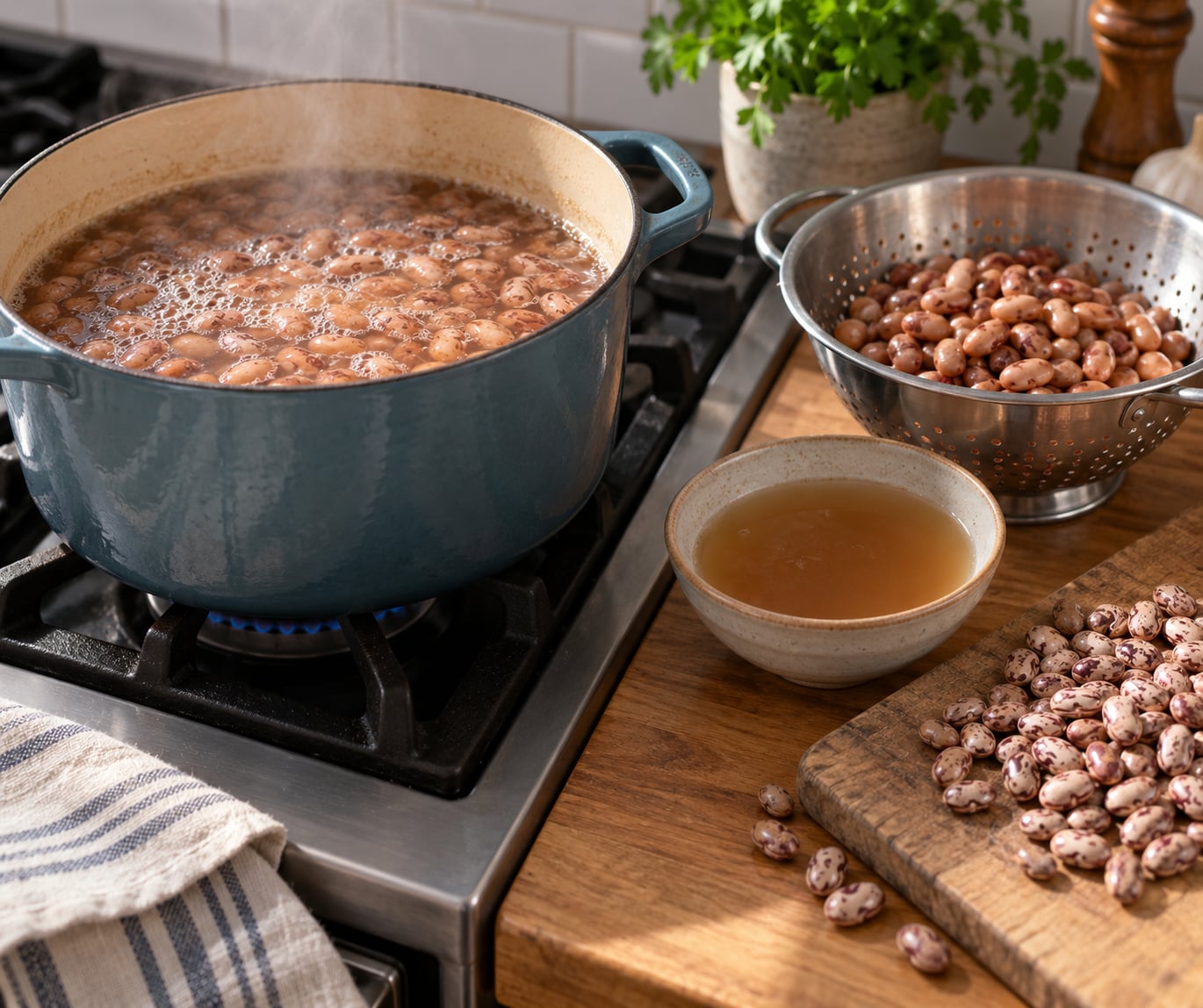
Bring the pot to a full boil over high heat with the lid off. As soon as it boils, turn the heat down to its lowest setting so the water barely moves. You want occasional bubbles and a lazy movement in the pot, not a rolling boil.
A hard boil is the single most common reason no-soak beans turn to mush. Agitating water makes the softened skins rub against each other and break, so you end up with beans that look soft and taste papery. A gentle simmer is the fix, and it takes discipline the first couple of times because the instinct is to crank the heat back up.
Skim the foam that rises in the first ten minutes. It is not dirty, but it tastes soapy if you stir it back in. Aromatics can go in now: a quartered onion, two bay leaves, a few smashed garlic cloves, or a spoonful of olive oil. Save the salt, the tomatoes, and any vinegar until later, since acid stops the softening process while the beans are still tough.
Add Fresh Water and Keep the Beans Simmering
Once the foam is gone, cover the pot loosely so steam escapes but the beans stay submerged. A lid slid slightly to one side does this well. Stir every 20 to 30 minutes, and each time you stir, check the liquid level.
Beans swell as they cook, and the water drops as it absorbs and as steam carries some away. When the liquid sits below the beans, add hot water until the beans are covered by an inch or two again. This is the mistake that turns a no-soak cook into a failure, and it happens quietly in the last thirty minutes when you stop paying attention.
There is a middle option for the evenings when you have a bit more patience than a full no-soak cook. Cover the beans, bring them to a boil, boil for two minutes, take the pot off the heat, leave the lid on, and let them sit at least an hour. That quick soak hydrates the skins enough to shave 30 to 45 minutes off the total cook without turning your afternoon into a waiting game.
Check the Beans for Tenderness
Timing without soaking is a range, not a number. The deciding factors are how old the beans are, the size of the beans, and how hard your tap water is. Treat the times below as a starting point and start checking early rather than late.
- Pinto, black, and kidney beans: about 2 to 2.5 hours
- Navy, great northern, and cannellini beans: about 90 minutes to 2 hours
- Chickpeas: about 2 to 3 hours
- Black-eyed peas and field peas: about 90 minutes to 2 hours
- Lentils: 20 to 30 minutes, since lentils are naturally a softer seed
Two tests tell you when they are done. Pinch one between your thumb and finger: a tender bean dents easily and the skin slips without resistance. Then taste one. If there is any raw, chalky bite left, it needs more time, no matter how long the recipe said.
Red kidney beans carry a special caution. Raw or undercooked kidney beans contain phytohaemagglutinin, a lectin that irritates the gut. It is destroyed by heat, and the rule is specific: boil the kidney beans vigorously in fresh water for at least 10 minutes before you drop the heat to simmer. Do this whether or not you soaked them. If the beans are still crunchy and slightly firm after a simmer, keep cooking them. Never taste a raw or barely cooked kidney bean.
Drain, Season, and Store the Beans
Drain the beans once they pass the taste test. Save a mug or two of the cooking liquid if you plan to cook them into soup later, since the starch in it thickens broths and makes bean water a workable substitute for egg white in baking.
Now add your salt, and add it generously. The old advice to never salt beans until the end has been disproved: salt at this stage seasons the beans all the way through, and salt early helps the cell walls soften. What still matters is acid. Tomatoes, vinegar, lemon juice, and other acidic additions hold off until the beans are tender, because they slow softening and can leave you with hard beans in a bright sauce.
For storage, cool the beans quickly rather than leaving them on the stove to room temperature. Spread them in a shallow container so the heat escapes, then refrigerate within two hours of finishing. Cooked beans keep three to four days in the refrigerator. For longer storage, freeze them in single-meal or half-cup portions with a little liquid or a coat of oil, and they hold for several months.
Common Mistakes
Almost every disappointing pot of beans traces back to one of a handful of problems, and each one has a direct correction.
- Beans still hard after two hours. Usually the beans are old, the heat was too high so the outside set before the inside softened, or the water ran low. Check age first, then lower the heat, then add hot water.
- Cloudy, thick, muddy cooking liquid. You stirred too hard, cooked too hard, or did not rinse the beans. Use a gentle simmer, skim early, and hold back about a cup of liquid when you drain.
- Skins tough while the centers go soft. Acid went in too early. Hold tomatoes, vinegar, and citrus until after the beans are tender.
- Beans taste tough in very hard water. Calcium and magnesium in the water interfere with softening. Use filtered or bottled water, or add 1/8 teaspoon of baking soda, which raises the pH and softens skins faster.
- Beans are bland. Salt was withheld and aromatics were kept out. Add salt once the beans are tender, along with your onion, garlic, and bay.
- Beans cooked unevenly. The pot was too small and the beans were piled on top of each other. Use a pot where the beans sit in one loose layer and stir more often.
- Beans sitting out too long. Cool them fast in a shallow container and refrigerate within two hours. Beans left out overnight belong in the trash.
With a pressure cooker you can skip most of this. Add about 8 cups of water per pound of unsoaked beans, cook on high pressure for 25 to 40 minutes depending on the variety, and let the pressure come down naturally for 20 to 30 minutes so the beans finish softening as they cool. Kidney beans still need their 10-minute hard boil first.
Frequently Asked Questions
How long does it take to cook dried beans without soaking?
Plan on 90 minutes to two and a half hours of gentle simmering for most dried beans taken straight from the bag. Pinto, black, and kidney beans run two to two and a half hours, navy and great northern about 90 minutes to two hours, and chickpeas closer to three. Older beans take longer, and a pressure cooker cuts the same beans to 25 to 40 minutes.
Can I add salt before the beans are cooked?
Yes, and modern kitchen wisdom says you should. The old rule against salting beans early is out of date, because salt helps soften cell walls and loosen skins, so adding a teaspoon with the aromatics is fine. Hold back acid instead, including vinegar, lemon juice, and tomatoes, until the beans are tender, since acid slows the softening process.
Can I cook dried beans in a slow cooker without soaking them?
A slow cooker handles unsoaked beans well. Add about 8 cups of water per pound of sorted, rinsed beans, cover, and cook on High for 4 hours or Low for 7 to 8 hours. Start checking in the last hour rather than trusting the clock, because slow cookers vary and beans older than a year can need extra time.
Why are my dried beans still hard after several hours?
Four causes account for most of it: the heat was too high, the water dropped below the beans and they sat on the bottom, the beans are old, or you added acid too early. Keep a steady gentle simmer, top up with hot water so the beans stay covered by an inch, hold back tomatoes and vinegar until the beans soften, and expect extra time for beans more than a year old.
Should I add baking soda to beans that will not soften?
A pinch helps, but treat it as a rescue rather than a habit. About 1/8 teaspoon of baking soda per pot raises the pH and softens tough skins faster, so beans may need 20 to 30 minutes less simmering. Too much tastes soapy and makes the cooking liquid slimy, so measure it carefully rather than adding a free spoonful.
Can I cook dried beans from frozen?
You can cook them straight from the freezer with no thawing. Tip the frozen beans into the pot without rinsing, cover with water, and simmer as usual, allowing about 20 extra minutes. Frozen beans cook unevenly because they start at different temperatures, so stir more often and test for doneness early instead of trusting the clock.
Conclusion
Cooking dried beans without soaking is straightforward: sort and rinse the beans, cover them with about eight parts water in a roomy pot, bring to a boil, then drop the heat to the barest simmer and stay out of the way. Add hot water whenever the level drops, keep the heat low, and wait for the pinch test and the taste test to agree before you drain.
Salt at the end, keep the acid out until the beans are tender, and refrigerate them within two hours. Give yourself the hour it takes, and you end up with a pot of beans that costs very little and tastes better than anything from a can.