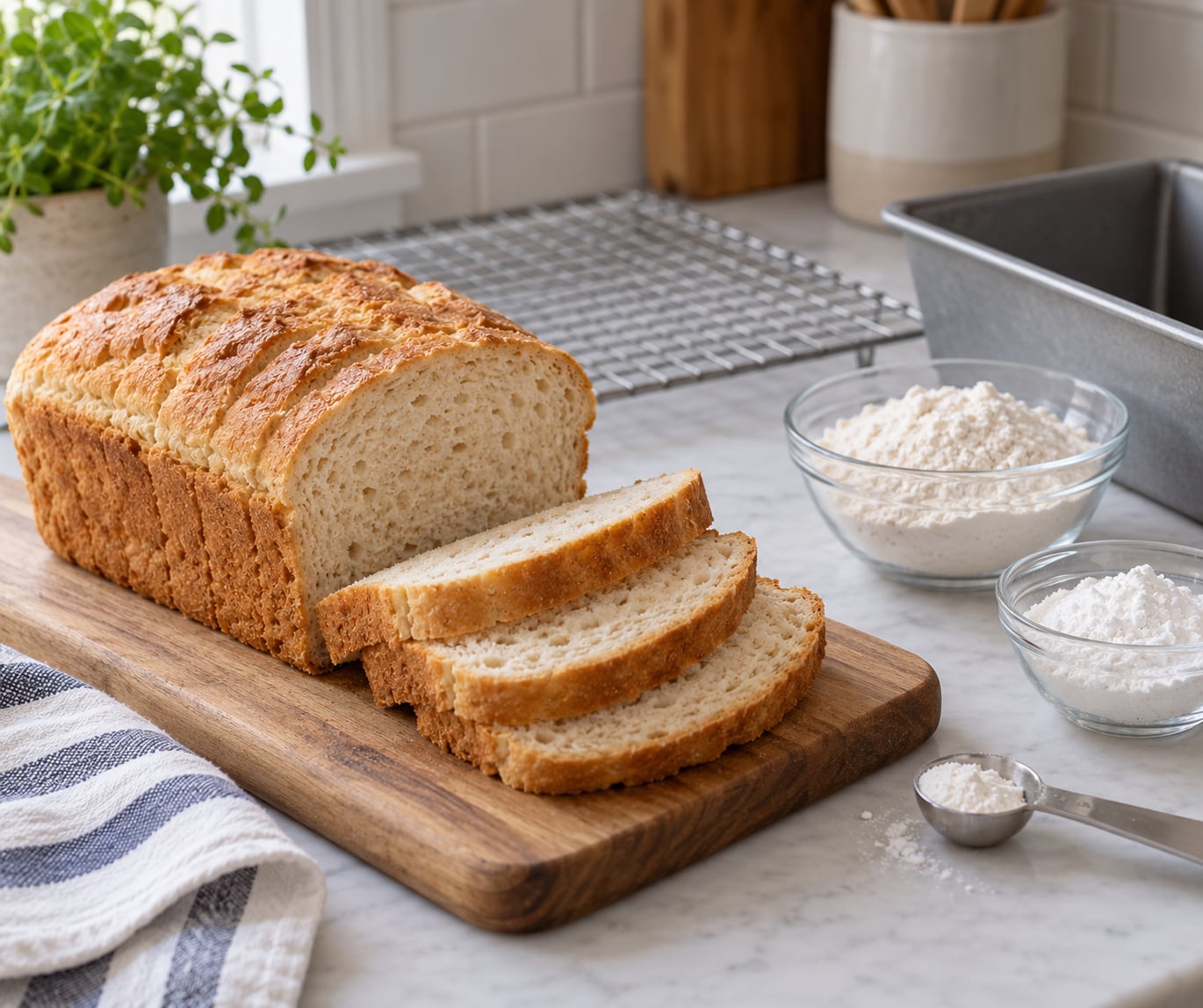
Gluten-free bread crumbles because there is no gluten protein network holding the crumb together, so the loaf depends entirely on what you add to replace it. If you want to know how to keep gluten free bread from crumbling, the four levers that matter are a binder, enough liquid, enough fat, and a full cool before you cut. Most crumbly loaves need one of them adjusted, not a whole new recipe.
This is not a difficult bake, but it is a fussy one. About 15 minutes of mixing and a couple of hours of waiting, and the whole diagnosis is usually visible before you ever turn the oven on.
Table of Contents
- What You Need
- How much binder to add, per cup of flour
- Step-by-Step: Four Fixes, in Order
- Choose a binding flour blend
- Adjust hydration and dough texture
- Shape and handle the dough gently
- Bake and cool for a sturdy crumb
- Common Mistakes
- What to do with a loaf that is already baked and crumbly
- Frequently Asked Questions
- Why is my gluten-free bread so crumbly?
- How much psyllium husk should I add to gluten-free bread?
- What happens if you add too much xanthan gum to gluten-free flour?
- How long should gluten-free bread cool before slicing?
- Can I use flax or chia instead of xanthan gum in gluten-free bread?
- Conclusion
What You Need
The ingredient list is short, but every item on it has a job. Skim the pantry before you change the recipe, because a crumbly loaf is far more often a missing binder than a bad formula.
- A binder. Psyllium husk powder, xanthan gum, guar gum, or HPMC. This is the single ingredient doing the most work.
- A base flour that tastes good. Sorghum, brown rice, millet, or buckwheat flour carries flavour and nutrition. Rice alone tastes like cardboard, and that is a separate complaint from structure.
- A starch or two. Tapioca starch, potato starch, or cornstarch. Starches gelatinize as they heat and give the crumb its tender, slightly springy feel.
- Fat. Oil, butter, or shortening. Fat coats the starch granules and slows them from setting rock-hard as the loaf cools.
- Liquid. Usually water plus milk or buttermilk. Gluten-free dough usually needs more of it than wheat dough, not less.
- Egg or a substitute. Eggs coagulate into a solid matrix of their own. Aquafaba (the liquid from a tin of chickpeas) does the same job and keeps the loaf vegan.
- An instant-read thermometer. Time alone tells you nothing about bake-set. Temperature tells you everything.
How much binder to add, per cup of flour
| Binder | Per 1 cup (about 120 g) flour | Per 500 g flour | Notes |
|---|---|---|---|
| Psyllium husk powder | 1 tablespoon (about 8 g) | about 15 g | Best all-rounder for yeasted loaves. Absorbs many times its own weight in water. |
| Xanthan gum | 1/4 to 1/2 teaspoon (1 to 2 g) | about 2 g | Easy to overdose, which pushes the crumb gummy. Measure it carefully. |
| Guar gum | 1/2 teaspoon (about 1.5 g) | about 3 g | Softer crumb than xanthan, less prone to going rubbery. |
| HPMC | 1 teaspoon (about 3 g) | about 5 g | Works inside commercial blends. Needs salt and an acidic ingredient to activate. |
| Ground flaxseed or chia | 2 tablespoons (about 15 g) | about 25 g | A food, not a hydrocolloid. Weaker, and it adds flavour and colour. |
Step-by-Step: Four Fixes, in Order
Choose a binding flour blend
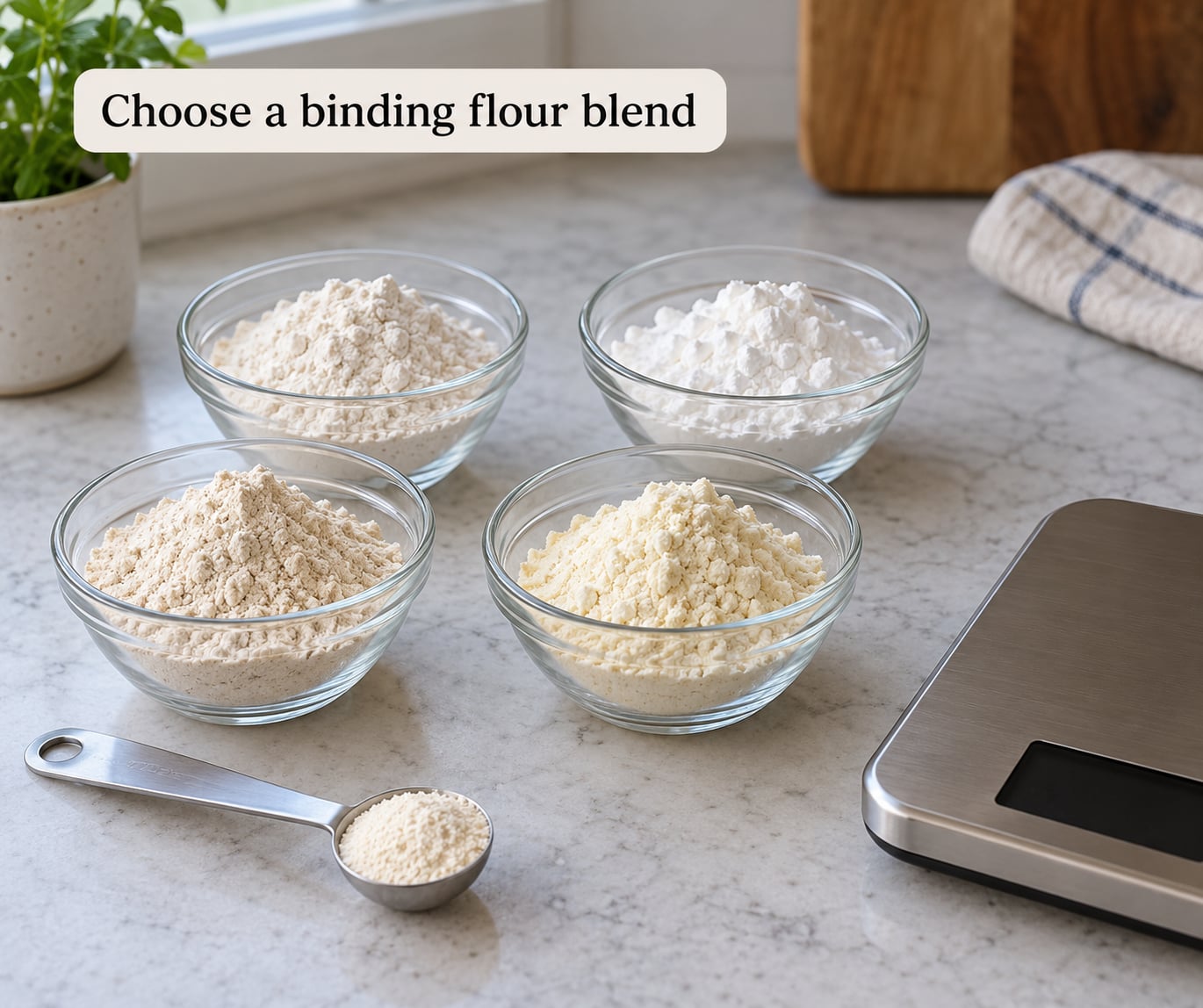
A single flour cannot make a sliceable loaf. Aim for a blend where roughly half the weight is starch, a third is a flavoured base flour, and the rest is a starch that stays tender. A working ratio is 40 percent sorghum or brown rice flour, 25 percent tapioca starch, 20 percent potato starch, and 15 percent additional flour or starch, then your binder measured off the total weight.
Weight beats volume for all of it. Scooping flour with a cup gives you a different amount every time, and that inconsistency is half of why some gluten-free loaves feel unreliable.
Adjust hydration and dough texture
Gluten-free dough needs more water than wheat dough because there is no gluten to hold the structure together, and because rice and sorghum flours are thirsty. Most recipes land between 75 and 95 percent hydration once you count the liquid in the eggs and the yogurt.
Judge by sight, not formula. The dough should look like thick pancake batter and pull away from the side of the bowl, not form a kneadable ball. It should slump slowly off a spoon and hold a soft peak for a second.
If it looks shaggy and torn, hold back 15 percent of the water at the next mixing and add it by the spoonful. Forum bakers on r/glutenfreebaking generally start 20 to 25 percent drier than the printed recipe and judge by feel, which is sound advice for a first trial.
Shape and handle the dough gently
Gluten-free dough has no elasticity to recover from abuse. Press it into the pan with lightly oiled hands instead of kneading it on a board, and keep the second rise undisturbed so the yeast can work without you knocking the gas out.
After the second rise, do not degas it, poke it, or roll it hard. Pour or spoon it straight into a greased pan and let it do what it wants. Overproofing is the most common reason a loaf sinks in the middle, and because gluten-free dough never forms the tall dome bakers watch for, an overrisen loaf is much harder to spot.
Bake and cool for a sturdy crumb
Preheat properly, then bake hot and drop the heat. Starting at 425°F (220°C) for 10 minutes sets the crust and gives the loaf its oven spring, and 375°F (190°C) for the remaining 30 to 45 minutes bakes the starches through. A pullman or straight-sided loaf pan gives the crumb side support that a free-form loaf never gets.
Bake until the centre hits 190 to 205°F (88 to 96°C) on an instant-read probe. Under-baked starch is gummy, and gummy crumb tears instead of slicing.
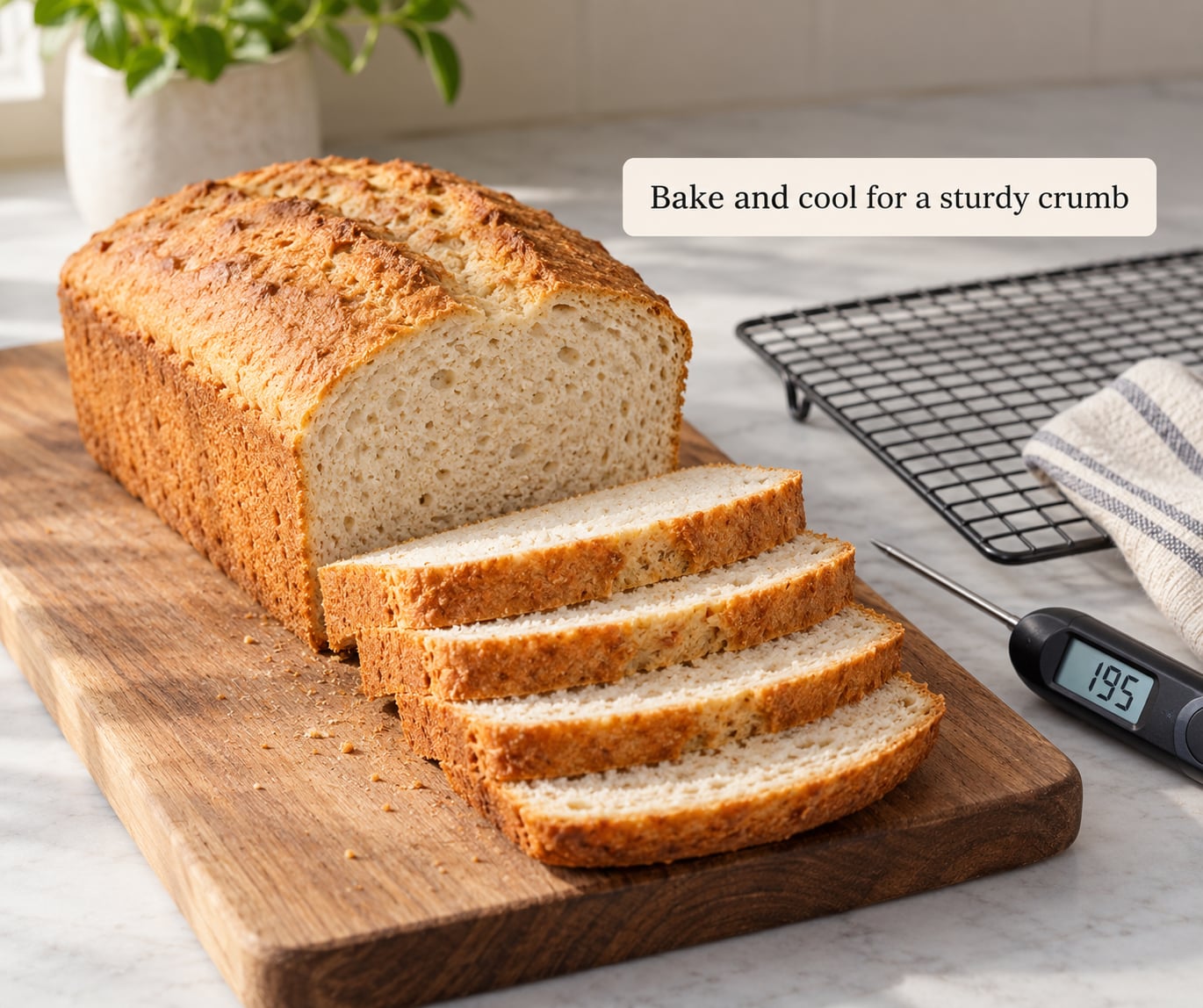
Then leave it alone. Small loaves need 45 minutes out of the pan plus another 30 on a rack. A large or dense one needs 2 hours. The starches finish setting and the crumb firms up as it cools, and a slice cut early will look like it came apart from the inside.
Common Mistakes
Almost every crumbly gluten-free loaf is one of these six problems. Find the symptom, make one change, bake again.
| Symptom | What went wrong | The fix |
|---|---|---|
| Crumbly and dry all over | Not enough binder, not enough fat, or both | Add 1 tablespoon psyllium per 2 cups flour, plus an extra 2 tablespoons of oil or butter |
| Falls apart the moment you slice it | Sliced warm, or the crumb never set | Cool the full time. Check the centre hit 190°F or above |
| Dense and heavy | Under-hydrated, or overproofed and collapsed | Raise hydration 5 percent and shorten the second rise by a third |
| Gummy or sticky inside | Too much xanthan, or under-baked | Cut the binder in half and extend the bake 10 minutes |
| Sinks in the middle | Overproofing, or a pan that is far too large | Cut yeast by a quarter, proof to a 50 percent rise, use the correct pan size |
| Gritty or sandy crumb | The dough did not hydrate long enough | Rest the mixed dough 30 to 60 minutes before baking |
Two mistakes come up constantly. The first is adding flour because the dough feels sticky. Sticky is correct for gluten-free dough, and dusting in flour dries it out and makes it worse.
The second is changing everything at once. If you swap the flour, double the binder, and add extra water in the same bake, you will change nothing and learn nothing. The most reliable method anyone uses is to change one variable, write down what you changed, and bake the next loaf with the same formula plus that single adjustment.
What to do with a loaf that is already baked and crumbly
You cannot rebake it back into a loaf, but you can rescue it. Toast slices rather than buttering them cold, which dries the surface into a shell that holds the rest together. A crumbly loaf also works turned into breadcrumbs, or pressed into a pan with eggs and milk for a custard-style bread pudding.
If the loaf is merely stale rather than structurally crumbly, store it properly next time. Never refrigerate it, because the starches retrograde fastest at fridge temperature. Freeze slices laid flat, separated by parchment, and pull each slice apart before freezing so you are not thawing a solid brick. One community trick on r/glutenfree is to separate slices with a knife while thawing rather than trying to pull them apart frozen.
Frequently Asked Questions
Why is my gluten-free bread so crumbly?
Wheat flour builds an elastic gluten network that stretches around gas bubbles and locks them into place. Gluten-free flours have starches and non-gluten proteins but no gluten, so nothing holds the crumb together once the loaf bakes. The job falls to hydrocolloids like psyllium husk or xanthan gum, plus added fat and liquid, and the starches themselves as they set during cooling. No binder, or too little water and fat alongside it, means the crumb stays loose.
How much psyllium husk should I add to gluten-free bread?
Use about 1 tablespoon (roughly 8 g) of psyllium husk powder per cup of flour by weight, or about 15 g per 500 g of flour. Psyllium absorbs many times its own weight in water, so if you add it, cut the liquid in your recipe back slightly or the dough turns soupy. It also needs time to hydrate, so mixing it into the dry ingredients first works better than stirring it into wet.
What happens if you add too much xanthan gum to gluten-free flour?
Too much xanthan turns the crumb gummy, dense, and faintly rubbery instead of tender, and it can stop the loaf rising properly because the dough gets too stiff. The fix is to halve the amount rather than add more flour. A useful target is 1 to 2 g per cup of flour, measured rather than spooned, since a quarter teaspoon and a half teaspoon feel identical and are not.
How long should gluten-free bread cool before slicing?
Wait 45 minutes for a small loaf and up to 2 hours for a large or dense one, including time out of the pan. The starches finish setting as the loaf cools, so a slice cut warm will pull apart from the inside no matter how good the formula is. If you are in a hurry, cool it on a wire rack rather than a board, since trapped steam softens the crust and keeps the crumb damp.
Can I use flax or chia instead of xanthan gum in gluten-free bread?
Yes, and they bring flavour and colour, but they are not interchangeable. Ground flaxseed and chia work as secondary binders at roughly 2 tablespoons per cup of flour, not as a standalone replacement for psyllium or xanthan. You can also use aquafaba, the liquid from a tin of chickpeas, which sets into a foam and traps gas the way egg white does, and works well for vegan loaves.
Conclusion
To keep gluten free bread from crumbling, do four things in this order: measure your binder by weight and add it if the recipe skipped it, raise hydration until the dough slumps like thick batter, handle the dough gently and stop overproofing it, then let the loaf cool all the way before the knife touches it. Most of the time that is the whole fix.
If it still crumbles, change one thing on the next bake and write it down. Two bakes from now you will know exactly which variable was the problem.