Vegan gravy is vegetable broth thickened with a roux, the same fat-and-flour paste that makes meat gravy, built with vegan butter or oil instead of drippings and cream. Learning how to make vegan gravy from scratch takes about 30 minutes and eight pantry ingredients, and the whole method rests on two things: browning the roux until it smells nutty, and seasoning in layers instead of all at the end.
The technique is genuinely simple. The reason most people end up with glue, or a thin puddle, or something bland is that they treat it as a list of steps instead of a ratio you can adjust by eye.
Table of Contents
- What You Need
- Step-by-Step
- How to Make the Roux Smooth and Thick
- How to Choose the Liquid and Seasoning
- Common Mistakes
- Tips for Serving and Storing Vegan Gravy
- Frequently Asked Questions
- What are the common mistakes when making vegan gravy?
- What is the secret to good vegan gravy?
- What is the 3:2:1 rule for gravy?
- How do I thicken or thin my vegan gravy at the last minute?
- Are poultry seasoning and Worcestershire sauce vegan?
- What store-bought gravy mix is vegan?
- Conclusion
What You Need
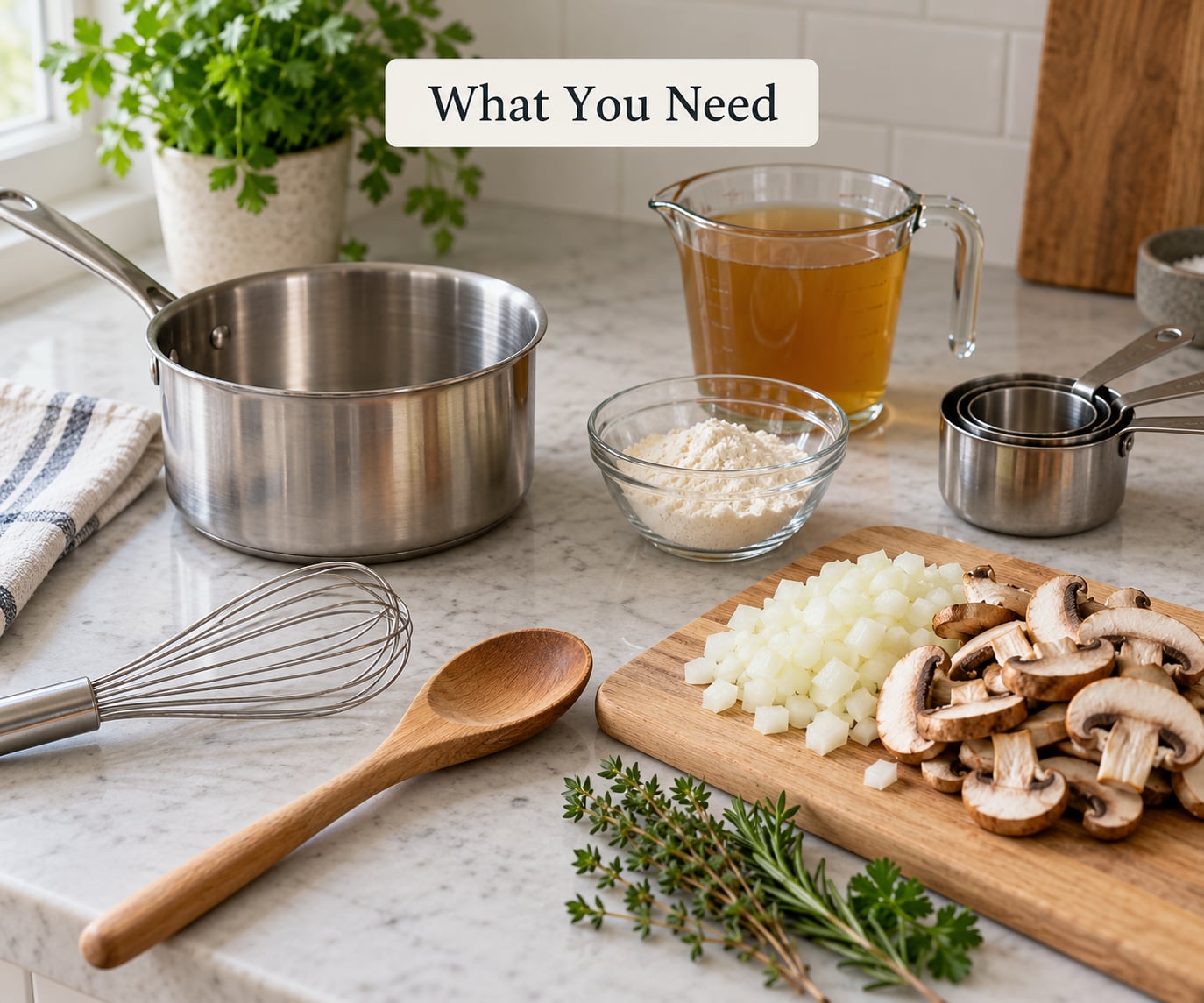
You need a medium saucepan with a heavy bottom, a whisk, and a wooden spoon for scraping the bottom. A fine mesh sieve or an immersion blender is worth having, though neither is essential.
Here is the base formula, which makes about four servings:
- 1/4 cup vegan butter (56 g), or 2 tablespoons olive oil plus 1 tablespoon vegan butter
- 1/4 cup all-purpose flour (about 30 g)
- 2 cups vegetable broth, low sodium if you plan to salt at the end
- 1 small yellow onion, diced small
- 2 cloves garlic, minced
- 1 tablespoon soy sauce or tamari
- 2 tablespoons nutritional yeast
- 1 teaspoon poultry seasoning, or a mix of dried sage, thyme, and black pepper
- Salt and black pepper to taste
Poultry seasoning confuses people more than any other ingredient in this list. It is a dry herb blend of sage, thyme, rosemary, marjoram, and pepper, and nothing about it comes from a bird. The word poultry refers to the flavors, not the source.
Standard Worcestershire sauce is the one real trap. Most traditional recipes are built on anchovies, so check the label or buy a vegan version. If you cannot find one, a teaspoon of soy sauce plus a splash of apple cider vinegar does the same balancing work.
For more depth, add any of these after the liquid goes in: 1 tablespoon tomato paste for body and a redder color, 1 teaspoon Dijon mustard for a gentle heat, 1 tablespoon mushroom powder, a tablespoon of vegan Worcestershire, or 1/2 cup full-fat coconut milk for a creamier, richer finish.
Step-by-Step
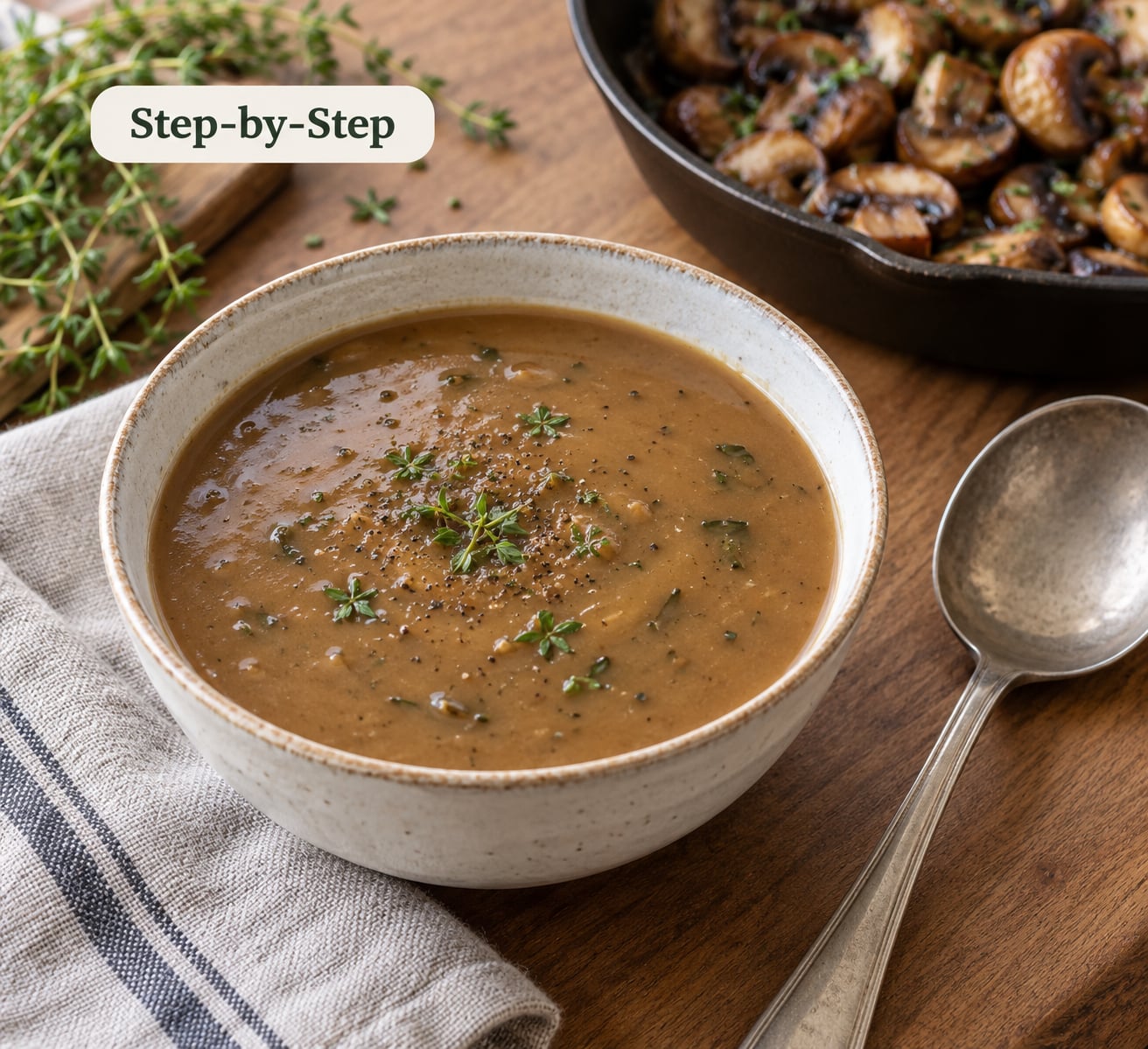
Six steps, about 30 minutes from start to finish. Read them through once before you light the burner.
- Sweat the onion. Melt the vegan butter in the saucepan over medium-low heat. Add the onion with a pinch of salt and cook 5 to 7 minutes until soft and translucent, not colored. Scrape in the garlic for the last 30 seconds.
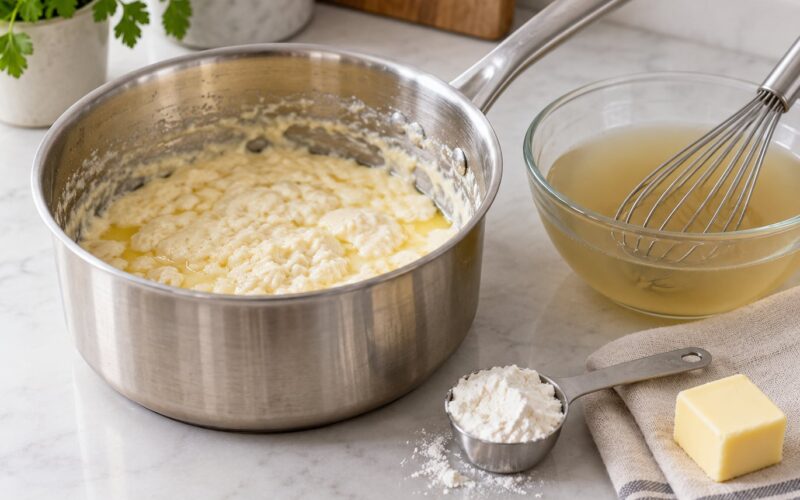
- Make the roux. Stir in the flour and keep it moving with a whisk. Cook 2 to 4 minutes, stirring almost constantly, until it smells like baked bread and turns the color of peanut butter.
- Add liquid in stages. Pour in one cup of broth while whisking hard. Let it bubble and thicken to a paste for about a minute, then whisk in the second cup. Pouring all the liquid at once is the single most common reason gravy turns lumpy.
- Layer the seasoning. Stir in the soy sauce, nutritional yeast, and poultry seasoning now, while the gravy is still thin and the flavors can spread through it.
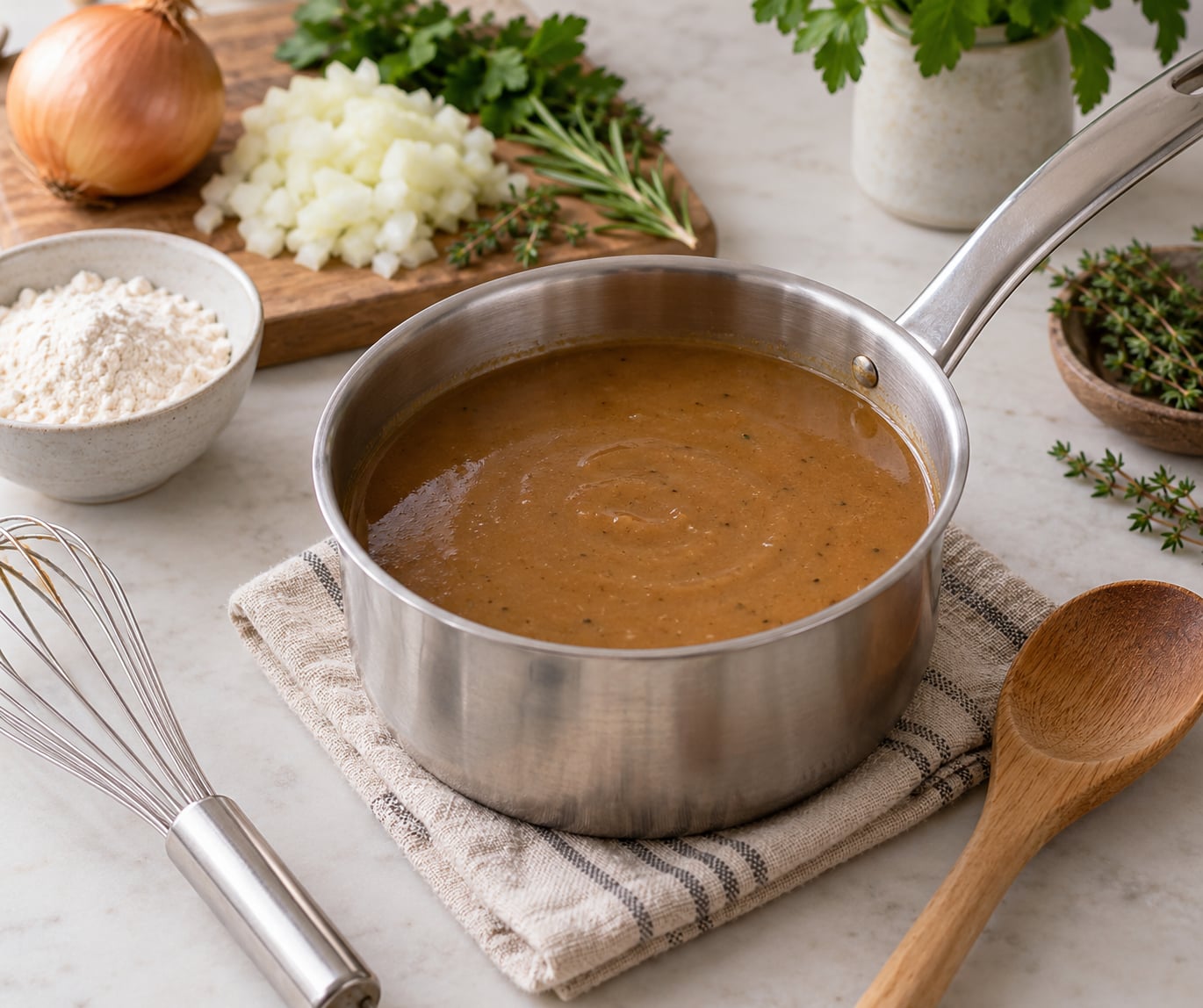
- Simmer. Lower the heat so the gravy barely bubbles and cook 10 to 15 minutes, stirring every minute or two. It should thicken noticeably and coat the back of a spoon.
- Finish and rest. Take it off the heat, taste, and salt. Rest 5 minutes before serving, because starch keeps thickening as it cools.
That is it. If you want a pourable gravy for mashed potatoes, stop at a loose, cream-like consistency. If you want the thick, biscuit-drowning version, simmer it two or three minutes longer.
How to Make the Roux Smooth and Thick
Cooking flour in fat is what separates a smooth gravy from a lumpy one. The fat coats each starch granule so they cannot clump together when liquid arrives, and the gentle heat swells them slowly so the broth thickens evenly.
Measure fat and flour in equal volumes: 1/4 cup to 1/4 cup for a standard 2 cups of broth. Olive oil works in place of butter, but you lose the flavor that animal fat contributes for free, so add another 1/2 teaspoon of salt if you go that route. A flavored olive oil covers the gap nicely.
Whisk rather than stir with a spoon, and keep the heat low enough that you can count to ten between stirs. Three signals tell you the roux is ready: it stops looking like wet paste, it smells nutty rather than raw, and it pulls away from the pan in a clean line when you drag a spoon through it.
Keep the color at peanut butter to chestnut brown. Push it darker and the flour tastes acrid and the gravy turns gluey as the starch over-disperses. If you want genuine Southern depth, go to a milk-chocolate brown and stop there.
Adding liquid is where lumps form. Whisking one cup in first, letting it thicken, and only then adding the second cup gives the starch time to absorb and swell without agglomerating. Never dump cold broth into a hot roux in one pour, and never use a cold slurry in hot sauce, which produces grainy texture.
When you need to rescue thin gravy after the fact, whisk 1 tablespoon of cornstarch into 1 tablespoon of cold water and stir that slurry in off the heat. For too-thick gravy, whisk in a splash of hot broth a tablespoon at a time.
How to Choose the Liquid and Seasoning
Broth carries most of the flavor, so use a good one. Vegetable broth works, mushroom broth gives a deeper, darker result, and no-chicken style broth adds more body because of its higher vegetable load. Bone broth is not an option here, and check that stock labels since some vegetable broths contain chicken flavoring.
The gravy color comes from the browning of the roux and the caramelized onion, not from dark soy sauce or beet juice. A tablespoon of dark soy sauce is a fine umami addition, but if it is the only reason the gravy looks brown, you have colored it and left it flat.
Umami comes from three places: dried mushrooms, soy sauce, and tomato paste or mushroom powder. You do not need all four, but a vegan gravy with none of them tends to taste flat next to meat gravy at the same table.
| Variation | Key change | Time | Gluten-free | Best over |
|---|---|---|---|---|
| Classic brown | Base formula, roux to chestnut brown | 30 min | With cornstarch slurry | Biscuits, mashed potatoes |
| Deep mushroom | Rehydrated porcini or shiitake, 1 tbsp mushroom powder | 45 min | Yes, with GF thickener | Roast, pot pie, stuffing |
| White gravy | Skip browning, add nutritional yeast and white pepper | 25 min | Yes | Mac and cheese, biscuits |
| Cashew cream | Blend 1/2 cup soaked cashews, 1 cup broth | 20 min soak | Yes | Potatoes, grilled vegetables |
| Potato water | Swap broth for starchy potato cooking water | 0 min extra | Yes | Anything you already made |
The potato water version is worth trying first if you boil potatoes anyway. That starchy, salty liquid thickens on its own, so you use a little less flour and skip the roux browning entirely.
About that 3:2:1 ratio you may have seen referenced: it is not an official rule, and the numbers vary by source. Used as three parts broth to two parts fat to one part flour by volume, it produces a rich, very thick gravy that clings to biscuits, which is why biscuit-and-gravy cooks like it. For a general-purpose sauce, the more forgiving ratio is one part fat to one part flour to six to eight parts liquid. Either way, the fat-to-flour pairing stays equal.
Common Mistakes
Almost every bad bowl of vegan gravy traces back to one of six things. Here is how to spot each and turn it around.
| Symptom | Cause | Fix |
|---|---|---|
| Thin and watery | Roux undercooked, or too much liquid at once | Simmer 5 more minutes, then add a cornstarch slurry off the heat |
| Thick, gluey, or gummy | Roux browned past chestnut, or over-simmered | Whisk in hot broth a tablespoon at a time |
| Lumpy | Liquid poured in too fast, or roux not whisked | Strain through a sieve or blend with an immersion blender |
| Grainy or gluey after thickening | Slurry made with warm liquid, or added to boiling gravy | Start over for that batch, or blend until smooth |
| Greasy or slick on the palate | Roux broke and separated from the broth | Whisk vigorously to re-emulsify, or strain and restart the fat |
| Bland | No browning, no umami, or salted at the end only | Add soy sauce, nutritional yeast, or mushroom powder and simmer again |
| Acrid or bitter | Flour scorched past dark brown | Discard and start over; there is no fix |
| Gelatinous in the fridge | Starch sets as it chills | Reheat in 30-second microwave bursts, whisking, with a splash of broth |
Blandness is the most common complaint and the easiest to fix. Season in layers: soy sauce and nutritional yeast go in with the liquid, herbs go in at the simmer, salt goes in at the end. Seasoning only at the end flattens everything because the salt never had time to travel.
Mushroom-heavy gravies also throw off consistency, since mushrooms drink liquid and release it unpredictably. Cook them separately until their moisture has cooked off, then add them at the end.
Tips for Serving and Storing Vegan Gravy
Vegan gravy is the piece that turns a plate of vegetables into supper. It works over biscuits and mashed potatoes in the way most of this region eats, over fried catfish or any seared protein, and folded into pinto bean pot pie before it goes into the oven.
It also shows up in places nobody expects. Drizzle it over tater tot casserole, use it as the sauce for poutine-style fries, spoon it over wide noodles or brown rice, or pour it into a hot dog or biscuit sandwich at a party where guests eat different diets.
Adjust consistency at the table rather than in the pot. Thin it with hot broth, thicken it with a cornstarch slurry made in cold water, and do it in small increments so you do not overshoot.
For storage, cool the gravy quickly and refrigerate it in a covered container for up to three or four days. Keep the food safety rule simple: reheat to a steaming 165°F before serving.
It freezes well. Cool it fully, leave a finger of room in the container for expansion, and freeze in individual portions so you can pull out what you need. Thaw overnight in the fridge, not on the counter, and reheat in 30-second microwave bursts with a splash of broth, whisking between each one. The starch sets as it chills and loosens again with gentle heat and liquid.
One more trick for holiday cooking: make the roux and refrigerate it separately, then whisk in hot broth the day of. That way the browning happens fresh and nothing goes greasy while it waits.
Frequently Asked Questions
What are the common mistakes when making vegan gravy?
The usual four are adding all the liquid at once, which causes lumps, undercooking the roux, which leaves the gravy thin, salting only at the end, which leaves it bland, and simmering too long after the roux darkens, which makes it gluey and acrid. Fix the last one by pulling the pan the moment the roux reaches a chestnut brown.
What is the secret to good vegan gravy?
Brown the roux and season in layers. Most flat vegan gravy has plenty of salt and no flavor development. Cooking the flour and fat until it smells nutty takes an extra three minutes and adds more than any bottled seasoning. Then put the soy sauce in with the liquid and the herbs in at the simmer, so they disperse instead of sitting on the surface.
What is the 3:2:1 rule for gravy?
There is no official 3:2:1 rule, and sources disagree on the order of the parts. Read as three parts broth, two parts fat, and one part flour by volume, it makes a very rich, thick gravy suited to biscuits. For a general sauce, the more forgiving ratio is equal parts fat and flour with six to eight parts liquid. The fat-to-flour pairing stays equal in both.
How do I thicken or thin my vegan gravy at the last minute?
For thick gravy, whisk in hot broth one tablespoon at a time until it loosens. For thin gravy, take the pan off the heat and whisk one tablespoon of cornstarch into one tablespoon of cold water, then stir that slurry in. Always use cold water for the slurry, since warm liquid makes it clump, and give the sauce a minute to thicken before adding more.
Are poultry seasoning and Worcestershire sauce vegan?
Poultry seasoning is a dry herb blend of sage, thyme, rosemary, marjoram, and pepper, so it is fully vegan. Standard Worcestershire sauce usually is not, because most traditional recipes are built on anchovies. Read the label, buy a vegan version, or substitute a teaspoon of soy sauce with a splash of apple cider vinegar.
What store-bought gravy mix is vegan?
Most boxed gravy mixes contain milk solids, chicken fat, or anchovy-based Worcestershire, so read the ingredient list rather than trusting the front of the box. Check the plant-based products in the soup aisle and confirm the seasoning packet is separately labeled. Making it from scratch takes about 30 minutes and you control the fat, the salt, and the thickener entirely.
Conclusion
Every good vegan gravy comes down to the same two moves: cook the roux until it smells like bread and stops looking wet, and season in three passes instead of one. Once you can do those, the recipe stops being a recipe and becomes a ratio you can scale or bend to whatever you are serving.
So decide before you start: pourable over mashed potatoes, or thick enough to split a biscuit. Butter or oil, wheat flour or cornstarch slurry, plain broth or something with dried mushrooms in it. Then cook it once and adjust from there.