Knowing how to store fresh herbs so they last longer comes down to one decision: which method suits the herb in your hand. Stand soft herbs like parsley and cilantro in a little water in the fridge, roll woody herbs like thyme and rosemary in a damp paper towel, leave basil on the counter, and freeze or dry anything you will not cook within about ten days. Done right, a bunch that normally lasts four days gives you two or three weeks.
I wasted enough herbs to stop buying them carelessly, so I keep one jar in the fridge door and a spare bunch in the freezer at all times now. Most spoilage traces back to moisture sitting on the leaves or a container far too large for what is inside it.
Table of Contents
- What You Need
- Step-by-Step: How to Store Fresh Herbs So They Last Longer
- Step 1: Choose Fresh Herbs and Remove Damaged Leaves
- Step 2: Dry the Herbs Thoroughly
- Step 3: Choose the Right Storage Method
- Step 4: Store Each Herb in the Correct Container
- Step 5: Check Herbs Before Using Them
- Common Mistakes
- Storing herbs wet
- A soggy paper towel
- A container far too large
- Refrigerating basil
- Using the fridge door for herbs
- Leaving oil-covered herbs at room temperature
- Frequently Asked Questions
- How long do fresh herbs last in the refrigerator?
- Should fresh herbs be washed before storing?
- What is the best way to store basil so it stays fresh?
- Can fresh herbs be frozen for later use?
- Why do fresh herbs turn black in the refrigerator?
- Which herbs should be stored in water rather than wrapped in a towel?
- Conclusion
What You Need
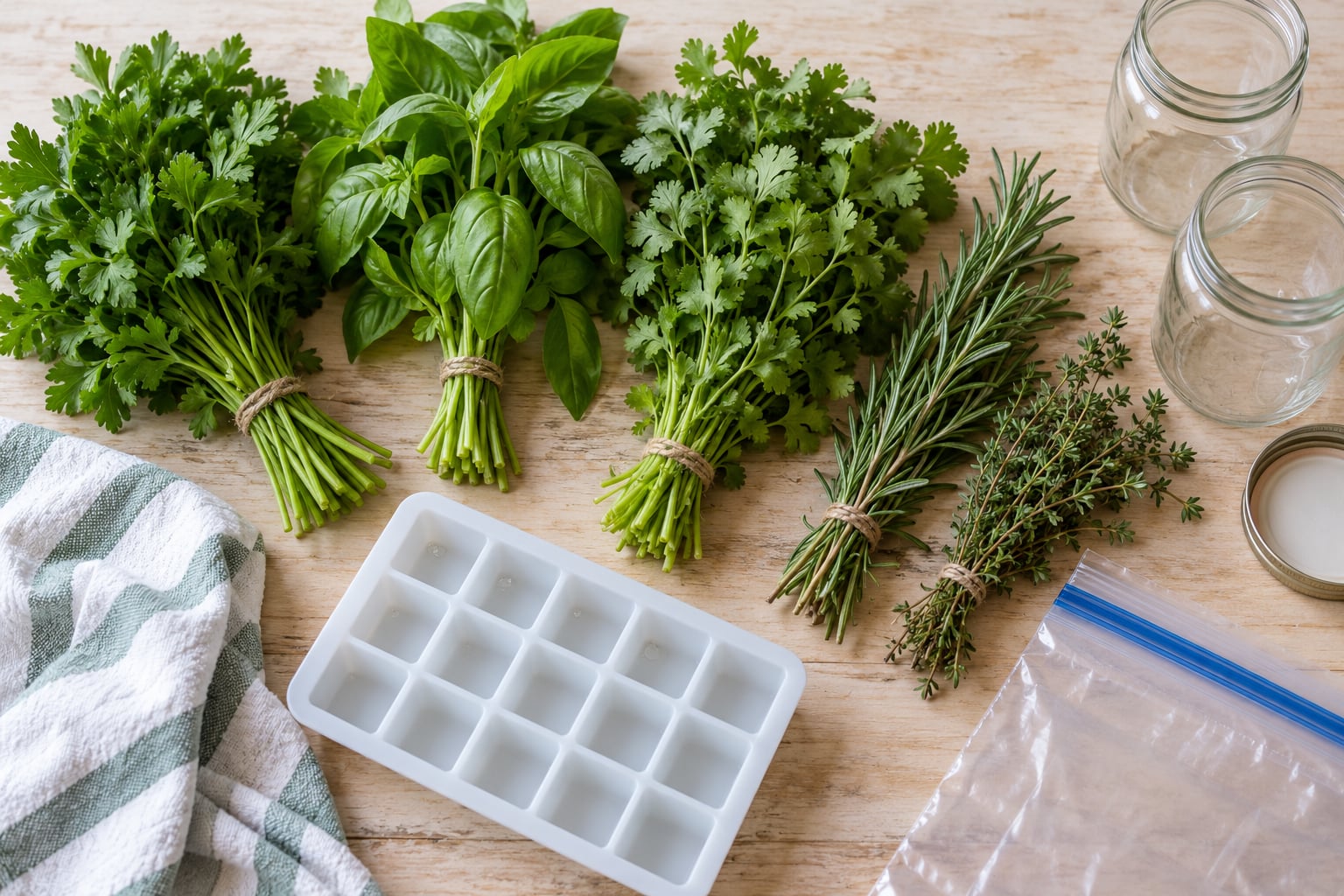
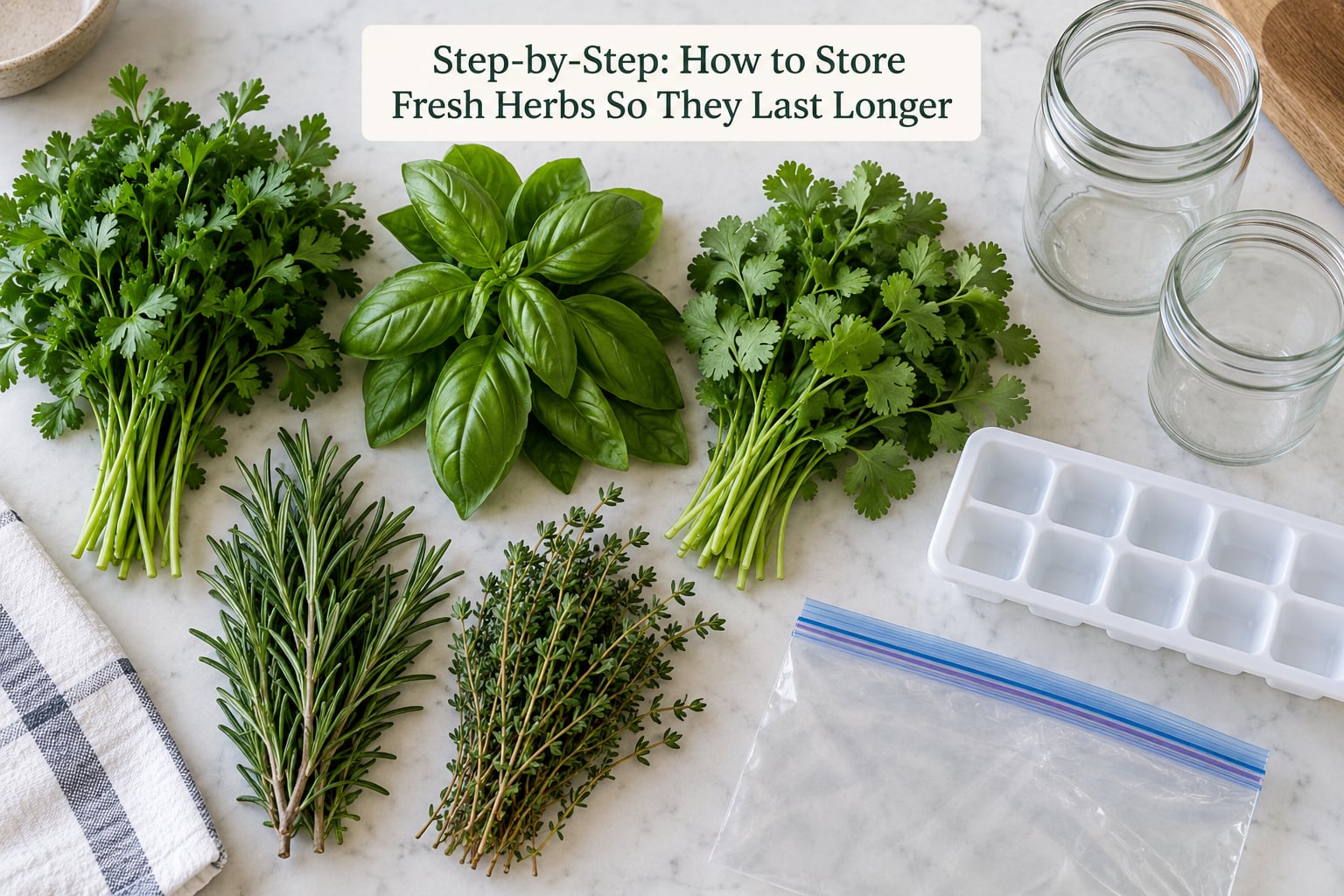
The tools are ordinary, and you can get through with a glass jar and a clean towel. Having a couple more on hand makes the difference for herbs you buy often.
- A straight-sided glass jar with a lid, roughly a quart, for standing stems in water
- A clean kitchen towel or a roll of paper towels
- Resealable freezer bags or a small airtight container
- A salad spinner, or a second towel for drying delicate leaves
- A silicone ice cube tray and a freezer bag for freezing chopped herbs
- A sheet pan for flash freezing before the herbs go into a bag
A damp towel in the fridge door or crisper is a decent substitute for the containers above if you only ever store one or two herbs. An herb keeper, the glass insert with a water reservoir in the bottom, works on the same principle as the jar and costs a bit more.
Step-by-Step: How to Store Fresh Herbs So They Last Longer
Step 1: Choose Fresh Herbs and Remove Damaged Leaves
Sort the bunch the moment you get it home. Pull off anything yellowed, bruised, or slimy at the base of the stem, because one bad leaf spreads to its neighbours inside a bag within a day or two.
Do not wash unless you need to. Washing at home adds moisture to the leaves, and moisture plus fridge chill is exactly the combination that grows grey fuzz. If a bunch is visibly dirty, rinse it quickly and dry it thoroughly before it goes anywhere near a container.
For parsley and cilantro, decide between the whole bunch and chopped. Standing the roots in water keeps the stems hydrated and the leaves plump for the longest time, while chopped parsley tucked into a damp towel keeps just as well and takes up about a third of the space.
Step 2: Dry the Herbs Thoroughly
Dryness decides how long you have. Any water clinging on a leaf when you seal the container becomes condensation, and condensation becomes mold.
Spin the herbs in a salad spinner for a few seconds, then blot gently with a towel. For herbs with delicate leaves like basil and mint, pat rather than rub, and skip the spinner if the leaves bruise at the edges. Take the towel trick as the test: if the towel comes away damp, the herbs are not dry enough to store.
Step 3: Choose the Right Storage Method
Match the method to the herb and to how long you need it. Each approach has a realistic window, and the window is short enough that guessing loses you the herbs.
- Jar of water in the fridge (soft herbs): about 1 to 2 weeks. Stand stems in 1 to 2 inches of water, cover loosely with a plastic bag or lid, and change the water every 3 to 4 days.
- Damp paper towel in the fridge (woody herbs): 2 to 3 weeks. The towel supplies humidity without the stems sitting in water and going slimy.
- Countertop jar (basil): 3 to 5 days. Cold temperatures blacken basil leaves, so it stays out of the refrigerator.
- Freezing (any herb, cooked use): 6 to 12 months. Chops sit in ice cube trays with olive oil or water, or flash freeze whole on a sheet pan first.
- Air-drying (woody herbs and sage): up to a year. Small bundles hang upside down in a dark, airy room until the leaves are crisp.
For freezing, chop the herbs, pack them tightly into tray wells, and add olive oil or water to cover. Freeze, pop the cubes into a freezer bag, and label with the herb and date. Oil cubes suit pesto, pan sauces, and finishing oils, while water cubes drop straight into soups, curries, and marinades without adding grease to the pot.
Choose a paper towel damp, not soggy. Wring it out until barely damp, roll the woody herbs in it, then seal the roll in a bag or container.
Step 4: Store Each Herb in the Correct Container
The chart below covers the herbs most kitchens actually buy. Match your herb to its row and you have the method and the container decided.
| Herb | Type | Best method | Container | How long it lasts |
|---|---|---|---|---|
| Basil | Soft | Countertop in water, loosely covered | Glass jar, plastic bag over top | 3 to 5 days |
| Cilantro | Soft | Stems in water, fridge | Glass jar, bag over top | 1 to 2 weeks |
| Parsley | Soft | Stems in water or damp towel, fridge | Glass jar or resealable bag | 1 to 2 weeks |
| Dill | Soft | Stems in water, fridge, or chopped and frozen | Glass jar or ice cube tray | 5 to 7 days fresh |
| Mint | Soft | Damp towel, fridge | Resealable bag | 1 to 2 weeks |
| Chives | Soft | Damp towel in airtight container, fridge | Airtight container | 5 to 7 days |
| Tarragon | Soft | Stems in water, fridge | Glass jar | 1 to 2 weeks |
| Rosemary | Woody | Damp paper towel roll, fridge | Resealable bag | 2 to 3 weeks |
| Thyme | Woody | Damp paper towel roll or air-dry | Resealable bag or jar | 2 to 3 weeks fresh |
| Oregano | Woody | Damp paper towel roll or air-dry | Resealable bag or jar | 2 to 3 weeks fresh |
| Sage | Woody | Damp paper towel, fridge, or air-dry | Resealable bag or jar | 2 weeks fresh, 1 year dried |
| Marjoram | Woody | Damp paper towel roll, fridge | Resealable bag | 2 to 3 weeks |
A container that fits snugly matters more than the material. A handful of parsley in a two-quart container will dry out and yellow at the edges, because there is not enough air moving around it and the leaves press against the sides.
Put herbs in the crisper rather than the door. The door is the warmest and most jostled spot in the refrigerator, and temperature swings there shorten the life of anything leafy. Reserve the door for things that tolerate that treatment, like jars of sauce or condiments.
Step 5: Check Herbs Before Using Them
Smell first. Fresh herbs smell bright and green; a musty, sour, or cooked smell means they are done. Soft herbs should feel crisp rather than limp, and woody stems should snap instead of bending.
Discard anything slimy, blackened, or fuzzy, and use the rest the same day you notice the problem. A jar with one bad stem can contaminate the whole bunch, so pull out the affected sprigs rather than fishing around in it.
Wilted but not spoiled herbs often come back. Trim the stems, stand them in a jar of ice water for 10 to 15 minutes, and drain. The leaves perk back up well enough for a salad, which rescues a bunch that was destined for the compost bin.
Common Mistakes
Almost every storage failure comes down to one of these, and each has a simple fix.
Storing herbs wet
Drying is the step people skip. Pat herbs dry before they go into any container, and store them unwashed until you are ready to cook.
A soggy paper towel
Too much water turns the towel into a source of rot for the stems resting on it. Wring it out until it is just damp to the touch.
A container far too large
Match the container to the bunch. Extra air dries leaves out, and a small bunch spread across a big bag yellows before you use it.
Refrigerating basil
Basil is a tropical plant and cold damage blackens its leaves within a day or two. Keep it in water on the counter, away from direct sun, and change the water daily.
Using the fridge door for herbs
Move them to the crisper. The door warms up every time it opens, and leafy herbs feel every one of those swings.
Leaving oil-covered herbs at room temperature
This one matters for safety. Herbs stored under olive oil at room temperature carry a real botulism risk because oil excludes oxygen and lets bacteria grow. Keep oil-packed herbs frozen, or refrigerate them and use them within about four weeks.
Frequently Asked Questions
How long do fresh herbs last in the refrigerator?
Soft herbs such as parsley, cilantro, and mint last 1 to 2 weeks when their stems stand in water and the water is changed every 3 to 4 days. Woody herbs like thyme, rosemary, and sage keep 2 to 3 weeks rolled in a damp paper towel. Basil lasts 3 to 5 days on the counter and blackens in the fridge. Chives are the shortest at roughly 5 to 7 days.
Should fresh herbs be washed before storing?
Usually not. Washing adds moisture, and moisture sealed inside a container turns into condensation and then mold. Store herbs unwashed and dry, and wash the amount you need right before you cook. If a bunch is visibly dirty or sandy from the garden, rinse it quickly, then dry it thoroughly with a salad spinner or clean towel before storing.
What is the best way to store basil so it stays fresh?
Keep basil out of the refrigerator and stand the stems in a jar or glass of water on the counter, loosely covered with a plastic bag. Change the water daily and pull off any leaf that sits in it. Cold temperatures damage basil, and the leaves turn black within a day or two of refrigeration. Three to five days on the counter is the realistic window.
Can fresh herbs be frozen for later use?
Yes, and freezing is the best method for herbs headed into cooked dishes. Chop them, pack them into ice cube trays, cover with olive oil or water, and freeze solid before transferring to a bag. They keep 6 to 12 months. Oil cubes work well for pesto and pan sauces, while water cubes suit soups, curries, and marinades. Texture softens, so frozen herbs belong in cooking rather than garnishes.
Why do fresh herbs turn black in the refrigerator?
Blackening usually means cold damage rather than spoilage. Basil is especially sensitive and does best at room temperature in a jar of water. Cilantro and parsley blacken more often when leaves are crushed, wet, or pressed against the container walls. Chilled air that is dry and moving also darkens tender leaves. Store herbs loosely, keep them dry, and use the crisper instead of the door.
Which herbs should be stored in water rather than wrapped in a towel?
Soft herbs with tender stems do best standing in water: parsley, cilantro, dill, tarragon, and basil on the counter. Put 1 to 2 inches of water in the jar so the cut ends stay covered, cover loosely, and refresh the water every 3 to 4 days. Woody herbs like rosemary, thyme, sage, and oregano take on too much moisture this way, so they prefer a damp paper towel.
Conclusion
Start by naming the herb, because that decides everything else. Soft stems go in water, woody stems go in a damp paper towel, and basil stays on the counter. Dry the leaves before they go in, use a container that fits the bunch snugly, and keep everything but basil in the crisper.
Past about ten days, stop trying to hold herbs fresh and switch to freezing or drying. Two minutes of prep on the day you buy the bunch buys you the whole recipe, or most of the next month.